





In the mid-20th century, there came a wave of anti-colonial movements across Africa and Angola was no exception. The Angolan people began to demand their right to self-determination and freedom from colonial rule. In 1961, the National Front for the Liberation of Angola (FNLA) conducted a guerrilla war against the Portuguese, followed by the People’s Movement for the Liberation of Angola (MPLA) and the National Union for the Total Independence of Angola (UNITA) in the following years. The struggle for independence was marked by heavy fighting, political instability, and international intervention, but in 1975, Angola finally got its independence, ending over four centuries of Portuguese colonial rule.

Angola, officially known as the Republic of Angola, is a country located in southwestern Africa. It is known for its rich culture, vibrant music, and stunning natural beauty. One of Angola’s most famous cultural exports is kizomba, a popular dance and music genre that originated in the country and has spread to other parts of the world.
Angola has a long and complex history, marked by centuries of colonization, slavery, and war. The country was colonized by Portugal in the 16th century and remained under Portuguese rule until 1975, when it got its independence. The legacy of colonialism and the struggle for independence have had a profound impact on Angola’s cultural identity, including its music and dance traditions.
Kizomba, which means “party” or “celebration” in Kimbundu, one of the Bantu languages spoken in Angola, emerged in the 1980s and 1990s as a fusion of Angolan semba music, Caribbean zouk, and other African rhythms. Semba is a traditional dance and music genre that originated in Angola and is characterized by its joyful tempo, complex rhythms, and energetic movements. Zouk is a popular dance and music genre that originated in the French Caribbean and is characterized by its slow and sensual tempo, soft melodies, and romantic lyrics.

Young woman dancing kizomba
Kizomba became popular in Angola in the 1990s, especially in Luanda, the country’s capital. The dance quickly spread to other parts of the country and became an important part of Angola’s cultural heritage. Kizomba dance parties, known as “kizombadas,” were held in clubs, bars, and community centers, attracting people of all ages and backgrounds.
In recent years, kizomba has gained popularity in other parts of the world, particularly in Europe, where it has become a popular social dance. Kizomba festivals and workshops have been held in many countries around the world, attracting dancers and music lovers from different cultural backgrounds.
Kizomba is not only a dance and music genre but also a cultural expression that reflects the history and identity of Angola and its people. It is an important part of the country’s cultural heritage and a source of pride for Angolans around the world.

ANA Tijoux, emblematic figure of Latin rap, joins us at the opening of the festival! A strong and committed French-Chilean artist born in her native Lille to Chilean parents exiled by the dictatorship, ANA has bult her musical style on the fundamental rhythms of Rap and the Chilean folkloric colors of her origin.
Her background, influences and temperament give her an indomitable stage strength to tackle political issues wildly. From Europe to Latin America, singing in Spanish with humor and rebellion has led her to consolidate her presence in the international scene of the Latin Rap wave and win Grammys.
After opening for Iggy Pop, the iconic Stooges figure said that “she knows what she’s doing!”
The Tempo Latino Social Club welcomes her into their circle of shared values with proudly and respectfully.
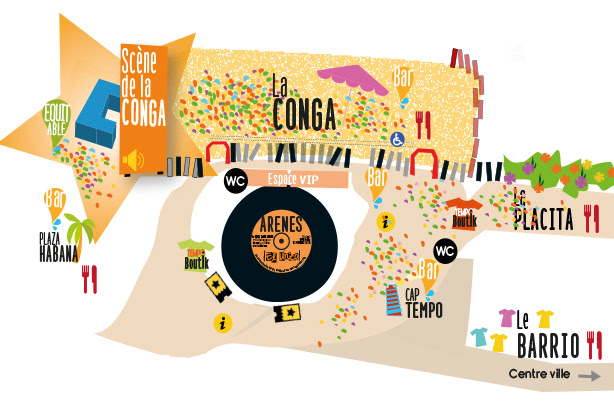
Between psychedelic palm trees, tropical white sand and the first day’s frenzy, we’ll meet at 19h on the Conga stage to embark on the 28th edition.
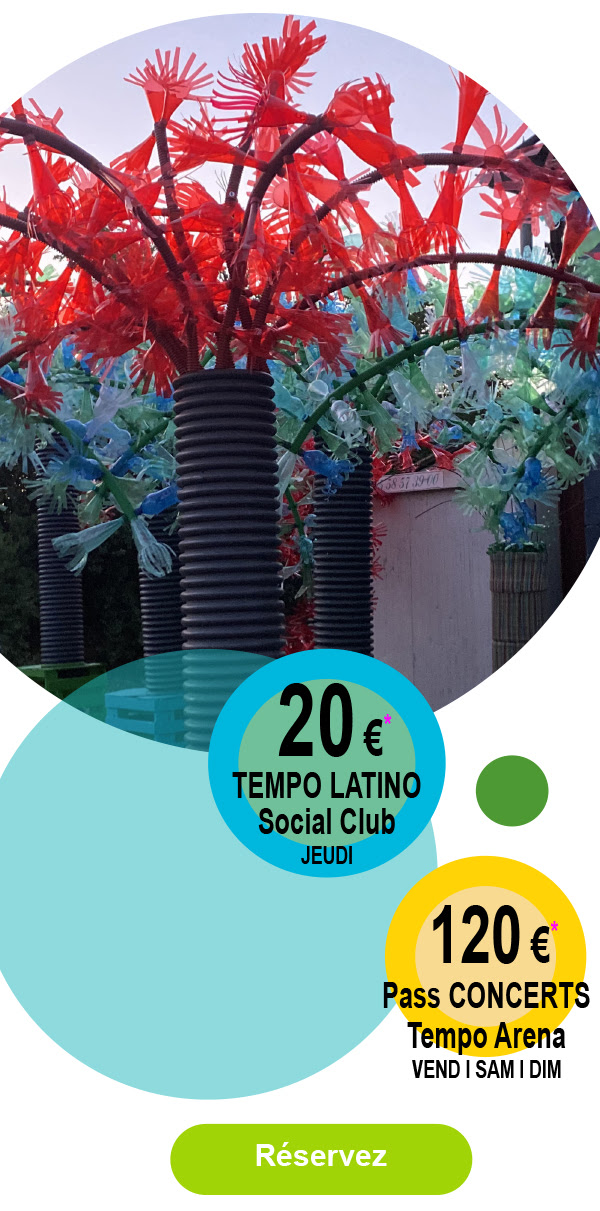
Imagined in 2022… the Tempo Latino Social Club*, born from our associative, voluntary and committed structure, brings us together to share our values of cultural and musical mestizaje…
*This evening does not cover the pass for the Tempo Arena concert.

THANKS
Public… Artists… Technicians… Partners… Professionals…
Tempo VOLUNTEERS




