• Skip to primary navigation
  • Skip to main content

International Salsa Magazine

  • HOME
  • Previous editions
    • 2026
      • ISM / March 2026
      • ISM / February 2026
      • ISM / January 2026
    • 2025
      • ISM / December 2025
      • ISM / November 2025
      • ISM / October 2025
      • ISM / September 2025
      • ISM / August 2025
      • ISM / July 2025
      • ISM / June 2025
      • ISM / May2025
      • ISM / April 2025
      • ISM / March 2025
      • ISM / February 2025
      • ISM / January 2025
    • 2024
      • ISM / December 2024
      • ISM / November 2024
      • ISM / October 2024
      • ISM / September 2024
      • ISM / August 2024
      • ISM / July 2024
      • ISM / June 2024
      • ISM / May 2024
      • ISM / April 2024
      • ISM / March 2024
      • ISM / February 2024
      • ISM / January 2024
    • 2023
      • ISM / December 2023
      • ISM / November 2023
      • ISM / October 2023
      • ISM – September 2023
      • ISM – August 2023
      • ISM July 2023
      • ISM Edition June 2023
      • ISM – May 2023
      • ISM April 2023
      • ISM March 2023
      • ISM February 2023
      • ISM January 2023
    • 2022
      • ISM December 2022
      • ISM November 2022
      • ISM October 2022
      • ISM September 2022
      • ISM August 2022
      • ISM July 2022
      • ISM June 2022
      • ISM May 2022
      • ISM February 2022
      • ISM January 2022
    • 2021
      • ISM December 2021
      • ISM November 2021
      • ISM October – 2021
      • ISM September 2021
      • ISM August 2021
      • ISM July 2021
      • ISM May 2021
      • ISM April 2021
      • ISM June 2021
      • ISM March 2021
      • ISM February 2021
      • ISM January 2021
    • 2020
      • ISM December 2020
      • ISM November 2020
      • ISM October 2020
      • ISM September 2020
      • ISM August 2020
      • ISM July 2020
      • ISM June 2020
      • ISM May 2020
      • ISM April 2020
      • ISM March 2020
      • ISM February 2020
      • ISM January 2020
    • 2019
      • ISM December 2019
      • ISM November 2019
      • ISM October 2019
      • ISM Septembre 2019
      • ISM August 2019
      • ISM July 2019
      • ISM June 2019
  • Spanish
  • Download Salsa App
    • Android
    • Apple

Search Results for: dance

Cache Live Music puts Miami to dance to traditional Latin music

Roland Cache graced this edition with his presence to tell us about his beginnings, the subsequent creation of his band Cache Live Music, and his current career. The American of Cuban descent honors his roots with the music he and his collaborators play to delight their fans at any event they are hired, indicating the pride he feels in representing his parents’ country and how passionate he is about his craft.

Roland shared many interesting details about his musical life, and we are more than happy to share them with our readers in the following lines.
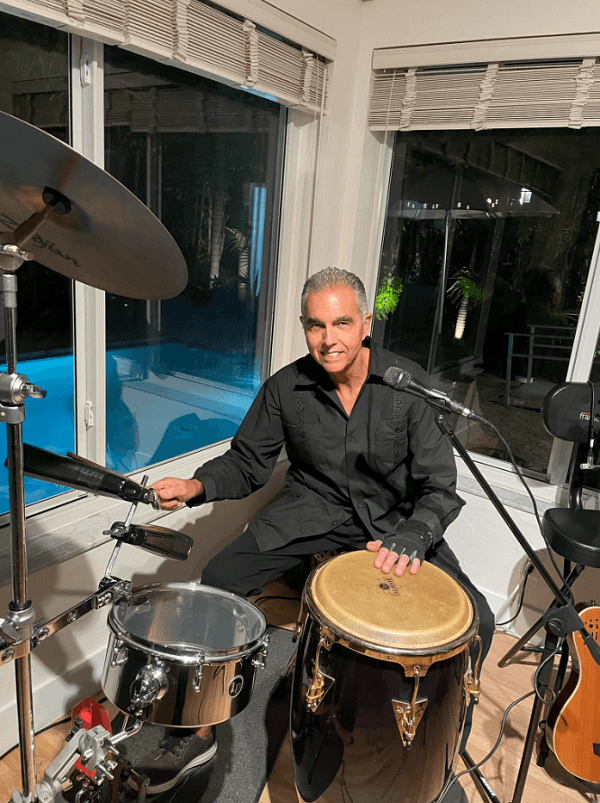
Roland Cache playing
Roland Cache playing drums live at an event

Roland’s musical beginnings as a teenager

As a child, Roland lived in Elizabeth, New Jersey, where some high school friends convinced him to play drums with them. Their favorite genre was the rock of the day, which was the 1960s. A few years later, specifically in 1973, another friend took him to a salsa concert at Madison Square Garden, and he liked what he heard so much that he became more involved in Latin music and left American music aside. 

Seeing great artists such as Tito Puente, Ray Barretto, and other artists of Puerto Rican descent, he learned to play timbales, tumbadora, and bongos, which allows him to play a combination of conga, timbales, and clave at the same time. 

Orchestras prior to Cache Live Music

Before creating his own band, Roland was part of other projects that were training him for what was to come in his career later. One of them was a band from New Jersey, whose members formed La Charanga Casino, which became very popular in that city.

Some time later, Roland could not play for a while, so he has been throwing himself into selling cars and other area businesses. Then, in 1998, he returned to music and created an American band that played rock and jazz with a touch of Latin music.
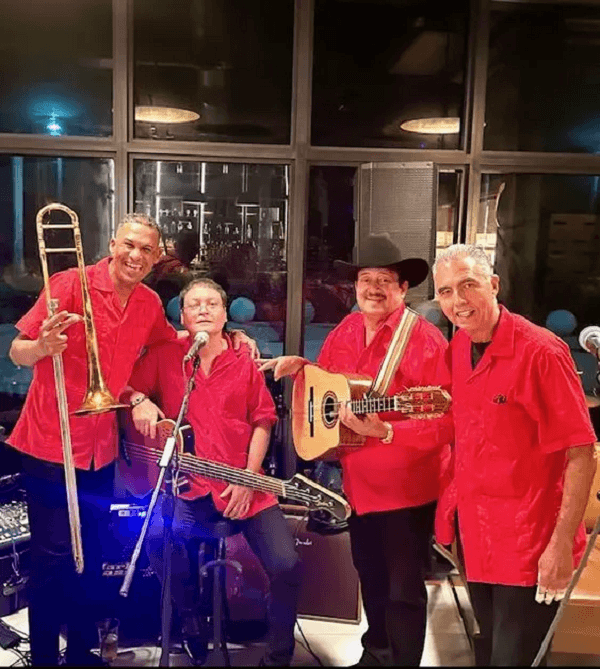
Roland Cache and the rest of the band
Roland Cache and the rest of Cache Live Music

Creation of Cache Live Music 

Eventually, he left the American band and founded a Latin band called Cache Live Music with a group of musicians, some of whom remain alongside Roland to this day. He met most of them through another musician friend who introduced them so he was knowing other artists who joined his project.

Cache Live Music was officially started in 1999, and according to its founder, the hardest thing about keeping a band like this together for so long was the search of opportunities in clubs and other kinds of places. However, Roland says that his experience as a salesman and negotiator has helped him a lot in winning contracts and the best conditions for him and his bandmates.

Current status of Cache Live Music

Today, the core of the band consists are three of its members: the guitarist, the bassist, and Roland, who is a multi-instrumentalist. More recently, Cache included a flutist, a trombonist, and sometimes a singer. This is how, depending on the requirements for a particular event, the group’s leader decides which members and instruments to include for every occasion in order to offer something different.
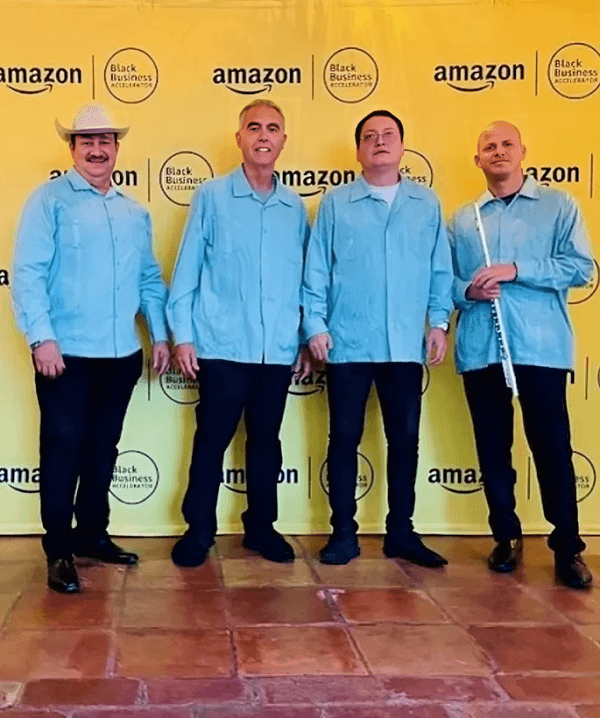
Cache at an Amazon event
Cache Live Music at an Amazon corporate event

Regarding the repertoire, they only perform covers, but they ensure that each and every song has their personal touch so that they resemble as little as possible to the original versions.

Anyone who wants to hire Cache Live Music can do so through its profile on The Bash by making a deposit and sending a contract to agree on the conditions of the event. However, it is important to note that they are already booked for December and January with corporate parties and weddings, for which we wish them every possible success because they already have the talent.

Tomas Pedro Regalado and Roland
Former Mayor of Miami Tomas Pedro Regalado and Roland Cache

Read also: The Williamsburg Salsa Orchestra: electrifying fusion and salsa flavored with indie rock
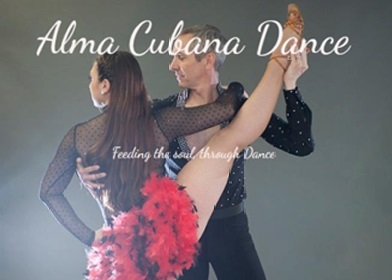

Alma Cubana Dance Academy

North America / USA / Portland

Alma Cubana Dance Academy

Alma Cubana Dance Academy

“They are a small dance group in Portland, ME. that offers Salsa and Bachata lessons and have student level teams for both those styles as well as ladies styling. Currently the lessons are on Sundays, you can find everything current on their website www.almacubanadance.com

Alma Cubana Dance was founded in the spring of 2015 by Vanessa Webber (Gutierrez). Alma Cubana means “Cuban Soul”, and being half Cuban, she wanted her group to reflect that heritage. It has been a long standing dream to offer classes, build a performance group and to help grow the Salsa and Latin dance community in Southern/Midcoast Maine. Their focus is to bring quality instruction while maintaining the social atmosphere of Salsa dance.

‘I danced Ballet and Modern growing up and helped develop a salsa company in Boston while in College which I believe is celebrating 10 years or more this year, although I am not with them anymore. I took 8 dancers to Miami last year and they competed in the first Miami Latin Dance Championships where all of them placed in at least one category.”

“They are a small dance group in Portland, ME. that offers Salsa and Bachata lessons and have student level teams for both those styles as well as ladies styling. Currently the My company is very young, only just 2 years, and it is mainly attended by those who love to dance but it is not a full time commitment. We perform locally a lot, and try to take the groups to 2-3 congresses or festivals, usually within driving distance. We have done Boston Salsa Festival twice, Connecticut Salsa Fest last year and Bachateando Miami last year, we plan to go to Connecticut and Boston again this year.” Vanessa Webber (Gutierrez), Alma Cubana Dance founder/director

They will be changing the schedule in April for Spring and Summer. Spring and Summer Schedule will have team practices on Sundays and Wednesday, classes for Salsa and Bachata before our regular latin night, which just celebrated 1 year.”

2017 Winter Schedule

Sundays

  • 3:00–4:00 pm Bachata and Body Movement
  • 4:00–5:30 pm Beginner Salsa Bootcamp
  • 4:00–5:30 pm Intermediate Salsa Bootcamp
  • 5:30–7:00 pm Open Level Salsa Team Rehearsal*

Tuesdays

  • 8:00–9:30 pm Bachata Team Rehearsal

2017 Spring/Summer Schedule

Sundays: Classes held at Aquarius Ballroom

  • 2:00–3:30 pm Ladies Choreography Class
  • 3:30–5:00 pm Bachata Performance Team*
  • 5:00–6:30 pm Salsa Performance Team*

Wednesdays: Classes held at Pearl Nightclub

7:30–8:15 pm Salsa for Social Dance 8:15–9:00 pm Bachata for Social Dance 8:00–9:00 pm Drop-in Class Salsa/Bachata (Note: There is a potential overlap/error in the Wednesday schedule near the end, listing 8:15-9:00 pm and 8:00-9:00 pm for different classes).

Esencia Latina Wednesdays at Pearl Nightclub

Esencia Latina means “Latin Essence” and that is what they want this night to embody. Start off the night with lessons to get your feet moving from 8-9pm. At 9, the lights go down and have a great mix of Salsa, Bachata, Merengue, Cha Cha and more to keep you on the dance floor. Latin dance is a social dance, its meant to be something you do with your friends and/or family. Loosen up, shake your hips and party like Latinas! Pearl Nightclub is located next to the Tap House 442 Fore St, Portland, ME

Alma Cubana Dance Academy - Flyers
Alma Cubana Dance Academy – Flyers

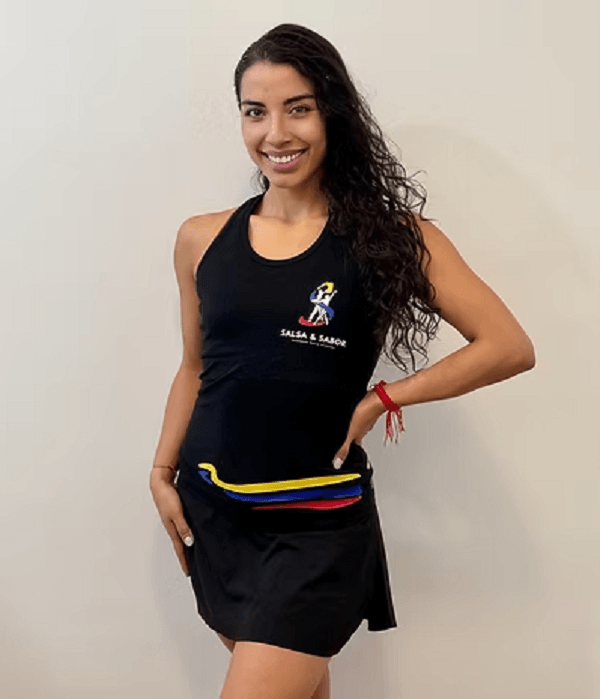
Colombian dancer and instructor Camila Cepeda takes salsa caleña to Canada

Every day there are more Latinos who, with their talent, are gradually taking over various cities in Canada and the hearts of many of its inhabitants. Colombian instructor and dancer Camila Cepeda shows us that she and several of her compatriots have managed to break into the aforementioned North American country and shares with us a little bit of her interesting story.

Dancer and instructor Camila Cepeda
Colombian dancer and salsa caleña instructor Camila Cepeda

Camila’s interest in dance

Camila has danced through life, and since she was a little kid, dance has been very important to her. One genre in particular that caught her attention was salsa caleña, especially since she saw it for the first time with dance groups on the TV show “Colombia’s Got Talent”. From there, more specifically in 2011, she looked for a dance academy where she could learn to dance and imitate what she saw on the screen.

Almost immediately, she realized that it was a very demanding style that required stunts and movements that were not common in more classic versions of salsa. After training in dancing, she did not want to be just an expert in salsa caleña, but many more people learned how to dance it as well, which led her to create a folk dancing group with which she would take her first steps towards teaching.

In addition to salsa caleña, Camila also danced salsa choka, champeta, bachata, merengue, and Colombian folklore. 

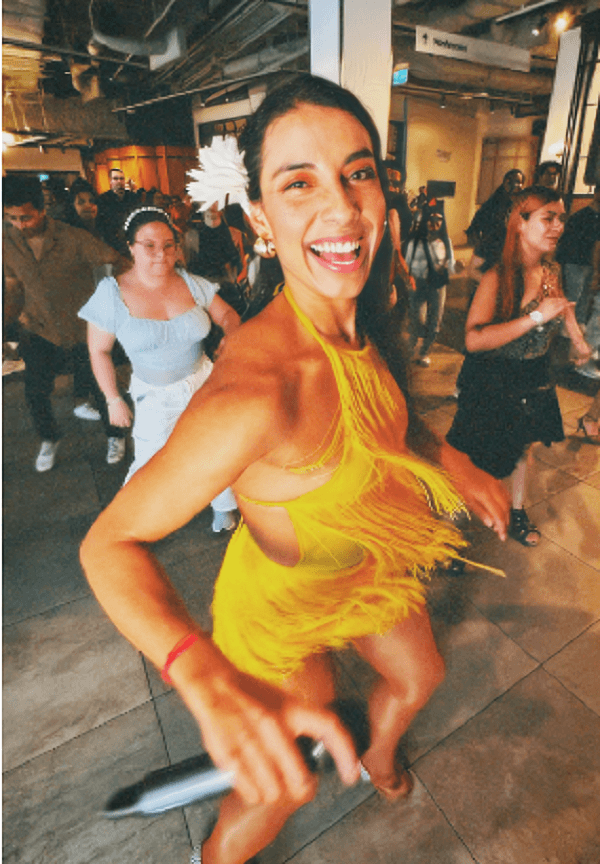
Camila dancing at an event
Camila Cepeda dancing in one of her salsa caleña events

Moving to Canada

Initially, Camila’s plans did not include leaving Colombia, but when she knew Canada, she found it an extremely interesting country where she could start something new with dance due to the lack of salsa caleña there. So, she entered the country with a student visa and studied international business at Seneca College in Toronto, with the intention of forming her own company in her new host country.

While gaining business experience through jobs for other companies, she continued to offer classes in parallel. Finally in 2020, in the middle of the COVID-19 pandemic and when she was still a university student, she decided to register and open her dance academy, “Salsa & Sabor.”

During that time, she also validated her teaching in English so that she could give classes to both locals and people from other cultures who spoke the same language.

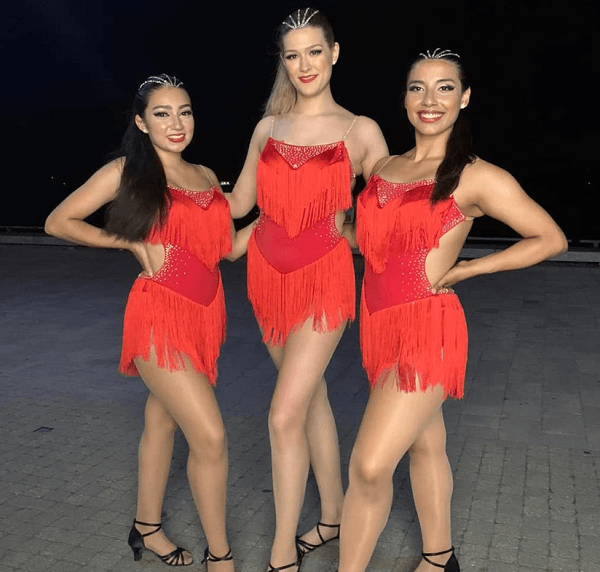
Camila, Aleja, and Sonia
Camila with dancers Aleja and Sonia

Salsa & Sabor today

Although the academy was started with only online classes due to the sanitary restrictions of that time, Camila was able to gather together a more or less numerous community that allowed her to stay afloat in such a difficult moment. Therefore, when government controls were relaxed, the young woman had no problem to organize dance classes and activities in parks keeping proper social distancing.

A short time later, she could finally open her dance studio, welcome students in person, and recruit other instructors such as Diana, Victoria, Mateo, and Paula. One thing to mention about these five young Colombians is that they were all Camila’s students in the past and, after all the training she offered, they also became experts in the field. Given the pitifully small number of salsa caleña instructors in Canada, when they were ready, she asked them to join her team, and they gladly accepted the opportunity.

This, in turn, helped them to open up more schedules and workshops for many more people, allowing the academy to grow even more.

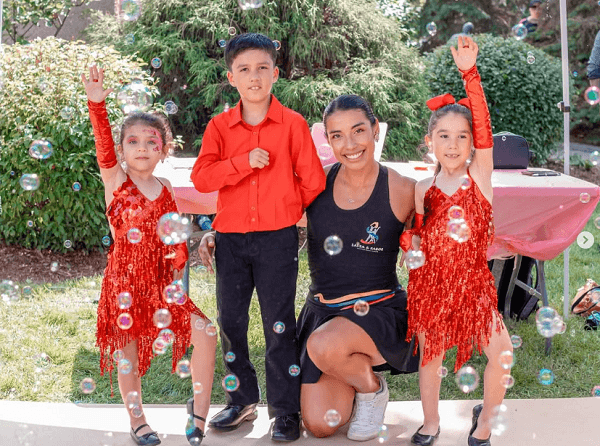
Camila with her students
Camila with some of her little students

Division of teaching genres and events

As we said at the beginning of this article, Camila also teaches other genres such as salsa choke, la champeta, bachata, and merengue, but her flagship and main rhythm remains salsa caleña. An important difference between salsa caleña and the rest is that it has a well-defined continuity and academic structure, so it takes much longer to learn. The other genres are relatively simpler, so they do not require as many hours or such an elaborate program.

Differences between salsa caleña and traditional salsa

According to Camila, a very important component of salsa caleña is its speed compared to traditional salsa. The way salsa is danced in Puerto Rico, Cuba, or New York is much better known around the world due to its age, while salsa caleña is a little newer and only began internationalizing a few years ago. In addition, traditional salsa is slower and uses the hips and shoulders a lot, while salsa caleña relies heavily on the rapid movements of the feet.

In fact, an important fact to know is that salsa caleña was created from a mistake. It turns out that a group of young people in Cali were doing private parties with LPs by various artists of the time, but they accidentally raised their speed and made the songs sound faster than they should. This led them to create completely new steps and choreographies based on these fast songs, giving rise to what we now know as salsa caleña. 

These parties were called “aguelulos,” a Colombian term to refer to alcohol-free parties or gatherings for young people. 

Read also: Tito Puente Jr.: perpetuating a legacy with its own rhythm

Kadenza Dance School

Latin America / Argentina/ Buenos Aires

Kadenza Dance School is a dance academy located in Buenos Aires, Argentina. They don’t just teach people the steps of a musical rhythm; they demonstrate through their teaching that dancing nourishes the spirit of those who practice it. Not only that, but dance also allows for a connection with emotions, giving students more freedom for their spirit or soul.

KADENZA is a school geared toward students of all ages and with different goals, whether they wish to pursue a professional path or use dance as a form of recreation or therapy. All their students and teachers benefit from a comfortable reception area, spacious studios equipped with mirrors, barres, wooden floors, high-quality sound systems, and Wi-Fi throughout the studio. In short, it’s an ideal place to learn with passion, as the atmosphere is full of joy, respect, and good vibes, where one can enjoy what they love to do most… which is dancing.

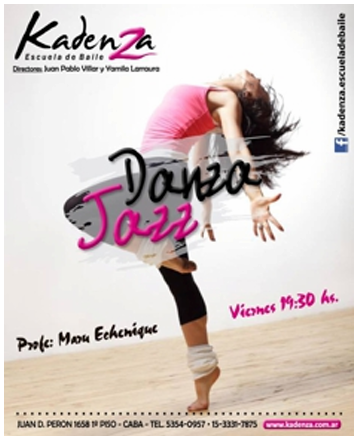
Kadenza Dance School - Danza Jazz
Kadenza Dance School – Danza Jazz

They also state that they are seriously committed to the quality of instruction, where qualified professors and instructors give their best in every class. This ensures their students incorporate the essentials of each technique and develop the maximum potential of their learning in the rhythms chosen by the student.

The Directors: Yamila Larraura and Juan Pablo Villar

The School’s Directors are Yamila Larraura and Juan Pablo Villar, who mention that, “Anyone can open an Academy, but few are the ones that make a difference.”

If we want to know more about the history of these two directors, we can start with Yamila Larraura, who was born in Argentina. Since she was a child, she began listening to Afro-Latin music thanks to her father, “Jorge Washington Larraura,” who was of Uruguayan origin. When she was 14, she went on vacation to Villa Gesell with her parents and a friend of theirs. It was on this trip that her interest in Salsa was awakened, as she went to a place near the beach that played Salsa music and offered classes in the afternoon with all the people from the beach.

One of the songs heard back then was “El Muerto se fue de Rumba” by the group “Las Sabrosas Zarigüellas,” which was very catchy for everyone who heard it. After her vacation, she decided to enroll in Salsa classes, where her teachers were Pablo Demaro and Kimena Puente.

As for Juan Pablo Villar, during his youth, he worked as a waiter in a bar and took theater classes, which also included lessons in national folklore and Latin rhythms (Salsa). This was his first contact with dance, and from that moment, he developed an interest in it. One day, a person came to the bar and mentioned that they taught classes in a studio, asking if they could leave flyers at the bar for people who wanted to dance. Knowing this, Juan Pablo Villar decided to go to the Salsa classes taught by Professor Pablo Demaro.

Kadenza Dance School - Social
Kadenza Dance School – Social

They explain that the Salsa classes back then were in a Cuban style, which featured fairly simple movements and figures. It was in these very classes that the future directors of KADENZA, Juan Pablo Villar and Yamila Larraura, first met.

The Journey to Kadenza

To gain a better experience, and to teach and give classes, they had to learn new techniques. They decided to seek out the best teachers in Argentina, who at that time were from the “Escuela de Mambo en Dos,” led by teachers Liz Paredes and Carlos Aragón, until they moved to Italy in 2007.

Afterward, they formed a dance group with their colleagues called “Combo Bayres,” during which time they toured the country and performed on various stages. In 2007, Liz Paredes and Carlos Aragón returned from Italy and formed the “Compañía Mambo en Dos,” where Yamila Larraura and Juan Pablo Villar joined the project. They gained great experience in the artistic world, traveling to different Argentine cities like Mar del Plata, Rosario, among others.

They also had the opportunity to travel abroad, attending the Salsa Congress in Uruguay, and later going to the United States, to New York City, to present at the Salsa Congress where they met great dance legends like Eddie Torres. Another great experience they had was the honor of being the official dancers for the famous Venezuelan Salsa singer “Oscar D’León” and the Dominican Salsero José Alberto, also known as “El Canario.” By 2010, they left the Mambo en Dos company to start their own school.

The academy’s beginning went without a name for a year, simply referred to as Pablo and Yamila’s school, but they were always looking for a name that would identify the essence they wished to convey. They eventually came up with “Cadenza,” which in Italian means “style of free rhythms.” To make the name more original, they changed it to “KADENZA,” feeling proud of their choice.

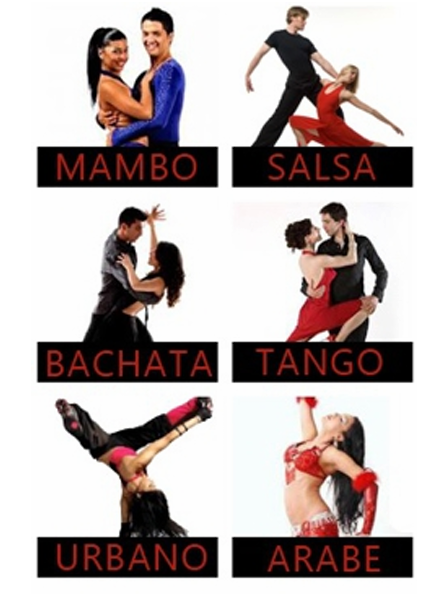
Kadenza Dance School - Mambo, Salsa, Bachata, Tango, Urbano, Arabe
Kadenza Dance School – Mambo, Salsa, Bachata, Tango, Urbano, Arabe

Contact Information

For more information, contact them at:

  • Website: http://www.kadenza.com.ar
  • Facebook:escueladebaile
  • Phones: 5354-0957 / 15-3331-7875
  • Email: [email protected]
  • Google Plus: https://plus.google.com/106664874547676369685
  • Youtube: https://www.youtube.com/channel/UC-he58RYqrJwoxoH8OID3ZA


Salsa Fever On2 Dance Academy

North America / USA /  New York

At Salsa Fever On2, they take great pride in being the only licensed Adult and Children Salsa / Mambo dance academy in the state of New Jersey! Salsa Fever On2 has been in business for 12 years.

Members of the Salsa Fever On2 Dance Academy

Here, we have a reputation throughout the dance community for providing our students with an Award-Winning, structured curriculum that is conducive to all different levels of dancers while maintaining a fun and stress-free environment.

Whether you want to take your dance to the next level, support your exercise regimen, work on social skills or scape the daily stressors in your life, you can rest assure that you will be surrounded by a supportive staff in a non-intimidating environment.

The instructors at Salsa Fever take pride knowing that their students are held to the highest calibre and it’s evident on the dance floor. Under the artistic direction of Mario J. Gonzalez and his staf, SFOn2 Dance Academy aims to create true “On2” dancers – trained equally in dance and musicality.

Mario Justo Gonzalez a.k.a Mario B Founder & Director Salsa Fever On2 Dance Academy

Professional Dancer, Instructor, Choreographer, Actor, MC, DJ Date of Birth: April 23, 1976 Birthplace: Hoboken, NJ EthnicBackground: Puerto Rican/Cuban [email protected]

Mario has had an interesting start to what is now a SALSA / MAMBO lifestyle!

Mario was very athletic throughout his grammar and high school years. In 1999, a really good friend and high School teammate, Danny Useche, introduced Mario B. to the “Salsa Scene”. This, in turn, inspired Mario to sign up for his first dance class. It did not quite work out as well as he expected, as the class was slightly more advanced than he predicted. This left Mario even more determined to prove his point, size, shape and color was irrelevant when it comes to MAMBO!

Photo 1: Members of the Salsa Fever On2 Dance Academy

Mario was down, but definitely not out. He then came across one of the smoothest and most humble instructors in the Mambo scene, Greg Taylor, a prodigy of Delille Thomas and Original Eddie Torres dancer. After a few days with Greg Taylor, Mario was in Mambo Heaven. Took classes with Greg for approximately 6 months and was eternally grateful to Greg for this time, patience and expertise. Mario knew it was time to move forward and take on more of a challenge; he began taking more advanced classes with other established instructors.

Mario was immediately sought out and asked to become “The Papa” to Abbey Plotkins “The Mambo Mamas & The Papa”. Mario was now the Mambo Papa! By joining The Mambo Mama & The Papa, Mario was gice the opportunity to perform for what would become an instant hit LATIN MADNESS, an off-Broadway Dancical / Musical depicting the evolution of latin dance from past to present. The director and producer agreed that Mario would be a great addition to their all-star cast. Mario was now dancing alongside the BEST Mambo Dancers in the world! Latin Madness gave Mario the opportunity to dance, work and share the stage with the most sought out professionals in the world.

With stage experience and help from an acting coach, Mario earned the respect to appear in the movies “Empire” and “Kal-ho-naho”. Mario acted for the NY International Independent Film & Video Festival at Madison Square Garden, which then opened the doors for Mario to perform in two latin concerts at MSG… the largest stage in the world! In a short amount of time, Mario has come a long away to become a Professional Dancer, Choreographer, Instructor and Actor.

What’s most amazing I that he achieved all of these goals with NO background in dance!

It’s true what they say “Hard work does” pay off! “Hard work does pay off!” Who would have thought that Mario would transition from a full – time athlete to becoming a future Mambo Legend? In addition, his love for music and dance was Mario’s motivation to name his youngest daughter Jazzlyn.

Cycle Classes

Members of the Salsa Fever On2 Dance Academy - Dancers
Members of the Salsa Fever On2 Dance Academy – Dancers

Mambo On2 Partner & Floor Shine

  • Beginner Level 1: Beginner Students learn from a syllabus to help track their progress & pinpoint problem areas in floor shines & turn patterns in a 6 week cycle.
  • Advanced Beginner Level 2: students learn from a syllabus reflecting from Beginner Level 1 to help track their progress & pinpoint problem areas in floor shines & turn patterns with more of a challenge in a 6 week cycle.
  • Pre Intermediate Level 3: students learn from a syllabus reflecting from Beginner Level 2 to help track their progress & pinpoint problem areas in more complex floor shines & turn patterns in a 6 week cycle
  • Intermediate 4 Level: Students learn from a syllabus reflecting from Advanced Beginner Level 2 to help track their progress & pinpoint problem areas in more complex floor shines & turn patterns. Advanced beginner Level 2 will also prepare you for Advanced classes

What to bring to class

Please bring comfortable shoes with a leather or suede bottom. The best investment you can make as a dancer is a pair of quality dance shoes.

Do NOT recommend rubber soles or thick soled shoes as it will be difficult to find your balance, spin, and do the other exercises that to do in class. Bottled Poland Springs water is sold at the studio for a dollar.

Members of the Salsa Fever On2 Dance Academy - Photo 1
Members of the Salsa Fever On2 Dance Academy – Photo 1

Come dressed to dance. A short sleeved shirt and comfortable pants, tight & wind breakers are recommended. This class is a workout, you will sweat & enjoy it. There is a changing are at the studio, as well as restrooms.

The school is also equipped with state of the art central air conditioning & heating for both the summer & winter.

What to expect

Every class begins with a warm-up as a group, with introductory footwork drills for the first hour.

This gives students a chance to review the material that they know, and also gives them opportunity to assess new students and makes sure that they are in the appropriate group. For the second hour you split into partner work & continue with turn patterns & instruction. At the end of the class students have time to practice the moves that they learned, as well as ask question & clarify things that may have been missed.

Members of the Salsa Fever On2 Dance Academy - Photo 2
Members of the Salsa Fever On2 Dance Academy – Photo 2

Location: 83 Franklin Street

Jersey City, NJ 07307

Phone: (201) 792-116

[email protected]

  • Page 1
  • Page 2
  • Page 3
  • Interim pages omitted …
  • Page 165
  • Go to Next Page »

International Salsa Magazine (ISM) is a monthly publication about Salsa activities around the world, that has been publishing since 2007. It is a world network of volunteers coordinated by ISM Magazine. We are working to strengthen all the events by working together.