• Skip to primary navigation
  • Skip to main content

International Salsa Magazine

  • HOME
  • Previous editions
    • 2026
      • ISM / March 2026
      • ISM / February 2026
      • ISM / January 2026
    • 2025
      • ISM / December 2025
      • ISM / November 2025
      • ISM / October 2025
      • ISM / September 2025
      • ISM / August 2025
      • ISM / July 2025
      • ISM / June 2025
      • ISM / May2025
      • ISM / April 2025
      • ISM / March 2025
      • ISM / February 2025
      • ISM / January 2025
    • 2024
      • ISM / December 2024
      • ISM / November 2024
      • ISM / October 2024
      • ISM / September 2024
      • ISM / August 2024
      • ISM / July 2024
      • ISM / June 2024
      • ISM / May 2024
      • ISM / April 2024
      • ISM / March 2024
      • ISM / February 2024
      • ISM / January 2024
    • 2023
      • ISM / December 2023
      • ISM / November 2023
      • ISM / October 2023
      • ISM – September 2023
      • ISM – August 2023
      • ISM July 2023
      • ISM Edition June 2023
      • ISM – May 2023
      • ISM April 2023
      • ISM March 2023
      • ISM February 2023
      • ISM January 2023
    • 2022
      • ISM December 2022
      • ISM November 2022
      • ISM October 2022
      • ISM September 2022
      • ISM August 2022
      • ISM July 2022
      • ISM June 2022
      • ISM May 2022
      • ISM February 2022
      • ISM January 2022
    • 2021
      • ISM December 2021
      • ISM November 2021
      • ISM October – 2021
      • ISM September 2021
      • ISM August 2021
      • ISM July 2021
      • ISM May 2021
      • ISM April 2021
      • ISM June 2021
      • ISM March 2021
      • ISM February 2021
      • ISM January 2021
    • 2020
      • ISM December 2020
      • ISM November 2020
      • ISM October 2020
      • ISM September 2020
      • ISM August 2020
      • ISM July 2020
      • ISM June 2020
      • ISM May 2020
      • ISM April 2020
      • ISM March 2020
      • ISM February 2020
      • ISM January 2020
    • 2019
      • ISM December 2019
      • ISM November 2019
      • ISM October 2019
      • ISM Septembre 2019
      • ISM August 2019
      • ISM July 2019
      • ISM June 2019
  • Spanish
  • Download Salsa App
    • Android
    • Apple

Search Results for: dance

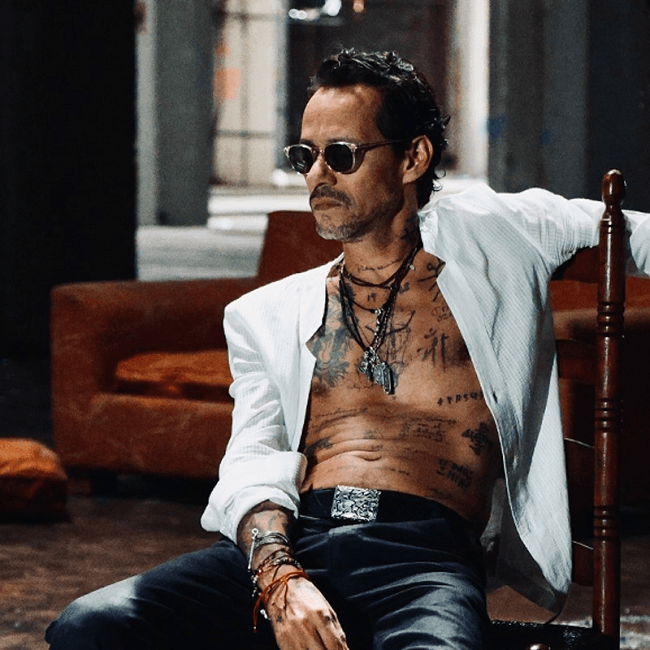
Marc Anthony Says to Europe Pa’llá Voy

The most influential tropical artist of the 21st century will offer a series of concerts in Spain, London, Holland, France, Italy, Switzerland, and Germany

Otra Nota (1993) was Marc Anthony’s first solo album

Si hay una fiesta pa’llá voy. Si hay una rumba, pa’llá voy. Con buena música y alcohol, cuando me llamen, pa’llá voy. With this nice choir of the song Pa’llá Voy that gives its name to the 2022 tour, Marc Anthony begins the series of concerts in Europe.

The versatile Salsa artist with the record for the most albums sold worldwide begins a series of 17 concerts on Saturday, June 4th at the OVO Arena Wembley in London (United Kingdom) with a capacity for 12,500 people. His next stop will be in the Rotterdam city (Netherlands) in Ahoy, which can hold 15,818 salsa souls, followed by Paris (France), Assago (Italy), Zurich (Switzerland), Cologne (Germany), ending his tour in 11 cities from Spain (Cornellá de Llobregat, Santiago de Compostela, Madrid, Seville, Fuengirola, Calvia, Oviedo, Valencia, Murcia, Cadiz, and Las Palmas de Gran Canaria). In this last city, the capital of Gran Canaria, Marc Anthony will step onto the stage of the Granca Live Fest that will take place on July 8th at the stadium of this cosmopolitan city with a capacity of 31,250 people.

This same tour, postponed due to the pandemic in 2020, was initially called “Opus Tour” and a year later it changed to “World Tour” now it is titled “Pa’ lla voy Tour” the homonymous name of the thirteenth album of the singer of Puerto Rican descent released on March 4th, 2022.

Pa’lla Voy was recorded during the pandemic period in Miami (United States), the place of residence of Magnus, the company of the singer awarded the Order of the Golden Sphinx by Harvard. This studio album is made up of nine Salsa pieces (Pa’llá voy, Yo le mentí, No se quita, Nada de nada, Amor no tiene sexo, Mala, Gimme some more, El que te amaba y Si fuera fácil).

“When we got to the studio to record this album, I was full of inspiration. I had time to absorb these songs, fall in love with them, and create what you can now hear.” The artist wrote on his Facebook account on March 4th.
You don’t need to carry out any additional management or expense if you purchased the tickets in 2020

Anthony, with almost three decades of trajectory, has released two singles from this new production, “Mala” co-authored by Lenier and under the production of Sergio George (producer of his first hits), and co-produced by Motiff, recognized for his work with Víctor Manuelle, Gente de Zona, Natalia Jiménez among many others.

In the same way, “Pa’lla Voy” was released this year, his most important single, and that gives life to the tour. This first track of the album was written by the Venezuelan singer-songwriter brothers San Luis (Luigi and Santiago Castillo). Another piece of information that we can provide you is about the participation of the only woman on this album, the Venezuelan singer Elena Rose, co-writer of the song “Yo Le Mentí”. Andrea Elena Mangiamarchi, known by the artistic name Elena Rose, is known for working with urban singers like Becky G, Rauw Alejandro, Tini, and CNCO.

Tickets for this long-awaited tour are between 40 Euros and 140+ Euros. The tickets purchased for the suspended tour in 2020 are valid.

Don’t miss out on this opportunity to sing and dance on Pa’lla Voy Tour,  https://www.marcanthonyonline.com/gira/ and enjoy this new salsa jewel live and listen to his greatest hits such as “Valió la pena” or “Vivir mi vida”, the latter ranked 46th among the category of the 50 most important Latin songs of the American magazine specialized in music, Rolling Stone.
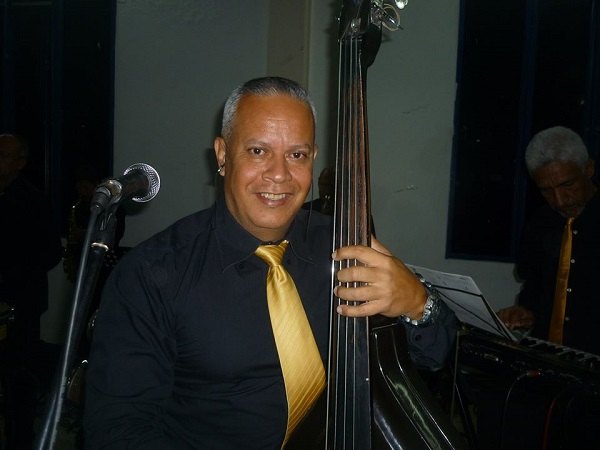
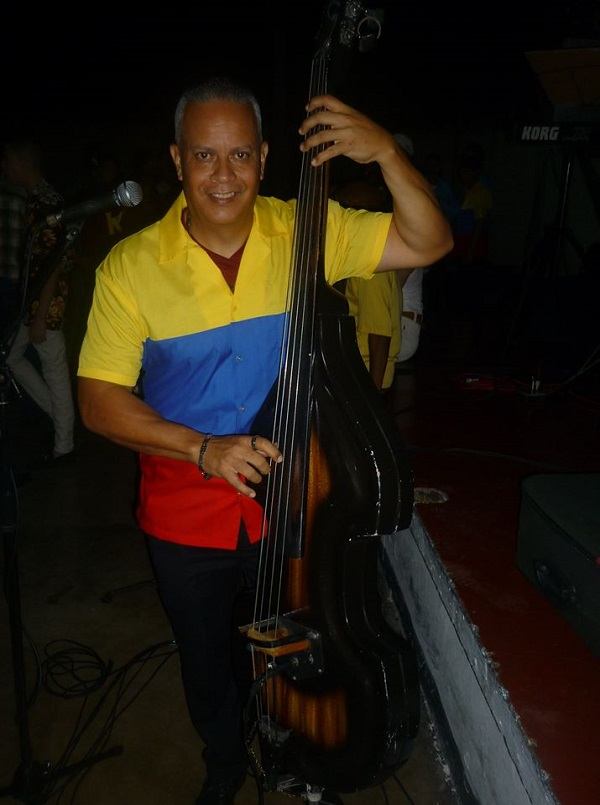
José Mosquera from Barquisimeto for the World “The bodybuilder and elegant”

Barquisimeto, is well known as the musical capital of Venezuela and in this opportunity we will make special mention to the musician José Jesús Mosquera Cañizales, born in our city in the Antonio María Pineda Hospital, on May 23, 1969, son of Rafael Mosquera and Juana Cañizales, married to Yolanda García and from this union were born their children Yolanda José and Luis José.

Mosquera was always inclined to music since he was a child, participating in the musical activities of his school “Ciudad Bolivar”, located on Carrera 13 and 48th Street, in Barquisimeto, singing and playing the cuatro in a self-taught way and with the help of his father who taught him to improve his playing.

At the age of 8 he studied at Pablo Canela’s academy, at the age of 10 he learned to play guitar, also with the support of his father and his cousin Carlos Romero.

At the age of 11 he participates in the musical groups of the Christian church, standing out as a guitarist, drummer and timbalero. When he turned 15, he became interested in playing the bass guitar and during his high school studies at the Ezequiel Bujanda Combined Cycle, he met Jesús Rincón, also a musician, and joined the ranks of the “Obeligaitas” bagpipe group, where he began his career as a bass player.

When he turned 18 years old, he was part of the staff of the group “Tecnogaitas” of the Tecnológico Antonio José de Sucre and simultaneously he was bassist of the band “La Salle”. Afterwards, he is recommended to Alí Rojas and auditions to be the bassist of the “Sonora de Alí”, where he remains for 3 years.

Alí Rojas gave him the responsibility of being the bassist of the dance orchestra “Sensación”, where he remained for 15 years. In 1992, he began working as a music instructor for the Fundación del Niño until 1996.

Mosquera, besides being an excellent bass player, plays string instruments such as the cuatro, guitar and requinto.

In 1993, Mosquera turned to romantic music and created the duet “Génesis” with his friend and compadre Carlos Enrique Prince, performing in nightclubs and private parties. In 1997, he joined the Poliboys Orchestra of the General Command of the Lara State Police as a bass player, where he currently works. In 2004 he began his musical studies at the Vicente Emilio Sojo Conservatory and graduated as an academic musician in 2009 with excellent grades. José has performed on regional television stations demonstrating his qualities in various prestigious programs and in 2016, he won 3rd place in the Police Voice Festival.

Mosquera, at what date do you become interested in salsa as a musical genre?, Professor Carlos in 2007 I start playing the baby bass and in 2011 I join the K’dencia Latina Orchestra of Carlos Sanchez and also had the privilege of accompanying Benjamin Rausseo “El Conde del Guácharo”, performing with his band and with K’dencia Latina, accompanied the late Willy Rodriguez, and vocalists of national and international renown: Hildemaro, Pibo Márquez, Charlie Guzmán, Alejandro Mayora, Mariana “La Sonera de Venezuela” and the official doubles in Venezuela of Rubén Blades (Jhony Heredia) and Celia Cruz (Ibrahíma Rondón).

Mosquera finally told us that musical excellence is achieved through perseverance and dedication.

Finally we wish the best of success on behalf of International Salsa Magazine, to the excellent musician José Mosquera “The bodybuilder and elegant bass”.

See you next time and let’s keep on salsaing!

José Mosquera “The bodybuilder and elegant”.

Once again, maestro Bobby Valentín delivers a very daring and innovative musical theme

While it is true that salsa is very much alive, it is also true that it has been enriched through fusions and transformations.  Of course, this is not the first time we see that the salsa sound is transformed to give way to increasingly daring musical themes.   

I’ve said it before and I’ll say it again: “I’m glad there are collaborations where the wallet of other sounds invests in producing music that I enjoy.  Note that the only music I enjoy with the passion I enjoy nothing else is salsa.  This salsa I’m talking about also includes fusions and other inventions, as long as I like them.”

Well, let’s get to the mambo….

During the “Tropical Music Festival” I was backstage and was able to share with the musicians before and after their performances.  That privilege gave me the opportunity to talk to them about their projects, among other things.  On a side note, Oria Rivera graciously let me know about the release that same day of Bobby Valentin’s latest single.  As soon as I got home I listened to the song via You Tube.

Once again, maestro Valentín delivers a very daring and innovative song. I know that “chinchas” are going to fall on me as usual; but without being repetitive, you know that I am one of those who believe that Valentin is never wrong. 

Let’s establish that boogaloo or bugaloo is a Latin music and dance genre that was popular in the United States in the 1960s. It originated in New York City, mainly among Hispanic and Latin American teenagers. The style was a fusion of popular African-American rhythm and blues (R&B), in turn combining soul music with mambo and son montuno.

In the 1950s and 1960s, African Americans in the United States listened to various styles of music, including jump blues, R&B and doo-wop. Latinos in New York City shared those tastes, but also listened to genres such as mambo and cha-cha-chá. There was a mix of Puerto Ricans, Cubans and African-Americans in clubs, whose groups tried to find common musical ground. In the end, boogaloo or bugaloo was the common musical ground, a fusion of many styles cooking American son montuno, guaguancó, guajira, guaracha, mambo, R&B and soul on the same stove.  That must have been the reason why the boogaloo or bugalú allowed Spanish and English on equal terms.

As you can see, fusions are not a recent fad.

Well then.  The time has come to tell you what my salsa ears have heard, since there will be those who say that this is not a salsa song.  Well, the truth of the matter is that it is not suitable for salseros without musical appreciation skills.

From the first bars of this song, Bobby Valentín’s musical arrangement highlights the bass, accompanied by trumpets and saxophones in an arrangement that sounds great.  In the first thirty seconds of the song you can appreciate the vocal part of the composer -Bobby Valentín- ultra well accompanied by his most recent acquisition for the front of his orchestra: Leró Martínez. And for the most skeptical, Bobby and Leró sing in impeccable English.

The song is perfect, since in three minutes it opens up a range of musical possibilities in “English without barriers”.  Despite the brevity of the song, it lacks nothing.  Nor does it feel or sound like musical creativity was curtailed by trying to shorten the time.  The track flows naturally from the prelude, to the mambo, to the closing. At one and a half minutes, the saxophones provide the melody and the trumpets the breaks.  At the fiftieth minute, the trumpets play challenging the rhythm section, formed by:  Victor Roque on the tumbadoras, Kevin Vega on the timbal and Javier Oquendo on the bongo. Ceferino Cabán’s piano complements the “king’s” bass in a masterful way.

Shortly after the second minute (2.19), Victor “Yuca” Maldonado’s baritone saxophone sets the stage for Julito Alvarado and Angie Machado’s trumpets to firmly establish their presence.  This second minute also highlights the dynamism of the trombone by Eliut Cintrón. Let’s not forget that the composer, arranger, producer and bassist of this song was a trumpet player in his beginnings. At exactly 2.40 the bass takes command of the orchestra with more forcefulness, melodically allying itself with the sound of the trumpets and saxophones. Well into the second minute (2.44) the electric guitar in command of Javier Perez begins a correspondence with the bass, which is maintained until the closing of the song.

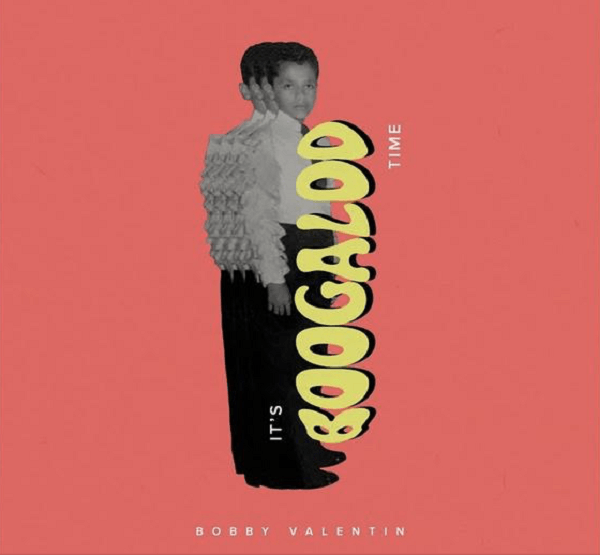
As for the cover art, it features a childish Bobby Valentine dressed as a musical celebrity.  The boy wears dark pants and a white shirt with those stylish puffed sleeves that scream mambo.  The title letters, which read It’s Boogaloo time are superimposed over the child’s image.  The style of the yellow letters that inscribe the word Boogaloo over the image described above make me imagine letters in some liquid material. The composition of the artwork rests on a rather garish salmon-colored background. According to the credits, both the graphic design and art direction were created by Orialis Valentin. Brava!

If you are one of those who say you are tired of the same old same old, I challenge you to listen to this gem, just as I recommended El Twist a while back. 

Salsa lives! I hope I have dispelled your doubts, if you had any.  If you still have any doubts, I confirm that you are not ready for this salsa conversation.

Musical Director: Bobby Valentín

Audio Recording & Mixing: Play Bach Studio

Engineer Carlitos Velázquez and Ramón Martínez

Mastering: WAVEM Acoustic LLC; Eduardo Ramos

Producer: Bobby Valentín

© 2022, Bronco Records, Inc. (Artist: Bobby Valentín)

La Muñeca de La Salsa is here with us again

La Muñeca de La Salsa or La Chica del Bling

For the second time, we have here Puerto Rican artist Almodovar. She is a salsa singer and other genres, composer and dancer. Pleasure to meet you, Melina, how are you doing? Glad to have you here.

Thank you, Karina. Thank you for the time and I’m super pumped to be here with you for international salsa magazine (laughs).

Melina Almodóvar is a salsa singer, composer, and dancer

Why do they call you La Muñeca de la Salsa or La Chica del Bling?

La Chica del Bling comes from maestro Bobby Cruz, who did a song with me in 2016. We made a recording that was called Salsa Factory Bunch. He wrote that song specifically for me, which was called El Bling. That’s how he starts calling me La Chica del Bling and, as there are so many people who know the trajectory of Mr. Bobby Cruz, those who know that he wrote the song for me identify me as La Chica del Bling. That is something very special for me, since he is one of my salsa icons from day one.

In the case of La Muñeca de La Salsa, when I moved here to Miami, I was looking for a nickname similar to El Caballero de La Salsa or El Niño Bonito de La Salsa. Seeing how my name is like that of another renowned singer in Puerto Rico Melina Leon, I wanted to find another name that would identify me and noticed that many Latino men called me muñeca (doll in English). That’s how I came up with the name La Muñeca de La Salsa.

Your family has always been closely related to arts. Your father was a singer, your mother was a dancer and your grandmother was an artisan. What did you get from each of them?

That’s an excellent question. I’m often asked that, but not that way. My dad was a bolero singer and like ballads and old music like Camilo Sesto, and it was thanks to one of his songs that I was named Melina. He also liked Marco Antonio Muñiz and all the singers from that era. He would go to bars to sing until five in the morning and he used to take me to these gatherings in Puerto Rico. He always had his guitar in his car and was invited to parties to sing because he did it for free.

My mom was a flamenco dancer, she studied dance all her life and wanted me to dance too. So, she put me in jazz ballet classes since I was little. I studied with a lady whose name was Sophy Sanfiorenzo, who was also Chayanne, Ricky Martin, and Los Menudo’s teacher of that time. She was very well known in the city of Bayamón, Puerto Rico. Dancing was something secondary for me, but my mom wanted me to take it more seriously. At the end, we made a deal and agreed that I would study salsa and Caribbean dancing.

My grandmother always wanted me to be an artist and pushed me to be what I am today. She does a lot of crafts such as sculptures and paintings. I didn’t inherit those skills (laughs). My aunt is an architect and also paints very well, while another aunt is also very good with crafts. My family is very artistic and I followed that road.

Melina Almodóvar is very proud to be boricua

Her referents

I understand that your grandmother gave you some cassettes with songs by Celia Cruz and Rubén Blades, did these artists influence you or were there others?

My grandmother gave me a Rubén Blades CD and my aunt was the one who introduced me to salsa music thanks to her taste for this genre. Most of the family liked bohemian songs made by Pedro Flores, Rafael Hernández, Bobby Capó, Sylvia Rexach, among others. My grandmother and the rest of my relatives liked bolero a lot. In my case, I like bolero very much and I have done concerts dedicated to this genre, but what moves and motivates me is salsa.

You always listened to tropical music as a kid in Puerto Rico, but I understood that I was cut out to sing salsa when started studying it and understand it deeply. In high school, I came to sing pop, jazz, country, merengue, bachata and many other genres. However, salsa is what I like the most.

You described your move from Puerto Rico to Memphis as a culture shock. What was the most shocking thing about that time?

It’s one thing to move from Puerto Rico to Los Angeles or New York or Florida where there are a lot of Latinos. When I moved, I was very young and went to live in the southern United States, where they listen to country and blues. For me, the most shocking thing was the culture. In Puerto Rico, everyone talks on the front doors and there was a lot of closeness. When we moved to Tennessee, we didn’t know anyone, so we had to start creating a new life and finding our way in this new city.

Melina Almodóvar performing at North Beach Bandshell

You were part of Orquesta Caliente. According to many, that was the first successful Latin salsa orchestra in Memphis. What do you think was the formula for success of this orchestra?

It was a combination of many things because I have been part of many groups and tried to organize orchestras in different places. After that experience, I tried to start an orchestra in Nashville, Tennessee, for a while and tried to start another one in Atlanta, Georgia.

When I was 17 years old, I was called and asked if I knew how to sing salsa, to which I replied yes. That’s when i was given a cassette tape with several songs made by Tito Puente, Ruben Blades, Celia Cruz, among others. I went home and started writing the songs down letter by letter to learn them by heart and audition for the orchestra. That day, I realized that all the musicians were American and extremely talented. I was 17 years old at the time and had no idea who I was playing with, which led me to look up their histories and they were really well trained and talented. Almost all of them were professors at the University of Memphis at the time, but they wanted to form a salsa orchestra.

So, we started playing in different places. Given that there was no internet and no social media, we had to create our own flyers by hand, make copies, go to the houses and put up them there. The first day we played, not a lot of people showed up, but it was a good start for us. After three months, not one more body fitted there.

For me, it was a beautiful experience because we started playing everywhere and were at plenty of festivals in South Florida. We were so into what we were doing and all the members wanted the music to work out spectacularly, so we were united in a common objective. I think that was the key to our success.

Tell me about the Hollywood Salsa Fest

We have been doing this festival for about seven years now and it was a dream come true because I never thought there would be more than 10,000 people there for throughout the day. It is a culmination of all the work we have done since I came to Miami. It was a great achievement.

This Hollywood Salsa Fest of this year included Maestro Charlie Aponte, Timba Live, Salsa Ballet de Cali, Maestro Bobby Cruz, Tito Puente Junior and many others.

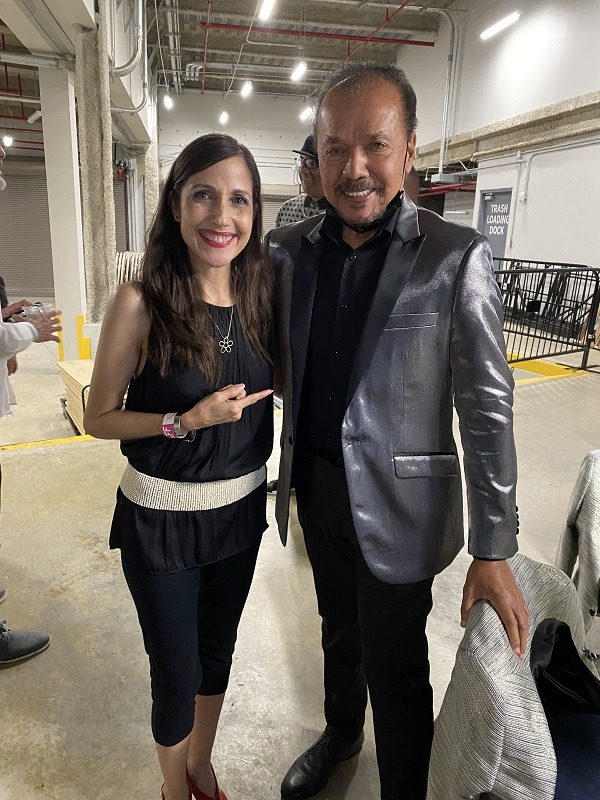
Melina Almodóvar next to Oscar D’ León

All the talent Ochestra Fuego has to offer

This is our conversation with Marcus Hernández

We are here with the musical director of the Orchestra Fuego Marcus Hernandez. Nice to meet you, Mr. Hernandez. It’s a real pleasure to have you here.

Thank you. This is a real pleasure and a blessing to be here with you.

Marcus Hernández is the musical director of Orchestra Fuego

According to your website, there are many references to fire and colors red and yellow. Why hoose the name Fuego and use these tones?

Well, I had an orchestra in New York during the 1970’s whose name was Fuego 77. Fire and candela always had much to do with my style. When I moved to Florida, I launched an orchestra and decided to give it that name.

One of your latest singles is called Candela. Is it also to do with all this?

Yes, it is. I am always doing many things at the same time. When I was going to compose the song, I called my friend Carlos Infante, the guy from Miami who does all the arrangements for the orchestra. Since I grew up in New York, I grew up listening to that style of music in salsa.

Your website also reveals that your orchestra has a total of 12 members. Do you still have that number of people?

Most of the guys are still working with me. It is a blessing for me to have most of the guys who started the orchestra working with me. I want to stress that they are not only musicians, but active members of the orchestra. If you want to hire a musician, you call a guy and explain to him what he has to do, but my guys are members. We are always in touch and ask for feedback among ourserves. I think they are part of the orchestra, which is like a family.

Some of the guys leave and come back, but the vast majority of them have stayed in the group for seven years.

Marcus Hernández on stage

Of course, most of the musicians change groups a lot, but that’s not the case with you. Most of them are permanent members, right?

Of course! If my musicians get any job and we don’t have any performance for now, they can go work with other groups. However, when we have something to do, they know they have to play with us. The musicians know that I am always seeking the best for them. When we get contracts, we take care of them.

We have a team of managers that includes Tony de la Boga, Maria Caban, and my wife Silvia Hernandez. We always ensure that they have food, drink, water and everything they need to work. When we travel, they always come with us and we take care of the orchestra. That is a rare thing that almost no one does.

How have you kept such a large group together?

We always look for opportunities to play. We are the orchestra that plays the most throughout Florida. Our team of managers is always looking for places for us to play. I think that’s an example of the orchestra’s leadership, which I always take care of.

I am always looking for the best events for my musicians. They know I always have them on my mind and that’ss why they have stayed with me so long. They can play with other groups, but they know they must always be available for the Orchestra Fuego.

New projects (título 3)

I have understood that you are recording your next musical work and a new music video, could you tell us a little about that?

On April 18, our sixth album Candela was released along with its video. We have got a lot of attention these days because we have also released our second Christian song. We are not a Christian orchestra, but most of the guys are Christians. And then every once in a while, we do one or another Christian song, like one we did in a salsa version, that is to say, our style. Many churches have called us to do events with them because they have liked our work a lot.

Many artists prefer to release one song at a time because they say that releasing a full album is no longer profitable for them. In that sense, how are you working?

If you want to draw the attention of large companies like Sony, singles are good for artists who already have a career, but if you are a not so well known orchestra, they don’t take you seriously. So, these companies are looking for orchestras with full albums. We always make full albums containing 10 songs. In fact, our last album has 14.

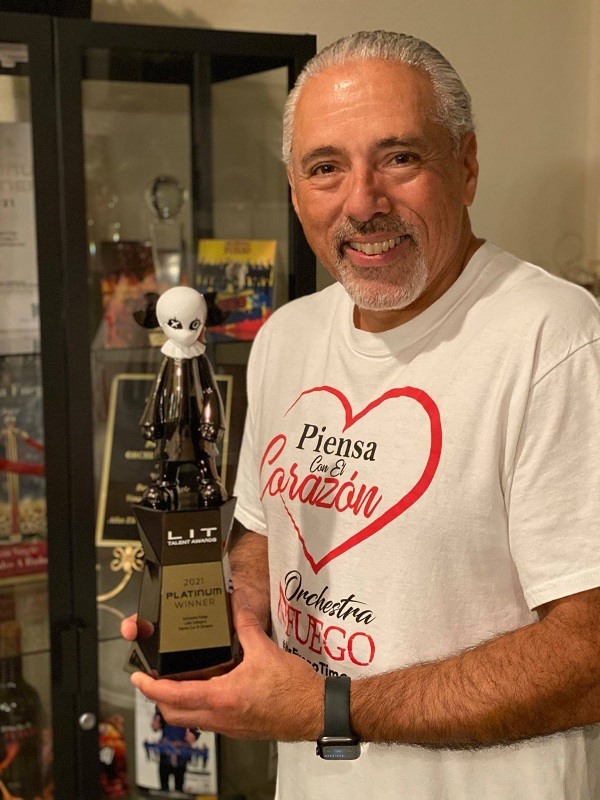
Marcus Hernández when Orchestra Fuego won its Platinum Award Trophy from the LIT Talent Awards

Among the many recordings you have made, I noticed that you did a tribute to Celia Cruz. What does this artist represent for you?

We have always liked her style, which included the costumes, the show on stage, among other things. I have seen her many times, in fact, I recorded my first album with Fania Records. So, I always saw her when it was her turn to get into the studio.

The orchestra Fiego’s vision was to be a show band, which means that we were not only musicians, we are also dancers. One thing people like a lot is that we use uniforms and are always well dressed. Another thing people also like is that the guys dance and have choreographies.

We played with Grupo Niche at the House of Blues before the pandemic, something that only those who have a long career in music can do. We have been able to play there thanks to our talent and characteristics.

On your website, you talk about old school salsa. From your point of view, what are the differences between old school salsa and modern salsa?

I think modern or romantic salsa is not part of my style. Our new album include several romantic songs, but my style will always be New York City Salsa, which was created for the dancer.

I saw that you already have dates to perform in the United States. Do you have any international tour planned?

Yes, we are going to tour with Grupo Niche. We are planning to go to Puerto Rico, Colombia, Peru, etc. Diego Galé is also going to play with us and we are also going to tour with him in Mexico and other countries.

What formula do you feel has not worked for you?

We tried to experiment with romantic music, but those songs did not have the results that we expected, which tells us that people want to hear us play salsa brava. We made the cessary changes in the fifth and sixth albums which are based on what works for us.

Lead singer Miguel Guerrero, and backup vocalists Kharina Rovira, and Betsy Lopez

Your website and social networks

Website: orchestrafuego.com

Facebook: Orchestra Fuego

Instagram: Orchestra Fuego

  • « Go to Previous Page
  • Page 1
  • Interim pages omitted …
  • Page 118
  • Page 119
  • Page 120
  • Page 121
  • Page 122
  • Interim pages omitted …
  • Page 165
  • Go to Next Page »

International Salsa Magazine (ISM) is a monthly publication about Salsa activities around the world, that has been publishing since 2007. It is a world network of volunteers coordinated by ISM Magazine. We are working to strengthen all the events by working together.