• Skip to primary navigation
  • Skip to main content

International Salsa Magazine

  • HOME
  • Previous editions
    • 2026
      • ISM / March 2026
      • ISM / February 2026
      • ISM / January 2026
    • 2025
      • ISM / December 2025
      • ISM / November 2025
      • ISM / October 2025
      • ISM / September 2025
      • ISM / August 2025
      • ISM / July 2025
      • ISM / June 2025
      • ISM / May2025
      • ISM / April 2025
      • ISM / March 2025
      • ISM / February 2025
      • ISM / January 2025
    • 2024
      • ISM / December 2024
      • ISM / November 2024
      • ISM / October 2024
      • ISM / September 2024
      • ISM / August 2024
      • ISM / July 2024
      • ISM / June 2024
      • ISM / May 2024
      • ISM / April 2024
      • ISM / March 2024
      • ISM / February 2024
      • ISM / January 2024
    • 2023
      • ISM / December 2023
      • ISM / November 2023
      • ISM / October 2023
      • ISM – September 2023
      • ISM – August 2023
      • ISM July 2023
      • ISM Edition June 2023
      • ISM – May 2023
      • ISM April 2023
      • ISM March 2023
      • ISM February 2023
      • ISM January 2023
    • 2022
      • ISM December 2022
      • ISM November 2022
      • ISM October 2022
      • ISM September 2022
      • ISM August 2022
      • ISM July 2022
      • ISM June 2022
      • ISM May 2022
      • ISM February 2022
      • ISM January 2022
    • 2021
      • ISM December 2021
      • ISM November 2021
      • ISM October – 2021
      • ISM September 2021
      • ISM August 2021
      • ISM July 2021
      • ISM May 2021
      • ISM April 2021
      • ISM June 2021
      • ISM March 2021
      • ISM February 2021
      • ISM January 2021
    • 2020
      • ISM December 2020
      • ISM November 2020
      • ISM October 2020
      • ISM September 2020
      • ISM August 2020
      • ISM July 2020
      • ISM June 2020
      • ISM May 2020
      • ISM April 2020
      • ISM March 2020
      • ISM February 2020
      • ISM January 2020
    • 2019
      • ISM December 2019
      • ISM November 2019
      • ISM October 2019
      • ISM Septembre 2019
      • ISM August 2019
      • ISM July 2019
      • ISM June 2019
  • Spanish
  • Download Salsa App
    • Android
    • Apple

Search Results for: dance

Tito Nieves’ concert “50 Años, La Historia” made it clear that ‘Salsa Lives

On Saturday, May 17, 2025, Tito Nieves celebrated half a century of a successful musical career at the Coliseo de Puerto Rico (El Choliseo) with a massive concert titled “50 Años, La Historia,” part of his “Mi Último Tour” (My Last Tour) tour.

Tito Nieves smiles in front of a packed coliseum

Music started powerfully around 9:00 p.m. with “Señora Ley” (Lady Law), followed by “Mañana es Domingo” (Tomorrow is Sunday). This led into a medley of songs Tito popularized before going solo: “El Pregonero” (The Town Crier), “El Piragüero” (The Shaved Ice Vendor), and “Panadero” (Baker), all penned by Ramón Rodríguez. In this first segment, the honoree was joined by Rodríguez and Norberto Vélez, setting the theme for the show, where Nieves was accompanied by various guests.

Tito Nieves bid good evening shortly before asking the audience to record the concert, asserting it would be the first and last time he would perform solo at the Coliseo de Puerto Rico for a historic concert that the singer declared was “sold out.”

The soloist demonstrated the evolution of his career, moving to the next stage of his journey, which included the songs “Quiero Perderme Contigo” (I Want to Get Lost with You) and “El Amor Más Bonito” (The Most Beautiful Love). Before starting “Perdido en la Oscuridad” (Lost in the Darkness), Tito stated that during one of the most difficult stages of his life, he asked José José for permission to record it. “Un Tipo Común” (An Ordinary Guy) preceded Tito’s spoken interlude, during which he requested “a big round of applause for Ismael Miranda ‘the eternal handsome boy,’ who is with us tonight.”

For the next segment, Gilberto Santa Rosa and Gerardo Rivas joined Tito Nieves for the song “Soy” (I Am). Gilberto explained that he and Tito Nieves have been musical brothers for over forty years, shortly before saying, “Tito and I are family,” a phrase that led into the performance of “La Familia” (The Family).

The next stage featured a medley of hits including “Sueño” (Dream) and “Lo Que Son Las Cosas” (What Things Are Like). From this same solo period, “Manías” (Obsessions) and “No Me Queda Más” (I Have Nothing Left) stood out. Tito Nieves’ voice was recorded on several of the few salsa lyrics in English. For the concert, Tito brought to life “I’ll Always Love You,” “Celebration,” and “I Like It Like That,” with which he later bid farewell.

Tito paused during the concert to dedicate the song “Gracias Madrecita” (Thanks, Little Mother) to his late mother, Victoria Nieves.

The next guest, Rey Ruiz, “the salsa heartthrob,” performed “Almohada” (Pillow) with Tito, then sang “Mi Media Mitad” (My Other Half) to a bolero rhythm before transitioning to the same song in its usual salsa tempo, which is how it became popular. The turn of also invited Carlos García brought him to the stage to sing “No Me Vuelvo a Enamorar” (I Won’t Fall in Love Again) as a duet with Tito.

Shortly after, Tito Nieves continued singing his most notable hits, including “Déjame Vivir” (Let Me Live) and “Tuyo” (Yours). When it was José Alberto “El Canario”‘s turn, he sang “Le Gusta Que La Vean” (She Likes to Be Seen) with Tito Nieves and “Baila Que Baila” (Dance, Dance) solo. For this particular performance, dancers and choreographers Flavia Tamara Livolsi and Tito Ortos Gutiérrez were in charge of the dance that connected with the guest’s music, who also performed his characteristic “flute” solo, without a flute.

The super orchestra accompanying El Pavarotti de la Salsa

For the song “Fabricando Fantasías” (Manufacturing Fantasies), Tito Nieves took the stage accompanied by 9 child choristers; both the singer and the choristers were dressed in white. Tito sang alongside a hologram of his deceased son, whose passing preceded the song’s release; for the concert, this led into “Un Amor Así” (A Love Like That) and “Soy Cantante” (I Am a Singer).

Continuing with the idea of being accompanied by his guests, Tito Nieves welcomed Tony Vega to the stage to perform their duet and give voice to “Tú Por Aquí, Yo Por Allá” (You Here, Me There), shortly before Tony performed “Aparentemente” (Apparently). Once Tony’s participation concluded, Tito returned to the stage dressed in blue to perform “Te Amo” (I Love You) and “Más Que Tu Amigo” (More Than Your Friend).

Tito Nieves y Daniela Darcourt

Immediately after, Tito Nieves commented: “In salsa, we’ve had Celia, La Lupe, Graciela, India…”, as he welcomed one of the new salsa promises: Daniela Darcourt. With her, he sang “Si Tú Te Atreves” (If You Dare) shortly before suggesting his “musical daughter” perform the soloist’s new single, titled “La Sinvergüenza” (The Shameless Woman).

The concert’s peak was reached during the performance of “De Mí Enamórate” (Fall in Love with Me) and “Sonámbulo” (Sleepwalker), songs with which the artist demonstrated that the voice that earned him the title of “The Pavarotti of Salsa” remains intact.

Next, Tito and his wife—Janette Figueroa, the self-proclaimed “toxic one”—showcased their influencer skills, leading into a theatrical interlude of their interaction with the public during the COVID-19 lockdown: “Conversa con Tito” (Talk with Tito). For this, the couple was accompanied by the new talents Daniela Darcourt and Christian Alicea. Once the micro-theater segment concluded, the production celebrated the sold-out status by presenting a plaque indicating the exclusive status, after congratulatory greetings to Nieves from Víctor Manuelle, Rubén Blades, and Marco Antonio Solís were projected.

It was at this moment of various congratulations that it was demonstrated that ‘Salsa Lives’in the key of fierce salsa. For this, Christian Alicea joined Tito Nieves’ vocal and stage mastery, contributing with his voice and an energetic conga solo.

At 12:40 a.m. on May 18, the concert hosted by “The Pavarotti of Salsa,” accompanied by his super orchestra, concluded with the same power it began, though in English and to the beat of “I Like It Like That.” For the closing, the dance corps, made up of Tito Ortos, Tamara Livolsi, Christina Reyes, and Yadiel Carrasco, complemented the interpretive energy with which Humberto “Tito” Nieves once again demonstrated the connection he has maintained with the salsa audience, regardless of the language he sings in.

Bella Martinez Puerto Rico

Photographs By: Francisco J. Rivera Rosado Photographs

Also Read: Oscar Rojas Oscar Rojas has 54 years of musical career full of passion, rhythm and flavor

Isadora Duncan, destined for a life of freedom and the avant-garde, of beauty and tragedy

Isadora Duncan was born in San Francisco in 1877. Her father, Joseph, abandoned the family shortly after her birth. Left in extreme poverty, her mother, Mary Isadora Gray, worked tirelessly to support her four children.

Isadora Duncan, destined for a life of freedom and the avant-garde, of beauty and tragedy

Nevertheless, she always told them, “We can do without bread, but never without Art,” and consistently encouraged her children’s artistic vocations.

From a very young age, her mother introduced her to the works of Beethoven, Schubert, Schumann, Mozart, and Chopin, and to the writings of Shakespeare, Shelley, Keats, and Whitman. She also taught her about classical Greek culture, paganism, and feminism.

The family lived like a small artistic troupe. Mary gave piano lessons, and Isadora taught dance while her mother played Mendelssohn on the piano.

Then her sister Elizabeth would recite poems by Theocritus, and their brother Raymond would conclude with a short talk about the Greeks or about dance and its effects on the society of the future.

Although she auditioned as a dancer in various theaters, she found no success. Isadora perceived dance very differently. She believed in improvisation, with movement like waves of a sea reflecting the very Soul, a concept almost mystical and spiritual, far removed from the formal technique of Classical Ballet.

As she recounted in her autobiography:

“I was born by the sea. My first idea of movement and dance surely came from the rhythm of the waves and also from nature; clouds carried by the wind, trembling trees, flying birds, whirling leaves…” This living nature is what she sought to express through dance.

Isadora Duncan was born in San Francisco in 1877.Her father, Joseph, soon after left the family.
Isadora Duncan was born in San Francisco in 1877.
Her father, Joseph, soon after left the family.

Early Struggles and European Dreams

Shortly after, a fire destroyed their home, leaving the family destitute again. Isadora secured a small role in a pantomime in New York: Madame Pygmalion. She had to borrow money for the train ticket and rehearsed unpaid for over a month. During lunchtime breaks, Isadora had no money for food and would hide in the facilities to sleep before continuing to rehearse.

Eventually, her family moved to New York, where in 1896, Isadora joined the company of playwright John Augustine Daly, taking ballet lessons with Marie Bonfanti. Due to her rejection of an academicism she considered limiting and unnatural, she managed to travel to Europe in 1898.

She arrived in England, where, always self-taught, she studied arts at the British Museum. There, she found great inspiration for her dances, which evoked ancient Greek movements and attire. She observed the movements of dancers on Greek vases, and from there adopted one of her characteristic postures: tilting her head back like the maenads. She then went to France, where she met Löis Fuller, who shared her ideas. Löis, like Isadora, was an alternative dancer whose performances incorporated elements of circus acts and variety shows.

Breakthrough and Artistic Vision

Together, they embarked on a tour of Munich and Vienna, creating new performances: “Dance Serpentine,” “Dance of Fire,” and “The Divine Shoe,” all embodying an absolutely modern concept. Finally, in Budapest, Isadora signed her first contract to dance solo on a large stage. She achieved great success, establishing herself on all European stages.

“Dance of Fire”, and ‘The Divine Shoe’, of an absolutely modern concept Isadora finally in Budapest.

After one of her shows, a great admirer came to greet hernone other than Konstantin Stanislavski, the creator of the famous acting method and one of the founders of Russian Theater. When he asked who had taught her to dance, Isadora replied, “Terpsichore.”

Nevertheless, her dance remained transgressive. She wanted to free dancers from pointe ballets, tutus, and corseted figures, to give expression to the soul through Art. The “costume” for her choreographies consisted of loose, transparent tunics, and bare feet to maintain direct contact with the earth.

A great admirer of Hellenic culture, she began constructing a Dance school in Greece, on the hill of Kopanos. Others followed in Germany and Paris. These schools often accepted girls from very humble backgrounds, charging them no fees. Over time, expenses became almost unsustainable, but Paris Singer, heir to the sewing machine empire, appeared offering financial assistance to allow them to continue.

Teaching, Tragedy, and Legacy

She embarked on tours across Europe, Russia (where she was invited by Lenin), and America, though what she loved most was teaching. She used to say, “First, we teach the children to breathe, to vibrate, to feel, and to become one with the general harmony and movement of nature. First, we are going to create a beautiful Human Being, a dancing child!”

After two marital breakups, in 1913, in a tragic accident, her children, Deirdre and Patrick, drowned in the Seine. The following year, a third child died shortly after birth. From then on, in all her choreographies, a long red scarf would appear over her white tunic, like a permanent, unclosed wound. In 1917, she adopted six of her students, “The Duncan Dancers.”

On International Dance Day, we remember the creator of the Isadora Duncan Contemporary Ballet.

While Isadora had many romantic liaisons, her most stable relationships were with Oscar Beregi, Gordon Craig, Paris Singer, and Sergei Esenin. But to maintain her Freedom, she never wanted to marry.

At the peak of her fame, on September 14, 1927, as she was about to give a concert in Nice, she greeted the public from her car: “Goodbye friends! I’m off to glory!” Shortly after, the very red scarf that never left her became entangled in the rear wheel, causing her death. Her legend began.

Ana and Irma, two of her adopted daughters, continued to disseminate the Duncan technique, which is still taught and danced today. A diva ante litteram, a rebel and pioneer of the dance revolution that erupted during the 20th century, an ultimate symbol of independence and purity: Isadora Duncan, in addition to being the mother of modern dance, is an anticipation of the free, ideal, nonconformist, and independent woman who would still have to wait decades to appear.

International Dance Day (April 29)

This date, proclaimed by UNESCO in 1982, commemorates the birth of Jean-Georges Noverre, an innovator and dance master considered the creator of modern ballet. On International Dance Day, we remember the creator of Contemporary Ballet.

Fania All Stars

Album: Crossover

Song: Isadora

Arranged By: Louie Ramirez

Arranged By: (All Strings) Vincent Montana, Jr.

Producer: Jerry Masucci

Written-By: C. Curet Alonso.


Fania All Stars Crossover 1979

By:

Angel A. Padron Hernandez

Dj. Augusto Felibertt

Also Read: Yolanda Moreno “the People’s Dancer”

Oscar D’León’s La Crítica was founded in Caracas in 1978

La Critica by Oscar D’León

We had just returned from New York when “Chiquitín,” Oscar D’León’s longtime secretary, called us at the office to let us know there was a commotion in the “Faraón de la Salsa’s” office.

Oscar D'León's La Crítica was founded in Caracas in 1978
Oscar D’León’s La Crítica was founded in Caracas in 1978

It was about the defection of some musicians from the Orquesta La Salsa Mayor. Indeed, Leo Pacheco, Felipe Blanco, and other musicians had decided to leave for financial reasons.

The news caused a stir; Oscar had already achieved a very special sound. He had moved away from the trombones that characterized his style and had incorporated a brass section with trumpets that made a difference. Suddenly, he was without his powerful machinery. Leo and his group formed what was called Nuestra Orquesta La Salsa Mayor, and Oscar, without a second thought, reassembled his group alongside Enrique “Culebra” Iriarte.

La Crítica

No one should doubt that Oscar had a tough time, but the prestige he had gained and the popularity of the sonero allowed him to come out on top.

Paul González, the son of “El Guajiro” González, a veteran guarachero and who at the time served as manager for the now-called “Sonero del Mundo,” devised the orchestra known today as La Crítica to avoid future setbacks and to have an orchestra on hand to alternate in scheduled dances.


La Critica de Oscar D’ León

The project’s formation brought together pianist and arranger Mauricio Silva, percussionist Radamés Pimentel, and Teo Hernández, who would serve as vocalist.

Since 1978, La Crítica emerged as an exceptional group. The jazz influences infused by Mauricio Silva from the very beginning were crucial for the public to accept the band as a favorite. In that “beginning,” other significant names included “Cheo” Navarro and Gustavo Quinto, who were already known from their time with Grupo Mango.

It could be said that Teo Hernández was the newest to the scene, as he had only been “toiling” in the world of salsa for five years, although he already had a “summa cum laude” after recording with maestro Ray Pérez and his Dementes. A female voice would debut with the orchestra: Gladys Torres.

40 Years of La Crítica

There have been many setbacks and successes over 40 years.

The musicality of this successful group is to be celebrated this Saturday, June 16, at the BOD Cultural Center. The event is at 5:00 in the afternoon, when the salsa public will gather en masse.

La musicalidad de esta exitosa agrupación ha de ser celebrada este sábado 16 de junio en las instalaciones del Centro Cultural BOD.

Jorge Collazo, who was Oscar D’León’s press chief and now is La Crítica’s on their return, tells us that a spectacular night is being prepared, “an evening to remember, a show that no salsero should miss.

The original singers will be there: the sonero Teo Hernández and Gladys Torres, who will take the stage accompanied by top-tier musicians and luxury guests to celebrate, dance, and sing the well-known hits of the moment, we are talking about ‘Se necesita rumbero,’ ‘Amada ven,’ ‘La merenguita,’ ‘Madre,’ ‘Rumba rumbero,’ ‘No lloraré,’ ‘A él,’ and ‘Cruel desilusión,’ among others.”

La musicalidad de esta exitosa agrupación ha de ser celebrada este sábado 16 de junio en las instalaciones del Centro Cultural BOD.

The prestige gained by La Crítica allowed it to accompany great international soneros such as Justo Betancourt, Héctor Lavoe, Ismael Miranda, Ray de la Paz, Daniel Santos, and the legendary Celia Cruz.

This is part of La Crítica.

Also Read: Cheo Linares is a Singer, Composer, Sonero, Poet and Caraqueño

Tribute to Alberto Naranjo and his musicians

Latin America / Venezuela / Caracas

40 years of El Trabuco Venezolano A Deserved Tribute to Alberto Naranjo and his musicians

Teresa Carreno Theater. Caracas, Venezuela August 21 to 25, 2017
Collaboration and Photographs by Lysbeth Weffe

From August 21 to 25, at the Teresa Carreño Theater (TTC), in Caracas, the Tribute to maestro Alberto Naranjo was held for his 57 years of artistic life, and to the group of his creation El Trabuco Venezolano for its 40 years of founding . With a long time of preparation and a lot of love involved, as it said in the hand program and was perceived in the environment, the event had the general production of Franklin Rojas, the Grupo Madera Foundation and the Teresa Carreño Theater Foundation.

Alberto Naranjo and Noel Mijares

More than an orchestra, El Trabuco Venezolano has been an authentic Venezuelan salsa movement born from the initiative of Alberto Naranjo, a veteran drummer and arranger who has walked the trade through the most diverse tendencies and schools of popular music in the Caribbean, always counting with the direct support of the musical producer, Orlando Montiel(I).

It was at a recital conference given by César Miguel Rondón and Domingo “El Flaco” Álvarez at the Museum of Contemporary Art in Caracas, in August 1977, that El TrabucoVenezolano(2) made its public debut.It immediately became the most finished and interesting musical project known to the city of Caracas up to that time. Alberto Naranjo organized it under the concept of a big band with the idea of ​​developing a particular proposal that would differ from its similar ones in the rest of the Caribbean, with a sound that bridges salsa, jazz, funk and Venezuelan.

With seven albums released, two of them live with the group Irakere from Cuba, and having passed more than a hundred performers through its ranks, El Trabuco, more than a group in conventional terms, has been a download and meeting space for local musicians, as well as the best of schools for many of them.

Alberto Naranjo
Alberto Naranjo

He also counts among his achievements, having motivated the Caracas salsa environment of the moment, imposing a high standard that influenced the formation of the best salsa orchestras, apart from creating, in short, his own Caracas sound brand(3).

The activities of this large tribute began on Monday 21 with the talks in the Protocol Plate of the TTC: “History in Venezuelan salsa” with Franklin Rojas and “Hera & Pablo, the Venezuelan salsa dance”; on Tuesday 22, Cheo Guevara’s discussion on “Alberto Naranjo, and his historical mark” and the forum “The production of salsa content in alternative radio” moderated by Zulay Millán. They continued like this throughout the week.

Several workshops were held, among them, “Percussion Tuning” dictated by Nicolás Monterola and “Latin Percussion” by Professor Frank Márquez. Also in the lobby on the ground floor of the TTC, the following concerts were presented: Caracas Legends Ensemble, with its tribute to Eddie Palmieri, the Salsarría Orchestra, Grupo Madera, Mundito and his Orchestra La Celestial, The Big Band of San Agustín and the Orquesta Carlin.

Grupo Madera
Grupo Madera

The highlight of this week of well-deserved recognition was the Trabuco Venezolano concerts at the Ríos Reyna venue on August 24 and 25, presented by Zulay Millán and José Gregorio Acero.

Although with a room not completely full and recalling other times of splendor of a TTC that received the stars of the show from all over the world, we enjoyed two nights of memorable, tasty, lively and educational concerts, with a stage full of great musicians. and a full Alberto Naranjo, going through it and playing around more than directing the members of the big band. With the best of the best-known musicians and singers of Venezuela in the genre, with some of the original members of this group and new talents, we were able to delight ourselves in an exquisite waste of salsa, jazz and funk, lasting three hours each day.

“The teacher was narrating the stories of the different themes that they interpreted…”

Alberto Naranjo at the Teresa Careño with his orchestra "Trabuco Venezolano"
Alberto Naranjo at the Teresa Careño with his orchestra “Trabuco Venezolano”

The member musicians of El Trabuco Venezolano 2017, present at the concerts on August 24 and 25, were: Alberto Lazo (piano), José “Mortadelo” Soto (bass), William Vásquez (three), William Mora (tumbadoras), Frank Márquez (timbale), Franklin Rojas (bongo), Hugo Olivero (sax), Eduardo “Mondy” Dávila (sax), Manuel Barrios (sax), Irvin Blanco (sax), Edwin Ruiz (sax), Adrián Suárez (trombone), Eliel Rivero (trombone), Pedro Carrero (trombone), Franklin Moreno (trombone), Oscar Mendoza (trombone), Vicente Freijeiro (trumpet), Rafael Rey (trumpet), Gustavo Aranguren (trumpet), José “Cheo” Rodríguez (trumpet) , Noel Mijares (trumpet), Edgar “Dolor” Quijada (voice), Troy Purroy (voice), José Luis Peña (voice), Yeci Ramos (voice), Arturo Guaramato (voice).

The teacher was narrating the stories of the different songs they performed, referring to the fact that his musicians were chosen by meritocracy, sharing with the audience and ordering someone to shut up on more than one occasion, in a humorous tone, yes. He reminded us that they are not only dedicated to salsa and in some pieces where they did not sing, he emphasized that they were instrumental and that they could help us soar our imagination and dream.

Yeci Ramos, Juan Jose Conde, Edgar "Dolor" Quijada, Jose Luis Peña, Troy Purroy
Yeci Ramos, Juan Jose Conde, Edgar “Dolor” Quijada, Jose Luis Peña, Troy Purroy

The great experience of this meeting of musicians that has been El Trabuco Venezolano was reflected in a repertoire of 13 songs, including originals, emblematic and premieres, which they gave us.

They began with the songs “Yo Soy La Rumba” (Marcelino Guerra) with the solo voice of Troy Purroy and a timpani solo by Frank Márquez, “Bravo Rumbero” (José “Cheo” Navarro) sung by Edgar “Dolor” Quijada, “ La Negra Tomasa” (Guillermo Rodríguez Fiffe) in the voice of Arturo Guaramato, “Tres Días”, an original theme by Chucho Valdés and ceded to El Trabuco, sung by José Luís Peña, with the participation of the dancers Hera and Pablo. At this point, the entire audience had warmed up, and there was even a couple from the public who danced in the hall from the beginning of the concert until the end, both days.

The night continued with the emblematic “Almendra” (Alberto Barroso). This theme arranged by Naranjo for Arturo Sandoval 46 years ago, featured the masterful participation of Noel Mijares -Venezuela Big Band Jazz, Desorden Público- on trumpet, interacting with great complicity with the maestro. It followed with a premiere, “Alna’s Mambo” an instrumental composition, subliminal as Naranjo described it.

Yeci Ramos, Juan Jose Conde, Edgar "Dolor" Quijada, Jose Luis Peña, Troy Purroy - Photo
Yeci Ramos, Juan Jose Conde, Edgar “Dolor” Quijada, Jose Luis Peña, Troy Purroy – Photo

The concert continued with “Gongo Blues” (Eduardo Cabrera), a theme in which the extraordinary solos of Eliel Rivero on the trombone, Gustavo Aranguren on the trumpet, Manuel Barrios on the saxophone and Alberto Naranjo pleased us playing the kettledrum. . He followed up with the instrumental “El Ojo del Huracán,” a Latin jazz combo, which was written in the early ’70s and still sounds weird, Maestro Naranjo said.

Then with the song “Oye como va” (Tito Puente) the rumba was lit up, the lights in the room were turned on and hardly anyone could keep up without stopping and dancing. In the song “El Hijo del Sonero” (Ricardo Quintero) Yeci Ramos sang, in “El Cumaco de San Juan” (Francisco Delfin Pacheco), Arturo Guaramato and in “Compañeros” (Ricardo Quintero), Juan José Conde, these three songs they were accompanied by the drums of Grupo Madera.

“Imágenes Latinas” (Bernardo Palombo – Andy González), was the theme chosen as the finale, a piece that has become a cult object among music lovers, the salsa audience and lovers of Latin jazz, according to the words of connoisseur José Orellán .

It featured the extraordinary participation of Adrián Suárez in the trombone and bodyguard solo, and the interpretation of the son player Edgar “Dolor” Quijada.

Alberto Naranjo in his tribute

At the concert on Friday 25, El Trabuco Venezolano and its creator were declared CULTURAL HERITAGE OF THE NATION by the Institute of Cultural Heritage (IPC) and the Ministry of People’s Power of Culture of Venezuela.

With the hope that this experience can be repeated in other theaters in the country and the world, we congratulate the organizers, Alberto Naranjo and the musicians of El Trabuco Venezolano for having received such well-deserved recognition as Cultural Heritage of the Nation.

Notes: (1) and (2) The salsa book. Chronicle of urban Caribbean music. Cesar Miguel Rondon. Ediciones B Venezuela SA., 2007. (3) Taken from the Caracas Exhibition. Ciudad del Son, montage and texts by Alejandro Calzadilla, at the La Estancia Cultural Center, belonging to the company Petróleos de Venezuela (PDVSA La Estancia), September 2017.

Orange County (OC) Salsa with Esteban Conde

North America / USA / California

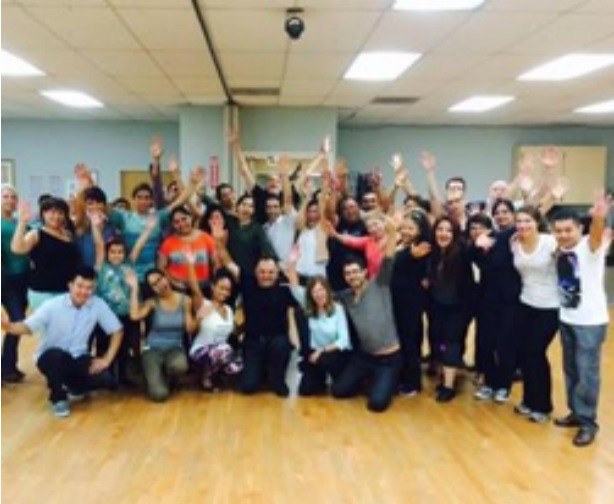
Salsa dance classes in Orange County by Esteban Conde, no partner or experience needed. Weekly and weekend Salsa and Bachata classes at the Costa Mesa dance studio. Salsa classes and dance instruction will give you the tools to learn how to dance salsa in no time.

Photo 1 - Salsa dance classes in Orange County
Photo 1 – Salsa dance classes in Orange County

The goal is to help you go from classes to dancing fast! And you will not only learn how to dance, but make great friends, increase your confidence and add joy to your life. Come give these salsa and bachata classes a try!

Salsa, Bachata, Salsa Parties and Events

  • Saturday Salsa Class: Every Sat 4:40pm-5:30pm Come and learn how to dance SALSA and have fun! This class teaches the basics and new moves each week. Don’t miss it Beginner level, no partner needed at 2980 Mcclintock way ste a and b, Costa Mesa, 92626. $15


  • Monday & Thursday Salsa: Class Every Monday and Thursday evening are the nights for Salsa classes. No partner or experience needed. Fun and Friendly atmosphere! Class starts at 8pm. No reservation needed. Each class is $15, with discounted prices for packages and monthly membership options. Come check us out!


  • Monday and Thursday Bachata Class: OC Salsa Studio, 2980 McClintock way, Costa Mesa. Bachata Class 7-8 every Monday and Thursday, rain or shine. Beginner level class, no partner, registration or experience needed. $15, this class covers basics and steps and specializes for those with 0 experience and new to dancing altogether.
Photo 2 - Salsa dance classes in Orange County
Photo 2 – Salsa dance classes in Orange County

“I’ve always loved latin music and wished I could dance. Deciding to give it a try, i tried a free class with Esteban and crew at OC SALSA. What a pleasant surprise to feel so comfortable and welcome with a group I didn’t know, doing something I had never done. It was fun, great exercise, and I couldn’t wait for the next session. I was hooked because the instructors and atmosphere make it so easy to learn, you get plenty of personal attention, and can learn at your own pace”.

“Nice people, high quality instruction, and very reasonable cost. If you want to try, improve, or perfect latin dance, this is the place for you!” Student Testimonial

OC Salsa at 2980 McClintock way # A & B, Costa Mesa, 92626 2980 McClintock Way, Costa Mesa, CA 92626, EE. UU. Call On: 949-813-0412 [email protected] http://estebanconde.com

  • « Go to Previous Page
  • Page 1
  • Interim pages omitted …
  • Page 34
  • Page 35
  • Page 36
  • Page 37
  • Page 38
  • Interim pages omitted …
  • Page 165
  • Go to Next Page »

International Salsa Magazine (ISM) is a monthly publication about Salsa activities around the world, that has been publishing since 2007. It is a world network of volunteers coordinated by ISM Magazine. We are working to strengthen all the events by working together.