• Skip to primary navigation
  • Skip to main content

International Salsa Magazine

  • HOME
  • Previous editions
    • 2026
      • ISM / March 2026
      • ISM / February 2026
      • ISM / January 2026
    • 2025
      • ISM / December 2025
      • ISM / November 2025
      • ISM / October 2025
      • ISM / September 2025
      • ISM / August 2025
      • ISM / July 2025
      • ISM / June 2025
      • ISM / May2025
      • ISM / April 2025
      • ISM / March 2025
      • ISM / February 2025
      • ISM / January 2025
    • 2024
      • ISM / December 2024
      • ISM / November 2024
      • ISM / October 2024
      • ISM / September 2024
      • ISM / August 2024
      • ISM / July 2024
      • ISM / June 2024
      • ISM / May 2024
      • ISM / April 2024
      • ISM / March 2024
      • ISM / February 2024
      • ISM / January 2024
    • 2023
      • ISM / December 2023
      • ISM / November 2023
      • ISM / October 2023
      • ISM – September 2023
      • ISM – August 2023
      • ISM July 2023
      • ISM Edition June 2023
      • ISM – May 2023
      • ISM April 2023
      • ISM March 2023
      • ISM February 2023
      • ISM January 2023
    • 2022
      • ISM December 2022
      • ISM November 2022
      • ISM October 2022
      • ISM September 2022
      • ISM August 2022
      • ISM July 2022
      • ISM June 2022
      • ISM May 2022
      • ISM February 2022
      • ISM January 2022
    • 2021
      • ISM December 2021
      • ISM November 2021
      • ISM October – 2021
      • ISM September 2021
      • ISM August 2021
      • ISM July 2021
      • ISM May 2021
      • ISM April 2021
      • ISM June 2021
      • ISM March 2021
      • ISM February 2021
      • ISM January 2021
    • 2020
      • ISM December 2020
      • ISM November 2020
      • ISM October 2020
      • ISM September 2020
      • ISM August 2020
      • ISM July 2020
      • ISM June 2020
      • ISM May 2020
      • ISM April 2020
      • ISM March 2020
      • ISM February 2020
      • ISM January 2020
    • 2019
      • ISM December 2019
      • ISM November 2019
      • ISM October 2019
      • ISM Septembre 2019
      • ISM August 2019
      • ISM July 2019
      • ISM June 2019
  • Spanish
  • Download Salsa App
    • Android
    • Apple

Search Results for: dancers

Anya Katsevman: “You have the dream, I have the tools”

USA - New York - New York

When we refer to Anya Katsevman, the first word that comes to mind is: passion! And that is the only way we could explain that a woman has so much strength, dedication and dedication in different facets of her life.

Anya Katsevman is not only a dancer and choreographer, but also a motivational coach and dream builder. In addition, it has its own line of dance dresses and costumes. An unstoppable woman!

Anya Katsevman by Franklin Liranzo
Anya Katsevman Courtesy of Franklin Liranzo

A native of Kiev, Ukraine, Anya and her family immigrated to the United States when she was 8 years old. She is the younger sister of award-winning Latin dancer Eugene Katsevman. She lives in New York.

She also holds numerous titles in salsa. Among them, she is a two-time World Champion as well as the San Francisco International Salsa Congress and New York Salsa Congress Champion.
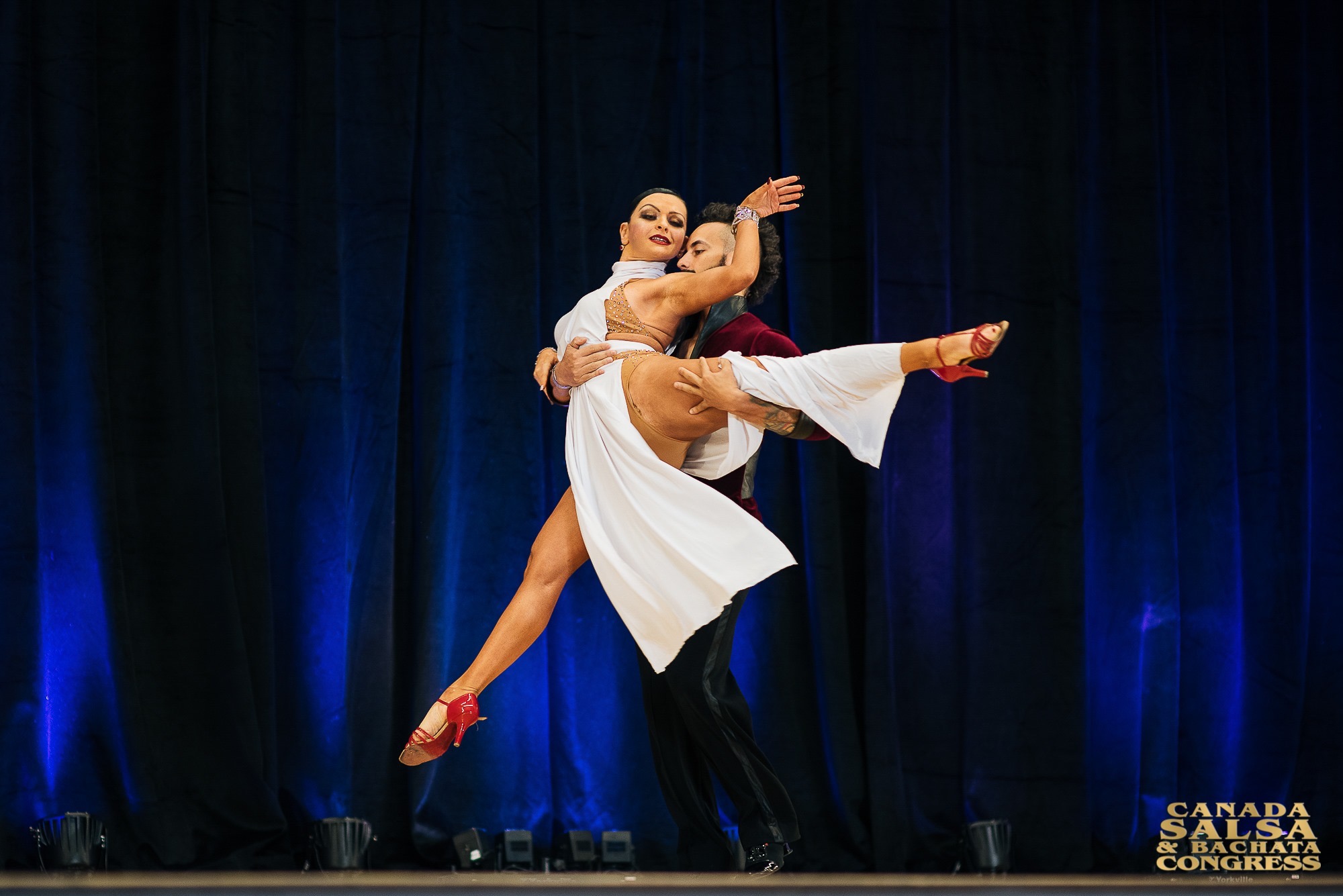
Anya Katsevman dancing

Anya Katsevman is a maker of champions

This is precisely the distinctive mark of Anya Katsevman , that ability to make each dancer, each artist, each dreamer discover in himself his potential to succeed, his style and make the most of his abilities.

She believes that “the art of dance requires much physical ability, exposure and practice. The art of dance is also developing your own voice and getting to know the artist behind the athlete that makes the dancer”

A wonderful career

“Queen of Salsa” Anya Katsevman is a two-time World Salsa Champion, coach and choreographer to more than a dozen world champions, noted costume designer, respected salsa congress circuit judge and advocate for international Latin dance who has transformed the sport during her more than 25-year career.
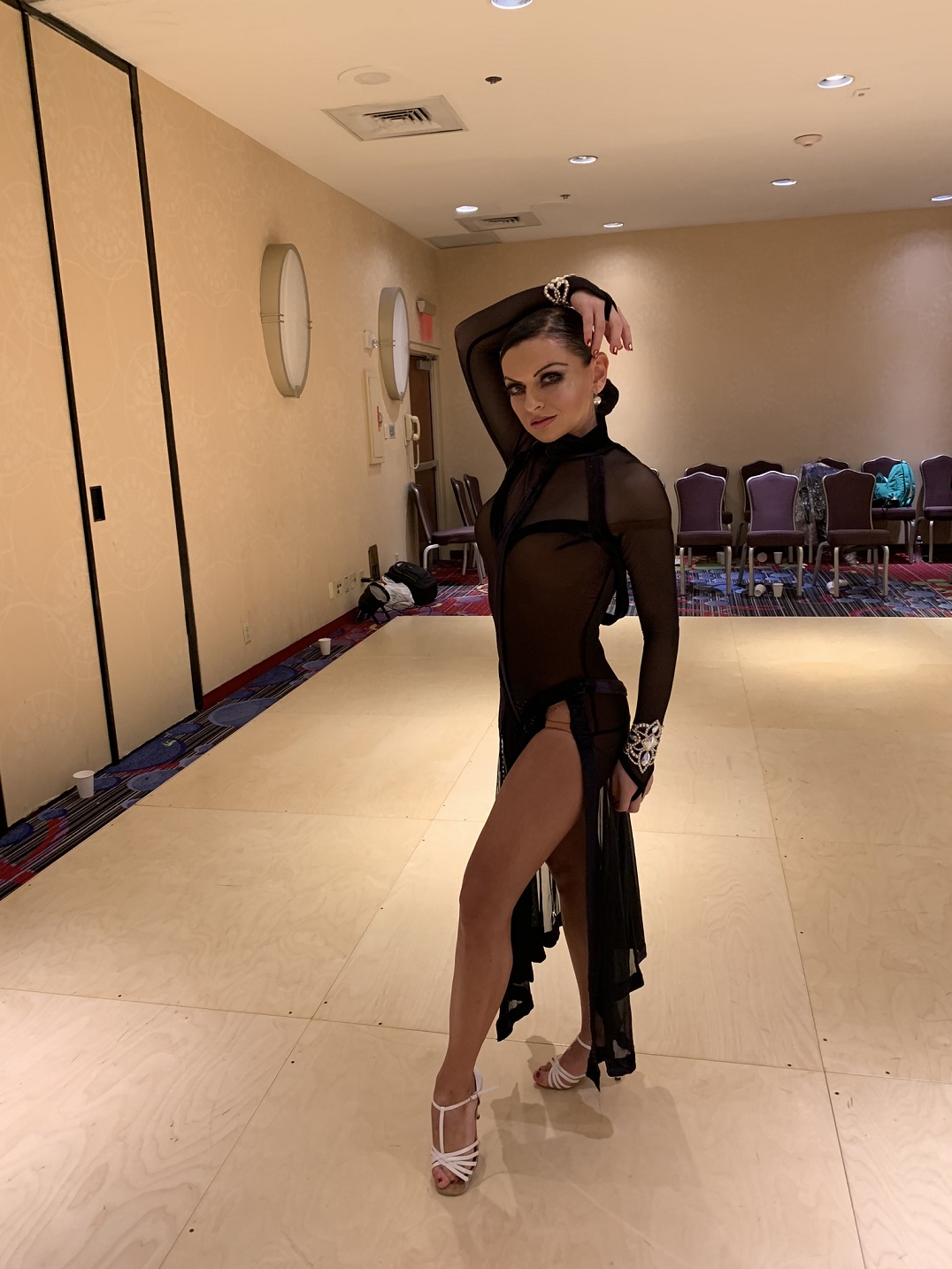
Anya Katsevman
Anya Katsevman

Renowned for her unique coaching methods, Anya’s style blends multiple cultures and dance forms: her eastern European upbringing and the appreciation for Latin dance culture that she developed in the United States; and her ballroom and salsa backgrounds. She demands rigor, discipline and excellence, and uses her understanding of anatomy, physiology and movement while encouraging freedom of expression to turn her students into the top dancers in the world.

Anya trains and choreographs for “Dancing with the Stars Costa Rica” principal dancer Lucia Jimenez (2020 World Bachata, Chacha and Salsa Champion), “America’s Got Talent” stars Harold Rancano and Regan Hirose (9-time World Bachata Champions), the Huracan Dance Company (2019 World Team Salsa Champions), the stars of Quebec’s 
Revolucion Adriano Leropoli and Samantha Scali (2017 World Salsa Champions), principal dancers in Carmen to Havana and Back Isabelle Freiberger and Hunter Houde and the USA World Games Olympic salsa team.

Always successful and sharing her knowledge

As a competitor and performer, Anya has won more than 20 world titles including the 2009 and 2010 Salsa World Championships. She is also the 2008 North American Salsa Champion, a two-time San Francisco Open Salsa Champion, two-time New York Congress Salsa Champion, Puerto Rico Open Salsa Champion and La Classique Du Quebec Champion. Anya has starred in touring shows “Burn the Floor ” on Broadway and ABC’s “Dancing with the Stars, in addition to numerous other television productions, stage shows, movies, and showcases in the U.S. She has performed with El Gran Combo, Gilberto Santa Rosa and “The Mambo King” Eddie Torres, and for President Barack Obama.

Anya Katsevman - dancers
Anya Katsevman – dancers

Anya is an ambassador for salsa, helping to expand its popularity worldwide. She believes connection is one of the most important aspects of the human experience, and dance is the best medium to explore how we connect with each other and ourselves. Anya has expanded her dance instruction to include GoDeeper, which she co-founded in 2019 to provide monthly movement classes, individual coaching sessions, and group workshops to promote professional growth and self discovery.

Meet this talented woman

International Salsa Magazine had the pleasure of interviewing Anya recently and invites you to learn a little more about this magnificent artist.

International Salsa Magazine (ISM): How did you discover your passion for Latin Dance?

Anya Katsevman (AK): My brother is a professional ballroom dancer

I started to dance ballroom in 1995 following his footsteps  I competed in the international Latin category world wide  in 2007 I was teaching in a dance studio in Manhattan and they did a lot of salsa  that’s where I was introduced to social dancing  I fell in love with the idea that dance is accessible to all people and doesn’t have to be competitive  from there my love for salsa turned in to a career choice  I decided to study Latin social dance and became a two time world salsa champion  for me it was a passion to spread the beauty of dance through teaching as much as performing that did the trick.

ISM: Have you had any obstacle in your professional life? How could you overcome them?

AK: I think when your career is long enough you will probably have many obstacles to overcome  and your passion for your craft and the reason you do it is usually stronger than the obstacle in front of you that gives you the drive to overcome it  it is hard to narrow specifics down because I’ve had so many  my competitive dance partner lived 3000 miles away from me when we won the worlds in 2010 and I just made the commitment to work hard and travel pick up the slack where needed and get the job done regardless I think that was the formula in every struggle.

ISM: What is the achievement that has made you most proud?

AK: I am most proud of all of my students accomplishments  I am of course extremely proud and honored to be a world champion but for me the pleasure of having developed other world champion’s especially those who started learning from me from scratch makes me extremely proud beyond all measures I am also very proud of how individual and independent all of my students are  the variety and diversity of their dancing makes me really happy.

ISM: In the path of entrepreneurship, how did you manage to find the strategy to grow your business? What are the skills you consider an entrepreneur must have to achieve success?

AK: Honestly I believe success comes from genuine passion and desire  it is easy for us to study a successful person after the fact and say which moves appeared strategic but I believe who ever is on their way working toward that goal should do it because they are passionate about each step not because of the end result  my business grows because I am committed to my craft and doing it at my best capacity.

I am genuinely passionate about my dance quality  my students growth and the subjects I am teaching  I study the Industry I watch for what’s missing I ask what contribution would be of most value this doesn’t feel like hard work to me  it is my passion my genuine interest and the rest flows  when I feel I am doing something strategic or because it’s good for my brand or etc it doesn’t flow the same way feels forced and isn’t as successful so I try to only go with my own flow current interest and most passionate desires.

ISM: Could you give us some advice to maintain discipline, even in complex situations?

AK: Absolutely  discipline is hard for anyone when it feels needed and forced so I always try to flip the mindset  if I have to do something I’m bored of or am avoiding because it’s hard or tedious I always find something to be excited about instead whether it is dreaming of what the task will do for me  or adding something Sensory I enjoy to the task like my favorite sounds smells or visuals or including a friend in the process.

If you focus on what you do like about it it’s much easier to do it. Also discipline is really only hard at first pretty quickly it becomes a habit so if you put more disciplined things in to practice it will all feel like a habitual part of your day and you’ll start to enjoy it and feeling accomplished.

ISM: What would you say to all those young dancers who want to achieve a dream?

AK: They do come true!!!!!
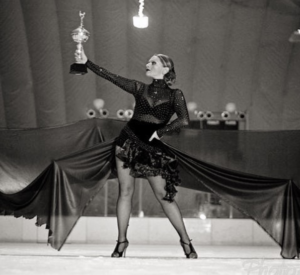
Dream more!!!! Everything is possible  want it bad enough to work for it but don’t be afraid to dream those wild dreams if it wasn’t possible you wouldn’t have had the dream in the first place.


Rosa Maria Peña Collado, Rome and its Sauce Online TV program Music and Entertainment

Latin America / Peru

Rosa María Peña Collado: “ROMA Y SU SALSA” is an On Line TV Program with a MAGAZINNE format of MUSIC and ENTERTAINMENT that has as its main objective to promote the permanent diffusion of the Peruvian national talent and international guests that work in the different musical and artistic genres.

The Program “ROMA Y SU SALSA” begins its transmission in March 2015 through the web address http://www.radiomiraflores.com and later in other media such as

Rosa María Peña Collado - Roma y su Salsa
Rosa María Peña Collado – Roma y su Salsa

Roma y su Salsa

http://www.radioondadigital.com/tv

http://www.eccoradio.pe

http://www.caracolrecord.pe

where it has been executed in a sustained way (with two periods) until now.

In the itinerary of interviews and presentations, Peruvian members and talents of   ORCHESTRAS have paraded such as

Zaperoko La Resistencia Salsera del Callao

K’llao Salsa, N’Samble,

Creole Sax, Perkutao

Sabrosura

La Chola Caderona

Salome

Beto Chira and Orchestra

Las Estelares de la Rumba

The Wizards of Sauce

Sauce Suggestions

Son Canelas

Rock Band Stirrup

SINGERS AND COMPOSERS

Antonio Cartagena

Edilberto Cuestas CANTES Willy Rivera

Johnny Rojas

Kike Peña

Pablo Villanueva “Melcochita”

Victor Zanelli

Manolo Rodriguez

Carlo Supo

Shanney Hurtado

David Roman

Marcelo Villar

Martin Lopez

Anne Kolher

Laura Mau

Fanny Almenara

Sandra Cardenas

Rosa María Peña Collado

SINGERS AND IMITATORS

Paquito Português “Frankie Ruiz”

Isabel Castro “La India”

MUSICIANS AND COMPOSERS

Carlos Orozco

Isaac Sanchez

Juan Rebaza

Juan Arana

Juan Medrano “Cotito”

Manuel Leon

Daniel Venegas

MUSICIANS

Cesar Vivanco

Urban Collac

Maximum Chest

Mita Barreto

Lucho Cueto

John Canevello

Aldo de Dios

Omar Basallo

Percy Chinchilla

Carlos Nieves

Guillermo Arias

Jesús Zavala (visually impaired percussionist)

WRITERS

Mario Aragon

DANCERS AND CHOREOGRAPHERS

Charles Anton

Julio Zegarra

Joel Pictures

Daniel Vivanco

COLLECTORS

Walter Renteria

Beto Onetto

Albert Cologne

ANIMATORS AND PRESENTERS

Jorge Eduardo Bancayan

Dante Corrales

Oscar Godos

INTERVIEWS PERUVIANS LIVING ABROAD

Cesar Correa

Daniel “The Cat” Arboleda

Hector “Jereto” Ferreyra,

Rosa María Peña Collado

SINGERS AND COMPOSERS

Renzo Padilla “El Borincaico”

Mirko Radovic

Mike Ortiz, Luchito Muñoz

MUSICIANS AND COMPOSERS

Ahmed La Torre

Kiki Sanchez

Rafaelo Parejas

DANCER AND CHOREOGRAPHER

Cecilia Villalobos

DJ’s SALSA

Armando Carrasco

August Felibertt

(Caracas – Venezuela)

INTERNATIONAL ARTISTS

Pedro Brull

Roberto Blades

Pichie Perez, Jose Lugo (RIP)

Alberto Martinez

Alex D’Castro

Vitti Ruiz

Jose Fajardo Jr.

Nolberto Velez

Gerardo Rivas NG2

Patty Padilla

TELEPHONE LINK

Herman Olivera

Papote Jimenez

Ramonita Parra

Raffi Torres

DANCER

Allien Ramirez (Tri World Salsa Champion)

PRODUCER

Albert Torres (RIP)

Finally, it has been planned to resume the interviews via zoom in order to continue the permanent work of diffusion of the art and talent of the great SALSA FAMILY, complemented by the online radio that is under construction.

Rosa María Peña Collado

Peru: Roma y su Salsa

Rosa María Peña Collado

Driver

“ROME AND ITS SAUCE”

Eva Gordillo, psychologist by profession and director Salseros Academy

Eva Gordillo: The so-called Cuban style is the original way of dancing “casino” or “rueda de casino”.

The first steps of this dance were developed in the sports casino in Havana and other dance halls in the Cuban capital at the end of the 1950s, hence its name in Cuba: “–“, as it was originally called “El baile del casino”.

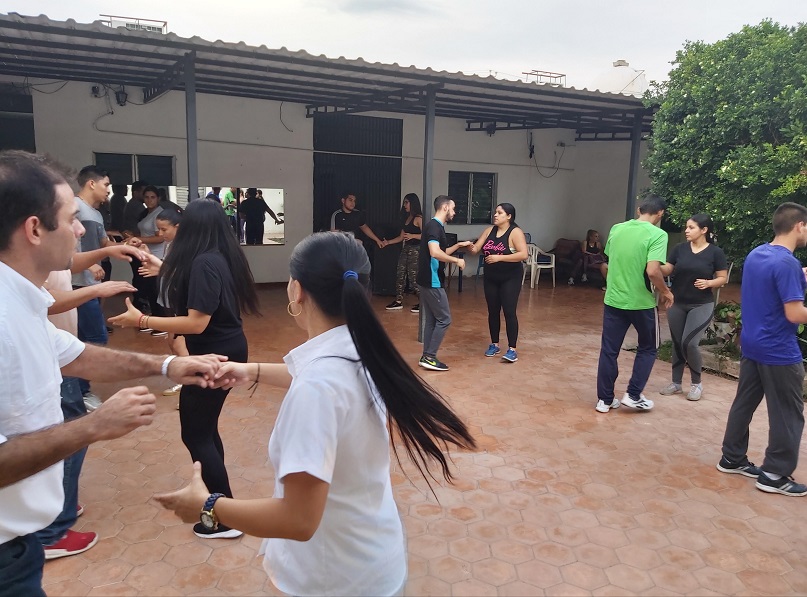
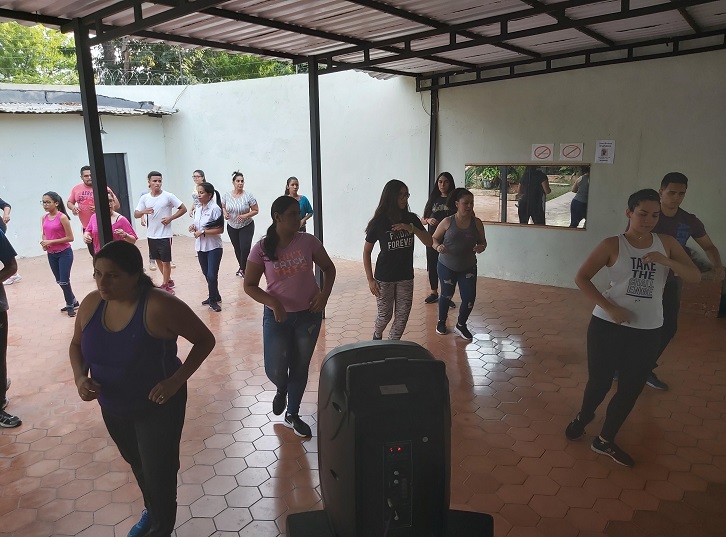
Photo of Salseros Academy Dance Academy

In Barquisimeto, the musical capital of Venezuela, the dancers of Afro-Caribbean rhythms have a place to develop, improve and learn skills with the help of professionals, who achieve the integration of its participants, creating an atmosphere of great joy for all ages.

In this sense, our special guest in Salsa Escrita “La Columna Salsera de Barquisimeto”, through International Salsa Magazine, www.salsamundi.com, is Eva Gordillo, psychologist by profession and director of the dance academy “Salseros Academy”.

Dancers of Salseros Academy Dance Academy

Eva has been a passionate dancer since the age of 13 and today, with only 22 years old, she has toured most of the dance schools in the twilight city and some outside the state of Lara, projecting and developing herself as an instructor of proven hierarchy and reliability.

Welcome Eva to the only salsa magazine in the world, International Salsa Magazine and Salsa Escrita. Thank you, Professor Carlos, for giving me the opportunity to be present in your prestigious salsa column, which is already recognized in my country, the Caribbean, the United States and Europe, thus supporting the entire existing salsa movement in Venezuela.

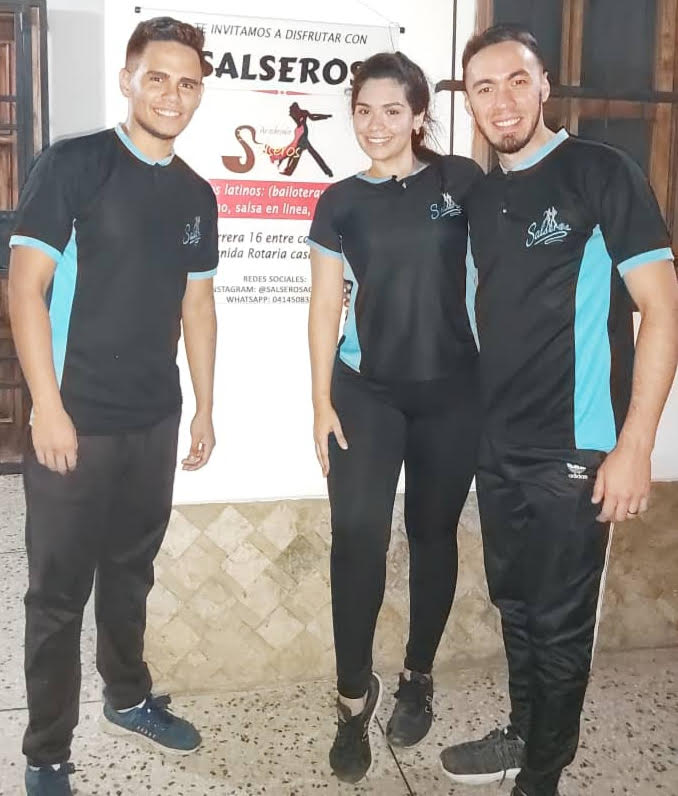
Eva Gordillo and Members of the Salseros Academy dance academy

Eva, how and when did the idea of having your own dance academy come up? Friend Carlos, on November 26, 2018, I started and materialized my great dream, my own academy and together with my colleagues and friends, Eleazar Hernandez and Manuel Gamez, we started this adventure, from which today, we are harvesting many fruits and we feel extremely happy with this project and grateful, mainly with God, because everything is thanks to Him.

Excellent, very good friend, by the way, what kind of dances do you develop and teach in “Salseros Academy”? In our academy we give group and personalized classes, for all ages, conditions and levels. Our strength is Latin rhythms, especially Salsa, as our name indicates.

We focus on their different dance ramifications, such as New York style mambo, Salsa en Linea or Los Angeles style, Cuban Timba en Linea and En Rueda or “Salsa Casino”. Amiga Eva, in addition to salsa, do you teach other dance rhythms? Indeed Carlos, in addition we teach some Cuban music derivatives such as the chachachá, pachanga and boogaloo.

We are also projecting ourselves strongly with the bachata and its variants, as well as other Latin genres, such as merengue, among others.

During a visit to the headquarters of “Salseros Academy” in the city of Barquisimeto, by the Latin American correspondent team of International Salsa Magazine, we were able to see the excellent, comfortable and spacious facilities, located on Carrera 16 between Calle 61 and Avenida Rotaria, where Eva is accompanied by four experienced instructors specialized in different dance styles. The attendance and registration of participants is massive, given the proven quality and recognized throughout the city of Barquisimeto.

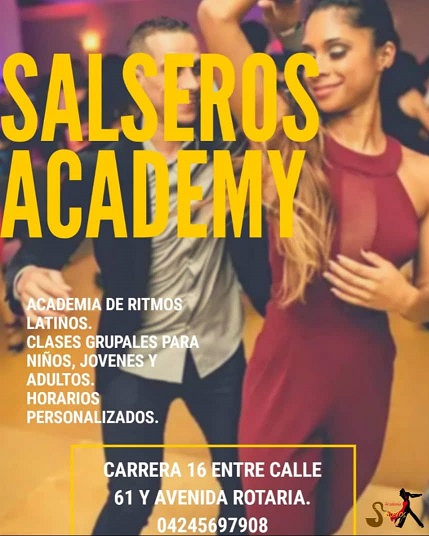
Dance Academy Salseros Academy

Friend Eva Gordillo, do you also have other projects at a musical and danceable level? That’s right teacher, at present we are heading to be producers of salsa events, thus promoting the Latin dance movement in our state Lara.

By the way, last year we had the pleasure of carrying out an event called “La Gran Gala de la Salsa” (The Great Salsa Gala), on the occasion of the celebration of the 1st anniversary of our academy, in which the dancers were able to enjoy the “Kadencia Latina” and “Jossy y su Banda” orchestras. Digital platforms and contacts for those interested in dancing at Salseros Academy? Friend Carlos, they are: Instagram: @salserosacademy, @evacarolgz, Whatsapp: 0424-5697908, Facebook: Grupo Salseros.

On behalf of the academy, my team and students, we would like to thank you for your support and projection of our work through your column “Salsa Escrita” in International Salsa Magazine. We wish you success and blessings to continue driving the Venezuelan salsa movement.

ISM Salseros Academy Dance Academy Fund

By Carlos Colmenares, ISM Journalist Correspondents, Barquisimeto, Venezuela

Historical events that gave birth to kizomba

History of kizomba

There are many musical genres and rhythms that we love and make us want to dance just by listening to them, but in most cases, we do not know their origin or how they became what they are today. Such is the case of kizomba, whose origins are both particular and fascinating, so we want to explore a bit about this interesting story for the knowledge of all those readers who still do not know it.

This dance modality that has become well known in Latin America and the United States in recent years has its origins in Angola in the 1960s as a fusion of ”semba” and other African rhythms, but it was not as simple as it sounds. In fact, many things happened before kizomba became what we know, some of which have to do with historical events that led to the creation of this musical genre indirectly.

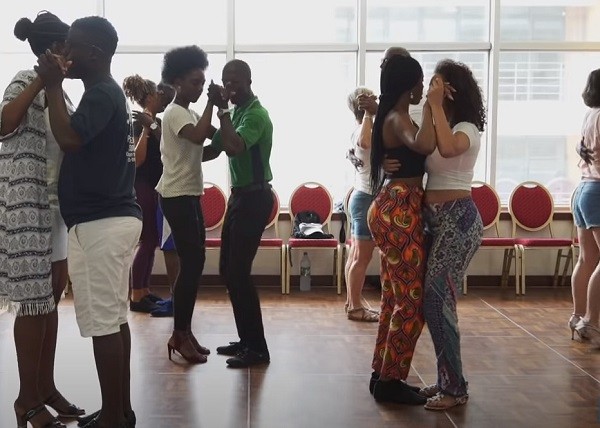
People dancing kizomba
People dancing kizomba in a dance studio in Angola

Historical context

Angola was colonized by Portugal in the 16th century, fact from which the European country began to impose its culture, language, religion and political system in the occupied territory. In the same way, the colonizers took advantage of the Angolans in every possible way, but the best known was the labor exploitation to which they were subjected to obtain resources and the suppression of their national identity.

The situation became so unbearable that there has been an emergence of numerous anti-colonialist movements throughout the country such as the National Front for the Liberation of Angola, the People’s Movement for the Liberation of Angola and the National Union for the Total Independence of Angola. This resulted in the Angolan population demanding the rights they had as inhabitants from their own country and which had been forcefully taken away from them. The following years were marked by intense armed conflict, a lot of political instability and international intervention.

Finally in 1975, Angola gained independence from Portugal to become a country free from the yoke which settled down on it for decades. However, the legacy of colonization in every area of national life was so profound that it could not be swept way from one moment to another, including traditional music and dances. Both Angolan music and dance ended up mixing with European and Portuguese rhythms in general, resulting in a colorful range of sounds that have been conquering the whole world.

Angolan women dancing
Angolan women dancing tradicional rhythms

Origin of kizomba and its name

Returning to semba that was mentioned at the beginning, it was its union with other African rhythms such as zouk that gave origin to kizomba as such. The word ”kizomba” comes from ”kimbundú” or ”quimbundú” which means ”party”. Kimbundú is a language spoken in some Angolan provinces and the Portuguese language incorporated some of its terms such as ”xinga” which means ”curse”.

On this subject there is much controversy, since lots of hypotheses are floated to explain the origin of kizomba and one of them states that this genre does not exist as such, but it is a version of the already existing zouk, but sung in Portuguese. There are also some studies indicating that kizomba comes from ”bèlè”, which is a dance inherited from African ancestors who came to the Island of Martinique as slaves to work in the sugarcane plantations.

By mixing bèlè and the European polka, Martinican musicians created something called ”beguine”, which was spreading in Parisian popular dances. When these rhythms were mixed with more commercial music in the 1970s, zouk originated and this term makes direct reference to the spontaneous parties in Martinique. ”Zouk” means ”party” in Creole, which is a language spoken by West Indians that emerged from the mix of French with other African languages. Coincidentally, it has the same meaning as ”kizomba” in Kimbundu.

Luanda Semba Festival
Some contestants at the Luanda Semba Festival 2019

After zouk spread to French Guiana and Brazil, it returned to Africa, especially to Angola and Cape Verde, where it merged with semba and finally gave birth to kizomba.

What how is kizomba is today

Kizomba tended to be slow-paced and static and not required many turns, but that changed with the passage of time. Today, it includes legs tangled and recreates much more visual moves than before.

Something that characterizes the genre is the circle dance with forward and back steps, which has been very appealing to dancers from all over the world despite their origin. Besides, it is very easy, sensual, different and exotic.

Read also: No man is a prophet in his own land

How Jacira Castro and Salsa Power changed the Latin music scene

How did Salsa Power start?

Latin culture, specifically the musical part, has had a large group of unconditional allies who have promoted it worldwide through their work and platforms, being Chilean-American Jacira Castro one of the best known. Jacira is a salsa casino-style salsa teacher and web designer who had the dream of spreading the typical rhythms of our countries, but she did not figure out how until she came up with a revolutionary idea: Salsa Power. 

Salsa Power was born in 1999 as part of an initiative created by Castro and graphic designer Julian Mejia, who practically became her partner until the moment when the page stopped working. From that year on that the dance instructor began to generate contacts and develop human networks with people inside and outside the world of music, especially from the salsa genre. A particularity of this system devised by Jacira was that it was fed by the information received from people from anyqhere in the world about everything related to concerts, festivals, press conferences, autograph signings and much more.

Jacira Castro - Salsa Power
Dance instructor and web designer Jacira Castro – Salsa Power

How did this project work?

Thanks to the technology that was advancing little by little in all this time, there were many more contact ways and social media came along to facilitate these activities. The website grew to such an extent that it came to have more than 300 correspondents in over 60 countries, many of whom did not even have professions or occupations related to music, but wanted to strive to make the initiative successful and Latin artists and orchestras have a dependable space to promote their work.

Contrary to what many readers may have thought, everyone involved in this project never received a single cent or publicity in return for all the work being done. In fact, it was Jacira herself who had to pay for all the expenses related to Salsa Power such as plane tickets, travel, lodging, food, wardrobe, among other things. Not to mention the website maintenance and other hosting costs for the domain to work properly.

Fortunately, all that effort and money were worth it because Salsa Power rose to become the largest salsa website on the internet and a true reference for any independent media planning to do anything remotely like that. Much of the fruits harvested by this beautiful project can still be found on the internet and consist of articles, interviews, event coverage, videos and many other things.

The name Salsa Power was so respected that you could not talk about the Latin salsa scene in the United States without mentioning it, especially in South Florida, a place where competition for the first places was at its higuest. This competition was not only between artists and musical groups, but also between media, associations and academies, triggering some inconvenience and regrettable situations like the one experienced by Jacira and Julián a few years ago.

Jacira paid for all the expenses related to Salsa Power

Controversies

Jacira has had run-ins with some important personalities of the Latin music community in Florida because of her political positions, which went against the current of a large number of Latin artists and dancers at that time, especially those who are part of the Cuban exile. Her attitudes towards the political situation in Cuba have been highly controversial, mainly those related to the U.S. economic embargo on the Caribbean country and the limitations on free cultural exchange between both nations. Both Castro and other leaders of the entertainment industry were opposed to the decades-old blockade, which has been maintained until today.

This caused the dance teacher to make some enemies in the Miami music scene, which led to the hacking of Salsa Power with the caption ”This is a communist website” in big red letters along with a message whose author calls Jacira ”communist” and ”pro-Fidel Castro”. Obviously, she got worried and immediately called Julian to bring down the page.

As they began to diagnose the issue and its possible causes, they concluded that those responsible were part of an association composed of a dozen dance schools in Miami and its sorroundings called Salsa United. Around the same time, this organization had just created its own website, which published content very similar to that of Salsa Power, so much so that its principal spokesperson Jolexy Hurtado and Jacira came to have some arguments and run-ins due to how much alike the interviews were in both websites. The conflict reached at such a level that Jacira states that Hurtado told her she was messing with the wrong guy.

Undoubtedly, this whole situation was a big headache for the web designer, but has never let any of this daunt her or make her feel inadequate. On the contrary, she has grown before adversities and has faced them with the gallantry that has always characterized her, since she knows what her work is worth in terms of quality and globality.

However, there comes a point when the effort and time invested are not enough, so it is time to be realistic and assume that everything has its end, as the great Héctor Lavoe would say.

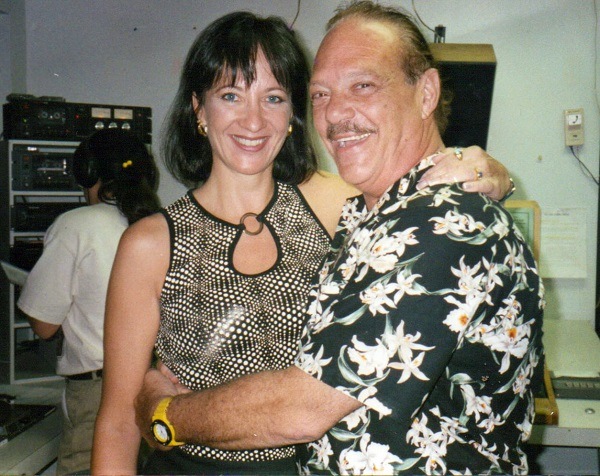
Jacira and Larry
Jacira Castro with producer, composer, and pianist Larry Harlow

Farewell to Salsa Power and Jacira’s current life

After 22 years of operation of the Salsa Power project, many of the correspondents who provided information for the page got married, had children, studied, moved and pursued other professional opportunities that did not allow them to continue their work. For the same reason, Jacira had no choice but to terminate the project that was her life for more than two decades and publish a farewell message thanking all her readers for their support over the years and assuring that she will continue to travel and enjoy salsa and dance.

In spite of abandoning her duties as administrator of Salsa Power, the great impact of the Chilean-American’s work on those who have come to know her and collaborate with her cannot be denied. On her LinkedIn profile, there plenty of favorable reviews about her professionalism and commitment in every activity she makes.

From International Salsa Magazine, we wish her the greatest success in every project she undertakes and that she enjoys all the stages that are to come.

Read also. Pacifica Radio, history, shows and controversy

  • « Go to Previous Page
  • Page 1
  • Interim pages omitted …
  • Page 28
  • Page 29
  • Page 30
  • Page 31
  • Page 32
  • Interim pages omitted …
  • Page 53
  • Go to Next Page »

International Salsa Magazine (ISM) is a monthly publication about Salsa activities around the world, that has been publishing since 2007. It is a world network of volunteers coordinated by ISM Magazine. We are working to strengthen all the events by working together.