• Skip to primary navigation
  • Skip to main content

International Salsa Magazine

  • Home
  • Previous editions
    • 2025
      • ISM / November 2025
      • ISM / October 2025
      • ISM / September 2025
      • ISM / August 2025
      • ISM / July 2025
      • ISM / June 2025
      • ISM / May2025
      • ISM / April 2025
      • ISM / March 2025
      • ISM / February 2025
      • ISM / January 2025
    • 2024
      • ISM / December 2024
      • ISM / November 2024
      • ISM / October 2024
      • ISM / September 2024
      • ISM / August 2024
      • ISM / July 2024
      • ISM / June 2024
      • ISM / May 2024
      • ISM / April 2024
      • ISM / March 2024
      • ISM / February 2024
      • ISM / January 2024
    • 2023
      • ISM / December 2023
      • ISM / November 2023
      • ISM / October 2023
      • ISM – September 2023
      • ISM – August 2023
      • ISM July 2023
      • ISM Edition June 2023
      • ISM – May 2023
      • ISM April 2023
      • ISM March 2023
      • ISM February 2023
      • ISM January 2023
    • 2022
      • ISM December 2022
      • ISM November 2022
      • ISM October 2022
      • ISM September 2022
      • ISM August 2022
      • ISM July 2022
      • ISM June 2022
      • ISM May 2022
      • ISM February 2022
      • ISM January 2022
    • 2021
      • ISM December 2021
      • ISM November 2021
      • ISM October – 2021
      • ISM September 2021
      • ISM August 2021
      • ISM July 2021
      • ISM May 2021
      • ISM April 2021
      • ISM June 2021
      • ISM March 2021
      • ISM February 2021
      • ISM January 2021
    • 2020
      • ISM December 2020
      • ISM November 2020
      • ISM October 2020
      • ISM September 2020
      • ISM August 2020
      • ISM July 2020
      • ISM June 2020
      • ISM May 2020
      • ISM April 2020
      • ISM March 2020
      • ISM February 2020
      • ISM January 2020
    • 2019
      • ISM December 2019
      • ISM November 2019
      • ISM October 2019
      • ISM Septembre 2019
      • ISM August 2019
      • ISM July 2019
      • ISM June 2019
      • ISM May 2019
      • ISM April 2019
      • ISM March 2019
      • ISM February 2019
      • ISM January 2019
    • 2018
      • ISM December 2018
      • ISM November 2018
      • ISM October 2018
      • ISM September 2018
      • ISM August 2018
      • ISM July 2018
      • ISM June 2018
      • ISM May 2018
      • ISM April 2018
      • ISM March 2018
      • ISM February 2018
      • ISM January 2018
    • 2017
      • ISM December 2017
      • ISM November 2017
      • ISM October 2017
      • ISM September 2017
      • ISM August 2017
      • ISM July 2017
      • ISM June 2017
      • ISM May 2017
      • ISM April 2017
  • Download Salsa App
    • Android
    • Apple
  • Spanish

Search Results for: guaguancó

Virgilio Martí was an excellent rumbero and composer of the classic “Cuba Linda” where he was vocalist and percussionist in Grupo Folklorico Experimental Newyorkino

Virgilio Martí, born in 1919 in Havana, Cuba.

Virgilio Marti
Virgilio Marti

Fine Rumbero, Singer, Composer, Arranger, Percussionist, Actor and Orchestra Director well known since the late 40’s, especially as a guaguancó singer.

He began touring the world in 1949 and met his later wife in 1960 in Peru.

That same year, he settled in New York, participating in the local scene. He participated in the LP “Patato y Totico” in 1967, he also participated with his brother Eloy Martí in a Quintet accompanied by Gene Golden for the year 1979.

Israel López (Cachao), Arsenio Rodríguez, Héctor Cadavieco, Francisco Valdés, Papaíto, Tony Mayari and Mario Cadavieco also worked on that album.

He participated in the “Grupo Folklórico Experimental Newyorkino” where he was their vocalist and percussionist in 1975. During his stay with them, he composed the song “Cuba Linda”.

Another work of Martí of great remembrance is the album titled: “Saludando A Los Rumberos” published by the Caimán label in the early 80’s and in which the Cuban acts as vocalist and main star.

Grupo Folklórico Experimental Newyorkino

In it Martí is involved with talents such as: Tony Cofresí, Andy and Jerry González, Yomo Toro, Paquito Pastor, Ray Romero, Claudio Roditti and Ignacio Berroa, among others.

“Iya Modapue” is in itself a guaguancó with open rumba, being at the same time the favorite number of the ‘Grupo Folklórico’, and even the first groove to be recorded.

The levels of experimentation and the freedom to unload several rhythms in a single musical performance are the factors producing the attraction of the musicians for “Iya Modupue” (which means Thank You Mother).

The vocal part is in the hands of Virgilio Martí. The trumpet of “Chocolate” Armenteros, the trombones of José Rodríguez and Reinaldo Jorge, the flute of Gonzalo Fernández and the percussion of Frankie Rodríguez stand out.

“Se Me Olvidó” a bolero by Lolita de la Colina but adapted in guaguancó to the style of the Grupo Folklórico, which, by the way, turned out to be the piece of greatest radio diffusion in the tropical environment and therefore, the one that would open the doors to the group.

The song was interpreted by Virgilio Martí, who also plays the congas. In “Se Me Olvidó”, the violin of Cuban Alfredo de la Fe, the quinto of Julito Collazo, the street redoblante of Jerry González and a Mexican marimba played by Andy González in counterpoint to the notes of the double bass, also played by Andy, stand out. Here it is worth mentioning that Alfredo de la Fe is a virtuoso violinist and among his many performances, I remember his work with Eddie Palmieri, Larry Harlow (the wonderful Jew), the Fania All-Stars and the avant-garde Típica 73.

In the early 80’s he formed a band with brothers Andy and Jerry González, and percussionist Ignacio Berroa.

It is worth mentioning Virgilio Martí’s 1985 performance in the film by Cuban filmmaker León Ichaso entitled “Crossover Dreams” (Sueños truncados).

In it, the Havana native plays the role of “Cheo Babalú” and vocalizes the song “Llora Timbero”.

In that film production made in New York City, he also participates with actor Rubén Blades, who plays the role of “Rudy Veloz”, where they sing the song “Todos Vuelven”.

In 1990, he contributed to the “Soundtrack” of the movie Azucar Amarga.

He maintained a great skill in converting songs from other genres into rumba arrangements.

We can mention the adaptation of the theme of the Brazilian composer Jorge Ben, “Más Que Nada” in which he appears on the LP with Patato and Totico.

Martí died on October 17, 1995.

Virgilio Marti – Guaguanco (1979)

Tracks:

  1. Amanecer (Armando Manzanero)
  2. Todos vuelven (Rafael Otero)
  3. A tus pies (D.R.) (Agustin Lara)
  4. My childhood (Laureano Martinez)
  5. Saluting the rumberos (Manolo Albo)
  6. I’m going to divide it (R. Livi)
  7. Acanapon (D.R.)
  8. The little handkerchief (D.R.)
  9. Que susto (Virgilio Marti)
  10. Odiame (Rafael Otero)
Virgilio Marti - Guaguanco (1979)
Virgilio Marti – Guaguanco (1979)

Information realized (June 1, 2024)

Also Read: Carlos “Nene” Quintero comes from a family of musical prodigies

Contributor: Dj. Augusto Felibertt (International Salsa Magazine)

Salsa trip – Where to dance Salsa in Europe?

Europe

Do you want to go to Europe but you don’t know where are the best places to dance? Do you want to enter in the passionate salsa world? Are you looking for adventures and meet new people? International Salsa Magazine wants to guide you to the best salsa and Latin places in Europe. In this edition we show you the dance life in three different countries: Ireland, Switzerland and England.

Ireland

Strictly Salsa

This academy/club offers a weekly Salsa Classes and a Salsa Club every Thursday in The National Stadium on the South Circular Road, Dublin. The classes are divided for categories:

Strictly Salsa Dublin
  • Ladies: Alexandra – Ladies Styling with Body movement. For those of you who know Alex, this will be one of the greatest most indebted workshop focused around not just footwork and styling but how to use your body and techniques and tips on how to practice and perfect what will be thought to you in class. It will not just be watch me then try it, Alex loves questions and wants to share her knowledge.
  • Men: Claudiu – This for you guys will really help you put more flavor and movement into your dancing skills, incorporating all this with steps that are very usable on the social dance floor, there will be elements of Rumba & Guaguanco and by the end it should all come together nicely. As with Alex, Claudius knowledge is very deep so ask as many questions as possible to maximize the time.

For more info: http://strictlysalsa.ie/


Salsa Dublin

A lot of our instructors are also performers and they have a huge amount of experience performing on stage /in competitions/ at weddings & parties. The academy has dancers from Ireland, Turkey, Poland, Spain, Romania, and each one brings their own individual strengths to our group.

The teacher’s team has two previous winners of the Irish Salsa Championships, and the current (2012) Champion of the Irish Bachata Open. We also have instructors with backgrounds in Ballroom, Hip Hop, Ballet, Contemporary etc. which gives the team a greater understanding of musicality and a deeper appreciation for what they teach.

Salsa Dublin
Salsa Dublin

Development of the dancers is a key focus in our structure. Through regular team meetings, teachers training and dance group practice, we are able to keep physically and mentally growing and improving. You never stop learning no matter how good you are, so we are always striving to better ourselves. This academy works with world class international teachers and champions, bringing them to Ireland so that they can share their knowledge and ideas with the academy and their students.

Workshops are crafted for all levels of Salsa and Bachata lovers. A day of workshop involves a total of 4 hours of learning from four local and international dance instructors!! You will be sharing this amazing experience with both your fellow learners and from people from outside the regular classes.


For more info: SalsaDublin.com


Switzerland

La Movida Laussane

La Movida/Poco Loco is a bar-restaurant known by its Latin-Mexican aesthetic and food, which also offers special nights and parties for Salsa and Latin music lovers. With the performances of Dj’s and live bands, this special club is bringing all the Latin flavor to Switzerland. Cocktails, food, music and more!

Poco Loco
Poco Loco

For more info and reservations: https://pocoloco-movida.ch/


Salsa Passion Company

Whether you are completely new to the art, or experienced dancer, Salsa Passion Company has the knowledge and the experience to bring you further with your dance skills.

The academy philosophy is understanding that dance is about social and fun, but while you are investing your time and money to learn, why not learn it properly.

They’ve develop a “step by step” method that is fun and efficient for everyone to learn. They teach the “know how”. You will learn the vocabulary and the techniques of how to put them together, so you can be.

To learn how to dance Salsa, you should first understand the rhythm of Salsa, the steps, the body movement, the TWO persons but only ONE system principle in order to dance together with harmony, then move on to the turns and figures, and that’s the focus of the academy.

For more info: http://www.salsapassion.ch/d_course.html


England

Caramelo Latin Dance

Looking for Salsa classes in London? You’ve come to the right place! At Caramelo Latin Dance you will find only the highest quality tuition in Crossbody Salsa On1 and On2, as well as in and many other Latin dances.

Caramelo Group - Salsa
Caramelo Group – Salsa

The 4-week Latin dance courses are perfect for a consistent and immersive approach that will help you see a marked progression in your dancing irrespective of your level.

Classes take place on Wednesdays and Thursdays. You can Combine your Salsa classes with Bachata, NY Mambo On2, Cha Cha Cha, Pachanga and Styling and enjoy Latin dancing to the fullest!

For more info: http://www.caramelolatindance.co.uk/


Incognito Dance

Incognito Dance Company (IDC) was established in 1999. It has some of the most experienced and qualified Latin Dance instructors and performers in Europe. All our Latin dance courses, workshops, holidays, events and clubs are run and taught by highly trained, friendly instructors who encourage dancers of all levels to enjoy the spirit of dance.

Try the award winning Gold, Silver & Bronze Salsa Courses, learn to dance, have fun, keep fit and meet new friends. Check out the private lessons, weekly classes, regular workshops, bootcamps, monthly parties, holidays, and special events.


Experienced dancers are given fun, technically challenging classes, and plenty of hours to social dance to the latest Latin music by our fabulous DJ’s. The academy teach many Latin dance styles of salsa from LA Style, NY Style, Cuban and Puerto Rican, as well as Bachata, Kizomba, Cha Cha, Reggaeton, Latin Hip Hop, Merengue etc.

For more info and classes: https://www.incognitodance.com/


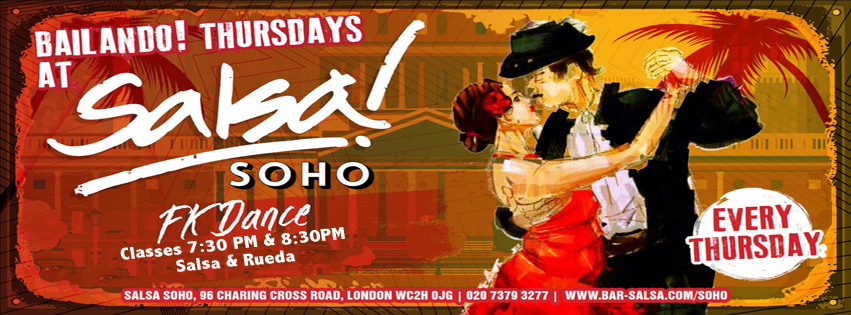
Salsa Soho London

The best place to celebrate your Latin roots! Salsa classes every night of the week, amazing drinks menu with over 50 cocktails and of course non- stop Latin music.

This club/restaurant has menus to suit all occasions and tastes. For a bigger party or less formal occasion they Sharing Planks are perfect and includes Salsa favorites like tacos and Iberico ham croquettes. Special events, birthdays, parties and more, with the best atmosphere in London!

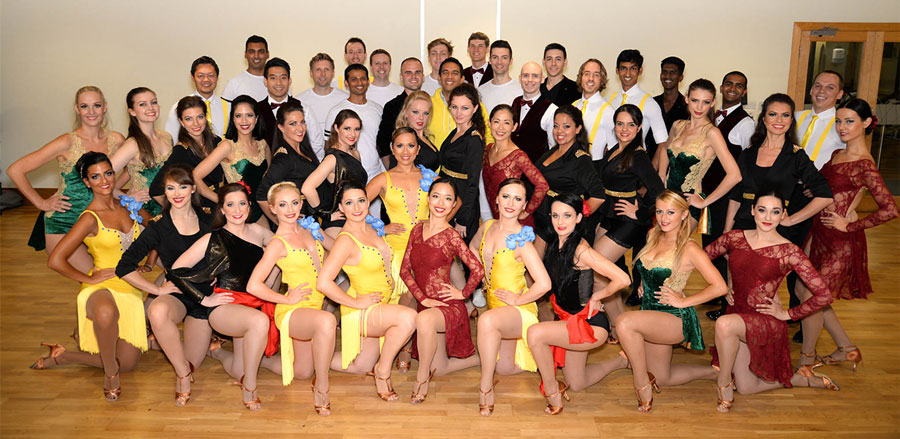
Salsa Soho
Salsa Soho

For more info and reservations: https://www.bar-salsa.com/soho

Hernan Olivera the sonero of the 21st century

Latin America / Puerto Rico / Puerto Rico

Hernan Olivera, this excellent Salsa singer named Hermenegildo Olivera was born on January 30, 1959 in Newark, New Jersey.

Hernan Olivera is the son of Puerto Rican parents and from an early age he felt a great affinity for Latin music since his father listened to the groups of the moment such as Tito Puente, Celia Cruz, Machito, Ismael Rivera with Cortijo y su Combo, Alegre All Stars, Tito Rodríguez, Santitos Colon, etc.

Hernan Olivera
Hernan Olivera

Then, in the 70s, in the midst of the Salsa Boom, Herman began his love of singing listening to the performances of Chamaco Ramírez, Héctor Lavo’e, Cheo Feliciano and Marvin Santiago, among others. These vocalists were mainly his source of inspiration; That school of soneros served as an apprenticeship for him and that is when he made the decision to sing professionally.

Hernan Olivera - photo
Hernan Olivera – photo

When he was just 15 years old, Herman began his career as a Salsa performer with an orchestra called “La Justicia”, after this he was part of the band “La Sónica” where he met his friend and trombonist Jimmy Bosch, after this He spent time with the “Caramelo” orchestra and later made the most important leap in his career by joining the “Con Conjunto Libre” in 1978, where he left his voice for the first time on the LP “Increíble” from 1981 under the direction by percussionist Manolo Oquendo and Bassist Andy González where he stands out with the song “Decide”.

Then in 1983 he would record with the Conjunto Libre in the production “Rhythm, sound and style” the song “Que Humanity” that would become a success. In 1988 Herman left the group “Libre” and became part of a project by Mr. Fernando Pastrana and under the musical direction of trumpeter Miguel Santiago whose album was called “La Exclusiva” which shared the vocal part with Roberto Mier, in this album stands out interpreting the songs “Xiomara” and “Te vi pasa”.

Hernan Olivera with his piano

After this, in 1990 he was invited to record on the album “Salsa Sudada”, for the Valdesa Records label of Víctor Raúl Sánchez “Patillas” and with the musical direction of Isidro Infante, sharing vocals with Mario Muñoz “Papaíto”, Adalberto Santiago, Eladio Peguero “Yayo El Indio” and Pablo Villanueva Branda “Melcochita”; in this work he interprets the themes “La needle” and a tribute to the city of Cali called “Valle plata de salsa”.

He continued with his career as a performer and in 1993 he was once again invited to record the production “Now” with the Free Ensemble, where his great conditions and resources as a singer are undoubtedly reflected, there the song “You belong to me” became a hit in addition to other songs such as “Obsesión” and “El Son” stand out on this album.

Subsequently, he launched an independent project called Herman Olivera and La Exclusiva “Chequea La Mercancía” produced by Fernando Pestana, where the song “Me Extra Spider” is one of the most outstanding. In 1996 he reunited with the Conjunto Libre and made the live album entitled “On The Movie”.

Caratula Alta resolucin sin letras of Hernan Olivera

In 1997 he participated in the CD of the band Rikoson All Stars called “Evoluciones Del Son” where he stands out very well in the romantic theme “Aquella Noche”.

Photo - Hernan Olivera in concert
Photo – Hernan Olivera in concert

In 1998 he was requested by the piano teacher Eddie Palmieri and together with the vocalist Wichy Camacho they recorded the album “El Rumbero Del Piano” in which he stood out as a singer in the songs “Malagueña salerosa” and “Oiga mi guaguancó” that same year. he is invited to the recording studios by the trombonist Jimmy Bosch and they release the album titled “Soneando Trombón” which contains the hit “Otra opportunity” that he performs as a duet with Frankie Vázquez, on this CD the song “Descargarana” is also inserted. ”.

Photo 2- Hernan Olivera in concert

That same duo Olivera and Bosch meet the following year (1999) and make the production “Salsa Dura” where Herman shines interpreting the full “Impact we will have” this album also has the participation of the singers Frankie “Nene” Morales and Frankie Vázquez parallel to this album, the RMM label launches a live CD and DVD entitled “Eddie Palmieri & Friend’s” where Herman looks excellent in the number “Palo Pa’ Rumba”.

Hernan Olivera in concert

Salsa y Punto Dance Company! 2001 – 2017

Europe / España

Salsa y Punto Dance Company. Proud to carry their flag around the world

Salsa y Punto has more than 15 years of experience teaching Caribbean rhythms. We cordially invite you to meet them so you can experience the heat and the guaguancó.

Here you will find teachers with great international experience who will teach you and help you improve your dance style. Starting in September, they will be launching new facilities: 2 open-plan rooms with air conditioning, showers and toilets, as well as free parking.

Just 8 minutes from the center of Valencia, in the Alfafar Business Center, surrounded by restaurants and entertainment areas and enjoy between the MN4 Shopping Center and Carrefour.

Without a doubt, it will be your best choice!

Dancers of Salsa y Punto Dance Company

Salsa y Punto was born in Caracas Venezuela in 2001, directed by the musician and dancer Jhonny Sánchez and the dancer and choreographer Carmen González.


They are the first dancers to present the Salsa L.A Dance (online) with acrobatics in Venezuela, since at that time the existing dance groups ventured into other dance styles.


Starting in 2001, Jhonny & Carmen show their first Choreographies as a couple to the Venezuelan Salsero public. In previous years they had the opportunity to work in Venezuela and visit Puerto Rico with the Latin Image Group in 2000 and 2001.


Jhonny and Carmen are the pioneers in this style of dance and this is demonstrated by the significant number of presentations and videos for more than 15 years, in which they have managed to forge their own original style over time, “Salsa A3” (3 dancers), since 2003.


They have walked through the best stages in Venezuela, in addition to participating in the most important concerts in Caracas.


They toured their country of origin with the Orquesta Dimensión Latina “2001-2002” and participated in television programs such as: Sabado Sensacional, the Carolina Gómez Show, De Todo Un Poco and De Par en Par.


They were the exclusive couple to represent Venezuela at the World Salsa Congress in Puerto Rico 2002, and in turn managed to be finalists among the best 8 couples in the world at the 1st World Dance Championship “Salsa Open”, Puerto Rico 2002.


In 2003 they visited Spain, as guests at the World Salsa Congress in Valencia, where they were “a revelation as a dance company.”


Due to the great success, and the number of presentations offered by promoters from different festivals, they decided to stay in Valencia, the city that received them for the first time in Europe.

Teachers of Salsa y Punto Dance Company

Currently, they direct the Salsa y Punto academy, through which a large number of students from the Valencian Community have passed, and have trained dancers who today work as dancers and teachers.


Since 2002, they have performed at the most important dance festivals in the world and have been the forerunners of Kizomba in Valencia since 2011. In 2013 they managed to be World Runners-up in the Kizomba Open, and Kizomba Champions in Switzerland 2015.

They were finalists of the television program “Tú si que vales 2011”.


To date, they run their dance companies Salsaypunto Dance Company, Salsaypunto Amateur, Kizombaypunto and Bachataypunto.


Proud to carry the flag of Venezuela and Spain around the world.


Nanette Hernández promotes the bomba and plena in New Jersey

We know that the most of our Latin countries have historically become known for genres such as salsa, merengue, bachata and more recently reggaeton and trap. However, the popularity of the aforementioned genres made us leave aside other more local rhythms that also deserve exposure.    

On this occasion, we wanted to talk about the bomba and plena, so we resolved to interview Nanette Hernandez, who is one of its main proponents here in the United States, more specifically in New Jersey.   

This is Nanette
This is Nanette Hernández, who is a great promoter of the bomba and plena


How Nanette became interested in the bomba and the plena 

Nanette began by telling us that her interest in music was born thanks to her parents, who are Puerto Rican and moved to the United States, Pennsylvania, during the 1950s to continue their life in this new country. However, his home was built based on Puerto Rican culture and, of course, that included language and music. Her father had an ensemble that played jibaro music and Nanette grew up watching this, so this musical environment was always very familiar to her.   

As she grew up, Nanette also became very interested in dancing and discovered that she really liked salsa when she was just a teenager. She remembers listening to Celia Cruz, Johnny Pacheco, El Combo de Puerto Rico and many of the most popular groups and musicians of the time, who also inspired her to keep dancing. She felt that she was encouraged just by dancing, so she continued to do so over the years, but not professionally.   

After marrying Juan Cartagena and seeing that she and her husband shared a taste for Latin music, they began to frequent places where Puerto Rican music groups performed. That is how they were in a show of the dance and drum ensemble ”Los Pleneros de la 21”. They were so fascinated by what they saw and heard that both Nanette and Juan began to study the plena and bomba because they wanted to know everything about these rhythms. Their interest was such that they were even in contact and consistently et with the Cepeda family, which is a cultural institution with many years of experience in everything to do with the bomba and plena.   

She also mentions that Roberto Cepeda, part of the aforementioned family, was very important in her decision to devote herself to promoting the bomba and plena and feels that he saw something in her that even herself was not able to see, so she decided to search for expert teachers in these genres to become more professional in the dancing and instrumental part in order to be able to teach them to others.   

Nanette dancing
Nanette dancing bomba and plena

Differences between the bomba and plena  

When we asked Nanette about the differences between the bomba and plena, she made it very clear that people often think that they are almost the same, but they are not. They are extremely different and have many differences from each other.   

In the case of the bomba, it has re than 400 years of existence and originated in Africa. The genre arrived in America along with the slaves who were brought to the New Continent and the new inhabitants of these lands brought their improvised instruments with them such as the so-called ”barrels”, which have a great resemblance to drums. They are often accompanied by maracas.    

In the case of the plena, this rhythm uses the pandero, the güiro and other smaller hand instruments with which they make a completely different sound from the bomba. To complement what Nanette told us, we can also say that the plena is believed to originate in Ponce, Puerto Rico, and its lyrics are very focused on comedy, activism and denunciation. In addition, it is also seen as a very peculiar mix between African and European music. 

Another difference between the bomba and plena is that, in the bomba, it is the dancer who leads and guides the musicians, while in plena the opposite happens. These genres are very different from each other, but that does not change the fact that both complement each other perfectly well in any show or class.   

Nanette next to her husband Juan Cartagena, Segunda Quimbamba's founder 
Nanette next to her husband Juan Cartagena, Segunda Quimbamba’s founder

How Segunda Quimbamba came about    

Segunda Quimbamba is a project initiated in 1989 by Juan Cartagena, Nanette’s husband, which was born as a result of the couple’s interest in promoting two of the most important ancestral rhythms from Puerto Rico and preserving the most important musical traditions on the Island of Enchantent, such as the ”parrandas”. A few years later, they began introducing the bomba and plena until they became the center of the project. 

In 1997, Nanette and Juan founded the Segunda Quimbamba Folkloric Center, which is a non-profit arts organization that seeks to promote the bomba and plena in New Jersey and the rest of the United States so that those interested can learn more about Puerto Rican music and culture in general. The organization also seeks to offer music and dance workshops at solidarity prices and even for free at times.   

Nanette and Juan have been invited to participate in numerous events and have been recognized for the role they have played in promoting Latin music, especially that of Puerto Rico. For example, in 2023, The New Jersey State Council of The Arts recognized the couple with the New Jersey Heritage Fellowship Award in honor of what they have accomplished with this wonderful and ambitious musical project. 

Read also: Edwin Ortiz y La Mafía del Guaguancó is present in ISM 

  • « Go to Previous Page
  • Page 1
  • Page 2
  • Page 3
  • Page 4
  • Page 5
  • Interim pages omitted …
  • Page 17
  • Go to Next Page »

International Salsa Magazine (ISM) is a monthly publication about Salsa activities around the world, that has been publishing since 2007. It is a world network of volunteers coordinated by ISM Magazine. We are working to strengthen all the events by working together.