• Skip to primary navigation
  • Skip to main content

International Salsa Magazine

  • HOME
  • Previous editions
    • 2026
      • ISM / September 2026
      • ISM / August 2026
      • ISM / July 2026
      • ISM / June 2026
      • ISM / May 2026
      • ISM / April 2026
      • ISM / March 2026
      • ISM / February 2026
      • ISM / January 2026
    • 2025
      • ISM / December 2025
      • ISM / November 2025
      • ISM / October 2025
      • ISM / September 2025
      • ISM / August 2025
      • ISM / July 2025
      • ISM / June 2025
      • ISM / May2025
      • ISM / April 2025
      • ISM / March 2025
      • ISM / February 2025
      • ISM / January 2025
    • 2024
      • ISM / December 2024
      • ISM / November 2024
      • ISM / October 2024
      • ISM / September 2024
      • ISM / August 2024
      • ISM / July 2024
      • ISM / June 2024
      • ISM / May 2024
      • ISM / April 2024
      • ISM / March 2024
      • ISM / February 2024
      • ISM / January 2024
    • 2023
      • ISM / December 2023
      • ISM / November 2023
      • ISM / October 2023
      • ISM – September 2023
      • ISM – August 2023
      • ISM July 2023
      • ISM Edition June 2023
      • ISM – May 2023
      • ISM April 2023
      • ISM March 2023
      • ISM February 2023
      • ISM January 2023
    • 2022
      • ISM December 2022
      • ISM November 2022
      • ISM October 2022
      • ISM September 2022
      • ISM August 2022
      • ISM July 2022
      • ISM June 2022
      • ISM May 2022
      • ISM February 2022
      • ISM January 2022
    • 2021
      • ISM December 2021
      • ISM November 2021
      • ISM October – 2021
      • ISM September 2021
      • ISM August 2021
      • ISM July 2021
      • ISM May 2021
      • ISM April 2021
      • ISM June 2021
      • ISM March 2021
      • ISM February 2021
      • ISM January 2021
    • 2020
      • ISM December 2020
      • ISM November 2020
      • ISM October 2020
      • ISM September 2020
      • ISM August 2020
      • ISM July 2020
      • ISM June 2020
      • ISM May 2020
      • ISM April 2020
      • ISM March 2020
      • ISM February 2020
      • ISM January 2020
    • 2019
      • ISM December 2019
      • ISM November 2019
      • ISM October 2019
      • ISM Septembre 2019
      • ISM August 2019
      • ISM July 2019
      • ISM June 2019
      • ISM May 2019
      • ISM April 2019
      • ISM March 2019
      • ISM February 2019
      • ISM January 2019
    • 2018
      • ISM December 2018
      • ISM November 2018
      • ISM October 2018
      • ISM September 2018
      • ISM August 2018
      • ISM July 2018
      • ISM June 2018
      • ISM May 2018
      • ISM April 2018
      • ISM March 2018
      • ISM February 2018
      • ISM January 2018
    • 2017
      • ISM December 2017
      • ISM November 2017
      • ISM October 2017
      • ISM September 2017
      • ISM August 2017
      • ISM July 2017
      • ISM June 2017
      • ISM May 2017
      • ISM April 2017
      • ISM March 2017
      • ISM February 2017
      • ISM January 2017
    • 2016
      • ISM December 2016
      • ISM November 2016
      • ISM October 2016
      • ISM September 2016
      • ISM August 2016
  • Spanish
  • Download Salsa App
    • Android
    • Apple

Search Results for: guaguancó

Salsa, territory of joy.

Latin America / Venezuela / Caracas

Salsa, territory of joy, language of celebration, enjoyment of the towns and their people, was born from a confluence of facts, geniuses and rhythms. Confluence that happened in the faith of the same religion: Afro-Cuban music.

Salsa pal Bailador
Salsa pal Bailador

And that mixture, which Richie Ray and Bobby Cruz cleverly described as “similar to the tomato sauce that is put on hamburgers to give them flavor”, was summed up in the insightful sentence of the occasional witness, the journalist Phidias Escalona: “the music that you make is salsa. From now on we will call it sauce”.

The year was 1968 and although the new rhythm already existed, there had been no consensus on the name. And that consensus began to emerge -perhaps for the first time- on the album “Los Durisimos The Strong Ones, Salsa y Control”, by Richie Ray and Bobby Cruz. Later, Richie himself would add: “The word was born around us, (however,) if it weren’t for (Jerry) Masucci there would be no salsa, because he brought it to the world.”

In 1960s New York Harlem, black Americans had begun to like Latin music, despite not speaking Spanish.

Ama a tu musa como a ti mismo - Salsa
Ama a tu musa como a ti mismo – Salsa

The guajira dazzled them until they made them dance. Believing that the mixture of boogaloo, blues, mambo, guaguancó or son montuno, was a variant of the boogaloo invented by Chubby Checker, the new rhythm was founded, incorporating the concepts of the Latin spirit in their interpretations and that -technically- they would add to the baggage : percussion, piano, violins, trumpets, trombones and whatever instrument would serve to give it flavor and richness.

Cocola' Wears - Venezuela Salsa
Cocola’ Wears – Venezuela Salsa

Musically, for example, the so-called “blue notes” would be added (that is how the overtones of the acoustically weak E and B notes, last to be added to the scale, where they would be relocated between Lam and Lam) would be added to the new fusions. Then came the downloads and phrases that we know until now as characteristics of salsa.

Thus the sauce was born. And so it has been transformed, always within the circle that encloses joy, passion and enjoyment, history, experiences, fortune or misfortune, seen from different perspectives: urban, social, sensual or everyday.

Tocadisco - musica
Tocadisco – music

Federico Betancourt “Pioneer of Salsa in Venezuela”

Latin America / Venezuela / Carabobo

Jesús Federico Betancourt was born in the city of Valencia, Carabobo state, on March 22, 1940. He was always attracted to music from a very young age.

Photo of Federico Betancourt on stage

In his adolescence, he liked Cuban rhythms, being influenced by Sonora Matancera, Mon Rivera, Eddie Palmieri and Joe Cotto. Before entering the entertainment world, he works at the Bank of Venezuela.

He affirms that he has not carried out formal studies at the musical level, learning the necessary theory to be able to perform as an orchestra conductor, but without interest in interpreting any instrument, but with a well-tuned ear, which has allowed him to remain in the music business for decades. , in fact on certain occasions he is named as the King of the Güiro.

Photo by Federico Betancourt

His career began when he entered the Los Selectos Orchestra, where they played songs by the Billos Caracas Boy’s and the Los Melodicos Orchestra, which were at their peak in the 1960s, all this in a particular way, said Orchestra did not go beyond that.

In 1965, Federico Betancourt decides to satisfy his artistic restlessness and founds a band called Federico y su Combo Latino. The members that made up this band were chosen from among the founder and together with Roberto Monserrat.

But it was not until the middle of 1966, when the twenty-six (26) year old undertook the recording of the LP that would make him famous forever. This record production entitled LLEGO LA SALSA, would mark an important stage in Venezuelan Salsa, because it was the first LP that made use of the word SALSA in the country.

Federico Betancourt
Federico Betancourt

Federico Betancourt himself recounts that the Venezuelan announcer Phidias Danilo Escalona had a Radio Program called LA HORA DE LA SALSA, EL SABOR Y EL BEMBÉ, where all the Cuban and Puerto Rican Caribbean rhythms that were fashionable at the time were placed, among those who highlighted La Sonora Matancera with Celia Cruz, Tito Puente, Joe Cuba, Tito Rodríguez among others, and who was the one who supported them the most in terms of recording the album.

The production was recorded under the Palacio label, and the LP was titled LLEGÓ LA SALSA, he affirms that the title was chosen without taking into account the importance that it would revert in the future, he also affirms that it was not the name that gave him success , the album was a “bump” in sales, since all the songs were the most requested at the time, using his words: “The album sold like hot cakes”.

The music lovers of the time requested it on specialized sites such as the LA SALSA album. Federico says: “The father of the word SALSA was Phidias Danilo Escalona, ​​he used it for the first time in his radio program, and I, humbly, with the success of my LP, gave him the push for its mass use.”

Federico Betancourt - Photo
Federico Betancourt – Photo

In Venezuela, the word SALSA was welcomed by the public willingly, since it suggested a mixture of flavors, which was exactly what happened in the Phidias program, but at the level of rhythms. After the appearance of Federico’s album, all the shows that were performed at the level of Caribbean and Cuban rhythms, carried the name of SALSA.

It is important to name the musicians who took part in this historic production: The musicians are: Ali Rojas Bongo and Cencerro, Roberto Monserrat Music Director and Timbal, Pedro Medina Congas, Alfredo Arcas Trombone, César Pinto Trumpet, Enrique Iriarte Piano, Rafael Prado Bass, Carlín Rodríguez Singer and maracas, Dimas Pedroza Singer, Federico Betancourt Güiro and Director of the Orchestra. The musical arrangements were by the famous trumpeter Eduvigis Carrillo (RIP). Production themes:

Llego la Salsa CD - Federico su Combo Latino
Llego la Salsa CD – Federico su Combo Latino
1.- Cocolía

2.- Conmigo
3.- El Pachanguero

4.- Sancocho Caliente
5.- Guaguancó Manía

6.- Celosa

7.- Despierta Rumbero

8.- No Critiquen
9.- Saoco

10.- Baila Yemaya
11.- Café Y Pan

12.- Que Me Querías

After the success obtained with the record work, the time came for the first international outing, which was to Colombia, in 1969. It happened because the singer of Los Melodicos, Víctor Piñero, informed Betancourt that he was stuck in Cartagena and Barranquilla with the themes El Cobrador and Federico Boogaloo. After the information, the young musician went to the neighboring country and got a contract for the famous Reina del Mar parties, in Cartagena, on November 11, 1969.

The experience of the band was so good, that in 1970 they returned to visit the country. From then until our days Federico y su Combo continues to be an emblematic and legendary band in Venezuela, for this reason the WEB of the classy salsero SALSA BRAVA, offers its respects to such an important salsa figure.

Discography
1966 Llegó La Salsa Palacio (LPS-6171)
1966 Salsa y Sabor Palacio (LPS-6185)
1967 Más Salsa Palacio (LPS-6205)
1967 Durísimo – Vol. 4 Palacio (LPS-6216)
1968 Federico Boogaloo Palacio (LPS-6228)
1968 Psicodélico Con Salsa Gilmar (LPG-110)
1969 Mejor Que Nunca Gilmar (LPG-111)
1969 Vibración y Ritmo Sonus (102-17080)
1970 Dos Sets Velvet (LPV-1539)
1970 La Machaca Velvet (LPV-1539)
1973 Federico Si Te Pone A Bailar Palacio (LPS-6332)
1975 Derrape De Salsa BASF (10.068)
1976 Siguelo Ahí…. a Lo Cortico BASF (10.070)
1977 Ayer y Hoy BASF (10.076)
1977 Esto Es Lo Mejor Palacio (LPS-6372)
1978 Mis Exitos y Más BASF (10.079)
1978 Sabor Foca (LPF-10.037)
1979 Federico y Su Combo Foca (LPF-10.120)
1979 Federico y Su Orq. – El Maestro Discomoda (DCM-1128)
1980 Federico y Su Orq. con Memo Morales Discomoda (DCM-1148)
1982 No Le Digan Integra (PF-14.075)
1983 Nuevamente Palacio (LPS-66.541)
1984 SaaaBroooSo! Palacio (LPS-66.552)
Compilation
1996 Mis Exitos y Más…Vol.1 Sonograma
1996 Mis Exitos y Más…Vol.2 Sonograma
1996 Mis Exitos y Más…Vol.3 Sonograma
2005 El Pionero De La Salsa Palacio
2008 Salsa De Oro Gilmar


Latin America / January 2025

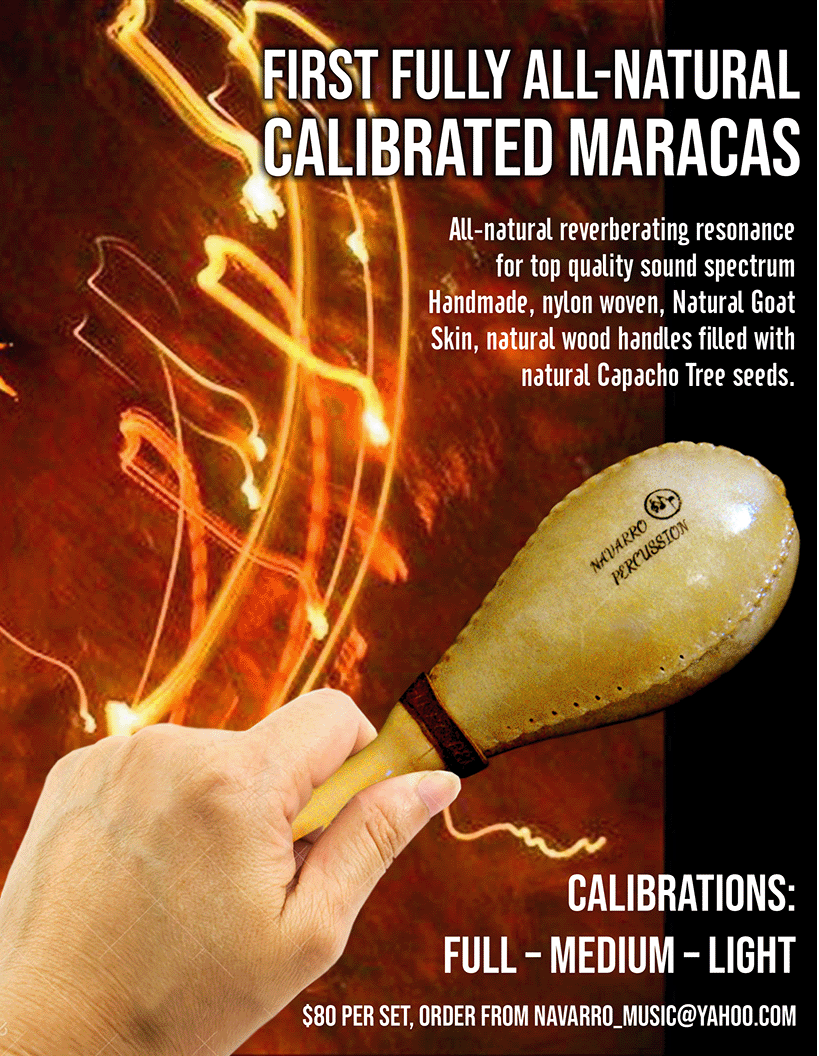
Fundación Cultural Madera 15 donde la Hermandad, el Deporte, la Danza y la Salsa van de la manoEnrique “Culebra” Iriarte, master of the piano and musical compositionLarry Harlow and Ismael Miranda: beginning of the so-called “Salsa Arseniana” in honor of the music of Arsenio Rodriguez, the creator of Son Montuno and “King of Guaguanco”.Calibrated maracas

DIRECTORY OF NIGHTCLUBS

Argentina flag
ARGENTINA

Aruba circular flag
ARUBA

Belize circular flag
BELIZE

Bolivia circular flag
BOLIVIA

Brazil flag
BRAZIL

Chile circular flag
CHILE

Colombia
COLOMBIA

Costa Rica circular flag
COSTA RICA

Cuba circular flag
CUBA

Dominican Republic
DOMINICAN REPUBLIC

Ecuador circular flag
ECUADOR

Guatenala circular flag
GUATEMALA

Mexico Circular flag
MEXICO

Panama circular flag
PANAMA

Peru circular flag
PERU

Puerto Rico circular flag
PUERTO RICO

Venezuela circular flag
VENEZUELA

Virgilio Martí was an excellent rumbero and composer of the classic “Cuba Linda” where he was vocalist and percussionist in Grupo Folklorico Experimental Newyorkino

Virgilio Martí, born in 1919 in Havana, Cuba.

Virgilio Marti
Virgilio Marti

Fine Rumbero, Singer, Composer, Arranger, Percussionist, Actor and Orchestra Director well known since the late 40’s, especially as a guaguancó singer.

He began touring the world in 1949 and met his later wife in 1960 in Peru.

That same year, he settled in New York, participating in the local scene. He participated in the LP “Patato y Totico” in 1967, he also participated with his brother Eloy Martí in a Quintet accompanied by Gene Golden for the year 1979.

Israel López (Cachao), Arsenio Rodríguez, Héctor Cadavieco, Francisco Valdés, Papaíto, Tony Mayari and Mario Cadavieco also worked on that album.

He participated in the “Grupo Folklórico Experimental Newyorkino” where he was their vocalist and percussionist in 1975. During his stay with them, he composed the song “Cuba Linda”.

Another work of Martí of great remembrance is the album titled: “Saludando A Los Rumberos” published by the Caimán label in the early 80’s and in which the Cuban acts as vocalist and main star.

Grupo Folklórico Experimental Newyorkino

In it Martí is involved with talents such as: Tony Cofresí, Andy and Jerry González, Yomo Toro, Paquito Pastor, Ray Romero, Claudio Roditti and Ignacio Berroa, among others.

“Iya Modapue” is in itself a guaguancó with open rumba, being at the same time the favorite number of the ‘Grupo Folklórico’, and even the first groove to be recorded.

The levels of experimentation and the freedom to unload several rhythms in a single musical performance are the factors producing the attraction of the musicians for “Iya Modupue” (which means Thank You Mother).

The vocal part is in the hands of Virgilio Martí. The trumpet of “Chocolate” Armenteros, the trombones of José Rodríguez and Reinaldo Jorge, the flute of Gonzalo Fernández and the percussion of Frankie Rodríguez stand out.

“Se Me Olvidó” a bolero by Lolita de la Colina but adapted in guaguancó to the style of the Grupo Folklórico, which, by the way, turned out to be the piece of greatest radio diffusion in the tropical environment and therefore, the one that would open the doors to the group.

The song was interpreted by Virgilio Martí, who also plays the congas. In “Se Me Olvidó”, the violin of Cuban Alfredo de la Fe, the quinto of Julito Collazo, the street redoblante of Jerry González and a Mexican marimba played by Andy González in counterpoint to the notes of the double bass, also played by Andy, stand out. Here it is worth mentioning that Alfredo de la Fe is a virtuoso violinist and among his many performances, I remember his work with Eddie Palmieri, Larry Harlow (the wonderful Jew), the Fania All-Stars and the avant-garde Típica 73.

In the early 80’s he formed a band with brothers Andy and Jerry González, and percussionist Ignacio Berroa.

It is worth mentioning Virgilio Martí’s 1985 performance in the film by Cuban filmmaker León Ichaso entitled “Crossover Dreams” (Sueños truncados).

In it, the Havana native plays the role of “Cheo Babalú” and vocalizes the song “Llora Timbero”.

In that film production made in New York City, he also participates with actor Rubén Blades, who plays the role of “Rudy Veloz”, where they sing the song “Todos Vuelven”.

In 1990, he contributed to the “Soundtrack” of the movie Azucar Amarga.

He maintained a great skill in converting songs from other genres into rumba arrangements.

We can mention the adaptation of the theme of the Brazilian composer Jorge Ben, “Más Que Nada” in which he appears on the LP with Patato and Totico.

Martí died on October 17, 1995.

Virgilio Marti – Guaguanco (1979)

Tracks:

  1. Amanecer (Armando Manzanero)
  2. Todos vuelven (Rafael Otero)
  3. A tus pies (D.R.) (Agustin Lara)
  4. My childhood (Laureano Martinez)
  5. Saluting the rumberos (Manolo Albo)
  6. I’m going to divide it (R. Livi)
  7. Acanapon (D.R.)
  8. The little handkerchief (D.R.)
  9. Que susto (Virgilio Marti)
  10. Odiame (Rafael Otero)
Virgilio Marti - Guaguanco (1979)
Virgilio Marti – Guaguanco (1979)

Information realized (June 1, 2024)

Also Read: Carlos “Nene” Quintero comes from a family of musical prodigies

Contributor: Dj. Augusto Felibertt (International Salsa Magazine)

Salsa trip – Where to dance Salsa in Europe?

Europe

Do you want to go to Europe but you don’t know where are the best places to dance? Do you want to enter in the passionate salsa world? Are you looking for adventures and meet new people? International Salsa Magazine wants to guide you to the best salsa and Latin places in Europe. In this edition we show you the dance life in three different countries: Ireland, Switzerland and England.

Ireland

Strictly Salsa

This academy/club offers a weekly Salsa Classes and a Salsa Club every Thursday in The National Stadium on the South Circular Road, Dublin. The classes are divided for categories:

Strictly Salsa Dublin
  • Ladies: Alexandra – Ladies Styling with Body movement. For those of you who know Alex, this will be one of the greatest most indebted workshop focused around not just footwork and styling but how to use your body and techniques and tips on how to practice and perfect what will be thought to you in class. It will not just be watch me then try it, Alex loves questions and wants to share her knowledge.
  • Men: Claudiu – This for you guys will really help you put more flavor and movement into your dancing skills, incorporating all this with steps that are very usable on the social dance floor, there will be elements of Rumba & Guaguanco and by the end it should all come together nicely. As with Alex, Claudius knowledge is very deep so ask as many questions as possible to maximize the time.

For more info: http://strictlysalsa.ie/


Salsa Dublin

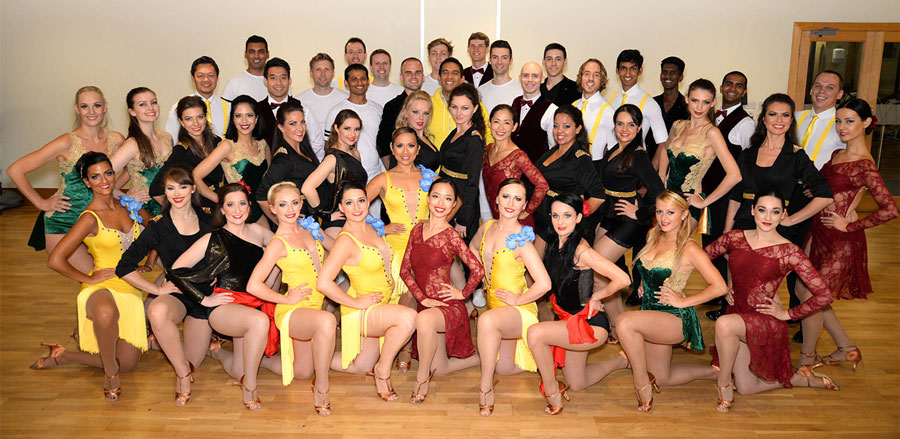
A lot of our instructors are also performers and they have a huge amount of experience performing on stage /in competitions/ at weddings & parties. The academy has dancers from Ireland, Turkey, Poland, Spain, Romania, and each one brings their own individual strengths to our group.

The teacher’s team has two previous winners of the Irish Salsa Championships, and the current (2012) Champion of the Irish Bachata Open. We also have instructors with backgrounds in Ballroom, Hip Hop, Ballet, Contemporary etc. which gives the team a greater understanding of musicality and a deeper appreciation for what they teach.

Salsa Dublin
Salsa Dublin

Development of the dancers is a key focus in our structure. Through regular team meetings, teachers training and dance group practice, we are able to keep physically and mentally growing and improving. You never stop learning no matter how good you are, so we are always striving to better ourselves. This academy works with world class international teachers and champions, bringing them to Ireland so that they can share their knowledge and ideas with the academy and their students.

Workshops are crafted for all levels of Salsa and Bachata lovers. A day of workshop involves a total of 4 hours of learning from four local and international dance instructors!! You will be sharing this amazing experience with both your fellow learners and from people from outside the regular classes.


For more info: SalsaDublin.com


Switzerland

La Movida Laussane

La Movida/Poco Loco is a bar-restaurant known by its Latin-Mexican aesthetic and food, which also offers special nights and parties for Salsa and Latin music lovers. With the performances of Dj’s and live bands, this special club is bringing all the Latin flavor to Switzerland. Cocktails, food, music and more!

Poco Loco
Poco Loco

For more info and reservations: https://pocoloco-movida.ch/


Salsa Passion Company

Whether you are completely new to the art, or experienced dancer, Salsa Passion Company has the knowledge and the experience to bring you further with your dance skills.

The academy philosophy is understanding that dance is about social and fun, but while you are investing your time and money to learn, why not learn it properly.

They’ve develop a “step by step” method that is fun and efficient for everyone to learn. They teach the “know how”. You will learn the vocabulary and the techniques of how to put them together, so you can be.

To learn how to dance Salsa, you should first understand the rhythm of Salsa, the steps, the body movement, the TWO persons but only ONE system principle in order to dance together with harmony, then move on to the turns and figures, and that’s the focus of the academy.

For more info: http://www.salsapassion.ch/d_course.html


England

Caramelo Latin Dance

Looking for Salsa classes in London? You’ve come to the right place! At Caramelo Latin Dance you will find only the highest quality tuition in Crossbody Salsa On1 and On2, as well as in and many other Latin dances.

Caramelo Group - Salsa
Caramelo Group – Salsa

The 4-week Latin dance courses are perfect for a consistent and immersive approach that will help you see a marked progression in your dancing irrespective of your level.

Classes take place on Wednesdays and Thursdays. You can Combine your Salsa classes with Bachata, NY Mambo On2, Cha Cha Cha, Pachanga and Styling and enjoy Latin dancing to the fullest!

For more info: http://www.caramelolatindance.co.uk/


Incognito Dance

Incognito Dance Company (IDC) was established in 1999. It has some of the most experienced and qualified Latin Dance instructors and performers in Europe. All our Latin dance courses, workshops, holidays, events and clubs are run and taught by highly trained, friendly instructors who encourage dancers of all levels to enjoy the spirit of dance.

Try the award winning Gold, Silver & Bronze Salsa Courses, learn to dance, have fun, keep fit and meet new friends. Check out the private lessons, weekly classes, regular workshops, bootcamps, monthly parties, holidays, and special events.


Experienced dancers are given fun, technically challenging classes, and plenty of hours to social dance to the latest Latin music by our fabulous DJ’s. The academy teach many Latin dance styles of salsa from LA Style, NY Style, Cuban and Puerto Rican, as well as Bachata, Kizomba, Cha Cha, Reggaeton, Latin Hip Hop, Merengue etc.

For more info and classes: https://www.incognitodance.com/


Salsa Soho London

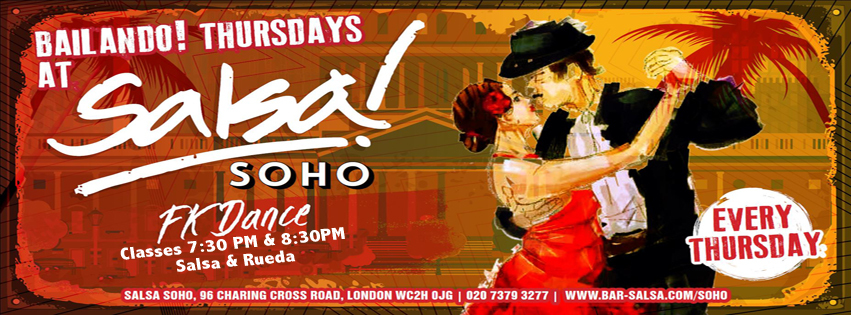
The best place to celebrate your Latin roots! Salsa classes every night of the week, amazing drinks menu with over 50 cocktails and of course non- stop Latin music.

This club/restaurant has menus to suit all occasions and tastes. For a bigger party or less formal occasion they Sharing Planks are perfect and includes Salsa favorites like tacos and Iberico ham croquettes. Special events, birthdays, parties and more, with the best atmosphere in London!

Salsa Soho
Salsa Soho

For more info and reservations: https://www.bar-salsa.com/soho

  • « Go to Previous Page
  • Page 1
  • Page 2
  • Page 3
  • Page 4
  • Page 5
  • Page 6
  • Interim pages omitted …
  • Page 18
  • Go to Next Page »

International Salsa Magazine (ISM) is a monthly publication covering salsa activities around the world and has been publishing since 2007. It is a worldwide network of volunteers coordinated by ISM Magazine. Together, we work to strengthen salsa events around the world.