




| DIRECTORY OF NIGHTCLUBS | ||
|
|
|
|
|
|
|
|
|
|
|
|
|
|
|
|
|
|
|
|
|
|
|
|



| DIRECTORY OF NIGHTCLUBS | ||
|
|
|
|
|
|
|
|
|
|
|
|
|
|
|
|
|
|
|
|
|
|
|
|
Joshua Levine, artistically known as Josh Levine, is one of so many examples of Americans who, without having any type of Latin roots, fall under the charm of our beautiful music and do not hesitate to make it their way of life. That is why we wanted to talk to Josh, born in New York City, a little more about his career and what brought him to where he is today.

The first instrument that drew Josh’s attention as a child was the piano, as his babysitter was a piano teacher and offered him some lessons to satisfy his curiosity. The interesting thing is that his teaching was more focused on the ear than on reading music as such, showing that there are musicians perfectly capable of playing without needing a musical score.
However, like any child, he began to have other interests such as skating, to which he devoted much of his time back then. About 10 or 11 years later, his father, who was a great jazz fan, used to listen to this genre at home frequently, to the point that the young man once again felt that passion for what he had practiced so many years ago and began to listen a little more intently to the artists his father enjoyed.
Seeing his son’s growing taste for jazz, Josh’s father decided to take him to a concert featuring Cedar Walton’s piano trio with Ron Carter on bass and Billy Higgins on drums. He was so impressed by their performance that he decided to study bass that same day, as at the time it seemed to him the most understandable and easiest instrument to learn because of its few notes at once.
He got so good that he even became part of his high school band, a group from where great artists emerged including Carlos Henriquez, a great musical luminary who has worked with Celiz Cruz, Eddie Palmieri and Ruben Blades and is the current bass player for the Jazz At Lincoln Center Orchestra.
For those same years, Josh also learned Spanish and clarified that he does not have any Latin ancestry, so this was not the motive behind his interest in this music. However, he grew up in a neighborhood in Manhattan where many Latino families lived, especially Caribbeans from Puerto Rico, the Dominican Republic and Cuba.

Meanwhile, he was also studying biology in college and a little jazz and classical music. Upon graduation, by pure chance, he met a young Venezuelan musician named Roberto Fuentes, who was the director of Alpargata Cantorum (a very famous Venezuelan musical comedy and theater group in the 70s), who wanted to form a band with him and a few other musicians. Fuentes showed Josh a lot of Venezuelan folkloric music, taught him to play cuatro and made him listen to several songs typical of Venezuelan music such as ”Barlovento”, ”El Alma Llanera”, ”La Vaca Mariposa”, ”Pajarillo Verde” and many more.
As for classic salsa, he made him listen to Ismael Rivera, Rubén Blades, Willie Colón and many others.
Having been in the group with Fuentes gave him what he needed to make contact with many other groups, including that of José Luis Martínez, who was very close to Juan Carlos Formell Sr. Thanks to Martinez he learned a great deal about Cuban music, the way Cuban son is played on the bass, the pronunciation of words in the Cuban dialect, among other things.
His big break came when he met Jainardo Batista, whom he was a big fan of when he was in his band Nu Guajiro (or Nu D’lux, as it would end up being called). It turns out that Josh went every Sunday to hear them play at the club where they were at the time and, after 10 years of following their music, they finally invited him to play with them.
After a while, the group disbanded, but Josh and Jainardo did not lose touch. And not only that, but they continued playing together and had the idea of forming something new.

Cuarteto Guataca was born when Josh and Jainardo decided to form a new group after the breakup of Nu D’lux and counted with the participation of Dominican arranger, composer and tres player Román Lajara and Puerto Rican producer, composer and flutist Jeremy Bosch. He describes them both as musical prodigies, to the point of telling us that Lajara was the representative of the Cuban tres as an instrument at the 2024 National Jazz Day in Morocco.
Josh, Jainardo, Román and Jeremy were the members of the original quartet, but they did not play for a living because it was not enough, but as a sort of part-time job. For the same reason, the four of them also worked on other projects at the same time, as is usually the way with New York today.
During the COVID-19 pandemic, they started playing in city parks to earn some tips during the quarantine, leading their audiences to grow tremendously and many venues began to hire them to play in their open spaces. At a time when musicians were out of work, they had events at least six out of seven days to a week.
This led to them to be ready to get in a studio for the first time and record their first album, which was released in 2022 and is available on all digital platforms for all to enjoy. It should be noted that Román was not playing as often with Cuarteto Guataca, so he was replaced by Venezuelan producer, composer and pianist Gabriel Chakarji until he got back some time later.
Read also: De Tierra Caliente founder Bronson Tennis talks about his career and band

Robert: His name is: Elio Osácar Douguet, and artistically we know him as: Sonny Bravo When and where were you born?
Sonny: I was born on October 7, 1936 in West Harlem, New York City.
Robert: Are you of Cuban descent?
Sonny: Yes, my grandparents were born in Havana, three in Santiago de las Vegas and one (maternal grandfather) in Bejucal. My parents were born in Key West, FL, and raised in Tampa, FL.
Robert: Tell me about your father Santiago “Elio” Osacar.
Sonny: Obviously, my first mentor! Santiago Osácar Colomá, born October 12, 1911 in Key West, FL, raised in Tampa, FL. He and his two older brothers, Juan and Tomás, founded the Sexteto Tampeño in 1928. He married my mother, Elisa Douguet Bravo in February 1932 and they settled in New York around 1933. Shortly thereafter he joined the Caney Quartet as bassist and second voice. At that time he also formed and recorded with his own group, the Conjunto Moderno. Later he was also a member of Monchito y su Orquesta. But he always returned to Caney! Until his death in the summer of 1957, from a pancreatitis attack he suffered on the stage of the Chateau Madrid in NY.
Robert: Maestro Sonny, is it true that you played baseball, but due to an injury you turned to music?
Sonny: Yes, it was in an amateur league in Miami where I was raised, my father was the manager! I was a pitcher and after pitching a complete game, while it was drizzling; the shoulder pains started the next day and that’s as far as my brief career went.
Robert: Did you write arrangements for Conjunto Caney?
Sonny: I only wrote one, “Añorado Encuentro” (Piloto y Vera), but it was never recorded.
Robert: What groups did you work with in Miami?

Robert: Is the Típico Charanga format your favorite?
Sonny: Yes! I would like to have the same format we used on Alfredo de la Fé’s LP (Toca, Alfredo Toca) with the modern harmonies that can be heard in my arrangement of “El casabe,” my adaptation of Humberto Perera’s arrangement of “Que rico bailo yo,” and my arrangement of my own song, “Toca, Alfredo toca.”
Robert: What pianists influenced your playing?
Sonny: Charanga genre: Jesús López. Ensemble genre: Lilí Martínez. Big band and combo genre: Pedro “Peruchín” Jústiz. Variety of genres: Rubén González.
Robert: How did you become involved with the José Fajardo Orchestra?
Sonny: In 1963, bassist Nilo Sierra took me to the Palladium to meet Fajardo. After I married my first wife, I returned to Miami, and was able to contact him. During 1963 I played with him the dances I mentioned above and also toured with him to Venezuela, Mexico, Santo Domingo, and Puerto Rico. Fajardo stayed to fulfill his contract at the San Juan Hotel, but Orestes Vilató and I returned to New York. Orestes because of melancholy, and I, because I found out that my wife was going to give birth in January 1965.
Robert: As I understand it, when you settle in New York, you start playing with: Willie Bobo, Bobby Valentin and Ray Barretto What would you highlight about your work with Barretto?

Robert: How did your integration with La Tipica 73 come about?
Sonny: I was there from the beginning. The group (unnamed) started in the summer of 1972 with musicians from various orchestras in a “jam session” (descarga) format, with the purpose of filling out the week with stews on Mondays, Tuesdays and Thursdays, that is, the laziest days in clubs and dance halls. Alfredo de la Fe was one of the original musicians. He and I played with Fajardo at that time.
There was also Bobby Nelson (flute) from Charlie Palmieri’s orchestra. Instigated by Johnny “Dandy” Rodriguez and with the support of several promoters and club managers, we decided to strengthen the group, create an ensemble and take the risk of competing with the already established groups.
Robert: Where did the idea of making the record production “Intercambio Cultural” come from?
Sonny: Johnny Rodriguez made the connection when he went to Havana on vacation. When he returned, he convinced Jerry Masucci to initiate the arrangements so that he could record at EGREM’s studios.
Robert: Was Típica 73 blocked because they had performed and recorded in Cuba and that’s why the group disbanded? Or were there other reasons…
Sonny: That’s the only reason!
Robert: What do you remember about your experience with Conjunto Clasico?
Sonny:
Side A: A lot of work, good music, good musicians.
Side B: Out of 20 songs, there were 19 solos of three and only one piano solo!
Robert: Maestro Sonny, you were present in several stages of Tito Puente’s orchestra, did you replace Jorge Dalto?
Robert: Of all the arrangements you have done in your career, which is your favorite?
Sonny: I have several, by format.
COMBO:
Typical ’73:

BIG BAND:
Latin Giants of Jazz:

Mambo Legends Orchestra:

CHARANGA:
Alfredo de la Fé:

Robert: And your favorite piano solo?
Sonny: I have two. El casabe (Alfredo de la Fe LP), because of the relaxed son montuno tempo and because of my favorite format: ¡Charanga moderna! And ¿Adónde vas? (Tito Puente’s LP) because it was recorded live and I could extend the solo, and because it’s the King’s orchestra!
Robert: On January 28, 2003 there was a historic reunion in Puerto Rico, which culminated with the release of the album TIPICA 73 LIVE. How did you live that experience?
Sonny: The audience enjoyed it, but not me. There was flavor and swing, but the piano had a damaged key and I was almost completely out of tune and the choruses were pretty weak. The record was bootlegged before it was released.
Robert: Of today’s pianists, who would you single out?
Robert: What future do you see for salsa?
Sonny: Unfortunately, I think it is diminishing with the disappearance of the old guard. We need to remember and respect tradition, but we also need to move forward, developing genres and sub-genres. For example, in Cuba, dance is developed and danzonete and danzón emerge. They develop the son and the son montuno, the guaracha, the mozambique, the mambo, the ritmo pilón, the ritmo pa’ cá, etc., emerge. Then came the songo and the timba, all based on the son. Where is the development of the New York, Puerto Rican, Caribbean or South American “salsa”? It is still more or less the same since the day it was discovered. If it were not for the innovations in Cuba, there would be no groups such as: Los Van Van, NG La Banda, La Ritmo Oriental, Klimax, etc. And please don’t talk to me about “salsa monga” or “bachata” or “reggaeton”, which, in my humble opinion, are not innovations, but aberrations!
Exclusive interview with Sonny Bravo
Interview by music journalist and researcher Robert Tellez M.

Also Read: Robert Tellez is undoubtedly “El más que sabe de salsa” (The one who knows the most about Salsa)
Gabriela studied classical guitar privately, and music and piano at a Conservatory in Buenos Aires.
Adding to the musical medley was her father’s influence (a noted jazz saxophonist and arranger) which became even stronger than her classical studies. After finishing high school, Gabriela decided to move to New York.
There she studied orchestration for brass and strings in a class conducted by Don Sebesky and composition at Hunter College. Gabriela started to write her own material. Her studio and club work took off leading to a record deal with major label Warner Brothers Jazz.
The album elicited much praise for Anders’ vision and impassioned vocal style.
Her unique marriage of Brazilian, Latin and Jazz led to Vogue and People Magazine describing Anders and her music as “exotic and bold”, “wonderfully soulful”, and “one of the most distinctive new voices to hit the music scene in years”.
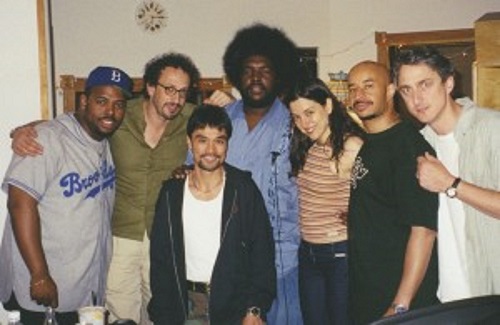
Her second record for Warner Bros Records was a European release entitled “Gabriela” which featured an array of world-class sidemen, including Christian McBride, Amir “Questlove” Thompson and Kirk Whalum. Again, she contributed ten of the album’s twelve tracks.
Her next CD “Last Tango in Rio” was released in 2005 by major label EMI. “Last Tango in Rio” is a collection of songs closely associated with Billie holiday that have been uniquely transformed by Gabriela’s interpretation and orchestration.
In October of 2009, JVC Japan released her CD “Bossa Beleza“. “Bossa Beleza” blends her own immediately recognizable sound with that of her first musical love, classic Bossa Nova.
Gabriela Anders‘ 2015 album, “Cool Again”, beautifully displays the significant gifts as singer, vocal orchestrator, songwriter and bandleader she has steadily developed through her previous releases. The mix of original and cover songs on “Cool Again” finds Gabriela at her best.
The soulful funk of the original title track is a classic example. Its message of empowerment can be considered a core theme in Gabriela’s lyrics and a source of her resonating appeal as a performer, entertainer and artist.
The project’s three pianists – Jim Ridl, Jean-Michel Pilc and Jon Cowherd – are radically different stylists from different corners of the world, here each offering their unique sensibilities to Gabriela’s voice and music.
2021 CD release Gabriela Anders’ ‘Los Dukes’! Los Dukes is a new 9 piece band arranged and directed by Gabriela Anders, featuring songs from the Duke Ellington’s catalog done in wildly distinctive Latin American styles. A Latina’s tribute to the music of Duke Ellington.
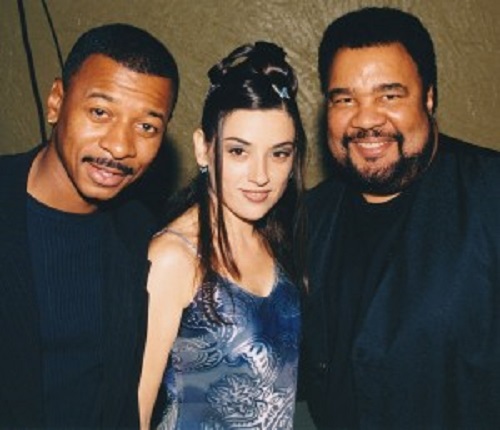
Los Dukes, pays loving tribute to the elegant GENIUS of Duke Ellington and includes some of the best Latin Jazz players on the New York scene.
Gabriela Anders – Último Tango En Rio (2004)

Temas:
Músicos:
Gabriela Anders (Voz, teclados)
Romero Lubambo (Guitarra)
John Benitez (Bajo)
Wayne Krantz (Guitarra)
Portinho (Batería, percusión)
Gabriel Rivano (Bandoneón)
H. Martignon (Teclados)
Tito Castro (Bandoneón)
Donald Edwards (Batería)
Jorge Anders (Saxo)
Jorge Alfano (Flauta, flauta andina, charango)
Información realizada (22 de abril de 2009)
Also Read: Samuel Quinto Feitosa is a Brazilian virtuoso jazz and classical pianist
Los Angeles is an inexhaustible source of Latin talent and this is proven every day with a large number of singers, musicians and groups that give all for all in each of their performances, with which they manage to earn a privileged place in the city and California’s music scene.
On this occasion, we talked with the great Mexican percussionist Juan Karlos Jimenez, with whom we had the privilege of making contact to learn more about his career and contributions to Latin music in US territory.

Juan Karlos was born in Veracruz, place he describes as ”one of the most salsa-loving cities in Mexico”. The first musical influence in the artist’s life has been his own father, who played a lot of Cuban music of the time when Juan Karlos was still a child, and among his favorite groups and artists were La Orquesta Aragón and Tito Puente.
Of his four brothers, he was the only one who devoted himself to music professionally and wanted to take salsa as a foundation, being something exceedingly rare for a Mexican, since most of the population does not usually see this genre as part of the typical music of the country. However, Juan Karlos also points out that, since Veracruz is located in the tropical part of the country, the city has a lot of Caribbean musical influence. This was one of the reasons that led the artist to become so passionate about salsa.
In addition to music, he also studied a degree in communication and graphic design at the Universidad del Valle de Atemajac, Guadalajara. As for the communication part, being a 13-year-old boy, he began working at a radio station, which would be the beginning of interest he would have in the not too distant future for locution in a much more formal way. This led him to work in very prestigious places in Mexico such as Televisa Radio, giving him the necessary experience to know how to handle himself as a musician in relation to the media when he would promote his orchestra years later.
While I was university studying, I worked in a music store and one day I had to serve to the Cuban Afro-jazz singer Rosalía de Cuba, who invited me to attend Cuban nights of which she was part of in restaurants and clubs in Guadalajara. One night, I was encouraged to go and started playing with one of the trios that performed that day and the leader of the group was so fascinated with my skills as a percussionist that he hired me permanently in exchange for 150 Mexican pesos per performance” said Juan Karlos about his time as a student.
He also pointed out that in order to reach such a good level, he took a few classes with the late Cuban arranger, composer and bongocero Adalberto Alvarez, leader of the group Son 14, thanks to whom he was able to play percussion so efficiently.
Today, he exercises his skills as a graphic designer with his orchestra Sangre Nueva Band, since he is the one who creates the album covers, flyers and artwork in general related to his musical project.

When Juan Karlos was just going to form his first band in Guadalajara, he met Maika Miller, who played for the Mexico’s Philharmonic orchestra and would be his partner for several years. Some time after they married, Milka was offered a master’s degree in Los Angeles and asked her husband to go with her, to which he gladly accepted because of the new opportunities he would have in his new home.
A few years later, he retried creating his group in her new city of residence after 15 years of hard work. And while Juan Karlos and Milka are no longer a couple, they continue to be part of the same musical project, which they have baptized Sangre Nueva Band.
However, in order to reach that point, he had to gain a lot of experience playing and perfecting his technique, but fortunately, many groups gave him the opportunity to make a living and be better every day at what he did, such as Conjunto Son 14, Carache, Santiago de Cuba, Rosalía de Cuba, Johnny Blas Y Afro Libre Orquesta, La Orquesta de Yari Moré, Tabaco y Ron, among others.
His first attempt at creating an orchestra was Jazz Son, which he founded with Maika in Mexico with the idea that his music would be based on the fusion of jazz and son, but his plans were postponed with their sudden move to the United States. Finally, in 2009, he managed to found the orchestra he has today, which he called Sangre Nueva Band.
Even so, he never stopped playing independently for other artists such as Gilberto Santa Rosa, Victor Manuelle, Ruben Blades, Cheo Feliciano and many more.

One of the things that led Juan Karlos to create his own orchestra in Los Angeles was his desire to be the leader of his own project. He says he feels fortunate and grateful to be able to play with other orchestras, but in his own words ”it is better to be the head of mouse than the tail of a lion”. For the same reason, the idea of working in his own business without having to rely on other orchestras or singers was always in his head.
When he decided it was time, he had a chance encounter with an Armenian musician who, from the street, saw his congas in the back of his car, asked him if he was a musician and invited him to play at a nightclub next Saturday. By that time, he had managed to gather six musicians playing three congas, a trumpet and a bongo. On the same day, a music entrepreneur asked him to play at another venue, so he ventured to enlarge the group and was asked to name the band, which he called ”Sangre Nueva”.
Today, Juan Karlos is very happy with all the musicians who accompany him on this adventure and hopes that they will stay with him for a long time.
Read also: Raúl Vargas and his flamenco rumba duo Dos Bandoleros