• Skip to primary navigation
  • Skip to main content

International Salsa Magazine

  • Home
  • Previous editions
    • 2025
      • ISM / November 2025
      • ISM / October 2025
      • ISM / September 2025
      • ISM / August 2025
      • ISM / July 2025
      • ISM / June 2025
      • ISM / May2025
      • ISM / April 2025
      • ISM / March 2025
      • ISM / February 2025
      • ISM / January 2025
    • 2024
      • ISM / December 2024
      • ISM / November 2024
      • ISM / October 2024
      • ISM / September 2024
      • ISM / August 2024
      • ISM / July 2024
      • ISM / June 2024
      • ISM / May 2024
      • ISM / April 2024
      • ISM / March 2024
      • ISM / February 2024
      • ISM / January 2024
    • 2023
      • ISM / December 2023
      • ISM / November 2023
      • ISM / October 2023
      • ISM – September 2023
      • ISM – August 2023
      • ISM July 2023
      • ISM Edition June 2023
      • ISM – May 2023
      • ISM April 2023
      • ISM March 2023
      • ISM February 2023
      • ISM January 2023
    • 2022
      • ISM December 2022
      • ISM November 2022
      • ISM October 2022
      • ISM September 2022
      • ISM August 2022
      • ISM July 2022
      • ISM June 2022
      • ISM May 2022
      • ISM February 2022
      • ISM January 2022
    • 2021
      • ISM December 2021
      • ISM November 2021
      • ISM October – 2021
      • ISM September 2021
      • ISM August 2021
      • ISM July 2021
      • ISM May 2021
      • ISM April 2021
      • ISM June 2021
      • ISM March 2021
      • ISM February 2021
      • ISM January 2021
    • 2020
      • ISM December 2020
      • ISM November 2020
      • ISM October 2020
      • ISM September 2020
      • ISM August 2020
      • ISM July 2020
      • ISM June 2020
      • ISM May 2020
      • ISM April 2020
      • ISM March 2020
      • ISM February 2020
      • ISM January 2020
    • 2019
      • ISM December 2019
      • ISM November 2019
      • ISM October 2019
      • ISM Septembre 2019
      • ISM August 2019
      • ISM July 2019
      • ISM June 2019
      • ISM May 2019
      • ISM April 2019
      • ISM March 2019
      • ISM February 2019
      • ISM January 2019
    • 2018
      • ISM December 2018
      • ISM November 2018
      • ISM October 2018
      • ISM September 2018
      • ISM August 2018
      • ISM July 2018
      • ISM June 2018
      • ISM May 2018
      • ISM April 2018
      • ISM March 2018
      • ISM February 2018
      • ISM January 2018
    • 2017
      • ISM December 2017
      • ISM November 2017
      • ISM October 2017
      • ISM September 2017
      • ISM August 2017
      • ISM July 2017
      • ISM June 2017
      • ISM May 2017
      • ISM April 2017
  • Download Salsa App
    • Android
    • Apple
  • Spanish

Search Results for: jazz club

Virginia Ramirez is the artist of the XXI century, the Princess of Piano and Voice, the hope that will save the new generations of anti-music

Virginia Ramirez, the talented concert pianist, pianist and singer-songwriter, has been making an impact for her contributions to the music of her country and the world. She was born in the city of San Cristobal, Venezuela and grew up in a family where art, poetry and music were the language of every day.

Virginia Ramírez es la artista del siglo XXI

His mother was a poet (Etha, the Lady of Love), Dr. Enriqueta Martinez, his father Asdrubal Ramirez, a self-taught harpist, guitarist and singer of Venezuelan popular music.

Since she was 7 years old she plays the piano and from a very young age she began to develop her musical skills, she started her training at the Miguel Angel Espinel School with the well-known teachers Edgar Vasquez (Piano) and Heliodoro Contreras (Theory and Solfeo).

She graduated as a pianist, concert pianist and piano teacher at the National School of Music in Havana (Cuba) where she graduated with the highest qualifications and studied at the José Lorenzo Llamozas School and the Simon Bolivar Conservatory of Music.

He has taken courses in harmony and improvisation with professors Gerry Weil, Andres Alen Rodriguez and Mike Orta at the “FIU of Miami” in the jazz department.

Ramirez studied classical piano with Professor Igor Lavrov, recorded her jazz projects with drummer Willy Díaz and bassist José Velázquez in the “Jazz” program of the Venezuelan TV channel “Venezolana de Televisión” in Venezuela on several occasions, and her first album “Espiral de Fuego”.

She participated as a special guest of other groups such as Alberto Borregales and Fredy Roldán and El grupo la Calle.

She participated with a new proposal as a composer and pianist in important Jazz festivals in Venezuela as the “Latin Festival” of the Teatro de la Opera de Maracay (June 2003) and the “Prehot” of the 5th.

Festival de Jazz del Hatillo (October 2003), where he alternated and shared the stage with the American bands of Aaron Thurston (drummer) and Jaime Baum (flutist), receiving excellent reviews from the radio and television press.

She alternates her activity as a jazz concert performer with teaching, as a piano and singing teacher.

In her music school Vicky’s harpsichord.

Her formidable work in music and composition is very beautiful and colorful, because in her proposal she has fused jazz and Afro-Venezuelan elements highlighting the values of Venezuelan and Latin American music and using a variety of drums such as the Culo’e Puya, Quitiplas, Clarines, Cumaco and Chimbangles combining them with the songs of the peoples of the coast of Venezuela making excellent personal harmonic contributions.

He has achieved a high musical concept that has been recognized in the continent and the world, for that incredible capacity to unite the idea of the concert with the characteristics of the Show and for that reason he contributes much more of the pure musical element in each one of his performances.

With a rich repertoire and an unparalleled originality in the world of Venezuelan Female Jazz, this excellent artist is a source of joy and an excellent contribution to the new generations of Jazz.

She has won countless national and international awards and recognitions, among which stand out: World Prize “César Vallejo” for Artistic Excellence, World Prize “El Águila de Oro” for Artistic Excellence 2022, 2023, almo Chispeante prize 2024, awarded by the UHE, world Hispanic writers union, thousand minds for Mexico, and world academy of literature, history, art and culture First Mention in the Juan Sebastián Bach Competition in Havana Cuba.

1993 as a teacher, pianist, concert pianist has participated in various festivals and concerts such as the Fitztrovia Festival in London, in Mexico, Madrid, the south of France, in Colombia with his salsa group tabaco latino, where he performed in different cities, Cali, Bogota and Medellin.

Within the salsa accompanied artists such as: Cheo Feliciano, Hernán Olivera, Meñique Lena Burke the singer Alfredy Bogado of the Venezuelan group “La Calle” and precisely with this group La Calle in the Juan Sebastian Bar when she worked there in 2000 was where they began their activities with salsa in several cycles of pianists, composers and arrangers.

In the Keyboard Museum of Caracas, in a jazz trio with Nene Quintero and William Velázquez on bass, in the Festival a toda Música Caracas, in the opera theater of Maracay and the Simón Bolívar University, among others.

Excellent comments in the national and international critics, have generated the presentation of his CD “Espiral de Fuego” presented by Otmaro Ruiz Jaquest Braunstein and Gerry Weil in his album “Manos y Alma” recorded, outstanding musicians such as: Nene Quintero, Aquiles Baez, Roberto Koch, Gonzalo Teppa.

Carlos Nene Quintero y Virginia Ramírez

Special guests: Vasallos del Sol, Aquiles Baez and C4 trio. This album “Manos y Alma” was presented by Aquiles Baez, Luis Perdomo and Pablo Aguirre from the BBC in London, received excellent reviews from the press in the south of France.

Her performance in the church La Canourgue in the south of France accompanied by the musicians Didier Hennot and Tonny Margalejo and her tour of successive concerts, carried out in France in different cities Mende, Saint Privat Des Vieux, Lozere, Ispagnac presenting her albums mentioned above.

She participated in the assembly and production of the play Cabaret with important theater artists such as Francis Rueda, Cayito Aponte, Natalia Martinez, Adrian Delgado, Karl Hoffman, Luis Fernandez performing in the Rios Reyna hall of the Teresa Carreño in different cities of Venezuela.

Virginia had the luxury of playing keyboards in the Kit Kat Club Band directed by Armando Lovera.

Great impact had her album “jazzguinaldos” produced as a trio with musicians Gonzalo Teppa and Nene Quintero, including as special guests Enio Escuariza, composer of all the lyrics of the album.

Her project “Acro Jazz” opens the horizon towards the world of circus arts, performing in different cultural centers of Venezuela musicalizing with the piano circus works and participating herself as a circus artist with the artist Jesús Piña in a pulsating work in the museum of the keyboard, Trujillo, Valencia among other cities with a new band integrated by Rubén Rebolledo Guitar, Willy Díaz Drums, David Rubio Bass and as special guests Jesús Piña and Kerlly Garcia.

He performed in the city of Morelia and Mexico, founded in 2015 a trio with musicians Fernando Mendoza Drums and Flavio Meneses bass, presenting the music of his albums in different nightclubs like Amati, Café de las Rosas, Casa de la cultura de Uruapan, and other cities of Morelia.

Virginia Ramírez, la talentosa concertista, pianista y cantautora

She accompanied drummer Antonio Sanchez in the house of music in Morelia.

Virginia Ramirez has collaborated with different artists of the Venezuelan music scene such as the group Facundo Project a Venezuelan Rock group, the singer Cheo Linares in his album “llegó la Navidad”, the singer Amarilis Bolaño in her album singing Henry Martinez, the singer Alejandra Gonzales in her album “Joyas de mi País” in the album “Tierra Liberada” and in the project “Venezuela demo”.

Ramirez has made music a matter of life and in her habitat of pianist and concert pianist, prepares for this year a vast plan to musicalize the poetry of the greatest poets of the world and a program entitled “La Totalidad de Virginia Ramirez”, by Cabina 11, Canal Global de Queretaro, Mexico, a country that has already known of her beauty and great talent.

I see in Virginia Ramirez, the complete artist with infinite talents as a pianist, singer, composer, songwriter and circus artist, who intentionally projects herself, illuminating the artistic firmament of the world with daring and magical projects that will always surprise the audience and make them feel the desire to ask for more.

Undoubtedly Virginia Ramirez is the artist of the XXI century, the princess of the piano and voice, the hope that will save the new generations of anti-music.

Dr. Carlos Hugo Garrido Chalem president of mil mentes por México and of the UHE Hispanic World Writers Union. President of the world academy of literature, history, art and culture.

Alterna su actividad de concertista de Jazz con la docencia, como profesora de piano y canto en su escuela de música la clave de Vicky.

Also Read: Wilmer Lozano from a very young age his mother saw in him the desire to be a musician


The Soul of Latin American culture – Salsa, Merengue y Lambada

Latin American / Venezuela / Caracas

Did you know that Salsa, Merengue and Lambada are rhythms that have been enjoyed in the last decade? Well, this link that unites them is the energy and passion for life, expressing itself in music, showing itself in the romance of couples dancing in harmony and with dance it unites them even more in a sentimental way as in fellowship.

These rhythms were born from a very urban environment, where each dancer can freely show their personality in the movement, however, following certain rules that each genre has, where one can follow each step and technique or do it spontaneously. For example:

✓ Never use the same foot twice, it must be alternated (right, left, right…).

✓ Dance with your partner as a mirror, that is, if you go to the right, your partner goes to the left.

✓ Transfer of weight from one foot to another as steps are performed.

Salsa is a rhythm that originates from the synthesis of Cuban son and other Caribbean music genres, with jazz and other American rhythms. One of the main contributors comes from the African rumbas along with the cumbia, the guaguancó, the guajira, the Cuban son, the mambo, the montuno son, the cha cha cha, among others.

It can be said that salsa is one of the most important rhythms in the music industry where it has many characteristics of its contributors, for example, “salsa” is close to “mambo” due to the steps executed in counts of eight, its movements and patterns are unique, however, it is a side-by-side dance with different turns.

Couple dancing Salsa

The Merengue has its origin in the Dominican Republic and has a huge degree of popularity in the Caribbean area, it is a slow rhythm that increases its speed at the end of the dance, it is similar to the bolero but it is danced more than anything in groups than with a partner.

The secret of the dance is based on the transfer of weight from one foot to another, where each Latin genre has a characteristic that differentiates them, the best example is the similarity that everyone believes that “salsa” has with “merengue”, where Salsa has 4 beats, where the first beat touches the floor lightly with the tip of the foot quickly, which is known as “TAP” and this is repeated in four “4” and eight “8”, instead The merengue does not exist, this “TAP” is only 2 beats, it is a constant rhythm, very simple, whose speed of steps is marked by the musical rhythm.

But both genres have to have in the dance a movement of the hip, shoulders and position of the hands that characterizes them, marking the sensuality of Latin rhythms.

The “Lambada, a Brazilian genre that originated from the small cafes and bars that came from the garrafa dance, is believed to have been the product of rhythms such as the “Carimbo” and the “Merengue” with influences brought from the “Forro” and the “Samba” so it has a lot of Caribbean music influences, but the melody is the combination of Caribbean drums, brass and electric guitars with an added touch of Spanish elements and the flavor of the local indigenous people. It first spread to Bahia, Europe, Japan, the USA and the Middle East. It is currently danced in nightclubs and dance clubs, since its creation its jiv, merengue, rumba, even sevillanas and acrobatic maneuvers have evolved.

It is a 3-beat dance (fast – slow – fast) where the first step is taken with the first beat of the music, the second is the movement of one of the 2 senses and the third is the transfer of the weight back to the center moving the leg more slowly.

This dance is danced with the whole body, women dance pointe, flex the knees and the trunk moves in the opposite direction to the lower part of the body, if the hip rotates in one direction the rib cage rotates in the opposite direction. It can be danced alone or as a couple (they dance very close together giving the impression that it is one person), where the man molds his partner in the dance and the woman can embellish the dance with head movements or a controlled intentional fall producing a wave from the knee to the hips and shoulders.

If you want to know and learn some basic steps of the mentioned rhythms, look for the book in movement Latin Dance Dessi and Orod Ohanian and get passionate with these three “3” hot dances. Or follow us and watch the following videos to learn how to dance merengue, salsa and lambada.

Lenin Francisco Domingo Cerda, better known as Frankie Dante, the “Underground” and “Irreverent” of Salsa in New York in the 60’s and 70’s.

“Cerda If I were president, if I were a president, there would be no armed forces, wars would end, the boys would go home where they belong.”

Lenin Francisco Domingo Cerda, mejor conocido como Frankie Dante el “Underground” e “Irreverente” de la Salsa en New York

Lenin Francisco Domingo Cerda, known as Frankie Dante, was born in Santo Domingo, Dominican Republic, on September 15, 1945.

He traveled to New York City in search of the sound of the barrio, influenced by Willie Colón and Eddie Palmieri with his Orquesta La Perfecta.

Frankie Dante, always characterized for being an authentic sonero, who interpreted the stories of the Latin barrio.

In 1968 under the label Cotique he appears in the album “Los Coquetones”, where Ismael Quintana also participated, the great influence in his development as a vocalist, this album is produced by Mr. George Goldner.

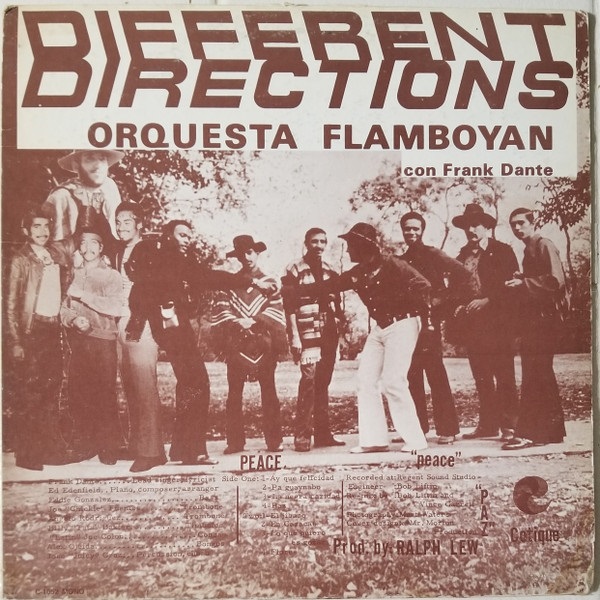
Cerda records a second production with La Orquesta Flamboyán, entitled: “Different Directions”, following the line implemented by maestro Eddie Palmieri with La Perfecta, where he continues the emphasis on social issues, raised in his first musical work, this time with the production of Ralph Lew.

Orquesta Flamboyan Con Frank Dante Different Directions1970
Orquesta Flamboyan Con Frank Dante Different Directions
1970

Launches the album: “Se Viste de Gala”. Resuming his social commitment, he includes the piece “Venceremos”, accompanied by the electric guitar played by Harry Vigianno, who also plays the tres in this production.

In 1972, Frankie Dante is invited by Larry Harlow to produce a new album entitled: “Orquesta Flamboyán Con Larry Harlow”.

Here Frankie achieved hits such as: “La Cuna del Son”, “Yo Te Seguiré”, “Vive La Vida Hoy” and “Presidente Dante”.

The album featured the participation of Larry Harlow on piano and musical production, Ray Romero and Jerry Gonzalez on Congas, Ismael “Pat” Quintana and Milton Cardona on backing vocals.

This album is considered as a recognition of Frankie Dante’s talent when he was asked by the “Wonderful Jew”, Larry Harlow to record together.

Frankie shows all his irreverence by substituting the montuno for a political speech in the manner of a candidate.

As a representative of the Underground current, Dante prefers to perform in a bohemian way in Clubs such as: El Caborrojeño and the Cheetah.

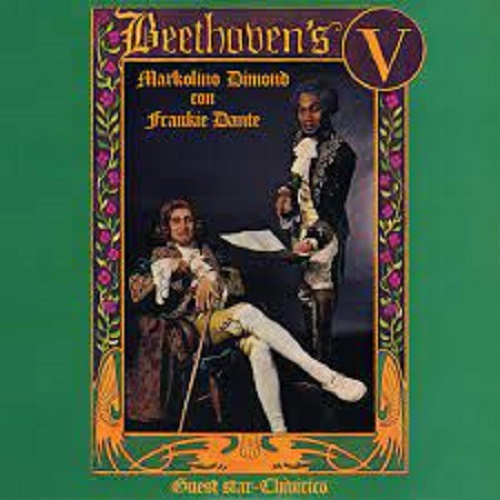
While in these clubs he meets pianist Marcolino Demond and they release the historic album: Beethoven’s V.

One of his best productions was with the extraordinary musician and pianist Markolino Dimond, who had played with Willie Colón, the album was titled: Markolino Dimond Con Frankie Dante Beethoven’s where in addition to his extravagances he imposed a different way of playing.

The album included five compositions by Marcolino Dimond: “Sabrosón”, “Camarones”, “El Quinto De Beethoven”, “Maraquero” and “Ahora Sí”, two songs with reserved author’s rights: “Los Rumberos” and “Yo No Tengo Amigo” and the hit “Porque Adore” by maestro Tite Curet Alonso.

Markolino Dimond Con Frankie Dante Guest Star Chivirico* Beethoven's V
Markolino Dimond Con Frankie Dante Guest Star Chivirico* Beethoven’s V

Dante and Marcolino were a duo without precedents, taking into account that both had the stigma of rebelliousness.

The album features Frankie Dante and Chivirico Davila on vocals and Yayo “El Indio”, Pete “El Conde” Rodriguez and Ismael “Pat” Quintana on backing vocals.

Other great musicians that participated in the band are Nicky Marrero – Timbales, Bongos; Pablito Rosario – Bongos; Barry Rogers – Trombone; Mike Collazo – Timbales, Eddie “Guagua” Rivera – Bass; Lewis Kahn – Trombone; Reinaldo Jorge – Trombone and Frank Malabé – Congas.

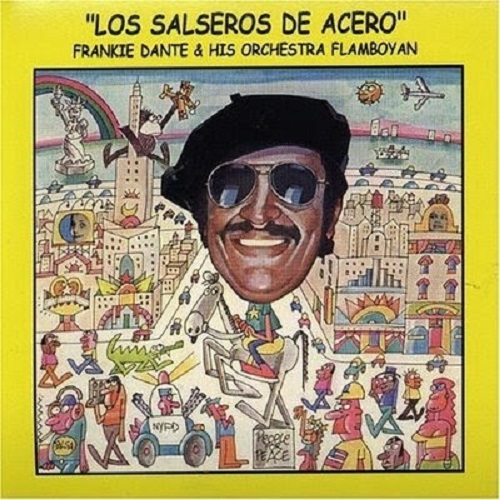
 In 1976, again with Marcolino, he released: “Los Salseros de Acero”, in an attempt to reunite the original line-up of Los Flamboyán with Joe “Chickie” Fuentes on trumpet, Ángelo Rodríguez on trombone and Alex Ojeda on timbales, plus the participation of stars of the moment such as: Charlie Palmieri, Tito Puente and Ricardo Marrero, in what was called: Flamboyán All Star Band.

Frankie Dante & His Orchestra Flamboyan Los Salseros De Acero

Among the songs on the album were “Ciencia Política” by Frankie Dante and “Chupa El Pirulí” composed by the wonderful Ciego Arsenio Rodríguez.

That year he published his seventh album “The Flamboyán All Star Band Frankie “Be Bop” Dante”, also recorded for Cotique Records, which included songs such as: “El Pipón”, “Son Retozón” and “Mumbo Jumbo”, compositions by Frankie Dante himself and a version of the song “María Cervantes” by the Puerto Rican Noro Morales.

Sonny Bravo, Norberto Cruz and Marty Sheller participated in the arrangements; Charlie Palmieri – Arrangements and Director and Mr. Ralph Lew as Producer.

The album also counted with the participation of other great musicians of the salsa movement such as: Leopoldo Pineda – Trombone, Ray Maldonado – Trumpet, Frankie Malabé – Congas, Orestes Vilató – Timbales, Ronnie Cuber – Sax and Flute, Willie Colón – Chorus and Tito Allen – Chorus.

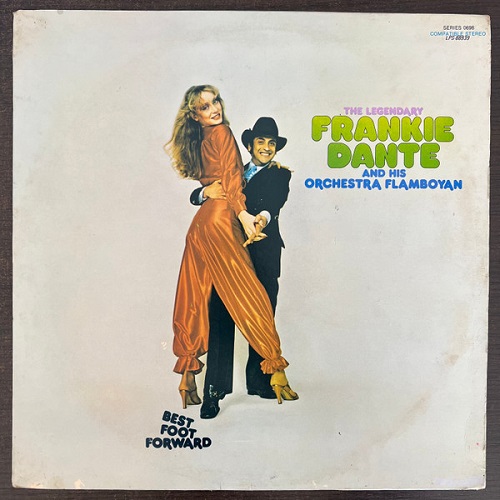
One of Cotique’s recordings was entitled “Frankie Dante and his Orquesta Flamboyán Best Foot Forward”, a compilation album with Frankie’s hits such as: “Paz”, “Los Rumberos”, “Presidente Dante”, “Venceremos” and the well known song “Yo Te Seguiré” written by the great Catalino Tite Curet Alonso.

The Legendary Frankie Dante And His Orchestra Flamboyan Best Foot Forward

His last recording appearance would happen in 1979 with the release of “Los Rebeldes”, where he decided to name his group: Frankie Dante Y Los Rebeldes.

This album has songs such as: “Los Congresistas” by Frankie Dante, a version of the song “Semilla De Caña Brava” by Cuban Luis Martinez Griñan “Lily” and “Vuelve El Rumbero” by Puerto Rican Johnny Ortiz.

Also participating in the recording were: Sal Cuevas – Bass, Louie Cruz, Marty Sheller, and Louie Ramirez in the Arrangements, Alberta Dering – Artistic Director, Ralph Lew as Producer and Milton Cardona as Musical Director.

Dominican Frankie Dante developed his musical career in New York City, where he died of cancer on March 1, 1993.

Dante, emulating his compatriot Johnny Pacheco, settles in the city of skyscrapers and takes with his “precursor” lyrical talent in terms of social conscience in salsa. With good artistic sense he perceives that the sound of the neighborhood and its hurtful musical style will be the main axis of the new concept that is born in the land of Uncle Sam.

“He recognizes in the almost adolescent Willie Colón a style to follow, he is enormously attracted to that “sour” way of arranging the songs, the maestro Eddie Palmieri and his Orquesta La Perfecta (already in full swing) also influence the young Dante as well as Ismael “Pat” Quintana’s way of interpreting, a style that Frankie incorporates immediately in his first production in 1968 under the Cotique label (Ref. CS-1043) titled Los Coquetones”.

Sources and Bibliography:

  • http://www.megaupload.com/pt/?d=FR6AAPU0
    • http://ww.malianteo.com
    • http://www.salsajazz.com/i
    • http://apostolsalsero.soy.es/frankie-dante-la-orquesta-flamboyan/
    • Latinastereo 100.9 FM nuestra música

Also Read: Nicky Marrero is an innovator, timbalero and bongo player, living legend of our Afro-Latin and Caribbean music.

Young Puerto Rican singer Jeremy Bosch supports the Spanish Harlem Salsa Museum

There are many people who believe that salsa is a genre of past generations that does not have worthy youth representatives who stick up for this set of rhythms that has been keeping so many people dancing for so long, but fortunately they are wrong. Jeremy Bosch, whom we had the opportunity to interview at The Johnny Cruz Shw a few weeks ago is a god example of this.   

We are honored to know that one of the new sensations of Latin music, specifically salsa, supports one of the most important institutions dedicated to the genre such as the Spanish Harlem Salsa Museum, so we want to take advantage to talk a little about the career of this young singer and everything he has achieved so far.   

Jeremy playing the flute
Jeremy Bosch playing the flute live

Jeremy’s beginnings in this world 

Jeremy Bosch is a singer and flutist born in the city of Ponce, Puerto Rico, who began his journey in the world of music singing and playing percussion in the church on his block while growing up listening to a great variety of artists including Hector Lavoe to Chicago and Tonny Bennett, so he had influences of all kinds.   

Not much time would past before Jeremy took achevable steps towards the direction he was meant to take. At only 17 years old, he won a scholarship to study at Berklee College of Music in the city of Boston, United States, and graduated in 2023, specializing in jazz composition. From then on, what followed for the young artist have been successes and great proposals he could seize.   

One of thse things he is best known for is having been the vocalist and flutist of the acclaimed group Spanish Harlem Orchestra, but that has not stopped him from collaborating with great figures in the industry such as musical director and Grammy-winning percussionist Pete Perignon, with whom he recorded the social short called ”Sería Una Pena”.   

Johnny and Jeremy
Johnny Cruz and Jeremy Bosch posing for the camera

Jeremy’s professional career 

Sometime later, he would have the opportunity to realize one of the most important works of his career, which is the tribute to the late Cheo Feliciano, which was recorded live at the Dizzy Club in New York City and was titled ”The Music of Cheo Feliciano. In addition, the project included Nelson Gonzalez, Johnny ”Dandy” Rodriguez and Spanish Harlem Orchestra leader Oscar Hernandez.   

With regard to this great night for his career, Jeremy commented that since his debut both he and arranger and vibraphonist Felipe Fourniel had long time wanting to work on something about Cheo Feliciano and his legacy for a long time until they finally made it. This show was the sign that Jeremy has everything to become an icon of salsa and Afro-Caribbean music in general.   

As for his solo career, he has made a few remarkable recordings and one of them was ”Prologo Hoy”, which included the participation of Nicaraguan singer Luis Enrique and Cuban vocalist and guitarist Alain Perez. It is a five-song EP that focuses a lot on Afro-Colombian and tropical music, while including some covers in English such as ”Love Holiday”, which gives a distinct flavor to the material as a whole. 

Jeremy and Johnny on the set
Jeremy Bosch and Johnny Cruz on the set of The Johnny Cruz Show

Later on, Jeremy released ”Epilogo: la clave del tiempo”, which includes 11 tracks and is basically a mix of Afro-Cuban rhythms, soneo, urban genres, modern synthesizers, among other elements. The album starts with ”Locura” and continues with singles such as ”Try Again”, ”La Mala”, ”Autopsia” and a few more.   

Support for the Spanish Harlem Salsa Museum 

In the social networks of the director of the Spanish Harlem Salsa Museum, Johnny Cruz, there is a clip in which the The Johnny Cruz Show host introduces Jeremy as his special guest on that occasion, promotes the interview with him and describes him as the sensation of the moment. Then, the camera goes n Jeremy’s face, who thanks the invitation with a smile and assures that they both will have a good time talking about his life and career. 

We are honred to support young talents like Jeremy and, at the same time, to get the same support and love back because that is what salsa and the Latin music scene in general needs, that all those involved join together around it to keep it alive. 

Johnny Cru ISM corresponde in New York City


Read also: Paquito D’Rivera supports the salsa museum 

Career and interesting facts about Venezuelan singer and musician Omar Ledezma Jr.

Venezuelan singer, percussionist and music teacher Omar Ledezma Jr. has already talked to us in the past and has revealed important details regarding his life and career, but this time, our editor Eduardo Guilarte has been in charge of interviewing him and revealing some unknown details about his different facets professionally and personally.  

Is such a pleasure to have the chance to talk to one of the most talented Latin musicians who currently lives in the San Francisco Bay Area and know so many things that the artist had not previously revealed.   

Venezuelan percussionist Omar Ledezma
This is Omar Ledezma Jr., Venezuelan singer, percussionist and music teacher

Omar Ledezma’s beginnings in music and childhood 

Omar Ledezma Jr. was born on February 17, 1972 in Caracas, Venezuela, and was raised in a very close family that gave him a lot of love and care since he was a child. Both the Ledezma and López families were very important in his growth, but it was from the Ledezma’s that he got his musical vein.   

His mother and cousin José Vicente Rodríguez López decided to enroll him in the marching band at the Claret School, where he had his first contact with music by playing the snare drum, an instrument he was first assigned to play. It is also in the band where he started making friends with other teens who were already forming gaitas groups to compete in contests related to this traditional Venezuelan genre.   

When he turned 16, he began to participate in these gaitas inter-school competitions in 1987 and 1988. In 1989, he participated in his first big musical event at the nightclub Mata de Coco. Omar assures that this was the official start of his career in a more professional way. A few years later, going hand-in-hand with his father, he began to take a deeper interest in music as a profession and wanted to experiment with other genres such as Afro-Cuban music and Latin jazz.   

This path led him to join the orchestra La Charanga Clásica led by Mr. Frank Luzón. While playing there, he met several inspiration timbaleros such as Daniel Cádiz (from the Andy Durán Orchestra). 

In parallel with all of the above, Omar was admitted to study in law school at the Santa María University, so he shared his time between his university studies and his professional musical activities. In his spare time outside the university, he played Latin jazz and was formed as a percussionist with his orchestra.   

In 1995, Omar graduated as a lawyer as part of the class ”Honor a Venezuela” ranked in 12th place among his classmates. Although today he is not engage in law at all, he considers that having continued his studies was very important to him as a person because he would have a base on which to stand on in case his plans with music fell through.   

However, the artist never thought about practicing law, since he was very clear that it would be difficult to do so due to the legal situation in Venezuela, so he continued to focus on his great passion, which was music. Besides, after analyzing it, he decided that he did not have a natural talent for that career. 

In parallel, during those years as a law student, he made a trip to Cuba, which he claims changed his life completely. Some friends he made there, when seeing his skills as a musician, told him that he could be studying law, but that his life was and would be music forever.  

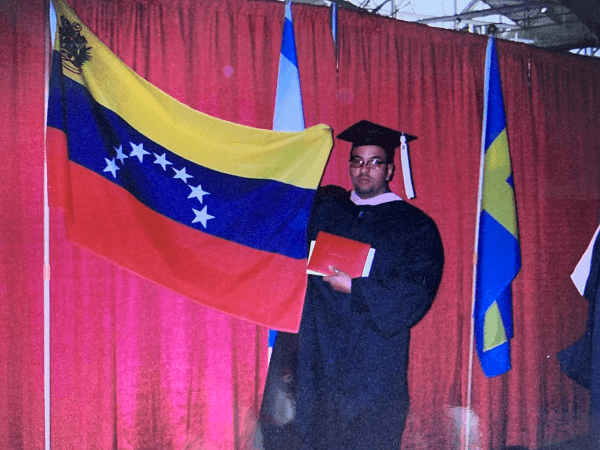
Omar graduating as a lawyer
Omar Ledezma Jr. graduating from Berkee College of Music

The United States and Berklee College of Music 

Just a few years after graduating, specifically in 1998, Omar made the decision to move to the United States looking for new opportunities and describes this trip as an exploring experience because many of his friends, orchestra fellows and acquaintances from the musical environment in general started taking new directions in the mid 90’s. The young man knew he wanted to do the same and chose the city of Boston to settle in at first.   

Although he finally moved to Boston in 1998, already in 1997, his mother gave him the idea of going to the United States with an open ticket so he could decide whether to stay permanently or return. In the end, he opted not to use the return ticket and stayed in Boston to try to enter any music school through a scholarship.   

After checking several options, he chose Berklee College of Music because it was the only college that allowed him to study composition and arranging as hand percussionist, so he auditioned to be admitted and was selected in the fall of 1999. He obtained a 70% scholarship, but he had to work hard to get the remaining 30%. In that sense, Omar assures that the same school helped him to obtain the corresponding permits to work legally in the country and thus be able to pay the percentage that is not covered by the scholarship. 

Omar also told us that it was his friend Gonzalo Grau who helped him do the demo with which he auditioned to enter Berklee and it was a song of his own titled ”Cacao”. Today, he assures that that recording gave him one of the greatest opportunities he has ever had in life, which was to study there. He spent a total of four years studying in that institution and graduated in 2003. 

During his undergraduate studies at Berklee, Omar had the option to study business and intellectual property and his lawyer’s training made it easier for him, but he defines himself as a ”natural born performer” and his life was the stage, so he did not see himself stuck in an office solving cases.   

One of the first jobs Omar had in Los Angeles was replacing the singer from Johnny Polanco’s prestigious orchestra and that one that helped him take that place was Ray Barreto’s flautist, the late Artie Webb. The concert was held at the Mayan.  

Omar playing the conga
Omar Ledezma Jr. playing the conga in a live performance

Family 

As to the family part, Omar told us that he had married his wife Jennifer Radakovich about seven or eight years ago, but they have no children for the moment. This is because they are still analyzing their opportunities to settle permanently in the state of California, so he assures us that they are still building their future as a couple and as a family. 

Jennifer’s family comes from Serbia and settled in Detroit, Michigan. They had to leave their country, which was then the former Yugoslavia because of the war that went on in the territory at the time. In fact, at a family reunion, his in-laws told him that his wife’s father arrived in the country on the boat anchored in Long Beach, California, The Queen Mary.  

Pacific Mambo Orchestra 

Omar Ledezma started his journey with Pacific Mambo Orquesta practically since its foundation in October 2010, when he started playing at Café Cocomo. Santana’s timbalero Karl Perazzo, who was already included in the lineup of the venue, proposed him to go to this place to play as a percussionist on Monday nights. The problem was that there was no money to pay him for the moment. 

That’s when the directors of Pacific Mambo, Christian Tumalan and Steffen Kuehn, proposed to the owners of Cafe Cocomo to give them some space to have band practice. These Monday meetings ended up being paid rehearsals open to the public in exchange for 10 dollars a night. This lasted some years in which the 20 members of the orchestra were in charge of developing much of the repertoire that has made them famous internationally. 

About this time, Omar said that, on several occasions, he and his orchestra fellows sat down to talk about the continuity of the band owing to the lack of money. The wonderful thing is that everyone always voted in favor of their stay in the group despite the adversities. According to the Venezuelan musician, it was this hunger and desire to succeed that made the orchestra what it is today.   

Omar, Eric, Karl, and Edgardo
Omar Ledezma Jr., percussionist Eric Rangel, music producer Karl Perazzo, and bandleader Edgardo Cambon

These efforts worked and Pacific Mambo Orquestra managed to win their first and only Grammy so far in 2014. That year began with the orchestra’s appearance in one of the main banners of the iTunes page for a little over a week, which gave them a lot of popularity at that time and was not common for Latin artists and groups. 

That same year, the group began touring with Tito Puente Jr. in August and were so successful that Omar and five other members of the group decided to begin campaigning for that year’s Grammys via e-mails to all the members of the jury promoting their latest album. Then, on tour, they received the news of their nomination (the second of Omar’s career), but they did not think they would win. 

Much to the surprise of Omar, in January 2014, he received word that Pacific Mambo Orquesta won its first Grammy in the category of Latin Tropical Album of the Year. This event changed the lives of everyone in the group to the extent that large media outlets started looking at them. One of them was world-famous Billboard magazine, which published a piece talking about the band and its talents. 

It is important to stress that, although it was an experience the musician will never forget in his life, he is aware that this is in the past and has to look ahead and focus on his future successes. At this moment, Omar and his companions are focused on making up for time lost during the pandemic and performing all the activities that confinement prevented them from doing. 

Read also: Arranger, composer and pianist Carlos Ordiano 

  • « Go to Previous Page
  • Page 1
  • Interim pages omitted …
  • Page 13
  • Page 14
  • Page 15
  • Page 16
  • Page 17
  • Interim pages omitted …
  • Page 34
  • Go to Next Page »

International Salsa Magazine (ISM) is a monthly publication about Salsa activities around the world, that has been publishing since 2007. It is a world network of volunteers coordinated by ISM Magazine. We are working to strengthen all the events by working together.