• Skip to primary navigation
  • Skip to main content

International Salsa Magazine

  • Home
  • Previous editions
    • 2025
      • ISM / November 2025
      • ISM / October 2025
      • ISM / September 2025
      • ISM / August 2025
      • ISM / July 2025
      • ISM / June 2025
      • ISM / May2025
      • ISM / April 2025
      • ISM / March 2025
      • ISM / February 2025
      • ISM / January 2025
    • 2024
      • ISM / December 2024
      • ISM / November 2024
      • ISM / October 2024
      • ISM / September 2024
      • ISM / August 2024
      • ISM / July 2024
      • ISM / June 2024
      • ISM / May 2024
      • ISM / April 2024
      • ISM / March 2024
      • ISM / February 2024
      • ISM / January 2024
    • 2023
      • ISM / December 2023
      • ISM / November 2023
      • ISM / October 2023
      • ISM – September 2023
      • ISM – August 2023
      • ISM July 2023
      • ISM Edition June 2023
      • ISM – May 2023
      • ISM April 2023
      • ISM March 2023
      • ISM February 2023
      • ISM January 2023
    • 2022
      • ISM December 2022
      • ISM November 2022
      • ISM October 2022
      • ISM September 2022
      • ISM August 2022
      • ISM July 2022
      • ISM June 2022
      • ISM May 2022
      • ISM February 2022
      • ISM January 2022
    • 2021
      • ISM December 2021
      • ISM November 2021
      • ISM October – 2021
      • ISM September 2021
      • ISM August 2021
      • ISM July 2021
      • ISM May 2021
      • ISM April 2021
      • ISM June 2021
      • ISM March 2021
      • ISM February 2021
      • ISM January 2021
    • 2020
      • ISM December 2020
      • ISM November 2020
      • ISM October 2020
      • ISM September 2020
      • ISM August 2020
      • ISM July 2020
      • ISM June 2020
      • ISM May 2020
      • ISM April 2020
      • ISM March 2020
      • ISM February 2020
      • ISM January 2020
    • 2019
      • ISM December 2019
      • ISM November 2019
      • ISM October 2019
      • ISM Septembre 2019
      • ISM August 2019
      • ISM July 2019
      • ISM June 2019
      • ISM May 2019
      • ISM April 2019
      • ISM March 2019
      • ISM February 2019
      • ISM January 2019
    • 2018
      • ISM December 2018
      • ISM November 2018
      • ISM October 2018
      • ISM September 2018
      • ISM August 2018
      • ISM July 2018
      • ISM June 2018
      • ISM May 2018
      • ISM April 2018
      • ISM March 2018
      • ISM February 2018
      • ISM January 2018
    • 2017
      • ISM December 2017
      • ISM November 2017
      • ISM October 2017
      • ISM September 2017
      • ISM August 2017
      • ISM July 2017
      • ISM June 2017
      • ISM May 2017
      • ISM April 2017
  • Download Salsa App
    • Android
    • Apple
  • Spanish

Search Results for: jazz club

Why Does Everyone Know La Bodeguita Del Medio In Prague?

The Most Emblematic Restaurant / Bar In Havana (Cuba) Turns 19 Years In The “City Of Hundred Spires”

Five women sitting and toasting at the La Bodeguita del Medio bar
Spanish is also spoken in La Bodeguita Del Medio in Prague

Prague (Capital of the Czech Republic) has become one of the most hospitable major cities for Cuban migrants.

In this bohemian region nicknamed the “City Of Hundred Spires”, beer is the traditional drink of any establishment, so an authentic Mojito (made with natural spices that aid good digestion) is a delight for the palate of any inhabitant or tourist of the area. And you can only taste it in an authentic Cuban place such as La Bodeguita Del Medio.

This Restaurant / Bar was founded in the city of the Astronomical Clock 19 years ago (December 17th, 2002), six decades after the opening of the original restaurant in Havana (Cuba).

La Bodeguita del Medio is designed in the colonial style of 20th century Havana with live music and daily dance acts. It has two original bars and a replica of the famous Sloopy Joe’s Bar (a 20-meter long mahogany bar with high stools and luxurious display cabinets) that was made in Colombia. In this bar, besides the mojitos, you can also try more than 150 types of short and long drinks.

View from the stage with a pianist and singer performing at the bodeguita del medio in prague
Usually, there is a notice that says: Tonight Latino Dance Show

Regarding the menu, you will find typical Havana specialties, as well as seafood, fish, vegetables, and meat specialties. Also, and adding a bit of tradition, you will find the menu in Spanish and if you can attend every day at noon you will delight the international European menu.

Additionally, while you taste the variety of dishes and cocktails, you will enjoy a live Cuban band (generally trios) and performances by Latin dancers every night.

Six Decades Of La Bodeguita Del Medio

Night shot of the neon green facade of the Bodeguita del Medio in Prague
Food is prepared with fresh ingredients and according to the season in La Bodeguita Del Medio (Prague)

Based on the story written by La Bodeguita Del Medio in Prague

“For some reason unknown to us, it is said that La Bodeguita is located at a distance of one hundred cobblestones (stone carved in the shape of a rectangular prism for paving streets) from the largest American Baroque building in Cuba, which if proven, indisputably turns out to be true and is the Havana cathedral.

In 1950, La Bodeguita del Medio restaurant opened its doors at number 207 cobbled street…

Upon entering La Bodeguita (in Havana) for the first time, the olfactory senses revel in the delicious aroma of Cuban mint, while tasting the special herbs, which do wonders for the digestive system. Thus, these inseparable ingredients became the rudiments of the famous drink that we know today as MOJITO, whose current shape and flavor were developed in La Bodeguita.

At the back of the Havana Bodeguita restaurant, guests have the opportunity to sample excellent Cuban cuisine, while enjoying the sounds of traditional melodies sung by a Cuban trio.

Now let’s go back to… 1942 when Ángel Martínez Borroto bought a small shop in the still fortified old town of the city. A short time later, he dedicated himself to managing and developing his small business, called La Casa Martínez… For some time… clients would come to La Bodeguita to settle their business with a glass or two of rum.

Among the most prominent regulars who frequented the Bodeguita at that time, were the classic Cuban poet Nikolas Guillén and the notable prose writer Alejo Carpentier. Little by little, La Bodeguita established an impressive client base, which turned out to be a popular choice for intellectuals, artists, and bohemians… In fact, over time, La Bodeguita became a forum for progressive-thinking intellectuals (who came from Latin America and the world) to meet and debate.

  • You Can Also Read: Meet The Amazing Fasching Jazz Club In Sweden

…Initially, meals were only available to family members and the few waiters, prepared by Martinez’s wife, nicknamed “Armenian girl” (presumably because of her dark skin tone).

At this time, the main ingredients were a combination of black beans and white rice or as it were more often called: maoríes y cristianos.

To finish, the guests were served baked pieces of pork, called “Fried Pork Masses” and fried plantain chips known to the locals as “Plantain Tostadas.”

Martínez was dedicated to satisfying the requests of his most trusted customers and later began serving food, even though people only paid for drinks.

Crowded bar area in Prague's Bodeguita del Medio
Smoking is allowed in this establishment (La Bodeguita Del Medio-Praga)

In 1950, the title of Martínez’s company was indefinitely changed from La Casa Martínez to the name the regulars had been using for some time: La Bodeguita.

This same decade also saw the arrival of a new wave of clients from around the world, including artists such as American singer Nat King Cole, Nobel Prize Winner for literature Ernest Hemingway, and female beauty idols Brigitte Bardot and Sophia Loren.

…Today La Bodeguita del Medio serves as an unwavering reminder of its bohemian past where guests, whether intellectuals, politicians, or passersby, continue to meet and pass the time.

As for the colonial Bodeguita building, dating from the late 19th century, many visitors believe that the collection of priceless signatures, memorabilia, and photographs preserved on the stone walls deserves to be listed in the Guinness Records Book.”

Orquesta La Moderna Tradición frontman Tregar Otton talked to us

What Orquesta La Moderna Tradición is

Tregar Otton playing
Tregar Otton, founder of the orchestra, playing the violin

Orquesta La Moderna Tradición has been one of the most legendary groups of Cuban music in its entire history. It is a group whose members are based in San Francisco, California, and consists of 11 members who play different genres such as danzón, timba, guaguancó, cha cha chá, son, rumba, charanga, among others. They also mix in elements from American jazz, violins, and Afro-Cuban rhythms.    

The beginning of this orchestra’s story goes back to 1996, since they started to perform throughout the United States to bring the best of traditional Cuban music to every corner of the country and transport Cuban immigrants back to the Havana’s streets and clubs during the 50’s. All the success accumulated allowed them to perform at the San Francisco Jazz Festival, the Smithsonian Institution, the Lincoln Certer and many other venues of high prestige.    

Recently, Orquesta La Moderna Tradición once again displayed their talent at Yoshi’s, a jazz club and restaurant located in Oakland, California, whose reputation in the San Francisco Bay Area is not up for discussion. Our editor Eduardo Guilarte was present at the show to cover the details of the event, which left all those present in awe.  

Conversation with Tregar Otton, founding director of the orchestra 

Tregar Otton and Maru Pérez
Tregar Otton and Maru Pérez-Viana, his wife and an important part of the orchestra

Based on the above, we talked with Tregar Otton, founder, director, composer, and violinist of the group. This talented musician, born in the Marshall Islands and raised in Texas, started to learn about classical music from an early age and joined the Berkeley Symphony while he still was a teenager. By the 1990s, this musical promise worked as a regular part of Virgilio Mart Y Sus Majaderos, La Tipica Novel and the Charanga Orquesta Broadway. 

By the year 1995, Otton founded Orquesta La Moderna Tradición with Roberto Borrell. At the beginning, the group started to become well-known for its soft sounds of Afro-Cuban charanga, which are accompanied by a set of wind instruments and violins that give a unique touch to this group’s music. 

Today, we have the welcome presence of the musician to talk about each and every one of the issues raised in this brief review and anything he wants to reveal to our dear readers. It is such a pleasure to have you here today, Tregar. How are you feeling?  

I am fine here near San Francisco. Good to see you today.

Very good, Tregar. You got started in the world of music at a young age. Could you tell us a bit about your beginnings? 

I started playing violin when I was four years old and my family had a violin teacher as a neighbor. My parents did the laundry for all our neighbors, so we met her and she ended up giving me classes every day. After that, I studied a lot of classical music, bought music when I was about 20 and fell in love with it because it used the violins differently from classical music. I really enjoyed playing dance music because the connection with the public is quite different from that of classical music. In the case of classical music, many people get bored, but Cuban music and salsa music make a much more direct connection to the audience. There is nothing like playing for a floor with dancers. 

We understand that you were born in the Marshall Islands, but grew up in Texas, is that correct? 

Yes. After my dad married my mom, they both moved to Micronesia, the Marshall Islands, in the middle of the Pacific. After that, I grew up in Corpus Christi, Texas, till I was 13 or 14 about when I moved to California.   

I asked because it is very interesting how you set your eyes on Cuban music despite your origins. Where does this interest in Cuban music and the rhythms you play come from? 

For the same reasons I play dance music. It caught my attention when I heard Charanga de La 4 or one of these New York bands. I was impressed that violins were part of the percussion and were making repetitive sounds with the refrain and the son montuno. We are more part of the rhythm section than the melodic section in many of our songs. We can dance while we are on stage. I was also impressed by the improvisations of Cuqui and Alfredo de la Fé. I had many Latin friends I met in college while learning Spanish because no one in my family spoke it. 

How did Orquesta La Moderna Tradición come about and who joined you in its foundation? 

I was working with a group. I was in New York, where I was playing with the Broadway Orchestra and the Orquesta Tipica Novel. I was very lucky to have been in that city because I got to know many veteran musicians in the 80’s like Renato Valdés, Virgilio Martí, and Adalberto Santiago. I visited a Cuban friend from San Francisco named Fito Reinoso, who had a group called Ritmo Y Armonía and he visited us here in New York. I was tired of the cold in New York, so I decided to go to San Francisco, where Tito and I had the idea of creating a group. It was there that I met a great drum instructor and dance teacher Roberto Borrell, who joined us to found Ritmo y Armonía. After two years, we had to be apart, but Roberto and I still wanted to play danzón. At least here in the Bay Area, it is very difficult to get singers. The ones we have are good, but there are not so many. So, we planned to make a danzonera or danzón group. When the orchestra began to work, we only played danzón songs, rehearsed every week and did many tours with this musical genre because there was a boom with swing dancing and dance music during the 40’s. So, we were surfing that wave. So, we were surfing that wave and doing collaborations with swing groups because it was older music. Danzón is a very rich genre, but it is no of interest to many people because they do not know how to dance it, so we started expanding our repertoire to include more modern and dance music. We still play danzones, but only two per set. There are still musicians from the original group in the orchestra including Michael Spiro. Roberto went to Peru about a decade ago, so Michael and I stayed with the group and invited Eduardo Herrera, who is a singer born in Caracas, Venezuela, to perform with us. We expanded the repertoire by doing the best we could with my own creations. Let’s remember I am the arranger of the group, so I do some songs and we have one that is included in the new recording in which I wrote the music and maestro Carlos Caro from Cuba added the lyrics. 

Orquesta La Moderna Tradición performing
Orquesta La moderna Tradición at one of its shows

Although rhythms like danzón are not so popular, did you feel the acceptance of the public? 

There were many people who knew danzón who began to notice that it was a very interesting genre due to the presence of the violins. As Roberto Borrell is a dance teacher, he teaches many of his students how to dance danzón, which is not easy because they should be affixed on each turn they have to make according to the sounds of the instruments.   

Can you go from one genre to another in the same song? 

Yes, we do that a lot. On our new album, we have rhythms with batá drums from music of Santería, which we use for our danzón songs. It sounds complicated when I explain it, but it is easy at the time of listening to it. 

What makes Orquesta La Moderna Tradición different from other Latin music groups in the United States? 

Well, I know no other group that plays danzón or charanga. There are two genres of popular dance music in Cuba that come from son montuno, which uses violins and flutes. In the case of charanga, the musicians use violins and flutes. Since the 70’s and 80’s, charanga is now no longer heard in the United States. In Cuba, neither do you hear danzón much. We are a group that has so many danzones in the repertoire. There are not too many groups that play cha cha chá. Me being an arranger, I try to create cha cha chá songs that are not copies of what was played by Orquesta Aragón and other bands in the 40’s and 50’s.   

Given that music has evolved so much, what reaction do you perceive from the young public when you play charanga, cha cha chá, danzón and other rhythms? 

Interesting question. For young people who do not know and are not salsa fans, our music sounds like salsa because it is difficult to distinguish the genres without knowing them well. However, I work as a music teacher and I have many groups of children, in which there are many salsa fans. They listen to Ray Barreto, Willie Colón, and Hector Lavoe. They also like charanga and understand it well. However, I think danzón is more difficult because it has to be a reflection of what people are feeling in their culture. Cha cha chá is simpler and innocent, but danzón is finer and refined. I think music can influence people and play its part in changing the direction of their culture. 

Can you tell us a little bit about your performance at Yoshi’s? 

Because of COVID-19, for a year and a half, we could not do anything. We could not even rehearse until the vaccine came on the market. We got this date with Yoshi’s because we have played there many times before as well as Yoshi’s in San Francisco. So, they gave us a date and we had the support of local DJs like Luis Medina, Chuy Varela and Jose Ruiz. We also made use of social media to promote us, sell our CDs and attract people to our shows. The staff of Yoshi’s was impressed because it is rare that a local band has been able to sell so many tickets. We were very excited to see so many people loving us and showing how much they love music. We have a large audience that is very loyal to us and has been going wherever we perform for over 20 years.  

Orquesta La Moderna Tradición at Yoshi's
Orquesta La Moderna Tradición performing at Yoshi’s

What are your future projects? 

We get everything ready for the repertoire of the new album. When I was in New York, I was working with Juan Carlos Formell, Juan Formell’s son, who is the bass player and took over his father’s position in Los Van Van. I was one of the first people he met here in the United States and we became very good friends. Then he told me that I could arrange any of his songs without any problem, so I have about four or five of his songs ready and some others that I have not finished yet. We have enough material to make at least two albums, but it is very expensive. One could only cost us about $15 to start with. 

cover art work for the new album El Encantado
Cover art work for the Orquesta La Moderna Tradición new album El Encantado

Your social networks or websites  

Official website: www.danzon.com  

Facebook: https://www.facebook.com/OrquestaLaModernaTradicion  

Bandcamp: https://orquestalamodernatradicin.bandcamp.com/album/encantado-2 

Do You Know In Which Country Rubén Blades Start his Tour?

The United States Will Be The First Country Where The Panamanian Artist Will Present Salswing Tour!

Rubén Blades with blue hat on stage
Rubén Blades will be recognized as “Person of the Year” at the Latin Grammys on November 17th in sin city, Las Vegas (Nevada)

The multifaceted artist and political activist, Rubén Blades, announced his return to the American stage with his friend and fellow countryman Roberto Delgado & Big Band, starting next November 20th.

The Salsero icon announced the beginning of his tour through his official Facebook account: “We are very happy to be able to work and get in touch with our audience again, after almost two years without being able to do so. With the Roberto Delgado Big Band, an orchestra of 20 musicians that is sounding better, we are eager and want to share our latest album Salswing!, and the usual songs… Please, don’t stop getting vaccinated”.

There are eight cities that the living Salsa legend will visit in North America, starting on November 20th in Oakland (CA), Los Angeles (CA), Atlanta (GA), Miami (FL), passing through Boston (MA), and New York (NY) on November 28th and December 2nd respectively, and having as a special guest the extraordinary American actress, singer, and wife of Blades, Luba Manson who will be showing the repertoire of her Jazz album Triangle released in October 2020.

Rubén Blades with black hat and Luba Mason with white shirt
Rubén Blades and Luba Manson have been married since 2006

Later, Salswing Tour! & the Roberto Delgado Big Band will present their penultimate concert this year on Friday, December 3rd in Washington (DC), and will close this magnificent tour on Sunday, December 5th on the southwest shore of Lake Michigan at the mighty Arena Arie Crown Theater in Chicago (IL).

Regarding this great 2021 tour, Nelson Albareda, CEO of Loud And Live, the company in charge of carrying out this series of concerts and those of Latin stars such as Carlos Vives, Juanes, Farruko, among many others, commented: “It is an honor for us working with a Latin icon, who has inspired generations through his salsa music and long artistic career. Rubén Blades is not only a great artist but also a great ambassador, and activist for our Latin community”.

The prestigious Panamanian songwriter will show for the first time the eleven songs of his most recent album “Salswing!” title that also gives the name to the tour.

Digital album cover Salswing! in red background and yellow letters
“Music is a universal gift, and from Panama, we renew our contribution with this album, SALSWING!”. Rubén Blades

Salswing! has 11 tracks including, Mambo Gil, Cobarde, Canto Niche, and Ya No Me Duele, the latter written by Jeremy Bosch and Rubén Blades with arrangement by Tom Kubis. Salswing! was recorded in collaboration with the record’s bassist and musical producer, Roberto Delgado, and his band made up of 20 talented Panamanian musicians, and it was released on the digital market on April 15th, 2021.

“Although the connection between Jazz and Salsa has been historically documented, much remains to be described and recognized. The combinations and collaborations between musicians of these genres have been numerous over the years and include figures of the stature of Mario Bauza & Dizzy Gillespie, Machito & Charlie Parker, Luis Russell, and Louis Armstrong. With this record production, I try to continue that relationship, verifying that art does not have a nationality but rather represents a spirit that transcends races, geographies, and languages”. It is extracted from his official page.

Rubén Blades has been performing with Roberto Delgado & Bing Band for ten years in the most prestigious stages around the world. In these eight concerts, there will be a historical tour of recognition of the Latin origins of jazz as well as the influences of the son, Afro-Caribbean music, and swing. In addition to including the hits always chanted by the crowd in any corner of the planet.

  • You Can Keep Reading: Meet The Amazing Fasching Jazz Club In Sweden

Who Is Roberto Delgado?

Roberto Delgado dressed in black holding a Grammy in his hand
Roberto Delgado and his Orchestra along with Rubén Blades won a Grammy for Best Latin Tropical Album in 2018

Roberto Delgado was born in the capital of the Chiriquí province in western Panama on June 27th, 1961. This prodigious artist has developed in the musical environment as a Producer, Singer, Bassist, and Arranger.

His upward career began with his studies at the prestigious Conservatory of Music of Fine Arts in Mexico City (Mexico) and later at the Golden West College of Huntington Beach California (United States).

With more than 40 years of experience, Roberto has been a member of ten Panamanian groups counting the Salsa singer orchestra, Roberto Blades (1992) and he is currently the director of his big band made up of 20 musicians and with whom he has shared the stage since 1996 together with the master Rubén Blades.

In the enormous list of famous artists that Delgado has accompanied in productions and tours in addition to the Blades brothers are Cheo Feliciano, Celia Cruz, Gilberto Santa Rosa, Ismael Miranda, Andy Montañez, Tito Nieves, La India, Víctor Manuelle, José Alberto “El Canario”, Luigie Texidor, Maelo Ruiz, Charlie Aponte, Joan Manuel Serrat, Carlos Vives, and many more.

The conductor together with Rubén Blades has performed on the major international stages, including Madison Square Garden (New York), Hollywood Bowl (Los Angeles), Shepherd’s Bush (London), Poble Espanyol de Barcelona (Spain), numerous Latin American auditoriums, and acclaimed festivals in Europe and the Caribbean.

Also, this duo has three Latin Grammys (2015, 2017) and two Grammys for Best Traditional Tropical Latin Album in 2016 and 2018.

Currently, Roberto Delgado (60 years old) and Rubén Blades (73 years old) continue to transgress the barriers that will be the first Latin artists touring Salswing! in the middle of the pandemic throughout the North American territory.

An important fact to attend the Rubén Blades and Roberto Delgado & Big Band concert series in Los Angeles County is mandatory to wear masks. At the moment, mandatory vaccination in the United States only applies to public employees and workers of large companies.

Great conversación with conductor and timbalero Sammy Deleon

How Sammy Deleon’s career began to flourish

There have been uncountable artists who have lifted Latin music around the world, and one of them has been conductor Sammy Deleon. This American of Puerto Rican parents was born in Lorain, Ohio, on August 18, 1961, and grew up in the same county with his 14 brothers. He started his professional career with the Trio Puerto Rico when he was just 13 years old, after which he was already beginning to demonstrate his incredible musical skills. 

While it is true that neither of his parents were musicians, Sammy recalls with affection his mother while she used to sing at home and his father used to play the Puerto Rican cuatro during the Christmas season to celebrate the occasion to the sound of parrandas typical of the Island of Enchantment that were created for the occasion.   

This musician greatly enjoyed the work of Tito Puente, with whom he later developed a great friendship and an excellent working relationship. That happened on one night when the King of Timbales was playing a concert in Lakeview Beach. Deleon made his way to the stage, greeted the timbalero, wanted to talk to him and asked to play with him. After doing some soundtracks and a unique display of talent, Puente accepted to let him play and together they shone on stage by making one of the biggest dreams of Sammy a reality. 

After that, he ended up playing with Puente in his hometown, Orlando, New York and Puerto Rico. After many years, the same would happen with Tito Puente Jr. who would also take into account this musician’s talent for his shows. 

Sammy Deleon with his timbales
Sammy Deleon playing the timbales in one of his concerts

Deleon has shown diverse musical abilities throughout his career, but without a doubt, he has been successful in percussion, more than in any other. Likewise, he has dedicated much of his time and effort to exploring Latin and Afro-Cuban rhythms, resulting in a style that is unlike many other artists of his kind. 

For the last 10 years, he has managed to conduct his own group Sammy Deleon Y Su Orquesta, with which he has had many of his successes in his career so far, one of them the respect and admiration of a vast multicultural audience that is always seeking innovation in the music which they hear. 

During these years, he has managed to capture the attention of many DJs, dancers, and Latin music lovers thanks to his hard work and the enormous energy invested in each of his musical productions. Contigo Y Sin Ti and Baila Que Baila have been a gift to the ear on dance floors crowded with people of all musical tastes and different levels of skills in relation to dance and choreography. 

Everything he learned during his career has also been benefitial to other musicians, as Sammy uses his knowledge to mentor would-be percussionists who want to follow in his footsteps and those of the most acclaimed musicians in history. Unquestionably, a noble task for those who, at a certain point, had the same dreams.   

Sammy Deleon and his people
Sammy Deleon Y Su Orquesta

Interesting and emotional conversation with Sammy Deleon 

A very good morning to all of you. This is Karina Garcia, North American director for International Salsa Magazine. I am very happy today because we have a very special guest. This is none other than Sammy Deleon who is a composer, timbalero, and musician with a long-standing career. How are you, Sammy? How are you feeling today? 

I’m very well, thank you. I’m very well, thank goodness. From here in Cleveland, Ohio.  

All right, Sammy, could you tell me what pushed you to go into music? What inspired you? What did you decide to take this path and why did you chose percussion? 

Well, the one who put the music on was my father. Gumersindo Deleon was the one who started all this. I say he was a frustrated musician because his time was not very good, but slowly, he taught me and my two brothers Puerto Rican jibaro music when I was a little boy. Two years went by and one of my brothers was 15 years old, the other one was 14 and I was 13 when my brother taught us salsa when it was a boom in New York. That is how we started playing percussion on our own, since no one taught us.  

We listened to music every day and from there started singing in church choirs with trios, ensembles, jibaro music and, little by little, we kept going up, up, up. That is when my older brother Roberto, who was a timbalero before I do, saw that I were interested in the timpani than him while he was dedicated to the conga and my other brother Micky was dedicated to the bongo. Then the three of us were rehearsing almost every day and my dad said that we were too loud when playing percussion. Years passed and my brother Roberto moved to Florida, my brother Micky moved to Kansas City and I were alone here.  

I have been playing since I was 13, starting with the Trio Puerto Rico and, later, I started playing with a group called Conjunto Nabori with music by Cheo Feliciano and we were doing it with vibraphones, congas, timbales and so on. From there, we joined an orchestra called Charambo (meaning charanga and mambo) where I stayed for 10 years. Next thing after that, the orchestra was going to break up, another merengue group called Orquesta Marquis was being created when merengue was in full swing in the 90s. After being part of that orchestra for five years, we had a problem with the director, so we fired him and changed the name to Orquesta Impacto Nuevo where I stayed for 10 years. After burning the CD, we went to Florida to promote it and, after that, a few things did happen and I decided to go back to Ohio.  

We created a group under my own name, so it was called Sammy Deleon Y Su Orquesta with which we have worked for almost 25 years now. We have joined many different singers. When we were in the Charambo Orchestra, we performed with Tito Puente, Adalberto Santiago, Chivirico Dávila, Vitín Aviléz, Conde Rodríguez, Luisito Carrión, Tito Rojas, Tony Vegas and many more. We played with Ismael Mirando for over a year and I won several awards in the city as Legend of the year and it was a big thing. I use an orchestra composed of 18 musicians and played mambo created by Tito Puente and Los Mambo Kings.  

Remember that I come from a big family in which we were 14 siblings, 8 sisters and 5 brothers. The oldest was a DJ for many years and the one who brought salsa here in the 70s and 80s. I also had the joy of playing with the Gran Combo de Puerto Rico two years ago because their timbalero got sick, which is why I had the opportunity to play with them a couple of times while he was getting better. We have played in Buffalo, Cincinnati, New York, Los Angeles and many other places. 

Sammy Deleon at the Jazz Fest Cleveland
Sammy Deleon performing at the Jazz Fest Cleveland

All right, Sammy. Everybody knows very well your admiration for Tito Puente before you even became a famous musician. In fact, I remember seeing an interview with you in which you recount an anecdote of how you met and played with him. 

Thank you. You brought up a very cool issue. One time, Tito Puente came here to Cleveland, Ohio, in 1979. There was a big concert in Lorain, where I was born and raised. He played during the day, and at night, we went to watch him at a well-known jazz club. There, a friend of mine offered to give me 20 pesos if I was going to play with him, to which I replied yes. So I went to the stage, made a hand gesture, said give me a break and I do not think he heard me. However, he looked at me and told me to get close to him. When I was up on the stage, he said look at me, listen and don’t touch anything yet. That is when he did something, I did the same and we are continuing to do so. That was the last song on his set. He took me into his dressing room, asked me where I was from. I told him I was from Loraine, Ohio.  

He asked me who taught me to play and I told him I was just self-taught. He said no way!, and can you read music?, to which I answered no, but that I was learning to do it. Then, he told me that I had a great future in front of me and to keep playing the timbales because that is an instrument that requires a lot of strength to be played because it is not like a 4-drum battery. So basically, he told me to move on because I was going to have a good future in front of me. He died several years later, but I played with him a couple of times here in Cleveland, New York, Orlando, and Detroit, Michigan.  

After his death, I met his son, Tito Puente Jr. who came to Cleveland. I conducted an orchestra composed by 17 musicians, he played all of his father’s songs and we had a good time. When he comes in October, I have to provide him with the group again. Playing with Tito Puente was one of the best moments I have ever had. 

You commented in that interview and now that it was memorable for you to play with Tito Puente. Apart from that, what other memorable experience could you mention? 

There is an experience I had in 2016 when I won the jazz salsa and legend award. I was labeled a legend – imagine that, me a legend! Since when am I a legend? That took me by surprise when I got the prize. I am still shocked (crying). I didn’t expect that award because other musicians have had more years of trajectory than me.  

When the lady called me and said me what’s going on, I asked her if she was sure of what she was saying and she answered yes. After hanging up the phone, I sat down and cried because I did not expect this. I had to call my family and explain to them what was going on. The day I got the prize, my whole family was there with me. To this date, it still shocks me because it was a very special day for me. I pray to Him not to cry again because these things enter my heart.   

How does it feel to be on a par with your idols? How does it feel to play with them and to see the road you have taken? 

It has been amazing to accompany artists such as Tito Puente or Tony Vega, who are on another level and I am trying to get there. I’m already old man and coming up on 60 years old, but I still have a way to go and try to pull ahead step by step. I’m going to make it, but it was an honor to play with all those legends. We have opened up for many groups such as La Sonora Ponceña, La Mulencia, Luis Henrique and so on. I will never forget those days and times.   

Sammy Deleon and Bobby Valentin
Sammy Deleon next to Bobby Valentin

I understand that you have been responsible for training young people who wish to become percussionists, is that right? 

Yes, we are working with guys from Ohio to teach them about salsa, percussion, instruments and many other things. There are many who leave, but there are always two or three who stay on. Right now, we’re teaching kids all about salsa, which I love to do because I will not last long around here. 

In what way has teaching contributed to your career? What is the most valuable thing you have learned from your students? 

I learn that you have to be humble in life. When those boys go home and tell their parents that I’m teaching them, many of the family members want to come see what their kids are doing here. So I am working hard to see that they are learning only positive things and using their time well. What if they will be able to make good money and even become professionals about this in the future?

How do you think these young people perceive your music? 

Many young people opt for Reggaeton, which is what is fashionable, but I give thanks that I have achieved that two or three young people stay with me to learn. They want to learn to play the bongo, the conga, the timbales, and other things. I always look for more of them to get them interested in salsa. 

Sammy Deleon playing the timbales and posing before the camera
Sammy Deleon posing before the Camera while playing the timbales

What do you do outside the recording studios and off the stage? 

I love sports. When there is a basketball or football game (my favorite) that I want to see, there is no one to stop me from watching it.   

Do you practice any of them? 

Basketball, but I am too old for that. I used to play a lot, but I don’t do it anymore.   

What advice do you have for young people who want to devote themselves to music in the context of this pandemic? 

The only advice that I can give to someone who wants to learn to play music is to study, learn to read music, and choose an instrument before learning to play others. Many young people want to play many instruments at the same time, but they don’t master one. You have to master an instrument before trying to learn to play others.   


Email: [email protected]  


Facebook: Sammy Deleon 

Home

Cache Live Music puts Miami to dance to traditional Latin music

Roland Cache graced this edition with his presence to tell us about his beginnings, the subsequent creation of his band Cache Live Music, and his current career. The American of Cuban descent honors his roots with the music he and his collaborators play to delight their fans at any event they are hired, indicating the pride he feels in representing his parents’ country and how passionate he is about his craft.

Roland shared many interesting details about his musical life, and we are more than happy to share them with our readers in the following lines.

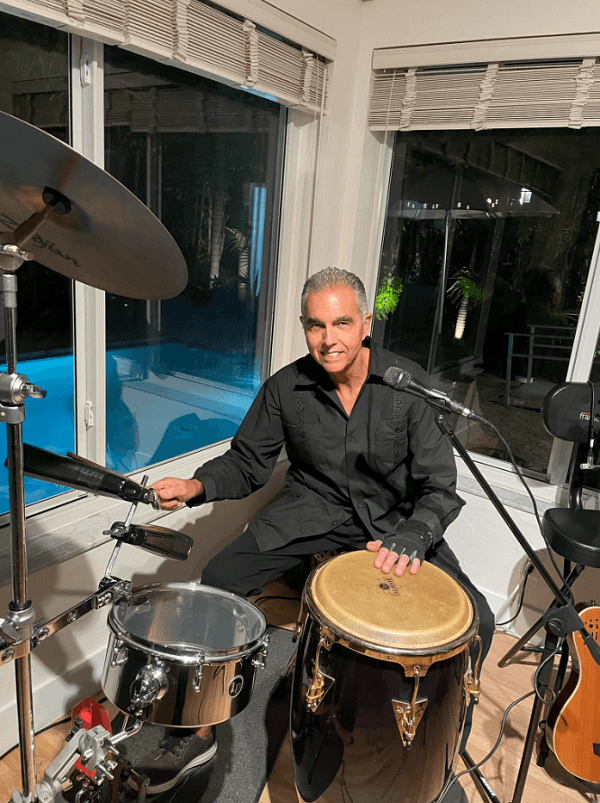
Roland Cache playing
Roland Cache playing drums live at an event

Roland’s musical beginnings as a teenager

As a child, Roland lived in Elizabeth, New Jersey, where some high school friends convinced him to play drums with them. Their favorite genre was the rock of the day, which was the 1960s. A few years later, specifically in 1973, another friend took him to a salsa concert at Madison Square Garden, and he liked what he heard so much that he became more involved in Latin music and left American music aside. 

Seeing great artists such as Tito Puente, Ray Barretto, and other artists of Puerto Rican descent, he learned to play timbales, tumbadora, and bongos, which allows him to play a combination of conga, timbales, and clave at the same time. 

Orchestras prior to Cache Live Music

Before creating his own band, Roland was part of other projects that were training him for what was to come in his career later. One of them was a band from New Jersey, whose members formed La Charanga Casino, which became very popular in that city.

Some time later, Roland could not play for a while, so he has been throwing himself into selling cars and other area businesses. Then, in 1998, he returned to music and created an American band that played rock and jazz with a touch of Latin music.

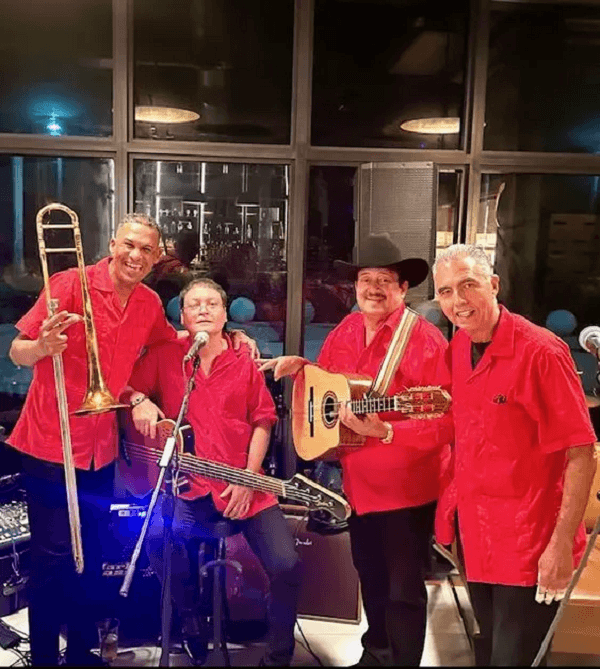
Roland Cache and the rest of the band
Roland Cache and the rest of Cache Live Music

Creation of Cache Live Music 

Eventually, he left the American band and founded a Latin band called Cache Live Music with a group of musicians, some of whom remain alongside Roland to this day. He met most of them through another musician friend who introduced them so he was knowing other artists who joined his project.

Cache Live Music was officially started in 1999, and according to its founder, the hardest thing about keeping a band like this together for so long was the search of opportunities in clubs and other kinds of places. However, Roland says that his experience as a salesman and negotiator has helped him a lot in winning contracts and the best conditions for him and his bandmates.

Current status of Cache Live Music

Today, the core of the band consists are three of its members: the guitarist, the bassist, and Roland, who is a multi-instrumentalist. More recently, Cache included a flutist, a trombonist, and sometimes a singer. This is how, depending on the requirements for a particular event, the group’s leader decides which members and instruments to include for every occasion in order to offer something different.

Cache at an Amazon event
Cache Live Music at an Amazon corporate event

Regarding the repertoire, they only perform covers, but they ensure that each and every song has their personal touch so that they resemble as little as possible to the original versions.

Anyone who wants to hire Cache Live Music can do so through its profile on The Bash by making a deposit and sending a contract to agree on the conditions of the event. However, it is important to note that they are already booked for December and January with corporate parties and weddings, for which we wish them every possible success because they already have the talent.

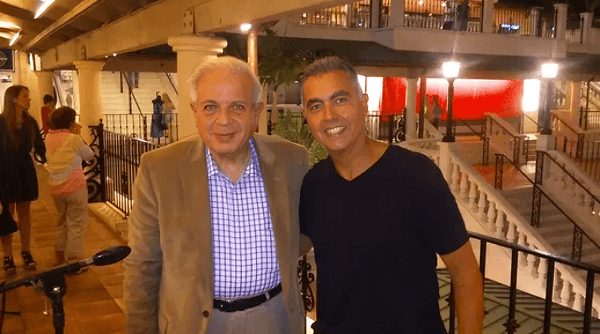
Tomas Pedro Regalado and Roland
Former Mayor of Miami Tomas Pedro Regalado and Roland Cache

Read also: The Williamsburg Salsa Orchestra: electrifying fusion and salsa flavored with indie rock

  • « Go to Previous Page
  • Page 1
  • Interim pages omitted …
  • Page 4
  • Page 5
  • Page 6
  • Page 7
  • Page 8
  • Interim pages omitted …
  • Page 34
  • Go to Next Page »

International Salsa Magazine (ISM) is a monthly publication about Salsa activities around the world, that has been publishing since 2007. It is a world network of volunteers coordinated by ISM Magazine. We are working to strengthen all the events by working together.