• Skip to primary navigation
  • Skip to main content

International Salsa Magazine

  • Home
  • Previous editions
    • 2026
      • ISM / January 2026
      • ISM / February 2026
    • 2025
      • ISM / December 2025
      • ISM / November 2025
      • ISM / October 2025
      • ISM / September 2025
      • ISM / August 2025
      • ISM / July 2025
      • ISM / June 2025
      • ISM / May2025
      • ISM / April 2025
      • ISM / March 2025
      • ISM / February 2025
      • ISM / January 2025
    • 2024
      • ISM / December 2024
      • ISM / November 2024
      • ISM / October 2024
      • ISM / September 2024
      • ISM / August 2024
      • ISM / July 2024
      • ISM / June 2024
      • ISM / May 2024
      • ISM / April 2024
      • ISM / March 2024
      • ISM / February 2024
      • ISM / January 2024
    • 2023
      • ISM / December 2023
      • ISM / November 2023
      • ISM / October 2023
      • ISM – September 2023
      • ISM – August 2023
      • ISM July 2023
      • ISM Edition June 2023
      • ISM – May 2023
      • ISM April 2023
      • ISM March 2023
      • ISM February 2023
      • ISM January 2023
    • 2022
      • ISM December 2022
      • ISM November 2022
      • ISM October 2022
      • ISM September 2022
      • ISM August 2022
      • ISM July 2022
      • ISM June 2022
      • ISM May 2022
      • ISM February 2022
      • ISM January 2022
    • 2021
      • ISM December 2021
      • ISM November 2021
      • ISM October – 2021
      • ISM September 2021
      • ISM August 2021
      • ISM July 2021
      • ISM May 2021
      • ISM April 2021
      • ISM June 2021
      • ISM March 2021
      • ISM February 2021
      • ISM January 2021
    • 2020
      • ISM December 2020
      • ISM November 2020
      • ISM October 2020
      • ISM September 2020
      • ISM August 2020
      • ISM July 2020
      • ISM June 2020
      • ISM May 2020
      • ISM April 2020
      • ISM March 2020
      • ISM February 2020
      • ISM January 2020
    • 2019
      • ISM December 2019
      • ISM November 2019
      • ISM October 2019
      • ISM Septembre 2019
      • ISM August 2019
      • ISM July 2019
      • ISM June 2019
      • ISM May 2019
      • ISM April 2019
      • ISM March 2019
      • ISM February 2019
      • ISM January 2019
    • 2018
      • ISM December 2018
      • ISM November 2018
      • ISM October 2018
      • ISM September 2018
      • ISM August 2018
      • ISM July 2018
      • ISM June 2018
      • ISM May 2018
      • ISM April 2018
      • ISM March 2018
      • ISM February 2018
      • ISM January 2018
    • 2017
      • ISM December 2017
      • ISM November 2017
      • ISM October 2017
      • ISM September 2017
      • ISM August 2017
      • ISM July 2017
      • ISM June 2017
      • ISM May 2017
      • ISM April 2017
      • ISM March 2017
      • ISM February 2017
  • Download Salsa App
    • Android
    • Apple
  • Spanish

Search Results for: jazz

Ricardo Vega and Karen Forcano

Latin America / Argentina /

Ricardo Vega and Karen Forcano. Salsa dancers and instructors of Latin dances.

Karen Forcano is originally from Argentina and took her first steps into the dance world at an early age, largely due to the influence of her mother, who was a ballet dancer. At 6 years of age, she began with ballet lessons and then at age 7 she was introduced to the exciting world of salsa and merengue, which would now be known as the start of her professional career.

Ricardo Vega is from Chile and began dancing ballet when he was only 7 years old. Although much of his influence came from his grandparents, who were tango dancers, Ricardo’s experience in dance included the styles of ballet, contemporary, jazz, as well as many others.

Karen and Ricardo met when they were 9 years old but their start in the professional/competitive world of salsa began in 2009. Since that time, they have been conquering championships as a couple, both on and off the dance floor.


Ricardo Vega and Karen Forcano

Jorge Duran

Europe / Germany

Interview to Jorge Duran & his Jalea de Mambo

Now settled in Europe, venezuelan vibraphonist Jorge Duran is leading Jalea de Mambo band which mix musicians from different nationalities recovering the swing and mambo of the 50s with the smart flavor of the New York Palladium, the famous Broadway dance-hall, and the color of the best Latin Jazz that can be heard in Europe right now. Its characteristic vibraphone sound makes this band a unique and raw example in the current music panorama.

Recently documentary “We Like It Like That” has been released worldwide http://latinboogaloo.com/ emphasizing that cultural revolution where boogaloo, mambo, among other genres, were considered the so-called “Latin Soul” creating that cultural movement which day by day takes more strength everywhere.

Jorge Duran
Jorge Duran

1) Jorge, tell us a little bit about your background, your roots, and your musical influences.

Well, I started playing Latin American percussion in Venezuela (Caracas) having the chance to share with great musicians beside studying with amazing percussion players but my degree was focus in composition. Then I begun to play jazz vibraphone and it took me a few years to play again Latin American Music although here I am ready to give my very best.

2) How did you come to the idea of Jalea de Mambo?

The idea of Jalea de Mambo came to me long time ago (10 years ago or more) when I first heard the album Cal Tjader Modern Mambo Quintet, quite old album indeed (1955). That record change everything for me and blew my mind up focus then on mambo, latin jazz and what so called “Latin Soul”.

3) Mambo, Boogaloo, what many people called “Latin Soul” was a revolution during the 50s. Do you think that nowadays these genres could reach something similar?

I really think everything is possible if you work hard, I’m not trying to make a revolution my idea is that every single person come to see us playing, enjoying magic music, having a great time. Obviously that “revolution” happened once but its essence has come along the years in all musicians who play caribbean rhythms. Nowadays, this genre is getting popular again but honestly I believe it has never lost validation.

Photo of Jorge Durán and his band members in the music world

4) What are your feelings coming from Venezuela performing in Europe and worldwide? Is the musical movement opened and active enough over there?

My feeling is that in Europe we, musicians, have more opportunities to show our culture and most of the people here are opened enough to hear or see our projects.

Beyond Europe is quite the same because I have Heard about concerts with more tan 100.000 audiences in Arab Countries, for instance. It simply means that latin and caribbean music “hook” people hearts so they enjoy it full.

5) Now that you are settled in Europe tell us a bit more about your projects and expectations.

I’m living in Germany now and it is a huge challenge for me as it is a real different culture and language but my idea is to spread the Latin American culture and music not only in Europe but worldwide. We are living very tough moments at this very moment and firmly believe that músic and culture are more needed than ever because music tame the beasts, as people usually say, and that’s what we need now, I mean, peace, calm and mainly love.

Photo of Jorge Durán and his team at the live concert

6) Looking for these goals, are you working on your own or you are supported by a company, agency or similar.

Now I have the great pleasure to say that I’m not alone in this business because Cat 7 Production is my new family and they are really focused in spreading my music to reach more people. I think this is the idea, music is a language we need to be heard as I said before.

7) Finally Jorge, let’s share a message for all your fans beside colleagues who work hard to achieve similar goals you are looking for.

Well, I’m always very grateful when some one takes time to send emails or messages after watching us in a concert, I love it and love fans who give me strenght to keep doing what my heart says. My humbly advice to all musicians who have an idea or project is that never stop making music because everything is possible in life and the real power is inside us. This is one of more beautiful and hard profession but sure worth it!

Jorge Duran in concert

Latin America / February 2026

Callao Carnival 02 2026Víctor Cuica 02 2026Salsa Festival in CubaTito Rodríguez 02 2026Don Perignon 02 2026

February 2026  – FESTIVALS

Cuba circular flag
CUBA
Festival de la Salsa 2026

Festival de la Salsa 2026

Feb 26 / Mar 01, 2026

Club 500 – Palmares
Calle 12 entre Calzada 7/ 3ra Vedado
La Habana 10400, Cuba

€ 110

Bella MartinezCalibrated maracas

DIRECTORY OF NIGHTCLUBS

Argentina flag
ARGENTINA

Aruba circular flag
ARUBA

Belize circular flag
BELIZE

Bolivia circular flag
BOLIVIA

Brazil flag
BRAZIL

Chile circular flag
CHILE

Colombia
COLOMBIA

Costa Rica circular flag
COSTA RICA

Cuba circular flag
CUBA

Dominican Republic
DOMINICAN REPUBLIC

Ecuador circular flag
ECUADOR

Guatenala circular flag
GUATEMALA

Mexico Circular flag
MEXICO

Panama circular flag
PANAMA

Peru circular flag
PERU

Puerto Rico circular flag
PUERTO RICO

Venezuela circular flag
VENEZUELA


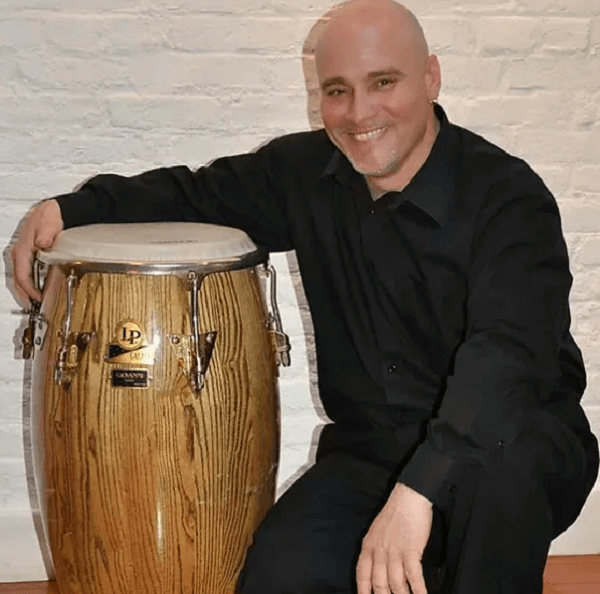
Musician and entrepreneur of Latin origin Jorge Torres talks about his band and his company

American multi-instrumentalist and entrepreneur of Puerto Rican descent Jorge Torres had a conversation recently with us about his musical origins, his company Jimmy Jorge Entertainment, his band, and his work with music today. In International Salsa Magazine, we are more than happy to interview him and learn what he has to tell us.

Jorge Torres and his conga
Musician and entrepreneur Jorge Torres next to his conga

Jorge’s beginnings in music in his native Chicago

Jorge said that when he was very young, his mother got a large stereo system that included a record player and radio where she listened to all kinds of music. His brother had a copy album “Che Che Cole” by Willie Colon and a cowbell he used to play constantly, making it the first instrument he heard in his childhood.

In the fifth grade in Philadelphia, he became interested in learning to play the guitar, but at that time his school did not offer guitar programs, but violin. So he decided to try the violin, but only played it during that year. In the eighth grade, he returned to Chicago to live with his father following the death of his mother, and his interest turned to steel drums, which he also referred to as Caribbean drums. 

He spent another year playing this instrument until he reached high school and moved back to Philadelphia to live with his brother, which is when he changed his mind again and started loving the trumpet and the conga. He was so passionate about the latter that he bought his own conga, which he still has to this day. Then, other musician friends taught him how to play it, and the rest is history.

Jorge Torres playing
Jorge Torres playing the conga live

Early professional career

His learning to play the conga was the beginning of his life as a professional musician, and he played for various groups such as La Orquesta Cupey, Orquesta La Precaución, and Orquesta La Opinión, among others. During this time, Jorge learned to play many other instruments such as bongos and timbales. His teacher was Mikie Rivera, renowned Puerto Rican singer-songwriter and trova and jazz guitarist, who met with the young man and other musicians in the cellar of a friend’s house to mentor them and work with them.

These meetings aroused in him the idea of creating his own band in the future because of all that Rivera taught him about the music biz, and he wanted to put that knowledge into practice as soon as possible.

Jimmy Jorge and The Latin Jazz Expenses

Jorge’s band started as a small jazz group, but he did not want to settle for that. At some point, he was interested in having an orchestra with four wind instruments, three singers, piano, bass, bongos, timbales, and congas. That is how Jimmy Jorge and The Latin Jazz Express project arose.

This project started as a six-member Latin jazz band in 1995, but has managed to grow to the point that it has about 12 members and plays many other musical genres, although salsa is still very present in its repertoire.

Jorge Torres and the band
Jorge Torres and the rest of Jimmy Jorge and The Latin Express

Through hard work, Jimmy Jorge and The Latin Jazz Express have managed to position itself in the industry until they became the house band on the radio station called “La Mega 1310 AM” for some time and have played at all kinds of events such as The Puerto Rican Parade, La Feria del Barrio, Penn’s Landing’s Hispanic Fest, among others. 

Some of the current members of the band are Peruvian singer Joseito Rivera, Puerto Rican singer Lia Montalvo, Dominican singer Hugo Tavares, conguero Edwin “Papo Buda,” percussionist Orlando Santana, and trombonist Edgar Salias.

Jimmy Jorge Entertainment

When Jorge began performing with American orchestras, he noticed that some of them, in addition to their musicians, also had dancers and DJs who were part of the orchestra and the show. The inclusion of these professionals in concerts seemed like a phenomenal idea to him and wanted to put it into practice for his own project, so he took advantage of the contact he had made with singers, DJs, photographers, dancers, and dance teachers to recruit them for his own shows in the future.

So, he began asking for phone numbers in order to build a network of artists he could count on in case he needed their services. Today, he has a large catalog of options for every type of show, making Jimmy Jorge Entertainment one of the most important Latin entertainment companies in Philadelphia today.

Read also: Raúl Eliza: from the army barracks to the stage and recording studios

Carlos Jimenez offers his talent and passion to charm the audience in universities, hotels, and restaurants all over New York

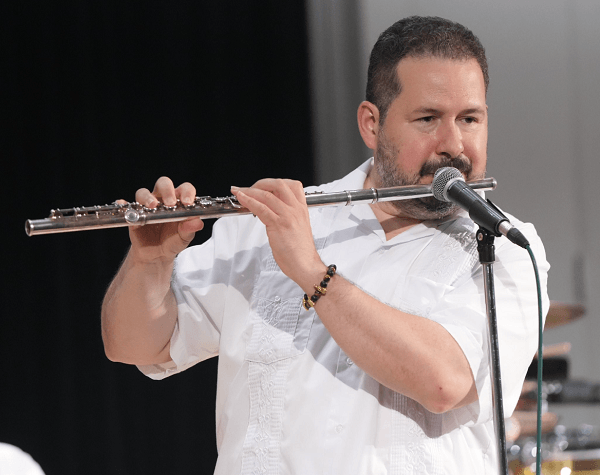
We are very happy because this beginning of the year has brought us a very friendly conversation with brilliant bandleader, composer, vocalist, and flutist Carlos Jiménez, who kindly answered the questions we had for him. 

The New Yorker has many interesting things to tell, so we hope that everyone will enjoy the material below.

Carlos Jimenez playing
Carlos Jimenez playing the flute live

Carlos’ beginnings in music

Carlos was born in New York City, but moved to Puerto Rico with his family when he was six years old. It was on the Island of Enchantment that he discovered his inclination toward music thanks to his trumpeter father William, and his cuatrista grandfather Cruz, who encouraged him to take music lessons. Therefore, he also began to receive musical training and built competence for playing percussion instruments such as the timbales, bongos, and congas. 

His first lyrical instrument was the trumpet, which he learned to play under the tutelage of Professor Pablo León at Francisco Zayas Santana High School. However, inspired by Mongo Santamaría and his musical arrangements for his song “Song For You,” he decided to switch instruments and start playing the flute, which he has continued to do.

Carlos’ return to New York

As a young man, he decided to return to his hometown highly motivated by the vibrant Latin music scene there, which he describes as “the city where all our dreams come true.” While there, he enrolled at the Music Conservatory of Westchester to study classical flute, but his training have not been completed. 

He also studied jazz harmony and voicing with piano teacher Michael Longo, who he describes as a good friend and teacher to the point of making a recording together. Unfortunately, Longo was one of the many victims of the COVID-19 pandemic, which was an immense sadness for Carlos and those who had the privilege of knowing him. 

Orlando Marín and Carlos Jimenez
Orlando Marín ”El último Rey del Timbal” and Carlos Jimenez

Results of his prolific career

After more than 20 years of successful career, Carlos has built a great reputation in the industry at the point of passion and hard work. He himself says that his good name comes as a result of his responsibility, reliability, and, most importantly, his ability to play good music.

His great skills as a professional and musician have led him to play at corporate events for companies such as Victoria’s Secret, Nike, ScotiaBank, Regeneron, and many others. In addition to that, he has also been able to play and lead orchestras in performances for universities and cultural institutions such as Lehman College, Sarah Lawrence College, New York Botanical Garden, Columbia University, and many more. 

Likewise, Carlos’ band has performed in so many festivals such as West Harlem Jazz Festival, Harbour Jazz Festival, Fall Harvest Fishkill Farm Festival, Lake George Festival, Summer Sound Festival, and many others. 

Altruistic side

In addition to the above, Carlos has also earned the respect of his colleagues thanks to the numerous galas, charity events, and community activities the artist has been involved in recent years, which has made him worthy of numerous awards for his community service. This shows that the flutist is not only passionate about his craft, which is music, but also uses it to do good to those in need. We can also add that he has headlined numerous shows at well-known restaurants and hotels such as Casa Cipriani Hotel, The Marriott, Ritz Carlton, The Lexington Hotel, among others.

Carlos Jimenez and Eric Adams
Carlos Jimenez and former New York Mayor Eric Adams

The Carlos Mambo Dulcet

Together with his orchestra, Carlos has released several albums, including “Red Tailed Hawk Vol. 1,” “Red Tailed Hawk Vol. 2,” and “Despierta Boricua,” among others. The artist closed the conversation by saying that his group continues to be formed and has more than 100 musicians and all are are wonderful.

Read also: La Nota Band showcases the best of Venezuelan talent

  • « Go to Previous Page
  • Page 1
  • Interim pages omitted …
  • Page 9
  • Page 10
  • Page 11
  • Page 12
  • Page 13
  • Interim pages omitted …
  • Page 103
  • Go to Next Page »

International Salsa Magazine (ISM) is a monthly publication about Salsa activities around the world, that has been publishing since 2007. It is a world network of volunteers coordinated by ISM Magazine. We are working to strengthen all the events by working together.