• Skip to primary navigation
  • Skip to main content

International Salsa Magazine

  • Home
  • Previous editions
    • 2026
      • ISM / January 2026
      • ISM / February 2026
    • 2025
      • ISM / December 2025
      • ISM / November 2025
      • ISM / October 2025
      • ISM / September 2025
      • ISM / August 2025
      • ISM / July 2025
      • ISM / June 2025
      • ISM / May2025
      • ISM / April 2025
      • ISM / March 2025
      • ISM / February 2025
      • ISM / January 2025
    • 2024
      • ISM / December 2024
      • ISM / November 2024
      • ISM / October 2024
      • ISM / September 2024
      • ISM / August 2024
      • ISM / July 2024
      • ISM / June 2024
      • ISM / May 2024
      • ISM / April 2024
      • ISM / March 2024
      • ISM / February 2024
      • ISM / January 2024
    • 2023
      • ISM / December 2023
      • ISM / November 2023
      • ISM / October 2023
      • ISM – September 2023
      • ISM – August 2023
      • ISM July 2023
      • ISM Edition June 2023
      • ISM – May 2023
      • ISM April 2023
      • ISM March 2023
      • ISM February 2023
      • ISM January 2023
    • 2022
      • ISM December 2022
      • ISM November 2022
      • ISM October 2022
      • ISM September 2022
      • ISM August 2022
      • ISM July 2022
      • ISM June 2022
      • ISM May 2022
      • ISM February 2022
      • ISM January 2022
    • 2021
      • ISM December 2021
      • ISM November 2021
      • ISM October – 2021
      • ISM September 2021
      • ISM August 2021
      • ISM July 2021
      • ISM May 2021
      • ISM April 2021
      • ISM June 2021
      • ISM March 2021
      • ISM February 2021
      • ISM January 2021
    • 2020
      • ISM December 2020
      • ISM November 2020
      • ISM October 2020
      • ISM September 2020
      • ISM August 2020
      • ISM July 2020
      • ISM June 2020
      • ISM May 2020
      • ISM April 2020
      • ISM March 2020
      • ISM February 2020
      • ISM January 2020
    • 2019
      • ISM December 2019
      • ISM November 2019
      • ISM October 2019
      • ISM Septembre 2019
      • ISM August 2019
      • ISM July 2019
      • ISM June 2019
      • ISM May 2019
      • ISM April 2019
      • ISM March 2019
      • ISM February 2019
      • ISM January 2019
    • 2018
      • ISM December 2018
      • ISM November 2018
      • ISM October 2018
      • ISM September 2018
      • ISM August 2018
      • ISM July 2018
      • ISM June 2018
      • ISM May 2018
      • ISM April 2018
      • ISM March 2018
      • ISM February 2018
      • ISM January 2018
    • 2017
      • ISM December 2017
      • ISM November 2017
      • ISM October 2017
      • ISM September 2017
      • ISM August 2017
      • ISM July 2017
      • ISM June 2017
      • ISM May 2017
      • ISM April 2017
      • ISM March 2017
      • ISM February 2017
  • Download Salsa App
    • Android
    • Apple
  • Spanish

Search Results for: jazz

Founder and owner of Guapacha Productions Gil Tower

Talk with Gil Tower 

From this platform, we have had to interview many famous Latinos who have left their countries and Latin culture in general on high, but today is the turn of a very special one. We are talking about the talented Venezuelan musical director and multi-instrumentalist Gilberto Torres, better known as Gil Tower in the artistic environment.    

Thanks to a mutual friend, we have managed to make contact with Gil Tower, who from the beginning has been very accessible and willing to share everything related to his work in the music industry and his contribution to the Latin cultural scene, so we are very grateful to him for giving us the opportunity to hear his great story.   

Below, we share the topics covered in a conversation that was as enjoyable as it was enlightening.   

Gil talked with us
Talented musical director and multi-instrumentalist Gil Tower kindly talked with us

Musical beginnings in his home country   

Gil Tower always knew that he wanted to devote himself to the world of music. When he was about five years old, he began watching television programs related to classical music and zarzuela. Several of his aunts were zarzuela teachers and took him to see zarzuela orchestras, which was great for him. In fact, several of those musicians he got to see play on these occasions ended up teaching him when he began preparing to become an artist. 

One of the most important institutions in the training of Gil is the National System of Youth and Children’s Orchestras and Choirs of Venezuela (El Sistema), where he was trained directly by maestro José Antonio Abreu, a fundamental part in the path which this young musician would take later in his career.   

He joined the children’s orchestra, advanced all the way to the youth orchestra and finally reached a more professional level in the national orchestra. At about this time, Gil recalls that ”maestro Abreu always said that we were rich because we had an instrument in hand and could change the world through music. As a child, I didn’t understand what he was getting at. Now I do understand and I think he was absolutely right.   

”Abreu was a unique influence on me because he transformed me as a person and musician. He also made me become a leader, as he had always wanted me to be,” he continued.   

Learning from the groups he was in 

As to the learning acquired in the many groups he worked with, Gil singled out Carlos Rojas, who was a musician and jazz lover. Carlos took the initiative to give a workshop in La Pastora (a very important area of the city of Caracas, Venezuela). 
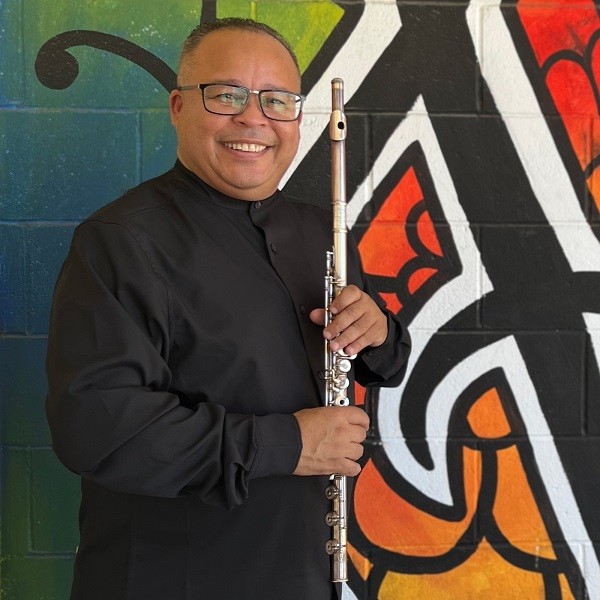
Gil with his flute
Gil Tower with his flute

As a teenager, Gil used to go to La Pastora to learn to improvise with Carlos in salsa, as he liked this genre so much ever since. This is how he started learning about harmonies and taking his first steps as a composer. 

When given the chance to play with the group Los Morrillos, he learned a lot about gaitas and other Venezuelan rhythms from the western region of the country. In the case of the group Madera, he learned (and keeps learning) a lot about Afro-Venezuelan music in general.   

After that, he met Jesús ”Chucho” García, who is an intellectual, activist and author of several books on Afro-Venezuelanity. Together they formed a group called Cimarrón, with which they represented Venezuela at the International Jazz Plaza Festival in 1989. To date, they are still very good friends and continue to learn about this great musical branch from one another. 

Why move to Germany? 

His initial plan was to move to the United States to continue his studies in Berkeley, but he was unable to obtain the required visa at the time. However, that would not be the end of his dream.   

It turns out that some friends of his from the group Madera went on a Germany tour and stayed to live there. Then, one of them, Felipe ”Mandingo” Rengifo offered him to join them to work in that country and try to be admitted in one of their conservatories. At the time, Gil only had a saving of $1,000, with which he took a gamble.    

Although he had to play in the streets and wash bathrooms at the beginning, he achieved his goal of entering a conservatory, an institution that gave him the opportunity to fix his papers to have a legal status in Germany. Having solved this inconvenience, he was able to focus his attention on his musical project Guapacha (name in honor of a great Cuban drummer who lived in the parish of San Agustin del Sur, Caracas).   

All this experience was preparing him for when he could finally achieve his goal of going to the United States.   

 

Gil and Guapacha
His project Guapacha was named after a great Cuban drummer who lives in Caracas

Arrival in the United States   

While still in Germany, Gil was invited to participate in a jazz festival in the United States, specifically in Montana. He did so well that he amazed many musicians with whom he shared the stage that day and exchanged contact information for future events.   

Later, he managed to play in San Diego and Boston, where he had the opportunity to share the stage with the Boston Power Orchestra and meet Danilo Pérez, Dizzy Gillespie’s pianist. The latter, in turn, recommended him to maestro Tito Puente, whom he met shortly thereafter. 

This was how the artist managed to build a very respectable reputation in the industry through his talent. This is how he ended up playing with ”half the world” and building a great prestige as a musician and composer.   

In addition to singing and playing multiple instruments, Gil has also taught low-income youth in order to spread the knowledge he has gained throughout his career. He even created an orchestra composed of children whose parents have no resources or documents in order to help them learn music and provide them with better work-study opportunities in the future. Some have even got into college and obtained scholarships thanks to this knowledge.    

Parallel to these activities, he began composing and making arrangements for other artists who began to require his services.    

Guapacha Productions   

On the subject of Guapacha Productions, Gil says that the idea came when he began researching on the music industry, licensing, distribution and other things. 

The musician saw an opportunity to achieve his dreams during the pandemic, which is when he noticed that many artists had no idea how to register a composition and how other necessary licenses to collect their royalties from their music works.   

Gil, Guapacha, and major labels
Guapacha was created for the purpose of becoming independent from major labels


Noticing the ignorance of many young talents about the industry, he created the company Guapacha Productions, which is responsible for the musical production and arrangements for artists signed to this label.    

When asked how the economic issue was handled for artists who do not have the resources to launch their career as it should be, he explained that there are three types of music distributors: major labels, labels created by the artists themselves and independent companies like Guapacha Productions. We are a group of independent artists who created our own label and we are trying to have our own distribution, so we would not be obliged to negotiate with any big distribution company” explained Gil. 

Along with that, it is Guapacha Productions that will make agreements with Spotify, iTunes and other digital platforms to distribute the music of its artists without intermediaries. 

The company has been so successful in these efforts that its name will soon be part of the Latin Grammys, which means that the talents signed to the label will have the chance to stand out and be finalists in the various categories.   

Cheo Valenzuela’s ”Salsa Buena” Tour   

With respect to the important issue of Cheo Valenzuela’s ”Salsa Buena” tour (artist signed to Guapacha Productions) in Europe, there are negotiations with some event producers in France, Spain and England so that Cheo Valenzuela can perform at various venues in those countries. There are also talks of taking the artist to Central America and the United States, specifically to San Francisco, where Gil lives.   

In addition to that, Valenzuela is working on an EP with five songs by other artists and another one with five compositions created by himself. Being already a singer with a long-standing career, this last work would also become him a consacrated composer before the world. Once all this material has been released, his name is going to be considered for a Grammy nomination, which Gil has a lot of faith that he will win due to his great talent.   

At the time of doing this interview, Valenzuela is taking a few days off due to the death of his mother, so we send our condolences and solidarity to him and his family at such a difficult time. 

Read also: Musical director of VibraSÓN Jake Jacobs is here 

Israel “Cachao” Lopez Sobrado in fame and respect in the seventies was dedicated to maintain the tradition at the highest level

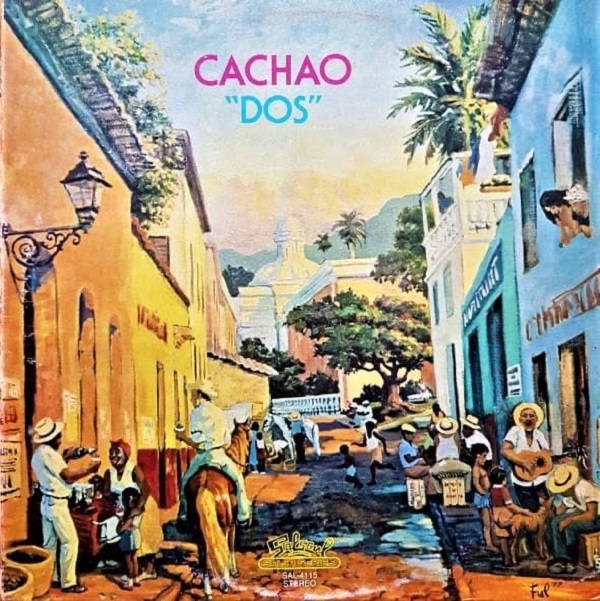
“Cachao Dos” for the year 1977.

It will be enough to mention the name of this celebrity to open a whole range of creativity and genius embodied in what is considered a cult discography.

Since 1931, the year in which he started musically as a member of the Havana Philharmonic Orchestra, the precocious Israel would give a foretaste of the talent he had and that, as time went by, would be consummated hand in hand with his right-hand man and musical accomplice, Orestes “Macho” López, his older brother.

Certainly, music was impregnated in the DNA of the López family, a generating machine of musicians by tradition, something that Lázara Cachao, Israel’s niece and daughter of his deceased younger brother Orlando “Cachaito” Lopez, reaffirms: “The tradition of being musicians comes from the grandparents and great-great-grandparents, all the Cachao are musicians”.

Israel “Cachao” López Sobrado

Regarding his transcendence, he and his older brother Orestes are said to be the creators of the Mambo, a rhythmic variation of the Danzón and a genuine musical expression that would mark a before and after in Latin music.

However, and as it is known, this contribution would change its clothing and would reach worldwide popularity when it reached the hands of another “inventor” born in Matanzas, Cuba, named Dámaso Pérez Prado, who as it is known, gave it another treatment and musical twist reaching surprising popularity.

“Cachao”, after a 31-year stay with the Havana Philharmonic Orchestra, decided to leave Cuba, settling for many years in New York City.

As it is understandable, his presence in this city was more than important for the musical guild and music fans.

He was nothing less than one of the managers and protagonist of the famous Jam Sessions recorded by the Panart whose presence was capitalized among many others by Tito Puente, Tito Rodríguez and Eddie Palmieri.

From the first one we could say, a whole school, a musician with a deep knowledge of his double bass and creator of his own style, bow in hand, and as a prolific composer, with approximately three thousand compositions together with his brother “Macho” López.

The years in New York were musically very good for Israel Lopez as well as in Las Vegas and finally Miami, where he lived until his last days.

Making a discography of him is quite a task and a challenge. However, after his arrival, I remember with great pleasure his collaboration for the album Latin Explosion by Joe Cain and his orchestra in 1964, where among others, Listen dos Trompetas and Mungo, Mungo Baby stand out.

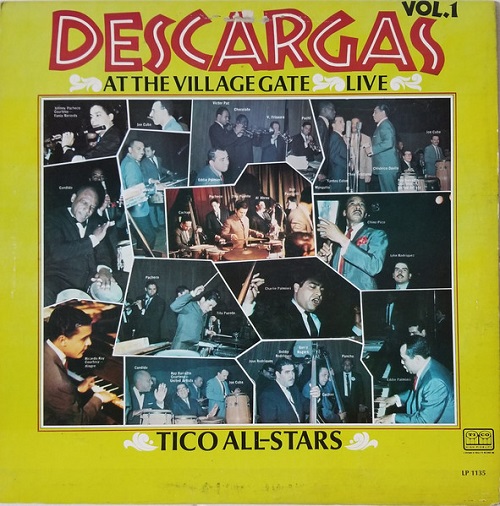
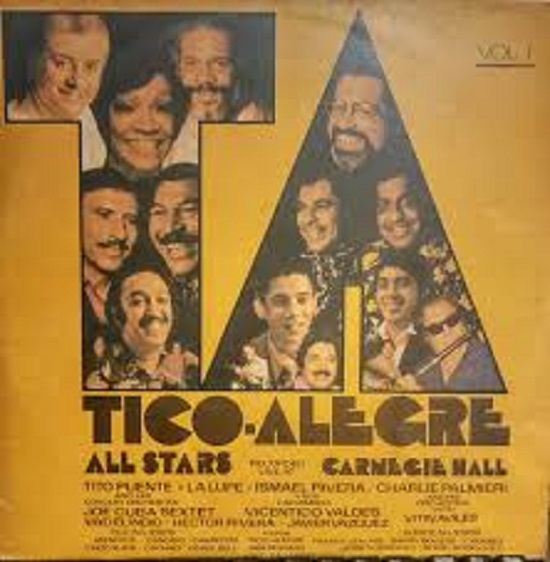
Esta es mi Orquesta, theme/performance of Tito Rodriguez’s musicians emulating what Stan Kent and his Big Band did, or those performances as special guest in the famous Descargas at The Village Gate Live and Tico All Stars, among many others.

The Village Gate Live
Tico All Stars
Tico All Stars

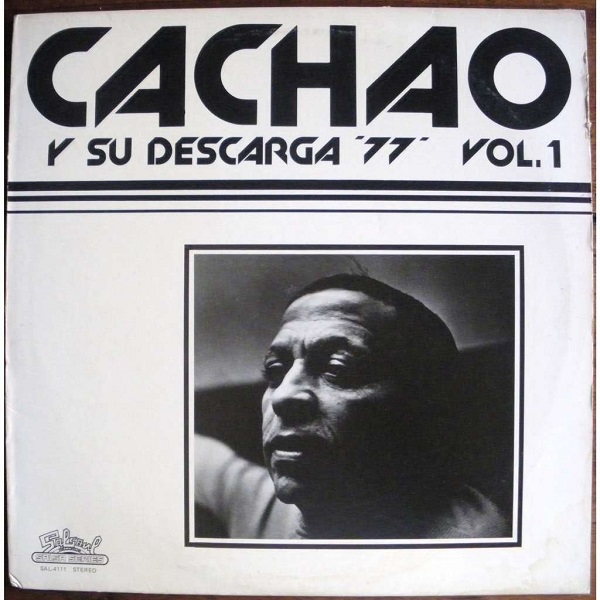
In the seventies, Cachao, with his fame and respect, dedicated himself to maintain the tradition at a supreme level, and from that period, punctually 1977, Cachao will present two epic works, the first one entitled Cachao y su Descarga Vol. 1 and then Cachao Dos, both recorded for Salsoul Records under the production of René López and Andy Kaufman.

Cachao y su Descarga Vol. 1

The latter contains only a total of five tracks, but they are well fulfilled in their purpose of maintaining a fierce defense of the rhythms that Gran Cachao has been proclaiming for years.

This album, like everything else recorded by the double bass player, is genuine and of supreme quality, something that is due to Israel’s responsible and dynamic character, something that the leader Julio Castro can attest to, having not only known him personally but also having worked with his orchestra La Única, which arrived in NYC for a prolonged stay of a little more than half a year.

Cachao Dos
Cachao Dos

Repertory

Ko Wo Ko Wo: (Guiro): Julito Collazo

Israel “Cachao” López: Contrabajo

Julito Collazo: Vocal, Chekere, Conga

Mario Muñoz “Papaito”: Campana

Diane Cardona: Coro

Marcelino Guerra: Coro

Héctor “El flaco” Hernández: Coro

Zunny López: Coro

Frankie Rodríguez: Coro

Fela Wiles: Coro

Jóvenes del Ritmo: (Danzón): Israel López

Israel “Cachao” López: Contrabajo

Julián Cabrera: Congas

Gonzalo Fernández: Flauta de Madera

Oswaldo “Chihuahua” Martínez: Timbales

Charlie Palmieri: Piano

Rolando Valdés: Guiro

Cuerdas:

“Pupi” Legarreta: Violín

Alfredo de la Fe: Violín

Eddie Drenon: Violín

Yoko Matsuo: Violín

Carl Héctor: Violín

Patricia Dixon: Cello

Centro San Agustín: (Danzón-Cha): Israel López

Israel “Cachao” López: Contrabajo

Carlos “Patato” Valdés: Congas

Gonzalo Fernández: Flauta de Madera

Lino Frío: Piano

Rolando Valdés: Guiro

Nelson González: Tres

Mario Muñoz “Papaito”: Percusión

Alejandro “El negro” Vivar: Trompeta

Alfredo “Chocolate” Armenteros: Trompeta

Rafael “Felo” Barrios: Coro

Roberto Torres: Coro

Trombón Melancólico: (Descarga): Israel López

Israel “Cachao” López: Contrabajo

Manny Oquendo: Timbales

Charlie Palmieri: Piano

Barry Rogers: Trombón

José Rodríguez: Trombón

Andy González: Campana

Frankie Rodríguez: Percusión

Gene Golden: Percusión

Milton Cardona: Percusión

Rafael “Felo” Barrios: Coro

Roberto Torres: Coro

Chambelona (Popurrí de Congas): Neri Cabrera

Israel “Cachao” López: Contrabajo

Julito Collazo: Bombo

Lino Frías: Piano

Mario “Papaito” Muñoz: Percusión

Oswaldo “Chihuahua” Martínez: Percusión

Virgilio Martí: Percusión

Eugenio “Totico” Arango: Coro

Rafael “Felo” Barrios: Coro

Read Also: Carlos “Patato” Valdés one of the best percussionists in the history of Latin Jazz

Cachao

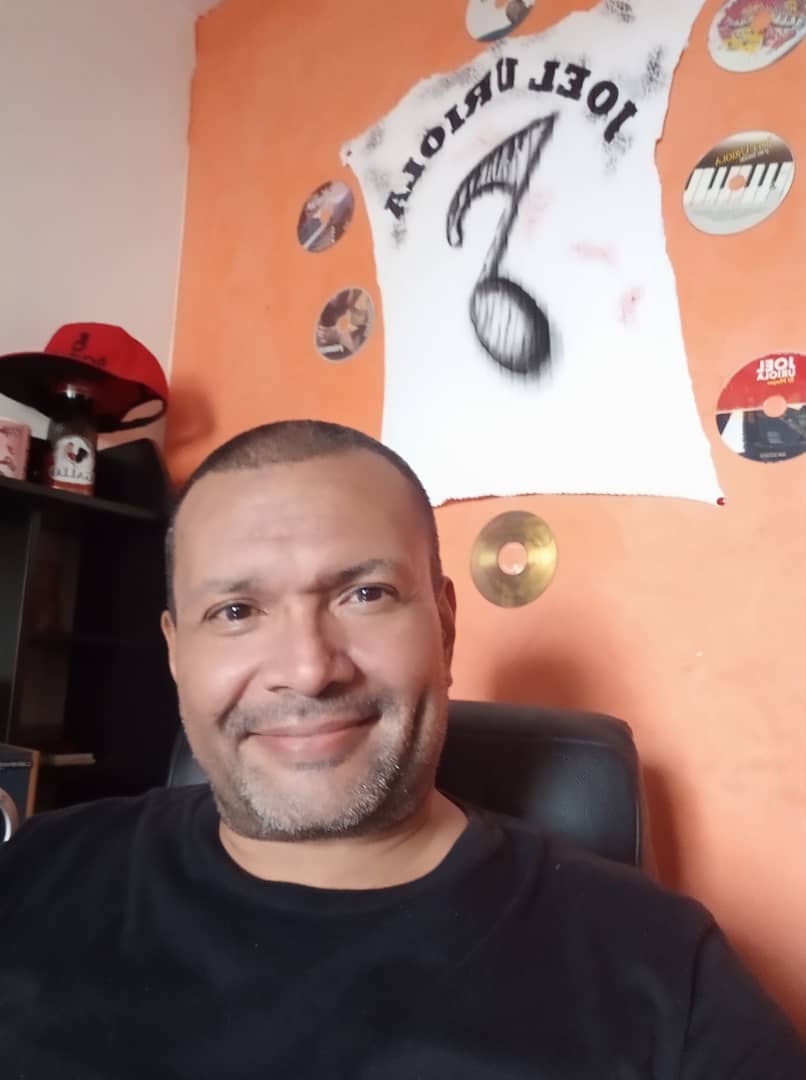
Joel Uriola

Latino America / Venezuela / Caracas

Joel Uriola “I am the best, because I surpass myself”

Very soon the theme will be released, Cuidadillo there ok

This Venezuelan pianist, arranger and musical producer was born on January 4, 1963 in Caracas, in the popular parish of Antímano, the same one that saw the birth of Sonero del Mundo Oscar D´ León, by chance or his destiny was already written and en route. towards a dream that over the years would come true; be the best and that your work is recognized both nationally and internationally.

In our gathering, Joel tells us that when he is classified as the best, he has nothing to do with competing with others or with airs of greatness, but with surpassing himself in everything he proposes, he tells us that “my path is longer, but I came as Joel Uriola”, his name is a seal that ensures quality work.

With 38 years of musical career, Joel Uriola has plenty of talent, level and experience, in each production he uses the best group of Venezuelan musicians and continues to be at the forefront of music, all this is demonstrated in the more than 1000 musical productions in which he has participated as a performer, director or musical producer, with national and international artists.

Joel Uriola
Joel Uriola

Joel Uriola The best?

“That’s right, metaphysics says that you can’t talk about yourself in a negative way, you can’t sell a product if you don’t have good marketing, you must see beyond, be your own manager, most record companies are in the hands of ignorant people. the music that drive the artist’s work”. “Artists have the obligation to cultivate themselves, learn and not only be musicians, we must project ourselves in a big way”.

How did your childhood develop and what was the atmosphere of the time like?

“I had a good education in my home, with values, a grandmother with character, who told me that no matter where you lived, your behavior would make a difference, she always motivated me, just like my mother who also instilled in me to prepare myself, my grandmother was an enterprising woman, my father was a rumba guitarist and a professor at the Católica”. “I remember that I saw the debut of the Trabuco Venezolano in the CC Propatria, as fate would have it, my mother had an office there, as did the people of the Latin Dimension.”

At what age did you start in music and with which orchestras did you take your first steps?

“My musical beginnings took place at the “Prudencio Esáa” School of Music, starting professionally at the age of 17 with a group called Galaxia, I was the conga player, it was a Son group and we rehearsed at the observatory”. “Then I became part of the Caracuchos of Joseito Rodríguez from 1977 to 1979, whom I met thanks to Jesús “Totin” Rebolledo, later with the Latin Dimension from 1979 to 1980, from Cesar Monges I learned a great deal, and from 83 to 87 with Oscar D´ León.

And why is there that change from the conga to the piano?

“Due to the noise I made in the house when I was rehearsing and the equipment turned on at full volume, my mother subliminally gave me an organ, it was less noise, and then I began to imitate what the pianists did in a self-taught way, I remember the theme of Pete Rodríguez… What things life has, life, life”. “Then my mother bought me a piano and took me to audition at the School of Music and I stayed, I was a student of teacher Tiero Pezzuti, Gerry Well and Samuel del Real”. “In the nightclubs of El Rosal I did many substitutions, there I polished myself, I had a good preparation and some great teachers who are my friends”.

Joel Uriola - piano
Joel Uriola – piano

What anecdotes do you have about your experience of working alongside Oscar D´ León, and about that piano solo on the song “Cuídate bien”, did you ever think that being so young, almost 20 years old, your name would remain forever on the mind of the salsero?

“The time with Oscar was glorious, I got to know many places, we toured for 3 and 4 months, we enjoyed ourselves but we also had a lot of fun, I learned a great deal and disciplined.” “I had the blessing of meeting many musicians that I admired such as Eddie Palmieri, Salvador Cuevas, Barry Rogers, among others, with Domingo Quiñones I made a great friendship.” “As for improvisation, I feel great pride, it was something that came out at that time, I don’t know if it will come out again -laughs-“.

Which musician has been your biggest influence?

Markolino Diamond, Eddie Palmieri, Papo Lucca.

A pianist you admire?

“Markolino Diamond is my idol, a lot of what I do has to do with this guy, if he were alive he wouldn’t exist…”. “He was irreverent, crazy, he broke the schemes.”

How do you see the response of the salsa audience with your productions?

“There will always be admirers and detractors, with the level of awareness that you gain, it doesn’t bother you that there are people who don’t like your work, I make music for everyone”. “Public opinion can kill you if you are not prepared for it, but you must believe in what you do.”

How do you see the support of the media to spread your music?

“Thank God the record companies disappeared, those who knew the least about music controlled them, they decided that it was commercial and that it was not, in the alternative media there is response and support, however, social networks allow you to reach in a matter of seconds many places and you can do your own marketing”.

What do you think about the fusions that you are doing with salsa, for example, salsa and reggaeton?

“It works perfectly, it’s urban salsa, reggaeton with its lyrical content has improved a lot, they’ve softened it, reggaeton artists have great economic and communication support.” “The good things are guaranteed, reggaeton is seen as Salsa was seen in its beginnings, with bad eyes, but you see, Salsa is worldwide even the Chinese dance it, people consume what the radio puts on it, even if it’s bad, there’s room for everyone”.

As a music teacher, what have you contributed to the country?

“Train the next generation, in values ​​and discipline, and that seed continues to germinate, help people regardless of how they sometimes pay you.”

Why musician and not another profession?

“I wanted to be Disip (Venezuela’s intelligence corps), but when one is born marked for something, that’s what goes… My destiny is music.”

How do you see the music industry right now?

“Everyone is recording with their own effort, you make a song, you upload it to the networks, we have that powerful tool in our favor; the record companies limited you, hardly any albums are recorded anymore”.

Can you live from music?

“Well… Thank God I can do it, every day I get up like a conuquero to work, I can live from music.”

Of the 9 productions under your belt, which do you think is the best or the most important for you?

“Babalawo (2009), the best achieved, the best worked in all aspects, was sold in all religious houses.”

What motivated you to form your own orchestra?

“I’ve always been a leader, that’s why I decided to form my own orchestra, everyone has their moment”.

Isn’t it a difficult job to compose and arrange?

“You are born for this, it is not difficult, you must study and prepare yourself, my muse can arrive at 3 a.m., I get up and add or season my music in my own way, I listen to traditional Cuban music, jazz that inspire me.”

What is Joel Uriola doing right now?

“Currently I dedicate myself to producing for other artists of the Salsero genre, always offering quality, the most recent is the work with the Mercadonegro Orchestra with the theme Rumba Negrito”.

You are the arranger of the 3 songs that made the Bailatino orchestra known internationally, you have been the Producer and arranger in five songs of “Rumberos del callejón”, among other Venezuelan artists. What does it feel like to contribute so that other Venezuelans are successful?

“At the moment you do things, you do it with the best intention, and that is the greatest satisfaction, helping others grow regardless of how they pay.”

Do you feel that unity and camaraderie are lacking in the salsa guild?

“Totally, without unity nothing is achieved.”

What do you think of copying, imitating and not creating?

“He who imitates is destined to fail, one must have personality, you must not cling to something foreign to survive, what you do has more value, you must have creative capacity”.

Future plans or present?

“I am recording two songs, Cuidadillo there ok composition by Maurice Melo, a salsa with tasty rhythmic elements, timba and hard sauce, and the second song You are the teacher has a Christian connotation, with the Praise Orchestra, the song is my own. , a cool sauce with Christian sauce”.

Joel reaffirms us “My road is long, but I arrive as Joel Uriola, I am who I am, I am the best”.

Steven Brezet. The Dutch influenced by African percussion

Europe / Holland / Róterdam

Steven Brezet. The Dutch influenced by African percussion

Through his mother’s interest in African dance, Steven Brezet grew up hearing African percussion. At the age of six he attended a gig at Podium Grounds in Rotterdam, where he watched Senegalese percussionist Aly Ndiaye Rose play a duo show together with Lucas Merwijk. Ndiaye Rose played on five drums at once, fascinating to such a little boy, and so began a lifelong love of percussion.

Steven Brezet
Steven Brezet

Right then and there, he asked his mother for lessons and they set up classes with Aly Ndiaye Rose.

Steven took djembe lessons with Ndiaye Rose and soon began expanding to other percussive instruments, including sabar, congas, bongos, timbales, timbal and others.

He worked on his skills as a musician not only by taking many different classes, but also by traveling to countries with different musical styles, including Senegal, Guinea, Curacao, Maroc and Brazil.

This broadened Steven’s musical passion from African percussion to include Brazilian and Latin music.

At home in the Netherlands, Steven played with people of many nationalities, of learning by playing in the streets.

Steven Brezet
Steven Brezet in a concert

Venezuelan percussionists Roberto Quintero and Orlando Poleo inspired him in this genre and taught him the importance of practice and structure.

Combining this methodological approach to percussion with practical, street-wise learning makes Steven’s technique remarkable and the broad range of instrumental knowledge adds impressive depth.

Currently, Steven is recording and touring with the band KOFFIE, but for the past two years he has also performed with bands like Banda Magda (USA), The Re:Freshed Orchestra (NL),  The Bill Laurance Group (UK) and Grammy Award winning band Snarky Puppy (USA).

Steven can be heard on the Snarky Puppy album We like it here for which he recorded as a guest musician in Kytemans studio.

This work with Snarky Puppy led to broad recognition, while the KOFFIE album Huntu gave way to performances at many music festivals, bringing Steven’s percussion sounds to a wider audience. Jazzism described Huntu as outstanding album.

These projects and collaborations made Steven into the versatile percussionist he is today. Steven values innovation and tries to mix different styles and rhythms throughout all his musical endeavors.

Steven Brezet
Steven Brezet playing drumms

At the moment Steven is recording his own music. A salsa album will be upcoming in the end of 2017.

And finally Steven will release his first album which was recorded in Kytopia Utrecht. It is a mix of Afrobeat and Funk.

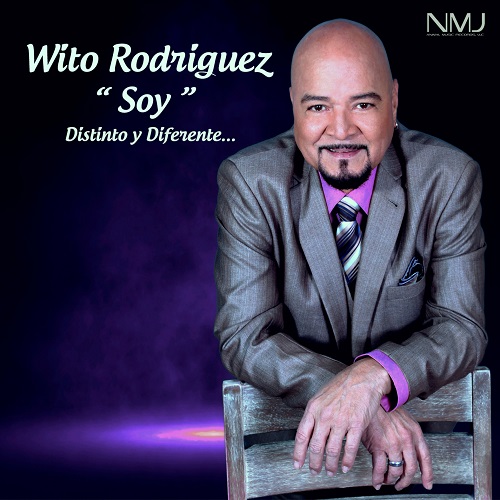
1 New artist Wito Rodriguez “I am distinct and different”

Norte America / Estados Unidos / Florida

Wito Rodriguez. “I am distinct and different”

Irwin “Wito” Rodríguez was born in Chicago to Puerto Rican parents and got his start in the musical field as a singer and musician. During his teenage years, he performed with a Rock and Roll band as a guitarist.

In 1968 Wito Rodriguez decided to move to “La Isla Del Encanto”, Puerto Rico, in order to search for his musical roots and experience the spicy sounds of his beloved Latin Ritmo.

His first encounter in the Salsa genre was with a Puerto Rican percussionist from the 60’s called “Chacón y su Orquesta”, where Wito learned all the Latin rhythms such as Guaguancó, Boogaloo, Mozambique, etc.

Chacón was his coach in Latin percussion instruments and Wito also fell in love with maracas.

Wito Rodriguez returned to Chicago in 1971 to join “Orquesta La Justicia” a local band that opened shows for artists such as: Ismael Rivera, Ray Barreto, Willie Colón, El Gran Combo and the legendary “Fania All Stars”.

Like many young men of that time, in 1973 Wito Rodriguez decided to join the United States Army and was sent to Europe.

During his stay in Germany, Wito Rodriguez took singing lessons with the Opera singer Barbra Sutton, and at the same time he created two bands with the names of “El Conjunto Sabor” and “La Sonora Antillana”.

These orchestras accompanied artists of the Salsa genre such as: Adalberto Santiago, Ismael Miranda, Tito Allen, Santitos Colón, Pete “El Conde” Rodríguez and the queen of Salsa, Celia Cruz.

After his retirement from the army, Wito joined forces with German band leader Rudi Fuesers and created the European Salsa Orchestra “Conexion Latina”.

With Conexion Latina, Wito Rodriguez recorded two albums; “Calorcito” and “Un Poco Loco”.

He also had the great experience of recording two songs with the band of Director and Arranger Peter Herbolzheimer.

During the 80’s, Wito wanted to broaden his horizons by forming his own groups called “Wito Rodriguez y Orchestra” and “Wito Con Cache”.

Missing his family and friends, Wito “crossed the pond” to return to the United States to finish his Army career.

He never gave up his passion for music, a new big band sound was on his mind, and he returns to the spotlight with the Wito Rodriguez Salsa Jazz Orchestra under the musical direction of trumpeter and arranger, Gino Picart.

“What a wonderful world” or “What a Wonderful World” is his third album released in January 2015.

Although busy in 2016 with live performances, a new album had also been produced and recorded between South America Venezuela and Orlando, Florida.

The most recent production called “Como el Viento” will be released in 2017. This album contains a compilation of songs recorded over the years in Europe than ever for the Western Hemisphere. I hope you enjoy your first solo release… What a wonderful world!

In 2018 Wito released another CD called “The Best of Wito” which has a mix of all the songs that fans thought were the best and respected their preferences.

Wito also has four new singles that he has released from his new album, which will be available from February 2019.

Through the internet platforms you can find these releases.

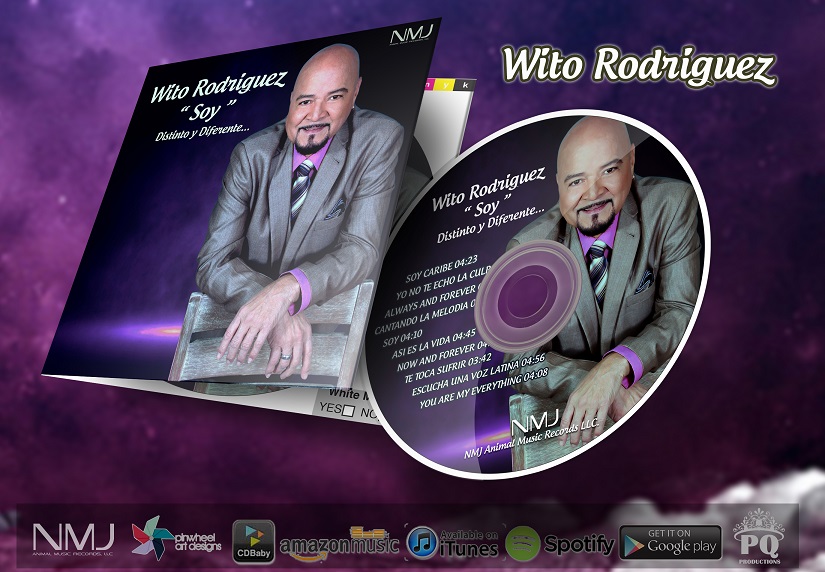
Always and Forever, Soy Caribe, Yo No Te Echo La Culpa and Now and Forever are the ones that have been released so far.

“As a bilingual singer, I am blessed to contribute to the music industry in my songs, singing them in English and Spanish, unity through my music in a mix of salsa and R&B, etc.” Wito Rodriguez

In the year of 2018. Wito Rodriguez was blessed to be nominated at the Hollywood Music Media Awards (HMMA) in Los Angeles, CA in November 2018.

You can also see his certificate as an honoree at the Fox Music Awards USA, Miami in November 2018, who was nominated and honored for being the Army Veteran Salsero Singer.

The Chicago Salsa Congress was one of its great events in 2018.

In March 2019 his new bilingual production Soy Distinto Y Diferente came out with the song Soy Caribe already nominated at the Hollywood Media Music Awards on November 20, 2019 in Hollywood California.

NMJ Animal Music Records LLC. [email protected]

PQ Promotions/Management Jenny Morales [email protected]

(682-554-4851 or (813-785-3086))

  • « Go to Previous Page
  • Page 1
  • Interim pages omitted …
  • Page 52
  • Page 53
  • Page 54
  • Page 55
  • Page 56
  • Interim pages omitted …
  • Page 103
  • Go to Next Page »

International Salsa Magazine (ISM) is a monthly publication about Salsa activities around the world, that has been publishing since 2007. It is a world network of volunteers coordinated by ISM Magazine. We are working to strengthen all the events by working together.