• Skip to primary navigation
  • Skip to main content

International Salsa Magazine

  • Home
  • Previous editions
    • 2025
      • ISM / November 2025
      • ISM / October 2025
      • ISM / September 2025
      • ISM / August 2025
      • ISM / July 2025
      • ISM / June 2025
      • ISM / May2025
      • ISM / April 2025
      • ISM / March 2025
      • ISM / February 2025
      • ISM / January 2025
    • 2024
      • ISM / December 2024
      • ISM / November 2024
      • ISM / October 2024
      • ISM / September 2024
      • ISM / August 2024
      • ISM / July 2024
      • ISM / June 2024
      • ISM / May 2024
      • ISM / April 2024
      • ISM / March 2024
      • ISM / February 2024
      • ISM / January 2024
    • 2023
      • ISM / December 2023
      • ISM / November 2023
      • ISM / October 2023
      • ISM – September 2023
      • ISM – August 2023
      • ISM July 2023
      • ISM Edition June 2023
      • ISM – May 2023
      • ISM April 2023
      • ISM March 2023
      • ISM February 2023
      • ISM January 2023
    • 2022
      • ISM December 2022
      • ISM November 2022
      • ISM October 2022
      • ISM September 2022
      • ISM August 2022
      • ISM July 2022
      • ISM June 2022
      • ISM May 2022
      • ISM February 2022
      • ISM January 2022
    • 2021
      • ISM December 2021
      • ISM November 2021
      • ISM October – 2021
      • ISM September 2021
      • ISM August 2021
      • ISM July 2021
      • ISM May 2021
      • ISM April 2021
      • ISM June 2021
      • ISM March 2021
      • ISM February 2021
      • ISM January 2021
    • 2020
      • ISM December 2020
      • ISM November 2020
      • ISM October 2020
      • ISM September 2020
      • ISM August 2020
      • ISM July 2020
      • ISM June 2020
      • ISM May 2020
      • ISM April 2020
      • ISM March 2020
      • ISM February 2020
      • ISM January 2020
    • 2019
      • ISM December 2019
      • ISM November 2019
      • ISM October 2019
      • ISM Septembre 2019
      • ISM August 2019
      • ISM July 2019
      • ISM June 2019
      • ISM May 2019
      • ISM April 2019
      • ISM March 2019
      • ISM February 2019
      • ISM January 2019
    • 2018
      • ISM December 2018
      • ISM November 2018
      • ISM October 2018
      • ISM September 2018
      • ISM August 2018
      • ISM July 2018
      • ISM June 2018
      • ISM May 2018
      • ISM April 2018
      • ISM March 2018
      • ISM February 2018
      • ISM January 2018
    • 2017
      • ISM December 2017
      • ISM November 2017
      • ISM October 2017
      • ISM September 2017
      • ISM August 2017
      • ISM July 2017
      • ISM June 2017
      • ISM May 2017
      • ISM April 2017
  • Download Salsa App
    • Android
    • Apple
  • Spanish

Search Results for: nominations

Flora Purim has earned her two Grammy nominations for Best Female Jazz Performance

Flora Purim (born March 6, 1942 in Rio de Janeiro) is a Brazilian jazz singer known primarily for her work in the jazz fusion style.

Airto Moreira, Flora Purim y Carlinhos Noronha

She was featured for her part on Chick Corea’s landmark album Back to Eternity.

She has recorded and performed with many artists, including Stanley Clarke, Dizzy Gillespie, Gil Evans, Stan Getz, the Grateful Dead, Santana, Jaco Pastorius, and her husband Airto Moreira.

Flora Purim’s voice has earned her two Grammy nominations for Best Female Jazz Performance and Down Beat magazine’s Best Female Singer award four times.

Her musical partners include Gil Evans, Stan Getz, Chick Corea, Dizzy Gillespie and Airto Moreira, with whom she has collaborated on more than 30 albums since moving with him from her native Rio to New York in 1967.

In New York, she and Airto became the center of the period of musical expression and creativity that produced the first commercially successful “Electric Jazz” groups of the 1970s.

Blue Note artist Duke Pearson was the first American musician to invite Flora to sing with him on stage and on record.

She then toured with Gil Evans, about whom she says, “This guy changed my life. He gave us a lot of support to do the craziest things.

This was the beginning for me. Her reputation as an outstanding performer earned her work with Chick Corea and Stan Getz as part of the New Jazz movement that also contained the nurturing influence of saxophonist Cannonball Adderley.
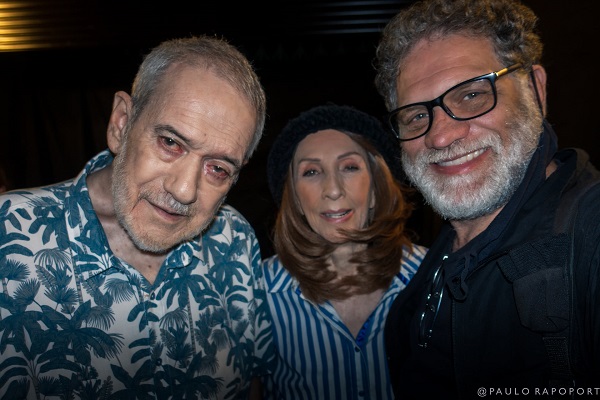
Airto Moreira, Flora Purim e Paulo Rapoport Popó

Soon after, Flora began to seriously re-educate discriminating musical minds after joining with Chick Corea, Stanley Clarke and Joe Farrell to form Return To Forever in late 1971.

Two classic albums resulted – Return to Forever and Light as a Feather nodal points in the development of jazz fusion.

Flora’s first solo album in the United States, Butterfly Dreams, released in 1973, immediately placed her among the top five jazz singers in Down Beat magazine’s jazz poll.

In the mid-1980s, Flora and Airto resumed their musical collaboration to record two albums for Concord – Humble People and The Magicians – for which she received Grammy nominations.

In 1992 she went further by singing on two Grammy winning albums – Planet Drum with Grateful Dead drummer Mickey Hart (Best World Music Album) and the Dizzy Gillespie United Nations Orchestra (Best Jazz Album).
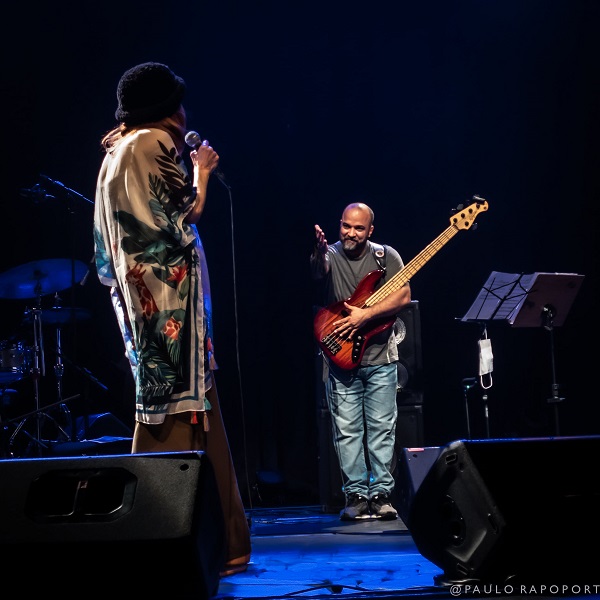
Flora Purim y Carlinhos Noronha

The launch of the Latin jazz band Fourth World in 1991, featuring Airto, new guitar hero Jose Neto, and keyboard and reeds leader Gary Meek, marked a new era in Flora’s career.

The band was signed to the British jazz label B&W Music, and Flora consciously set out to win over the next wave of listeners.

Flora’s 1995 album Speed of Light, with major writing and performance contributions from Chill Factor and Flora’s daughter Diana Purim Moreira, makes the connection between her experimental beginnings with Chick Corea and Gil Evans and the new “head” music being produced by jazz musicians in the London and New York hip hop scenes.

Flora Purim Open Your Eyes You Can Fly (1976)

Flora Purim Open Your Eyes You Can Fly (1976)

1- Open Your Eyes, You Can Fly (Chick Corea-Neville Potter)

2-Time’s Lie (Chick Corea-Neville Potter)

3- Sometime Ago (Chick Corea-Neville Potter)

4-San Francisco River (Airto Moreira-Purim Purim)

5-Andei “I Walked” (Hermeto Pascoal)

6-Ina’s Song “Trip to Bahia” (Flora Purim)

7-Conversation (Hermeto Pascoal)

8-Medley: White Wing/Blank Wing (Hermeto Pascoal-Flora Purim).

arrangements:

Hermeto Pascoal (4.5.7.

Egberto Gismonti (4)

Flora Purim (6)

The whole group (1.2.3)

01-David Amaro – electric guitar

George Duke – electric piano

Alfonso Johnson – electric bass

Ndugu (Leon Chancler) – drums

Background vocals: Flora, David Amaro, George Duke, Hermeto Pascoal

Instrumental solo: David Amaro (electric guitar)

02-Hermeto Pascoal – flute

David Amaro – acoustic guitar

George Duke – electric piano, ARP sequence,

ensemble synthesizer

Alfonso Johnson – electric and acoustic bass – Alfonso Johnson – electric and acoustic bass

Ndugu – drums

Airto Moreira – percussion

Instrumental solo: Hermeto Pascoal (flute), Nudgu (drums)

03-Hermeto Pascoal – flute

David Amaro – electric guitar

George Duke – electric piano, ARP sequence,

ensemble synthesizer

Alfonso Johnson – electric bass

Ndugu – drums

Airto Moreira – percussion

Laudir de Oliveira – congas

Instrumental soloist: Hermeto Pascoal (flute), David Amaro

(electric guitar)

04-Hermeto Pascoal – flute, electric piano

Egberto Gismonti – acoustic guitar

David Amaro – electric guitar

George Duke – moog synthesizer

Alfonso Johnson – electric bass

Ron Carretero – acoustic bass

Robertinho Silva – drums

Instrumental duet: Hermeto Pascoal (flute) and George Duke

(synthesizer

05-Hermeto Pascoal – flute, electric piano

David Amaro – electric guitar

George Duke – moog synthesizer, clavinet

Alfonso Johnson – electric bass

Airto Moreira – percussion

Robertinho Silva – drums, berimbauduet

vocal: Flora Purim and Airto Moreira

Instrumental duet: Hermeto Pascoal (flute), George Duke (flute), George Duke

(synthesizer), David Amaro (electric guitar)

06 -Hermeto Pascoal – electric piano

David Amaro – electric guitar

George Duke – moog, ARP Odyssey and ARP Odyssey sequences, ARP synthesizer

ARP, ensemble synthesizer

Alfonso Johnson – electric and acoustic bass – Alfonso Johnson – electric bass and acoustic bass

Robertinho Silva – drums, percussion

Laudir de Oliveira -congas

Instrumental solo: Georrge Duke (ARP synthesizer)

Odyssey)

07-Hermeto Pascoal – electric piano

David Amaro – electric guitar

George Duke – ARP sequences ensemble and moog synthesizer

moog synthesizer

Alfonso Johnson – acoustic bass

Airto Moreira – percussion

08-Hermeto Pascoal – electric piano, pipe, harpsichord,

whistling, percussion (seven-up bottles)

Egberto Gismonti – acoustic guitar

Ron Carretero – acoustic bass

Alfonso Johnson – electric bass

Airto Moreira – percussion, drums, berimbau

Robertinho Silva – percussion, berimbauduet

vocal: Flora Purim and Airto Moreira

Instrumental solo: Hermeto Pascoal (harpsichord and whistle)

Information realized (March 28, 2008)

Sources:

L’Òstia Latin Jazz 

Flora Purim

Also Read: Samuel Quinto Feitosa is a Brazilian virtuoso jazz and classical pianist
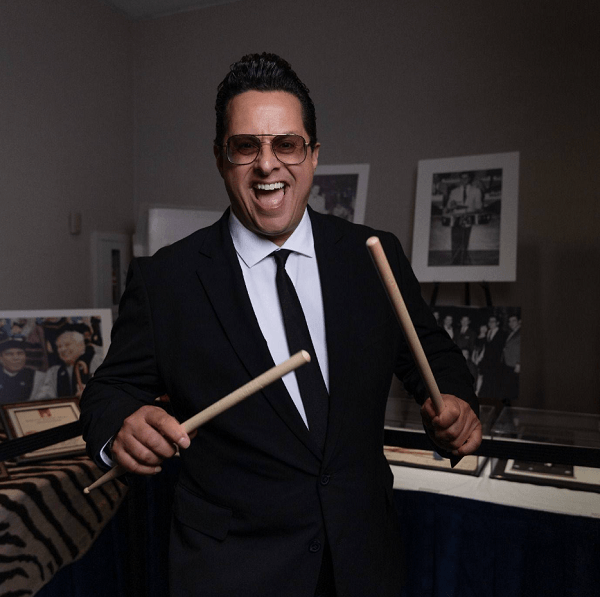
Tito Puente Jr.: perpetuating a legacy with its own rhythm

In International Salsa Magazine, we cannot contain our joy for the conversation we had with the son of one of the greatest legends of Latin music, who is now writing his own story of grandeur thanks to the education he has received practically since birth. This is none other than New York producer, composer, and percussionist Tito Puente Jr., who shared about 40 minutes of his time to answer some questions exclusively for Augusto Felibertt and yours truly, Karina Garcia. 

Tito puente jr. smiling
Producer, composer, and timbalero Tito Puente Jr. smiling for the camera

The burden of Tito Puente’s iconic legacy

Having a successful father is a great blessing, but sometimes, it can become a veritable martyrdom for a son who wants to follow his path, as comparisons between them will always be inevitable. Being able to share with Tito Puente Jr., son of the legendary King Of Timbales Tito Puente, gives us the opportunity to get his perspective on this interesting and important subject. 

Fortunately, the artist does not see this legacy as a burden, but quite the opposite. Although he admits that his father is one of the greatest masters and ambassadors Latin music and our culture in general have ever had, and that it is not easy to fill his shoes, he proudly bears his father’s surname and promotes his music.

Moreover, he sees the surname “Puente,” as well as the Spanish word implies, as a union among several generations because many young people this day do not know Tito Puente, Celia Cruz, and many other exponents of that salsa’s golden era. Tito Jr. wants to be part of that “bridge” between generations so that people of all ages can learn about these prodigies, including, of course, his father.

Childhood with Tito Puente as his father

Regarding his childhood and adolescence, Tito emphasized that he always saw his father play all types of instruments such as timbales, marimba, saxophone, percussion, and many others, which inspired him and made him want to imitate him from the beginning. Today, his career is largely influenced by everything he saw at home, and he plays his father’s arrangements and compositions, which are divided between a total of 186 albums. 

Everything learned within his family has taken him so far professionally, to the point that he now has seven Latin Grammys and 14 nominations, all thanks to the legacy he carries. 

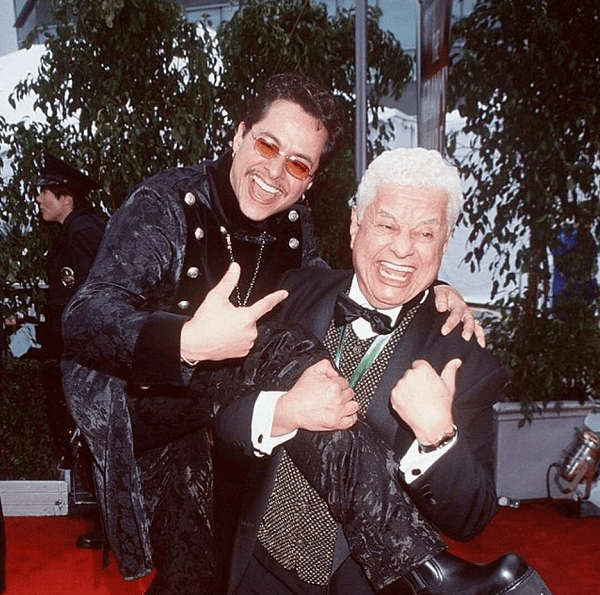
Tito Puente and Tito Puente Jr.
Tito Puente Jr. and his father Tito Puente on the 1998 Grammy Awards red carpet

The Puente family today

On the more personal side, Tito is the youngest of his brothers, among whom he is the only one who works on music as a profession. To some extent, this has made him take upon his shoulders Tito Puente’s legacy through his own art.

The musician currently resides in southern Florida, specifically in Miami, although he works with orchestras from different cities and countries. He is married and has two children who are Miranda, 18, and Tito Puente Jr. Jr., 17. Miranda studies marine biology at university, while her younger brother is in high school but travels constantly with his father and enjoys composing and playing the guitar.

He also told us a little about his wife, who loves salsa but is not in music. On the other hand, he spoke lovingly of “the boss,” his mother Margarita Puente, who is currently in charge of royalties, record labels, publicity, and the documentary on Tito Puente’s life.

He also has two siblings: Audrey Puente, 55, who is a television meteorologist, and Rony Puente, 77, who is also a musician like his father and younger brother. 

Other musical influences besides that of his father

In addition to salsa, mambo, and guaguancó, Tito really enjoys English rock and several bands such as Metallica, Slayer, Iron Maiden, Black Sabbath, and others into this style. These tastes of his have led him to the idea of, at some point, blending heavy metal with mambo to see which result he gets.

As well as he can really enjoy the music of Bon Jovi and Ozzy Osbourne, he is also fascinated by El Gran Combo de Puerto Rico, which he finds to be a very interesting mixture of genres that he would like to experiment with someday. 

He also said laughing that his father did not share his musical tastes and that the only rock band he liked was Santana, and that was because they did their own version of the hit “Oye Cómo Va” in psychedelic rock and Latin rock. 

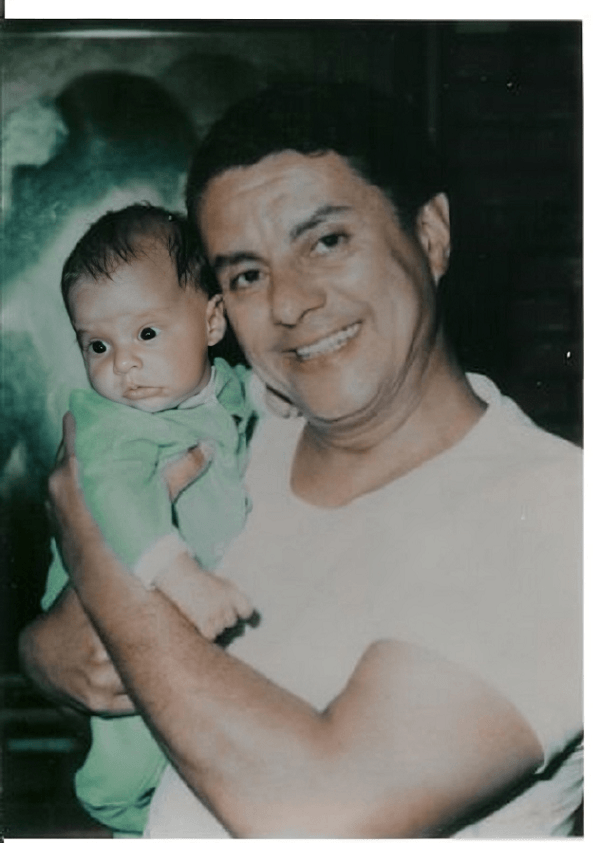
Tito Puente holding his son
Tito Puente carrying his son Tito Puente Jr.

Current singers

Today, Tito works with various singers, including Aymee Nuviola, Lucrecia, Yolanda Duque, and his great friend, “La Princesa de La Salsa” La India. His father worked with great vocalists such as Tony Vega, Michael Stuart, Oscar D’León, José Alberto “El Canario,” Miguel Ángel Barcasnegras Díaz “Meñique,” and many more. 

Tito’s latest album, “The King And I,” also features other big voices such as Domingo Quiñones, Frankie Negrón, José Alberto “El Canario,” Tony Vega, Sheila E., Pete Escovedo, and many other salsa superstars of today and yesterday. 

The timbalero has worked with many figures who also worked with his father in the past, so it is clear that they see him and respect him as the continuation of his musical legacy.

Tito’s views on academic training in music

On the important issue of academic training in music, Tito pointed out that there are not enough educational programs aimed at teaching Afro-Cuban music in schools and universities, which in his view needs to change as soon as possible.

In fact, he noted the importance of promoting programs in educational institutions around the world so that their students learn much more than just symphonic music and become more rounded professionals. Although he recognizes the importance of knowing Beethoven and Tchaikovsky, he also believes that aspiring musicians should know about Eddie Palmieri, Charlie Palmieri, Larry Harlow, Pupi Campo, and other artists in this style. 

The artist believes that the above mentioned artists and many others related to jazz and salsa are part of a very important era of music in the world, which is why he believes that teachers must take them into account during their classes. For him, it is a mission to promote both his father’s music and that of other exponents of his kind in the academic field.

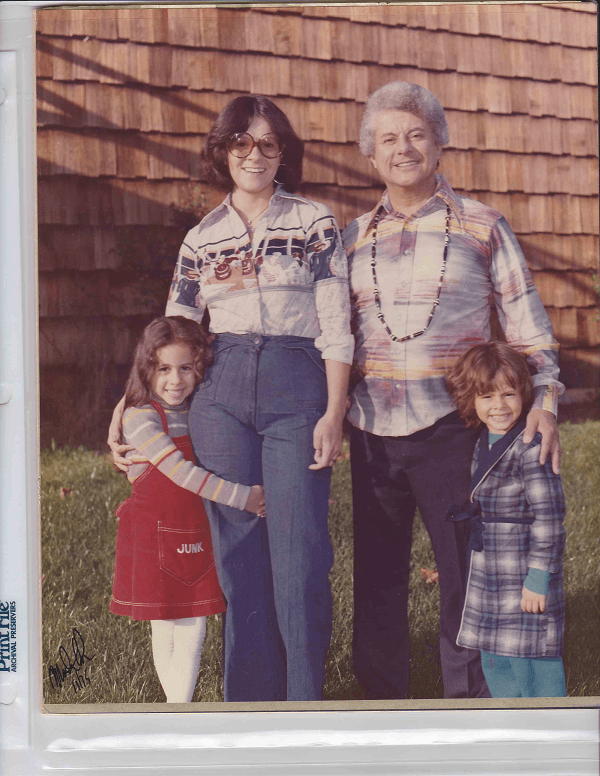
Tito Jr. and his family
Audrey, Margarita, Tito, and Tito Jr.

Upcoming tours

For our research, we could notice that Tito has several performances and tours scheduled for the rest of the year, more specifically for November. In this regard, he told us that in the first week of September, he went to play his father’s music on his weekly show Mambo Mondays, which is held to delight dancers eager to keep enjoying Tito Puente’s music.

About international tours, he plans to go to Germany in February next year and Spain next summer. He is also close to release a documentary in 2026 and a new album with the Los Angeles Symphony Orchestra, which has 77 musicians and instruments such as violins, violas, harps, bagpipes, flutes, French horns, among others.

Tito Puente Jr. and his son
Tito Puente III and his father Tito Puente Jr.

Final comment

We still cannot believe we had this great conversation with the talented Tito Puente Jr. and it has been a great pleasure to share this time with him. Those who wish to contact him can do so through his social media channels, which are as follows:


Facebook: https://www.facebook.com/TitoPuenteJr/

Instagram: https://www.instagram.com/titopuentejr/

X: https://twitter.com/titopuentejr

Tik Tok: https://www.tiktok.com/tag/titopuentejr 

Spotify: https://open.spotify.com/intl-es/artist/2ROkqvVDXj5JgmN6z2uFrM

Read also: Venezuela violinist and former musician in El Sistema Ali Bello has many interesting things to say

Chick Corea

North America / USA /

Chick Corea. The worldwide Jazz sensation

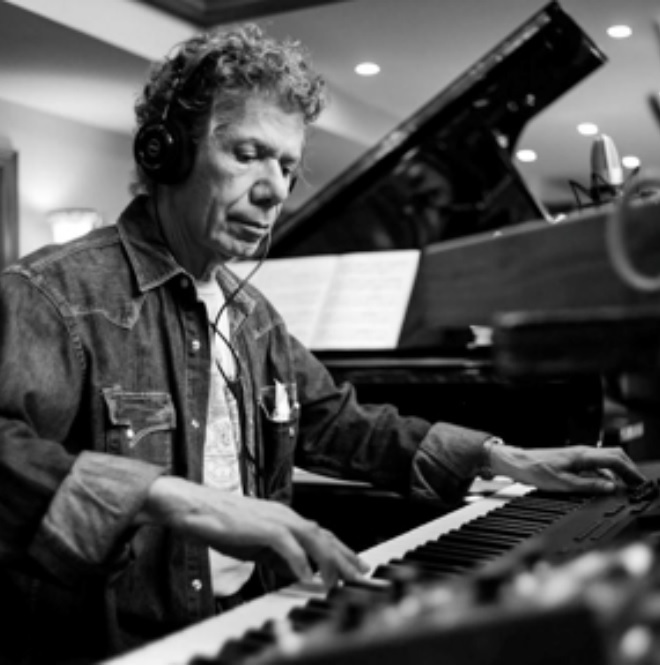
Chick Corea
Chick Corea

Armando Anthony “Chick” Corea is an American jazz and fusion pianist, keyboardist and composer. Many of his compositions are considered jazz standards. As a member of Miles Davis’s band in the late 1960’s, he participated in the birth of the electric jazz fusion movement. In the 1970’s he formed Return to forever. Along with Herbie Hancock, McCoy Tyner and Keith Jarrett, he has been described as one of the major jazz piano voices to emerge in the post-John Coltrane era.

A DownBeat Hall of Famer and EA Jazz Master, 22 – time Grammy winner and keyboard virtuoso, Chick Corea has attained living legend status after five decades of unparalleled creativity and an artistic output that is simply staggering.

Chick is the fourth – most – nominated artist in the history of the Grammys with 63 nominations. He’s also earned 3 Latin Grammy Awards, the most of any artist in the Best Instrumental Album category.

“Chicl Corea: Documentary of Legendary Jazz Great, Pianist and Component http://vimeo.com/10933550”

From straight ahead to avant-garde, bebop to fusion, children’s songs to chamber music, along with some far-reaching forays into symphonic works, Chick has touched an astonishing number of musical bases in his illustrious career while maintaining a standard of excellence that is awe-inspiring. A tirelessly creative spirit, Chick continues to forge ahead, continually reinventing himself in the process.

Chick Corea: European Tour 2017

  • Wroclaw, Poland – 06/22/17: Chick Corea Elektric Band – Hala Orbita – 8:00 pm
  • London, United Kingdom – 06/24/17: Chick Corea Elektric Band – Barbican – 7:30 pm
  • Lviv Ukraine – 06/27/17 : Chick Corea Elektric Band – Alfa Jazz Festival – 9:00 pm
  • Timisoara, Romania – 06: Chick Corea Elektric Band – Timisoara Jazz Festival – 9:00 pm
  • Belgrade, Serbia – 07/02/17: Chick Corea Elektric Band – Kombank Arena – 10:00 pm
  • Skopje, Macedonia – 07/02/17: Chick Corea Elektric Band – Metropolis Arena – 10:00 pm
  • Kongsberg, Norway – 07/07/17: Chick Corea Elektric Band – Kongsberg festival – 5:00 pm
  • Rotterdam, Netherlands – 07/07/17: Chick Corea Elektric Band – North Sea Jazz Festival – 11:00 pm
  • Rotterdam, Netherlands – 07/08/17 Chick Corea & Bela Fleck – North Sea Jazz Festival – 09:00 pm
  • Rotterdam, Netherlands – 07/09/17: Chick Corea & Trondheim Jazz Orchestra – North Sea Jazz Festival – 4:30 pm
  • Dublin, Ireland – 07/10/17: Chick Corea & Bela Fleck – National Concert Hall – 8:00 pm
  • Trentino, Italy – 07/12/17: Chick Corea & Bela Fleck – Sounds of the Dolomites Festival – 1:00 pm
  • Grugliasco, Italy – 07/13/17: Chick Corea & Bela Fleck – Gru Village Festival – 10:00 pm
  • Sant Feliu de Guixols, Girona, Spain – 07/16/17: Chick Corea & Bela Fleck – Festival de Porta Ferrada – 9:30 pm
  • Valencia, Spain – 07/17/17: Chick Corea & Bela Fleck – Jardines de Viveros – 8:00 pm
  • Moritz, Switzerland – 07/21/17: Chick Corea & Bela Fleck – Festival Da Jazzz – 9:00 pm
  • Albany, NY – 08/05/17: Chick Corea Elektric Band & Bela Fleck and The Flecktones – The Palace Theater – 7:30 pm
  • Vienna, VA – 08/06/17: Chick Corea Elektric Band & Bela Fleck and The Flecktones – The Filene Center – 8:00 pm
  • Red Bank, NJ – 08/09/17: Chick Corea Elektric Band & Bela Fleck and The Flecktones – Count Basie Theatre – 7:30 pm
  • Kennett Square, PA o 08/09/17: Chick Corea Elektric Band & Bela Fleck and The Flecktones – Longwood Gardens – 8:00 pm
  • Chautauqua, NY – 08/11/17: Chick Corea Elektric Band & Bela Fleck and The Flecktones – Chautauqua Institute – 8:15 pm
  • Sterling Heights, MI – 08/12/17: Chick Corea Elektric Band & Bela Fleck and The Flecktones – Michigan Lottery Amphitheatre- 7:30 pm
  • Cincinnati, OH – 08/13/17: Chick Corea Elektric Band & Bela Fleck and The Flecktones – PNC Pavillion – 7:00 pm
  • Denver, CO – 08/15/17: Chick Corea Elektric Band & Bela Fleck and The Flecktones – Denver Botanic Gardens – 6:30 pm
  • Salt Lake City, Utah – 08/16/17: Chick Corea Elektric Band & Bela Fleck and The Flecktones – Red Butte Garden Amphitheatre 6:00 pm

For further information and tickets:

411 Cleveland St. #215 Clearwater, FL 33755

(888)712-4425

The Kurland Agency

[email protected]

(617)254-0007

htpps://www.facebook.com/chickcorea

htpps://www.youtube.com/user/ChickCoreaTV


Argentine tango bassist and Latin Grammy winner Pedro Giraudo returned to his roots

Latin Grammy winner Pedro Giraudo spoke exclusively to us for International Salsa Magazine, so we are very pleased to bring you the best of our conversation with the Argentinian bassist and composer. Next, these are the highlights of his beginnings and his exciting career in his native country and in the United States, where he currently resides.

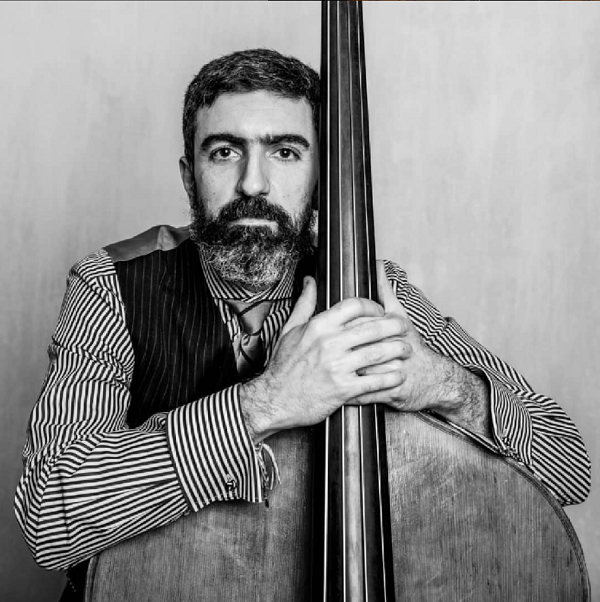
Pedro Giraudo posing
Argentine bassist Pedro Giraudo posing for the camera

Pedro’s beginnings in music

Pedro comes from a family of musicians. In fact, his father was a bandleader and his mother sang in a choir, so he was surrounded by music practically since he was born. He has memories of him watching his parents rehearse and play instruments when he was very young, so he was always very familiar with this kind of thing.

During his adolescence, he performed recitals with various ensembles, some of which played classical music, jazz, and tango. His professional advancement was very gradual, but he was doing some activities that prepared him for what was to come years later.

His love for this world grew so big that, once he turned 19, he moved to the United States precisely to study music and learn everything he could about what can be expressed through it. His musical interests initially focused on jazz, but that changed over time. 

Already at the end of his last year in college in New York, he was working regularly with various groups of different genres.

Interest in tango

Although, as we have said, Pedro comes from Argentina, he had not been particularly interested in tango at first, but his numerous trips around the world made him feel a little uprooted and detached from his beginnings. For this reason, nostalgia made him reconnect with the traditional music of his homeland. In addition, the fact that he was Argentinean encouraged many groups to call him, even though his knowledge of tango was not yet very deep at that time.

After giving himself the opportunity to play tango more formally, he also set to work to study it much more to learn about its most famous composers, its various styles, its ways to write music in the genre, among other things. In addition to that, he started to transcribe a lot of music to know what it sounded like in different styles and to gain practice. 

This path eventually led the artist to become part of many tango bands and even to lead some ensembles.

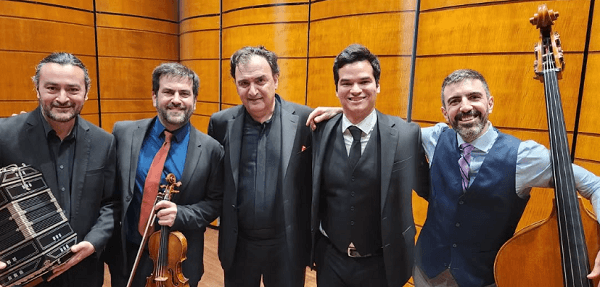
Pedro and friends
Pedro Giraudo, pianist Ahmed Alom, symphonic director Sergio Alessandro Bušlje, violinist Sami Merdinian, and accordionist Javier Sanchez

Groups Pedro was in

Pedro’s main goal in arriving in the United States was to become a double bassist, and after finally achieving it, he graduated from college and started to explore his role as a composer and leader of his own ensemble. From there, the band varied for characteristics and changed members and in size over the next 15 years. The last thing was a 17-piece big band.

Then, in the year 2014, due to the death of a great friend, Argentine pianist Octavio Brunetti, the Lincoln Center for The Performing Arts asked him to lead an event to celebrate his life and music. Therefore, in 2015, the musician started his tango project, which he would name Pedro Giraudo Tango Quartet, taking this request as a starting point. 

Today, he focuses all his efforts on tango ensembles, although he does recognize that he is increasingly angling for the classical side. For example, for his latest album, Pedro used a symphony orchestra, and since the last few months, he has been conceiving his next project with a chamber orchestra. 

Great collaborations in his career

Throughout his career, Pedro has been able to work with great music glories such as Paquito D’ D’Rivera, Rubén Blades, Pablo Ziegler, William Cepeda, and many others. One of the nicest things about this work for the Argentine is that he is always surrounded by very talented people from whom he can learn a lot.

One of them was bandoneonist Hector Del Curto, who was one of the first people Pedro started playing tango with in New York. Del Curto, in turn, had the great honor of playing with the greats of the golden age of Argentine music, such as Osvaldo Pugliese. 

It was through Hector that Pedro was able to meet and play with Pablo Ziegler, who was the principal pianist of Astor Piazzolla’s Second Quintet and greatly influenced the way tango is played on the piano. In fact, playing along with him on the double bass was an experience of which he learned so much, which he appreciated. 

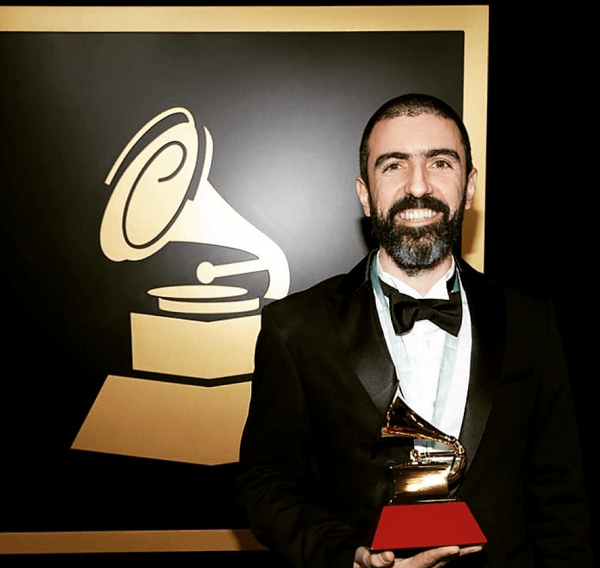
Pedro and his Grammy
Pedro Giraudo holding his Latin Grammy in Las Vegas

In the case of William Cepeda, the artist made some arrangements for him and he received many valuable lessons from him, such as the importance of keeping musicians engaged with sheet music to prevent them from getting too lax. It was also with Zepeda that he made his first arrangements for a symphony orchestra.

On the other hand, Paquito taught him how to be a practical musician and to make perfect, well done arrangements for any occasion. 

Latin Grammy winner

Pedro is fortunate to be a Latin Grammy winner thanks to his album “Vigor Tanguero” in the category Best Tango Album in 2018. When we asked him about his experience, the double bassist said that there are some details he does not fully understand, such as the elements taken into consideration when voting for an artist in a category. However, that did not overshadow the joy of winning such an important award.

He says his victory was a surprise. At the time, he remembers being on tour with Pablo Ziegler, and after a four-hour rehearsal, his phone had about 40 missed calls congratulating him, while he did not even know that the nominations were being announced that day. To his amazement, he was included.

The final event was in Las Vegas, where Pedro finally heard his name and felt a total joy and pride for all he had achieved. In this respect, he said, “I’m not a person who collects awards, but this is a recognition I’m very proud of, to be honest.”

Read also: French flamenco dancer Fanny Ara lets us know the most important details of her career

French flamenco dancer Fanny Ara lets us know the most important details of her career

There are countless artists from all over the world who have fallen in love with Latin and Spanish-speaking rhythms due to their colors and richness, so we cannot fail to talk about cases like that of dancer, choreographer and dance teacher Fanny Ara, with whom we had the opportunity to talk for a few pleasant minutes about her beginnings in her native French Basque Country and her current career. 

This talented woman, who we met through her work with Javi Jiménez and his group Barrio Manouche, has a lot of interesting things to say, so we invite our readers to enjoy this story from start to finish.

Dancer Fanny Ara posing
The beautiful Fanny Ara posing for the camera. Photo taken by Tony Abello

Fanny Ara’s beginnings in dance

With respect to how Fanny first became interested in dancing, Fanny explained that her aunt was a Spanish classical dancer and convinced her parents to sign her up for dance classes when she was about six or seven years old, to which they agreed and so they did. The little girl was so pleased with this discipline that she knew at once that she wanted to be devoted to this for the rest of her life.

She studied piano, although nowadays he does not play it, and obtained a degree in music at the Bayonne School of Art and, once he had finished all her studies, she wanted to try his luck in Spain. Been there, she had the opportunity to work side by side with some of the best exponents of flamenco dancing such as Isabel Quintero and Antonio Najarro, sparking her curiosity for looking further into it and specializing in it. 

In the end, she stayed in Spain for a few more years and had no incentive to return to her country of origin. She had already started a new life in a completely different place and a profession that kept her there for the time being.

Moving to the United States

While still living in Spain, Fanny fell in love with an American and went to live with him in San Francisco, where her partner had always lived. She was fortunate enough to move to what was no other than the city with the largest flamenco music scene in the country, so it was not at all difficult for her to adapt to the new world that was opening up before her.

In fact, it did not take long for her to join dance companies, teach classes and perform just like she had been doing in Europe. The only difference is that San Francisco was a big city, while her hometown was very small and Seville, where she lived in Spain, was not a big village either, so this was a big change for her.

San Francisco opened her mind tremendously in many ways that she had not considered, so she decided that this would be her new home indefinitely.

Maria Elena and Fanny
Flamenco dancer Marina Elena Scannell and Fanny Ara. Photo taken by Timo Nuñez

Differences between the American and European market in terms of dance

Given that San Francisco had a much wider variety of cultures and music, Fanny was able to experiment with many other art forms like she had not done before, so she was able to dance different genres from flamenco such as jazz and even salsa, especially at social events.

The fact that her new home did not have the same traditional barriers the dancer encountered in Spain helped her to expand her horizons and try new genres and dances. In addition, being able to work in Canada and Latin America has also allowed her to expand her knowledge to unimaginable levels.

Awards and nominations 

This entire career has also led Fanny to be recognized for her talent. The artist received six Isadora Duncan Dance Award nominations for important categories such as Most Outstanding Individual Dancer and Most Outstanding Musical Performance. In addition, she earned a recognition from New York’s Vilcek Foundation as “Creative Promise in Dance.” 

She feels absolutely happy and lucky to be awarded and recognized for her achievements in several of her greatest works, including “Magia Flamenca,” “A Través de Tus Ojos,” “Tattooed,” “Lilith,” among others.

Biggest challenges of being a dancer and choreographer

According to Fanny, one of the biggest challenges facing an event producer and choreographer like her is the obtaining of economic resources needed to carry out her ideas, which makes it difficult to get financing for her projects, especially after the pandemic.

In addition, many venues and restaurants are not interested in paying what corresponds to a flamenco show, which greatly reduces the chances of making some labour agreements.

Another disadvantage encountered by the artist and her team is the refusal of some theaters to allow them to use their premises, as the flamenco tablao requires a certain footwear and tap, which can be a little damaging to the floor of these establishments. 

However, these problems have not been an impediment for her to continue her work, although she has had to adapt to certain conditions.

Fanny and Barrio Manouche
Fanny Ara dancing with the group Barrio Manouche

What motivates Fanny to create her choreographies

One of the things that move Fanny to create a choreography is to give a voice to those who cannot speak. In the last two productions the choreographer has made, she has sought to address the abuse suffered by human beings, especially women. The plot of the play is about three dancers who have suffered some form of abuse throughout their lives, showing how important it was for Fanny to show what many people suffer today with no one to listen.

What the artist wanted was to bring a message of hope to her audience and give a voice to those who have remained silent in the face of any form abuse to them. Best of all, words were not required to give the message, as the dancers expressed their emotions through their movements and gestures, which was more than enough.

In the case of “Lilith,” Fanny was the lead dancer together with two other musicians who accompanied her to offer a simple but powerful performance about the hard life’s way of a woman, something the artist wanted to illustrate through her work.

Ara sought to raise awareness among the audience during the hour or two her show lasted, so that attendees would go home with a different view of what they had believed until now. 

Read also: Javi Jiménez from Barrio Manouche talks about his career in Spain and then in San Francisco

  • Page 1
  • Page 2
  • Page 3
  • Interim pages omitted …
  • Page 10
  • Go to Next Page »

International Salsa Magazine (ISM) is a monthly publication about Salsa activities around the world, that has been publishing since 2007. It is a world network of volunteers coordinated by ISM Magazine. We are working to strengthen all the events by working together.