• Skip to primary navigation
  • Skip to main content

International Salsa Magazine

  • HOME
  • Previous editions
    • 2026
      • ISM / March 2026
      • ISM / February 2026
      • ISM / January 2026
    • 2025
      • ISM / December 2025
      • ISM / November 2025
      • ISM / October 2025
      • ISM / September 2025
      • ISM / August 2025
      • ISM / July 2025
      • ISM / June 2025
      • ISM / May2025
      • ISM / April 2025
      • ISM / March 2025
      • ISM / February 2025
      • ISM / January 2025
    • 2024
      • ISM / December 2024
      • ISM / November 2024
      • ISM / October 2024
      • ISM / September 2024
      • ISM / August 2024
      • ISM / July 2024
      • ISM / June 2024
      • ISM / May 2024
      • ISM / April 2024
      • ISM / March 2024
      • ISM / February 2024
      • ISM / January 2024
    • 2023
      • ISM / December 2023
      • ISM / November 2023
      • ISM / October 2023
      • ISM – September 2023
      • ISM – August 2023
      • ISM July 2023
      • ISM Edition June 2023
      • ISM – May 2023
      • ISM April 2023
      • ISM March 2023
      • ISM February 2023
      • ISM January 2023
    • 2022
      • ISM December 2022
      • ISM November 2022
      • ISM October 2022
      • ISM September 2022
      • ISM August 2022
      • ISM July 2022
      • ISM June 2022
      • ISM May 2022
      • ISM February 2022
      • ISM January 2022
    • 2021
      • ISM December 2021
      • ISM November 2021
      • ISM October – 2021
      • ISM September 2021
      • ISM August 2021
      • ISM July 2021
      • ISM May 2021
      • ISM April 2021
      • ISM June 2021
      • ISM March 2021
      • ISM February 2021
      • ISM January 2021
    • 2020
      • ISM December 2020
      • ISM November 2020
      • ISM October 2020
      • ISM September 2020
      • ISM August 2020
      • ISM July 2020
      • ISM June 2020
      • ISM May 2020
      • ISM April 2020
      • ISM March 2020
      • ISM February 2020
      • ISM January 2020
    • 2019
      • ISM December 2019
      • ISM November 2019
      • ISM October 2019
      • ISM Septembre 2019
      • ISM August 2019
      • ISM July 2019
      • ISM June 2019
  • Spanish
  • Download Salsa App
    • Android
    • Apple

Search Results for: radio

What makes sensual bachata so popular

Why sensual bachata is popular

With the passage of time, music has undergone such a big transformation that it looks no longer as what it was a few decades ago. Just as new musical genres with very modern rhythms have emerged lately, the old ones have continuously adapted to consumers’ changing tastes of this era. Such is the case of bachata, which has progressively succumbing to the sensual fashion that has spread to a good part of current genres. 

Nowadays sensual bachata has gone on to become one of the favorite musical styles for both young and not so young. The best proof of this is that each day there are more radio stations and nightclubs that include in their repertory this music to appeal to the public who support it. 

What has made sensual bachata become so famous? 

This genre from the Dominican Republic and Puerto Rico has always stood out for its waste of romanticism and sensuality, which has made it very famous in the rest of the world. One of the most important characteristics of bachata is the deep connection that should exist between the members of the dance couple in order to infect the audience with magnificent energy and an intimacy out of this world. 

Sensual bachata has become one of the favorite variants for most people, which has expanded enormously thanks to a large number of dancers who have dedicated themselves to seeking new horizons and setting aside traditional styles from previous years. This style has had plenty of promoters, which was the reason it has become so popular in a pretty quick period of time. 

The role of women in sensual bachata 

Why sensual bachata is so popular
Young couple dancing sensual bachata

Without any doubt, women have acquired a leading role in bachata in recent years as it is the female part of the dance that performs the most sensual movements of the choreography. On top of this, there are a more or less intense touch of eroticism and a very vivid interpretation of the music to give the result that the dancers are looking for. After professional dancers started adding these ingredients to their choreographies, there was the emergence of a set of rhythms that reinvented itself and won the support of the public. 

One of the reasons why sensual bachata has gained so much popularity lately is the role played by women during the dance. 

This genre shows us a woman who should be able to take advantage of all her femininity and be very sure of herself at all times. Every part of her body must move to the rhythm of the music without neglecting the load of eroticism needed at any time. 

The best of all this is that every day there are more and more women who want to bring out this sensual side that all women have, so they choose to enroll in dance classes where they are taught to dance these types of rhythms in a professional manner or not so much. A large part of these classes is aligned toward learning delicate body movements, cadence, and much more. 

Home

Hanny the Voice of Cuba for the world

Leosbel Jiménez Licea is Hanny the Voice of Cuba

Born on July 8, 1972, Havana Cuba in the Vedado neighborhood. For the love of the songs I used to listen to on the radio at home, the love for music was born, especially for the guitar. That’s why since I was 4 years old all my toys were musical instruments, a drum set, drums, harmonicas, triolas, until I had a little toy guitar with which I used to invent concerts on the balcony of my house, the neighbors would pass by and laugh when they saw me so small believing me to be a star.

Leosbel Jiménez Licea Born on July 8, 1972, Havana Cuba in the Vedado neighborhood By the passion to the songs that I listened at home on the radio was born the love for music especially for the guitar, so since 4 years old all my toys were musical instruments, a battery, drums, harmonicas, triolas until I had a toy guitar with which I invented concerts on the balcony of the house, the neighbors passed and laughed to see me so small believing me a star Translated with www.DeepL.com/Translator (free version)
Leosbel Jiménez Licea

Hanny the Voice of Cuba

9 years old, I begin to study the basics of the guitar in the house of culture of the neighborhood at the same time that I was practicing fencing, at the age of 11 I won the national infantile championship of fencing earning me a scholarship to the school of sport incision (Eide) in the city of Havana, school from where many glories of the Olympic and world-wide sport of Cuba have come out.

14 years for disenchantment with the sport life I decide to leave the sport and to concentrate only in the music, in a self-taught way of course, there I begin to write my first songs that were poems that I was musicalizing at the time that I was learning new chords.

At the age of 19 I already had some songs that were sometimes played on some programs of the radio station in the province on the Havana City Radio.

So I was trolling the streets meeting many street artists until one day, an Englishman David Butlle, known as Mr. Bongo, arrived in Cuba in search of an orchestra to produce a record in Britain, a few days before leaving Cuba wanted to buy several albums of Cuban music from the 50s and did not know how to speak Spanish, my friend who passed by helped him with the translation into English, thanked him and told him who he was, my friend told him about my music, then we recorded a demo of 11 songs of my authorship then took them to London.

Between August and September of 1996, I was flying to London to record my first CD titled (Athe Voice of Cuba) production of 11 themes of my authorship and a danzón of the composer Niurka Díaz and Daniel Rodriguez, recorded with British, Cuban, Venezuelan, Colombian musicians all settled in London, my first recording work came out two themes that were in the French movie “Place Vomdome”, with the famous actress Catherine Deneuve, a British novel called Coronation Street, I also use my music, novels and series from Argentina, one called the Lola from Colombia and Israel, my first cd enjoyed good reviews in the best known and respected media especially in the UK opening the doors to the Royal Albert Hall, jazz cafe in London, the most prestigious jazz festivals and world music generally from the UK, as well as taking my music to all Europe, Colombia, Peru, etc, making for the success of the album concerts in Norway, Spain, Turkey, and Finland.

So I was trolling the streets meeting many street artists until one day an Englishman David Butlle known as (Mr. Bongo) arrives in Cuba looking for an orchestra to produce an album for him in Britain
The Troubadour Leosbel Jimenez Licea

In 1998 I recorded my second album produced by my company (Hanro Records) and this time we recorded between the laboratory of electroacoustic music of Cuba and London with the participation of musicians from the Orchestra of Elio Reve, Paublito fg and Irakere, plus some British and Latin musicians based in London, at the same time conducted and directed a radio program in Spectrum radio called Cannonazo in England. Then came a period of just a few acoustic concerts to prepare all the new songs that we will start recording at the end of the quarantine. In 2019, I did 6 concerts in Finland, 5 Acoustic and one with a band in one of the most prestigious halls of Helsinki, I did 5 concerts in Ecuador and one concert in Cali Colombia, now we were preparing a group of concerts in Colombia, Chile and Peru everything is stopped until normality arrives, with 3 albums ready to start recording little by little.

In 1998 I record my second album produced by my company (Hanro Records) and this time we recorded between the laboratory of electroacoustic music in Cuba and London with the participation of musicians from the Orchestra of Elio Reve, Paublito fg and Irakere
Hanny the Voice of Cuba for the world

Home

From Italy Albert Giorgio Giovanni DJ. Lindo Salsa and Bachata

Albert Giorgio Giovanni Fiorentu Dj Lindo is an Italian and Latin music producer (Salsa and Bachata).

Albert Giorgio Giovanni Fiorentu aka Albert Lindo or DJ. Lindo is an Italian DJ. and producer of Latin music (Salsa and Bachata).

Born in Udine, Italy in 1989, he started his career as a dancer in 1997.

In 2008 he graduated as a dance teacher.  In 2011 he moved to Austria (until today) and in 2014 he started working as a dance teacher at the school Conny & Dado in Graz.

In the same year he started his career as a DJ and in 2017 as a producer.

Dj Lindo is an Italian DJ and producer of Latin music (Salsa and Bachata).
Albert Giorgio Giovanni Fiorentu to Dj Lindo producer of Latin music (Salsa and Bachata).

In 2019 (after the first 2 unfortunate productions) the first world production “The Phantom” is released, helped by the pianist and composer Marco Ronca.

In 2020 he obtained his second diploma as a dance teacher and also launched his new single “No Te Detengas” always with Marco and in collaboration with several recognized artists.

Between the end of 2020 and the beginning of 2021, 4 new productions will be ready, a bachata and three salsas (a romantic salsa, a hard salsa and a Cuban salsa) with the collaboration of many recognized artists.

Currently Dj Lindo is part of the record label located in Milan (Italy) Alosibla Music Group and Downbridge Publishing, which each year presents the famous compilation.

Albert Giorgio Giovanni Fiorentu aka Albert Lindo or Dj Lindo is an Italian DJ and producer of Latin music (Salsa and Bachata)
Italian DJ and Latin music producer (Salsa and Bachata)

“SALSA IT”

Did you know the origin of the DJ…

The 9th of March is World DJ Day, thanks to the initiative of the ‘Worl DJ Fund’ and the NGO ‘Nordoff Robbins Music Therapy’. But, do you really know the history of these music mixing artists?

For 16 years this day has been celebrated as a tribute to this sector of music that is so in vogue in our time, which take advantage of his ‘birthday’ to donate what they charge these days to charitable causes.

The initiative was carried out in 2002 by the ‘Worl DJ Fund’ and the NGO ‘Nordoff Robbins Music Therapy’, and has been active for over a decade. But the history of the DJs has a few more years.

For those who still do not know what is behind the acronym DJ, a ‘disc jockey’ is a musician who creates, selects and plays before an audience music of his own or composed by other artists. There are several types, including radio and club DJs.

The first DJ in history

It was Ron Diggins, a British radio engineer who in 1947 built the famous Diggola
Ron Diggins first ever DJ

It was Ron Diggins, a British radio engineer who in 1947 built the famous Diggola, considered the first “mixing table” in the history of music. This home-made portable table included two turntables, lights, microphones, an amplifier and a dozen speakers. And it was made on a coffin wood base.

If we mention Ron Diggins, many of us won’t know who I’m talking about, because this British and radio engineer is considered the first DJ in history.

Many others before Diggins moved in with their records and equipment to cheer on the soldiers but he was the creator of “La Digolla”.

He himself built the first mixer in 1945, although it wasn’t until 1947 that the invention became official.

It was a portable table made of wood, worthy of any party room, it included two plates, lights, microphones, an amplifier and a dozen speakers.

As a curiosity, the wood with which Diggins made the first mixing table in history was casket wood.

Six weeks was the time it took the engineer to build the famous portable table.

Ron Diggins’ dream was to travel all over the UK with his van and “La Digolla”, so he could play his favorite songs.

This pioneer during his professional career was severely criticized by countless musicians who did not approve that the DJ would mix songs without their consent.

Diggins retired in 1995 after playing at 20,000 parties.

In his hard beginnings, traveling kilometers and full of criticism, he would never imagine what he had done, he had invented a profession. A job that would be paid for, more than he could have thought.

The first Disc Jockey in history, died at the age of 90 and in his long life he made 6 “Diggiolas” Some of them were auctioned off at more than $40,000.

“I haven’t invented anything, I just put the same things to a different use, that’s all.

On his 90th birthday, the first disc jockey confessed that, when he started to tour cities and towns with his invention, he received hundreds of criticisms from musicians who did not approve of him mixing their songs without their consent. Diggins retired in 1995 after playing at 20,000 parties.

The big DJ explosion

In the 60s and 70s, with the expansion of the discotheques in Europe and the USA, the creation of a specific technology for this figure of the music began, like the mixer ‘CMA-10-2DL mixer’. It was also the time of the birth of ‘hip-hop’ and ‘disco’ music.

In the 80’s we get the first big names, considered cult DJs, as Larry Levan who played in the ‘Paradise Garage’ in New York, or Frankie Knuckles, with its mixtures of ‘disco’ and ‘synth pop’ led to music ‘house’ in the ‘Warehouse Club’ in Chicago. At the same time, in Detroit, techno was born.

They were years of great impact for the DJs, who saw the birth of their first magazine specifically for professionals, the ‘DJ Times’ in 1988 and held for the first time an exclusive event for DJs of electronic music dance, the ‘Winter Music Conference’ in 85 in Florida.

The DJs of the digital era

The arrival of the ‘rave’ movement in the 90s radically changed the image of DJs and these artists began to project themselves as superstars or ‘Diva DJs’ who establish particular sounds and brands.

These new ‘DJs’ have arrived to our days, taking advantage of the technological innovations of the digital era, and there we have famous names such as the French David Guetta, Armin Van Buuren, Tiesto or Bob Sinclar, who travel the world with their mixes.

Source: https://culturizando.com/


Home

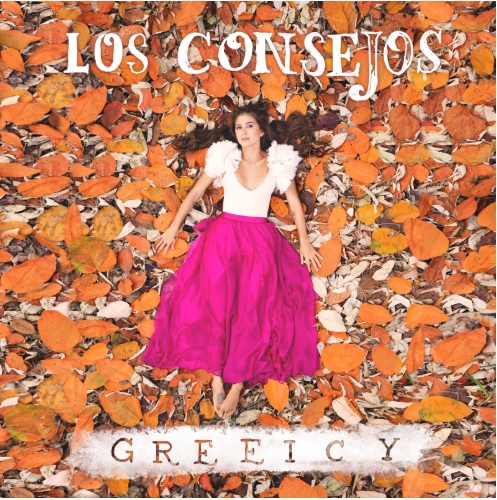
Greeicy premiere “Los Consejos”

Greeicy premieres her new single “Los Consejos” and is nominated for the 2020 youth awards

This time we have the Colombian actress, singer and dancer Greeicy Rendón who has moved into the world of current music; Since she was little, she was interested in acting and music, so with the help of her parents, she began to take acting classes, piano, flute, guitar and singing.

On August 3, 2017, she made her debut as a solo singer with the release of her first single, «Brindemos» and subsequently, in the company of other artists or alone, they developed various musical themes; currently the charismatic and talented Colombian singer and songwriter, Greecy premieres “Los Consejos” the second preview of her new album.

"LOS CONSEJOS" the second advance of his new record material
New single “Los Consejo”

“Los Consejos” is a ballad with a fresh proposal that incorporates urban pop tones with a sweet melody and powerful lyrics that fuse nostalgia and disappointment “Duele quererte y tú tan lejos, tenía la fé de que íbamos a llegar a viejos, me hago la fuerte, pero es complejo, si la tristeza se me nota en el espejo”

The song was written by Greeicy, Andres Torres, Mauricio Rengifo, Keityn, Rudeboyz, Lexuzbeatz, Bullnene, Flybot, and Juan Camilo Vargas Vasquez.

“Los Consejos” is accompanied by a music video, directed by Greeicy and Dario F. Burbano and produced by Mike Bahía, where Greeicy is seen longing for that love that could one day be, while he is seen alone on a swing, transmitting that pain we feel when love escapes from our hands, without really knowing why.

Greecy photo
Greecy photo on an estate

This new song follows in the footsteps of the premiere of “Los Besos” and its version on piano, a song that was initially released in April this year. “Los Besos” already has more than 60 million combined reproductions and its video more than 40 million views and is currently in Spotify’s Top 200 and Top 50 Viral lists in 9 countries, and also in the Top 100 of Apple Music Latino in 11 countries.

“Greeicy Rendón delights with his version of ‘Los besos’ on piano” – RCN Radio

“In this new romantic and fresh version, the charismatic and cheerful personality of Greeicy continues to be reflected, who today is positioned as one of the most important Latin pop artists of the moment.” – 40

Since entering the music scene, Greeicy has become one of the most prominent female figures within the genre, projecting sensuality, sparkle and style. For this reason, she has established herself as one of the most influential female artists, reaching 4.1 million subscribers and almost 2 billion views on her YouTube channel.

The nominees for Youth Awards 2020 were announced through social networks and in the voice of the most important artists of the moment, where the Colombian artist Greeicy achieves a nomination.

The awards given by the leading Hispanic network in the United States Univision, which year after year recognize the best of music, confirm Greeicy’s nomination in the Hottest Core category with their single “Aguardiente”.

The award ceremony will take place live at 8P / 7C on August 13 from Miami, Florida, in compliance with strict public health and safety measures.

Votes are already available at www.premiosjuventud.com/vota until next July 21.

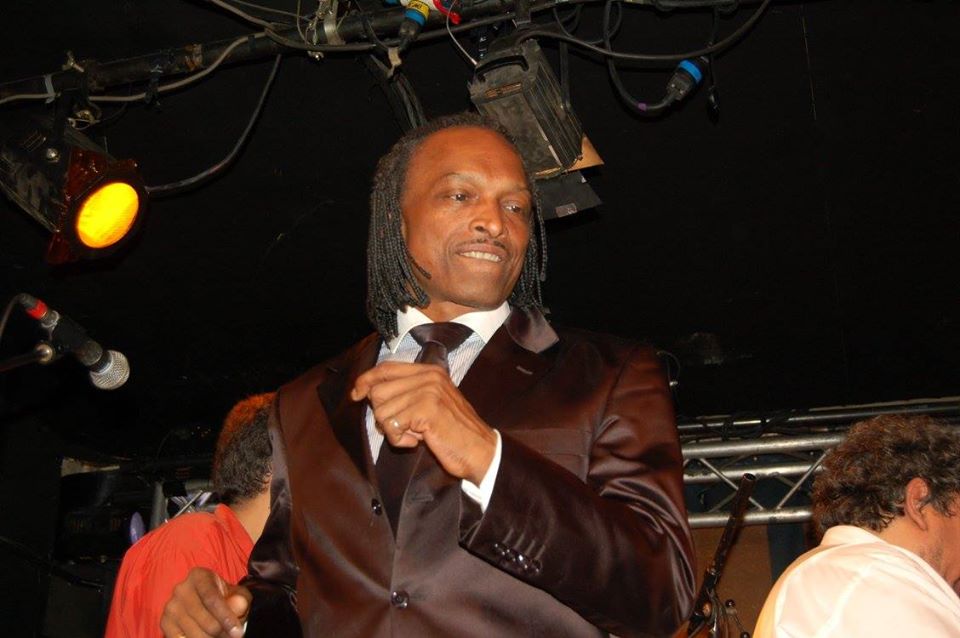
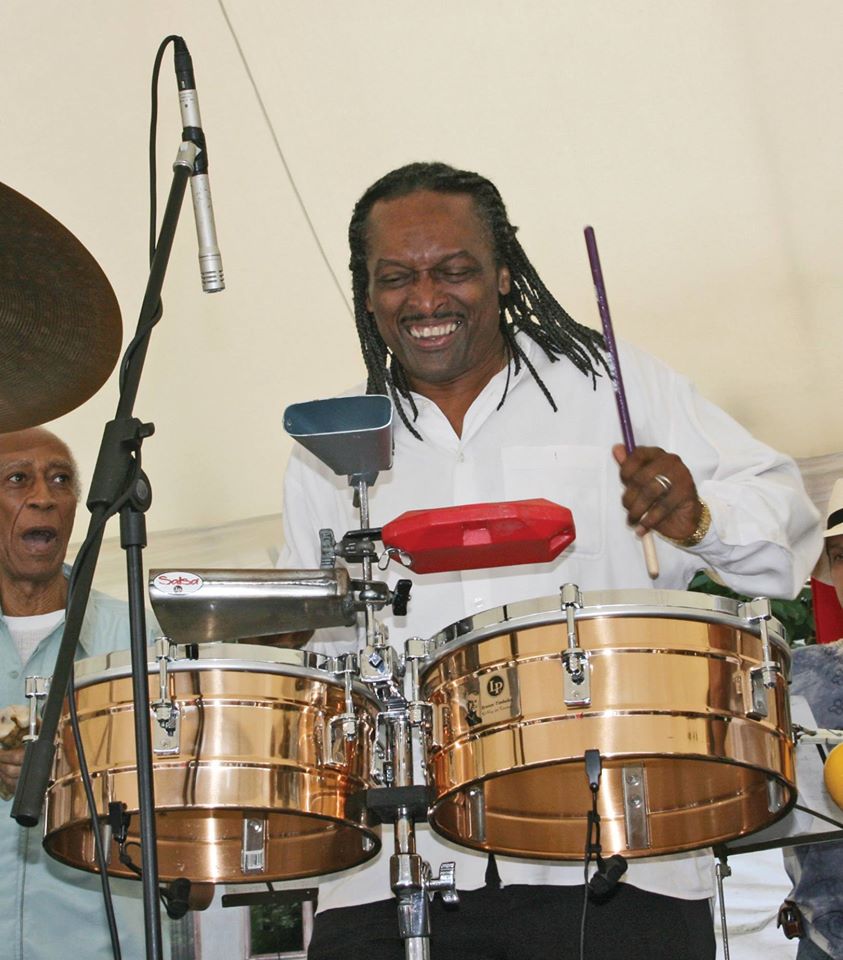
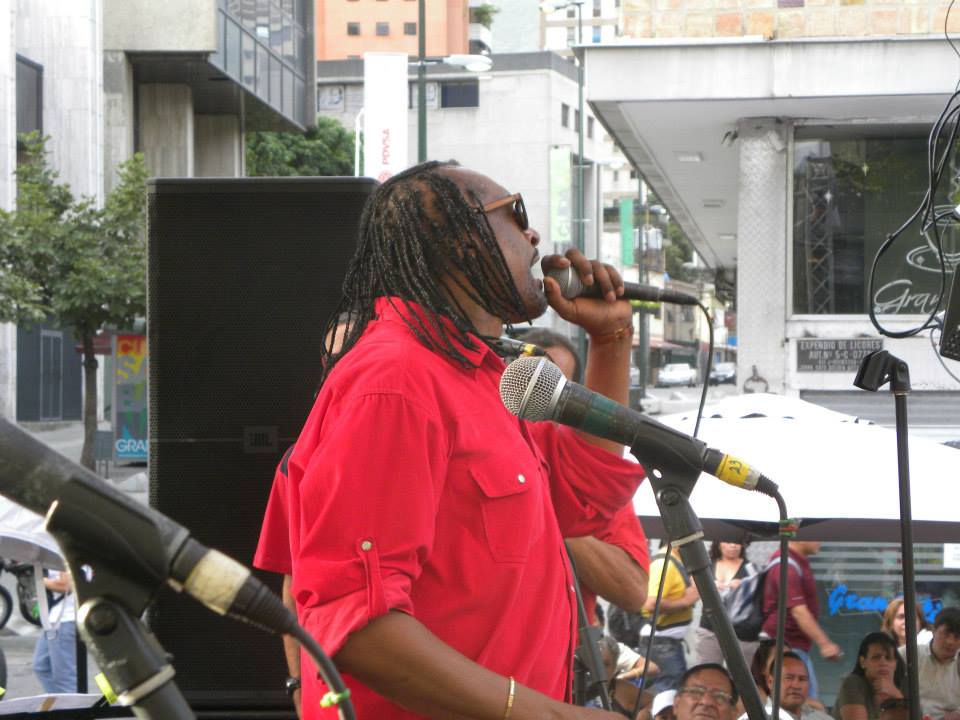
Orlando José Castillo: The Venezuelan sonero graduated in New York

Orlando José Castillo “Siempre Pa’lante”

He (Orlando José Castillo) is catalogued as one of the most important soneros that Venezuela has given to the world and considered a living legend of Afro-Caribbean music for his extensive, successful and extraordinary career during many years; for “International Salsa Magazine”, it is a great honor to have as a special guest on this occasion Orlando José Castillo “Watussi”, born in Marín, Yaracuy state, on March 23, 1949, who, since he was a child, moved with his parents to live in the parish of La Pastora in the city of Caracas.

Welcome Master Watussi and we hope that all salsa lovers through International Salsa Magazine, www.salsamundi.com, will know part of his life.

Thanks to all the staff for giving me the opportunity to read your magazine, which is already observed in Latin America, USA and Europe.

Orlando José Castillo "Watussi" The Venezuelan Sonero graduated in New York
Orlando José Castillo “Watussi”

And well, I am currently living in the city of Milan, Italy and let me tell you that I have beautiful and unforgettable memories of Barquisimeto, so for me it is a pleasure and an honor at the same time, to be sharing with all those people and my country.

To begin with, Maestro Watussi, which were the first groups and orchestras you were part of? Let me tell you that I started with Los Satélites, Federico y su Combo Latino, Porfi Jiménez, Príncipe y su Sexteto and that was super important, since they were the Venezuelan orchestras with which I began to form my career, especially with Los Satélites, Porfi, Federico; I sincerely owe the present of my life to all of them and that is why I do not want to leave them out of the picture.

"Watussi" The Venezuelan Sonero graduated in New York
Orlando José Castillo “Watussi”

Very good teacher, we would like to talk about your career in Puerto Rico and in the United States, with the various groups with which you were part.

Well, I tell you that I left Venezuela in 1979 definitely because I traveled for the first time in 1971, musically speaking, and it was my first international tour to the island of Santo Domingo with Los Satélites and then we returned in 72 and in 1974 we were the first Venezuelan orchestra to set foot on American soil in New York City.

NY being on the most important stage in the world at that time as it was Madison Square Garden and the importance of imposing a hit of musical salsa in the Big Apple, with a song I recorded called “Traicionera”, by the master Carlos Guerra and recorded with “Los Satélites”, after that experience I was founder of the “Renovación”, from there I went to be part of “Federico y su Combo Latino”; Then I worked with Rafael Cortijo and his Combo in Puerto Rico in 1977.

Later, in 1979, I went to the island of Borinquén, Cortijo was already traveling to New York and because I could not accompany him, I was lucky enough to be asked by the maestro Bobby Valentín to be part of his band. I stayed with him for three months and at one point I went to New York, The strike of Puerto Rican musicians, as many Dominican musicians were entering the island, led to Bobby being criticized for having a Venezuelan singer instead of a Puerto Rican one.

Later, in New York, I joined Cortijo and Kako Bastar again, who was another teacher in my career and with him I learned to know that great city and at that time almost all the singers of the orquestas bravas, were beginning to do their own work as soloists and I began to work with Joe Cuba and his Sextet, Eddie Palmieri, Larry Harlow, La Típica 73, until I arrived at the “Conjunto Libre”, I was there for about a year and a half, I recorded with them “El changó de María”.

After I had signed with the Fania label, which was a mistake I made, because Cortijo and Kako were telling me not to do it, since I had Fania in my brain, I rushed and was with them for a year practically inactive in the discography and that cost me not to have recorded the last album with Rafael Cortijo and others.

I recorded with Fania “Mi rumba y yo” and told them to leave me alone, they let me go and I joined the orchestra of “Bobby Rodríguez y su Compañía” for three years, I recorded a very good album, including the songs “María Cristina”, “El Pintor”, “Homenaje a Cortijo”.

In fact Carlos, then I continued with Palmieri in 1987, when I had already recorded the album “Las Calaveras” with José Mangual Jr. and there I began my career as a soloist.

Later on I set up my orchestra in New York, but unfortunately work began to decline due to the closure of venues such as El Corso, Casablanca, Copacabana, El Palladium and that brought as a consequence much less work, but thank God, in 1988 I had the opportunity to go to Paris, invited by my compadre Alfredo Cutuflá, in the place of Cheo Feliciano, to do the dance of December 31st at the New Morning.

Excellent, master Watussi, and it must have been a great commitment to replace Cheo at that time, tell us about this experience. Yes, I was fortunate to take his place because he did not travel at that time without his orchestra and Alfredito Cutuflá told me to get Cheo, I had his telephone number, I gave it to him and he told me that if Cheo did not go, I would go, and well it was a tremendous success with Cutuflá and that opened the doors for me in Europe and specifically in Italy, where my friend Carlos Ugueto was based, who brought salsa to that country.

Orlando José Castillo "Watussi"
Orlando José Castillo “Watussi”

Ugueto played the first album of this genre on his radio program, in his club and after he found out that I was in France, he sent for me and facilitated a tour in Milan in 1990, since in 1989 I was in Panama, singing to my compadre’s daughter Roberto “Mano ‘e Piedra” Durán, his 15 year old party, together with Camilo Azuquita, exactly on December 16, 1989,

but on December 19 the invasion of Panama began and I had to stay there until January 5 and well Carlos, I go to Europe and start my tour in Holland, then London, where I did a show with the master Tito Puente, on December 30, 1990, there I was 2 months in the old continent; I returned to New York, where I was residing, and in 1991 I returned to Europe and that’s when I stayed here for good with my family in Milan.

Orlando José Castillo, when you come to Venezuela, we imagine you will feel very well because you are visiting your homeland?

Of course I do, professor, when I go to my country I recharge my batteries, because there is no place like Venezuela, no matter what happens and I tell you honestly, I hope one day to be able to be in Barquisimeto with you, especially to personally show my appreciation for this gesture of having given my name to that “Peña Salsera Orlando Watussi”, in the middle of 2019, being the first time in Venezuela, to give me an honor of that size; especially my thanks to Dany Castillo and my family there, precursors of that idea, and to all the musicians of the musical capital to whom I send a cordial greeting.

Master Watussi, I am remembering that you were integrating the “Clan of Salsa” here in our city, do you remember that too?

Obviously, my friend Carlos, I was there with one of the bravest singers that Venezuela has given, my little brother Willy Rodriguez, who unfortunately is no longer with us.

Willy “El Guaro”, took care of me in his house for a few days, until I got my house in Barquisimeto; I am going to take advantage of this interview professor, to thank the family of Aldemar Barrera, the family of Honorio, tremendous bass player, Coromoto, who was the engine of that movement; greetings equally to Egidio and to all those panas.

Carlos, I want to greet especially the people of the Orquesta Malecón, I hope that one day we can meet on a stage and make a little effort, or perhaps in the Peña itself.

Orlando José Castillo, what can you tell us about Maestro Baquedano? Santiago Baquedano is one of the best musicians Venezuela has ever given and with him I worked on Margarita Island for a few months and from there I went to “La Salsa Mayor” and then I went to Puerto Rico, but I feel proud to have shared with so many valuable people from my country in my 50 year artistic career.

And let me tell you Carlos, just to finish, I reiterate my congratulations and good wishes for you to continue always with the work you do with this salsa column and your radio program, which aims to support and encourage musical talent in salsa.

Thank you Carlos and God bless you, take care all of you in my country and don’t leave the house! Cool…!.


Home

  • « Go to Previous Page
  • Page 1
  • Interim pages omitted …
  • Page 62
  • Page 63
  • Page 64
  • Page 65
  • Go to Next Page »

International Salsa Magazine (ISM) is a monthly publication about Salsa activities around the world, that has been publishing since 2007. It is a world network of volunteers coordinated by ISM Magazine. We are working to strengthen all the events by working together.