• Skip to primary navigation
  • Skip to main content

International Salsa Magazine

  • HOME
  • Previous editions
    • 2026
      • ISM / March 2026
      • ISM / February 2026
      • ISM / January 2026
    • 2025
      • ISM / December 2025
      • ISM / November 2025
      • ISM / October 2025
      • ISM / September 2025
      • ISM / August 2025
      • ISM / July 2025
      • ISM / June 2025
      • ISM / May2025
      • ISM / April 2025
      • ISM / March 2025
      • ISM / February 2025
      • ISM / January 2025
    • 2024
      • ISM / December 2024
      • ISM / November 2024
      • ISM / October 2024
      • ISM / September 2024
      • ISM / August 2024
      • ISM / July 2024
      • ISM / June 2024
      • ISM / May 2024
      • ISM / April 2024
      • ISM / March 2024
      • ISM / February 2024
      • ISM / January 2024
    • 2023
      • ISM / December 2023
      • ISM / November 2023
      • ISM / October 2023
      • ISM – September 2023
      • ISM – August 2023
      • ISM July 2023
      • ISM Edition June 2023
      • ISM – May 2023
      • ISM April 2023
      • ISM March 2023
      • ISM February 2023
      • ISM January 2023
    • 2022
      • ISM December 2022
      • ISM November 2022
      • ISM October 2022
      • ISM September 2022
      • ISM August 2022
      • ISM July 2022
      • ISM June 2022
      • ISM May 2022
      • ISM February 2022
      • ISM January 2022
    • 2021
      • ISM December 2021
      • ISM November 2021
      • ISM October – 2021
      • ISM September 2021
      • ISM August 2021
      • ISM July 2021
      • ISM May 2021
      • ISM April 2021
      • ISM June 2021
      • ISM March 2021
      • ISM February 2021
      • ISM January 2021
    • 2020
      • ISM December 2020
      • ISM November 2020
      • ISM October 2020
      • ISM September 2020
      • ISM August 2020
      • ISM July 2020
      • ISM June 2020
      • ISM May 2020
      • ISM April 2020
      • ISM March 2020
      • ISM February 2020
      • ISM January 2020
    • 2019
      • ISM December 2019
      • ISM November 2019
      • ISM October 2019
      • ISM Septembre 2019
      • ISM August 2019
      • ISM July 2019
      • ISM June 2019
  • Download Salsa App
    • Android
    • Apple
  • Spanish

Search Results for: record company

Willie Colón The “Architect of Salsa” Enters Immortality

February 21, 2026, will be etched into the history of Latin music as the day the “street trombone” fell silent to become an eternal echo.

A Sorrowful Farewell: February 2026

After several days of uncertainty and reports regarding his delicate health, the passing of William Anthony Colón Román was confirmed in New York City at the age of 75.

Willie Colón, the Architect of Salsa, Passes into Immortality

Producer, trombonist, visionary. He was the architect of a sound that broke the mold and redefined salsa from New York for the entire world.

With his aggressive trombone, his innovative musical concepts, and his leadership within the historic Fania All-Stars, he marked an era that can never be repeated.

The musician, who had already shown signs of physical frailty following his retirement from the stage in 2023, suffered severe respiratory complications that kept him hospitalized during his final days.

Iconic figures like Rubén Blades and the entire Fania family have expressed their grief, noting that we haven’t just lost a musician, but the “Malo” (The Bad Boy) who revolutionized the visual and sonic identity of Latinos in New York.

A Legacy of Rebellion and Sophistication

Unlike other bandleaders, Willie Colón didn’t just make music; he told cinematic stories. From his early days with Héctor Lavoe to his era of social consciousness with Rubén Blades, Colón transformed salsa into a vehicle for urban narrative.

With his aggressive trombone playing, innovative musical concept, and leadership within the historic Fania All-Stars
  • Innovation: He was responsible for putting the trombone at center stage, creating that “heavy,” raw sound that defined the Bronx.
  • Identity: Through his iconic album covers (emulating FBI “Wanted” posters), he constructed the mystique of the Latin anti-hero.

His Eternal Anthems

Willie Colón’s catalog is the backbone of every party and social reflection in Latin America. Among his most remembered tracks, more relevant today than ever, are:

Song Significance
El Gran Varón A milestone in social lyrics regarding identity and redemption.
Idilio The most romantic and melodic facet of his mature era.
Pedro Navaja The ultimate expression of narrative salsa produced alongside Blades.
Gitana A classic of sentiment and rhythmic fusion.

Beyond the Trombone: Activism and Service

In his later years, Willie Colón’s life was also defined by his work offstage. He served as an activist, a community leader in New York, and held positions in organizations advocating for Hispanic rights. His life was a testament to the fact that art and social commitment can walk hand-in-hand.

Producer, trombonist, visionary. Architect of a sound that broke molds and redefined salsa from New York to the world.

Producer, trombonist, visionary. Architect of a sound that broke molds and redefined salsa from New York to the world.

The Centennial on the Horizon

Though the Maestro has physically departed in 2026, his office and family have made it clear that his music will live on. Releases of unedited material and tribute concerts are expected as we pave the road toward the centennial of his birth in 2050.

“Time passes, and I am left unable to speak to you”  Willie Colón.

His music will continue to speak for him on every corner where a trombone sounds and in every heart that feels the pulse of urban salsa.

His talent was more than rhythm: it was identity, the barrio, resistance, and living history. Today, we don’t just say goodbye to a musician; we say goodbye to a pillar, a North Star, and an entire chapter of our Latin culture.

Anecdote:

Willie Colón had a notorious incident in Medellín in 1985 when he refused to perform at the Iván de Bedout Coliseum because the promoters of “Rumba Producciones” failed to pay the agreed amount. Police arrested him along with 13 of his musicians, and they were detained for two days at the Belén neighborhood police station.

The audience, who had waited for hours, grew unruly, leading to riots that resulted in six injuries and significant property damage. This episode inspired the song “Especial No. 5,” which narrates Colón’s experience inside cell number five of that station.
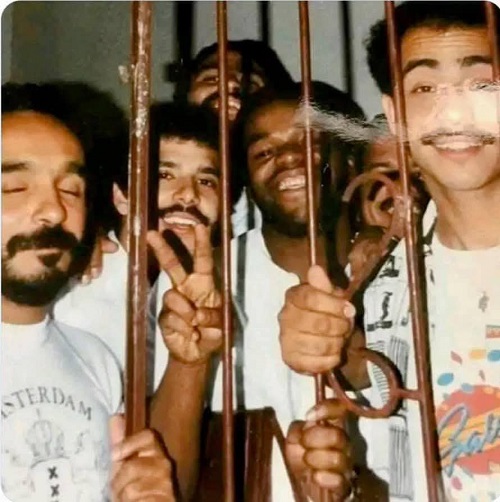
Willie Colón had an incident in Medellín in 1985

Special Contribution by Julio Cesar Galindo Alarcón (Lima, Peru)

A posthumous tribute to the great Willie Colón (1950-2026): The greatest disciple of Mon Rivera by his own admission and today a legend of our passionate salsa.

Willie Colón: From “Classic Urban Salsa” to “Symphonic Salsa”

His musical production clarifies and proves that “salsa” does not only originate from Cuban and Puerto Rican rhythms, but also from American, Brazilian, and other Latin influences.

When Willie produced and recorded his 1977 instrumental-only album, El Baquiné de Angelitos Negros, he expanded the orchestral lineup to include violins, saxophone, flute, cello, and trumpet. While the work had little commercial success and went largely unnoticed during his triumphant career, it served as more than just a platform for his “salsa” fusions with Jazz, Funk, Soul, and R&B. It was the starting point for producing grander orchestral arrangements with a larger number of musicians, thus becoming the precursor to what is now known as “Symphonic Salsa.”

Four years after this beginning, in 1981, this “Symphonic Salsa” reached its peak when Willie released his second solo album, Fantasmas dedicated to and motivated by the loss of his younger sister, Cindy. The album included a track he composed, with musical arrangements by Luis Cruz, titled “Toma Mis Manos” (Take My Hands).

This piece, dealing with the somber theme of death, is considered by this author (due to the quality of the composition and the fabulous “Symphonic” orchestration) to be an authentic and grand masterpiece of “Classic Salsa.” It blends Funk, Soul, R&B, and Bossa Nova with Willie’s excellent vocals, serving as a spectacular prelude to that other legendary, yet often overlooked, symphonic track recorded in 1991 by the “Canary of Carolina,” the great Lalo Rodríguez: “El niño, el hombre, el soñador y el loco.”

To conclude, with the immense pain that his departure brings, I accompany this tribute with the aforementioned song: “Toma Mis Manos,” an unforgettable composition by the recent legend of our “salsa” the great Willie Colón, famously known as “The Bad Boy of the Bronx.”

The legendary musician and his wife Julia Colón were married for decades and share three children (

The legendary musician and his wife Julia Colón were married for decades and share three children

Also Read: The legacy of Leopoldo Pineda, the ambassador of the trombone in La Maquinaria Fania All Stars


El Chinchilla

Europe / Spain

With his characteristic jovial and cheerful nature, just like the Flamenco Rumba he creates and performs, this extraordinary singer, born in Alcázar de San Juan, Ciudad Real, greets us with smiles and hugs, as if we were family or lifelong friends. Perhaps this is one of the keys to Miguel Chinchilla “El Chinchilla’s” success: simplicity and humility through and through.

El Chinchilla
El Chinchilla

Without further ado, to make the most of the limited time available, we begin the interview.

-Chinchilla, when and how did you get started in the art world?

Well, I have to say that before I was a musician, I was a painter. I painted my first oil painting when I was 7 years old, and I’ve never really put down the brushes. I couldn’t start developing my musical side until I managed to save enough money to buy my first guitar. I was 17 then, and from then until now, music has been my whole life, and I dedicate all my energy and time to it.

And when did you create that “magic” fusing Flamenco Rumba with genres like reggae, rock, and ska?

In my early days in music, I had a fusion rock band where we mixed everything imaginable: punk, rock, ska, reggae, flamenco, hip hop, and so on. That way of creating and understanding music is what marked me forever, and to this day, although I have a more defined flamenco and rumba style, my songs always have an open door to fusion, and that’s something I love because it makes me feel free. I don’t like to be pigeonholed or locked in any kind of mental cage.

Photo 1: El Chinchilla

For the album Quejios del Alma, for example, I collaborated with “El Gato” José Luis Morán on the track “Quiere que la Quiera,” and that combination—because, as I always say, Flamenco Rumba and Salsa are like cousins—turned out sensational and full of flavor. It was a real pleasure to share and record that track with “El Gato.”

— You write, compose, and perform your own music. Which of these roles brings you the most satisfaction?

Every part of the creative process for a song has its own charm, but for me, the ultimate payoff is being able to get up on stage and share it with my fans. That’s the most beautiful part—the part that makes everything else worth it. Giving your all on stage, interacting with the crowd, and feeling that energy coming off the stage that feeds back into me from my people… that’s priceless. It’s a one-of-a-kind feeling.

— You’ve released several albums, and with each one, your success grows. In fact, your music is playing on the top radio stations in Spain and even as far as Israel, just to name a couple of places. Why do you feel the need to start preparing a new album when you’ve barely finished the last one? Is your creativity just overflowing?

Well, I wouldn’t say it’s overflowing. The thing is, even if I’ve just finished a track and I’m thrilled with the result—and I’m thinking I’ll finally take a well-deserved break—it’s usually only a matter of weeks before my mind feels the need to let out the new ideas that are bubbling up and I head back into the studio. Maybe one day I’ll learn to relax in that sense, but it certainly won’t be anytime soon because I have this massive urge to tell the world how I feel.

– You’re preparing to release a new single along with its accompanying music video. When will it be released, and where can we see your other music videos, which, by the way, have thousands and thousands of views?

Photo 2: El Chinchilla

That’s right. My new single will be available starting January 2nd, and it will be accompanied by a beautiful music video filmed in Gran Canaria. The song is called “MI TESORO” (My Treasure). For me, the greatest treasure is nothing more and nothing less than the time I have to do with it as I please: come and go, do, undo, fly, live… That’s my treasure, the time I’m lucky enough to have. To see and enjoy my music, just go to YouTube and search for Miguel Chinchilla; that way you’ll find my official channel.

– As we mentioned before, you’re already working on a new album, and what are your expectations for 2017 in terms of concerts?

My expectations now are, initially, to release the songs one by one, giving each one the time it deserves.

As for concerts, I plan to do all the shows that come up along the way, since a whole professional team at my agency is working on that. Above all, I want to enjoy myself with my fans; that’s the ultimate goal.

Photo 3: El Chinchilla in concert

– Now, to say goodbye, Chinchilla… What are your future projects and a message for both your fans and the artists who want to walk the path to success in the art world?

Well, my future project would be to keep going strong in terms of music, living, suffering, and enjoying this tough but beautiful profession. To my fans, I send thousands of kisses and thanks because they help me so much and they are the best.

To people who want to dedicate themselves to this, I’d say that it’s hard and they’ll have a tough time, but if it’s really what they want, they must do things from the heart and persevere because in the end they will achieve their goal. That will be the reward that will make them happy for the rest of their lives.

We say goodbye just as we did when we met, with joy and laughter. El Chinchilla’s vitality is contagious, and that’s exactly what he transmits in his live performances. It’s impossible to remain unmoved at his concerts; it’s impossible to stop dancing and singing because that’s precisely this artist’s objective. Let’s keep an eye on their upcoming performances because they won’t leave anyone indifferent.

Photo 4: El Chinchilla and his group


Don Perignon Y La Puertorriqueña releases his new album ‘‘Classique et Savoureux’’

Today we welcome a friend of the house we have not spoken to in a long time, but who has a lot to tell. We are talking about bandleader and timbalero Pedro Luis Morales Cortijos, artistically known as Don Perignon, whom we have had the pleasure of interviewing after many years.

The artist and his orchestra La Puertorriqueña have released their latest album, ‘‘Classique et Savoureux,’’ which the Puerto Rican musician talks about in this conversation, among many other interesting topics regarding his personal life and career.

Don Perignon with a recognition
Don Perignon receiving recognition by the City of Los Angeles

A long-awaited reunion

When we were last in touch with Don Perignon, he was promoting his latest album, Demostrando A Tiempo, and, of course, much water has flowed under the bridge since then. After having released that album, the artist had many performances and quite emblematic events, such as the previous edition of El Crucero de La Salsa, which welcomed big names including El Gran Combo de Puerto Rico, La Sonora Ponceña, and many more. 

There were also some performances in Puerto Rico and travel to certain parts of the United States, such as Connecticut and New York. At the same time, they were already working on “Classique et Savoureux” and another production. With Christmas approaching, he and his team preferred to shove these projects aside for a while to leave center stage to Christmas music.

Arriving January, they finally got down to work to start the production without further delay. The premiere on digital platforms was held on January 23, and the physical release will be on February 13, but it does not end there, as they are also planning a second release on March 21, on the eve of Puerto Rico’s Día Nacional de La Zalsa. For the same date, vinyls are expected to be ready for collectors who want to buy them.

For the time of this interview, the music had already been recorded, and it was now the singers, including Alex D’Castro, Hermán Olivera, Josué Rosado, and Marcial Istúriz, who were in the studio recording their voices for the album.

Gilberto and Don Perignon
Gilberto Santa Rosa and Don Perignon

Why is the album called “Classique et Savoureux”?

With regard to the curious name he chose for his album, it was a whim of Don Perignon himself, who wanted to recognize and give thanks to the public of France and the French language, from which he adopted the name Don Perignon. The artist has been calling himself that for the last 40 years and has built his career on it. Although the name comes from a famous French champagne, he has never received any claims or lawsuits demanding that he stops using it, which is much appreciated. 

In fact, he got to talk to the person responsible for introducing that champagne in a beverage company in Puerto Rico and understood that Don Perignon’s career and fame in no way damages the brand’s name and reputation.

Authorized biography 

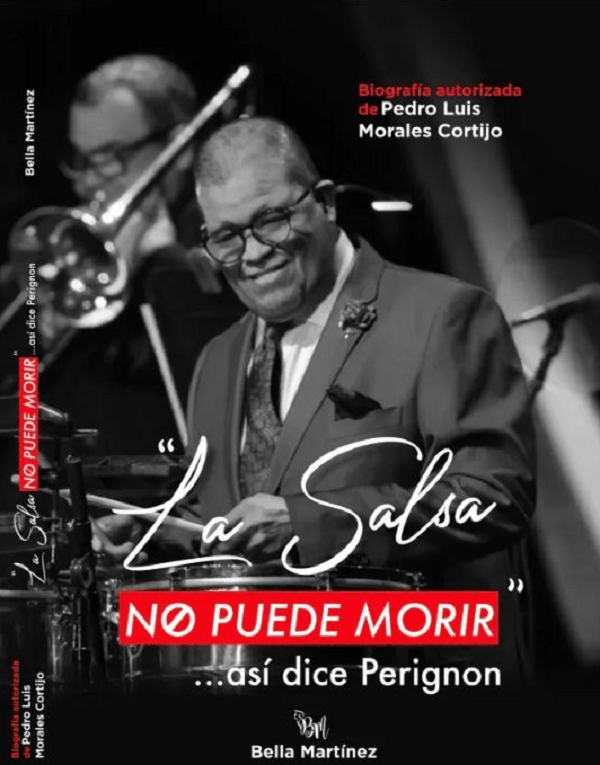
In addition to releasing his album, Don Perignon has also committed part of his time to engage in his authorized biography written by Puerto Rican author and International Salsa Magazine correspondent Bella Martínez. The book tells his story from his childhood to this day and includes the participation of the artist’s great friends and collaborators, including Andy Montañéz, Víctor Manuelle, and Gilberto Santa Rosa.

Some members of his family and other important people in his life also took part in the biography. 

Don Perignon and Victor
Don Perignon and Victor Manuelle

In each and every stage of his life described in the book, music plays a fundamental role given that, in his own words, it is an enjoyment that he has never been able to see as work.

It is titled “La Salsa No Puede Morir, así dice Perignon”, and is now available through platforms such as Amazon. In addition, the cover was designed by Félix Disla, the image is by Alina De Lourdes Luciano, the introduction is by Jaime Torres Torres, and the editorial care is by Robert Tellez M. 

Activities outside of music

Let us remember that Don Perignon was working as a bailiff at the Puerto Rico Department of Justice until April 2023, when he finally retired and was able to dedicate himself in full to music because he finally had time for it. He also pointed out that, should his health permit him, he will be involved in many other collaborations and projects with other singers who want to enter the Puerto Rican market, and he is happy to be able help them. 

Similarly, he assures us that he leaves it all in Our Lord Jesus Christ’s hands, who will let him know that he can achieve all this.

Cover of the book
Cover of ”La Salsa No Puede Morir, así dice Don Perignon”

Read also: Carlos Jimenez offers his talent and passion to charm the audience in universities, hotels, and restaurants all over New York

Jorge Duran

Europe / Germany

Interview to Jorge Duran & his Jalea de Mambo

Now settled in Europe, venezuelan vibraphonist Jorge Duran is leading Jalea de Mambo band which mix musicians from different nationalities recovering the swing and mambo of the 50s with the smart flavor of the New York Palladium, the famous Broadway dance-hall, and the color of the best Latin Jazz that can be heard in Europe right now. Its characteristic vibraphone sound makes this band a unique and raw example in the current music panorama.

Recently documentary “We Like It Like That” has been released worldwide http://latinboogaloo.com/ emphasizing that cultural revolution where boogaloo, mambo, among other genres, were considered the so-called “Latin Soul” creating that cultural movement which day by day takes more strength everywhere.

Jorge Duran
Jorge Duran

1) Jorge, tell us a little bit about your background, your roots, and your musical influences.

Well, I started playing Latin American percussion in Venezuela (Caracas) having the chance to share with great musicians beside studying with amazing percussion players but my degree was focus in composition. Then I begun to play jazz vibraphone and it took me a few years to play again Latin American Music although here I am ready to give my very best.

2) How did you come to the idea of Jalea de Mambo?

The idea of Jalea de Mambo came to me long time ago (10 years ago or more) when I first heard the album Cal Tjader Modern Mambo Quintet, quite old album indeed (1955). That record change everything for me and blew my mind up focus then on mambo, latin jazz and what so called “Latin Soul”.

3) Mambo, Boogaloo, what many people called “Latin Soul” was a revolution during the 50s. Do you think that nowadays these genres could reach something similar?

I really think everything is possible if you work hard, I’m not trying to make a revolution my idea is that every single person come to see us playing, enjoying magic music, having a great time. Obviously that “revolution” happened once but its essence has come along the years in all musicians who play caribbean rhythms. Nowadays, this genre is getting popular again but honestly I believe it has never lost validation.

Photo of Jorge Durán and his band members in the music world

4) What are your feelings coming from Venezuela performing in Europe and worldwide? Is the musical movement opened and active enough over there?

My feeling is that in Europe we, musicians, have more opportunities to show our culture and most of the people here are opened enough to hear or see our projects.

Beyond Europe is quite the same because I have Heard about concerts with more tan 100.000 audiences in Arab Countries, for instance. It simply means that latin and caribbean music “hook” people hearts so they enjoy it full.

5) Now that you are settled in Europe tell us a bit more about your projects and expectations.

I’m living in Germany now and it is a huge challenge for me as it is a real different culture and language but my idea is to spread the Latin American culture and music not only in Europe but worldwide. We are living very tough moments at this very moment and firmly believe that músic and culture are more needed than ever because music tame the beasts, as people usually say, and that’s what we need now, I mean, peace, calm and mainly love.

Photo of Jorge Durán and his team at the live concert

6) Looking for these goals, are you working on your own or you are supported by a company, agency or similar.

Now I have the great pleasure to say that I’m not alone in this business because Cat 7 Production is my new family and they are really focused in spreading my music to reach more people. I think this is the idea, music is a language we need to be heard as I said before.

7) Finally Jorge, let’s share a message for all your fans beside colleagues who work hard to achieve similar goals you are looking for.

Well, I’m always very grateful when some one takes time to send emails or messages after watching us in a concert, I love it and love fans who give me strenght to keep doing what my heart says. My humbly advice to all musicians who have an idea or project is that never stop making music because everything is possible in life and the real power is inside us. This is one of more beautiful and hard profession but sure worth it!

Jorge Duran in concert

Vinny Rivera release his latest single “Mientes”

North America / USA / Boston

Vinny Rivera. The #1 Latin Kizomba Artist in the World

Vinny Rivera
Vinny Rivera

Vinny Rivera ‘s new single “Mientes” coming off of his album “La Torre” takes Kizomba to the next level. Good friend Guelo Star who is currently writing for the likes of Don Omar, Ivy Queen, Jowell y Randy, De La Ghetto just to name a few originally wrote this song with the spirit of Kizomba and Vinny Rivera was the perfect voice to compliment the writing. This love song is sure to bring The #1 Latin Kizomba singer and songwriter towards new heights of world music.

Sound off the bongos & kick in the bass, Vinny Rivera is ready to hit the stage. One of the hardest working singer/songwriters, Victor “Vinny” Rivera, continues to shine in the music entertainment scene. Surrounded by great mentors and industry leaders such as world renowned international producers M&N Pro, Jorgie Milliano, Grammy award winning producer Richy Peña (Niña Bonita), and Universal Latino’s recording artist Yunel Cruz, Vinny’s sound has captured audiences all around.

The music of Vinny Rivera is refreshing and lends a sweet tuned voice to the likes of urban bachata Superstar Prince Royce mixed in with Latin Pop Superstars Luis Fonsi & Enrique Iglesias. Genres of music are no different. His voice as well as being multilingual lends itself to Salsa, Bachata, Kizomba, Mambo, Pop, R&B and many more musical genres.

Vinny Rivera - Mientes
Vinny Rivera – Mientes

On the other hand and recognizing musical legend “Jerry Rivera”, Vinny Rivera alongside longtime friend and producer Jorgie Milliano pay tribute to a tropical classic “Amores Como El Nuestro” by giving it a tasteful Kizomba twist that audiences everywhere are sure to enjoy.

Vinny Rivera is currently working on a new Latin Kizomba album that will continue to capture the hearts and ears of all Kizomba lovers.

Besides, Vinny’s talent for capturing audiences has exponentially increased his passion for performing and entertaining. Performing in festivals and special events, the demand has been genuine and stage performances continue to impact his listeners.

Musical Trajectory 

Victor Rivera, known artistically as Vinny Rivera, was born in Boston, Massachusetts, United States. Of Puerto Rican parents under the tutelage of his Dominican stepfather, he is one of the most hard working singers / composers to shine in the musical entertainment scene. Being influenced by the Boston city melting pot, he was exposed to a variety of musical genres including Reggae, Jazz, Soca, R & B and pop and the sounds of his native island and the neighboring Dominican Republic sounds the Salsa, Merengue, Bachata.

2- Vinny Rivera
2- Vinny Rivera

Completely addicted and forced by music and the desire to share his energy and healing skills, at the age of 16 he bought his first DJ set with his best friend Okland López and began playing music of all kinds of events. In that period he realized that he wanted to take the next step, to make music. He then began to study all kinds of music and finally was able to be comfortable enough to sing.

His friends encouraged him to record music and were associated as a trio together Loco Jow to pursue a career within the music industry. Although not signed with any record label they achieved a network of relationships around the world that got them heard everywhere, which allowed them to rank No.3 in a company of radio and distribution of popular music in South America.

Vinny continued to work with the group opening shows for world-renowned acts such as Don Omar, Wisin & Yandel, Zion & Lennox, Ivy Queen, Rakim & Ken-Y, Tony Dize, Alexis & Fido.

The group split because of four years of Vinny’s enlistment in the United States Air Force. Now a veteran of the Air Force from June 2004 to December 2014 Vinny learned that “Life is too short and you have to give everything you have.”

He started working and learning with Grammy-winning Producers such as Richy Peña who produced the hit “Niña Bonita” by Chino & Nacho and Lenny Santos recognized by the Bachata group “Aventura”. To then sing and write with Universal Billboard and Cuban artist Yunel Cruz. He also wrote a final hit for Jowell and Randy “Lo Que Quiero”, which reached # 11 on the charts, being remixed with Reggaeton Super Stars Arcangel, Farruko and Divino produced by his great friend Jorgie Milliano.

Vinny Rivera collash

His work and vocal skills have captured the respect and attention of the public around the world. The formula for Vinny Rivera’s latest plan is to use his music as a tool to address problems in the world. Until then he will continue to work diligently on making good music to enjoy.

  • « Go to Previous Page
  • Page 1
  • Interim pages omitted …
  • Page 8
  • Page 9
  • Page 10
  • Page 11
  • Page 12
  • Interim pages omitted …
  • Page 42
  • Go to Next Page »

International Salsa Magazine (ISM) is a monthly publication about Salsa activities around the world, that has been publishing since 2007. It is a world network of volunteers coordinated by ISM Magazine. We are working to strengthen all the events by working together.