• Skip to primary navigation
  • Skip to main content

International Salsa Magazine

  • HOME
  • Previous editions
    • 2026
      • ISM / March 2026
      • ISM / February 2026
      • ISM / January 2026
    • 2025
      • ISM / December 2025
      • ISM / November 2025
      • ISM / October 2025
      • ISM / September 2025
      • ISM / August 2025
      • ISM / July 2025
      • ISM / June 2025
      • ISM / May2025
      • ISM / April 2025
      • ISM / March 2025
      • ISM / February 2025
      • ISM / January 2025
    • 2024
      • ISM / December 2024
      • ISM / November 2024
      • ISM / October 2024
      • ISM / September 2024
      • ISM / August 2024
      • ISM / July 2024
      • ISM / June 2024
      • ISM / May 2024
      • ISM / April 2024
      • ISM / March 2024
      • ISM / February 2024
      • ISM / January 2024
    • 2023
      • ISM / December 2023
      • ISM / November 2023
      • ISM / October 2023
      • ISM – September 2023
      • ISM – August 2023
      • ISM July 2023
      • ISM Edition June 2023
      • ISM – May 2023
      • ISM April 2023
      • ISM March 2023
      • ISM February 2023
      • ISM January 2023
    • 2022
      • ISM December 2022
      • ISM November 2022
      • ISM October 2022
      • ISM September 2022
      • ISM August 2022
      • ISM July 2022
      • ISM June 2022
      • ISM May 2022
      • ISM February 2022
      • ISM January 2022
    • 2021
      • ISM December 2021
      • ISM November 2021
      • ISM October – 2021
      • ISM September 2021
      • ISM August 2021
      • ISM July 2021
      • ISM May 2021
      • ISM April 2021
      • ISM June 2021
      • ISM March 2021
      • ISM February 2021
      • ISM January 2021
    • 2020
      • ISM December 2020
      • ISM November 2020
      • ISM October 2020
      • ISM September 2020
      • ISM August 2020
      • ISM July 2020
      • ISM June 2020
      • ISM May 2020
      • ISM April 2020
      • ISM March 2020
      • ISM February 2020
      • ISM January 2020
    • 2019
      • ISM December 2019
      • ISM November 2019
      • ISM October 2019
      • ISM Septembre 2019
      • ISM August 2019
      • ISM July 2019
      • ISM June 2019
  • Download Salsa App
    • Android
    • Apple
  • Spanish

Search Results for: record company

From Cuba El Septeto Son de Nipe come Abriendo Caminos (Opening Paths)

Son de Nipe. A musical septet born in the municipality of Antilla, it burst into the cultural world with an album of the In Situ label of the Colibri Record Production Company.

Antilla is the smallest municipality of the province of Holguin in Cuba and one of the smallest of Cuba, it was founded on January 21, 1925, it is famous from distant times for its beauty, legends and original aspect.

De Cuba El Septeto Son de Nipe vienen Abriendo Caminos

The group is formed by former musicians of the orchestra Brisas de Nipe of this municipality.

This project was born from the hands of Porfirio Núñez Cruz (Firo) who as Art Instructor at the Casa de Cultura Adelaida del Mármol of Antilla had experimented with other amateur groups, but not with the same results, because the members did not have the necessary musical training.

The album Abriendo Caminos includes 14 songs, 10 of which belong to Antillean authors.

“The value of Abriendo Caminos also lies in the fact that it helps Antillean composers and arrangers to open up to the recognition of their work and ways of doing things”.

From the singer and percussionist of the septet Son de Nipe, Alejandro Arencibia appears the guaracha Esa muchacha quiere bailar and the son, Honor al Guayabero; from Edalio Espinosa Alayo (Pupi), former member of the Brisas de Nipe orchestra, the son, Es caliente como el sol (It’s hot like the sun).

The songs A mi Antilla (bolero-son) and, Y no me niegues el beso (son) by José James Pinder, singer of the septet. By Oscar Fernández, former singer of the Brisas de Nipe Orchestra, the disc offers the themes Rebozo de amor (guaracha) and the son Que lástima.
Septeto Son de Nipe
Septeto Son de Nipe

From the director of the septet Son de Nipe Porfirio Núñez Cruz, Mi son tradicional.

And the guaracha Olvídate de esa nena by the Antillean composer Nemesio Palacio.

The remaining four musical numbers are; De que callada manera by Nicolás Guillén and Pablo Milanes, Culpable by Pepe Delgado, Rabo de nube by Silvio Rodríguez and Una alborada de amor by Ariel Dotres Zaldivar, these songs were arranged by Porfirio Núñez Cruz.

In the septet’s album Son de Nipe Abriendo Caminos “the guaracha, the bolero, the bolero-son and the genuine son are retaken with originality and revalued”.

The latter is due to the fact that the musical criteria followed by its director was the respect for traditional music, its deep knowledge, but imbuing it with very contemporary nuances, which results in a seal that distinguishes the septet Son de Nipe.

“We use the son, but more updated because we make innovations, harmonizing it in a more modern way, without losing its roots”.

The selection of the songs that made up the album Abriendo Caminos was in charge of the septet’s management, since the Casa Discográfica Colibrí wanted originality and the authentic exhibition of the work that has been developed with traditional music in the eastern part of the country.

Son Cubano de Nipe en Holguin

The graphic image of the disc, worked in sepia and black colors fundamentally manage to set the atmosphere that is offered to us with a vintage flavor and invites us to listen to these 14 songs full of tradition and contemporaneity.

“It will be a delight for the listener and the dancer, the good function of the tres in its solos and “entregas”, the beautiful and ingenious introductions, the exquisite mixture between text and music of the boleros, the harmonic patterns of the soneros that not for conventional reasons give up a significant finish, without neglecting, on occasions, the voices replacing wind instruments”.

The selection of the members was meticulous. Porfirio had in his favor the prestige he possessed and the convening power among his former colleagues of the Orquesta Brisas de Nipe, so much so that in the list of his group he planned to include Reyes Cástulo Urgellés Fáez, better known as Lulú as bassist and José James Pinder (Joseíto) as singer, both retired from the Orquesta Brisas de Nipe and linked to the Casa de Cultura in occasional activities.

The septet still needed to be completed with a key piece, the tres, for which the prestigious Mario Arencibia Rodríguez, one of the best tres players in Antilla, was summoned.

In the Arencibia family, musicians abound, that is why the group was completed with them: Alejandro, singer and Rafael on the tumbadora.

Alejandro and Mario had been part of an amateur group called Renovación Antillana for more than 20 years, which was very famous in its time and where a great number of aficionados were formed.

Alejandro sometimes played the tres in other groups, but in Son de Nipe he remained as a singer, he also had a work relationship that did not allow him to devote himself entirely to music; His nephew, trained at the Casa de Cultura and under the musical influence of the family, had taken over the tumbadoras, so Rafael Arencibia was the youngest of the group, he was barely 25 years old and at this young age he had already played in several amateur groups and got the Brisa de Nipe orchestra out of trouble, due to the unexpected absence of its percussionist.

Rafael Arencibia Rodríguez joined the project with enthusiasm despite the fact that the genre and style of the repertoire were not those used by the amateur groups of his contemporaries.

Iro had obtained the desired musicians, but he still had a big step to climb, his musicians were not professionals, they all had work commitments and he needed to prepare the project for the right day…(ecured).


Septeto Son De Nipe – Abriendo Caminos (2006)

Temas:

  1. Esa Muchacha Quiere Bailar (Alejandro Arencibia)
  2. Es Caliente Como El Sol (Edalio Espinosa Adayo)
  3. A Mi Antilla (José James Pinder)
  4. Rebozo De Amor (Oscar Fernández Paz)
  5. De Qué Callada Manera (N. Gillén / Pablo Milanés)
  6. Honor Al Guayabero (Alejandro Arencibia)
  7. Culpable (Pepe Delgado)
  8. Mi Son Tradicional (Porfirio Núñez Cruz)
  9. Y No Me Niegues el Beso (José James Pinder)
  10. Clodomiro (Oscar Fernández Paz)
  11. Rabo De Nube (Silvio Rodríguez)
  12. Qué Lástima (Oscar Fernández Paz)
  13. Una Alborada De Amor (Ariel Dotres Zaldívar)
  14. Olvídate De Esa Nena (Nemecio Palacio)
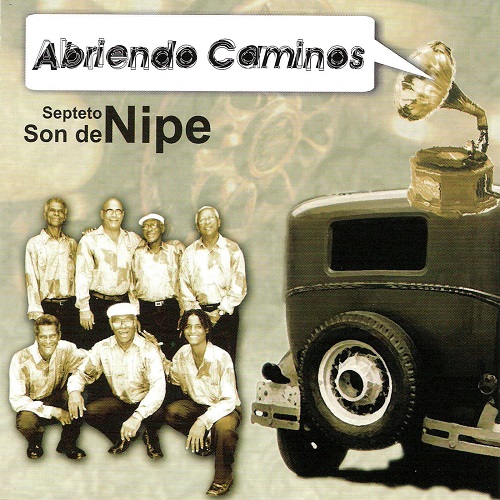
Septeto Son De Nipe - Abriendo Caminos (2006)
Septeto Son De Nipe – Abriendo Caminos (2006)


Research Sources:

L’Òstia Latin Jazz

Dj. Augusto Felibertt

Also Read: Virgilio Martí was an excellent rumbero and composer of the classic “Cuba Linda” where he was vocalist and percussionist in Grupo Folklorico Experimental Newyorkino

Papo Vázquez the Pirate & Troubadour of Our Latin Music

Papo Vázquez Enjoying the Bell.

Angel Vásquez, “Papo Vásquez”, was born on February 24, 1958 in Philadelphia, Pennsylvania, USA.

Papo Vazquez
Papo Vazquez

By age 15, Papo Vázquez was playing with local American bands in Philadelphia and accompanying guest artists such as Eddie Palmieri.

At just 17, he moved to New York and was hired to play for trumpet player Chocolate Armenteros’ band, and soon began playing and recording with other top artists on the salsa scene such as The Fania All-Stars, Ray Barreto, Willie Colón, Grupo Folklórico Neoyorquino, Eddie Palmieri, Larry Harlow, and Hector Lavoe.

Vazquez also became a key player in the burgeoning New York Latin jazz scene of the late 1970s, performing with Jerry Gonzalez, Hilton Ruiz, and more.

He began his studies with Slide Hampton, eventually recording and performing Slide Hampton’s World Trombones.

Papo Vázquez Photo by Ernie Gregory (Gone but not forgotten) Thank you Ernie!PV

A Grammy-nominated trombonist, composer, arranger, NEA Master Artist, he has a 50-plus year career in jazz, Latin and Afro-Caribbean music.

Musical Director of the National Puerto Rican Day Parade Orchestra, (NYC/WABC) 2016, 2017, 2018, 2019.

Commissioned by Wynton Marsalis to compose music for Jazz and Art series, conducted and performed with the J@LC orchestra, CD release August 2019 New York Pops Education, Board of Education certified, 2018 and 2019

New music commissioned for Afro Latin Jazz Alliance for the “Nueva Música” concert series.

Nominated for Grammy for Papo Vázquez’s Mighty Pirates, Marooned/Isolated, 2008

Born in 1958 in Philadelphia, Pennsylvania, although his early formative years were in Puerto Rico.

He went on to play and/or record with jazz luminaries Tito Puente, Dizzy Gillespie’s United Nations Orchestra, Chico O’Farrill, Ray Charles, Slide Hampton’s World of Trombones, Jerry Gonzalez Fort Apache, among many others. By the age of 22, Vazquez had traveled the world.

Papo Vázquez Mighty Pirates Troubadours 2023

Vázquez was deeply moved by jazz from a young age. His appreciation and knowledge of indigenous Caribbean music provides him with a unique ability to fuse Afro-Caribbean rhythms with the freer melodic and harmonic elements of progressive jazz.

Beginnings

After spending his early years in Puerto Rico, he grew up in the heart of North Philadelphia’s Puerto Rican community. He purchased his first trombone from a friend for $5 and joined the elementary school band.

At the age of 14, an uncle recommended him to a local salsa band, where he met trumpeter Jimmy Purvis. Purvis inspired Papo’s lifelong passion for jazz by giving him two records: J.J. Johnson’s Blue Trombone and John Coltrane Live at the Village Vanguard. By 15, Vazquez was performing with local Latin bands in Philadelphia and accompanying visiting New York artists such as Eddie Palmieri.

He was a founding member of Jerry Gonzalez’s Fort Apache and Conjunto Libre, as well as the popular Puerto Rican Latin fusion band Batacumbele.

With Batacumbele he performed, composed, arranged and recorded several albums from 1981 to 1985. Upon his return to New York, he joined Tito Puente’s Latin Jazz Ensemble, traveling with them as principal trombonist and touring Europe with Dizzy Gillespie’s United Nations Orchestra.

Leader, Composer and Innovator.

Vázquez has always been deeply moved by jazz, and specifically cites the music of John Coltrane and J.J. Johnson as having influenced him most. In addition, his appreciation and knowledge of the indigenous music of Caribbean peoples gives him a unique ability to fuse Afro-Caribbean rhythms, specifically those of Puerto Rico, with the freer melodic and harmonic elements of progressive jazz.

During his time in Puerto Rico with Batacumbele in the 1980s, he began experimenting with “bomba jazz,” a fusion of jazz and traditional Puerto Rican bomba. In 1993 he recorded his first album as a leader, Breakout. He continued to collaborate with a variety of Latin Jazz artists, contributing Overtime Mambo to Hilton Ruiz’s Manhattan Mambo and Contra Viento y Mareo to Descarga Boricua, Vol. 1.

In 1999, he released a live recording with a number of leading New York Latin and jazz artists, including bassist Andy Gonzalez, saxophonist Michael Brecker, among others. The release of Pirates & Troubadours At the Point, Vol. 1 was followed the next year by At The Point, Vol. 2.

Mighty Pirates Troubadours Songs del Yucayekepor Papo Vazquez
Mighty Pirates Troubadours Songs del Yucayeke
por Papo Vazquez

This project evolved into the Pirates Troubadours, an “Afro-Puerto Rican jazz band” that includes musicians such as Roberto Cepeda of Puerto Rico’s Familia Cepeda folklore group, Milton Cardona and Anthony Carrillo on percussion, and John Benitez, among others. The group performed at festivals around the world and released Carnival in San Juan in 2003, followed by From The Badlands in 2007.

Interest grew as a composer.

He was the first artist to receive a composer commission (Iron Jungle) for the Afro-Latin Jazz Orchestra, then a resident orchestra at Jazz at Lincoln Center.

His first classical composition, Palomita Suite Afro-Caribeña which to date was the first time Bomba y Plena had been performed with a Chamber Orchestra, was commissioned by the Bronx Arts Ensemble and premiered at the Hostos Center for Arts and Culture in the Bronx in 2004.

In 2007, on a commission from the Bronx River Arts Center, he wrote Sube el Río (River Rising) for its Mighty Pirate Orchestra for its 20th anniversary concert “Bronx River Sounds.”

Discography

Papo Vázquez Mighty Pirates Troubadours – Capítulo 10: Breaking Cover, Picaro Records 2020
Cuarteto Papo Vázquez – GV J.S. Bach, Picaro Records 2017
Papo Vazquez Mighty Pirates Troubadours – Spirit Warrior, Picaro Records, 2015
Papo Vazquez Mighty Pirates Troubadours – Oasis, Picaro Records, 2012
Papo Vázquez The Mighty Pirates – Marooned / Aislado, Picaro Records, Nominación al Grammy 2008
Papo Vázquez Pirates Troubadours – From The Badlands, Picaro Records, 2007
El Niño Josele – 2011
Tego Calderon – The Underdog / El Subestimado, Jiggiri Records, 2006
Shakira & Wyclef Jean – Tema de la final mundial de fútbol (“Bamboo”), 2006
Ray Barretto – Normas rican-ditioned, Zoho Music, 2006
Los Pleneros de la 21 Para Todos Ustedes, Smithsonian Folkways, 2005 – Nominación al Grammy,
Bebo Valdes – Bebo de Cuba, Calle 54, 2005 – Grammy, Mejor Álbum de Jazz Latino
Papo Vázquez Pirates Trovadores – Carnaval en San Juan, Cu-Bop Records, 2003
Wayne Shorter – Alegria, Verve, 2003 – Grammy, Mejor álbum instrumental de jazz
Jack Bruce – Sombras en el aire, Sanctuary Records Group, 2001
Freddie Cole Rio de Janeiro Blues, Telarc
Chico O’Farrill “Carambola” Fantasía
Banda sonora de la película Mo ’Better Blues de Spike Lee
Papo Vázquez “Piratas y trovadores – En el punto Vol. I” Cubop
Papo Vázquez “Piratas y trovadores – At the Point Vol. 2” Cubop
Milton Cardona “Cambucha” Clave americana
Arturo O’Farrill “Bloodlines” Fantasy
Chucho Valdés “All Stars Bronx Lebanon New Directions Project” RMM
“Jammin ‘in the Bronx” Papo Vázquez Band, Chucho Valdes & The Machito Orq RMM
Chart Busters con el Dr. Lonnie Smith, Lenny White, Hiram Bullock, Craig Handy, Papo Vázquez, et.al. Chico O’Farrill Fantasía “Pure Emotion”
Steve Berrios Fantasía del “primer mundo”
Descarga Boricua “Descarga Boricua” Tierrazo
Dave Valentin “Tropic Heat” GRP
Juan Luis Guerra 440 “Fogarate” 440
Papo Vázquez “Breakout” Timeless
Ruben Blades “Amor y Control” “Antecedente” & “Caminando” Sony
Hilton Ruiz “Manhattan Mambo” Telarc y “Hands on Percussion”
RMM Tito Puente “Fuera de este mundo” Tito Puente “100” RMM
Jerry Gonzalez Fort Apache Band “Obatala” “Live in Berlin” Enja & “Ya Yo Me Cure” American Clave
New York Latin Jazz All Stars “Feliz Navidad”
Bobby Valentin “Presenta al Cano Estremera” – Bronco Records
Batacumbele “Con Un Poco de Songo” & “En Aquellos Tiempos” Tierrazo
Ray Barretto “Ricanstruction” Fania
Slide Hampton “Mundo de trombones” WEST54
Chico O’Farrill “Calle 54”
Fania All Stars “Habana Jam” Fania
Willie Colon & Ruben Blades “Siembra” Fania
Willie Colon y Celia Cruz Fania
Héctor La Voe “De Ti Depende” – Feliz Navidad, Fania
Mon Rivera “Vuelvo a Vivir” Fania

Sources:

© 2017 por Papo Vázquez. Creado con orgullo.

Textos www.jazzismomedellin.com

Also Read: Eddie Palmieri brought salsa for the first time and live from Sing Sing Penitentiary in New York

Yehudry N. Perdomo M.

North America / USA / New York

High performance athlete in rhythmic gymnastics and professional dancer. Bailoxtreme master trainer and salsa fitness instructor. Yehudry was born in Caracas, Venezuela from a family where salsa was heard as the first and even only option. Surrounded by dancers, she began to enjoy this genre as well and began taking dance classes to stop being an amateur and prepare for a professional level.

His first academy was Latin Images, directed by Arelis Guevera and Remmys. After going through several academies, it was at Grizzly Dance Company where he learned about existing dance styles such as in L.A, Puerto Rico and New York, but never forgetting his style. LOVER OF SALSA IN ALL ITS VERSIONS.

Yehudry N. Perdomo M

Her salsa roots come from the neighborhood, although thanks to her performance as a gymnast, she maintains a very beautiful and impressive elegance when dancing, merging sport with dance. His first international presentation was in 2013 at the Peru Salsa Congress with the dance company where he began his career.

Today he is dedicated to fitness but his passion for salsa did not end there, as he created a training system called BAILOXTREME where salsa gained strength due to its unique way of training and dancing simultaneously in time of 1. This training system has generated that more people are interested in salsa and in taking classes in various consecrated academies in Venezuela and now internationally.

Today, Yehudry lives in Miami making this project grow but always remembering and respecting those who helped her grow professionally. Below you can learn more about this incredible dancer from a conversation she had with our ISM team…

What led you to choose Latin Images as your first dance academy?

The proximity to my home and the recommendation of dancer friends who are members of that company.


Did you always know that your passion for salsa surpassed rhythmic gymnastics?

It is not surpassed today by Salsa Fit or Fitness as it is currently called, it is Latin dance applied to Fitness and Gymnastics is a high-performance sport, I cannot choose between one and the other. Each one has marked a stage in my life. Currently I am not an athlete, now I am a training coach and a professional dancer, what I did was to unite both sports style and culture and the result was excellent.


Where do you think your salsa roots came from?

I really think that from my Maternal Grandmother, a beautiful black woman with a religious family, lovers of Afro-descendant music, she was the one who gave all her children that love for Salsa and Afro dances. I even have a musician uncle.


How was the creation of Bailoxtreme?

Well it’s very funny, but it was a coincidence. Some ladies were dancing and exercising in a park alone because their coach didn’t show up. And I offered to teach him that day. From there to here, what were 10 ladies became almost 300 in an area where there could only be 100 perhaps.


If you could choose a gymnastics idol and a salsa idol, which one would it be?

Definitely Almudena Cid and Nadia Comanecci.

Oscar d’ Leon, Raphy Leavit, Celia Cruz, Tito Puentes.

Bailo Xtreme - Yehudry N. Perdomo M
Bailo Xtreme – Yehudry N. Perdomo M


Would you see yourself performing with them doing bailoxtreme?

It would be an honor and an indescribable charge of energy to be able to exercise and learn to dance salsa with live music.


What’s next in Yehudry’s life?

I am currently recording a Cuban series that talks about the story of a revolutionary Fidelista who emigrates to Miami. This will be streamed on Netflix.

There I am a dancer who is kidnapped to pay a debt and it is a new challenge. I loved the experience and I’m already thinking about Salsa Pole fit, Something will come out (laughs)


For all the people who are reading us, tell them where they could practice this method?

In which dance academies? Both in Caracas and in Miami.

Bailo Xtreme logo - Yehudry N. Perdomo M
Bailo Xtreme logo – Yehudry N. Perdomo M

In Caracas you must communicate with the certified instructors in Bailoxtreme through their social networks or my instagram account @Yehudryfit_dancer

In Miami at Rise Health & Fitness

And Personalized at Country Club Towers gym Hialeah, FL.

Oscar Rojas Oscar Rojas has 54 years of musical career full of passion, rhythm and flavor

Oscarcito Rojas and his unmistakable lump.

In Venezuela, during the years 53-54, there were cold and humid nights in the home of the Rojas Mendoza Family, located in a high area of ​​the Pastora of beautiful Caracas, there the furniture that was outside would wake up damp, particularly a child’s chair with a colonial design, which had the back and seat made of cattle leather, which when heated by the heat of the sun became warm like the leather of a coastal drum.

That is when the restless child Oscar, barely 7 years old, discovered the sounds produced by that cured leather and began that love relationship with percussion without realizing that this would be his life; his livelihood; his passion; his everything.

Oscar Rojas has 54 years of musical career full of passion, rhythm and flavor

He also devised a pair of congas with two milk cans of different sizes, and thus achieve different sounds in his new instrument.

By the 70s, being a talented young man and wanting to earn his own living, Oscar bought a motorcycle to work as a messenger. Unfortunately, he had an accident on it, which led to his resignation from the company. With the money he generated from the liquidation, he bought a drum kit that belonged to the illustrious Pavo Frank. This is how his foray into rock began.

Later, due to the fractures he suffered in the motorcycle accident, he could not continue playing drums, but he got involved in percussion without a drumstick, which is to say, by hand, and he started playing congas.

Óscar Eduardo Rojas Mendoza is one of the most beloved and respected conga players in the country. He is the third of five siblings (Jaime; Yolanda; Óscar; Freddy and Leibia), son of Óscar Benito Rojas (musician and cabinetmaker) and Cira de los Santos Mendoza (dressmaker).

Loved by all his family, especially by his sons Gabriel ☦️ Osduare☦️ and Enrique; and his granddaughters Gabriela and Daniela.

Familia Rojas Mendoza: Liebia, Freddy, Oscar, Yolanda y Jaime

Born in Caracas on October 18, 1946, he began his musical career in 1970 with Ramón Hernández, continuing with a trail of figures such as: Pablo Schneider, Vytas Brenner, Victor Cuica, Oscar Maggi, Soledad Bravo, Lilia Vera, Frank Hernández (El pavo Frank), Oscar D’Leon, Chuchito Sanoja, Professor Juan Carlos Núñez, Alfredo Naranjo.

He has participated in the best Jazz festivals in the world and in the country such as the Memphis in May International Festival (Tennessee), Varadero International Festival (Cuba), V International Festival of Montreal (Canada), Festival D’te de Québec (Canada), 10 International Festival of Montreal (Canada), Mar de Plata Jazz Festival (Argentina), Curacao International Festival where he was invited by the great saxophonist Paquito D’ Rivera, in the Venezuela Jazz Festival, in the 4 Caracas Jazz Festivals, in the Jazz Festival in El Hatillo editions IV, V and VII, and in festivals in the interior of the country.

He was an active founder of salsa groups such as Oscar D’Leon, where he participated in the recording of the first 3 albums, the group Caribe Libre, Gerardo Lugo’s Incorregibles, Alfredo Naranjo’s El Guajeo, Nano Grant’s Ensemble ll, Pavo Frank and his Orchestra. He was also part of the jazz groups Oscar Maggi (Macoya), Pedrito López, Otmaro Ruiz and Víctor Cuica.

Oscar Rojas y Djane Shina Rojas

Among the national and foreign artists he has accompanied are: Trino Mora, Chucho Avellanes, Mirtha Pérez, Estelita del Llano, María Rivas, Nancy Ramos, Nancy Toro, Cheo Feliciano, Ted Cordón, Paquito de Rivera, Eddie Sansson, Aldemaro Romero, Chuchito Sanoja, Jimmy Bosch, the Venezuelan Symphony Orchestra, the Municipal Symphony Orchestra of Caracas, among others. He was the founder of the La Calle Group and the Ensemble de la Calle, ReNueve (rock group), Negros and Aparte.

He currently works as a percussionist for Maigualida and his Ensemble. He also rehearses every Wednesday at Juan Sebastián Bar “El Templo del Jazz y La Salsa” with the new Ensamble de la Calle.

He has been in a musical career for 54 years, full of passion, rhythm and flavor.

Oscarcito Rojas y su mazacote inconfundible

Research Sources: 

Djane. Shina Rojas

Jaime Rojas

Lutier: Freddy Rojas

Also Read: Djane Shina Rojas a Passion Turned into Reality

Renzo Padilla “El Borincaico”

Latin America / Peru / Lima

Renzo Padilla (Renzo Antonio Padilla Reyes) was born in Barrios Altos in Lima, Peru, on July 12, 1979. In search of a better future, in 1993 his parents decided to travel to the city of Buenos Aires.

Renzo Padilla. At the age of 15, Renzo began his career as a backing singer with the “New Band Salsa” Orchestra. His time with this group was brief, because later he would join the Orquesta La Original, made up of Peruvian musicians based in Buenos Aires.

Renzo Padilla
Renzo Padilla
Photo of Renzo Padilla in concert

In the year 2000 he moved to New York City, fulfilling a dream that he thought was impossible. That same year he signed a contract with the Grupo Fuerza Juvenil, he participated for two years in this group that was nominated for the Billboard awards in 2002.

He meets the timbalero Jimmy Delgado and he offered him a project to record, so Renzo resigns from Fuerza Juvenil and decides to record with Delgado, his first single titled Salsa con Dulzura. After this recording he was invited to accompany the most renowned artists in the world of salsa, such as: Frankie Hernández, Cheo Feliciano, Ismael Miranda, Cano Estremera, Ismael Quintana, David Pabón, Roberto Roena, Marvin Santiago, Meñique, Ray Barreto. , Adalberto Santiago, Cuco Valoy, Junior González, Paquito Guzmán, Yolanda Rivera, Luigi Texidor, José Bello, Pedro Conga, Cheo Andujar, Anthony Cruz, Luisito Carrion, Maelo Ruiz, Tito Nieves.

Renzo Padilla in concert
Renzo Padilla
Renzo Padilla

Another of his dreams came true when he met the master Willie Colon, he was invited by him to perform a song by Hector Lavoe, in a New York nightclub. He was also invited by El Gran Combo de Puerto Rico on several occasions.

In 2003, Ray Barreto and Adalberto Santiago met again, in which he participated as a chorister at the prestigious Carnegie Hall in New York.

Renzo Padilla in concert 2
Renzo Padilla on stage

In 2006 with bassist Ray Martínez he recorded his second album Alto Nivel, and recorded two songs with the Narváez Orchestra. In 2008 he sang with Jimmy Delgado at the Leyendas de la Salsa Concert, along with a lineup of artists such as Luis Perico Ortiz, Richie Ray, Bobby Cruz, Lalo Rodríguez and Adalberto Santiago.

Renzo also sang in the second part of the Legends of Salsa Concert in tribute to Ismael Quintana, where Tony Vega, Luis Perico Ortiz, Lalo Rodríguez, Héctor Tricoche performed, among others.

In 2009 he was a soloist with the Lavoe All Stars Orchestra, made up of musicians from Willie Colon and Hector Lavoe, such as Professor Joe Torre, José Mangual, Jimmy Delgado, Eddie Montalvo, Reynaldo Jorge, Milton Cardona.

Renzo Padilla and the orchestra

In 2010 he was called by the New York group “Our Latin Thing”, to share the stage with Victor Manuel.

On the other hand, Renzo began to develop his talent as a composer. One of his compositions Donde Esta Tu Amor was recorded by Puerto Rican singer Maelo Ruiz.

In 2014 he got together with Jacob Plasse to form the Melaza Group, in which all the songs are his. In that same year, he participated in the largest salsa group, the “Fania All Stars”, and also sang for the recording of the Narváez Orchestra’s album 65 Infantería.

In 2015 he participated as a backing vocalist and as a singer in the concerts of the piano emperor Eddie Palmieri.

Renzo Padilla singing in concert

In October 2016 he was part of the Eddie Palmieri Orchestra that traveled to Lima to perform a concert at the National Stadium. He has been a vocalist for Los Hermanos Lebrón.

In 2017 he had a successful tour of different cities in Japan. Currently he continues to sing in Lima and on tour around the world.

Renzo Padilla singing

This talented Peruvian singer is considered one of the promises of salsa. He will continue in his rising career of success and international recognition.

  • « Go to Previous Page
  • Page 1
  • Interim pages omitted …
  • Page 11
  • Page 12
  • Page 13
  • Page 14
  • Page 15
  • Interim pages omitted …
  • Page 42
  • Go to Next Page »

International Salsa Magazine (ISM) is a monthly publication about Salsa activities around the world, that has been publishing since 2007. It is a world network of volunteers coordinated by ISM Magazine. We are working to strengthen all the events by working together.