• Skip to primary navigation
  • Skip to main content

International Salsa Magazine

  • HOME
  • Previous editions
    • 2026
      • ISM / May 2026
      • ISM / April 2026
      • ISM / March 2026
      • ISM / February 2026
      • ISM / January 2026
    • 2025
      • ISM / December 2025
      • ISM / November 2025
      • ISM / October 2025
      • ISM / September 2025
      • ISM / August 2025
      • ISM / July 2025
      • ISM / June 2025
      • ISM / May2025
      • ISM / April 2025
      • ISM / March 2025
      • ISM / February 2025
      • ISM / January 2025
    • 2024
      • ISM / December 2024
      • ISM / November 2024
      • ISM / October 2024
      • ISM / September 2024
      • ISM / August 2024
      • ISM / July 2024
      • ISM / June 2024
      • ISM / May 2024
      • ISM / April 2024
      • ISM / March 2024
      • ISM / February 2024
      • ISM / January 2024
    • 2023
      • ISM / December 2023
      • ISM / November 2023
      • ISM / October 2023
      • ISM – September 2023
      • ISM – August 2023
      • ISM July 2023
      • ISM Edition June 2023
      • ISM – May 2023
      • ISM April 2023
      • ISM March 2023
      • ISM February 2023
      • ISM January 2023
    • 2022
      • ISM December 2022
      • ISM November 2022
      • ISM October 2022
      • ISM September 2022
      • ISM August 2022
      • ISM July 2022
      • ISM June 2022
      • ISM May 2022
      • ISM February 2022
      • ISM January 2022
    • 2021
      • ISM December 2021
      • ISM November 2021
      • ISM October – 2021
      • ISM September 2021
      • ISM August 2021
      • ISM July 2021
      • ISM May 2021
      • ISM April 2021
      • ISM June 2021
      • ISM March 2021
      • ISM February 2021
      • ISM January 2021
    • 2020
      • ISM December 2020
      • ISM November 2020
      • ISM October 2020
      • ISM September 2020
      • ISM August 2020
      • ISM July 2020
      • ISM June 2020
      • ISM May 2020
      • ISM April 2020
      • ISM March 2020
      • ISM February 2020
      • ISM January 2020
    • 2019
      • ISM December 2019
      • ISM November 2019
      • ISM October 2019
      • ISM Septembre 2019
      • ISM August 2019
      • ISM July 2019
      • ISM June 2019
    • 2016
      • ISM December 2016
  • Spanish
  • Download Salsa App
    • Android
    • Apple

Search Results for: record company

Renzo Padilla “El Borincaico”

Latin America / Peru / Lima

Renzo Padilla (Renzo Antonio Padilla Reyes) was born in Barrios Altos in Lima, Peru, on July 12, 1979. In search of a better future, in 1993 his parents decided to travel to the city of Buenos Aires.

Renzo Padilla. At the age of 15, Renzo began his career as a backing singer with the “New Band Salsa” Orchestra. His time with this group was brief, because later he would join the Orquesta La Original, made up of Peruvian musicians based in Buenos Aires.

Renzo Padilla
Renzo Padilla
Photo of Renzo Padilla in concert

In the year 2000 he moved to New York City, fulfilling a dream that he thought was impossible. That same year he signed a contract with the Grupo Fuerza Juvenil, he participated for two years in this group that was nominated for the Billboard awards in 2002.

He meets the timbalero Jimmy Delgado and he offered him a project to record, so Renzo resigns from Fuerza Juvenil and decides to record with Delgado, his first single titled Salsa con Dulzura. After this recording he was invited to accompany the most renowned artists in the world of salsa, such as: Frankie Hernández, Cheo Feliciano, Ismael Miranda, Cano Estremera, Ismael Quintana, David Pabón, Roberto Roena, Marvin Santiago, Meñique, Ray Barreto. , Adalberto Santiago, Cuco Valoy, Junior González, Paquito Guzmán, Yolanda Rivera, Luigi Texidor, José Bello, Pedro Conga, Cheo Andujar, Anthony Cruz, Luisito Carrion, Maelo Ruiz, Tito Nieves.

Renzo Padilla in concert
Renzo Padilla
Renzo Padilla

Another of his dreams came true when he met the master Willie Colon, he was invited by him to perform a song by Hector Lavoe, in a New York nightclub. He was also invited by El Gran Combo de Puerto Rico on several occasions.

In 2003, Ray Barreto and Adalberto Santiago met again, in which he participated as a chorister at the prestigious Carnegie Hall in New York.

Renzo Padilla in concert 2
Renzo Padilla on stage

In 2006 with bassist Ray Martínez he recorded his second album Alto Nivel, and recorded two songs with the Narváez Orchestra. In 2008 he sang with Jimmy Delgado at the Leyendas de la Salsa Concert, along with a lineup of artists such as Luis Perico Ortiz, Richie Ray, Bobby Cruz, Lalo Rodríguez and Adalberto Santiago.

Renzo also sang in the second part of the Legends of Salsa Concert in tribute to Ismael Quintana, where Tony Vega, Luis Perico Ortiz, Lalo Rodríguez, Héctor Tricoche performed, among others.

In 2009 he was a soloist with the Lavoe All Stars Orchestra, made up of musicians from Willie Colon and Hector Lavoe, such as Professor Joe Torre, José Mangual, Jimmy Delgado, Eddie Montalvo, Reynaldo Jorge, Milton Cardona.

Renzo Padilla and the orchestra

In 2010 he was called by the New York group “Our Latin Thing”, to share the stage with Victor Manuel.

On the other hand, Renzo began to develop his talent as a composer. One of his compositions Donde Esta Tu Amor was recorded by Puerto Rican singer Maelo Ruiz.

In 2014 he got together with Jacob Plasse to form the Melaza Group, in which all the songs are his. In that same year, he participated in the largest salsa group, the “Fania All Stars”, and also sang for the recording of the Narváez Orchestra’s album 65 Infantería.

In 2015 he participated as a backing vocalist and as a singer in the concerts of the piano emperor Eddie Palmieri.

Renzo Padilla singing in concert

In October 2016 he was part of the Eddie Palmieri Orchestra that traveled to Lima to perform a concert at the National Stadium. He has been a vocalist for Los Hermanos Lebrón.

In 2017 he had a successful tour of different cities in Japan. Currently he continues to sing in Lima and on tour around the world.

Renzo Padilla singing

This talented Peruvian singer is considered one of the promises of salsa. He will continue in his rising career of success and international recognition.

Great Christmas salsa songs and their stories

Christmas is a time of joy where one of the most important elements is music, so we believe this is the best opportunity to feature some of the best Christmas salsa songs that we can remember. Here are the most cheerful songs in Latin music to listen to during the most beautiful time of the year.

Aires de Navidad by Héctor Lavoe and Willie Colón

”Aires de Navidad” is a great song which is part of the Christmas album ”Asalto Navideño Vol. I” from 1971. In the same year, Lavoe and Colón were already making preparations to record an album entirely dedicated to the festivities, indeed, they already had some songs recorded, but they knew that there were still details to finish. 

Then, Héctor asked musician Roberto García to join the project that was underway, as they needed a guitarist to accompany them. Garcia accepted the proposal almost immediately and got excited about the project that he even proposed Yomo Toro to join them, to which Hector and Willie agreed with no problems.

The day they agreed to record the material, Toro came in first and began playing a Puerto Rican cuatro when he was scheduled to play the electric guitar. However, Johnny Pacheco, upon hearing the sounds, liked the arrangement and approved it without question. 

That is how the four artists set out and recorded what would soon become one of the greatest Christmas hymns in recent times, and it will surely be in thousands of homes around the world this month.

Aires de Navidad
One of the photos taken during the recording of ”Aires de Navidad”

La Fiesta de Pilito by El Gran Combo de Puerto Rico

”La Fiesta de Pilito” is included in the album ”Nuestra Música” by El Gran Combo de Puerto Rico, which was recorded in 1985 as a tribute to the most beautiful and endearing of the Island of Enchantment during the Christmas holidays. Back then, any musical work created by El Gran Combo always became a resounding success once it was released and its members were sure that this would be no exception.  

It is then when the composer of one of the main songs of ”Nuestra Música” came on the scene, and we are talking about Luis ”Pilito” Cruz, who would become part of the internationally acclaimed salsa group that same year.

What is known in the first instance about the song is that it did not have a specific name, so it was baptized as ”La Fiesta de Pilito” honoring the composer of its first two verses. Subsequently, the piece was completed with pregones and soneos created by the rest of the orchestra members.

Additionally, they received the support and collaboration from ‘‘El Caballero de La Salsa” Gilberto Santa Rosa, who served as a guest artist for the legendary recording.

Nuestra música at Christmas
Cover of the Christmas album ”Nuestra Música”

Bembé en Casa de Pinki by Richie Ray and Bobby Cruz

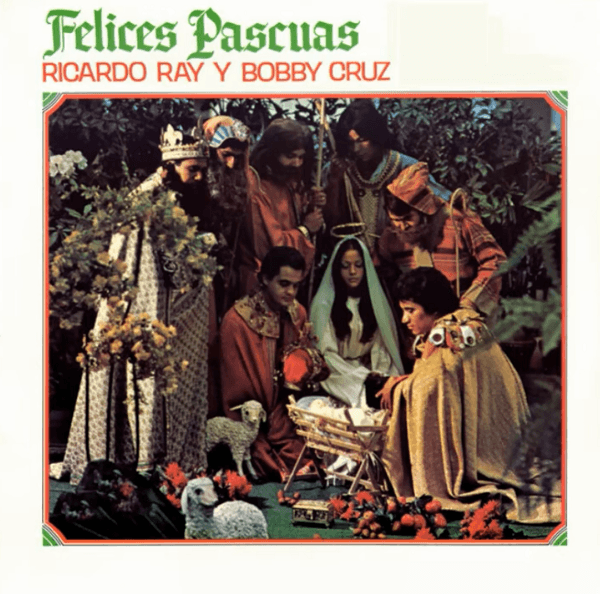
”Bembé En Casa de Pinki” is a Christmas song written by the famous duo Richie Ray and Bobby Cruz, which was released in 1971 and is the first single from the Christmas album ”Felices Pascuas”.

The song’s title comes from someone who would be very important in the career of the two aforementioned artists and that was the Panamanian-born diplomat named José Rogelio ”Pinki” Arias. The gentleman was a close friend of Richie and Bobby and, at the same time, director of the Panamanian Institute of Tourism. He used his friendship with the vocalists to invite them to various events in his country, knowing that they would be a complete success with the presence of the duo.

Such was the affection both exponents had for ”Pinki” that they dedicated to him two songs from their extensive repertoire, which were ”Bembé en Casa de Pinki” and one belonging to the album ”El Diferente”. 

Among other songs, ”Felices Pascuas” also includes tracks such as ”Bomba en Navidad”, ”Mi Niñez”, ”San José”, and ”Aguinaldo Navideño”.

Felices fiestas at Christmas
Cover of the Christmas album ”Felices Fiestas”

Estelita by La Sonora Ponceña

Another group that never misses a chance to offer their talent to please their fans and make them enter the Christmas atmosphere during the holiday season, leaving great classics that can not be missing every year in our homes and one of them is ”Estelita”.

Something that can never be missed in a Christmas album is that colorful character who always brings playfulness and good humor to the atmosphere. In this case, it is Estelita, who is a party neighbor who always sneaks into the Christmas parrandas in her neighborhood, something that many people will surely feel identified with in various parts of Latin America.

The song was written by the late maestro Joe Torres and was part of the album ”Otra Navidad Criolla!” along with ”Opera Gandinga”, ”Vamonos Pa’l Campo”, ”La Vengo Siguiendo”. 

Read also: Luis Guillermo Rangel the great friend of everyone

‘‘La Chiqui Some’’ and ‘’El Some’’ in International Salsa Magazine

Much prominence is given to singers, musicians and the visible part of the entertainment in general, but there is not enough talk of those who make it possible for the aforementioned to record what they have created for their audience. That is why we wanted to talk to Jennifer Freedman, better known as ”La Chiqui Some” and Agustin Someillan, who is known as ”El Some”.   

Jennifer and Agustin El Some
Singer Jennifer Freedman and trompeter Agustin Someillan in the studio

Singer Jennifer Freedman and trumpeter Agustin Someillan in the studio 

Jennifer and Agustin ‘’El Some’’’s first contact with music 

Jennifer started in music with percussion in 2005, but moved away from it for a few years to pursue other activities until other artists and groups called her to play with them. She was then invited to attend some rehearsals at Mam-Ax Studios, where by a twist of fate, there was a man named Someillan who already had a studio at that time. They still did not know each other at that time, but soon, one would be very important for the other’s professional life.   

In 2018, she had to go again to the same building, which is when she finally met Agustin, who tells her that she was in the wrong place and had to go to another office. Her visit to Mam-Ax was intended to participate in the recording of a single for singer Freddy Nieves, but that chance encounter would help her to learn that both she and Agustín had a partner in common, who recommended her to work together. 

After that, both accepted and began to know each other better, which led ”El Some” to advise Jennifer on her singing and other details of the business. At the same time, the girl was beginning to see music as something much more serious, since it was only a hobby for her by then. She had certain doubts because she had not jumped right into music professionally, but Agustín convinced her to try to start a career as such, to which she ended up giving in.   

The owner of the studio did not have the support of anyone at that time, so he had the great idea of partnering with Jennifer and bringing together their qualities in the same project.   

In the case of ”El Some”, he comes from a musical family and studied music in Cuba. He became a trumpet player just like his father. Back in his country of origin, he was fortunate to accompany many orchestras such as the Sexteto Nacional de Ignacio Piñeiro, with which he was nominated for Latin Grammy in 2014.    

Having decided his country did not provide him with all the opportunities he needed as an artist at that time, he tried his luck in New Jersey, where he currently resides as does Jennifer, with whom he currently shares the Sonority Record Studios project.    

At this moment, they are creating the album ”Los Some Son” as an idea of Jennifer herself to get people know ”El Some”’s career. Among the guests of the project, we can mention former Los Van Van singer Pedrito Calvo, former Los Van Van singer Melly Cartero, Jennifer herself, singer Frankie Vazquez, pianist Arturo Ortiz, among many others.    

Chocolate and Agustín El Some
Cuban jazz trumpeter Alfredo ”Chocolate” Armenteros and Agustín Someillan

How Jennifer and ”El Some” created Sonority Music Studios   

Agustin has been in the studio for almost 12 years, while Jennifer has only been there for five, but that has not stopped them from getting together perfectly, of course. He has always liked to play the trumpet, but his neighbors started to complain about the constant noise coming from his house, so he decided to look for a place to make music without disturbing anyone.   

However, before that, he was already working on music at home, to the point that he produced an album for José Mangual from his own home, which he describes as ”a huge odyssey”, since he did not have the conditions to complete a job of that magnitude. That is when he decides to look for a space more conditioned to record and produce, so he acquires half of the space he currently uses and elongated it after partnering with Jennifer. 

There were implements they did not possess the knowledge to use, but little by little, they were learning on their to create the brand they have today and the prestige that they acquired in the Latin music community with so much sacrifice. 

”Although this is not a big studio, great things have happened here. There is a great vibe and we make very good music” said ”El Some” about what has been achieved with this space, which has become their musical home.   

The studio has a vacuum-sealing cabin and everything necessary for mixing, mastering, editing, recording and much more.   

Jennifer during a performance
Jennifer Freedman during a live performance with Los Some Son

Relationship between Los Some Son and Sonority Music Studios 

At the moment of expanding the studio, Agustin had already named the place ”Some Son”, but once he and Jennifer became partners, they started to think about how to market it more effectively in the United States. Since everything they did there had to do with sonority, they opted for something with that word, so the studio ended up being called Sonority Music Studios. 

Both are listed as company managers and ”El Some” focuses on the music, creation, engineering and production side. On the other hand, Jennifer is much more focused on the administrative part, contracts, bookings, among other details of this type. 

Seeing what they were achieving with the studio, they felt they could expand a little more to other facets, so both artists also engaged in founding their own band that they called ”Los Some Son” in homage to the ”El Some”’s family of trumpeters and Cuban salsa music in general.   

In conclusion, both the studio and the band are formed by the same team, so both projects go hand in hand.   

Read also: Today we talk with Susana Y Su Orquesta Adelante 

Luis Guillermo Rangel the great friend of everyone

Time is the owner of the best because of what happens 

In this section of International Salsa Magazine, there have been very special characters who provided us with important lessons and wonderful anecdotes about their lives, but the luminary we are going to talk about in this opportunity simply has no comparison with the rest. We are talking about composer, musician and singer Luis Guillermo Rangel, who very kindly welcomed Augusto Felibertt and myself into his home to try to give us an overview of the highlights of his life, since he has a lot to say. 

After having picked us up on a busy street in the city of Caracas and arrived at the beautiful and comfortable home of Mr. Rangel and his family in the Las Mercedes area, we have become fascinated with his living room, which houses an impressive collection of instruments of all kinds, microphones, CDs and vinyl records, showing that the place is a reflection of what the artist is most passionate about. So much so that as soon as we entered the house, the first thing he told us was ”this is my life” as it was more than evident when appreciating the room.  

Mr. Rangel’s beginnings in music  

The first thing we wanted to know about the central figure in this story is obviously his beginnings in the musical world, to which he responded that it all started when he was only a child, since God gave him the opportunity to have parents who liked music very much. His father was a guitarist and his mother sang. 

Although Mr. Rangel lost his mother at a very young age, she gave him with a love of music deeply anchored in his heart. At that time, it was very easy to play in family homes, so his was no exception. 

”We came from El Cementerio, Avenida Los Carmenes 24 and that was a very familiar block. Every weekend, my home was filled with music and my mother loved parties, gatherings and friends. In one of these meetings, I met Alfredo Sadel, but he was not the only one. I also met Rubén Osuna and Sergio Mexicano in that context. My musical career as such began when I was seven or eight years old with a cuatro that dad bought”, he said about the subject.  

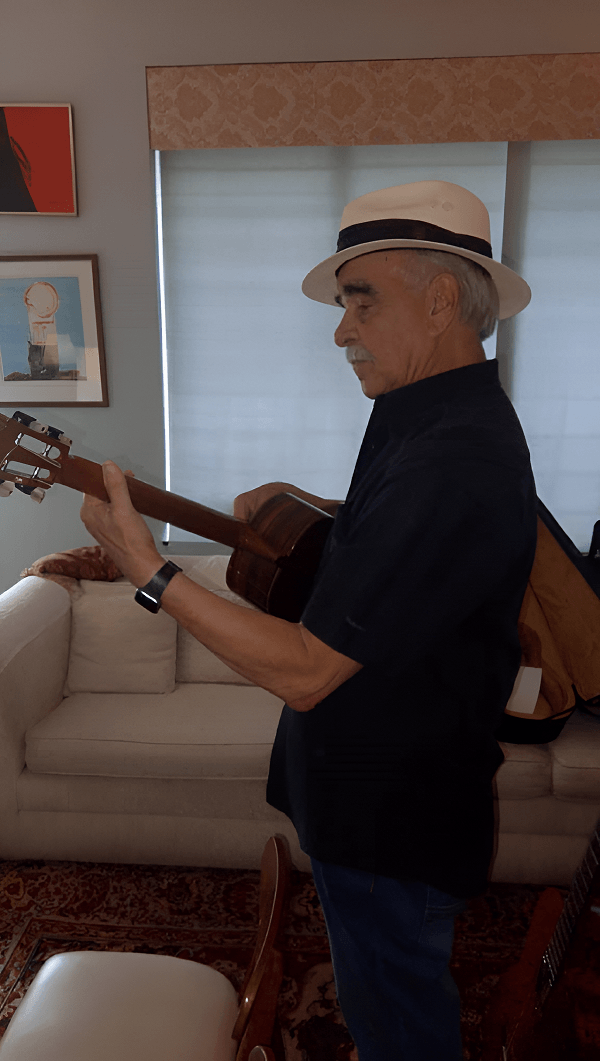
Rangel playing the guitar
Luis Guillermo Rangel playing the guitar in his living room

Time in Coche 

It was not long before the artist told us that he went to live in Coche with his family and it is in that same area that he met Cherry Navarro, José Luis Rodríguez ”El Puma”, Fran Acevedo and many other young people who would become his great friends thanks to his passion for music. He also made reference to a very famous group of that time called Los Zeppys and consisting of ”El Puma”, Estelita del LLano, Agustín Calzadilla, Alberto Lewis and Nicolas Alvarado.   

‘’We formed the first Venezuelan music group there in Coche and the harpist was Frank Acevedo, who lived in Los Valles del Tuy, but it was not an impediment for us to have the strength to form the ensemble. Nilson Díaz, who lived in El Valle, was our maraquero and ended up being the musical director of Yolanda Moreno’s group until he passed away recently” Mr. Rangel remembered about his time in Coche.  

Friendship with Cherry and Carlos Navarro 

His friendship with Carlos and Cherry Navarro comes from that Mr. Rangel was about 11 or 12 years old when he lived in the block eight letter D, while the Navarro brothers lived in letter C. They always met in the sports courts of the area to play basketball or rubber ball, but the time gathered also led them to become interested in other hobbies and one of them was music. 

One day, we were all invited to a birthday party and Cherry, who was the fastest of all of us, proposed us to give a small performance to the birthday boy, since we had no money to buy him anything. That’s how we started in this world” said Mr. Rangel keeping with his story. 

He continued his story saying that ”I met Chelique Sarabia at the Industrial Technical School while he was studying oil and I was studying electricity. We became great friends and he invited me to play with his band, with which I was for 26 years. We recorded very beautiful songs with Cherry, José Luis, Chucho Avellanet, Javier Solís and many other great talents. Such was the level we achieved that we even accompanied Placido Domingo at the Teatro Teresa Carreño in 1991 and 1992”. 

Precisely because of the large number of artists he has managed to meet in the music scene, he wants to compile all this information in a book that includes so many anecdotes that no one even heards about before. At the moment, he has a page known as ”Mi Personaje de Hoy” which currently has 21,000 followers and always has interesting things to tell.  

Rangel showing his skills
Luis Guillermo Rangel showing us his musical skills during our interview

What does it mean to have met and shared with so many national and international luminaries? 

Mr. Rangel ensures that the environment around him is very important to him. He thinks that the principles and values of every human being are determined by the people who accompany him in life. In the case of the Navarro family, he deeply values what each and every one of its members has done for him on a personal and musical level. 

”I was very fond of Cherry in life and, today, I have a beautiful friendship with Carlos. The same thing happened with José Luis Rodríguez, although he went international in a way that made it difficult for him to return to the country, and many other friends with whom I still maintain contact because I never forget my friends” Mr. Rangel emphasized on the issue. 

He also remembered singer-songwriter Rudy Márquez, who sadly passed away on October 9 this year. The artist grew up with Márquez in La Florida long before he went to live in Coche, a time when they used to play ball and cards. As adults, they met again on Radio Caracas Television and played in the extinct show ”Club Musical”, after which they went for lunch, had a coffee or shared any other plan to have a good time.  

The family for Mr. Rangel 

For Mr. Rangel, family is the backbone of growth and maturity. Fortunately, his was always very close, so he and his 11 siblings always stuck together and were in touch even after they became adults. Of course, that was until the older ones passed away. 

However, the artist believes that nowadays there is a great deficiency in the current family upbringing and submits that the values and principles of yesteryear are a bit lost. This is part of what has resulted in the situation facing the country at a social level, not to mention that there is no institution to protect these principles. 

Despite everything, he continues to believe in the institution of the family and thinks that the good things it brings to society can be recovered if we all play our part.  

Rangel staring at the guitar
Luis Guillermo Rangel staring intently at his guitar while he is playing it

What does music mean to Luis Guillermo Rangel? 

Mr. Rangel says that, for him, music is everything. It is the best language in the world and the language we all speak. The musician ensures that a human being can be going through any situation in life and, no matter how hard it is, accompanying it with music will automatically calm the spirit and soul almost immediately. 

He also added that ”music activates you. Psychologically, music is an element that helps you and each of its genres has a particular function. In the case of romantic music, we can use a song with this style to dedicate it to whom we like, while the ideal genres to brighten the spirit are guaracha and salsa. All this is what has made me grow and be here with you”.  

Luis Guillermo the composer 

Mr. Rangel claims to be pushing for his own achievements with songwriting, but unfortunately he has not found them yet. However, with sacrifices, he has been able to progressively become known thanks to this facet of his. 

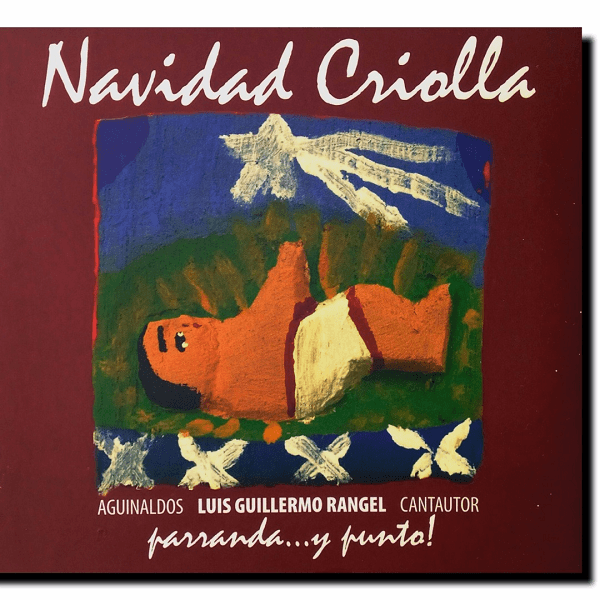
Recently, he recorded a very original Christmas album thanks to the fact that he listened to a lot of Christmas music at home and his father was a great arranger of aguinaldos, so he took some of that essence and poured it into an album which he called ”Navidad Criolla” about eight years ago. The big problem is that he has not had the resources to market it properly and the crisis and currency devaluation have made it even more complicated.  

However, the artist does not give up and continues his campaign to get someone important to be interested in the album and promote it so that people can enjoy it.  

Payola 

Like many other Venezuelan artists, Mr. Rangel has also had to deal with the phenomenon known as payola, which consists of the payment to radio stations by the artists in order to be able to be played in those spaces.   

He told us that when his Christmas album was released, a friend told him that he could make him reach number one on every available radio station in exchange for a specific monetary value, but he absolutely refused. 

”I didn’t know what payola was and I never thought that radio stations would hurt composers, musicians and singers and keep them away from their passion due to their greed for money. I believe that payola is a profound mistake that was made and continues to be made, so I have not been able to get lucky with my songs. I made a spectacular album with La Rondalla Venezolana and I don’t know where all of it will lead” said Mr. Rangel regretfully about the situation.  

Rangel in the bathroom
Luis Guillermo Rangel in the bathroom at home, where there are many photos with famous people such as Carlos Andrés Pérez, Eduardo Serrano, José Luis Rodríguez and many others

Luis Guillermo Rangel the musician 

As for his facet as a musician, Mr. Rangel defined himself in one word: ”guataca”. This means that the artist was always self-taught and did not need sheet music to do his job correctly. In this regard, he told us a very interesting anecdote, which we describe below. 

‘’One day, Chelique Sarabia got a call from Radio Caracas Televisión to ask him to lend one of her cuatristas, me among them, and when I went to the channel, the first thing these people did was to give me a score that I could not read. Then, I told Aldemaro Romero that Chelique and I have never had the need to read music to be able to play, something that surprised him a lot” said Mr. Rangel with a laugh. 

The artist ensures that he has never been ashamed to say that he does not use sheet music to play and he has his own methods to be able to play.  

His greatest musical influences 

Although the answer may seem very obvious, one of the greatest musical influences Mr. Luis Guillermo has had is his great friend Chelique Sarabia from the very moment they met at the technical school. His cuatrista retired, so he asked Mr. Rangel to fill that position and, from that moment on, they became inseparable until the death of the musician in 2022. 

He got to know Sarabia beyond the demanding artist and producer of strong character. He also got to know the romantic, passionate and noble man who always helped those who were just starting in the world of music.  

His great friend has been his biggest inspiration for what he has achieved musically.  

Luis Guillermo the friend 

Mr. Rangel describes himself as an extremely loyal friend who always tries to be consistent and never forgets his loved ones. He also revisits his friendships with Chelique Sarabia, Toco Gómez and Rudy Márquez, whom he met when he was just a 10 or 11year-old boy.   

I have a very broad concept of friendship, but very specific. A friend is not just for the good times or when you are in a good position, but for any moment. A friend can even help prevent you from saying a phrase that could be misinterpreted and lead you to serious problems” said Mr. Rangel, who also defined friendship as ”the conceptual confinement of a human being” and the importance of loving people as such.   

Navidad Criolla by Rangel
Cover of the album ”Navidad Criolla” by Luis Guillermo Rangel

Luis Guillermo Rangel as a father 

Mr. Rangel has four amazing children who unfortunately are abroad due to the current situation in Venezuela, which he assures us has affected him much not to having them close to him.   

He learned the importance of keeping the family together from his own, but also from Cherry and Carlos Navarro’s family, which always faced adversity without separating from each other. For him, the Navarro family was also his family, so much so that he even remembers on one occasion their mother made a shirt and gave it to him, a gesture that he still remembers fondly.   

”This is my life” 

Recalling that Mr. Rangel told us ”this is my life” as soon as we saw his collection of instruments and records in the living room, we wanted him to give us an explanation of why it is, he replied that the contents of his home include the things he loves the most. His guitars, instruments, sound equipment and microphones are among the most valuable things he has because that is how people know him. 

”I want to show people that my love for others is not only sentimental, but also musical, which translates into meetings I hold at my house, where we share, sing and play music. I remember one day Chelique Sarabia, Miguel Angel Landa, Henry Salvat, Toco Gomez and I affectionately baptized our group as ‘Junta Directiva’, since we were all directors. And the one who coordinated our meetings was journalist Aquilino José Mata,” he told us.  

Transition from conservative to modern 

Mr. Rangel claims that he has a lot of respect for music in general, but that there are some modern genres that have caused him a lot of rejection and one of them is reggaeton, which he can not stand since it is strident, rude and vulgar music whose lyrics he does not like in the slightest.  

In fact, both he and Augusto agreed that the aforementioned urban genre can be defined as ”music without music” since its exponents do not know what music is. 

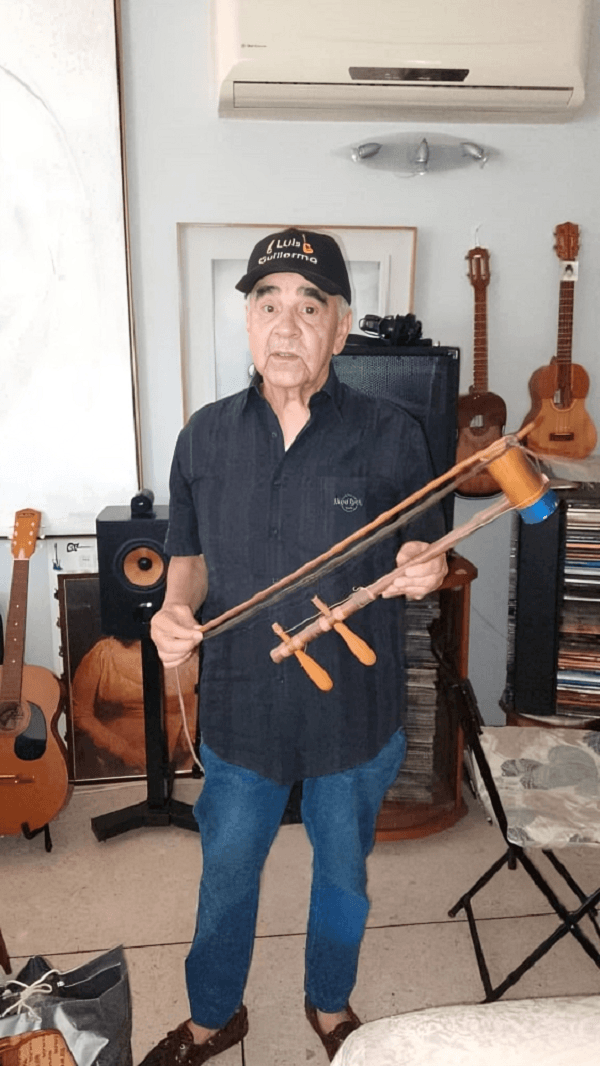
Rangel and his harp
Luis Guillermo Rangel and his Kravik harp or lyre

Luis Guillermo the collector 

One thing Augusto and I noticed was the huge amount of records and instruments he had in his home, so we wanted him to tell us a little about his facet as a collector, to which he wanted to clarify that he does not define himself that way. That is, he simply value the things according to the people who, at the time, gave them to him. In fact, each of his guitars is marked with the name of the person who sent it to him. 

The instrument that most caught our attention is the Kravik harp or lyre designed by a luthier in Africa, but unfortunately, Mr. Rangel has not yet been able to figure out how to tune it. The artist thinks that it must have some harmonic key that he has not yet been able to discover, but he supposes that it is a romantic instrument due to the sweetness of its sounds. It was a gift from the Vice Consul of Venezuela, Mauricio Portañoro, and it draws the attention of all visitors because of its peculiar appearance compared to other instruments. 

He also showed us a Chinese violin, which was also a gift from a diplomatic friend of his and only has two strings, which makes it so special and different from the rest of his collection.  

What Luis Guillermo is doing today 

Although he is very happy with the result he got, he also pointed out that the costs have made it very difficult for him to continue with the process to the point that he has not been able to get certain things done such as mastering. This has been one of the biggest obstacles he has faced in his career, although it has not stopped him from continuing to work with what he has.  

The muse for Luis Guillermo 

Every composer always requires certain conditions to be able to get inspired and write, and that is the case with Mr. Rangel, who needs to be completely relaxed prior to create music. According to his own words, ”I have to be fresh in soul, spirit, heart and mind so that everything flows better. I always prefer to be calm in any life situation and everyone close to me knows that”. 

He also told us that, because of the things he is going living, he has not been able to focus on finishing the song he has been composing for some weeks now. Calmness and lightness are fundamental for him to writing a song, verse, article or whatever comes to mind.  

From 1967 to 2024 

When asked for a summary of his life in all areas from 1967 to 2024, he wanted to give thanks for what he has been able to sustain from that year until now, especially with his health. He feels he has achieved a set of things that make him very happy and he continues to reflect on all those things. 

”I feel I have achieved what I’ve ever looked for, which is love, peace, tranquility and the possibility of creating and giving to others. I’ve tried to be the best I could be in life and I believe I’ve done it” Mr. Rangel concluded on the subject.  

Rangel and his violin
Luis Guillermo Rangel and his Chinese violin


Luis Guillermo the spiritualist 

Although Mr. Rangel can sometimes be arrogant and have a strong character in his own words, he also thinks he is a very spiritual person and, most of the time, very cheerful. That is exactly why his loved ones always want him around.  

He says when he is unable to share with friends for some reason, they always tell him how much they miss him for his smile to cheer them up. He thanks God, to whom he is always devoted, for everything, including his way of being.  

What did you think of the interview? 

We were very curious about what Mr. Rangel thought of our interview, to which he replied that it was not like any other he has given in the past.   

He told us that, throughout his career, he has given about 15 interviews, but in none of them had he felt the sensitivity, warmth and familiarity he found in us.   

Among the many well-known media outlets that have had the opportunity to speak with Luis Guillermo Rangel, International Salsa Magazine has stood out for the closeness it has had to the artist and the interest in knowing the person behind the musical and professional field. 

Therefore, the interview ends with the following words from Luis Gullermo Rangel to us: ”I want to thank Karina and Augusto for being here in my house and I hope you both feel comfortable here. I also hope they get to know my musical and instrumental side, but also my human side” And sure enough we did! 

Read also: Gabrielito Y La Verdad shines in Los Angeles 

Javier Plaza – Biography

Europe / Alemania / Munich

Javier Plaza was born on October 4, 1952 in the Target Shooting sector of the populous neighborhood of Sarría, in Caracas – Venezuela.

In 1957 the urbanization 23 de Enero was inaugurated and the Plaza Castillo family is one of the many founding families of this beautiful project of the government of Marcos Pérez Jiménez. Javier’s Plaza childhood and adolescence take place in this environment.

The parking lot of block 5 of the Monte Piedad area on January 23, was the space where Javier Plaza began to discover his skills as a percussionist, because it was the place chosen by the neighborhood boys to take out the drums, unload and share. Among some of these future stars we can mention Bitervo Plaza, José “Cheo” Navarro and Alfredo “Cutuflá” Franchesqui.

Starting in the mid-70s, he began his professional career in Latin music, forming part of groups such as Rumbón 10, Sexteto Juventud, Enrique “Culebra” Iriarte y su Orquesta, Culebra being the one who gave him the opportunity to be one of the orchestra singers.

This work opens the doors for him in the record market, with the help of producer Víctor Mendoza, he participates in recordings of different groups such as José Rosario y sus Soneros, Federico y Su Combo and El Clan de Victor.

At the beginning of the 80s, the Orquesta Café was formed, Javier is one of its vocalists along with Joe Ruiz and Carlos Espósito, managing to record one of the most important albums of his career and one of the most significant for the inhabitants of January 23, Due to the fact that most of its musicians are parishioners, the rehearsals were held in Monte Piedad and the economic resources for the recording of the album arose in the neighborhood, thanks to a great collaborator and music lover, Mr. Andrés “Culebra” Vasquéz.

In this group musicians participated, who at the time were not as recognized as today, among others Jose “Tucky” Torres, César “Chino” Pérez, Carlos “Kutimba” Espósito, Bitervo Plaza, Gerardo Rosales, Jorge “Venado” Ponce and the late Joe Ruiz.

Javier Plaza
Javier Plaza

By the mid-1980s, Javier began to knock on doors in the old continent and Alfredo Cutuflá, who lives in Paris, invited him to participate in Combo Ventú, a group established in Paris with most of its Venezuelan members.

There he began a successful career in Europe participating in different groups and collaborating in recordings and presentations of other artists. Thanks to the presentations of Combo Ventú, the director of the Conexión Latina Orchestra, based in Munich-Germany, contacted him to be part of their ranks, he has remained with this orchestra for 18 years, currently being the oldest musician of the grouping.

Since he (Javier Plaza) was hired by the Connection, he has lived in the city of Cologne-Germany, a place where a large group of Venezuelans live, many of them dedicated to culture.

He (Javier Plaza) reinforced his musical studies of vocal technique, theory and music theory at the Köln Mülheim and studied the German language at the IBM Institute.

He has participated in groups such as Kimbiza, La Charanga Nueva de Alfredo Cutuflá, the Colombian pianist Francisco Zumaqué, Salsamanía, Cesar “Chino” Pérez and Gerardo Rosales, without abandoning his responsibility within the Latin Connection vocalists.

With La Conexión, he has had the opportunity to accompany international stars of Latin music, such as Perico Ortiz, Ismael Miranda, Adalberto Santiago and Azuquita, among others. Javier comments that Nicky Marrero worked with La Conexión for five years.

Since 1992, Javier Plaza has been managing his personal project, the Son-Risa Orchestra. With her he has made two productions entitled “Libre Soy” and “Mi Música”, with most of the songs of his own authorship.

In 2006 he came to Venezuela with a project under his arm, lyrics, musical arrangements and a proposal, in search of private or government financial support.

The name of the project “El Reencuentro”, with which he planned to bring six talented Venezuelan musicians based in Europe to meet again with musicians who make life in our country and thus make a recording where this experience would be reflected, these musicians were Alfredo ” Cutuflá” Franchesqui, Orlando “Watussi” Castillo, Carlos “Kutimba” Espósito, Orlando Poleo, Yma América and José Ávila…

but the money was not enough to purchase the tickets. Therefore, El Proyecto Reencuentro was recorded with the musicians residing in our country, resulting in a product of excellent quality, among others, Nelson “Melo” Douglas, Alberto Crespo, Leonel Sanchez, Charles Peñalver, Alberto Naranjo, Tucky Torres, Rafael González, Carlos Julio “El Oso” Ramírez, Marcial Istúriz and José Ramoncini.

During the recording of this album, his mother passed away (02-04-2006), Rosario Castillo, popularly known in the neighborhood as Rosarito, to whom he dedicated this album and one of its songs was written especially for her.

The chorus of one of the themes of the new Son-Risa production says: “Let’s get the drums out again, let Caribe not die”.

As the boys did in the parking lot of Block 5 of Monte Piedad, we know that Javier Plaza and his Son-Risa Orchestra will have the support of all Venezuelan music lovers.

  • « Go to Previous Page
  • Page 1
  • Interim pages omitted …
  • Page 12
  • Page 13
  • Page 14
  • Page 15
  • Page 16
  • Interim pages omitted …
  • Page 42
  • Go to Next Page »

International Salsa Magazine (ISM) is a monthly publication about Salsa activities around the world, that has been publishing since 2007. It is a world network of volunteers coordinated by ISM Magazine. We are working to strengthen all the events by working together.