• Skip to primary navigation
  • Skip to main content

International Salsa Magazine

  • HOME
  • Previous editions
    • 2026
      • ISM / March 2026
      • ISM / February 2026
      • ISM / January 2026
    • 2025
      • ISM / December 2025
      • ISM / November 2025
      • ISM / October 2025
      • ISM / September 2025
      • ISM / August 2025
      • ISM / July 2025
      • ISM / June 2025
      • ISM / May2025
      • ISM / April 2025
      • ISM / March 2025
      • ISM / February 2025
      • ISM / January 2025
    • 2024
      • ISM / December 2024
      • ISM / November 2024
      • ISM / October 2024
      • ISM / September 2024
      • ISM / August 2024
      • ISM / July 2024
      • ISM / June 2024
      • ISM / May 2024
      • ISM / April 2024
      • ISM / March 2024
      • ISM / February 2024
      • ISM / January 2024
    • 2023
      • ISM / December 2023
      • ISM / November 2023
      • ISM / October 2023
      • ISM – September 2023
      • ISM – August 2023
      • ISM July 2023
      • ISM Edition June 2023
      • ISM – May 2023
      • ISM April 2023
      • ISM March 2023
      • ISM February 2023
      • ISM January 2023
    • 2022
      • ISM December 2022
      • ISM November 2022
      • ISM October 2022
      • ISM September 2022
      • ISM August 2022
      • ISM July 2022
      • ISM June 2022
      • ISM May 2022
      • ISM February 2022
      • ISM January 2022
    • 2021
      • ISM December 2021
      • ISM November 2021
      • ISM October – 2021
      • ISM September 2021
      • ISM August 2021
      • ISM July 2021
      • ISM May 2021
      • ISM April 2021
      • ISM June 2021
      • ISM March 2021
      • ISM February 2021
      • ISM January 2021
    • 2020
      • ISM December 2020
      • ISM November 2020
      • ISM October 2020
      • ISM September 2020
      • ISM August 2020
      • ISM July 2020
      • ISM June 2020
      • ISM May 2020
      • ISM April 2020
      • ISM March 2020
      • ISM February 2020
      • ISM January 2020
    • 2019
      • ISM December 2019
      • ISM November 2019
      • ISM October 2019
      • ISM Septembre 2019
      • ISM August 2019
      • ISM July 2019
      • ISM June 2019
  • Spanish
  • Download Salsa App
    • Android
    • Apple

Search Results for: salsa

Salsa trip – Where to dance Salsa in Europe?

Europe

Do you want to go to Europe but you don’t know where are the best places to dance? Do you want to enter in the passionate salsa world? Are you looking for adventures and meet new people? International Salsa Magazine wants to guide you to the best salsa and Latin places in Europe. In this edition we show you the dance life in three different countries: Ireland, Switzerland and England.

Ireland

Strictly Salsa

This academy/club offers a weekly Salsa Classes and a Salsa Club every Thursday in The National Stadium on the South Circular Road, Dublin. The classes are divided for categories:

Strictly Salsa Dublin
  • Ladies: Alexandra – Ladies Styling with Body movement. For those of you who know Alex, this will be one of the greatest most indebted workshop focused around not just footwork and styling but how to use your body and techniques and tips on how to practice and perfect what will be thought to you in class. It will not just be watch me then try it, Alex loves questions and wants to share her knowledge.
  • Men: Claudiu – This for you guys will really help you put more flavor and movement into your dancing skills, incorporating all this with steps that are very usable on the social dance floor, there will be elements of Rumba & Guaguanco and by the end it should all come together nicely. As with Alex, Claudius knowledge is very deep so ask as many questions as possible to maximize the time.

For more info: http://strictlysalsa.ie/


Salsa Dublin

A lot of our instructors are also performers and they have a huge amount of experience performing on stage /in competitions/ at weddings & parties. The academy has dancers from Ireland, Turkey, Poland, Spain, Romania, and each one brings their own individual strengths to our group.

The teacher’s team has two previous winners of the Irish Salsa Championships, and the current (2012) Champion of the Irish Bachata Open. We also have instructors with backgrounds in Ballroom, Hip Hop, Ballet, Contemporary etc. which gives the team a greater understanding of musicality and a deeper appreciation for what they teach.

Salsa Dublin
Salsa Dublin

Development of the dancers is a key focus in our structure. Through regular team meetings, teachers training and dance group practice, we are able to keep physically and mentally growing and improving. You never stop learning no matter how good you are, so we are always striving to better ourselves. This academy works with world class international teachers and champions, bringing them to Ireland so that they can share their knowledge and ideas with the academy and their students.

Workshops are crafted for all levels of Salsa and Bachata lovers. A day of workshop involves a total of 4 hours of learning from four local and international dance instructors!! You will be sharing this amazing experience with both your fellow learners and from people from outside the regular classes.


For more info: SalsaDublin.com


Switzerland

La Movida Laussane

La Movida/Poco Loco is a bar-restaurant known by its Latin-Mexican aesthetic and food, which also offers special nights and parties for Salsa and Latin music lovers. With the performances of Dj’s and live bands, this special club is bringing all the Latin flavor to Switzerland. Cocktails, food, music and more!

Poco Loco
Poco Loco

For more info and reservations: https://pocoloco-movida.ch/


Salsa Passion Company

Whether you are completely new to the art, or experienced dancer, Salsa Passion Company has the knowledge and the experience to bring you further with your dance skills.

The academy philosophy is understanding that dance is about social and fun, but while you are investing your time and money to learn, why not learn it properly.

They’ve develop a “step by step” method that is fun and efficient for everyone to learn. They teach the “know how”. You will learn the vocabulary and the techniques of how to put them together, so you can be.

To learn how to dance Salsa, you should first understand the rhythm of Salsa, the steps, the body movement, the TWO persons but only ONE system principle in order to dance together with harmony, then move on to the turns and figures, and that’s the focus of the academy.

For more info: http://www.salsapassion.ch/d_course.html


England

Caramelo Latin Dance

Looking for Salsa classes in London? You’ve come to the right place! At Caramelo Latin Dance you will find only the highest quality tuition in Crossbody Salsa On1 and On2, as well as in and many other Latin dances.

Caramelo Group - Salsa
Caramelo Group – Salsa

The 4-week Latin dance courses are perfect for a consistent and immersive approach that will help you see a marked progression in your dancing irrespective of your level.

Classes take place on Wednesdays and Thursdays. You can Combine your Salsa classes with Bachata, NY Mambo On2, Cha Cha Cha, Pachanga and Styling and enjoy Latin dancing to the fullest!

For more info: http://www.caramelolatindance.co.uk/


Incognito Dance

Incognito Dance Company (IDC) was established in 1999. It has some of the most experienced and qualified Latin Dance instructors and performers in Europe. All our Latin dance courses, workshops, holidays, events and clubs are run and taught by highly trained, friendly instructors who encourage dancers of all levels to enjoy the spirit of dance.

Try the award winning Gold, Silver & Bronze Salsa Courses, learn to dance, have fun, keep fit and meet new friends. Check out the private lessons, weekly classes, regular workshops, bootcamps, monthly parties, holidays, and special events.


Experienced dancers are given fun, technically challenging classes, and plenty of hours to social dance to the latest Latin music by our fabulous DJ’s. The academy teach many Latin dance styles of salsa from LA Style, NY Style, Cuban and Puerto Rican, as well as Bachata, Kizomba, Cha Cha, Reggaeton, Latin Hip Hop, Merengue etc.

For more info and classes: https://www.incognitodance.com/


Salsa Soho London

The best place to celebrate your Latin roots! Salsa classes every night of the week, amazing drinks menu with over 50 cocktails and of course non- stop Latin music.

This club/restaurant has menus to suit all occasions and tastes. For a bigger party or less formal occasion they Sharing Planks are perfect and includes Salsa favorites like tacos and Iberico ham croquettes. Special events, birthdays, parties and more, with the best atmosphere in London!

Salsa Soho
Salsa Soho

For more info and reservations: https://www.bar-salsa.com/soho
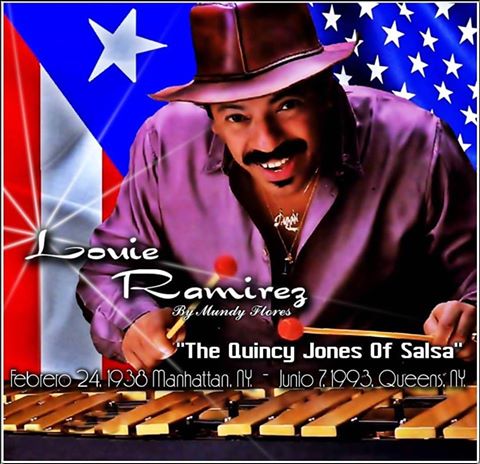
Louie Ramírez. The Hidden Talent of Salsa Ahead of its time

North America / USA / New York

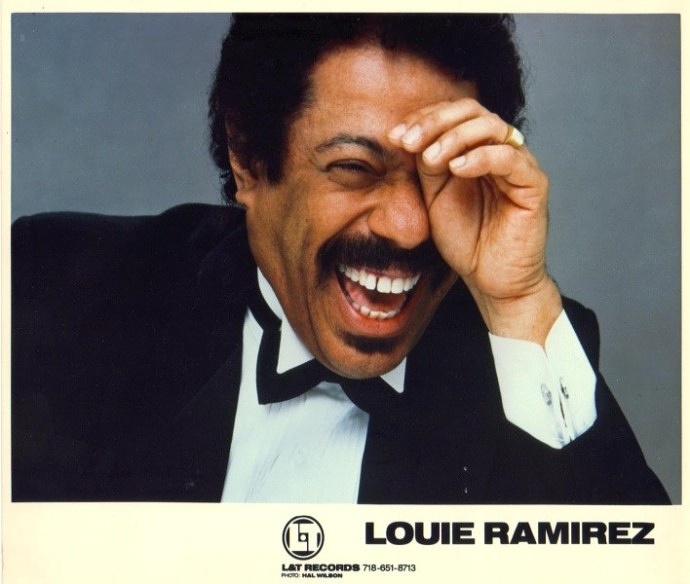
Louie Ramírez.

Music often requires characters who are always behind the scenes and support the work of singers and performers with their talent, who are ultimately the ones who “put on their face” and become popular. Sometimes, however, these anonymous characters rise to fame in order to perform their own work and even become more popular than any popular singer.

In the case of Pop, this character is called Quincy Jones, of whom it is enough to say that he has been an arranger for Frank Sinatra and a producer for Michael Jackson. A nobody”. In the case of Salsa, these characters have been symbolized by Jones’ emulator, a guy named Louie Ramírez who has done everything with everyone.

Louie Ramírez
Louie Ramírez

One afternoon in 1994, Ramírez was driving his car down the highway that would take him to Variety Studios in New York. It was going to be a quick session since he only needed one song to complete his 20th album as conductor. Perhaps that was why he was nervous and that filled him with anxiety. Minutes later he couldn’t resist the feeling and had to pull over to the side of the car. He had not finished doing it when a cardiac arrest ended his life.

Louie Ramírez
Louie Ramírez

Louie Ramirez was a genius. The classic man to whom everyone turns for advice and solutions to their problems. It didn’t matter if they were young or old musicians. The fact was, Louie had the answer, and visiting him was like rubbing Aladdin’s lamp. That was a characteristic that always accompanied him, from that first recording “Conozca a Louie Ramírez” in 1963.

He was 20 years old at the time and had already stood out for composing some pachangas and arranging for Pete and Tito Rodríguez’s orchestras. The commentator Dick Sugar then presented it like this: Ramírez breaks the image of the director of a group that uses the talent of other composers and becomes a follower of a rhythm. No, Louie Ramírez is a creator in his genre.

Louie Ramírez Photo
Louie Ramírez Photo

That talent did not go unnoticed by the new Czar of Latin music in New York, Jerry Masucci, who hired him as a star for Fania Records and at the same time, as an arranger for the orchestras and ensembles that belonged to the record company. Ramírez was soon involved in work and was only able to record two albums during the sixties, “Good news” and “Alí Babá”.

On that last album appeared the hit that allowed him to be a famous artist, El Títere, a true Salsa classic. The theme was sung by Rudy Calzado, the third of the soneros that Louie had used without finding the ideal. That was a burden that accompanied him as a director during the seventies, when he used singers of the stature of Pete Bonet, Tito Allen, Jimmy Sabater, “Azuquita” Rodríguez, Adalberto Santiago, and even Rubén Blades.

Louie Ramírez
Louie Ramírez

It was with Blades, precisely, that he made an anthological album, “Louie Ramírez and his friends”, in which the song Paula C was included, with an arrangement of those that deserve -hats off-. By then, Ramírez was considered in New York as the most progressive arranger that Salsa had, thanks to the brilliant work done for the Fania All Stars. An excellent job had been the instrumental arrangement of Juan Pachanga, to be sung by Blades, of Canta Canta for a performance by Cheo Feliciano, and of the entire album “Algo nuevo” that Tito Rodríguez sang with Louie’s orchestra.

But the high point of Ramírez’s career came in 1980 when Joni Figueras, representative of the K-Tel International label, hired him to arrange the ballads Todo se derrumbó and Estar Enamorado de Manuel Alejandro. The album, which included these and other tracks, was released two years later under the title “Hot Night” and was recorded by Louie’s own orchestra.

Louie Ramírez - Salsa Progresiva
Louie Ramírez – Salsa Progresiva

This is how the Salsa-ballad or Salsa-romántica was born in a job that Ramírez continued until his death, making attempts at Latin Jazz from time to time, which he loved. That is why he recorded an album in tribute to Cal Tjader, where Louie was director, producer, composer and arranger, in addition to playing the timpani and his favorite instrument: the vibraphone.

Louie Ramírez was a genius in arranging, in a career where those of Guantanamera and Isadora stand out for Celia Cruz, El Guiro de Macorina for Johnny Pacheco and El Caminante for Roberto Torres. Apart from this, there are his works for the Alegre and the Cesta All Stars. Regarding this profile of Ramírez, the critic Eleazar López defined it very well:

Louie Ramírez - salsero
Louie Ramírez – salsero

It is not easy to arrange for a dance band, especially when it comes to a group that cultivates the hot tropical genre. Many musicians feel influenced by Jazz and the result of their orchestrations leaves a void in the dancer. Others arrange simple, but so simple that they repeat and copy themselves, and the result is tiresome music, without any degree of creativity: music that says nothing, that leaves nothing. Louie Ramírez has found the perfect balance… that’s why he always stays current.

Louie Ramírez flyers

Juan Karlos Jiménez talks about his orchestra Salsa Nueva Band and freelance career

Los Angeles is an inexhaustible source of Latin talent and this is proven every day with a large number of singers, musicians and groups that give all for all in each of their performances, with which they manage to earn a privileged place in the city and California’s music scene.    

On this occasion, we talked with the great Mexican percussionist Juan Karlos Jimenez, with whom we had the privilege of making contact to learn more about his career and contributions to Latin music in US territory.   

percussionist Juan Karlos
This is gifted Mexican percussionist Juan Karlos Jiménez, with whom we talked in this occasion

Juan Karlos’ beginnings in music   

Juan Karlos was born in Veracruz, place he describes as ”one of the most salsa-loving cities in Mexico”. The first musical influence in the artist’s life has been his own father, who played a lot of Cuban music of the time when Juan Karlos was still a child, and among his favorite groups and artists were La Orquesta Aragón and Tito Puente. 

Of his four brothers, he was the only one who devoted himself to music professionally and wanted to take salsa as a foundation, being something exceedingly rare for a Mexican, since most of the population does not usually see this genre as part of the typical music of the country. However, Juan Karlos also points out that, since Veracruz is located in the tropical part of the country, the city has a lot of Caribbean musical influence. This was one of the reasons that led the artist to become so passionate about salsa. 

In addition to music, he also studied a degree in communication and graphic design at the Universidad del Valle de Atemajac, Guadalajara. As for the communication part, being a 13-year-old boy, he began working at a radio station, which would be the beginning of interest he would have in the not too distant future for locution in a much more formal way. This led him to work in very prestigious places in Mexico such as Televisa Radio, giving him the necessary experience to know how to handle himself as a musician in relation to the media when he would promote his orchestra years later.   

While I was university studying, I worked in a music store and one day I had to serve to the Cuban Afro-jazz singer Rosalía de Cuba, who invited me to attend Cuban nights of which she was part of in restaurants and clubs in Guadalajara. One night, I was encouraged to go and started playing with one of the trios that performed that day and the leader of the group was so fascinated with my skills as a percussionist that he hired me permanently in exchange for 150 Mexican pesos per performance” said Juan Karlos about his time as a student.   

He also pointed out that in order to reach such a good level, he took a few classes with the late Cuban arranger, composer and bongocero Adalberto Alvarez, leader of the group Son 14, thanks to whom he was able to play percussion so efficiently.   

Today, he exercises his skills as a graphic designer with his orchestra Sangre Nueva Band, since he is the one who creates the album covers, flyers and artwork in general related to his musical project.  

Juan Karlos posing
Juan Karlos Jiménez posing for camera

Moving to the United States   

When Juan Karlos was just going to form his first band in Guadalajara, he met Maika Miller, who played for the Mexico’s Philharmonic orchestra and would be his partner for several years. Some time after they married, Milka was offered a master’s degree in Los Angeles and asked her husband to go with her, to which he gladly accepted because of the new opportunities he would have in his new home.   

A few years later, he retried creating his group in her new city of residence after 15 years of hard work. And while Juan Karlos and Milka are no longer a couple, they continue to be part of the same musical project, which they have baptized Sangre Nueva Band.   

However, in order to reach that point, he had to gain a lot of experience playing and perfecting his technique, but fortunately, many groups gave him the opportunity to make a living and be better every day at what he did, such as Conjunto Son 14, Carache, Santiago de Cuba, Rosalía de Cuba, Johnny Blas Y Afro Libre Orquesta, La Orquesta de Yari Moré, Tabaco y Ron, among others. 

His first attempt at creating an orchestra was Jazz Son, which he founded with Maika in Mexico with the idea that his music would be based on the fusion of jazz and son, but his plans were postponed with their sudden move to the United States. Finally, in 2009, he managed to found the orchestra he has today, which he called Sangre Nueva Band. 

Even so, he never stopped playing independently for other artists such as Gilberto Santa Rosa, Victor Manuelle, Ruben Blades, Cheo Feliciano and many more.  

Juan Karlos playing
Juan Karlos Jiménez playing and recording in a studio

Salsa Nueva Band   

One of the things that led Juan Karlos to create his own orchestra in Los Angeles was his desire to be the leader of his own project. He says he feels fortunate and grateful to be able to play with other orchestras, but in his own words ”it is better to be the head of mouse than the tail of a lion”. For the same reason, the idea of working in his own business without having to rely on other orchestras or singers was always in his head. 

When he decided it was time, he had a chance encounter with an Armenian musician who, from the street, saw his congas in the back of his car, asked him if he was a musician and invited him to play at a nightclub next Saturday. By that time, he had managed to gather six musicians playing three congas, a trumpet and a bongo. On the same day, a music entrepreneur asked him to play at another venue, so he ventured to enlarge the group and was asked to name the band, which he called ”Sangre Nueva”.  

Today, Juan Karlos is very happy with all the musicians who accompany him on this adventure and hopes that they will stay with him for a long time. 

Read also: Raúl Vargas and his flamenco rumba duo Dos Bandoleros 

Cuqui Pacheco endorses the Salsa Museum and present the new book about Johnny Pacheco

The Salsa Museum and myself, Johnny Cruz, are pleased to welcome the former life partner of maestro Johnny Pacheco, María Elena Pacheco, better known as Cuqui Pacheco. The artist’s widow spoke exclusively with me and Rubio Boris about the new book by Juan Moreno-Velázquez entitled ”Johnny Pacheco: tres de café, dos de azúcar y ¡ponle salsa!” 

The maestro’s artistic and personal life continues to venom a particular interest to his biggest fans, so you can’t miss this spectacular compilation of some of the most interesting anecdotes of Johnny Pacheco’s career. Below, we will discuss some of the topics covered in the written material.   

Cover of Johnny Pacheco’s book
Cover of the book ”Johnny Pacheco: tres de café, dos de azúcar y ¡ponle salsa!”

What are the book’s main objectives? 

What Moreno-Velázquez looks for in the first place with this book is to do justice to the life and work of the world famous musician by describing some of the most important stages of his life, so that his loyal public will know far more about the record businessman and producer.   

One thing we want to point out in the story is that there were many things that led Pacheco to the place he obtained in the industry, such as the influence of his father Rafael Arias Pacheco, his percussion studies, his ability to perform and the talent for arranging he found out he had. 

After going down all that path as a musician, the artist began to develop a much broader and deeper vision of everything about the industry, to the extent that he became one of the greatest music entrepreneurs and forever changed the way businesses were run in showbiz. 

The book also aims to shed as much light as possible on Pacheco’s work, as the subject has been little documented. It could be said that one of the few documentaries that addresses the subject of the flutist and the stars who have been part of La Fania is ”Yo Soy La Salsa” whose trailer can be found on the YouTube platform. However, ”Johnny Pacheco: tres de café, dos de azúcar y ¡ponle salsa!” will surely expose unpublished or little-known aspects. 

In addition to this, the book memorialized the explanation of how Pacheco managed to turn salsa into some kind of Caribbean identity that made millions of Latinos identify with a single emotion no matter in which country they were born or where they currently live. 

Cuqui Pacheco and Samuel Pereyra
Cuqui and Samuel Pereyra, general administrator of the Banco de Reservas (the financial institution that published Pacheco’s biography) / Courtesy to the organizers

Issues raised in the book 

Before becoming the mogul he came to be, Pacheco had already demonstrated his creative skills with rhythms he popularized thanks to his talent, such as the pachanga and the charanga Pacheco. The book gives a very interesting account of facts, persons, circumstances, coincidences and anecdotes that are little mentioned publicly, which increases its value at a bibliographical level in the eyes of any student of salsa or Latin music in general.   

Moreover, the text also refers to the impact Pacheco had on music as a result of some factors among which we can mention his experience, musical sense, leadership and great interpretation of the experiences lived by other orchestras.  

The importance of this book lies in the exaltation of Pacheco’s work and the legacy left by him after his tragic death on that fateful day of February 15, 2021. It is sure to become an obligatory reference for anyone who wishes to learn more about the story not only of this musician, but of salsa in general. 

Johnny Cru ISM corresponde in New York City

Read also: Willie González supports the Spanish Harlem Salsa Museum 

Juan Sebastian Bar “The Temple of Jazz and Salsa in Caracas”

In the heart of the city, there is a refuge of sophistication and art: Juan Sebastián Bar.

Delight your palate with our cocktails, each a fusion of classic flavors and contemporary notes, while live jazz and salsa create the most special melodies.

In the heart of the city, lies a refuge of sophistication and art, Juan Sebastián Bar.

Aldemaro Romero, Alfredo Sadel, Billo Frómeta, Dámaso Pérez Prado, Tito Puente, Bobby Capó, Pedro Vargas, Leo Marini, Libertad Lamarque, Ray Barreto, Lucho Gatica, Olga Guillot, Marco Antonio Muñiz, Julio Gutiérrez, Vicky Carr, Armando Manzanero, Sergio Mendes.

They all passed through Juan Sebastián Bar, the so-called temple of jazz, but which is actually a brotherhood of music lovers. For 43 years it has been a reference in Caracas’ nightlife, even with its ups and downs. Every night, from Tuesday to Saturday, it offers a space for disconnection.

That brick cave, with its cork walls and the bar illuminated with bottle bottoms, has its anecdotes, the first one sinceevery night the famous saxophonist Victor Cuica threatened them and the second one. It stars the maestro Aldemaro Romero in a taxi heading to the place, one of his usual places to eat and drink.

The taxi driver who is already approaching the place located in El Rosal, comments: “poor those people who could not complete the facade and left it in bricks.” The scene speaks of that ostentatious and cosmopolitan Caracas of the seventies and eighties. The truth is that over the years the area was transformed into a financial district of large glass towers and the two-story brick house became the after office on Venezuela Avenue.

The name of the establishment, founded by Eleazar López Contreras -yes, the grandson of the former president of Venezuela- is a play on words with the name of the composer Juan Sebastián Bach, who holding a pair of cutlery serves as the logo for the business, under the design of Jorge Blanco, the famous illustrator who created the character of the Castaway.

In choosing the place, they considered other equally humorous options such as Bar Thoven.

The musical repertoire ranges from jazz to salsa. In the place you can listen to virtuosos of these genres such as Frank Sinatra, Ella Fitzgerald, Tonny Bennet, Héctor Lavoe and Willie Colón, among others.

Alfredo Naranjo, a percussion virtuoso who has left his mark on the international music scene, will delight us once again with his incomparable talent.

Alfredo Naranjo, a percussion virtuoso who has left his mark on the international music scene, will delight us once again with his incomparable talent

He recently participated in the Chicago International Festival and has received a Latin Grammy nomination for his unparalleled percussion performance on the album: Soy Puro Teatro: Tributo a La Lupe by Mariaca Semprún and with her, he also recorded a version of the gaita María la bollera.

Considered one of the greatest exponents of salsa and Latin jazz, Alfredo Naranjo has a long career that began at an early age at the Conservatory of Music of the National Youth Orchestra.

In 1986 he joined the Gran Mariscal de Ayacucho Orchestra, and then continued his training at the University of Long Island, New York.

He has played with artists such as Dave Samuels, Tito Puente, Ray Charles, Alex Acuña and Carlos “Nené” Quintero, and groups such as Guaco and Ensamble Gurrufío. Cheo Feliciano referred to him as “the best vibraphonist in salsa.”

He has been the leader of El Guajeo, a fundamental piece of contemporary Caracas. He has recorded albums such as Cosechando (1993), A través del tiempo (1997), Vibraciones de mi tierra (1999), Alfredo Naranjo y El Guajeo I y II (2001 y 2006), México Music Fest (2011), Lado A Lado B (2015) and Be Jazz Sessions (2018), an album that was awarded at thePepsi Music Awards in the Jazz Album category.

Enjoy a unique evening in a sophisticated atmosphere, where the passion for music is breathed in every corner.
Let yourself be seduced by the enveloping rhythms of Latin music in a sophisticated atmosphere.

Every Wednesday, Dj. Augusto Felibertt transports us through a unique musical journey.

Every Wednesday, DJ Augusto Felibertt takes us on a unique musical journey.

We look forward to seeing you at @Juansebastianbar to enjoy an unforgettable evening!

Wednesday to Saturday from 5:00pm on Venezuela Avenue and Mohedano Street, El Rosal.
Reservations at 0414-3080587

Also Read: Gato Barbieri was an excellent and virtuoso Argentine saxophonist par excellence

  • « Go to Previous Page
  • Page 1
  • Interim pages omitted …
  • Page 13
  • Page 14
  • Page 15
  • Page 16
  • Page 17
  • Interim pages omitted …
  • Page 402
  • Go to Next Page »

International Salsa Magazine (ISM) is a monthly publication about Salsa activities around the world, that has been publishing since 2007. It is a world network of volunteers coordinated by ISM Magazine. We are working to strengthen all the events by working together.