• Skip to primary navigation
  • Skip to main content

International Salsa Magazine

  • HOME
  • Previous editions
    • 2026
      • ISM / March 2026
      • ISM / February 2026
      • ISM / January 2026
    • 2025
      • ISM / December 2025
      • ISM / November 2025
      • ISM / October 2025
      • ISM / September 2025
      • ISM / August 2025
      • ISM / July 2025
      • ISM / June 2025
      • ISM / May2025
      • ISM / April 2025
      • ISM / March 2025
      • ISM / February 2025
      • ISM / January 2025
    • 2024
      • ISM / December 2024
      • ISM / November 2024
      • ISM / October 2024
      • ISM / September 2024
      • ISM / August 2024
      • ISM / July 2024
      • ISM / June 2024
      • ISM / May 2024
      • ISM / April 2024
      • ISM / March 2024
      • ISM / February 2024
      • ISM / January 2024
    • 2023
      • ISM / December 2023
      • ISM / November 2023
      • ISM / October 2023
      • ISM – September 2023
      • ISM – August 2023
      • ISM July 2023
      • ISM Edition June 2023
      • ISM – May 2023
      • ISM April 2023
      • ISM March 2023
      • ISM February 2023
      • ISM January 2023
    • 2022
      • ISM December 2022
      • ISM November 2022
      • ISM October 2022
      • ISM September 2022
      • ISM August 2022
      • ISM July 2022
      • ISM June 2022
      • ISM May 2022
      • ISM February 2022
      • ISM January 2022
    • 2021
      • ISM December 2021
      • ISM November 2021
      • ISM October – 2021
      • ISM September 2021
      • ISM August 2021
      • ISM July 2021
      • ISM May 2021
      • ISM April 2021
      • ISM June 2021
      • ISM March 2021
      • ISM February 2021
      • ISM January 2021
    • 2020
      • ISM December 2020
      • ISM November 2020
      • ISM October 2020
      • ISM September 2020
      • ISM August 2020
      • ISM July 2020
      • ISM June 2020
      • ISM May 2020
      • ISM April 2020
      • ISM March 2020
      • ISM February 2020
      • ISM January 2020
    • 2019
      • ISM December 2019
      • ISM November 2019
      • ISM October 2019
      • ISM Septembre 2019
      • ISM August 2019
      • ISM July 2019
      • ISM June 2019
  • Spanish
  • Download Salsa App
    • Android
    • Apple

Search Results for: salsa

Paris will party with Le Salsa Club Party – 18th September

Europe / France / Paris

Paris, the city of lights, is known for being a cosmopolitan city. Every month there is a special night where Latin music lovers and musicians have the chance to enjoy a new experience full of good music and dance lessons. LeSalsaClub’Party is the exclusive event where amazing DJ’s and artists of France offer an amazing show of Latin music.

This event is one of the biggest salsa party of Paris. It’s now taking place in the 13th district. This evening is dedicated to salsa dancers. You will meet teachers, international artists and especially on1/on2 social dancers. The atmosphere is non-elitist and open to all.

Paris will party with Le Salsa Club Party

The party is on September 18, and we promise you’ll have a great time because of the performance of the amazing DJ SER-J, the ambassador of salsa in Paris. His passion for music has always been a no-brainer, but it is with the salsa that she became ubiquitous. His collection grew quickly from CDs to vinyl. “A new way to listen to, greater harmonic richness, but especially the opportunity to get my hand on yet never digitized albums and therefore very little known.”

The party will be in 10-18 Rue Des Terres Au Curé 75013 Paris

For more information and prices, check the website: http://www.djser-j.com/ You can’t miss the night of your life! Soundcloud DJ Ser- J https://soundcloud.com/djser-j

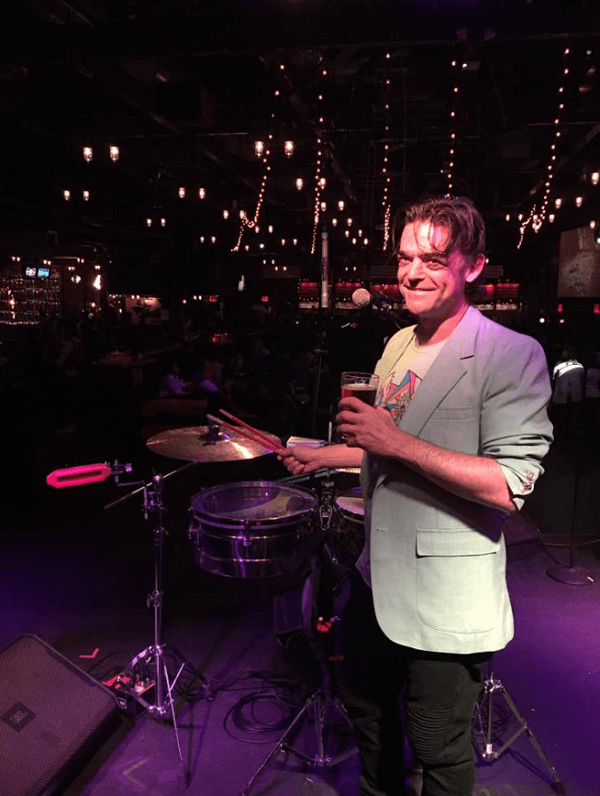
The Williamsburg Salsa Orchestra: electrifying fusion and salsa flavored with indie rock

The Williamsburg Salsa Orchestra is an 11-member musical group that, as the name suggests, uses salsa as its foundation but also mixes it with other genres such as funk and indie rock to make its music distinct. This combination of beats has led the orchestra to be internationally recognized for its explosive arrangements, modern touches, and repertoire inspired by Anglo-Saxon artists.

Today we are here with arranger and percussionist Gianni Mano (founder) and Argentine singer Solange Prat (vocalist) to find out about their beginnings, the current situation of the orchestra, their roles in the project, and much more. 

Solange Prat and Gianni Mano
Argentine singer Solange Prat and American bandleader Gianni Mano

Gianni and Solange’s musical awakening

Gianni began his first address by sharing that his family had some musicians back several generations, but his own interest in music aroused in his childhood. It was then that his parents enrolled him in piano lessons, but his taste for Afro-Cuban and Afro-Caribbean music settled in when he was a teenager, recently moved to Miami to attend college.

In the late 1980s, he got a job at a nightclub, where he discovered hits from great artists who would inspire him in the future, such as Cuban musician and percussionist Carlos “Patato” Valdés. When he listened to the artist, Gianni could hardly credit how wonderful and different it was what captivated his ears.

By the time, the young man was studying percussion focused mainly on classical music, but the impact of those rhythms he had heard was such that he wanted to know much more about them. This led him to move to New York and hire private teachers to know more about salsa, Afro-Cuban, and Nuyorican music, because when heard them, he discovered that this was what he wanted to dedicate himself on an artistic level. He assured us that it is always best to learn music directly from those who play it, so it was the best decision he could take.

The musician assured us that, at that moment, he could not believe the world he was missing, but when he found it, he did not let it slide.

At this point, Solange joined us and said her interest in music began in her native Argentina, where her parents always listened to Gloria Estefan, Juan Luis Guerra, and other artists of this type. On her mother’s side of the family, some relatives played the guitar and a lot of Argentine folk music such as sambas and chacareras, so she had a lot of contact with that music and eventually started singing at a very young age.

Gianni playing live
Gianni Mano playing live at Brooklyn Bowl

Since the girl used to sing all the time, her mother enrolled her in singing lessons until she got her first opportunity in a band at the age of 15. Added to that she spent about six months on a cruise in the Caribbean, and when she came back, she wanted to continue training on an artistic level, but with a focus on the music she had been listening to during her trip. 

Sometime later, she went to visit a friend in New York, and it was there that she met Gianni, who asked her to join The Williamsburg Salsa Orchestra, which was already founded. It was something very new for her, as she had never sung salsa before, but she accepted the challenge anyway, and Gianni served as a mentor for her at all times.

Gianni as an arranger

As for his role as an arranger, Gianni told us that, when he left his previous job to devote himself entirely to music, he spent oceans of time transcribing arrangements of other artists’ songs to see how they worked. He remembers that the first song with which he tried this was one by Tito Puente, but then he did the same thing with hundreds more.

For a long time, he listened to all these pieces hundreds of times to understand the form of a salsa-based song and how it needs to be structured for the enjoyment of the dancer on the dance floor. That is how he began to write his own arrangements, although acknowledging that they were not all that good at first, so he had to practice a lot.

His coexistence with groups of different genres and practice with various types of instruments helped him greatly to master this area in all styles.

Solange Prat singing
Solange Prat singing at the Sofar Sounds New York

The Williamsburg Salsa Orchestra

In 2009, Gianni was making some demos and garnered rave reviews, so he felt ready to start his own musical project, but obviously he could not do everything alone. He began to place ads in online newspapers to recruit artists to join his band, although there was a subject which worried him: language. He told us that he was looking for musicians who mastered both English and Spanish, and in that sense, Solange pleasantly surprised him with her singing ability in both languages. 

The orchestra’s first show was in 2010, which let it to gaining some popularity in the public of the city.

From Solange’s point of view, she describes her arrival in the orchestra as an unexpected event for her career, since in Argentina she had experienced a lot with soul, R&B, and funk. However, this would change with her move to New York, which is when she met Gianni and discovered a whole new world for her until then, but she loved it a lot.

So, she did his best to learn everything she could about this new music and keep up with required level. Gianni played a big role in this, as he taught her how to play certain instruments and gave him CDs from some of the great salsa legends to take them as a guide. 

She closed the subject by saying that moving to New York, meeting these musicians, and becoming part of this new music scene was great and inspiring.

Gianni, Solange, and the rest of the orchestra
From left to right: Angela Ortiz (piano), Rafael Gomez (bass), Jhohan Hernandez (congas), Felipe Fornier (bongo). Solange Prat (voice), Gianni Mano (Percussion), Alex Asher (trombone), John Challoner (trumpet), Jason Prover (trumpet), and Dimitri Modebacher (baritone sax)

How to maintain an 11-piece orchestra alive

Currently, the Williamsburg Salsa Orchestra has 11 members in total. At a time when bands and musical groups are getting smaller and smaller, we wanted to know what Gianni and his artists do to stay together in an environment that pushes them in the opposite direction. 

The percussionist says that one of his greatest dreams was to have a large salsa orchestra, and he has succeeded, but he admits that things were simpler before COVID-19. After that, far fewer people attended salsa dances or were willing to pay for such an event. Still, they have done everything humanly possible to keep the group together, since in the words of Gianni, an orchestra composed of six or seven people does not sound as good or as complete as one with nine or more musicians.

However, he does not deny that they have had some issues with certain venues due to the orchestra’s size, such as small stages or low ability to pay everyone, but in general, club owners and promoters just want a good show and for people to enjoy it. For this reason, they make an effort to hire bands like the Williamsburg Salsa Orchestra because they know what they have to offer.

Read also: Ania Bartelmus from La Candela Flamenco talks about her performance at the Hispanic Heritage Celebration

Carlos “Cano” Estremera was a legendary Puerto Rican salsa singer, widely known as “El Dueño del Soneo” (The Owner of Soneo)

Why “El Dueño del Soneo”?

He earned this nickname due to his extraordinary and almost unbeatable ability for soneo, which is the part of a salsa song where the vocalist has the freedom to improvise lyrics, phrases, and rhymes over the musical base, elevating the track’s energy and the connection with the audience.

El Dueño del Soneo
El Dueño del Soneo

Cano Estremera was famous for his quick wit, rapid rhyming, and extensive vocabulary, qualities that established him as one of the greatest soneros in history, often compared to figures like Ismael Rivera and Héctor Lavoe.

He started in Latin percussion and also with the group Barrio Latino, then he was with Los Pleneros del Quinto Olivo, and later, at the young age of 18, he joined La Orquesta Mulenze, with whom he recorded the track “Mala Lengua” in 1976. The voice that replaced Cano Estremera in Orquesta Mulenze was the great Pedro Brull, who recounts that he had to thoroughly study Cano Estremera’s style to join Edwin Mulenze’s orchestra.

Undoubtedly, one of the greatest successes in Cano Estremera’s career was accepting, in 1978, the invitation to be the lead singer of maestro Bobby Valentín’s orchestra, “El Rey del Bajo” (The King of the Bass).

His first song recorded with Bobby Valentín’s orchestra was the iconic track “La Boda de Ella” (Her Wedding), by the Puerto Rican composer Roberto Angleró, with no suspicion that it would soon become one of the essential elements of Puerto Rican popular culture.

Cano Estremera was famous for his mental agility

Cano Estremera was a unique sonero. He was an artist with an identity and immense talent that was very distinct from the normal or commercial. He established his style from the very first day he became known. There was no style in the genre like “El Cano’s.”

Bobby Valentín was always looking for sound and voices, and Luigi Texidor was leaving the group, and that’s when “Cano” joined with a very different talent.

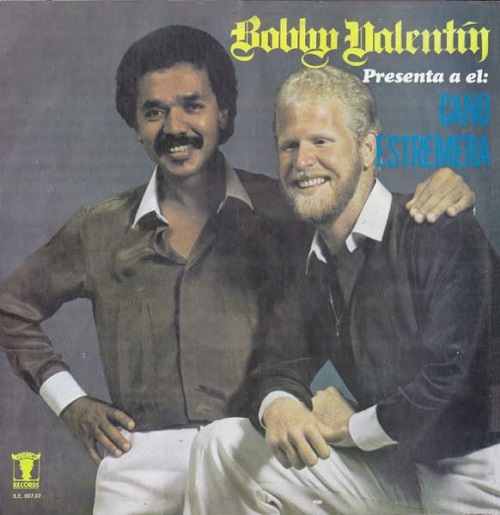
‘Bobby Valentín Presenta al Cano Estremera’ turns 40.

Cano Estremera’s first solo album, accompanied by Valentín’s orchestra. Produced by ‘El Rey del Bajo’ (The King of the Bass) and released by the Bronco Records label (BR-124) on Thursday, October 7, 1982. It includes the hits: Por qué Me Citas, Buen Corazón, El Caimán, Awilda, Casa En El Campo, etc.

'Bobby Valentín Presents Cano Estremera 1984

‘Bobby Valentín Presents Cano Estremera 1984

When he decided to go his own way as a solo singer, Cano Estremera did not have the support of the salsa industry’s machinery at the time. Despite this, with hard work and talent, Cano Estremera decided to fight alone with his music, personally producing everything from his album covers, musical arrangements, tours, and even the distribution of his musical works.

He was always a defender and fiercely protective of the genre. His style and demeanor were always controversial, and that was the magic that captivated his audience throughout his long career—always entertaining, creative, melodious, and above all, prodigious when he stepped onto a stage.

Solo Career: He separated from Bobby Valentín at the end of 1984 to form his own orchestra, further consolidating his career and his title with albums like “Dueño del Soneo”.

Cano Estremera y Dj. Augusto Felibertt

Death: He died on October 28, 2020, at the age of 62, after years of health problems related to pulmonary fibrosis, for which he received a double lung transplant in 2018.

Also Read: The owner of the Soneo’s solo career Cano Estremera

Colombian dancer and instructor Camila Cepeda takes salsa caleña to Canada

Every day there are more Latinos who, with their talent, are gradually taking over various cities in Canada and the hearts of many of its inhabitants. Colombian instructor and dancer Camila Cepeda shows us that she and several of her compatriots have managed to break into the aforementioned North American country and shares with us a little bit of her interesting story.

Dancer and instructor Camila Cepeda
Colombian dancer and salsa caleña instructor Camila Cepeda

Camila’s interest in dance

Camila has danced through life, and since she was a little kid, dance has been very important to her. One genre in particular that caught her attention was salsa caleña, especially since she saw it for the first time with dance groups on the TV show “Colombia’s Got Talent”. From there, more specifically in 2011, she looked for a dance academy where she could learn to dance and imitate what she saw on the screen.

Almost immediately, she realized that it was a very demanding style that required stunts and movements that were not common in more classic versions of salsa. After training in dancing, she did not want to be just an expert in salsa caleña, but many more people learned how to dance it as well, which led her to create a folk dancing group with which she would take her first steps towards teaching.

In addition to salsa caleña, Camila also danced salsa choka, champeta, bachata, merengue, and Colombian folklore. 

Camila dancing at an event
Camila Cepeda dancing in one of her salsa caleña events

Moving to Canada

Initially, Camila’s plans did not include leaving Colombia, but when she knew Canada, she found it an extremely interesting country where she could start something new with dance due to the lack of salsa caleña there. So, she entered the country with a student visa and studied international business at Seneca College in Toronto, with the intention of forming her own company in her new host country.

While gaining business experience through jobs for other companies, she continued to offer classes in parallel. Finally in 2020, in the middle of the COVID-19 pandemic and when she was still a university student, she decided to register and open her dance academy, “Salsa & Sabor.”

During that time, she also validated her teaching in English so that she could give classes to both locals and people from other cultures who spoke the same language.

Camila, Aleja, and Sonia
Camila with dancers Aleja and Sonia

Salsa & Sabor today

Although the academy was started with only online classes due to the sanitary restrictions of that time, Camila was able to gather together a more or less numerous community that allowed her to stay afloat in such a difficult moment. Therefore, when government controls were relaxed, the young woman had no problem to organize dance classes and activities in parks keeping proper social distancing.

A short time later, she could finally open her dance studio, welcome students in person, and recruit other instructors such as Diana, Victoria, Mateo, and Paula. One thing to mention about these five young Colombians is that they were all Camila’s students in the past and, after all the training she offered, they also became experts in the field. Given the pitifully small number of salsa caleña instructors in Canada, when they were ready, she asked them to join her team, and they gladly accepted the opportunity.

This, in turn, helped them to open up more schedules and workshops for many more people, allowing the academy to grow even more.

Camila with her students
Camila with some of her little students

Division of teaching genres and events

As we said at the beginning of this article, Camila also teaches other genres such as salsa choke, la champeta, bachata, and merengue, but her flagship and main rhythm remains salsa caleña. An important difference between salsa caleña and the rest is that it has a well-defined continuity and academic structure, so it takes much longer to learn. The other genres are relatively simpler, so they do not require as many hours or such an elaborate program.

Differences between salsa caleña and traditional salsa

According to Camila, a very important component of salsa caleña is its speed compared to traditional salsa. The way salsa is danced in Puerto Rico, Cuba, or New York is much better known around the world due to its age, while salsa caleña is a little newer and only began internationalizing a few years ago. In addition, traditional salsa is slower and uses the hips and shoulders a lot, while salsa caleña relies heavily on the rapid movements of the feet.

In fact, an important fact to know is that salsa caleña was created from a mistake. It turns out that a group of young people in Cali were doing private parties with LPs by various artists of the time, but they accidentally raised their speed and made the songs sound faster than they should. This led them to create completely new steps and choreographies based on these fast songs, giving rise to what we now know as salsa caleña. 

These parties were called “aguelulos,” a Colombian term to refer to alcohol-free parties or gatherings for young people. 

Read also: Tito Puente Jr.: perpetuating a legacy with its own rhythm

Jose Nogueras and Bobby Cruz Share a Social Message in Salsa

Veteran artists Jose Nogueras and Bobby Cruz have teamed up to create “Yo Soy Tú, Tú Eres Yo” (“I Am You, You Are Me”), a powerful song that celebrates equality, solidarity, and brotherhood among all people. According to a statement from Nogueras, the track delivers a deep and universal message: “Beyond our differences, we share the same dreams, struggles, and hopes.”

Bobby y Jose Por Bella Martínez

Composed by Jose Nogueras, “Yo Soy Tú, Tú Eres Yo” is a clear tribute to hope, love, justice, and unity, all set to a salsa rhythm deeply rooted in Puerto Rican heritage. The unmistakable voices of Nogueras and Cruz encourage us to reflect on the importance of human connection and empathy.

The song blends the classic essence of salsa with a meaningful human message. As is often the case with Nogueras’s compositions, the content resonates with today’s social reality. The arrangement perfectly complements the lyrics with rhythmic power, flavor, and authentic Puerto Rican style. This new release honors tradition while connecting with new generations of musicians and fans alike, thanks to its timeless message.

José Nogueras and Bobby Cruz combine their experience to produce "Yo soy tú, tú eres yo" (I Am You, You Are Me) by Bella Martinez

José Nogueras and Bobby Cruz combine their experience to produce “Yo soy tú, tú eres yo” (I Am You, You Are Me) by Bella Martinez

Nogueras’s lyrics once again confirm that his music serves as a vehicle for unity and hope. Meanwhile, the impeccable musical arrangement by Luis “Perico” Ortiz brings together several generations of great Puerto Rican musicians. The track features the talented Jorge Rivera on bass, interacting with the veteran tumbadora player Sammy Garcia. One of the most promising percussionists of his generation, David Marcano, shines on timbal and bongo. He’s also a member of one of the most respected dynasties in Puerto Rican popular music. On piano is Puerto Rico’s most versatile contemporary salsa artist, Carlos Garcia. The voices of the irreplaceable Josué Rosado and Willito Otero in the chorus seem to welcome back someone we’ve been missing for a while: Aldo Matta. The trumpets were handled by the song’s arranger, Luis “Perico” Ortiz, while Diego Diaz played the trombone.

Bella Martinez Puerto Rico


Also read: Mel Martinez, “I come from Puerto Rico and Puerto Rico is Salsa”

  • « Go to Previous Page
  • Page 1
  • Interim pages omitted …
  • Page 4
  • Page 5
  • Page 6
  • Page 7
  • Page 8
  • Interim pages omitted …
  • Page 402
  • Go to Next Page »

International Salsa Magazine (ISM) is a monthly publication about Salsa activities around the world, that has been publishing since 2007. It is a world network of volunteers coordinated by ISM Magazine. We are working to strengthen all the events by working together.