• Skip to primary navigation
  • Skip to main content

International Salsa Magazine

  • Home
  • Previous editions
    • 2026
      • ISM / January 2026
      • ISM / February 2026
    • 2025
      • ISM / December 2025
      • ISM / November 2025
      • ISM / October 2025
      • ISM / September 2025
      • ISM / August 2025
      • ISM / July 2025
      • ISM / June 2025
      • ISM / May2025
      • ISM / April 2025
      • ISM / March 2025
      • ISM / February 2025
      • ISM / January 2025
    • 2024
      • ISM / December 2024
      • ISM / November 2024
      • ISM / October 2024
      • ISM / September 2024
      • ISM / August 2024
      • ISM / July 2024
      • ISM / June 2024
      • ISM / May 2024
      • ISM / April 2024
      • ISM / March 2024
      • ISM / February 2024
      • ISM / January 2024
    • 2023
      • ISM / December 2023
      • ISM / November 2023
      • ISM / October 2023
      • ISM – September 2023
      • ISM – August 2023
      • ISM July 2023
      • ISM Edition June 2023
      • ISM – May 2023
      • ISM April 2023
      • ISM March 2023
      • ISM February 2023
      • ISM January 2023
    • 2022
      • ISM December 2022
      • ISM November 2022
      • ISM October 2022
      • ISM September 2022
      • ISM August 2022
      • ISM July 2022
      • ISM June 2022
      • ISM May 2022
      • ISM February 2022
      • ISM January 2022
    • 2021
      • ISM December 2021
      • ISM November 2021
      • ISM October – 2021
      • ISM September 2021
      • ISM August 2021
      • ISM July 2021
      • ISM May 2021
      • ISM April 2021
      • ISM June 2021
      • ISM March 2021
      • ISM February 2021
      • ISM January 2021
    • 2020
      • ISM December 2020
      • ISM November 2020
      • ISM October 2020
      • ISM September 2020
      • ISM August 2020
      • ISM July 2020
      • ISM June 2020
      • ISM May 2020
      • ISM April 2020
      • ISM March 2020
      • ISM February 2020
      • ISM January 2020
    • 2019
      • ISM December 2019
      • ISM November 2019
      • ISM October 2019
      • ISM Septembre 2019
      • ISM August 2019
      • ISM July 2019
      • ISM June 2019
      • ISM May 2019
      • ISM April 2019
      • ISM March 2019
      • ISM February 2019
      • ISM January 2019
    • 2018
      • ISM December 2018
      • ISM November 2018
      • ISM October 2018
      • ISM September 2018
      • ISM August 2018
      • ISM July 2018
      • ISM June 2018
      • ISM May 2018
      • ISM April 2018
      • ISM March 2018
      • ISM February 2018
      • ISM January 2018
    • 2017
      • ISM December 2017
      • ISM November 2017
      • ISM October 2017
      • ISM September 2017
      • ISM August 2017
      • ISM July 2017
      • ISM June 2017
      • ISM May 2017
      • ISM April 2017
      • ISM March 2017
      • ISM February 2017
  • Download Salsa App
    • Android
    • Apple
  • Spanish

Search Results for: salsa

El Chinchilla

Europe / Spain

With his characteristic jovial and cheerful nature, just like the Flamenco Rumba he creates and performs, this extraordinary singer, born in Alcázar de San Juan, Ciudad Real, greets us with smiles and hugs, as if we were family or lifelong friends. Perhaps this is one of the keys to Miguel Chinchilla “El Chinchilla’s” success: simplicity and humility through and through.

El Chinchilla
El Chinchilla

Without further ado, to make the most of the limited time available, we begin the interview.

-Chinchilla, when and how did you get started in the art world?

Well, I have to say that before I was a musician, I was a painter. I painted my first oil painting when I was 7 years old, and I’ve never really put down the brushes. I couldn’t start developing my musical side until I managed to save enough money to buy my first guitar. I was 17 then, and from then until now, music has been my whole life, and I dedicate all my energy and time to it.

And when did you create that “magic” fusing Flamenco Rumba with genres like reggae, rock, and ska?

In my early days in music, I had a fusion rock band where we mixed everything imaginable: punk, rock, ska, reggae, flamenco, hip hop, and so on. That way of creating and understanding music is what marked me forever, and to this day, although I have a more defined flamenco and rumba style, my songs always have an open door to fusion, and that’s something I love because it makes me feel free. I don’t like to be pigeonholed or locked in any kind of mental cage.

Photo 1: El Chinchilla

For the album Quejios del Alma, for example, I collaborated with “El Gato” José Luis Morán on the track “Quiere que la Quiera,” and that combination—because, as I always say, Flamenco Rumba and Salsa are like cousins—turned out sensational and full of flavor. It was a real pleasure to share and record that track with “El Gato.”

— You write, compose, and perform your own music. Which of these roles brings you the most satisfaction?

Every part of the creative process for a song has its own charm, but for me, the ultimate payoff is being able to get up on stage and share it with my fans. That’s the most beautiful part—the part that makes everything else worth it. Giving your all on stage, interacting with the crowd, and feeling that energy coming off the stage that feeds back into me from my people… that’s priceless. It’s a one-of-a-kind feeling.

— You’ve released several albums, and with each one, your success grows. In fact, your music is playing on the top radio stations in Spain and even as far as Israel, just to name a couple of places. Why do you feel the need to start preparing a new album when you’ve barely finished the last one? Is your creativity just overflowing?

Well, I wouldn’t say it’s overflowing. The thing is, even if I’ve just finished a track and I’m thrilled with the result—and I’m thinking I’ll finally take a well-deserved break—it’s usually only a matter of weeks before my mind feels the need to let out the new ideas that are bubbling up and I head back into the studio. Maybe one day I’ll learn to relax in that sense, but it certainly won’t be anytime soon because I have this massive urge to tell the world how I feel.

– You’re preparing to release a new single along with its accompanying music video. When will it be released, and where can we see your other music videos, which, by the way, have thousands and thousands of views?

Photo 2: El Chinchilla

That’s right. My new single will be available starting January 2nd, and it will be accompanied by a beautiful music video filmed in Gran Canaria. The song is called “MI TESORO” (My Treasure). For me, the greatest treasure is nothing more and nothing less than the time I have to do with it as I please: come and go, do, undo, fly, live… That’s my treasure, the time I’m lucky enough to have. To see and enjoy my music, just go to YouTube and search for Miguel Chinchilla; that way you’ll find my official channel.

– As we mentioned before, you’re already working on a new album, and what are your expectations for 2017 in terms of concerts?

My expectations now are, initially, to release the songs one by one, giving each one the time it deserves.

As for concerts, I plan to do all the shows that come up along the way, since a whole professional team at my agency is working on that. Above all, I want to enjoy myself with my fans; that’s the ultimate goal.

Photo 3: El Chinchilla in concert

– Now, to say goodbye, Chinchilla… What are your future projects and a message for both your fans and the artists who want to walk the path to success in the art world?

Well, my future project would be to keep going strong in terms of music, living, suffering, and enjoying this tough but beautiful profession. To my fans, I send thousands of kisses and thanks because they help me so much and they are the best.

To people who want to dedicate themselves to this, I’d say that it’s hard and they’ll have a tough time, but if it’s really what they want, they must do things from the heart and persevere because in the end they will achieve their goal. That will be the reward that will make them happy for the rest of their lives.

We say goodbye just as we did when we met, with joy and laughter. El Chinchilla’s vitality is contagious, and that’s exactly what he transmits in his live performances. It’s impossible to remain unmoved at his concerts; it’s impossible to stop dancing and singing because that’s precisely this artist’s objective. Let’s keep an eye on their upcoming performances because they won’t leave anyone indifferent.


Photo 4: El Chinchilla and his group


Don Perignon Y La Puertorriqueña releases his new album ‘‘Classique et Savoureux’’

Today we welcome a friend of the house we have not spoken to in a long time, but who has a lot to tell. We are talking about bandleader and timbalero Pedro Luis Morales Cortijos, artistically known as Don Perignon, whom we have had the pleasure of interviewing after many years.

The artist and his orchestra La Puertorriqueña have released their latest album, ‘‘Classique et Savoureux,’’ which the Puerto Rican musician talks about in this conversation, among many other interesting topics regarding his personal life and career.

Don Perignon with a recognition
Don Perignon receiving recognition by the City of Los Angeles

A long-awaited reunion

When we were last in touch with Don Perignon, he was promoting his latest album, Demostrando A Tiempo, and, of course, much water has flowed under the bridge since then. After having released that album, the artist had many performances and quite emblematic events, such as the previous edition of El Crucero de La Salsa, which welcomed big names including El Gran Combo de Puerto Rico, La Sonora Ponceña, and many more. 

There were also some performances in Puerto Rico and travel to certain parts of the United States, such as Connecticut and New York. At the same time, they were already working on “Classique et Savoureux” and another production. With Christmas approaching, he and his team preferred to shove these projects aside for a while to leave center stage to Christmas music.

Arriving January, they finally got down to work to start the production without further delay. The premiere on digital platforms was held on January 23, and the physical release will be on February 13, but it does not end there, as they are also planning a second release on March 21, on the eve of Puerto Rico’s Día Nacional de La Zalsa. For the same date, vinyls are expected to be ready for collectors who want to buy them.

For the time of this interview, the music had already been recorded, and it was now the singers, including Alex D’Castro, Hermán Olivera, Josué Rosado, and Marcial Istúriz, who were in the studio recording their voices for the album.

Gilberto and Don Perignon
Gilberto Santa Rosa and Don Perignon

Why is the album called “Classique et Savoureux”?

With regard to the curious name he chose for his album, it was a whim of Don Perignon himself, who wanted to recognize and give thanks to the public of France and the French language, from which he adopted the name Don Perignon. The artist has been calling himself that for the last 40 years and has built his career on it. Although the name comes from a famous French champagne, he has never received any claims or lawsuits demanding that he stops using it, which is much appreciated. 

In fact, he got to talk to the person responsible for introducing that champagne in a beverage company in Puerto Rico and understood that Don Perignon’s career and fame in no way damages the brand’s name and reputation.

Authorized biography 

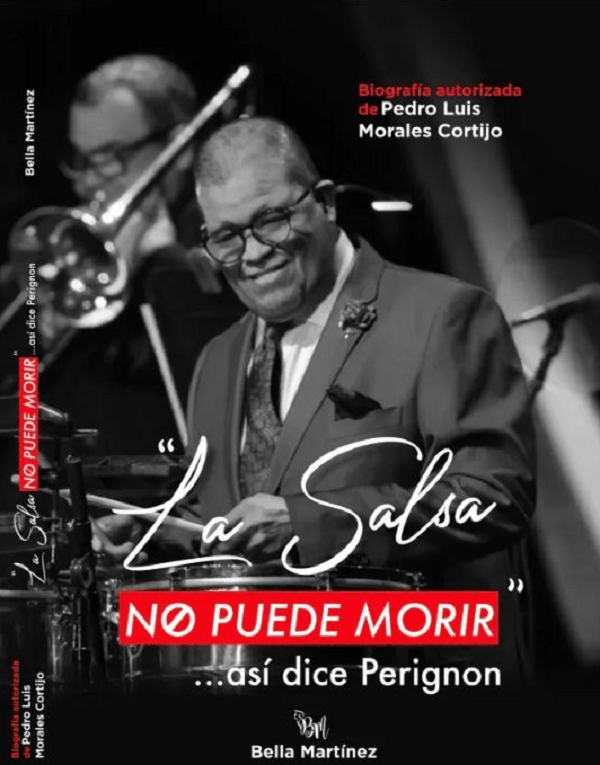
In addition to releasing his album, Don Perignon has also committed part of his time to engage in his authorized biography written by Puerto Rican author and International Salsa Magazine correspondent Bella Martínez. The book tells his story from his childhood to this day and includes the participation of the artist’s great friends and collaborators, including Andy Montañéz, Víctor Manuelle, and Gilberto Santa Rosa.

Some members of his family and other important people in his life also took part in the biography. 

Don Perignon and Victor
Don Perignon and Victor Manuelle

In each and every stage of his life described in the book, music plays a fundamental role given that, in his own words, it is an enjoyment that he has never been able to see as work.

It is titled “La Salsa No Puede Morir, así dice Perignon”, and is now available through platforms such as Amazon. In addition, the cover was designed by Félix Disla, the image is by Alina De Lourdes Luciano, the introduction is by Jaime Torres Torres, and the editorial care is by Robert Tellez M. 

Activities outside of music

Let us remember that Don Perignon was working as a bailiff at the Puerto Rico Department of Justice until April 2023, when he finally retired and was able to dedicate himself in full to music because he finally had time for it. He also pointed out that, should his health permit him, he will be involved in many other collaborations and projects with other singers who want to enter the Puerto Rican market, and he is happy to be able help them. 

Similarly, he assures us that he leaves it all in Our Lord Jesus Christ’s hands, who will let him know that he can achieve all this.

Cover of the book
Cover of ”La Salsa No Puede Morir, así dice Don Perignon”

Read also: Carlos Jimenez offers his talent and passion to charm the audience in universities, hotels, and restaurants all over New York

Caoba Y Bambú, Tito Rivera’s first discographic production

This month’s material is dedicated to the great arranger and trumpeter Ernesto “Tito” Rivera, who year after year has established himself as one of the most respected artists in the Puerto Rican music scene, especially in salsa. Below, we will mention some of the most important facts of his career to date and what he is doing presently.

Important facts of Tito Rivera’s career

One of the greatest contributions the virtuoso Tito has made to music in general has been his pen and the help he has provided to famous orchestras of all time, especially in the 1980s and 1990s. One of these is Roberto Roena y Su Apollo Sound, that to a large extent, is what fans remember today thanks to the Puerto Rican musician’s talented songwriting.

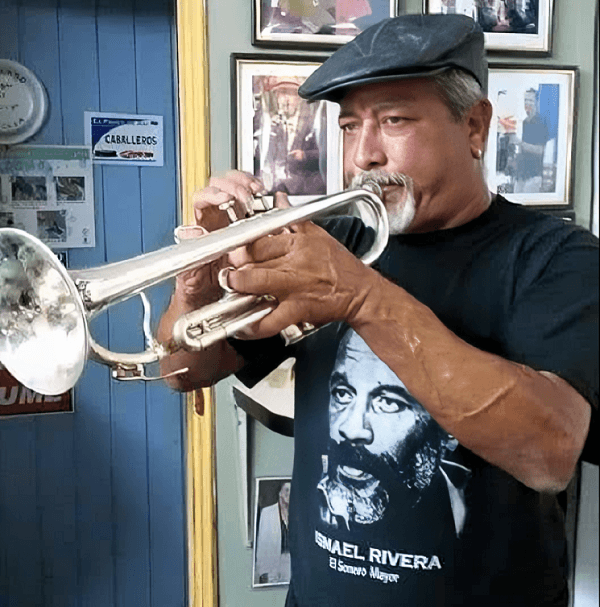
Tito Rivera playing the trumpet
Arranger and trumpeter Ernesto ”Tito” Rivera playing the trumpet

Another orchestra that was strongly influenced by Rivera was La Impacto Crea, which many remember as the group born of Hogares Crea and recorded for Vaya Records under the production of Bobby Valentín. Other groups we can mention on this long list include El Conjunto Borincuba de Justo Betancourt and Tony Yanz Y Su Orquesta Nacimiento.

Similarly, all this talent also gave him the opportunity to collaborate with many big stars, such as Marvin Santiago, who did not doubt to trust the trumpeter who lent his invaluable vision to a number of productions during those years. 

And not only that because Tito also left his mark on several songs by Kim De Los Santos Y Su Orquesta, which achieved impressive success in countries such as Colombia and Venezuela. 

Caoba y Bambú

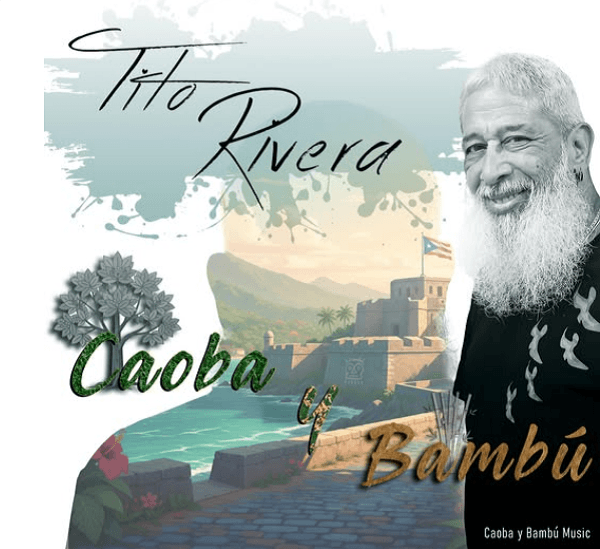
Caoba Y Bambú is Tito’s first album as a leader, which represents a major challenge for the sonero’s career. Once again, he demonstrates all the experience he has acquired over decades through the work of other greats who trusted his judgment at the time. Now it is his turn to work on something of his own to which he could apply everything he has learned over the years.

Cover of Caoba Y Bambú
Cover of the album ”Caoba Y Bambú”

Something very interesting to note about the album is that it brings to life great pieces such as “Musa Y Letra,” which was originally recorded by La Impacto Crea in 1981 for Vaya Records. What changes this time is that the song will be performed by Puerto Rican Jesús “Gumbi” Navedo and Venezuelan Marcial Isturiz. The soneros will also be accompanied by Danny Guzmán’s piano solo. 

The fact that “Musa Y Letra” was chosen as the first preview of the album was not a random decision, since it shows that Tito seeks to build an immediate connection with the most classic salsa fans, which only a song as representative as this one can do.

Although this has been a much talked about piece, it is definitely not the only one worthy of mention. We should also talk about “Plaza Vacante,” which is one of El Gran Combo de Puerto Rico’s best-known songs. However, this time, it will be performed by José Luis “Papa Chu” de Jesús, who will, without a doubt, do a magnificent job like the rest of the vocalists.

Another important addition to the album is “Vete Pa’alla,” which was previously recorded by Bobby Valentín for his album “Rompecabezas,” but on this occasion, it will be performed by the talented Davian Raúl. 

Johnny Cruz ISM


Read also: The 2026 NAMM Show Took Center Stage as Historic Gathering Celebrating the Future of Global Music Industry

Bandleader and conga player Tony Rosa tells us how he built his career

The great percussionist, conga player, and six-time Grammy winner Tony Rosa has honored us with his presence for this February edition, which is full of many interesting things despite being a very short month.

Like so many other artists of this kind, he started very young in this world. Although his musical roots were not so Latin or folkloric, as is common, he ended up falling in love with one of his great passions today: Latin music.

Tony Rosa with his Grammy
Tony Rosa as part of the Latin Grammy Arturo O’Farrill & The Chico O’Farrill Afro-Cuban Jazz Orchestra won

Tony’s beginnings in music

Tony started playing the tumbadora at the age of just 10 in New York, his native city, but when he turned 12, he moved to Los Angeles, California, which is where his formal career as a musician began. It was in Los Angeles that he learned to play percussion, more specifically the conga, in the streets of this new city that welcomed him and his family.

One interesting thing about this is that absolutely everything he knows about instruments he learned by himself, indicating that he did not attend any institution that provided formal training in music. At that time, as a 15-year-old boy, he was already playing for different orchestras and touring with them.

Rock phase

Before becoming integrally involved with salsa, Tony played with some rock bands such as Chicanos. In fact, rock is a genre he still likes very much, and several of his favorite groups are rock bands such as Queen and Santana. However, that phase did not last for ever, and it was not long before, at the age of 16 or 17, he played with orchestras such as Azuquita Y Su Melao. 

In 1997, he moved back to his native New York, where he started collaborating with Conjunto Libre and other groups of salsa and Latin jazz, a genre that was also making him curious.

Tony and Gilberto
Tony Rosa and ”The Salsa Gentleman” Gilberto Santa Rosa

Time with the Afro Latin Jazz Orchestra and Arturo O’Farrill

In 2008, while playing with Manny Oquendo, Tony met orchestra leader, composer, and pianist Arturo O’Farrill, who, after witnessing the great talent he had, asked whether he would be interested in joining his Afro Latin Jazz Orchestra, and he said yes. In total, he spent about nine years playing with O’Farrill and it was over five years ago. In fact, when asked if he knew why the Afro Latin Jazz Orchestra would no longer be playing at Birdland, he said he knew absolutely nothing about it.

After that, the artist found the right time to create his own quintet which he named Tony Rosa’s Afrojazz and with which he has songs such as “Mambo Mongo,” “Nothing Personal,” “Alfie’s Theme,” “Isn’t She Lovely,” and “Rica Mulata.”

Tony, Eddie, and Adan
Tony Rosa, legendary pianist Eddie Palmieri, and producer and arranger Adan Pérez

However, he assures us that his affection for O’Farrill and the orchestra remains intact, and they even played together again in a tribute to Andy González at Saint Peter’s Church in Manhattan. He is also grateful for all the experience he gained there, otherwise he would not have the project he currently manages.

Projects apart from Tony Rosa’s Afrojazz

In addition to his work he does with his Latin jazz quintet, Tony is also recording with another musical group called Los Amigos, with which he recently released an album.

And about tours and performances at arenas and well-known venues, he says he does not know yet what he will be doing in the coming months. However, he expects things to start moving as the year progresses.

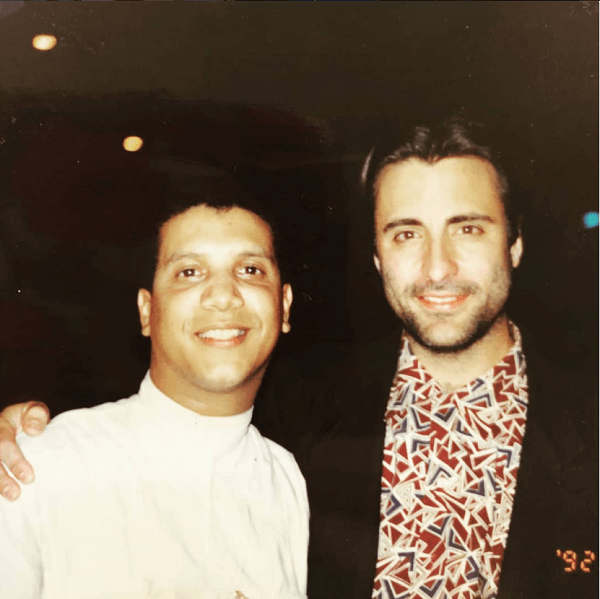
Tony and Andy
Tony Rosa and Cuban-American actor Andy García in 1992

Read also: Bandleader Arturo O’Farrill leaves behind Birdland to look for other opportunities

North America – February 2017

Chicago International Salsa Congress thubnails - North America - February 2017

  • « Go to Previous Page
  • Page 1
  • Interim pages omitted …
  • Page 58
  • Page 59
  • Page 60
  • Page 61
  • Page 62
  • Interim pages omitted …
  • Page 393
  • Go to Next Page »

International Salsa Magazine (ISM) is a monthly publication about Salsa activities around the world, that has been publishing since 2007. It is a world network of volunteers coordinated by ISM Magazine. We are working to strengthen all the events by working together.