• Skip to primary navigation
  • Skip to main content

International Salsa Magazine

  • HOME
  • Previous editions
    • 2026
      • ISM / March 2026
      • ISM / February 2026
      • ISM / January 2026
    • 2025
      • ISM / December 2025
      • ISM / November 2025
      • ISM / October 2025
      • ISM / September 2025
      • ISM / August 2025
      • ISM / July 2025
      • ISM / June 2025
      • ISM / May2025
      • ISM / April 2025
      • ISM / March 2025
      • ISM / February 2025
      • ISM / January 2025
    • 2024
      • ISM / December 2024
      • ISM / November 2024
      • ISM / October 2024
      • ISM / September 2024
      • ISM / August 2024
      • ISM / July 2024
      • ISM / June 2024
      • ISM / May 2024
      • ISM / April 2024
      • ISM / March 2024
      • ISM / February 2024
      • ISM / January 2024
    • 2023
      • ISM / December 2023
      • ISM / November 2023
      • ISM / October 2023
      • ISM – September 2023
      • ISM – August 2023
      • ISM July 2023
      • ISM Edition June 2023
      • ISM – May 2023
      • ISM April 2023
      • ISM March 2023
      • ISM February 2023
      • ISM January 2023
    • 2022
      • ISM December 2022
      • ISM November 2022
      • ISM October 2022
      • ISM September 2022
      • ISM August 2022
      • ISM July 2022
      • ISM June 2022
      • ISM May 2022
      • ISM February 2022
      • ISM January 2022
    • 2021
      • ISM December 2021
      • ISM November 2021
      • ISM October – 2021
      • ISM September 2021
      • ISM August 2021
      • ISM July 2021
      • ISM May 2021
      • ISM April 2021
      • ISM June 2021
      • ISM March 2021
      • ISM February 2021
      • ISM January 2021
    • 2020
      • ISM December 2020
      • ISM November 2020
      • ISM October 2020
      • ISM September 2020
      • ISM August 2020
      • ISM July 2020
      • ISM June 2020
      • ISM May 2020
      • ISM April 2020
      • ISM March 2020
      • ISM February 2020
      • ISM January 2020
    • 2019
      • ISM December 2019
      • ISM November 2019
      • ISM October 2019
      • ISM Septembre 2019
      • ISM August 2019
      • ISM July 2019
      • ISM June 2019
  • Spanish
  • Download Salsa App
    • Android
    • Apple

Search Results for: salsa

Kizomba Conquering the World of Salsa

North America / USA /

These are some of the things I learned about Kizomba when my boss told me to write about it: Its official language is Portuguese; I bet you didn’t know that, either.

See, even when we thought we knew about this music genre, because we hear it at parties, get together or social events; as a Caribbean music, known by its movements that are alike the common Latin rhythms, it actually comes from Angola; a country in Southern Africa, near Namibia; and its official language is Portuguese.

Kizomba Conquering the World of Salsa

That is why the first and most popular Kizomba songs are in Portuguese.

Diogo Cão was that responsible Portuguese explorer to discover Angola and to determine its official language and culture. Who could possibly know that after the colonization era, MUSIC would be that one thing capable of combining cultures and mixing beats taste between humans? Kizomba is a clear example of that. Another fun fact is that its name comes from Kimbudo; which means ‘party’, maybe that’s why it’s so exciting to dance it.

It’s good to know that its characteristic for its slow and sensuous rhythm, came with a mixed touch of African rhythm and Haitian Kompa, until it became the one we know now a day. In the 1990s, when the actual Kizomba got more and more popular, Angolan semba dancers started to adapt their semba steps, according to the tempo and flavour of the Kizomba beats.

Dancers
Dancers

Back in the 60’s, the big parties were referred as: “Kizombadas”; since at that time, Kizomba wasn’t really “Kizomba”. Imagine calling your own parties like that, funning right? Many other dance styles from other continents were also enjoyed, since the rest of Africa received the influence of many other cultures; as a result of African rhythms and European styles.

As Angola did with Portugal. During the years, it has spread ALL AROUND THE WORLD; to countries like: England, France, Spain, Poland, Denmark, Belgium, Sweden, Belarus, Lithuania, Egypt, Switzerland, Serbia, Canada and the United States of America. And now, we hear it in South America, through all these famous artists like: Prince Royce, Romeo Santos and Juan Luis Guerra.

Not always was Kizomba defined, as we know it today. See, through the years, it has been confused with other genres like Cape Verdaen; which turned out to be the first similar rhythm before Kizomba was, what it is today. Many immigrants confused Cape Verdaen rhythm with Kizomba vibes, back in the 80’s. This genre comes from Cape Verde, in Africa; where the official language is Portuguese as well, and their movements are very similar.

Photo 2: Dancers
Photo 2: Dancers

Another interesting fact that I learned about the origin of Kizomba, was its first popular name, “Zouk”. It is good to know that this term represents the origin of Cape Verdaen and Kizomba, because people used to call every type of music by this name. Now with the other name, Kizomba, people can tell them apart. In the history of Kizomba, we will find the popular Brazilian Zouk dance, evolved from a dance called Lambada.

In this following video you could see how to dance Zouk and Lambada https://www.youtube.com/watch?v=BlK5oIjVNfM By HOWCAST

https://www.youtube.com/channel/UCSpV HeDGr9UbREhRca0qwsA

I know what you are thinking; How many dance types come from the same one? That in fact is the magic of Kizomba; it involves so many rhythms and cultures and that’s why it as special and popular, as it is today.

Photo 3: Dancers
Photo 3: Dancers

Lambada, was a dance that took over most night clubs in Brazil; especially, in Rio de Janeiro. In the mid 90’s, Brazilians discovered Zouk from the French Caribbean; which had many similarities with Lambada, because of its Caribbean rhythm influence.

Soon, Lambada started to adapt to Zouk. However; Zouk’s rhythm was slower than the Lambada, so it was necessary to make alterations to the dance, including to its basic steps.

All Zouk professionals then decided to call Lambada style, Brazilian Zouk (Zouk Brasileiro); with the objective to protect their culture and also with the objective, not to interfere with different culture’s interpretations of Zouk.

Ghetto Zouk Dance is one type of Zouk that a couple dances to, very closely with higher dynamics, fun, flow and precision, that follows the ghetto Zouk beat. It combines the basic Kizomba steps and techniques, with faster rhythm in footwork, requiring firm posture and higher level of power, pressure and movement control from both partners.

In the Ghetto Zouk Dance, both partners share the same amount of pressure, tension and impulse which makes, especially the ladies, be more involved in the dance. It also improves the communication between partners and helps them to maintain the flow. Ghetto Zouk Dance uses syncopated rhythm more often to better reflect the beat. In practice, it is demonstrated by faster footwork than the one of Kizomba and higher overall dynamics of the dance.

Unlike very soft movements of Kizomba, Ghetto Zouk Dance applies more energy and extension, while still emphasizing the precision of the movement.

In this link https://www.youtube.com/watch?v=7n9p DcSGwgg you will see how to dance Guetto Zouk step by step. By GHETTO ZOUK DANCE & KIZOMBA PRAGUE https://www.youtube.com/channel/UCA6q QHYwbcfaIQNL23tKk-A

Kaysha dancing
Kaysha dancing

Knowing its steps, in some places of the world, Kizomba is known as African Tango. The body position is very similar to the Argentine Tango, with the upper body leaning forward with head touching at times.

The lower body, particularly the hips, is very fluid using forward, backward and circular movements, in connection with the partner. Like salsa, dancers can break apart and perform ‘solo’ movements.

Everything we learned today about this music genre and its origin leaves us the knowledge that cultures were made to mix up, to blend with others and to spread their believes. Music is that one thing supposed to teach us, how to enjoy life and make dancing as special as it is. The different styles and movements make us feel part of their culture and origin.

Involving all tastes and rhythms, known by its slow, insistent, somewhat harsh, yet sensuous rhythm, as the result of electronic percussion, some of the most popular Kizomba and Zouk artists of all times are:

Kaysha, the Democratic Republic of the Congo (1974 – present):

Kaysha is a French-based musician originally from the Democratic Republic of Congo. His music is a blend of styles such as kizomba, rhumba, zouglou, zouk, zouk love, calypso, R&B, and hip hop. Kaysha is also a successful music producer, having produced songs for some of the bestknown artists on the Afro-Caribbean scene, including Passi, Solaar, Jacob Desvarieux, Soumia, Lynnsha, Elizio, and Ludo.

Kaysha
Kaysha

Elizio, aka Mister ODC (Original Di Cabo Verde):

He is a singer-songwriter, born in Angola in 1979; of Cape Verdean origin. Revealed with the title 10 fois, 100 fois featuring Perle Lama in 2003, Elizio quickly meets his first big solo success with Melodia which leads him to the top of the zouk scene. The artist then connects the tubes and expands his musical universe with more than 70 titles, ranging from general dancefloor with sounds like Bad Man on Kizomba with Angel or Make love on tempo in particular, through the kuduro as Sabi Di Mas.

Elizio - Kizomba
Elizio – Kizomba
  • Anselmo Ralph Andrade Lamb (born 1981 in Luanda, Angola):

Better known as Anselmo Ralph; is a singer of R&B, Soul and Kizomba. In January 2006 he released his first album titled “Love Stories”. That year he was nominated by the Channel O Music Video Awards in the “Best R&B” and “Best Director” categories, and by the MTV Europe Music Awards 2006 in the “Best African Artist” category.

Anselmo Ralph - Kizomba
Anselmo Ralph – Kizomba

In 2012, Coca-Cola announced a promotional campaign featuring Ralph, their first with an Angolan artist. As of January 2013, Ralph was touring the Benguela region of Angola to promote his album “Best of Anselmo Ralph”, which premiered the month before in the #5 position on the Portugal Albums Top 30 chart.

  • Nelson Freitas was born and raised in the Netherlands, with creativity and talent he constantly tries to refresh the world of Zouk music. In 1997 the compilation CD of “MOBASS Presents” was released featuring the track, “Hoje em Dia” (Now a Days), which officially launched Quatro Plus (formerly known as Quatro) in the market. As one of the lead singers of the group, Quatro Plus went on to release three successful albums “4-Voz” (Four Voices) in 1998, “Bem Conche” (Get to Know Us) in 2002 and “Ultima Viagem” (Last Voyage) in 2005.
Nelson Freitas - Kizomba
Nelson Freitas – Kizomba

In almost a decade, Freitas has earned what’s rightfully his as he is of the most admired and respected producers, singers and writers in the Cape Verdean as well as the Zouk music industry. With a blend of Cape Verdean Kriol and English lyrics, a twist of R&B and hip-hop incorporated with Zouk and traditional Cape Verdean music. With all these ingredients Nelson made his solo album called “Magic” In October 2006.The album sold over 25.000 copies worldwide.

  • Don Kikas, born Emílio Camilo de Carvalho, is an Angolan singer from the city of Sumbe in the southern Angolan province of Cuanza Sul. In 1997, Don Kikas released his second album, Pura Sedução which was silver in Portugal. That same year, the album’s Esperança Moribunda song received the “Music of the Year” award granted by the Rádio Nacional de Angola (national radio station). By this time, invitations were extended for Kikas to perform at international level. His third album, Xeque Mate, released in December 1999, produced a totally-renewed Don Kikas as it included songs recorded in three different countries and featured foreign musicians as well.
Don Kibas - Kizomba
Don Kibas – Kizomba
  • Soumia is of Moroccan origin and was born on August 27, 1977 in Saint Mandé in Paris. She made her appearance onto the music scene first in 1998 singing a duet with Talina on the RUBIZOUK compilation album. Since then, she has been featured in numerous compilations including ZOUK R&B VOLUMEs I, II & III; TROPICAL HIT MACHINE and SECTION ZOUK. She released her first album STILL IN LOVE in 2002 and her hits include Mes Sentiments; Trahison; and Avec des si ou Rendez moi.
Soumir - Kizomba
Soumi – Kizomba

5th Annual Tricities Salsa Congress 2017

North America / USA / Washington

Come and enjoy the 5th Annual Tricities Salsa Congress at the Kennewick Red Lion, this September 22 – 24. This is one of the largest Latin events in eastern Washington with instructors from D.C., L.A. and Portland. Discounted passes are on sale now. Prices will be higher at the door. Friday and Saturday Nights Social passes will be sold at the door.

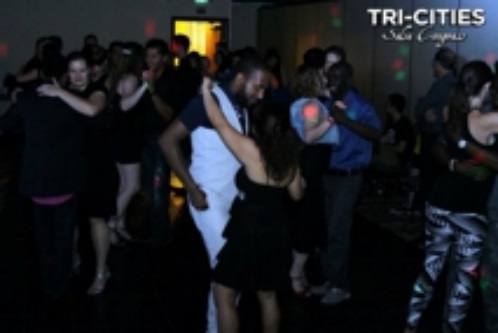
Dancing in 5th Annual Tricities Salsa Congress 2017- Photo 2

Don’t miss out on this spectacular event!!!!

  • 2 full days of workshops on Saturday and Sunday.
  • 2 workshop tracks to choose from each hour.
  • Social dancing Friday and Saturday night. 3 separate party rooms: a Salsa/Bachata ballroom, a Kizomba ballroom, and the Cumbia Party Room

Tickets: Full Pass $99.00 + $3.47 FEE (Including access to all workshop, performances and socials)

Hotel The Red Lion Hotel at Columbia Center

Hotel The Red Lion Hotel at Columbia Center is located within walking distance of Columbia Center Mall and numerous restaurants in Kennewick, WA Venue 1101 North Columbia Center Boulevard, Kennewick,WA 99336.

Instructors

Eddy vents (Portland, or):

Eddy Vents was born in Guinea – Bissau and raised in Portugal. Growing up part of the Palop Community, Eddy always felt electrified by Kizomba. In 1998, he began his career as a promoter in Lisbon which he continued after moving to London in October 2009.

Eddy Vents - 5° Congreso Anual de Salsa Tricities 2017 Flyer 2
Eddy Vents – 5° Congreso Anual de Salsa Tricities 2017 Flyer 2

Eddy’s immense love, passion, and knowledge of Kizomba were recognized by respected Kizomba teacher Norma Facey and Eddy humbly credits her for starting his teaching career around March 2010.

Eddy is known for a teaching style submerged in history and musicality which he believes are fundamental in producing top quality dancers and he is condent the success of his method is demonstrated each time his students take the dance floor

Erica Saucillo (Los Angeles, CA):

Erika Saucillo was born and raised in Los Angeles, California. She started dancing at the young age of four. Throughout the years, she trained in various dances such as folkloric, jazz, and hip-hop.

Erica Saucillo (Los Ángeles, CA): - 5° Congreso Anual de Salsa Tricities 2017 Flyer 1
Erica Saucillo (Los Ángeles, CA): – 5° Congreso Anual de Salsa Tricities 2017 Flyer 1

Erika began her Latin dance journey at the age of 21 when she first trained with “Alma Latina Los Angeles” directed by the world renown Sergio Jasso and Gaby Equiz. Erika quickly became the director of one of the largest Salsa/Bachata team in Los Angeles, “Quest Salchata Crew”. She is currently one of today’s top rising instructor & performer. Erika is a champion and top finalists at some of the world’s most important Latin dance competitions. She won the 3rd place in the World Latin Dance Cup Cha Cha Cha division, 2nd in the Top Female Bachata Social Dancer, and won first place at the 2016 LA top Female Salsa Social Dancer.

Oscar B.A. (Washington DC):

Oscar B.A is one of the pioneer ambassadors of Kizomba in the US. Currently based in the Washington, DC area, he has taught Kizomba workshops in some of the biggest Latin Dance festivals including The DC Bachata Festival, Flirt Seattle, and Reno Winter Bachata Festival. A sought after nonpareil dance instructor, he has been invited to run Kizomba boot camps by dance companies in Los Angeles, CA, Seattle, WA, Reno, NV and more.

Oscar currently teaches the longest running Kizomba dance classes in the DC, MD and VA Metropolitan area. Oscar’s career spans over 16 years of dancing, choreographing and instructing several dance disciplines. With roots in African dance, hip-hop, and Latin movement, Oscar founded the premier dance company Ollover!

Mario Vargas (Seattle, WA):

Mario was born in Nicaragua and raised in Miami. After moving to Seattle in 2012, Mario began dancing salsa and bachata and performed in various dance teams. After immersing himself in dance, Mario started teaching in 2013 and is currently teaching salsa and kizomba at the Salsa N Seattle studio. He has taught at numerous dance events including Vancouver (Canada), D.F. (Mexico), LA, and Washington DC. In addition to teaching, he hosts a weekly kizomba social on Wednesdays at the SNS studio. Mario will be teaching Kizomba at the 2016 Tri-Cities Salsa Congress with Shannon Urza.

And much more will be there…

DJS 5 Djs in scenes featuring during the weekend…

Djs Photo 2
Djs Photo 2
Djs Photo 1
Djs Photo 1

Mary Lyons (DJ Farenj) – Seattle, WA

Originally from the Boston area, Mary was exposed to “Kizomba” music by her Cape Verdean brother-in-law before it was popular in the United States dance community. Attending family gatherings in the 1990’s first introduced her to the music and culture of the Cape Verdean islands.

Not until 2011, did she discover the Angolan dances, kizomba, and Semba, which accompanied some of the beautiful music, she was already in love with. Further investigation and immersion into this music genre, extended her love and interest to the roots and culture of Angolan Kizomba and Semba. Mary regularly DJ’s at Century Ballroom in Seattle, as well as festivals including The White House Kizomba/Zouk Summit, Only Dance Seattle Festival, Seattle Salsa Congress, Seattle Bachata Kizomba Festival, and Tri-Cities Salsa Congress.

Dancing in 5th Annual Tricities Salsa Congress 2017- Photo 3

Sonido Marakero Tri-Cities, Wa

Sergio Luna Rocha aka Sonido Marakero is from Mexico City and lives currently in Pasco, WA with his family. Sonido Marakero loves to dance to cumbia, bachata and salsa music. He has enjoyed playing music since he was a young kid and has perfected his talent. He plays music around the area of Tri-Cities, Seattle, Yakima and Walla Walla. Sonido Marakero is a happy individual who loves to make other people dance on the dance floor. Come out and have a wonderful night and dance to the music played by Sonido Marakero. Look forward to seeing everyone having a wonderful time.

5th Annual Tricities Salsa Congress 2017 Flyer 3

To get more information about 5TH ANNUAL TRI-CITIES SALSA CONGRESS 2017 in Kennewick – Washington, visit: http://www.tricitiessalsacongress.com

Tito Nieves’ concert “50 Años, La Historia” made it clear that ‘Salsa Lives

On Saturday, May 17, 2025, Tito Nieves celebrated half a century of a successful musical career at the Coliseo de Puerto Rico (El Choliseo) with a massive concert titled “50 Años, La Historia,” part of his “Mi Último Tour” (My Last Tour) tour.

Tito Nieves smiles in front of a packed coliseum

Music started powerfully around 9:00 p.m. with “Señora Ley” (Lady Law), followed by “Mañana es Domingo” (Tomorrow is Sunday). This led into a medley of songs Tito popularized before going solo: “El Pregonero” (The Town Crier), “El Piragüero” (The Shaved Ice Vendor), and “Panadero” (Baker), all penned by Ramón Rodríguez. In this first segment, the honoree was joined by Rodríguez and Norberto Vélez, setting the theme for the show, where Nieves was accompanied by various guests.

Tito Nieves bid good evening shortly before asking the audience to record the concert, asserting it would be the first and last time he would perform solo at the Coliseo de Puerto Rico for a historic concert that the singer declared was “sold out.”

The soloist demonstrated the evolution of his career, moving to the next stage of his journey, which included the songs “Quiero Perderme Contigo” (I Want to Get Lost with You) and “El Amor Más Bonito” (The Most Beautiful Love). Before starting “Perdido en la Oscuridad” (Lost in the Darkness), Tito stated that during one of the most difficult stages of his life, he asked José José for permission to record it. “Un Tipo Común” (An Ordinary Guy) preceded Tito’s spoken interlude, during which he requested “a big round of applause for Ismael Miranda ‘the eternal handsome boy,’ who is with us tonight.”

For the next segment, Gilberto Santa Rosa and Gerardo Rivas joined Tito Nieves for the song “Soy” (I Am). Gilberto explained that he and Tito Nieves have been musical brothers for over forty years, shortly before saying, “Tito and I are family,” a phrase that led into the performance of “La Familia” (The Family).

The next stage featured a medley of hits including “Sueño” (Dream) and “Lo Que Son Las Cosas” (What Things Are Like). From this same solo period, “Manías” (Obsessions) and “No Me Queda Más” (I Have Nothing Left) stood out. Tito Nieves’ voice was recorded on several of the few salsa lyrics in English. For the concert, Tito brought to life “I’ll Always Love You,” “Celebration,” and “I Like It Like That,” with which he later bid farewell.

Tito paused during the concert to dedicate the song “Gracias Madrecita” (Thanks, Little Mother) to his late mother, Victoria Nieves.

The next guest, Rey Ruiz, “the salsa heartthrob,” performed “Almohada” (Pillow) with Tito, then sang “Mi Media Mitad” (My Other Half) to a bolero rhythm before transitioning to the same song in its usual salsa tempo, which is how it became popular. The turn of also invited Carlos García brought him to the stage to sing “No Me Vuelvo a Enamorar” (I Won’t Fall in Love Again) as a duet with Tito.

Shortly after, Tito Nieves continued singing his most notable hits, including “Déjame Vivir” (Let Me Live) and “Tuyo” (Yours). When it was José Alberto “El Canario”‘s turn, he sang “Le Gusta Que La Vean” (She Likes to Be Seen) with Tito Nieves and “Baila Que Baila” (Dance, Dance) solo. For this particular performance, dancers and choreographers Flavia Tamara Livolsi and Tito Ortos Gutiérrez were in charge of the dance that connected with the guest’s music, who also performed his characteristic “flute” solo, without a flute.

The super orchestra accompanying El Pavarotti de la Salsa

For the song “Fabricando Fantasías” (Manufacturing Fantasies), Tito Nieves took the stage accompanied by 9 child choristers; both the singer and the choristers were dressed in white. Tito sang alongside a hologram of his deceased son, whose passing preceded the song’s release; for the concert, this led into “Un Amor Así” (A Love Like That) and “Soy Cantante” (I Am a Singer).

Continuing with the idea of being accompanied by his guests, Tito Nieves welcomed Tony Vega to the stage to perform their duet and give voice to “Tú Por Aquí, Yo Por Allá” (You Here, Me There), shortly before Tony performed “Aparentemente” (Apparently). Once Tony’s participation concluded, Tito returned to the stage dressed in blue to perform “Te Amo” (I Love You) and “Más Que Tu Amigo” (More Than Your Friend).

Tito Nieves y Daniela Darcourt

Immediately after, Tito Nieves commented: “In salsa, we’ve had Celia, La Lupe, Graciela, India…”, as he welcomed one of the new salsa promises: Daniela Darcourt. With her, he sang “Si Tú Te Atreves” (If You Dare) shortly before suggesting his “musical daughter” perform the soloist’s new single, titled “La Sinvergüenza” (The Shameless Woman).

The concert’s peak was reached during the performance of “De Mí Enamórate” (Fall in Love with Me) and “Sonámbulo” (Sleepwalker), songs with which the artist demonstrated that the voice that earned him the title of “The Pavarotti of Salsa” remains intact.

Next, Tito and his wife—Janette Figueroa, the self-proclaimed “toxic one”—showcased their influencer skills, leading into a theatrical interlude of their interaction with the public during the COVID-19 lockdown: “Conversa con Tito” (Talk with Tito). For this, the couple was accompanied by the new talents Daniela Darcourt and Christian Alicea. Once the micro-theater segment concluded, the production celebrated the sold-out status by presenting a plaque indicating the exclusive status, after congratulatory greetings to Nieves from Víctor Manuelle, Rubén Blades, and Marco Antonio Solís were projected.

It was at this moment of various congratulations that it was demonstrated that ‘Salsa Lives’in the key of fierce salsa. For this, Christian Alicea joined Tito Nieves’ vocal and stage mastery, contributing with his voice and an energetic conga solo.

At 12:40 a.m. on May 18, the concert hosted by “The Pavarotti of Salsa,” accompanied by his super orchestra, concluded with the same power it began, though in English and to the beat of “I Like It Like That.” For the closing, the dance corps, made up of Tito Ortos, Tamara Livolsi, Christina Reyes, and Yadiel Carrasco, complemented the interpretive energy with which Humberto “Tito” Nieves once again demonstrated the connection he has maintained with the salsa audience, regardless of the language he sings in.

Bella Martinez Puerto Rico

Photographs By: Francisco J. Rivera Rosado Photographs

Also Read: Oscar Rojas Oscar Rojas has 54 years of musical career full of passion, rhythm and flavor

Toronto Dance Salsa Canada’s Largest Salsa Dance School

North America / Canada / Toronto

A place where you are welcome with open arms, people don’t judge you but look to understand you, value you for the special person that you are. Toronto Dance Salsa, Canada’s largest salsa dance school.

“Beautifully taught with careful attention to the appropriate tempo for the class. Atmosphere was excellent with structure and solid teaching while keeping it fun. The timing just before sunday social is great too – one reason I did the class was to provide the nudge to turn up to social” Student Testimonial

Flyers - Toronto Dance Salsa Canada's
Flyers – Toronto Dance Salsa Canada’s

All of the instructors have a lot of experience, enthusiastic and passion for Salsa. Besite Toronto Dance Salsa staff, they count with a big family of 60 volunteers who are committed to assisting the students.

Their volunteers are current or former senior Toronto Dance Salsa students who have caught the salsa bug and hold a great passion for sharing their love of salsa with others. All the classes have at least 6 volunteers who take their own time to walk around the room providing advice and guidance during the lesson and are also available to join the rotation if they have an absent student which assists them in maintaining an even number of male and female dancers in each lesson.

If you are interested in becoming a volunteer, visit http://www.torontodancesalsa.ca where you can find all the requirements.

Their students are constantly contacting Toronto Dance Salsa instructors through [email protected] so the can share with them how Toronto Dance Salsa changed their life.

“Toronto Dance Salsa has changed my life because it helped me tackle my fear of dancing and rebuild my confidence. I had an extremely rough year and my confidence was already at “rock bottom”. Student story

Photo of Salsa Dance School - Toronto Dance Salsa Canada's
Photo of Salsa Dance School – Toronto Dance Salsa Canada’s

If you live in Toronto and want to learn how to dance Salsa, don’t hesitate to visit Toronto Dance Salsa http://www.torontodancesalsa.ca where you can find all the information about you are looking for about lessons, volunteering, events, instructors and much more.

  • Address: 5095 Yonge Street, 2nd Floor, Toronto, ON
  • Intersection: Yonge between Finch and Sheppard
  • Subway: Right on top of North York Civic Centre Subway
  • Parking: 2hrs free validated customer parking

Orange County (OC) Salsa with Esteban Conde

North America / USA / California

Salsa dance classes in Orange County by Esteban Conde, no partner or experience needed. Weekly and weekend Salsa and Bachata classes at the Costa Mesa dance studio. Salsa classes and dance instruction will give you the tools to learn how to dance salsa in no time.

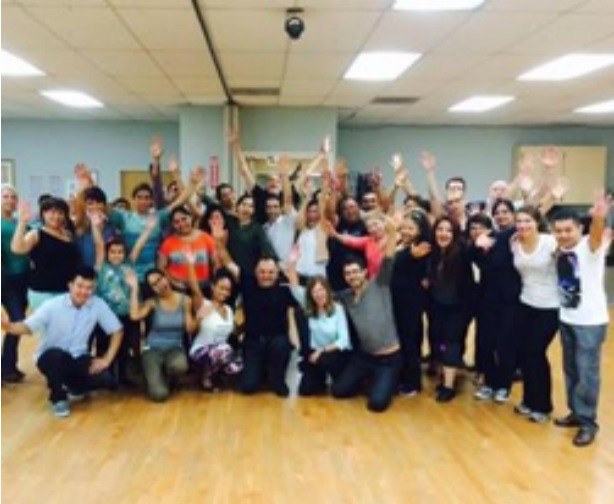
Photo 1 - Salsa dance classes in Orange County
Photo 1 – Salsa dance classes in Orange County

The goal is to help you go from classes to dancing fast! And you will not only learn how to dance, but make great friends, increase your confidence and add joy to your life. Come give these salsa and bachata classes a try!

Salsa, Bachata, Salsa Parties and Events

  • Saturday Salsa Class: Every Sat 4:40pm-5:30pm Come and learn how to dance SALSA and have fun! This class teaches the basics and new moves each week. Don’t miss it Beginner level, no partner needed at 2980 Mcclintock way ste a and b, Costa Mesa, 92626. $15


  • Monday & Thursday Salsa: Class Every Monday and Thursday evening are the nights for Salsa classes. No partner or experience needed. Fun and Friendly atmosphere! Class starts at 8pm. No reservation needed. Each class is $15, with discounted prices for packages and monthly membership options. Come check us out!


  • Monday and Thursday Bachata Class: OC Salsa Studio, 2980 McClintock way, Costa Mesa. Bachata Class 7-8 every Monday and Thursday, rain or shine. Beginner level class, no partner, registration or experience needed. $15, this class covers basics and steps and specializes for those with 0 experience and new to dancing altogether.
Photo 2 - Salsa dance classes in Orange County
Photo 2 – Salsa dance classes in Orange County

“I’ve always loved latin music and wished I could dance. Deciding to give it a try, i tried a free class with Esteban and crew at OC SALSA. What a pleasant surprise to feel so comfortable and welcome with a group I didn’t know, doing something I had never done. It was fun, great exercise, and I couldn’t wait for the next session. I was hooked because the instructors and atmosphere make it so easy to learn, you get plenty of personal attention, and can learn at your own pace”.

“Nice people, high quality instruction, and very reasonable cost. If you want to try, improve, or perfect latin dance, this is the place for you!” Student Testimonial

OC Salsa at 2980 McClintock way # A & B, Costa Mesa, 92626 2980 McClintock Way, Costa Mesa, CA 92626, EE. UU. Call On: 949-813-0412 [email protected] http://estebanconde.com

  • « Go to Previous Page
  • Page 1
  • Interim pages omitted …
  • Page 7
  • Page 8
  • Page 9
  • Page 10
  • Page 11
  • Interim pages omitted …
  • Page 402
  • Go to Next Page »

International Salsa Magazine (ISM) is a monthly publication about Salsa activities around the world, that has been publishing since 2007. It is a world network of volunteers coordinated by ISM Magazine. We are working to strengthen all the events by working together.