• Skip to primary navigation
  • Skip to main content

International Salsa Magazine

  • HOME
  • Previous editions
    • 2026
      • ISM / March 2026
      • ISM / February 2026
      • ISM / January 2026
    • 2025
      • ISM / December 2025
      • ISM / November 2025
      • ISM / October 2025
      • ISM / September 2025
      • ISM / August 2025
      • ISM / July 2025
      • ISM / June 2025
      • ISM / May2025
      • ISM / April 2025
      • ISM / March 2025
      • ISM / February 2025
      • ISM / January 2025
    • 2024
      • ISM / December 2024
      • ISM / November 2024
      • ISM / October 2024
      • ISM / September 2024
      • ISM / August 2024
      • ISM / July 2024
      • ISM / June 2024
      • ISM / May 2024
      • ISM / April 2024
      • ISM / March 2024
      • ISM / February 2024
      • ISM / January 2024
    • 2023
      • ISM / December 2023
      • ISM / November 2023
      • ISM / October 2023
      • ISM – September 2023
      • ISM – August 2023
      • ISM July 2023
      • ISM Edition June 2023
      • ISM – May 2023
      • ISM April 2023
      • ISM March 2023
      • ISM February 2023
      • ISM January 2023
    • 2022
      • ISM December 2022
      • ISM November 2022
      • ISM October 2022
      • ISM September 2022
      • ISM August 2022
      • ISM July 2022
      • ISM June 2022
      • ISM May 2022
      • ISM February 2022
      • ISM January 2022
    • 2021
      • ISM December 2021
      • ISM November 2021
      • ISM October – 2021
      • ISM September 2021
      • ISM August 2021
      • ISM July 2021
      • ISM May 2021
      • ISM April 2021
      • ISM June 2021
      • ISM March 2021
      • ISM February 2021
      • ISM January 2021
    • 2020
      • ISM December 2020
      • ISM November 2020
      • ISM October 2020
      • ISM September 2020
      • ISM August 2020
      • ISM July 2020
      • ISM June 2020
      • ISM May 2020
      • ISM April 2020
      • ISM March 2020
      • ISM February 2020
      • ISM January 2020
    • 2019
      • ISM December 2019
      • ISM November 2019
      • ISM October 2019
      • ISM Septembre 2019
      • ISM August 2019
      • ISM July 2019
      • ISM June 2019
  • Spanish
  • Download Salsa App
    • Android
    • Apple

Search Results for: salsa in venezuela

Carlos David Suarez

North America - USA - Texas - Houston

Carlos David Suarez, Professional dancer, choreographer, instructor and musician

Art has been in his veins since he was born, and Carlos David Suarez has cultivated his artistic gift, going far and traveling the world teaching and learning

He was born in Caracas, Venezuela, and grew up in the west of the city in the 23 de Enero, a well-known area to give birth and raise artists, athletes and talented people.

Carlos knew from a very young age that he wanted to be a musician (timbalero) … At 7 or 8 years old, his parents took him to the house of one of the best percussionists in Venezuela and from that moment he began his career in the art world.

Later, his mother could not take him to music classes anymore and unfortunately had to leave them aside, and continue with his primary studies. Although in one way or another, he was always connected with the stage and the dance. At school, he was part of plays, acts, traditional dances and everything related to the arts.

Photo by Carlos David Suarez

Years later, he started playing soccer, and soon realized that he was in love with the sport, and began training hard to thrive within teams.

One of his main strengths is discipline, so he applied it to both: art and sport. He came to play on good teams and was seen himself playing professionally outside of his native country.

“Yes, I always saw myself outside Venezuela, not because of any specific situation, but because as a child I saw myself traveling the world with music, art, or sports.”

Years later, when he was 14, his older brother took him to Imagenes Latinas, an incredible artistic dance school where he trained, and the only one he attended for at least 8 years. There he studied ballet, contemporary dance, jazz, hip hop, funky, Latin genres and above all; Salsa.

“I had great teachers who gave me the opportunity, seeing that desire to be a better artist every day, especially Arelis Guevara, owner and choreographer of the company”

After many efforts, sacrifices, study and, above all, hours after hours of rehearsals, Carlos become the first dancer of the professional company for three consecutive years. He traveled with the company to many national and international events, conferences and TV shows … South America, USA, Europe and Asia.

After his stay in the company, he decided to take other roads, take his own path and do new things. It was part of a ballet where he made musicals and all kinds of varied shows. He learned a lot about other disciplines such as tap, flamenco, nationalist dance, tango; and even a little acting.

He was in the ranks of this ballet for two years and then took his path as a soloist. For the first time, he had the opportunity to travel outside his country; to Miami.

“I was working on famous nightclub shows; then I went to Los Angeles to work with another dance company that I was in for a short time and then I went to Panama. ”

He worked for a short time in Panama; he returned for a short time to Venezuela, and moved to Casablanca, Morocco, where he worked in Salsa and Bachata shows. After two years, and to continue evolving in his artistic career, he decided to go to Europe. He arrived to the city of Amsterdam, Holland, where he was doing shows and workshops at congresses as a soloist.

Soon, he moved to Germany to pursue his dance training … He lived in Germany for two years, worked at various dance schools, and began to expand his horizons, making himself known at Salsa conferences throughout Germany, Europe and Africa. Then after another job offer, and pursuing more dreams and learning, he moved to Milano, Italy, where he lived for a couple of years and the opportunities to go to conferences and festivals were multiplying, giving classes and workshops in Europe, Africa and the United States.

At the time of this interview, Carlos is based in the United States completing art projects with other companies.
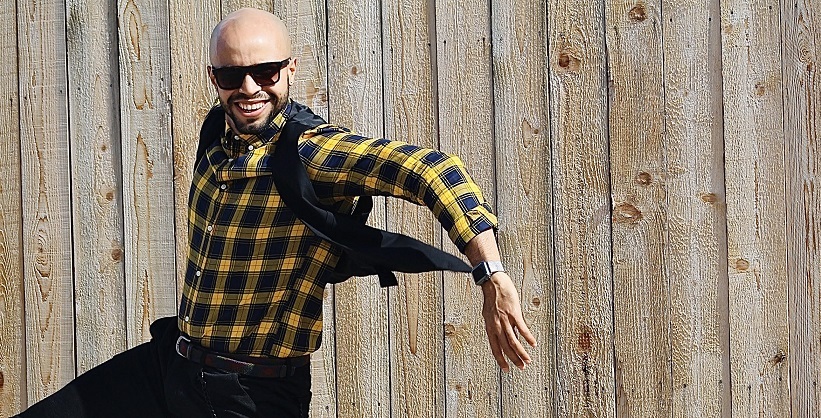
Carlos David Suarez pose

“I have had the joy of playing as a musician, and working with excellent companies, dancers, famous awards and great artists such as Juan Luis Guerra, Gilberto Santa Rosa, Pitbull, Chino & Nacho, El Gran Combo de PR, Los Adolescentes, among others. .. ”

Carlos Suárez continues to study, train and learn more and more from this career, which in his opinion is infinite to learn. He continues to work as an instructor, choreographer and dancer, doing shows at many festivals, giving his best at every step, respecting his work, image, integrity and ethics.

Get to know Carlos David Suarez more closely

International Salsa Magazine (ISM): Define in 5 lines, who is Carlos Suarez?

Carlos Suarez (CS):

A person who respects everyone, considering that we are equal, and each one has a different knowledge, talent and strength. A person who aspired, fought and achieved his dream of being an artist, despite all the experiences. Lover to be able to help and teach everyone. Someone who always gives all the support and love to his family and friends. Very disciplined with himself and with his students.

ISM: What do you enjoy most about your profession?

CS: Being able to get to know many countries, cultures, new people, and above all, being able to inspire others to believe in a discipline such as art.

ISM On what platforms and upcoming events (face-to-face and virtual we will see you)?

CS: To see me on platforms or social media, you can go to my Instagram: @casu__ or my Facebook page: CaSu – Dance & Beats. On these two platforms I always leave all my videos of classes, shows, workshops, musicals, etc. Right now due to the pandemic I do not have specific information on where I will be presenting myself, but if you follow me on the social media, you will know just when I know it.

ISM: How do you see yourself in 5 years?

CS: Good question …

I still see myself exercising my career as an artist and dedicating myself much more to music, which is one of the things that I’m most passionate about, and I haven’t had the opportunity to dedicate myself 100%. I see myself as an even more trained person and with much more knowledge, I also see myself dedicating love to a family and above all … I see myself being happy without hurting anyone.

Carlos David Suarez
Carlos David Suarez

ISM: What is your advice for those young people who, like you, are fighting for their dreams in the dance world?

CS: My advice is to never let anyone make fun of your dreams, nor do you make fun of the dreams of others … I believed, I bet on myself, and I won … I am the artist I wanted to be and I still have a long way to go, but all this does not come alone … It is a process that costs a lot, studying, preparing, always staying mentally and physically fit, learning languages ​​so that they can defend themselves in the world and, above all, be people who love and respect their work … Art.


Did you know that more than 60 personalities and artists come together in the Puerto Rican Virtual Parade

North America/ Puerto Rico / Puerto Rico

The fervor and love for Puerto Rico have overflowed in the call for the first Puerto Rican Virtual Parade with the aim of not interrupting a 62-year tradition of the great party that is celebrated in New York City.

Puerto Rican Virtual
Puerto Rican Virtual 2020

Dedicated to the great master of the timbal Tito Puente, a large number of personalities of the stature of Hollywood actors Edward James Olmos, who launched a phrase that will last for history, saying present “I was not born in Puerto Rico, Puerto Rico was born in me”.

Olmos was also joined by the popular and versatile actor Luis Guzmán, Rodrigo Massa, Juan Pablo Di Pace, Luis Ramos from the Power series and Delilah Cotto from Empire and Hulk, as well as Puerto Rican Major League Baseball player Yadier Molina who will present her daughter Ari D and directors José Javi Ferrer and Virginia Romero, the popular Super Yadira, Vanessa de Roide, Top Model Monique Alexandra and many more.

This year three kings said yes to their people, the Queen of Reggaeton Ivy Queen, who also started the urban movement La Leyenda Vico C and the King of Hearts, Manny Manuel.

Also present at this important event will be the group MDO, the artists Baby Rasta and Gringo, Melina León, Tito Nieves, Daniela Droz, Giselle, Víctor Santiago, Javyy L’amour, Spanish Harlem Orchestra, Lalo Rodríguez, The Martínez Brothers, Tito Puente Jr., Tito Rojas, Julio Sanabria, Luis Damon, Hip Hop Jibarito, Grizelle “La Chichi” del Valle, DJ NEGRO, DJ Playero and Michael Stuart.

Among the invited international artists are Soleil from Argentina, Toño Rosario, Fulanito, Yolanda Duke and Proyecto Uno from the Dominican Republic, the Salsa Institution, Adolescents from Venezuela and Ms. Dayana from Cuba.

Darma Diaz, councilor of the 37th district of New York City, stated that she was pleasantly surprised by the response of the artists, the media and the general public, “which represents one more demonstration of what Puerto Rican Pride is and how capable we are of rise up in the face of adversity”.

The Puerto Rican Virtual Parade will be broadcast through the Vivalivetv application on channel 1 “it will be totally free as a way to globalize this project and that wherever there is a Puerto Rican in the world or a Latino, they can enjoy this party” said Jhon Sepúlveda Vice President of Vivalivetv operations.

The artistic production of this event is in charge of the company Miami Talents and the editing and post-production in charge of the three-time winner of the Sovereign Award in the Dominican Republic, Hugo Oscar Chávez Baldera.

Website: https://paradavirtualpr.com/

Press contacts

Puerto Rico:

Jeanette Delgado

+1 787.645.0966

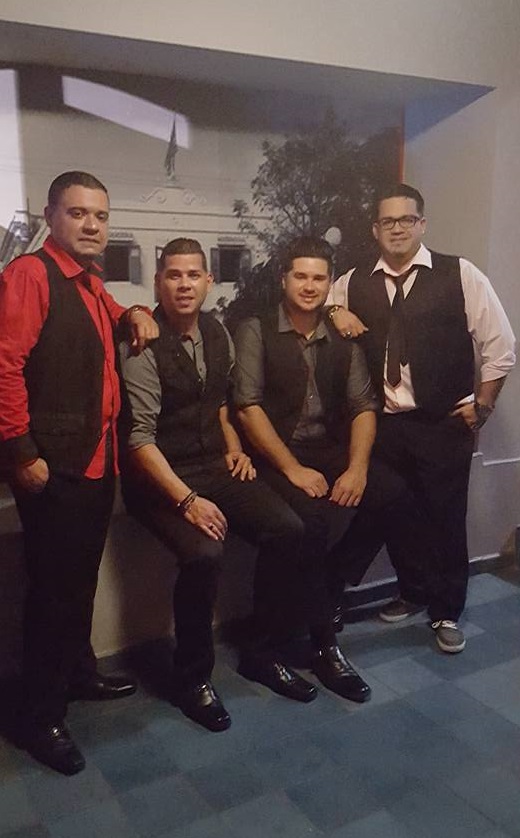
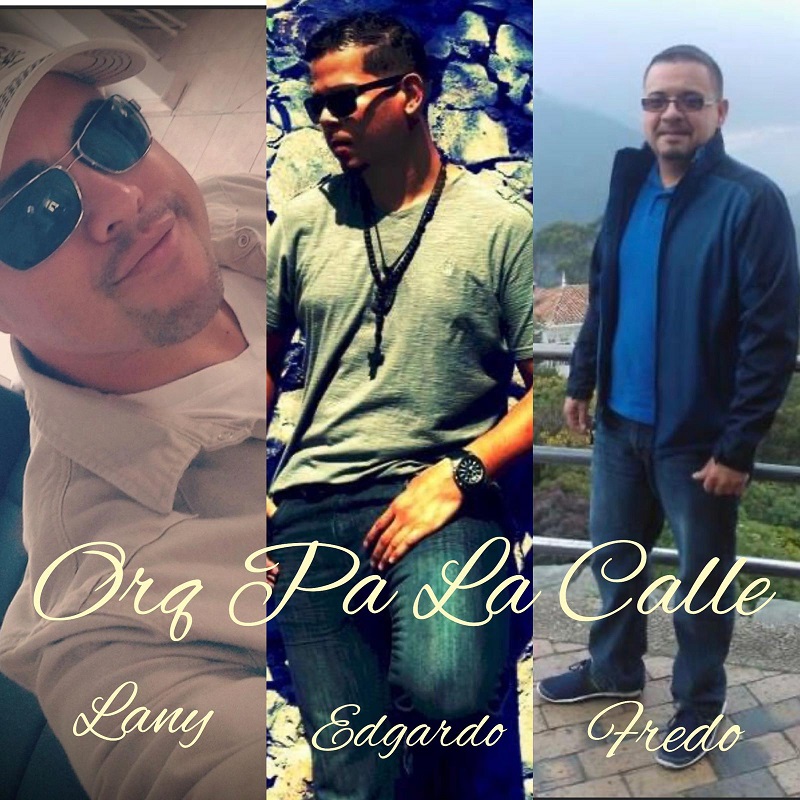
After 12 years, “Pa’ la Calle Orchestra” returns to the world of music

After being away from the musical scene for about twelve years, Pa’ la Calle Orchestra, who reaped their successes between 1996 and 2001, now returned again with their unique and contagious style.

Created by Ángel Díaz and Carmelo Rivera, who reaped their successes under the independent label (PALA Records). Successes like “I’m in love”, “Love”, “It costs me so much” among others.

Pa’ la Calle Orchestra exceeded their sales expectations and with their second production under the V.I.

Music was titled “Now I’m Going” with songs like: “I’m crying”, “You’re like this”, “That girl”, and “Where will my love be”. The latter being the one that marked the success of the musical career of this group.

The year 2012 without a doubt marked a new stage in the musical life of the orchestra, and with the return dedicated to our late drummer José “Neri” Rodríguez.

Pa' la Calle Orchestra members
Pa’ la Calle Orchestra members

Pa’ la Calle has been presented on WAPA TV, on radio stations making themselves known with the new musical themes, sounding strongly in Chile, Venezuela, Santo Domingo where they hope to present themselves strongly. In 2012 they resumed their musical path with the recording of 2 new songs, the cover “I’ve Lived Waiting For You” and “No Sufre Mi Corazón” Original lyrics. In 2014 the 3rd theme was recorded, the Cover “Que Lloro” which was strongly heard throughout Puerto Rico and strongly marked its path again and in 2016 they recorded the fourth theme “Vamos Pa Lante”, it was strongly sounded in Puerto Rico and Chile.

Pa' la Calle Orchestra - Logo
Pa’ la Calle Orchestra – Logo

Now we are presenting our fifth cover “Te Quise Olvidar” and the sixth “Mi Niña” and soon they will finish the seventh theme which they will call “Vamos De Fiesta”. They mention to us that… “This is the beginning of what will be our 4th Production that will be titled “A mi Amigo” and it will have a song called “A Mi Amigo” that is dedicated to our deceased colleague and co-founder of the orchestra”.

In this 4th production they will present a song with the salsa rhythm and we will have a Christmas song called “Esta Navidad”; It is important to note that it is being produced by Nelson L. Cordero at his Muralla Studio.

Pa' la Calle Orchestra
Pa’ la Calle Orchestra

The “Pa la Calle” Orchestra is ready to continue performing in all kinds of activities and they have a varied musical show. If you want to listen to the new musical themes, click on the following links and enjoy them:

Video LET’S GO FORWARD: https://www.youtube.com/watch?v=us2VmzPAdlA

MY GIRL video: https://www.youtube.com/watch?v=4uOm4bli3QU

Wilmer Sifontes “Music is one of the most important things in society”

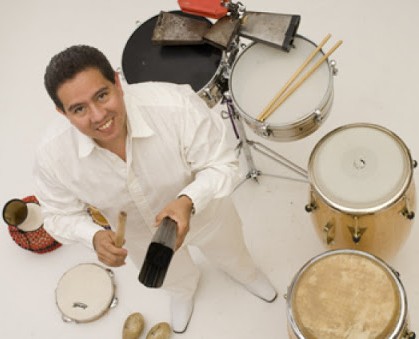
Music has no boundaries, it has the magical power to bridge social and cultural divides. Such is the case of percussionist Wilmer Sifontes, born in Caracas on March 21, 1968, a year of great events worldwide, a native of the parish of La Vega.

In 1992 he travelled to the United Kingdom for the first time to participate with the Entreverao Group in the World Music Festival “Spirit of The Earth” of the BBC in London.

Thanks to his (Wilmer Sifontes) participation with this group, he got several offers to return to the United Kingdom, so from 1996 he decided to settle down definitively in that country.

His musical duality has allowed him to work with different musical groups and bring the intoxicating rhythms of the American continent to those latitudes. He tells us that; “Fortunately, music is a universal language, it is the flag that one carries and allows you to make your way in other spaces”.

Wilmer, sometimes we imagine that the passion for music comes from a family inheritance, I see that this is not the case with you, how were your musical beginnings?

“In my family there are no musicians, however, as a child I always listened to music, on the way to my house there were places where the orchestras rehearsed, and that I liked it, I started playing salsa, it was always my forte, the music worm began at 10 years old, when the theme of Pedro Navaja with Ruben Blades and Willie Colon was in fashion, in the classroom a classmate imitated that little grave on the desk, this impressed me so much that from that moment the message came to me and I said -this will be my thing-“.

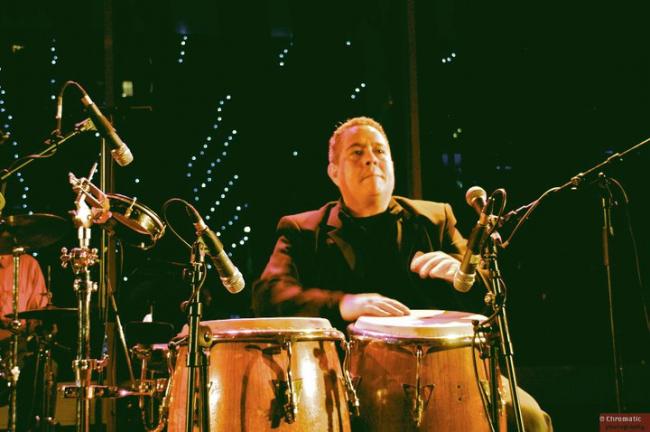
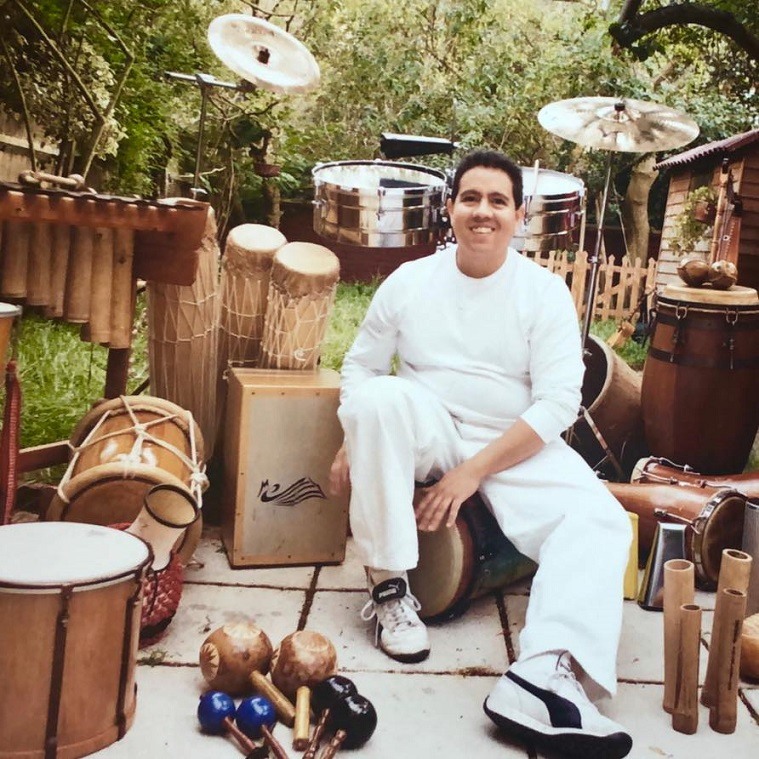
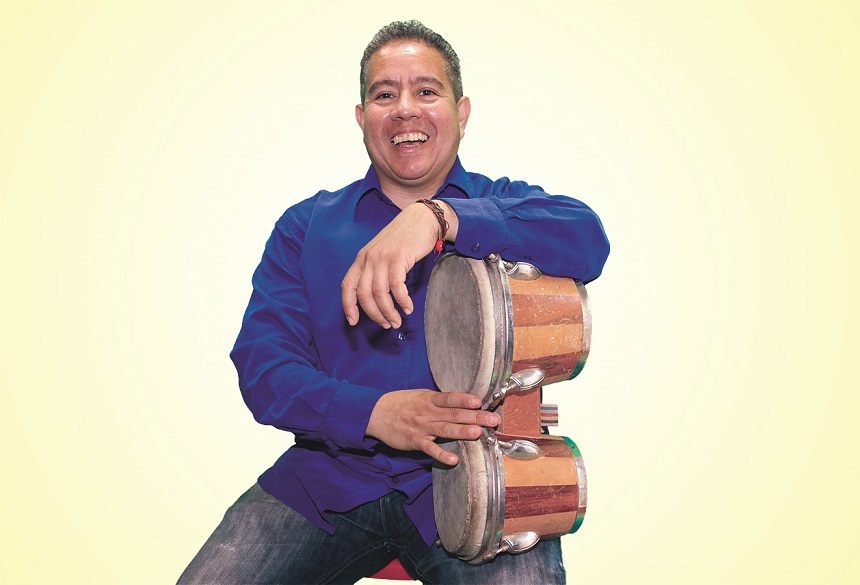
Wilmer Sifontes and his drums

That would be his entrance to the world of music

 “Yes, that was a message -but look at it-, I was a sportsman -I played Volleyball and Basketball-, and my sportsman friends wanted to be musicians, they were all adults and I was always with them as a boy, but they had no musical skills, no instruments, this prompted me to look for someone who would help me get into music, so, through my cousin I met the bassist José Machado

-he belongs to a family of musicians from La Vega-, they were my first teachers, they were always rehearsing and I saw, -a visual teaching – because I was a kid, they had a Cuban Son group called “Los Machados”.

At some point he played with them

 “After a while we started playing with the “Machados”, people were impressed to see such young boys playing, from him I received my first drumsticks, although I wanted to play bongo”.

How was that evolution?

 “In the neighborhood I continued with different groups, then with my cousin we created the “Orquesta La Conclave” and here we developed, we played in all the cultural events”. “We were rehearsing at Catia and Jesús Gómez -one of the singers of Sonero Clásico del Caribe- was always passing by and one day he told us that he needed a timbalero and a pianist, that if we wanted to work with him and we said yes, they played every night at La Caneca, a very famous place that was on Sucre Avenue in Catia”.

“This was my first night job, then I went to Silencio and played in different clubs”.

Wilmer Sifontes in the company of various artists

He is an empirical musician

“I made several attempts to study but… It was a little difficult, there were very rigorous classical schools at the time and I could not enroll, in one I went – La Lamas- together with my cousin, we took the exam and they scratched us (laughs), it is a very nice anecdote, we both sang without knowing the Black Tomasa”.

How does it come to perfection then?

 “I was playing by ear, it wasn’t something formal, as he already works in the nights in the clubs, a friend told me that in the Central University of Venezuela, Alberto Borregales and Orlando Poleo were giving classes, when I arrived I saw a great amount of people and I said: -whoa, here they are not going to accept me with that crowd- by chance, the teacher Borregales, makes a small group due to the little space that there was in the classroom, and at that moment I was going to evaluate them to decide who was left and who was not, fortunately I passed the test and I stayed”.

The experience of the street helped him

“(laughs), yes.”

Formally, Borregales was their teacher

 “Yes, but my first teachers were the Lp, besides the radio, I listened to a program called “Latin America the Cosmic Race”, with Borregales I entered with a greater discipline, he taught me to analyze, he indicated us what to read, what to listen. Later I was with Poleo in Caricuao, then in San Agustín and eventually went to Sarria. In the neighborhood I learned from Carlos “Tabaco” Quintana, he was one of my favorites, he was my inspiration, he was a timbalero with a terrible swing, excellent, in the neighborhood there were many good ones”.

“Apart from them I also learned from; Daniel Milano Mayora, Jesus Milano Palacios, in the Aquiles Nazoa Library -of Caricuao-, the Bigott Foundation and the Grupo Autóctono de la Vega”.

How was that jump from salsa to folklore?

 “I was offered to join the Grupo Autóctono de la Vega, with a great trajectory -it must be 40 or 50 years old by now- there is no role for the amount of people who have passed through there, it is the first group that makes the San Juan demonstrations in Caracas, this is from the Rivas and Ochoa family, it was my first school of folklore, they did dances, sports and then it was dedicated only to folklore music, both have been my teaching, I did not leave either of them”. “Then I played with many other folk and salsa groups, music is one of the most important things in society.”

The Grupo Autóctono de la Vega opened its doors to him, but the Agrupación Entreverao marked his future

“Yes, Entreverao marked my future, let’s say it was a show group, a quartet, its musical structure was very particular, harp, bass, drums and singer, then the percussion was introduced, the percussionist Rhay Herrera was their Director, I got a lot of experience with this group, we had a lot of work and learning, with them we made the first trip to the UK in 92”.

Wilmer Sifontes on stage

How did you decide that London would be your destination, why not another place more tropical, warmer, you did not think that you would face another culture, another language, another climate?

 “I was playing with Erick Franchesky, at that time he had 3 songs stuck in New York, we were going to go four or five of the band, it was almost confirmed, but it didn’t happen, music is like that, sometimes it offers you villas and castles and tomorrow you have nothing.” “I also had other proposals to come to the United Kingdom, the first thing that came out was this, that is, my destiny wanted me to come here”.

“Being out of your country, you learn other things, and that’s one of the particularities of my work, you learn to be more tolerant with people, as I know a lot of folklore from other places has allowed me to arrive, the culture is different to ours, is strong above all if you do not master the language, even if it is the basics, the climate if it was a shock, this is a fridge, (laughs)”.

I can’t imagine the English dancing and listening to Salsa, do they like the genre?

 “In the 90’s Salsa was very fashionable around here, there were many places to play, the acceptance of the music is excellent, when the Salsa boom, everyone wanted to learn to dance it, there are clubs to learn to dance, they have fallen in love with Latin American culture, they have been very receptive to those we have come to work with”. “I am the first Venezuelan to make a legal Folkloric Group in this country”.

Tell us a little about that project; AfroAmerica Project

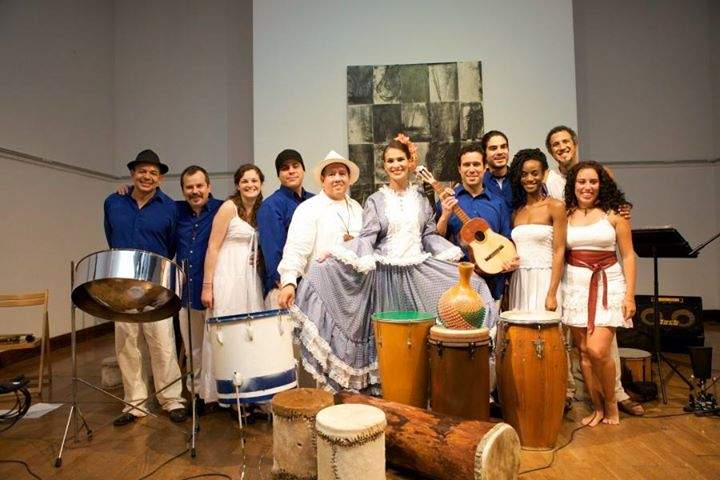
 He founded it in 2007, it is an official group of typical and traditional Afro-Venezuelan music, people love Latin American music, they receive it very well, the name is due to a magazine that Jesus “Chucho” Garcia made, which speaks of Afro-Cuban music”.

 He continues to work with this project

“Yes, it is a group like Un Solo Pueblo, 90% is Venezuelan music, fulia, tambor, parranda, Calipso, Larense music, there are people who are outside Venezuela and do not know their music, then, we must show what we are, show our culture”.

Photo of Wilmer Sifontes and his instruments

What groups have you worked with in the UK?

 “Any number of bands, when I arrived in the UK I started with a man named Kora, he played an African harp, his band was World Music, his music was a mix of African rhythms and the idea was to play Latin American percussion, as I have the virtue of playing different styles of music work with him”.

“Although I did a lot of Salsa in the early years, the other bands I remember are Conjunto Sabroso, Hussein Zahawy, Tumbaito, Ensamble Criollo, La Papayera, Salsa Nueva, The Voices of Naturale, La Charanga Rivera, Tango Tierra, Ensamble Criollo, Clara Rodríguez, Ola Onabule, AfroAmerica Project, Cubanito, Chacón y Su Timba, Bahareque, Salsa Céltica, Kora Colours, Los Charlys Orchestra, Classico Latino, Bilongo all Stars, among others”.

It’s easy for him to move through different genres

“Yes, I owe this to my country, thanks to all that learning I have been able to do so many things and share with so many people in different parts of the world.”

Thanks to this duality you have worked with and accompanied different artists, which ones do you remember?

“Among those I remember are Herman Olivera, Willie González, Maelo Ruiz, José Mangual Jr, Luisito Carrión, Roberto Torres,Tony Vega, Pedro Brull, Tito Gómez, Tito Nieves, Cano Estremera, Giovanni Hidalgo, Andrés Cepeda, Aterciopelados, Leroy Burges, Rodolfo Arcardi, Henry Fiol, Alci Acosta, and the Bands and groups in Venezuela are; Orquesta la Grande, Catatumbo, Entreverao, Criollo y Sabroso, Orquesta la Raza, and with whom I have participated are; Grupo Cosecha, Grupo Autóctono, Jesús Ruiz, La Gran Compañía and Eric Franchesky -who- among many others”.

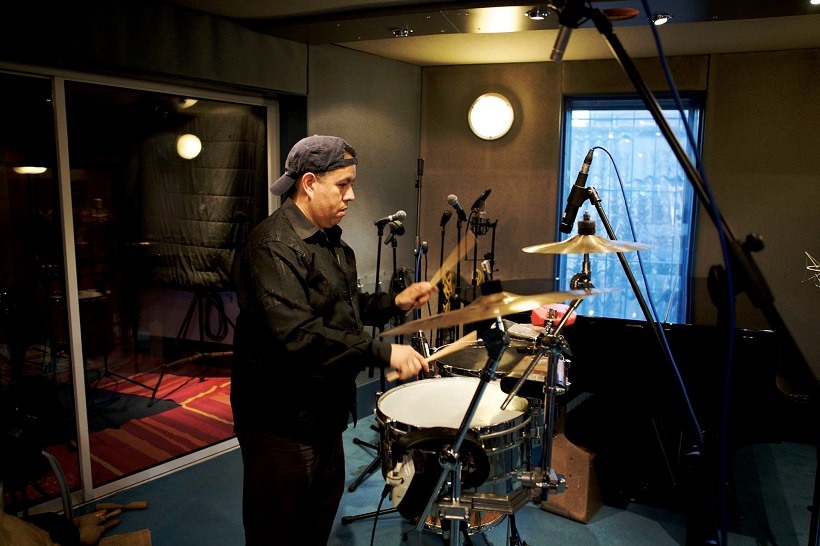
Wilmer Sifontes in the studio with his instruments

Celtic Sauce, explain that to me, it sounds a little strange

“It’s a Scottish group that mixes Celtic music with Salsa, with them I started doing substitutions for the timbalero, it’s very nice and interesting, they use the traditional instruments of Scottish Folk and the instruments of Salsa and Latin Jazz, they have also mixed it with pop, with rock, with Indian music, that gives them a unique and characteristic sound to this group, with this group I have traveled the world”.

Another band you have worked with is Sidestepper, very famous for fusing elements of Antillean and Colombian music with electronic music.

“Yes, the band was formed in Colombia, by the English producer Richard Blair, he revolutionized the traditional sounds of the region by mixing them with avant-garde sounds, with them I made an interesting work”.

Tell us about the Salsa Nueva Project

“That is the project of the Venezuelan pianist Elena Riu, is the fusion of Salsa with classical arrangements, you can be listening to a kind of montuno, a tumbao’ on the piano and the minute it disappears and leaves a passage well classic, is Latin in classical music, had original themes, is a theme that is called sal-si-ta -so separated-, had songs by Ruben Blades, Ismael Rivera, very cool.

“She needed a rhythmic element and invited me to accompany them, two months later we recorded an album in a church”.

 How do you feel about conducting one of the most popular bands in London, El Conjunto Sabroso?

“It has given me a lot of foundation and satisfaction, it was founded by Mrs. Luisa Elena Caicedo, since I arrived here I started to work with them, she listened to my references and called me to make substitutions, then I was their director and assistant director”.

Wilmer Sifontes in the studio

With you, the saying goes… No one is a prophet in his own land

“I think that yes, many people have been prophets, but… after death or after many years -laughs-, I don’t know, at this moment it is so difficult to put a definition to this, although I believe that nobody is a prophet in his land”.

From whom or from whom has he taken his musical influence?

 “There are several, the list is long, Carlos “Tabaco” Quintana, Orlando Poleo, Alberto Borregales, Alfredo Villamizar, Orestes Vilato, Tito Puente, Dave Wackel, Ray Barreto, Un Solo Pueblo, Guaco, Paquito de Rivera, Giovanni Hidalgo, Paoli Mejias whom I had the pleasure to meet and accompany, El Trabuco Venezolano, La Fania All Star, Irakere Orchestra, and Puerto Rican and New York Salsa, among many others”.

How has your musical growth been?

 “I have learned a lot from each culture, from the Colombian, Cuban, Argentinean, African, knowing the folklore of other places teaches you a lot, sharing with people from all over makes you grow and learn every day, this is part of the particularity of my profession.”

How do you see the market right now, there is a great variety of music, everyone has their own style, what do you think of all this new, but sometimes not good?

 “I don’t know if it’s taking a turn or not, the truth is that Europe is different, it has another kind of market, which is not that I’m involved, previously there were many festivals, pop and rock are the popular music of this country, but, reggaeton has been influenced by society, it has been injected with a lot of money, apart from the impact of social networks, it reaches more people, social networks have changed the way music is sold in the world.

“People are scared of reggaeton, for me it depends on who is doing it, the market has changed because of the networks, anyone makes music, anyone plagiarizes music from others, we are in a time of change and music does not escape from it.”

What do you think about tributes and copies, is the musician’s creativity running out?

“When people are alive it is always good to highlight their contribution to the world, there will always be a reference to someone, but it is good that people are creative, and there are the brazen ones who shoot the songs and put other lyrics on them, it is like winning people over with other people’s work”.

“The musical genius has not declined, what happens is that there are no promotions, people who do not do commercial work, it costs a little more to reach, fight against the great machines that bet on other things, musical geniuses are born for generations, are counted.”

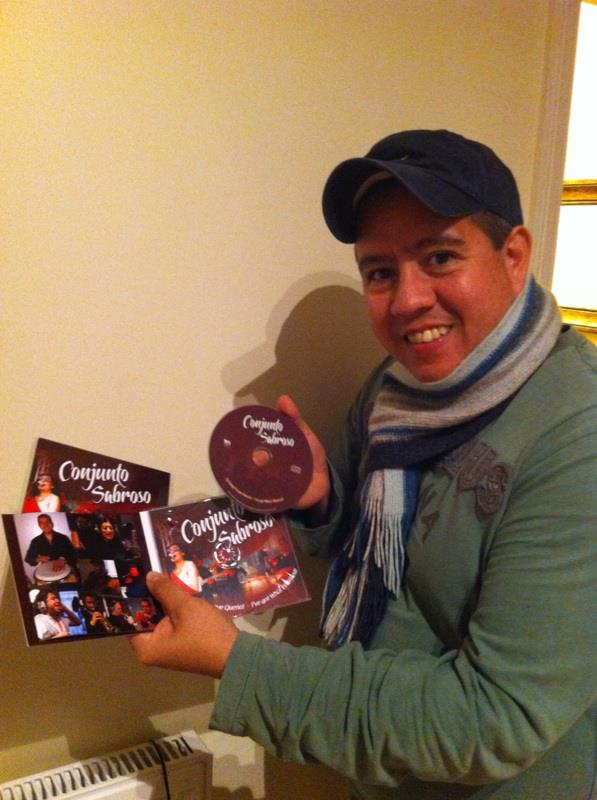
Wilmer Sifontes and his records

The first production of the Conjunto Sabroso is entitled “Ya tengo lo que quería, realmente”

 “You never get to have everything you want, but at that moment, we had what we wanted, in that production there are arrangements by Naty Martínez”.

Among your personal projects, which ones would stand out and what new proposals do you bring to the public?

“I was the founder of Ensamble Criollo, we still work with this, AfroAmerica Project, Wilmer Sifontes y Su Combo Caribe, Will Sifontes and his Latin Sound and I’m still working with Conjunto Sabroso as musical director, besides, I’m making a solo album, -let’s say it’s called Latin Jazz- it’s a mix of everything, of my musical career, I already have 3 numbers, there will be duets, quartets, guests, the production is going to be called “Handmade”.

If you were to choose between folklore and salsa

“I’ll take them both, they’re different loves, I still do folklore, salsa and fusions.”

What recommendation do you have for the relay generation

“My recommendation is that they prepare themselves, musically, but first of all their idiosyncrasy, we have to have very clear the bases of what we are and develop them with modern techniques and other elements from other countries, to have discipline, today it is easier to have the information, there are more institutes, the internet”.

Wilmer Sifontes
Wilmer Sifontes


By Eling Blanco, ISM Journalist Correspondent, Caracas, Venezuela


The 5 most famous Latin music DJs in USA

Latin music is characterized by its incomparable rhythm. Those who have Latin blood vibrate when listening to songs that remind them of their roots. However, Latinos are not the only ones who enjoy them, audiences of all ages and nationalities end up trying to dance to the tune of salsa, merengue or bossa nova.

Its growth has been increasing over the years and more and more Latino artists are performing on large stages; Important events in the United States and become the favorites of non-Hispanic people.

For this reason, it is very common to listen to these types of songs in different bars and clubs. Some DJs based in the US have wanted to enhance their roots and, even when they dabble in other genres, they are still famous for their Latin mixes .

Famous DJs of Latin music

DJ Deorro

Erick Orrosquieta, is a DJ and music producer, born in California but to Mexican parents. It is characterized by its inclination towards electro house. However, it does not neglect the Latin music sets. To his credit he has pieces such as “Bailar” with Elvis Crespo, where he did not hesitate to place his personal stamp.

Dj Deorro
Dj Deorro

He is working on a new album where he plans to gather more Latin songs and songs in Spanish. Even when he tours different countries, he always plays in his native USA again.

“I want to grab the sounds we used to hear when we were little, cumbia, merengue, mariachi, everything, in order to give them new music”

DJ Louie Vega

Luis Ferdinand Vega Jr. is an American with Puerto Rican roots. His uncle was nothing more and nothing less than the famous singer Héctor Lavoe. Little Louie Vega, as he is also known, grew up surrounded by Latin music. For this reason, his training and his passion for music of this style have always been noticed.

Dj Louie Vega
Dj Louie Vega

He is one of those artists who enjoy each show and immerse themselves in what they do. Dj Louie had his beginnings at parties in the Bronx and has not neglected his Hispanic side. Making different Latin mixes that he does not stop taking advantage of in many of his presentations. One of his most requested songs is “My people by Héctor Lavoe”. He has also participated in songs with a tropical rhythm like “Starring” with Roberto Roena and performed live with the accompaniment of different percussionists.

“Music comes from our hearts and we try to express it. We don’t look at the others, we just follow what we think is our path, ”  he told ­estaybullshit.com.

DJ Buddha

Dj Buddha
Dj Buddha

Urals Vargas, born in the United States, is a renowned DJ, songwriter, producer and music publisher who has earned a good place in the industry. Recognized for including Latin music and dancehall among his mixes. He is one of the critics’ favorites and remains in constant innovation. DJ Buddha has an album called “Ultra Latino” that contains some of his most requested Latin tracks. In addition, it has countless tracks produced, remixed or written that today belong to renowned Latino artists.

“For me, success has been not putting myself alone in a genre because I make electronic music, … and yet, I have also made songs in the Latin market,” he said in an interview with Deyanira Martínez.

DJ Alex Sensation

Dj Alex Sensation
Dj Alex Sensation

He is a Colombian who grew up in the United States and from an early age began mixing at nightclubs. He also worked at the station La Mega 97.9 Fm, walking through different musical genres but not forgetting where he came from.

“I grew up listening to salsa and cumbia because of my roots. One of the fi­rst clubs where he played on the weekends was a Dominican club. There, I learned about the Dominican culture Bachata, Merengue, typical merengue when I was still very young. I made many Dominican friends and fell in love with their culture. I mix everything under that genre,” he commented for an interview.

He is considered a very valuable artist for music. In fact, he has participated in different festivals, parades in the Dominican Republic and Puerto Rico and has been awarded the ACE, an award from the Association of American Entertainment Critics.

DJ Cristhian Terán

Dj Cristhian Terán
Dj Cristhian Terán

This is a Venezuelan who has positioned herself in the city of the sun. Its proposal is based on Latin rhythms and is the favorite of most nightclubs. He has a history that has accompanied her since its inception in Venezuela. Caramelos de Cianuro, Chyno, Nacho and Guaco are some of the artists from her country with whom she has shared the stage. However, he has also managed to rub shoulders with singers such as Maluma, Alexis and Fido and Arcangel. Cristhian is one of the DJs who has managed to get the most out of the Latin genres and keep them present in the United States. His music is usually heard in the different clubs in Miami.

  • « Go to Previous Page
  • Page 1
  • Interim pages omitted …
  • Page 65
  • Page 66
  • Page 67
  • Page 68
  • Page 69
  • Interim pages omitted …
  • Page 94
  • Go to Next Page »

International Salsa Magazine (ISM) is a monthly publication about Salsa activities around the world, that has been publishing since 2007. It is a world network of volunteers coordinated by ISM Magazine. We are working to strengthen all the events by working together.