• Skip to primary navigation
  • Skip to main content

International Salsa Magazine

  • Home
  • Previous editions
    • 2025
      • ISM / November 2025
      • ISM / October 2025
      • ISM / September 2025
      • ISM / August 2025
      • ISM / July 2025
      • ISM / June 2025
      • ISM / May2025
      • ISM / April 2025
      • ISM / March 2025
      • ISM / February 2025
      • ISM / January 2025
    • 2024
      • ISM / December 2024
      • ISM / November 2024
      • ISM / October 2024
      • ISM / September 2024
      • ISM / August 2024
      • ISM / July 2024
      • ISM / June 2024
      • ISM / May 2024
      • ISM / April 2024
      • ISM / March 2024
      • ISM / February 2024
      • ISM / January 2024
    • 2023
      • ISM / December 2023
      • ISM / November 2023
      • ISM / October 2023
      • ISM – September 2023
      • ISM – August 2023
      • ISM July 2023
      • ISM Edition June 2023
      • ISM – May 2023
      • ISM April 2023
      • ISM March 2023
      • ISM February 2023
      • ISM January 2023
    • 2022
      • ISM December 2022
      • ISM November 2022
      • ISM October 2022
      • ISM September 2022
      • ISM August 2022
      • ISM July 2022
      • ISM June 2022
      • ISM May 2022
      • ISM February 2022
      • ISM January 2022
    • 2021
      • ISM December 2021
      • ISM November 2021
      • ISM October – 2021
      • ISM September 2021
      • ISM August 2021
      • ISM July 2021
      • ISM May 2021
      • ISM April 2021
      • ISM June 2021
      • ISM March 2021
      • ISM February 2021
      • ISM January 2021
    • 2020
      • ISM December 2020
      • ISM November 2020
      • ISM October 2020
      • ISM September 2020
      • ISM August 2020
      • ISM July 2020
      • ISM June 2020
      • ISM May 2020
      • ISM April 2020
      • ISM March 2020
      • ISM February 2020
      • ISM January 2020
    • 2019
      • ISM December 2019
      • ISM November 2019
      • ISM October 2019
      • ISM Septembre 2019
      • ISM August 2019
      • ISM July 2019
      • ISM June 2019
      • ISM May 2019
      • ISM April 2019
      • ISM March 2019
      • ISM February 2019
      • ISM January 2019
    • 2018
      • ISM December 2018
      • ISM November 2018
      • ISM October 2018
      • ISM September 2018
      • ISM August 2018
      • ISM July 2018
      • ISM June 2018
      • ISM May 2018
      • ISM April 2018
      • ISM March 2018
      • ISM February 2018
      • ISM January 2018
    • 2017
      • ISM December 2017
      • ISM November 2017
      • ISM October 2017
      • ISM September 2017
      • ISM August 2017
      • ISM July 2017
      • ISM June 2017
      • ISM May 2017
      • ISM April 2017
  • Download Salsa App
    • Android
    • Apple
  • Spanish

Search Results for: tango

Argentine tango bassist and Latin Grammy winner Pedro Giraudo returned to his roots

Latin Grammy winner Pedro Giraudo spoke exclusively to us for International Salsa Magazine, so we are very pleased to bring you the best of our conversation with the Argentinian bassist and composer. Next, these are the highlights of his beginnings and his exciting career in his native country and in the United States, where he currently resides.
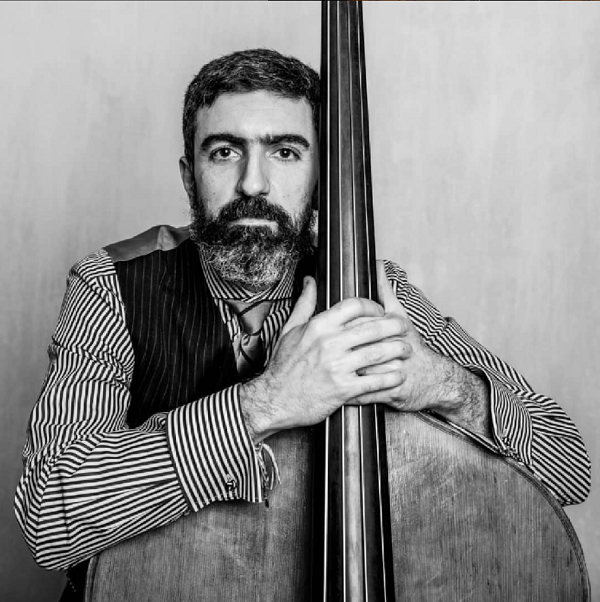
Pedro Giraudo posing
Argentine bassist Pedro Giraudo posing for the camera

Pedro’s beginnings in music

Pedro comes from a family of musicians. In fact, his father was a bandleader and his mother sang in a choir, so he was surrounded by music practically since he was born. He has memories of him watching his parents rehearse and play instruments when he was very young, so he was always very familiar with this kind of thing.

During his adolescence, he performed recitals with various ensembles, some of which played classical music, jazz, and tango. His professional advancement was very gradual, but he was doing some activities that prepared him for what was to come years later.

His love for this world grew so big that, once he turned 19, he moved to the United States precisely to study music and learn everything he could about what can be expressed through it. His musical interests initially focused on jazz, but that changed over time. 

Already at the end of his last year in college in New York, he was working regularly with various groups of different genres.

Interest in tango

Although, as we have said, Pedro comes from Argentina, he had not been particularly interested in tango at first, but his numerous trips around the world made him feel a little uprooted and detached from his beginnings. For this reason, nostalgia made him reconnect with the traditional music of his homeland. In addition, the fact that he was Argentinean encouraged many groups to call him, even though his knowledge of tango was not yet very deep at that time.

After giving himself the opportunity to play tango more formally, he also set to work to study it much more to learn about its most famous composers, its various styles, its ways to write music in the genre, among other things. In addition to that, he started to transcribe a lot of music to know what it sounded like in different styles and to gain practice. 

This path eventually led the artist to become part of many tango bands and even to lead some ensembles.
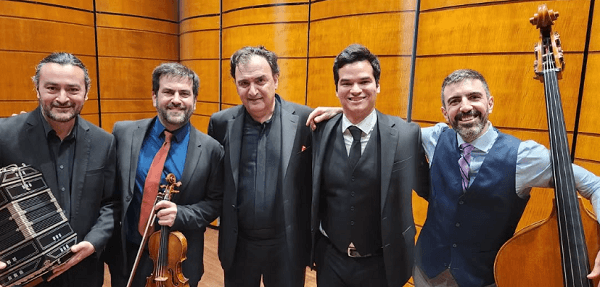
Pedro and friends
Pedro Giraudo, pianist Ahmed Alom, symphonic director Sergio Alessandro Bušlje, violinist Sami Merdinian, and accordionist Javier Sanchez

Groups Pedro was in

Pedro’s main goal in arriving in the United States was to become a double bassist, and after finally achieving it, he graduated from college and started to explore his role as a composer and leader of his own ensemble. From there, the band varied for characteristics and changed members and in size over the next 15 years. The last thing was a 17-piece big band.

Then, in the year 2014, due to the death of a great friend, Argentine pianist Octavio Brunetti, the Lincoln Center for The Performing Arts asked him to lead an event to celebrate his life and music. Therefore, in 2015, the musician started his tango project, which he would name Pedro Giraudo Tango Quartet, taking this request as a starting point. 

Today, he focuses all his efforts on tango ensembles, although he does recognize that he is increasingly angling for the classical side. For example, for his latest album, Pedro used a symphony orchestra, and since the last few months, he has been conceiving his next project with a chamber orchestra. 

Great collaborations in his career

Throughout his career, Pedro has been able to work with great music glories such as Paquito D’ D’Rivera, Rubén Blades, Pablo Ziegler, William Cepeda, and many others. One of the nicest things about this work for the Argentine is that he is always surrounded by very talented people from whom he can learn a lot.

One of them was bandoneonist Hector Del Curto, who was one of the first people Pedro started playing tango with in New York. Del Curto, in turn, had the great honor of playing with the greats of the golden age of Argentine music, such as Osvaldo Pugliese. 

It was through Hector that Pedro was able to meet and play with Pablo Ziegler, who was the principal pianist of Astor Piazzolla’s Second Quintet and greatly influenced the way tango is played on the piano. In fact, playing along with him on the double bass was an experience of which he learned so much, which he appreciated. 
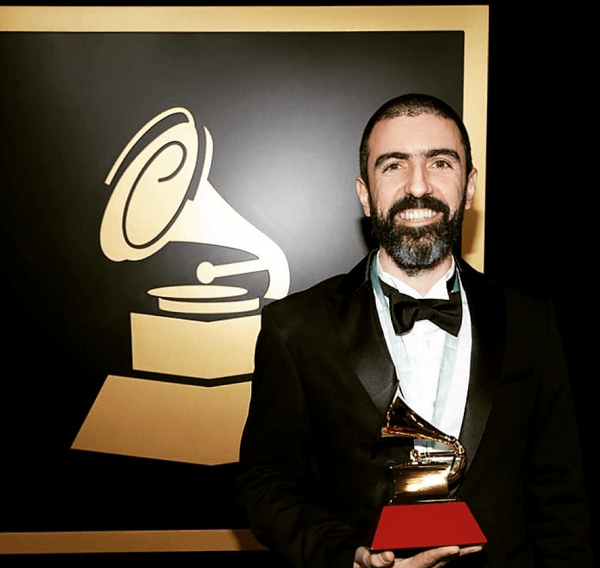
Pedro and his Grammy
Pedro Giraudo holding his Latin Grammy in Las Vegas

In the case of William Cepeda, the artist made some arrangements for him and he received many valuable lessons from him, such as the importance of keeping musicians engaged with sheet music to prevent them from getting too lax. It was also with Zepeda that he made his first arrangements for a symphony orchestra.

On the other hand, Paquito taught him how to be a practical musician and to make perfect, well done arrangements for any occasion. 

Latin Grammy winner

Pedro is fortunate to be a Latin Grammy winner thanks to his album “Vigor Tanguero” in the category Best Tango Album in 2018. When we asked him about his experience, the double bassist said that there are some details he does not fully understand, such as the elements taken into consideration when voting for an artist in a category. However, that did not overshadow the joy of winning such an important award.

He says his victory was a surprise. At the time, he remembers being on tour with Pablo Ziegler, and after a four-hour rehearsal, his phone had about 40 missed calls congratulating him, while he did not even know that the nominations were being announced that day. To his amazement, he was included.

The final event was in Las Vegas, where Pedro finally heard his name and felt a total joy and pride for all he had achieved. In this respect, he said, “I’m not a person who collects awards, but this is a recognition I’m very proud of, to be honest.”

Read also: French flamenco dancer Fanny Ara lets us know the most important details of her career

Gira Tango

Latin America / Venezuela / Caracas

For lovers of Tango, what better way to learn or practice it than at the “Gira Tango” Dance Academy that offers tango classes in Caracas, Venezuela. They also organize dinners, shows and tastings, not to mention that they work with the Embassies of Argentina and Uruguay.

The Vision and objective of the Academy is to promote national tango talent, where they seek meeting places to share knowledge, entertain the public in order to connect everyone through this style of dance.

Photo by Siulhy Santander and Leonel Colina - Gira Tango
Photo by Siulhy Santander and Leonel Colina – Gira Tango

Starting in 2015, the “National Tango Encounter” was organized, an artistic production that for a week offered the 5 municipalities of Caracas opportunities to enjoy classes, concerts, live shows and milongas in plazas, shopping centers and restaurants; and from that moment it was held annually, being for this month of November 2017 its 3rd edition in conjunction with the embassies of Uruguay and Argentina.

The workshops will be held on the 4th, 11th, 18th and 25th. If you wish to attend the classes at CELARG, look for information through 0412-9507209 or 0414-3206975 and register through the email [email protected]. Wear comfortable clothes and choose shoes that slide. In the case of women, Gira Tango recommends wearing heels without a platform that support the ankle.

Dancers and Teachers

The dancers and teachers that make up the academy are Siulhy Santander and Leonel Colina, founders of the Academy, who are dedicated to teaching tango and cultural management, not to mention that both were trained by internationally recognized teachers John Erban and Clarissa Sanchez. , Sofiani Figueroa, Daniel Martinez, Mario Morales, Daniel Naccuchio, Cristina Sosa, Fernando Galera and Vilma Vegas, among other exponents of tango with a great career.

Siulhy Santander and Leonel Colina

Siulhy Santander

She began his Tango studies in 2008 at the Centro Uruguayo Venezolano with the Academia Tango Caracas, directed by professors Frank Zambrano and Yore Rivas, without mentioning that he worked as a member of the dance corps of the Tango Caracas group until 2014, where He participated in various stagings and shows such as “Misterio Tango” and “10 Años de Tango Caracas”, where he met Leonel Colina. I also carry out workshops in Buenos Aires, Argentina, with professors Mario Morales, Fernando Galera and Vilma Vega in 2009 and 2012.

Siulhy Santander
Siulhy Santander

Leonel Colina

He was a student of Nationalist Dances from 1994 to 2001 in the Los Cocuyos Dance Group. He learned different types of dance such as Joropo, Calypso, Gaita, Drums, Bagpipes, Drums and Venezuelan Merengue. However, he decided to start studying again in 2007 at Academia Tango Caracas with professors Frank Zambrano, Yore Rivas, Frank Obregon and Sofiani Figueroa.

Leonel Colina
Leonel Colina

Starting in 2008, she worked as a member of the dance corps of the Tango Caracas group, participating in shows such as “Misterio Tango” and “10 years of Tango Caracas”, meeting Siulhy Santander Since 2011, the pair of dancers participated in the staging of the show “Misterio Tango”, which ran for two seasons at the Celarg theater and this couple has participated in cultural festivals such as:

  • IV International Meeting and III National Tango Championship, Caracas 2009.
  • V International Meeting and IV National Tango Championship, Tango 2010.
  • VI International Meeting and V National Tango Championship, Caracas 2011.
  • XVI International Dance Festival – Maracaibo (2011).
  • XVIII International Dance Festival – Maracaibo (2013).
  • Second Edition of the Ucab Dance Festival (2013).
  • Caracas International Theater Festival (2015).
  • World Tango Championship Medellin (2015).
Photo by Siulhy Santander and Leonel Colina

For more information:

  • WebSite: http://giratango.net/
  • Facebook: https://www.facebook.com/giratango/
  • Instagram: https://www.instagram.com/giratango/
  • Twitter: https://twitter.com/giratango
  • Email: [email protected]
  • Phones: +58 4129507209 / +58 4143206975


Grazy Tango Festival 2018

Europe / Austria / Graz

Grazy Tango Festival 2018 – 08 Mar 2018   –   11 Mar 2018

The elegance of Argentinian Tango is here to conquer the heart of Europe with the March edition of Crazy Tango Festival 2018! This is the third edition of this amazing Tango Festival in the beautiful city of Graz/Austria and each time attracts more national and international dancers. Participants will love the friendly atmosphere, the high quality workshops in air-conditioned rooms with wooden floors and the wonderful Milongas with superb music!

Grazy Tango Festival 2018

Maestros 2018:

  • Maja & Marko (Croatia)
  • Germán & Eva (Argentina & Denmark)
  • Boris & Chris (Argentina & England)

Tango DJs 2018:

  • DJ Pablo
  • DJ Germán
  • DJ Veronika
  • DJ Vlado
  • DJ Đurđina

Maja Petrović & Marko Miljević started dancing Tango in Zagreb, Croatia in 2002 in a small group of enthusiasts curious about this “new” dance. Only five years later they began giving regular lessons at the Tango Argentino Zagreb Dance School. Their first and most influential teachers were Pablo Rodríguez and Noelia Hurtado. Later they continued to study with Noelia and Carlitos Espinoza.

Maja and Marko - Grazy Tango Festival 2018
Maja and Marko – Grazy Tango Festival 2018

In 2014 they started to work with Tango professionally, holding workshops and performing all over Europe. In 2015 they had their debut in North America at Bailongo Tango Festival in Montréal, Canada.

Germán Cuestas started dancing when he was a teenager, and since then dedicated his life to music and Tango. He has a degree as a music school teacher and now uses this knowledge in his work as a Tango dancer.

He also has been a Tango DJ for many years and is the organizer of El Motivo Tango (a Milonga in Villa Malcolm’s club, Buenos Aires) and has taught in various Milongas and schools in Buenos Aires.Now he is based in Denmark, teaches and performs with Eva Lehrmann, around Europe, Russia and Argentina.

Eva and German dancing tango - Grazy Tango Festival 2018
Eva and German dancing tango – Grazy Tango Festival 2018

Eva Lehrman has been dancing different styles of dances most of her life, however it wasn’t until she met the Argentine Tango that she dedicated herself to dancing professionally. She travelled to Buenos Aires, where she soon started working in El Esquinazo, a newly opened Tango school, where she taught Tango and Yoga and there she also met Germàn. Today she mainly works in Copenhagen being an instructor, a DJ and a performer. She still spends a big part of her time in Buenos Aires, where she is part of a team who organizes Tango holidays.

Boris and Chris work to harmonize their distinct and varied backgrounds of dance training, biomechanics, and Tango to create their dance. The fundamental element of their Tango is “el abrazo”’ and the connection between two dancers. It enables them to communicate in an unspoken language that unites you to your partner, your partner’s body to yours.

They believe that even if two bodies are standing still in space, their embrace continues moving within and between them. In her experience of studying many other disciplines, Chris believes that this is what makes Tango so special, so unique and so rewarding, “alongside the technical details, the complexity of the steps and the music, in no other dance style have I experienced this sensation where dancers search for such a deep connection with their partner”.

Boris and Chris - Grazy Tango Festival 2018
Boris and Chris – Grazy Tango Festival 2018

Using knowledge and understanding of the body, their teaching method focuses on how to use the bodies to create movement and then how to transmit and receive this information through the embrace. Alongside steps and techniques, they will give you tools, foundations, and concepts that can be applied within your entire Tango world to discover different ways of moving.

Location

All the workshops will take place in the four air-conditioned halls of the dance school on approximately 450 m². You will also find a lobby with a cozy bar and comfortable chairs, as well as some cloak & changing rooms. Wooden floors are dancers’ paradise and the bar will take care for your refreshments!

Gravity does not allow very much floating, but sometimes in your life you come to a place, where the laws of gravity do not apply any more. This place will give you a pleasurable experience, which will put you at ease and which transfers you into an unforgettable experience. The place where we just can relax and let your soul get some rest.

The panorama hall presents itself with a glazing from the bottom to the top and offers an unbelievable view over the city of Graz. It is one of the most popular event locations of the “Schlossberg”, the well-known landmark of Graz. Together with the stage hall it covers 250m2 of wooden dancefloors so that dancers can experience a most memorable evening.


Am Schlossberg 7

A-8010 Graz

Tel.: +43 (0) 316 84 00 00

[email protected]

Körösistraße 81

A-8010 Graz


Further information at https://www.facebook.com/events/1666219917013457/

My mother sang tango

One of the Latin genres that is currently on the rise is tango, so it is common to find more and more people linked to it. There are even many who have made tango one of the most important passions of their lives, as in the case of Carlos Álvarez Guevara, with whom we have had the fortune to talk exclusively about this and other interesting topics.   

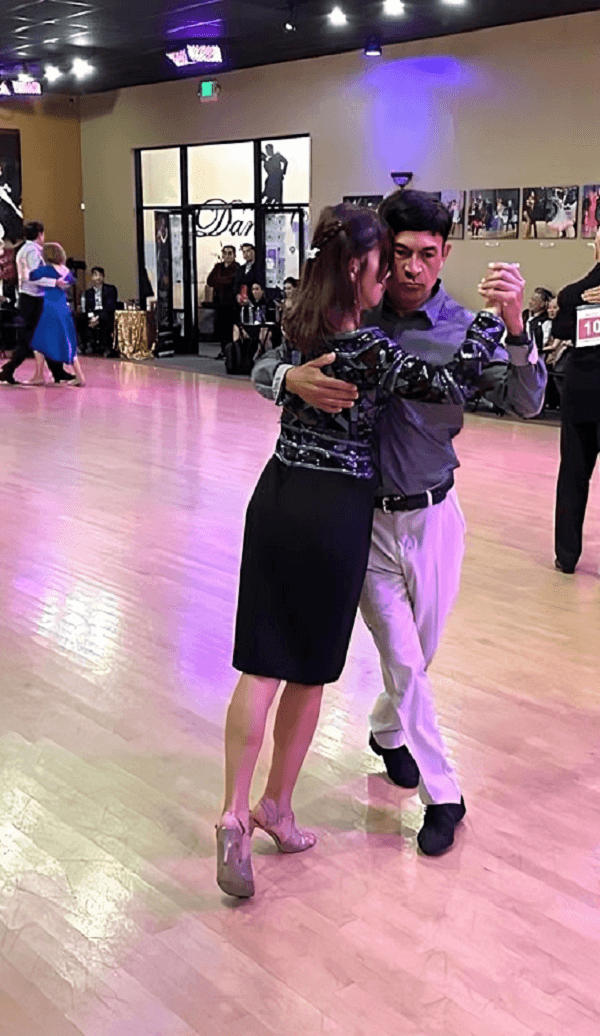
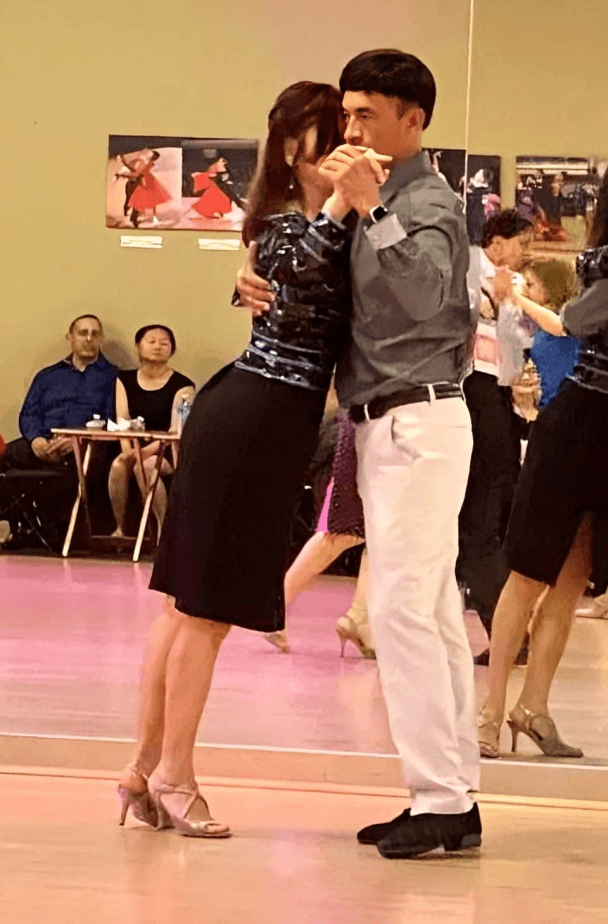
Carlos dancing tango
Carlos dancing with his dance partners in tango classes

Childhood with a tango singer mother   

Carlos’ contact with tango began during his early childhood thanks to his mother, who was a tango singer and dancer.   

Carlos describes his early live in El Salvador and points out that, back then, there were no cassettes or CD players with which to listen to music, so people had to make do with what they heard on the radio. His mother went to a well-known radio station to take part in singing competitions.   

It is then that the boy would listen to his mother rehearse for the competitions with old tango songs, which made him memorize them perfectly and be able to sing them in full. The rest is history.   

How Carlos sees tango today   

Today Carlos is a tango and salsa dancer, a genre that has also been important in his musical journey. However, he sings the songs he dances to at amateur level.   

For many years, he left aside music to devote himself to become a mechanic, a job from which he recently retired after more than 40 years of hard work. It was when he turned 45 that he fully resumed his love for tango and enrolled in dance classes to remember everything he had learned with his mother. 

This is why Carlos says that he is much more professional in dancing than in singing, since he dedicated much more time and effort to the former to become an expert in the field. Dancing, of course, is accompanied by singing, but it has less hierarchy in terms of the artist’s priorities.   

He has reached such a level of excellence in these disciplines that some friends of his put him in touch with Eduardo Guilarte, director of International Salsa Magazine, so that he could talk to us and his talents would become better known.    

Carlos was a mechanic
Carlos was a mechanic during a great part of his life, but tango is his biggest passion

Time dedicated to mechanics and dance   

Regarding the time dedicated to his formal work and dancing, Carlos claims he never had any problems, since he knew how to organize very well in this aspect. 

He always devotes his time to dance on weekends, days where he frequented, and still frequents, nightclubs with friends with whom he dances and spends very pleasant moments that clear his mind of everyday life.   

In addition to that, he also has a karaoke machine at home with which he also sings and practices his repertoire to delight anyone who wants to hear him on any nightclub stage.   

What Carlos has learned from tango   

Just as Carlos has been dedicated to singing and dancing tango, he has also invested time in learning about its history to give more depth to the knowledge he has about this genre and he wanted to share with us a little of what he has learned.  

He told us that one of the things he was most fascinated to learn is that tango has roots from many places and times around the world, although nowadays it is seen as an Argentine genre. Something that many do not know is that it has its origins in the arrival of Africans in the ”New World”, which played a fundamental role in the emergence of tango in Argentina and Uruguay, which were under Spanish rule.    

Both countries were transit ports for slave traffic, so the new inhabitants of these places brought with the their music and customs, which were mixed with the local music and customs to give rise to what is known today as tango. 

A very interesting detail he told us is that, when European sailors stopped in these countries and went to bars to look for drinks and some company, so the ladys in these places danced tango to seduce and provoke them. At that time, this kind of music was perceived as the lowest level of society to the point that the Catholic Church demanded its parishioners not to dance tango, but it turns out that the genre was pleasing to the people and nothing could be done about it.    

In the end, puritans had no choice but to embrace this wonderful dance and, today, people of all social classes, ages and races enjoy it without any complex.   

Carlos with his family
Carlos with his mothers, brothers and dog Mozote

The lyrics and references of tango    

Since Carlos has very extensive knowledge of everything about the genre and its lyrics, we wanted to know what he has studied about it.    

‘‘Tango can be many things at the same time. It can touch on issues related to the moral conduct of the individuals and, like many Latin genres, it also serves to mock and criticize politicians. It can also be an ode to love, spite and regret for having lost the loved one” Carlos shared with us on the subject.    

‘‘This genre can deal with many subjects at the same time, but one of the most recurrent is frustration with failed love and I don’t think that will change in a long time” said Carlos.   

Regarding the issue of the greatest artists who have inspired him to dance and sing tango, he mentioned Carlos di Sarli, Carlos Gardel, Oswaldo Pugliese and Enrique Rodríguez.   

What Carlos feels at singing and dancing tango   

Carlos describes listening to any tango song as ”listening to your own national anthem in a foreign country”. For him, listening to any piece sung by his parents in the past is a source of pride and takes him back to the most beautiful moments of his childhood. 

Carlos pointed out that ”when you are driven by loving emotions and some thoughts are trapped, you can express them through singing and dancing, which is what I always do”.    

The artist pointed out that he loves this world and it is one of the things that fills him the most in life, so he is grateful to be able to talk about it in International Salsa Magazine and express what it makes him feel to the world. 

Read also: Bolivian guitarist Gabriel Navia and his love for music 

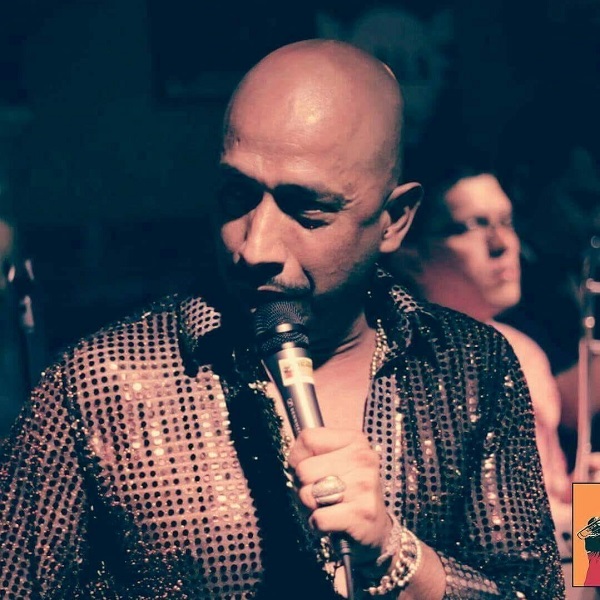
Cajiao, says he always had a taste for good music: the tangos and ballads of the 50s and 60s

Danilo Cajiao was born on February 9, 1969 in Cali Colombia son of Marina Munevar and Antonio Cajiao family with three siblings Walter, Patricia and Raul.

From my father I inherited the musical taste for Afro Antillean rhythms, we listened at home to the Sonora Matancera, Benny More, Arsenio, Daniel Santos and many more.

Danilo Cajiao was born on February 9, 1969 in Cali, Colombia.

There was always a taste for good music: the tangos and ballads of the 50s and 60s.

When I was a student I participated in several music festivals at school and I was part of several dance and Andean music groups.

I always liked salsa and my favorite artist of the genre will always be Angel Canales.

After the appearance of the program “YO ME LLAMO” in Colombia I was motivated to start the process to achieve the perfect imitation of Angel Canales.

I began my presentations in small salsa bars with a dance floor and I did about 4 songs of Diferente, as I went along the character was being perfected and the public and the owners of the bars were asking for something more.

I then created “the Orchestra SON DE LA 8″ in 2013 with the purpose of making the accompaniment and mount all the music of the different Angel Canales.

Orquesta SON DE LA 8

The market was opening and the support of the salseros was very large, We have had much acceptance in the salsero environment in Colombia.

Participating in major events locally, nationally and internationally:

Leyendas Vivas De la Salsa in Medellin Colombia,

Salsa al Parque Cali, Salsa al Parque Bogotá, Homenaje a la Salsa, Tributo a los salseros and Noche Blanca.

I have alternated and shared stages with several national and international artists and orchestras.

Orquesta Brodway, Orquesta Colon, Nelson y sus Estrellas, Gran Combo de Puerto Rico, Henry Fiol, Adalberto Santiago, Luisito Carrión, Papo Cocote, Cano Estremera, Moncho Santana, Orquesta Zodiac, Luigui Texidor, Frankie Vásquez, Tony Molina, Orlando Marín, Orquesta la Inmensidad and Orquesta la 33.

Danilo Cajiao, says there has always been a taste for good music, the tangos and ballads of the 50s and 60s.

International presentations:  

Guayaquil Ecuador and Caracas Venezuela.

Endorsed and supported by the family of ANGEL CANALES and by him I have taken my tribute to the most recognized places and salsa clubs in Colombia.

Apart from accompanying the Diferente Angel Canales with the orchestra Son de la 8 we have made our own music always keeping the line of heavy salsa and with good taste.

Angel Luis Canales “El Diferente”.

There were nine record productions by Angel Canales between 1975 and 1987, twelve productive years.

By 1970 Angel Luis Canales had put his voice on an album by African-American pianist Mark Dimond, and five years later Dimond’s orchestra was renamed “Angel Canales y Sabor”.

The immense musical freedom of Ángel Luis Canales Canales has much to do with the determining influence exerted on him by Rafael Cortijo, Ismael Rivera and the irreverence of the Combo de Cortijo as a whole.

The difference was that those two masons did not have enough money to support their ideas economically (discographically speaking) while Canales had enough because of the money he earned from his profession as a jeweler and diamond cutter.

That’s why he didn’t lower his head to anyone, that’s why he didn’t give in to any advantageous record contracts and made his own record label, that’s why he never paid or bribed radio producers, and he dressed the way he wanted.

That’s why the conservative salseros kept a CIA-like eye on him. And Canales revolutionized everything in his path: from his clothing to his vocal and orchestral arrangements, his presentations and his choice of repertoire.

By 1970 Angel Luis Canales had put his voice on a record by the Afro-American pianist Mark Dimond, and five years later Dimond’s orchestra was renamed “Angel Canales y Sabor”, and with it he would make a mark like few others in the world of salsa, from his total independence, to the freedom for the musicians, his revolutionary shaved head, and a wardrobe that had nothing to do with the salseros, in addition to his voice, repertoire and arrangements. Ángel Canales recorded in 1979 the album “El sentimiento del latino en Nueva York”, and an exquisite version of “Dos Gardenias”, by Cuban composer Isolina Carrillo.

“El sentimiento del latino en Nueva York” was a clarinada similar to “Imágenes Latinas”, the song by Argentine Bernardo Palombo presented a year earlier by Conjunto Libre, in terms of its contents of denunciation and clamor for justice. “Es el sonido que el americano oye/ y no entiende” (It’s the sound that the American hears/ and doesn’t understand).

Musical childhood

Ángel Luis Canales was born on June 29, 1950 in Santurce, Puerto Rico, son of Ángel Luis Canales and Ana Ilda Canales.

At the age of 8 he was already in New York with his parents, who liked to listen to romantic music and also to Cortijo y su Combo.

The Puerto Rican country song was also among his favorites; it was the jíbara song of his people. In time Canales would indicate that Cortijo and Ismael were determining influences in his musical and social journey.

Much has been said that his current retirement is due to Parkinson’s disease, but Ángel Luis Canales is there, he attends private invitations of his friends and remains in the battle line of salsa and life. He is currently 73 years old.

In those years and in school he was more inclined to practical workshops than books and that is why he went to work, recommended by one of his teachers in a jewelry store where from being a messenger he would learn all the secrets of the art of cutting, polishing and mounting diamonds. He became a professional, solvent, and with an extraordinary clinical eye that would serve him a lot later.

Vista larga, his new friends did not speak Spanish, his native language, but fortunately Angel Luis had peers of his generation, and Latinos like the Lebron brothers and Willie Colon himself.

He also took a long view of his internship in the U.S. Army and later assimilated the new trends that emerged in the music being made in New York.

He started out firmly, as we have already mentioned, with pianist Mark Dimond (Markolino), who had been linked to Willie Colón. With Mark he added his voice to some of the songs on the album “Brujería” and later, with the departure of the pianist, the orchestra was renamed “Ángel Canales y Sabor”.

With this band he would record “Sabor” in 1975 and other albums until “El Sentimiento del latino en Nueva York” in 1979.

Two years before the recording of this album, in 1977 Angel Canales made his first visit to a Latin American country, Panama, and the reception he received was such that he would later write a song dedicated to that country.

The same happened during his visit to Venezuela on November 13 and 14, 1981, which became a musical commotion of great proportions at the Poliedro de Caracas.

Likewise in Colombia and Peru he felt the devotion of the public of those nations. Perhaps he did not know the scope of his work and the projection he already had.

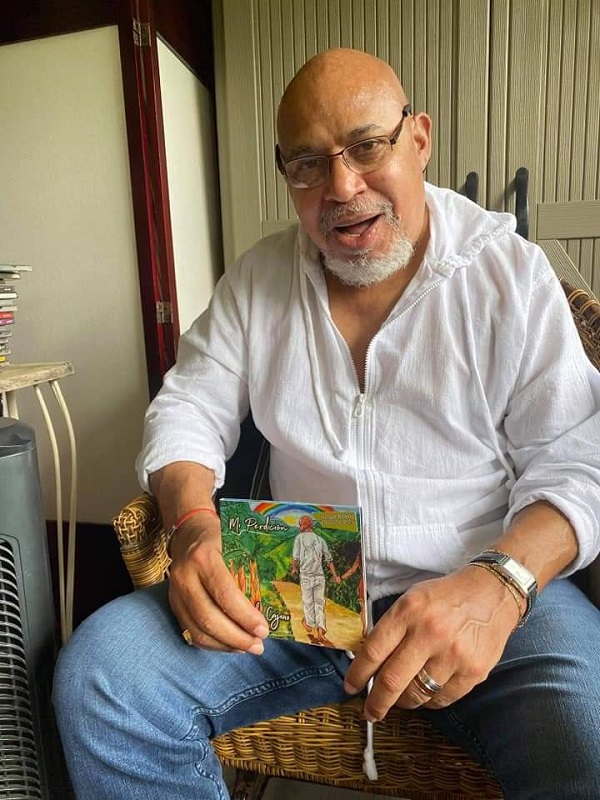
Angel Canales "El Diferente" receiving Danilo Cajiao's production "Mi Perdicion" year 2020.
Angel Canales “El Diferente” receiving Danilo Cajiao’s production “Mi Perdicion” year 2020.

Much has been said that his current retirement is due to Parkinson’s disease, but Angel Luis Canales is there, he attends private invitations of his friends and remains in the battle line of salsa and life. He is currently 73 years old.

Source: TeleSurTv

Also Read: Orquesta la Identidad is one of the most nationally and internationally recognized groups in the salsa genre

  • Page 1
  • Page 2
  • Page 3
  • Interim pages omitted …
  • Page 19
  • Go to Next Page »

International Salsa Magazine (ISM) is a monthly publication about Salsa activities around the world, that has been publishing since 2007. It is a world network of volunteers coordinated by ISM Magazine. We are working to strengthen all the events by working together.