Few musical groups have lasted half a century, maintaining their rhythmic identity unchanged, overcoming the push and pull of the recording industry, and resisting the vicissitudes of consumer culture as El Gran Combo de Puerto Rico has done.
Unlike other salsa orchestras, particularly those that have emerged in New York since the late 1960s, our so-called “Mulatos del Sabor” have always protected their musical timbre from innovations and complex experiments, safeguarding their own simple and rhythmic sound that has characterized them since their founding on May 26, 1962.
This does not mean that throughout 54 years of history they have avoided the significance of the new techniques and harmonic tendencies arrived by new times and new generations. On the contrary, the study and enjoy them, but in general, they keep them at a cautious distance to avoid infecting the identity traits of their sonority.
Thanks to this creative circumspection, the group, led by Rafael Ithier Nadal, has succeeded in establishing a rubric like very few other Afro-Antillean groups. The proof is in their musical catalog, so it is enough to listen, for example, to the harmonization of “Acángana”, a song produced in their third album, at the end of 1963, and to continue a journey through their history through melodies such as “Ojos chinos”, “A ti te pasa algo”, “Las hojas blancas” or “Sin salsa no hay paraíso” to confirm the thesis.
Its validity also responds to the synchrony between artistic creation, which adds music and talent, and collective fraternity, darned in a singular work ethic that is sustained in the philosophy of cooperativism. But beyond the sound and rhythm of their songs, if we consider other creative and sociological elements, we conclude that El Gran Combo de Puerto Rico is the group that best defines what we call salsa and, without fear of being mistaken, no one in the Latin American and Caribbean environment, inside or outside the United States, has been able to match their distinction and historical preeminence.
Part of the recipe for the success of this famous group lies in making everyday songs with simple, lilting and intelligible arrangements; a good rhythm section and a lot of clave, always thinking of the public’s taste without departing -and this is important- from the roots of Puerto Rican popular music. Rafael Ithier himself explains it candidly in an interview that is part of the draft of his memoirs:
“Not having a formal education in music, I cannot think of the works of Beethoven or Bach, but I can think of Chuíto (Jesús Sánchez Eraso) and Ramito (Flor Morales Ramos) when composing my arrangements.”

Since its foundation, El Gran Combo de Puerto Rico cultivates an important space in our Puerto Rican and Antillean songbook, standing out as one of the few musical institutions that assume the social and historical representation of the development of our melodic modernity, moving vigorously through the interpretation of rhythms such as bomba, guaracha, merengue, boogaloo, jala-jala, bolero, tango and, of course, salsa.
It is, undoubtedly, a sign of national and Afro-Caribbean identity, nourished by the rich cultural tradition that emerged and consolidated in the last half of the 20th century and remains strengthened to the present. Their artistic proposal shades a new era. Tanned in the shadow of veteran percussionist Rafael Cortijo Verdejo, the musicians who originated El Gran Combo in 1962 managed to impose a lilting sound that immediately captivated the national audience and, in a short time, during its first decade, began to take strong roots in stages around the United States, Colombia, Venezuela and Panama. The breadth of its repertoire, the sparkling choreography, the charisma of its members and the ability to incorporate humorous melodies and everyday narrations into its songbook were the key to its success.
Thus, the group founded by Rafael Ithier, Quito Vélez, Martín Quiñones, Miguel Cruz, Héctor Santos and Eddie Pérez together with Milton Correa, Daniel “Maninín” Vázquez, Micky Duchesne, Chiqui Rivera and Pellín Rodríguez stood out for their ability to entertain and provoke dancing among lovers of good music. Shortly after its creation, and after Roberto Roena and Andrés “Andy” Montañez joined the group, the work of El Gran Combo shone on television, becoming the first musical group in the country to fully dominate this mass media.
Their public presence was imposing: for seven consecutive years they maintained a daily participation on the radio waves and twelve television programs a week, becoming the great musical sensation of the country. They also determined the guidelines for the development of national popular music at the very moment when the great socioeconomic transformation of Puerto Rican society was taking place.
During its first seven years, the art of El Gran Combo de Puerto Rico was recorded in the productions “Menéame los mangos” (1962), “El Gran de siempre” (1963), Acangana (1963), “Ojos chinos-Jala jala” (1964), “El caballo pelotero” (1964), “El swing del Gran Combo” (1965), “En Navidad” (1966), “Maldito callo” (1967), “Esos ojitos negros” (1967), “Boleros románticos” (1967), “Fiesta con El Gran Combo” (1967), “Fiesta con El Gran Combo” (1967), “Fiesta con El Gran Combo” (1967), “Ojos chinos-Jala jala” (1964), “El caballo pelotero” (1964) and “El swing del Gran Combo” (1965), “Fiesta con El Gran Combo” (1967), “Boogaloo con El Gran Combo” (1967), “Tú querías boogaloo” (1967), “Pata pata, jala jala Boogaloo” (1967), “Tangos por El Gran Combo” (1968), “Merengues” (1968), “Los nenes sicodélicos” (1968), “Bombas” (1968), “Guarachas” (1968), “Latin power” (1968), “Smile” (1968) and “Este sí que es” (1969).
However, the glory achieved by El Gran Combo in its early years began to fade in 1969. That year all their appearances on radio and television were cancelled, their record production house, Gemma Records, cancelled their contract, their public engagements were undermined and the first important resignations of the collective took place with the departure of Roberto Roena and Elías Lopés, who immediately formed the Apollo Sound group. At the same time, the music market became more competitive. The emergence of new Afro-Antillean orchestras from New York determined a new course for popular dance music. The new salsa movement, articulated under the Fania company, imposed new challenges for the orchestras that, like El Gran Combo, had already established their dominance.
The “Universidad de la Salsa”, led by the ingenuity of Rafael Ithier, survived the inclemencies of this new era. Roberto Roena’s vacancy was filled with the famous dancer Mike Ramos, who will bring new choreographies to the collective. As a palliative to the crisis, they also ventured to create their own record label, EGC Records, to produce their musical works and not disappear from the artistic scene. Under this label appeared the album “Estamos primero” (1970), followed by “De punta a punta” (1971), a work which explored, for the first time, the sound of the trombone in the orchestra, and “Boleros románticos” (1972). Despite their quality, these productions did not penetrate the market as strongly as expected, although they contributed to the survival of the group. But it was the release of the album “Por el libro” (1972), followed by “En acción” (1973) and “Número 5” (1973) that returned El Gran Combo to its peak, thanks to the popularity achieved by the songs “Hojas blancas”, “El barbero loco”, “Guaguancó de El Gran Combo”, “Julia” and, especially, “Los zapatos de Manacho”.
The success that the group began to enjoy in that period suffered a bitter blow with the departure of singer Pellín Rodríguez, who in 1973 opted to pursue his career as a soloist. The veteran singer, creator of the hit “Amor por ti”, was initially replaced by Marcos Montañez, Andy’s younger brother, although his formal substitution was completed with the recruitment of vocalist and sonero Charlie Aponte, a young man with a splendid voice, enthusiastic and disciplined, who represented a great success for the group.
With new energy, El Gran Combo began to shine as one of the most important salsa institutions in and out of Puerto Rico, with the albums “Disfrútelo hasta el cabo” (1974), “Número 7” (1975), “Los sorullos” (1975) and “Mejor que nunca” (1976). It was, then, when the group, just when it recovered its place, suffered the departure of singer Andy Montañez, in 1977. The well-remembered “Niño de Trastalleres” accepted a seductive artistic offer to record as a soloist and, at the same time, to join the Venezuelan orchestra Dimensión Latina.
Andy Montañez’s decision affected the spirits of most of the members of the group because, for a moment, his absence was inconceivable, especially when he was considered the “eldest son” of Rafael Ithier. The discomfort caused by his departure was transformed into encouragement, perseverance and will to continue a musical project that has always been above any of its members.
Andy Montañez’s void was filled by singer Jerry Rivas, who took on a great challenge. However, the melodic strength that characterized this young vocalist, who started in the orchestra on April 19, 1977, began to seduce the group’s fans, who were persuaded with the interpretations “Buscando ambiente”, appeared in the album “Internacional” (1977), and “La clave y el bongó”, included in the production “En Las Vegas” (1978), the last album made for the EGC label.
The 1980s marked several important routes in the history of El Gran Combo. This period began with the release, in 1979, of the album “Aquí no se sienta nadie”, the most brilliant production in the group’s musical career and the one that sealed the closing of operations of the EGC production company, owned by the collective, to begin a new commercial relationship with the Combo Records company.
The value of “Aquí no se sienta nadie” is inscribed in the strength that this production generated in the market, to the extent of overthrowing the New York salsa invasion, imported from the family, which until then had dominated the radio airwaves and the record trade in the country.
As a historical fact, this is the first work of El Gran Combo in which all its songs were overwhelming hits: “Más feo que yo”, “Así son”, “Celos de mi Compay”, “Adela”, “Nido de amor”, “Brujería”, “Oprobio” and “Mujer boricua”.
Thus, the impact derived from this production reverted in an intense schedule of presentations inside and outside Puerto Rico that elevated the insignia of “Los Mulatos del Sabor” to a new place. The 80’s continued with the release of the productions “Unity” (1980) and “Happy Days” (1981), setting the pace with hits such as “Compañera mía”, “Te regalo el corazón”, “Pico pico”, “A la reina”, “El menú” and “Timbalero”.
Until then, the history of glory traced by the group landed in the celebration of its first 25 years of musical career, for which the compilation album “Nuestro aniversario” (1981) was produced, which included the most relevant themes cultivated by the group in that period, revamped with fresh and rejuvenated arrangements in the voices of Charlie Aponte and Jerry Rivas. The 1980s continued with the release of “La universidad de la salsa” (1983), remembered, among others, for the melodies “Mujer celosa”, “Pordiosero”, “Y no hago más na'”, “Las hojas blancas” and “Bomba de Puerto Rico”. With the same strength and impetus, in 1984 they released the production “Breaking the Ice” which is well remembered for the hit “Carbonerito”, interpreted by the chorus singer and dancer Luis “Papo” Rosario, who joined the group in the early 1980’s replacing the dancer Mike Ramos. In mid-1980, the album “Innovations” (1985) was released, which produced, among others, the hits “Juan Cabeza Dura”, “Camino de amapolas” and “La loma del tamarindo”.
Before the end of that year, El Gran Combo surprised its followers with the release of the album “Nuestra música” (1985), a project that rescued the Christmas spirit of the group by recording in one production melodies with festive airs that became the musical songbook of that celebration. “La fiesta de Pilito”, “No hay cama pa’ tanta gente”, “El arbolito”, “Desenfunda”, “El jíbaro listo”, “El alma de la fiesta”, “Asalto navideño” and “Cosas del campo” were the melodies of this spectacular musical work.
In 1986 came to the market the production “El Gran Combo y su pueblo” (1986), remembered for the songs “Lírica Borinqueña”, “Garantía” and “Le dicen papa”. This was followed by an album celebrating the group’s 25th anniversary, “25th Anniversary” (1987).
At that time, the salsa recording industry began to suffer alterations. Modifications in the scales of production, new technological advances and, most importantly, the dominance of female consumption and the “new” rhythmic preferences that were imposed on the market inevitably altered the harmonic conceptions of salsa.
Those were the years of the arrival of the romantic and erotic salsa movement which, for a moment, dominated the genre and displaced the “old” salsa exponents. Faced with this new scene, El Gran Combo opted to reinvent and “evolve” its sound, as can be seen in the album “Romántico y sabroso” (1988).
That album, which included songs such as “Quince años”, “Potro amarra’o” and “Cupido”, was measured against more stylized salsa formulas filled with softer arrangements and young performers who brought to the genre the image of a “refined rhythmic balladeer”.

The new route marked by salsa awakened a certain concern in the leader of the group, Rafael Ithier, who to face the new challenges imposed by the market opted to season the sound of his group with the technical skills of young arrangers such as Ernesto Sánchez, Louis García, and Tommy Villariny.
Then, Ithier thought that the “young blood” that was shining brightly in the salsa scene could contribute to resize the sound of El Gran Combo without altering its original formula. A first experiment in this direction produced the album “¡Ámame! (1989), which caught on with the “new” salsa taste thanks to the songs “Ámame” and “Aguacero”. However, the maintenance of a new melodic line, less lilting than the group’s original formula, collided with the production of “Latin-up” (1990), an album that went down in history as the group’s greatest blunder.
From then on, the veteran musician decided never again to abandon the direction of the orchestra’s musical arrangements. Thus, and without departing from the market trends and the taste of the new collective of salsa consumers, he produced “Erupción” (1991), an album that rescued the power and rhythmic essence of El Gran Combo.
“Agua pasada”, “Gotitas” and “Trinchera”, the latter dealing with the theme of the Puerto Rican soldiers who were taken to fight in the U.S. war against Iraq, were the group’s success in the 1990s.
Shortly after, the album “First Class International” (1993) was released, which was preceded by “Gracias, 30 años de sabor”, a compilation album celebrating the group’s three decades, a project that was complemented with the release of three volumes of old hits in original format.
Consecutively, El Gran Combo released the albums “La ruta del sabor” (1994), “Para todos los gustos” (1995), “Juntos de nuevo con… Andy Montañez” (1995), “Por todo lo alto” (1996) and “Pasaporte musical” (1998).
Although the rhythmic strength of the group was maintained, and the acceptance of the salseros never waned, the group’s presence on the radio waves and in public appearances of a festive nature began to diminish. The reason is attributed to market patterns, rather than to the group’s standard.
By way of example, in the four years between 1994 and 1998, four albums were produced – in addition to the commemorative production “35th Anniversary: 35 Years Around The World” (1997) – but the most memorable song in the Puerto Rican songbook during that period is “Que me lo den en vida”.
Those years served, meanwhile, for the group to consolidate other markets in Europe, Central and South America and the United States. In fact, it is the period of most international emergence, even though “La Universidad de la Salsa” always developed an intense work agenda outside the island.
The members of the group arrived in the 2000s with the work “Nuevo milenio, mismo sabor” (2001), which preceded the special production “40 años en vivo” (2002), which included the events of the great celebration to commemorate the four decades of the group’s history in a great concert held at the Rubén Rodríguez Coliseum in Bayamón.
After the 40th anniversary celebration, which resulted in the album “Los 40 de El Gran Combo” (2003), the group took a leap in its musical history by ending its partnership with Combo Records and joining the Fonovisa label, with which they recorded the albums “Para todos los gustos” and “Por todo lo alto” in 2003.
Then came the signing with Sony Discos, the first time the group sealed a commercial agreement with a large multinational company. In this new stage, the most important salsa group in the world produced the album “Aquí estamos y de verdad” (2004), remembered only for the hits “El matrimonio” and “Mi gorda bonita”.
It was in 2006 that Maestro Rafael Ithier decided to leave his instrument (the piano), which he played since the beginning of the group, to devote himself to directing the group from the front of the orchestra. This is when they recruited pianist Willie Sotelo, who was musical director and arranger of several orchestras such as Frankie Ruiz, Luis Enrique, Roberto Roena and others. Sotelo came to replace Maestro Ithier on a trip to Canada and New York on April 26, 2006 to which Don Rafael Ithier could not go for health reasons. Ithier was very pleased with Sotelo’s performance, so much so that since that date Maestro Ithier has been conducting the group from the front of the orchestra, although from time to time he sits down and plays the piano.
It was not until the release of “Arroz con habichuelas” (2006) that El Gran Combo, having completed 45 years of career, marked a new milestone in the history of salsa by becoming the most revered group in the genre, above all orchestras of all time, achieving the feat of turning all the songs of that production into major commercial hits. The songs “Si la ves por ahí”, “Te veo, nena”, “No hay manera”, “Arroz con habichuela”, “Esa mujer”, “Como tiembla el alma”, “Yo no mendigo amor”, “Piénsalo”, “No te detengas a pensar” and “No sé qué”. The result of this work derived, among other things, in several important distinctions, including two statuettes of the “Grammy” awards and an award of the “Premio Lo Nuestro”.
With “Arroz con habichuelas”, maestro Rafael Ithier endorsed that salsa marks its success in the flavor of the harmonic essence that is distilled in the clave. Therein lies the winning formula of this sonorous expression, the rhythmic message that distinguishes it and, of course, the indisputable personality of El Gran Combo. The success of “Arroz con habichuelas” was followed by the production “Sin salsa no hay paraíso” (2010), a rhythmic work, with simple and danceable arrangements that reaffirms the traditional sound of the group with songs like “Sin salsa no hay paraíso”, “El problema está en el coco”, “Es la mujer”, “Achilipú”, “Colombia tierra querida”, “A mí me gusta mi pueblo”, “La espuma y la ola”, “El comején”, “La receta de amor” and “Alguien que me quitar tu amor”.

A well-deserved tribute produced by Banco Popular de Puerto Rico, the special “Salsa” launched in December 2010, closed with a flourish the first decade of the new millennium. That project was a resounding success in the market and earned the group several important awards in the music industry.
Today, with more than half a century of history, El Gran Combo is still going strong and vigorous, setting the rhythmic tempo of salsa with a distinctive melodic line and a unique flavor that highlights the best of our Antillean heritage. It is in 2012 that they celebrated their 50th anniversary with a world tour that toured 5 continents. Countries as far away as Russia, China, Australia, Japan, Africa, all of North, Central and South America, Europe, Canada, celebrated their music and packed the presentations of this musical institution.
A double album collector’s version titled “El Gran Combo de Puerto Rico 50th Anniversary Vol I” was released and broke records in all venues and record stores. This album was released in CD and vinyl format with gold-colored cover and double cover. It sold out in less than a month.
The year 2014 marked the end of Charlie Aponte’s participation as vocalist of the group and the young Anthony García joined the Gran Combo. His acceptance was impressive and the young man adapted to the group quickly. “Anthony has brought to the group an injection of energy and youth that we needed” says Jerry Rivas.
In 2016 they released their production “Alunizando” where “Yo soy tu amigo”, “Tiene que haber de tó”, “Sácame el zapato”, “Mi Isla”, “Arepa con bacalao”, “Seguirá” were heard insistently on the radio. Alunizando has been catalogued as an emblematic album for 2016 and reached the Billboard chart with the song “Mi Isla” composed by Willie Sotelo, pianist of the group.
Already in 2017, it was the year of the celebration of their 55 years of trajectory with a very special concert, “THIS IS IT” at the Coliseo José M Agrelót in PR. In that concert its founder celebrated his 91 years of life. We asked him what is the secret for a group to last so many years and he answered: “We survive because we represent the music of a nation that is rich for its cultural heritage. That is why salsa is and will always be Afro-Antillean music, because it is derived from Africa, that’s where it all began, that’s where our roots are. We inherited this because it comes from there, we cannot take away the merit that a German or Swiss orchestra may have, but they cannot produce more than us because they do not have our cultural richness”. Rafael Ithier’s words with light.
At the end of 2017, after the scourge of Hurricane Maria, the Gran Combo continued its tour of activities outside Puerto Rico, in 2018 they performed at the prestigious Radio City Music Hall before a full house which they repeated in 2019 and only in February 2020.
At the moment they are recording a new album that is expected to be released in the summer of 2020, if it is not delayed due to the pandemic that is affecting the entire world.

Source: https://www.elgrancombodepuertorico.com/
Article of Interest: Understanding the music business

Rafael Reyes is a Cuban who was dedicated to being a coach of Greco-Roman wrestling and Olympic Wrestling in Cuba and had the opportunity to work in Mexico in this profession during the time that his contract imposed, during this time he made the decision to live there , being his current stay in Nayarit, Mexico.
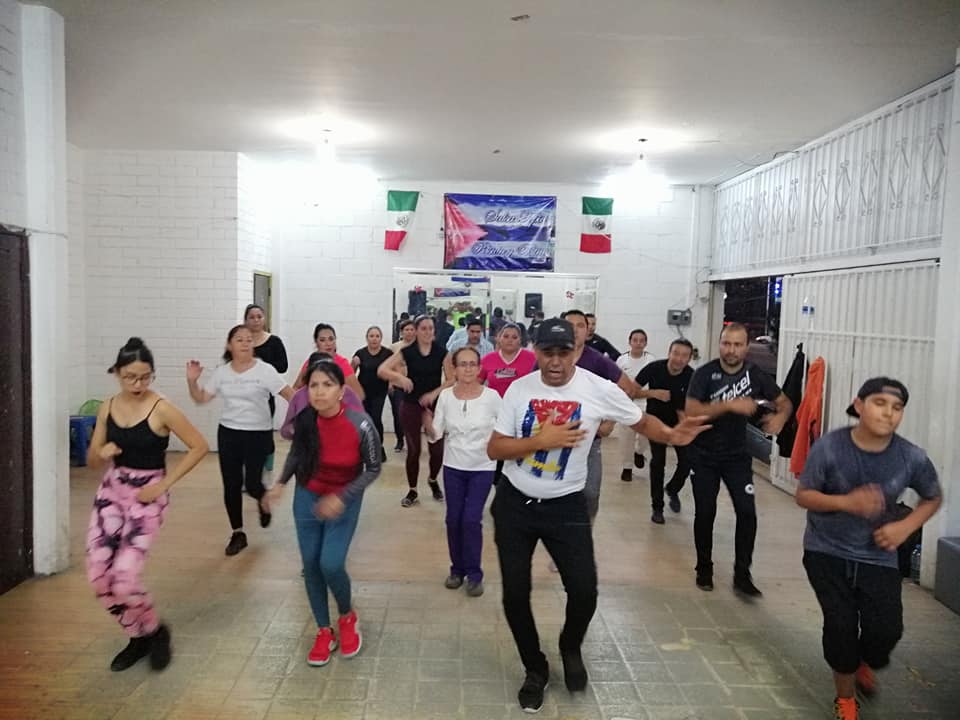
Thanks to personal motivation and the support of his students, he created and founded the Salsa Tepic Academy 6 years ago, he tells us that before founding his academy he gave dance classes at the Bar Juanes located at Rafael Buelna 86, Fray Junípero Serra, 63169 Tepic, Nayarit, Mexico; For him this was a hobby that he enjoyed very much and when he stopped working there, many of his students advised him to open a dance academy and that is how it came about.

|
|
|
Son Cubano and Salsa Cubana are the genres that he likes the most, he mentions that each genre has an identification in each country and in Cuba he tells us that it is very lively and dynamic which can make different fusions such as Timba ( is the fusion of several Afro-Cuban rhythms)… giving this musical genre a lot of motivation, differentiating it from linear salsa, Salsa Neoyorquina and Salsa en Dos, but be careful, you have to know the differences between traditional Timba and Cuban Timba. and very broad cultural.Being Cuban, he tells us that music is in the blood of most Cubans, especially Afro-Caribbean music, and to top it off his parents enjoyed dancing so he spontaneously inherited this passion for dance from a very young age, and He perfected his native dance techniques in workshops with various teachers.
Rafael Reyes is also in charge of organizing the Salsa talent festivals in Nayarit, they have invited Guadalajara, Guaraguato, Puerto Bayarta, among others with new talents so that they have something more than just academic learning but a new experience through participation. and competition between the different students of each city, showing all their abilities on stage; In total, it has had 5 Salsa talent festivals, which one can find out when the next one will take place through the Salsa Tepic Facebook page.
Also the students of the Salsa Tepic academy have participated in other events such as the one that happened a few weeks ago at the Bar Tango Milonga, another event they participated was the Puerto Bayarta festival, and in other places.
The dance classes at the Salsa Tepic Academy are currently active, of course with the protection measures for the covid-19, they began to work from 7 – 10 am and from 5 to 10 pm Mexico time; There they teach Cuban Salsa, Bachata, Son Cubano, Rumba, Merengue, Cumbia, Cha Cha Cha, among other rhythms, so if you are interested in learning to dance from scratch or continue with the experience you have in order to be able to defend yourself during a social, competitions, parties and / or meetings, and at the same time that the students learn to identify the type of music that they dance respecting their respective times.
https://fb.watch/6q7Gdt89if/
And he leaves us the following message for all his readers, current and future students “Whatever happens, they dance, never stop, dance is very healthy, it takes away stress, it is motivational, it makes you more sociable and above all it is something that everyone likes when one learns … that they take off the taboo or the fear of saying I don’t like dancing because of any circumstance ”
Each country has its essence with respect to what it represents above all in its culture, and in Latin America there is a great variety of musical genres and dances unlike Europe since during the colonization of the new world a mixture occurred not only at the level of races but also of culture, emerging a great variety of musical genres…
In this time we have Argentina, a country full of cultural diversity being the most interesting characteristic of this great South American country. It is a country where music is expressed with great style and elegance, especially at the level of dance, since its presentations are made in various places, including outdoors, especially in Buenos Aires (usually in summer).

During the 50s in the USA (United States) several musical genres were called “Latin Rhythms” to differentiate them from African-Americans, among which are salsa, merengue, samba, bachata and bolero among the most known. You will say that this has to do with the musical genres mentioned above … because there is a great difference and history since each musical genre or dance has its own rules to perform them either on a musical or dance level, but when a mixture arises. from two or more musical genres, a new one more innovative, fun and with a taste to the population, like what happened with the Latin rhythms in that country.

Salsa is a contagious and fun rhythm most of all for the general population at the time of dancing it, since people enjoy a very lively music where they usually shine with the amount of turns to magically show themselves with their spectators and to achieve this you are born with it or you train with professionals in dance; this generally applies to all Latin and / or tropical rhythms.
Flamenco has been his principal victory. Tango his maximum exploration. Salsa his greatest ambition, and Bolero his deepest romanticism. The world has witnessed his talent, Diego Ramón Jiménez Salazar or better known as Diego “El Cigala” has immersed us in these torrential musical genres with his masterful voice for 24 years. Each album shows us intoxicating rhythms that introduce you to joy on many occasions, and many others evoke stories of deep melancholy in their unequivocal lyrics.
Diego, a good, upright, and friendly man has lived very hard moments like the loss of the two most important women in his life. Her wife, Amparo Fernandez, a victim of cancer that took her life in 2015 in her home (Punta Cana, Dominican Republic), and a year after lost her mother, Aurora Salazar Motos.

For 26 years, Amparo was his manager, friend, confidant, wife, and mother of his two oldest children (Diego and Rafael). She was always his stick of support even during the worst stage of his career.
Diego El Cigala has always been very familiar, sentimental, and a believer in God. “… My children make me and they will always keep me going, music heals me from the inside, and God accompanies me making everything possible”, explains the nationalized Dominican artist.
A year and a half after these fateful circumstances, the XXI century cantaor resurfaces and rebuilds his life with his current couple Dolores “Quina” and his third son Manuel, who was the product of this relationship.
Quina loves me, I love her, and she understands me like nobody. I have grief and joy every day of my life. I see my children, my wife, my granddaughters and shot forward.”
At the beginning of 2000, there was a meeting. Diego “El Cigala” and Bebo Valdés got together for the first time, and very much in the style of a bridal link, Diego and Bebo created a strong bond of friendship, mutual respect, and professional admiration.

It was an afternoon at the house of musical director Fernando Trueba where they met and did not stop exchanging opinions about flamenco and Cuban music. From there their first collaboration together, three songs from the CD “Corren tiempos de alegría” released in 2001.
Bebo ever transmitted serenity and tranquility to Diego, which allowed them to record two years later Lágrimas Negras, an album with which they won a Latin Grammy Award for Traditional Tropical Album in 2004.
Both artists lived moments of unique and spiritual teachings. Each day Diego regrets Bebo’s physical departure and misses him so much that every day he looks up and sees Bebo saying to him: What’s wrong?
Bebo helped him get to know the Caribbean where he ended up living, helped him transcend flamenco, and learn about other genres. For that, the only way to pay tribute to him was with the sixth track belonging to the Indestructible record production, Fiesta para Bebo, with the special guest, Los Muñequitos de Matanza.
Since Lágrimas Negras, the cantaor of the XXI century has been able to venture into new genres and collaborations, such as the material Cigala & Tango (2010), Indestructible (2016), and his most recent record production “Cigala canta a México” presented in 2020.
Since 2016 Indestructible presented the greatest musical fusion of the American and European continent. It was a Salsa and flamenco production that brought together the founders of the Fania All-Stars after 25 years and recalled emblematic songs such as El ratón, Periódico de ayer, Moreno soy, and Juanito alimaña popularized by Willie Colón and Hector Lavoe, among many others.

Diego El Cigala from the gypsy ethnic group grew up in love with this Latin music since his childhood thanks to his father and the great stars of hard Salsa such as Héctor Lavoe, Celia Cruz, Cheo Feliciano, La Fania All-Stars, and El Gran Combo.

This tenth studio album in tribute to his wife Amparo Fernandez, and his great teacher and friend, Bebo Valdés, was recorded in different territories of the American continent, bringing the color and sound of Salsa from each area to this CD. The cities that he visited and captured part of the recording were: Cali (Colombia), San Juan (Puerto Rico), Havana (Cuba), Punta Cana (Dominican Republic), New York (United States), Miami (United States), and Jerez de la Frontera (Spain) where the production ended with the addition of guitar, choirs, cajón, and flamenco clapping.
As part of this fusion of genres, El Cigala had the opportunity to count on the talent of Oscar D’Leon, Bobby Valentin, Larry Harlow, Roberto Roena, Eddie Montalvo, Nicky Marrero, Jorge Santana, Gonzalo Rubalcaba, Luis Perico Ortiz, Horacio el Negro, José Aguirre, Diego del Morao, and the percussion group Los Muñequitos de Matanza with whom he created a very special connection because they have a lot of similarity with the culture of his gypsy people, “I love them, no I’ve seen better people with so much heart “, that’s how El Cigala described them.
Indestructible, nominated for the Latin Grammy for Best Tropical Album in 2018, represents the immortality of Salsa, the essence of the Afro-Caribbean rhythm that endures in the Latin roots of the new generations although it no longer has the same boom that is enjoyed between the period from 1970 to 2000.
Salsa was in the 70s a way to confront racism and xenophobia that Latin Americans were experiencing in the United States. That unites Salsa with gypsy music and the gypsy people, who have also experienced these prejudices”. Diego “El Cigala”