• Skip to primary navigation
  • Skip to main content

International Salsa Magazine

  • HOME
  • Previous editions
    • 2026
      • ISM / April 2026
      • ISM / March 2026
      • ISM / February 2026
      • ISM / January 2026
    • 2025
      • ISM / December 2025
      • ISM / November 2025
      • ISM / October 2025
      • ISM / September 2025
      • ISM / August 2025
      • ISM / July 2025
      • ISM / June 2025
      • ISM / May2025
      • ISM / April 2025
      • ISM / March 2025
      • ISM / February 2025
      • ISM / January 2025
    • 2024
      • ISM / December 2024
      • ISM / November 2024
      • ISM / October 2024
      • ISM / September 2024
      • ISM / August 2024
      • ISM / July 2024
      • ISM / June 2024
      • ISM / May 2024
      • ISM / April 2024
      • ISM / March 2024
      • ISM / February 2024
      • ISM / January 2024
    • 2023
      • ISM / December 2023
      • ISM / November 2023
      • ISM / October 2023
      • ISM – September 2023
      • ISM – August 2023
      • ISM July 2023
      • ISM Edition June 2023
      • ISM – May 2023
      • ISM April 2023
      • ISM March 2023
      • ISM February 2023
      • ISM January 2023
    • 2022
      • ISM December 2022
      • ISM November 2022
      • ISM October 2022
      • ISM September 2022
      • ISM August 2022
      • ISM July 2022
      • ISM June 2022
      • ISM May 2022
      • ISM February 2022
      • ISM January 2022
    • 2021
      • ISM December 2021
      • ISM November 2021
      • ISM October – 2021
      • ISM September 2021
      • ISM August 2021
      • ISM July 2021
      • ISM May 2021
      • ISM April 2021
      • ISM June 2021
      • ISM March 2021
      • ISM February 2021
      • ISM January 2021
    • 2020
      • ISM December 2020
      • ISM November 2020
      • ISM October 2020
      • ISM September 2020
      • ISM August 2020
      • ISM July 2020
      • ISM June 2020
      • ISM May 2020
      • ISM April 2020
      • ISM March 2020
      • ISM February 2020
      • ISM January 2020
    • 2019
      • ISM December 2019
      • ISM November 2019
      • ISM October 2019
      • ISM Septembre 2019
      • ISM August 2019
      • ISM July 2019
      • ISM June 2019
  • Spanish
  • Download Salsa App
    • Android
    • Apple

Search Results for: tropical

The Granada LA

North America / USA / Los Angeles

The Granada LA is the home to a Ballroom, Latin, Salsa & Bachata dance studio with Los Angeles hottest dance instruction with classes a week and private lessons available by appointment. Offering several nights with live entertainment and dancing to show off all you have learned.

Salsa & Bachata Taco Tuesday - The Granada
Salsa & Bachata Taco Tuesday – The Granada

Tuesday is Salsa & bachata Nights, Thursday is Bachata Tropical Nights with 3rd floor Hip Hop/Reggaeton, Friday and Saturday Nights the main dance floor becomes Los Angeles Best Live Salsa Club! Enjoy an extra room on Saturday for bachata and Hip Hop/Top on patio.

Bachata Thursday at the Granada LA

Also the first and third Sunday of the month, live music for the Ballroom Dinner Dance with Two’s Company with all your favorites. Also, offering other special nights once a month on different nights.

Con Mayor Live Salsa Bachata - The Granada LA
Con Mayor Live Salsa Bachata – The Granada LA

Group Classes & Private Dance Lessons go on throughout the building, but it is important to remember that the Granada LA has other activities and groups sharing the space day and night.

Conjunto Oye Live Salsa Saturday - The Granada LA
Conjunto Oye Live Salsa Saturday – The Granada LA

The restaurant is open Thursday thru Sunday for dinner, in addition to being the caterer for rentals. Just as most clubs in Hollywood, enjoy different theme nights, so will the Granada LA.

Friday and Saturday night Salsa dance club, Ballroom Dinner Dance, Thursday night Bachata dance club, Cuban Timba party 2nd sunday of the month, Chicago stepping platinum club 4th sunday of the month, Special Dance performances, Concert nights & special events throughout the week and on weekends.

Bachata Concert Dani J - The Granada LA
Bachata Concert Dani J – The Granada LA

Teaching and choreographing for shows, events, parties, celebrations and your first dance. The Ballroom Dance Studio is located in Los angeles and specializes in Ballroom, Latin, Swing, Salsa & Tango dance classes and instruction both privately and in groups.

Cuban Dance Party - The Granada LA
Cuban Dance Party – The Granada LA

Offering an elegant beautiful Banquet Facility in Los Angeles for your upcoming Wedding Reception, Quinceanera, Birthday Party, Anniversary or a Special Occasion in Alhambra.


The “Patio de Tula”

Latin America / Venezuela / Yaracuy

In the Yaracuy state of Venezuela, where nature reigns, salsa is also danced

Meeting point: El Patio de Tula in the city of San Felipe

In the patio of a house in an urbanization in the city of San Felipe, since 2013, there has been a salsa scene that is worthy of recognition. The Patio de Tula is the name of the place, named after the Buena Vista Social Club song: El Cuarto de Tula. It is a space created by music lover and cultural promoter Yony Padilla, inspired by some night spots in Caracas where salsa was danced, such as the emblematic “El Maní es Así en Sabana Grande.”

El Patio de Tula
El Patio de Tula

Apart from having become a point of reference in the Yaracuy state and a meeting place for musicians and passionate salsa lovers, or simply a place to de-stress or have a delicious soup on Sundays, in El Patio de Tula We work diligently to rescue the salsa genre and become an engine of dissemination and a teaching center for the musical education of children, young people and adolescents.

The aim is to create an African-American percussion and dance school, where rhythm and dance are connected in a vital and artistic encounter, through Afro-Caribbean, Afro-Venezuelan percussion workshops and Caribbean dance (salsa) and traditional Venezuelan dance classes. It is important to highlight that this training proposal will be called the Juan Carlos Marín Percussion School, as a living tribute to this musician from Yaracuya, who throughout his career has dedicated himself to the study and research of Latin music and the Yaracuyan drum. It would be well worth it for this project to be taken into account by the region’s cultural organizations to support it.

There are various personalities and groups linked to the salsa and urban music scene that have visited El Patio de Tula, among them we can mention: Edgar “Dolor” Quijada, Orlando “Watussi” Castillo along with Mandinga Star Band, Rodrigo Mendoza, Carlos Hurtado , Jóvito Eduardo, Wilmer Lozano, Edgar “El Abuelo” Rodríguez, Alejandro Mayora, Ray Herrera, David González Jr., Ronald Gómez, Cheo Linares, Aquamarina “La Sirena de la Salsa”, DJ. Augusto Felibertt, Sonora Yambú, Orquesta Salsa Cinco 25, Orquesta Salsa Libre, Orquesta Malecón, the Mango Group, Dame Pa Mátala, Y de Cuba, Sixto Llorente and the Yoruba Andabo Folkloric Group.

Yony ​​Padilla tells us that the salsa scene in the Yaracuy state is on the rise. To do this, they have the Hermandad Salsera de Yaracuy Foundation, which goes hand in hand with El Patio de Tula and at the same time is linked to the radio program Expresion Latina, produced and hosted by Hermes Mejías, and broadcast on the 102.9 FM dial from the central area of ​​San Felipe. Another location that is leading the scene in the area, as Yony tells us, is El Rincón de La Salsa. The large number of musicians and orchestras in Yaracuy are proof of what was said above. Among the musicians the following stand out:

  • Domingo Bracho – piston trombone
  • Jorge Yujere – trombone
  • Harry Ramos –piano
  • Luis Reyes –percussion
  • Kendri Siso –percussion
  • Asael Hernández – piano
  • Darwin González – Cuban three
  • Domingo Suárez – percussion
  • Jimmie Graterol – percussion
  • Jesús Mieres – percussion
  • Manuel Mieres –trombone
  • among others.

The salsa orchestras are: Sonora Yambu, Elegua Son, Yaracuy es Salsa, Orquesta Los Gullet de Marín, where Sonero Orlando “Watussi” Castillo, residing in Milan, Italy, participated as a special guest, Orquesta Trombosis and Escala 78. Among the DJs are: Diego Music, Jesús (Drupy) and Robert Villalobos.

Flyer de Patio de Tula

Further, investigating the salsa scene in the states surrounding Yaracuy, we were able to verify with the promoter Padilla that salsa is picking up in Aragua, this, if we measure it by the number of orchestras that he mentioned to us: Orquesta Mangue, Orquesta Primera Clase, La Foca and his Caribbean Sextet, Enmanuel Orchestra, Latinos Orchestra, Mondys Band, Fascination Orchestra (Recognition from the Universidad Bicentenario de Aragua –UBA–), Sono-Star Orchestra and Roberto Monasterios and his Orchestra.

Likewise, in other nearby states there are orchestras such as Malecón, Sazón Latino, Soneros Latinos, Líder, La Nor-Star in Lara; Osaona, Juramento, Sorongo, Batakum, Son Colón, Adrenalina Latina Puerto Cabello in Carabobo; and the Piri Salsa Orchestra in Falcón.

We invite you, therefore, to attend one of the tremendous rumbas that take place in El Patio de Tula, in a family and calm atmosphere, and in the process visit the greenest and most vibrant state of Venezuela. The Exotic Tropical Flora Park, the San Felipe El Fuerte Archaeological Historical Park and the Cumaripa Reservoir Recreational Park are an exemplary example of how, in Yaracuy, nature reigns.

ADDRESS: El Patio de Tula is located on 3rd street, San Rafael, Independencia, Yaracuy state, Venezuela.

Note: We highly appreciate the collaboration received from Yony Padilla and Augusto Felibertt in the preparation of this text.

Celesté Polanco. The Salsera Fair

North America/ USA / Pennsylvania

Celesté Polanco “The Salsera Fair” is a young singer in constant ascent in the National Salsa music movement nowadays. This star from Philadelphia with Dominican and Puerto Rican roots has managed to delve into the acceptation of the tropical music market with her two hits: “Traicionada” and “Mi Salsa te llama” in collaboration with great producers and composers of Latin Music.

Celesté Polanco
Celesté Polanco

This Salsera and humble person began her professional career thanks to the support of Héctor Rosado who believed in her talent and gave her the opportunity to be the lead vocalist of his Hache orchestra and at the same time to start working in the musical field, sharing stage with renowned Salsa figures, such as: Frankie Vázquez, Kevin Ceballo, Frankie Negrón, VITI Ruiz, Herman Olivera, Ricky Luis, and Chino Núñez y su Orchestra.

In 2015 Polanco decided to become a soloist with the 2x Grammy Award and 7x Billboard Award winner, Pablo Chino Núñez, recording her first two singles: “Traicionada”, released in 2015 under the production and arrangement of Pablo Chino Núñez, and composition of her authorship together to Linen Church and a year later her second promotional single “Mi Salsa te llama” whose composition, arrangement and production was in charge of Pablo Chino Núñez and Celesté Polanco.

Celesté Polanco photo in the USA

“La Fiera”, nicknamed by her producer Chino Núñez to see her deliver her emotions during the recording of Traicionada, connects her art with her experiences. “The best way to sing is from my experiences. It’s my art, you know, someone will connect with it because they have encountered it too. I love happy music as well that’s where “Mi Salsa Te Llama” comes in”, said Celesté.

“… I love Salsa I feel that in the Salsa music industry there are not enough females emerging in the Salsa Industry.”

Foto de Celesté Polanco

Celesté Polanco currently resides in Philadelphia and is recording her first album in which it will include her third promotional single: “El Tiempo Lo Dirá” which will be presented with an official video and will be available on all digital platforms soon.

This representative of the Salsa has performed at major festivals, such as: NAHREP (National Association of Hispanic Real Estate Professionals), LA LIVE (National Convention, 2016), MUSIKFEST in Bethlehem & LEVITT STAGE in PA and for this 2018 “La Fiera” will continue presenting his shows in Miami, Chicago, LA and also in the tri-state area.

Traicionada Cover - Celesté Polanco
Traicionada Cover – Celesté Polanco

“…The market of salsa, in general, it’s worldwide re-known. It doesn’t pertain to one ethnicity it has become multicultural… It’s a worldwide movement”.

“… My main focus is to reach as many people as I can through my voice and become a positive influence to the younger generation and all those who aspire to do great things but are scared to try”. Celesté Polanco

The Latin Music’s influences of Celeste “La Fiera” Polanco:

-Celia Cruz  -Oscar D’ León  -Yolanda Rivera  -Cano Estremera  -Orquesta Mulenze, etc…

For more information about Celesté Polanco, please like her on Facebook: https://www.facebook.com/celeste.polanco.7

El Tiempo Lo Dira Cover - Celesté Polanco
El Tiempo Lo Dira Cover – Celesté Polanco

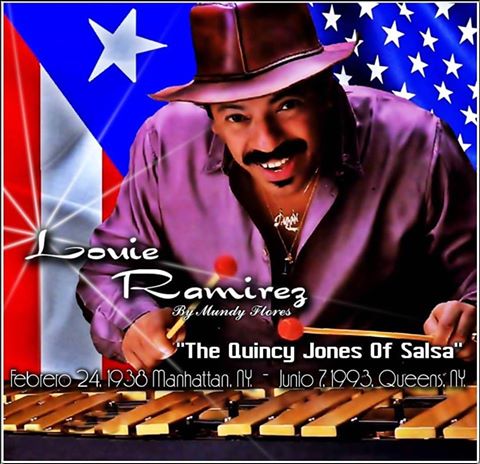
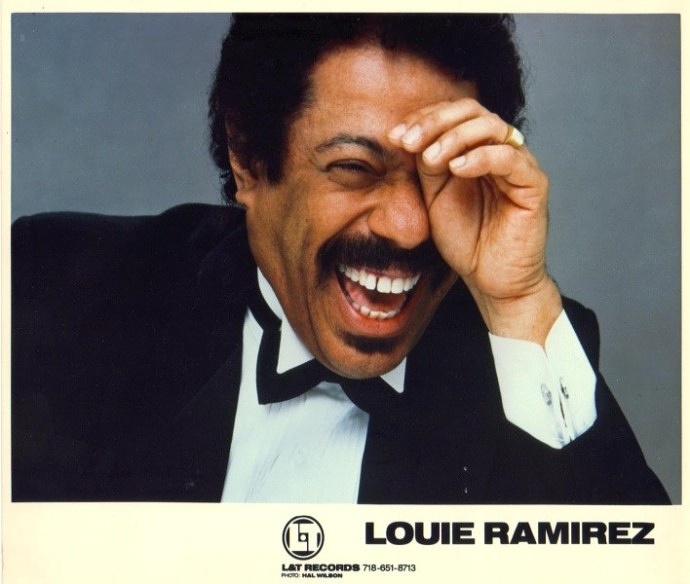
Louie Ramírez. The Hidden Talent of Salsa Ahead of its time

North America / USA / New York

Louie Ramírez.

Music often requires characters who are always behind the scenes and support the work of singers and performers with their talent, who are ultimately the ones who “put on their face” and become popular. Sometimes, however, these anonymous characters rise to fame in order to perform their own work and even become more popular than any popular singer.

In the case of Pop, this character is called Quincy Jones, of whom it is enough to say that he has been an arranger for Frank Sinatra and a producer for Michael Jackson. A nobody”. In the case of Salsa, these characters have been symbolized by Jones’ emulator, a guy named Louie Ramírez who has done everything with everyone.

Louie Ramírez
Louie Ramírez

One afternoon in 1994, Ramírez was driving his car down the highway that would take him to Variety Studios in New York. It was going to be a quick session since he only needed one song to complete his 20th album as conductor. Perhaps that was why he was nervous and that filled him with anxiety. Minutes later he couldn’t resist the feeling and had to pull over to the side of the car. He had not finished doing it when a cardiac arrest ended his life.

Louie Ramírez
Louie Ramírez

Louie Ramirez was a genius. The classic man to whom everyone turns for advice and solutions to their problems. It didn’t matter if they were young or old musicians. The fact was, Louie had the answer, and visiting him was like rubbing Aladdin’s lamp. That was a characteristic that always accompanied him, from that first recording “Conozca a Louie Ramírez” in 1963.

He was 20 years old at the time and had already stood out for composing some pachangas and arranging for Pete and Tito Rodríguez’s orchestras. The commentator Dick Sugar then presented it like this: Ramírez breaks the image of the director of a group that uses the talent of other composers and becomes a follower of a rhythm. No, Louie Ramírez is a creator in his genre.

Louie Ramírez Photo
Louie Ramírez Photo

That talent did not go unnoticed by the new Czar of Latin music in New York, Jerry Masucci, who hired him as a star for Fania Records and at the same time, as an arranger for the orchestras and ensembles that belonged to the record company. Ramírez was soon involved in work and was only able to record two albums during the sixties, “Good news” and “Alí Babá”.

On that last album appeared the hit that allowed him to be a famous artist, El Títere, a true Salsa classic. The theme was sung by Rudy Calzado, the third of the soneros that Louie had used without finding the ideal. That was a burden that accompanied him as a director during the seventies, when he used singers of the stature of Pete Bonet, Tito Allen, Jimmy Sabater, “Azuquita” Rodríguez, Adalberto Santiago, and even Rubén Blades.

Louie Ramírez
Louie Ramírez

It was with Blades, precisely, that he made an anthological album, “Louie Ramírez and his friends”, in which the song Paula C was included, with an arrangement of those that deserve -hats off-. By then, Ramírez was considered in New York as the most progressive arranger that Salsa had, thanks to the brilliant work done for the Fania All Stars. An excellent job had been the instrumental arrangement of Juan Pachanga, to be sung by Blades, of Canta Canta for a performance by Cheo Feliciano, and of the entire album “Algo nuevo” that Tito Rodríguez sang with Louie’s orchestra.

But the high point of Ramírez’s career came in 1980 when Joni Figueras, representative of the K-Tel International label, hired him to arrange the ballads Todo se derrumbó and Estar Enamorado de Manuel Alejandro. The album, which included these and other tracks, was released two years later under the title “Hot Night” and was recorded by Louie’s own orchestra.

Louie Ramírez - Salsa Progresiva
Louie Ramírez – Salsa Progresiva

This is how the Salsa-ballad or Salsa-romántica was born in a job that Ramírez continued until his death, making attempts at Latin Jazz from time to time, which he loved. That is why he recorded an album in tribute to Cal Tjader, where Louie was director, producer, composer and arranger, in addition to playing the timpani and his favorite instrument: the vibraphone.

Louie Ramírez was a genius in arranging, in a career where those of Guantanamera and Isadora stand out for Celia Cruz, El Guiro de Macorina for Johnny Pacheco and El Caminante for Roberto Torres. Apart from this, there are his works for the Alegre and the Cesta All Stars. Regarding this profile of Ramírez, the critic Eleazar López defined it very well:

Louie Ramírez - salsero
Louie Ramírez – salsero

It is not easy to arrange for a dance band, especially when it comes to a group that cultivates the hot tropical genre. Many musicians feel influenced by Jazz and the result of their orchestrations leaves a void in the dancer. Others arrange simple, but so simple that they repeat and copy themselves, and the result is tiresome music, without any degree of creativity: music that says nothing, that leaves nothing. Louie Ramírez has found the perfect balance… that’s why he always stays current.

Louie Ramírez flyers

Juan Karlos Jiménez talks about his orchestra Salsa Nueva Band and freelance career

Los Angeles is an inexhaustible source of Latin talent and this is proven every day with a large number of singers, musicians and groups that give all for all in each of their performances, with which they manage to earn a privileged place in the city and California’s music scene.    

On this occasion, we talked with the great Mexican percussionist Juan Karlos Jimenez, with whom we had the privilege of making contact to learn more about his career and contributions to Latin music in US territory.   

percussionist Juan Karlos
This is gifted Mexican percussionist Juan Karlos Jiménez, with whom we talked in this occasion

Juan Karlos’ beginnings in music   

Juan Karlos was born in Veracruz, place he describes as ”one of the most salsa-loving cities in Mexico”. The first musical influence in the artist’s life has been his own father, who played a lot of Cuban music of the time when Juan Karlos was still a child, and among his favorite groups and artists were La Orquesta Aragón and Tito Puente. 

Of his four brothers, he was the only one who devoted himself to music professionally and wanted to take salsa as a foundation, being something exceedingly rare for a Mexican, since most of the population does not usually see this genre as part of the typical music of the country. However, Juan Karlos also points out that, since Veracruz is located in the tropical part of the country, the city has a lot of Caribbean musical influence. This was one of the reasons that led the artist to become so passionate about salsa. 

In addition to music, he also studied a degree in communication and graphic design at the Universidad del Valle de Atemajac, Guadalajara. As for the communication part, being a 13-year-old boy, he began working at a radio station, which would be the beginning of interest he would have in the not too distant future for locution in a much more formal way. This led him to work in very prestigious places in Mexico such as Televisa Radio, giving him the necessary experience to know how to handle himself as a musician in relation to the media when he would promote his orchestra years later.   

While I was university studying, I worked in a music store and one day I had to serve to the Cuban Afro-jazz singer Rosalía de Cuba, who invited me to attend Cuban nights of which she was part of in restaurants and clubs in Guadalajara. One night, I was encouraged to go and started playing with one of the trios that performed that day and the leader of the group was so fascinated with my skills as a percussionist that he hired me permanently in exchange for 150 Mexican pesos per performance” said Juan Karlos about his time as a student.   

He also pointed out that in order to reach such a good level, he took a few classes with the late Cuban arranger, composer and bongocero Adalberto Alvarez, leader of the group Son 14, thanks to whom he was able to play percussion so efficiently.   

Today, he exercises his skills as a graphic designer with his orchestra Sangre Nueva Band, since he is the one who creates the album covers, flyers and artwork in general related to his musical project.  

Juan Karlos posing
Juan Karlos Jiménez posing for camera

Moving to the United States   

When Juan Karlos was just going to form his first band in Guadalajara, he met Maika Miller, who played for the Mexico’s Philharmonic orchestra and would be his partner for several years. Some time after they married, Milka was offered a master’s degree in Los Angeles and asked her husband to go with her, to which he gladly accepted because of the new opportunities he would have in his new home.   

A few years later, he retried creating his group in her new city of residence after 15 years of hard work. And while Juan Karlos and Milka are no longer a couple, they continue to be part of the same musical project, which they have baptized Sangre Nueva Band.   

However, in order to reach that point, he had to gain a lot of experience playing and perfecting his technique, but fortunately, many groups gave him the opportunity to make a living and be better every day at what he did, such as Conjunto Son 14, Carache, Santiago de Cuba, Rosalía de Cuba, Johnny Blas Y Afro Libre Orquesta, La Orquesta de Yari Moré, Tabaco y Ron, among others. 

His first attempt at creating an orchestra was Jazz Son, which he founded with Maika in Mexico with the idea that his music would be based on the fusion of jazz and son, but his plans were postponed with their sudden move to the United States. Finally, in 2009, he managed to found the orchestra he has today, which he called Sangre Nueva Band. 

Even so, he never stopped playing independently for other artists such as Gilberto Santa Rosa, Victor Manuelle, Ruben Blades, Cheo Feliciano and many more.  

Juan Karlos playing
Juan Karlos Jiménez playing and recording in a studio

Salsa Nueva Band   

One of the things that led Juan Karlos to create his own orchestra in Los Angeles was his desire to be the leader of his own project. He says he feels fortunate and grateful to be able to play with other orchestras, but in his own words ”it is better to be the head of mouse than the tail of a lion”. For the same reason, the idea of working in his own business without having to rely on other orchestras or singers was always in his head. 

When he decided it was time, he had a chance encounter with an Armenian musician who, from the street, saw his congas in the back of his car, asked him if he was a musician and invited him to play at a nightclub next Saturday. By that time, he had managed to gather six musicians playing three congas, a trumpet and a bongo. On the same day, a music entrepreneur asked him to play at another venue, so he ventured to enlarge the group and was asked to name the band, which he called ”Sangre Nueva”.  

Today, Juan Karlos is very happy with all the musicians who accompany him on this adventure and hopes that they will stay with him for a long time. 

Read also: Raúl Vargas and his flamenco rumba duo Dos Bandoleros 

  • « Go to Previous Page
  • Page 1
  • Interim pages omitted …
  • Page 10
  • Page 11
  • Page 12
  • Page 13
  • Page 14
  • Interim pages omitted …
  • Page 50
  • Go to Next Page »

International Salsa Magazine (ISM) is a monthly publication about Salsa activities around the world, that has been publishing since 2007. It is a world network of volunteers coordinated by ISM Magazine. We are working to strengthen all the events by working together.