|
|

|
|
Martin Franco is a talented New York’s producer, sound engineer, composer, vocalist, percussionist and saxophonist who has had a big trajectory in music, which he shared with us in a half-hour conversation we had.
The artist of Colombian parents has been kind enough to reveal some of the most important details of his artistic career and the process by which he has managed to become the professional in the music field he is today, so we hope the information revealed here will be liked by those who usually follow our publications.

Something important we did not know about Martín is that, although both his parents are Colombian, they moved to Mexico when he was little and he spent the first eight years of his childhood in that country, before moving to Laredo, Texas.
At his new school in the US, he and his classmates were allowed to choose the instrument they liked most to learn to play it and the boy chose the saxophone, as he thought it was ”the most beautiful” at the time.
When Martin began his training, he discovered that he had a real taste for music and began to see it as a pleasant pastime and not an obligation, which led his mother to buy him his own saxophone and tell him to ”throw forward to music” if that was what he liked.
When he turned 12, the family moved back to New York, where Martin started to take music more seriously and meet people related to the industry. That was when percussion and tropical music also caught his attention, as Texas was packed with Mexican cumbia and other such rhythms.
On the other hand, New York had an immense Puerto Rican community and even his own aunts had married Puerto Ricans. Since this was the dominant community in the city in those years, Martin began hearing the conga, the keyboard, the trombone, the timbales and all the music made by the Fania. It was then when his musical tastes and plans began to change.
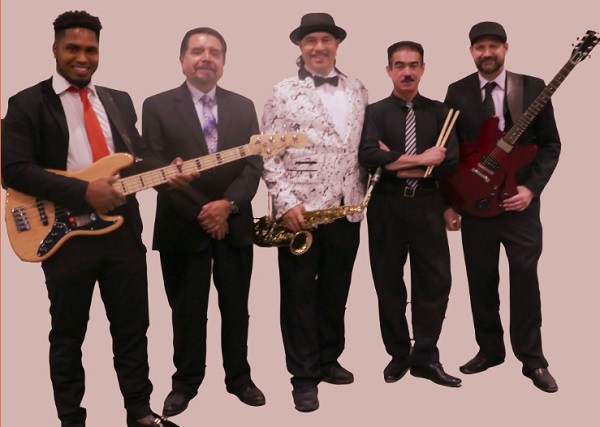
When he arrived in New York, Martin was not old enough to start a professional career, so he was engaged to play with friends in the streets, houses, apartments and private parties. However, this time helped him a lot to gain experience and his family was a great support in all this.
Martín, his family and some of his friends used to go to see live Latin artists and orchestras such as Celia Cruz, Héctor Lavoe, Tito Puente, Eddie Palmieri, Ray Barretto, Mongo Santamaría, among others. This also represented part of his motivation to do salsa in the future, although he also liked American jazz, which features the saxophone, his favorite instrument.
The mix of Latin and American genres resulted in the music that became popular in those years, and the music Martin makes today has much of what he learned back then. It was a mix of Caribbean tropical rhythms, jazz and American funk.
The musician considers that American and Latin rhythms have complimented each other over the years and he always tries to unite them in his performances, just like English and Spanish.
The name ”Mambo Soul Band” is a mixture of ”mambo”, which means ”to greet someone” or ”to communicate” in some African dialects, and ”soul” in English. This resulted in something like ”to communicate from the soul”, a concept that fascinated Martin. At the same time, both are the names for well-known musical genres, the one Latino and the other American.
He selected these genres as the name of his band because they contain what influenced him musically speaking. Latin jazz, soul and funk were the genres on which Martin based his songwriting for the band he was creating and he hired musicians who had experience with these rhythms. And in case they do not master any of them, he teaches them.
According to Martín, guitarists and bassists are the ones who usually have more problems when playing or learning to play these genres, while a percussionist usually has a greater dominion over these areas.
Another variant of the same project also led by Martín is Mambo Soul Jazz, which offers music and songs much more inclined to the American way. Mambo Soul Jazz is more aimed at quiet events where people do not usually dance much and just want background music to enjoy the evening.
The choose of one or the another will vary depending on the public of the day, although the basis of everything is always Latin music.
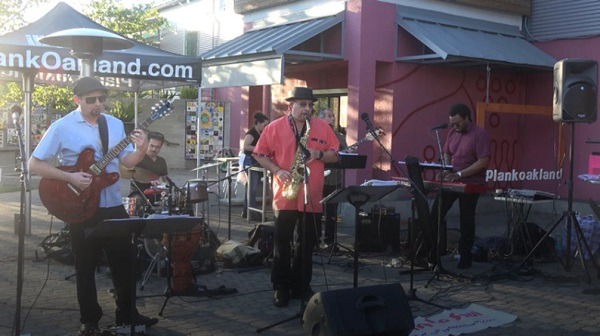
In the view of Martin based on his experience, one of the most challenging things for him and his musicians is the economic issue. At the level where they are, they do not make big profits from their work, which contrasts to the high cost of living in California.
This situation has led many of the musicians to have parallel jobs that allow them subsistence since it is very difficult to make a living from music. The only alternative is to constantly tour with famous groups, but not everyone is willing to do that, so they prefer to work on other things.
In his particular case, he can afford to live only from music because he is the leader of the orchestra and the one who is in charge of getting contracts and shows for the group.
What we took from the conversation
From the beginning, we have noticed that Martin is a man absolutely passionate about his Latin roots and all that comes with them, especially the musical part. He always stressed that everything he does is for his love of music.
It is our pleasure to have the opportunity to talk with this great exponent of Latin and Afro-Caribbean music and we offer him our best wishes for success from now on.
Talent can come from the most amazing and unexpected origins and more when we are talking about music, a branch of art from which always emerges people with a lot of potential who can completely break our schemes. This leads us to introduce the topic of a group of four young musicians and singers who joined their skills despite their apparent differences. They are the musical group Ladama.
Ladama is an alternative Latin music band composed of four members of different nationalities: Venezuelan Maria Fernanda Gonzalez, Brazilian Lara Klaus, Colombian Daniela Serna and American Sara Lucas.
Three of the four members of the group spoke exclusively with International Salsa Magazine and this report will show some of the topics covered during this pleasant conversation.
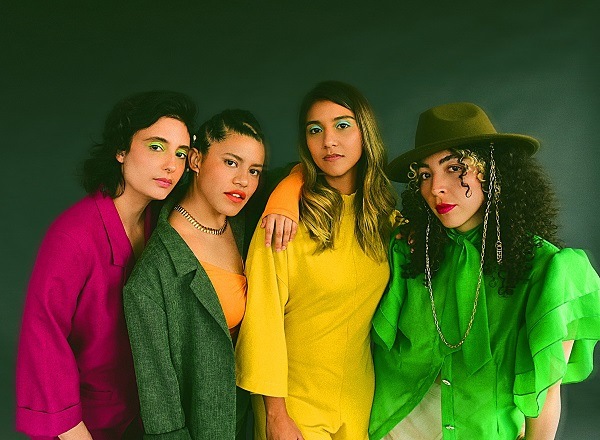
The conversation was started by Lara and Dani, who explained a bit about the rise and concept of the band. The group was created in 2014 while the girls were doing an artistic residency known as OneBeat, which was sponsored by the U.S. Department of State. They were selected to represent their respective countries, which led them to socialize with each other and discover the great chemistry between them because of the language and genres they played.
Since OneBeat was an initiative towards cultural exchange between artists and offered the necessary technical equipment to record music, they took full advantage of this space to get to know each other’s styles and see what they could do together.
Once the month-long residency was over, each went their way, but they kept in touch via Skype a year after having met. The motivation to create a project that would encompass a musical band and teaching classes to minority communities remains intact.
They wanted to create an initiative in which community, creativity, social impact and cultural exchange would be the fundamental pillars of Ladama. It was always clear that they not only wanted to make music, but also do something that would positively impact upon society and they think they have succeeded so far.
As for the name Ladama, it is simply a combination of the first two letters of the names of each one: ”la” comes from Lara, ”da” comes from Dani and ”ma” comes from María Fernanda. At the same time, ”La dama” in Spanish means ”The lady”, which also refers to the fact that it is an all-women group.
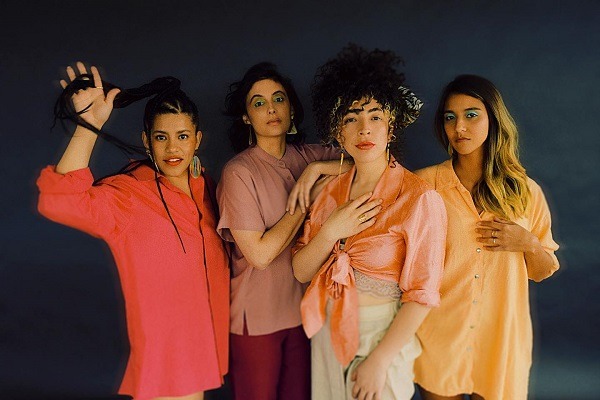
We were very impressed by the fact that all Ladama members came from different countries, so we wanted to know how this impacted the group. Lara answered that the only thing they needed was the desire to play together and move this initiative forward, which means that the origin of each one was not a problem to found the group.
Just like every other band, each one had her own ideas and they discussed them together to know which one to choose or not.
Their major test was given during the Rec-Beat Festival in Brazil. They arrived only a few days before the event, so they could barely rehearse and set up the repertoire. Despite the haste, they feel that everything went very fluidly, as they spent time meeting with each other and writing some songs for an occasion like this.
Given that Lara, Dani and Maria Fernanda come from Latin and tropical countries, there are certain rhythms that sound so much alike, which they took advantage of to unify them and create completely new rhythms that sound good at the same time. Lara also pointed out that these mixes are in constant change and they always try not to get stuck in the same styles.
In addition to that, Ladama has left traditional music behind a little bit and has focused on alternative music and other genres such as pop, soul and R&B.
Dani addressed the topic of genres by saying that they do not follow a plan in which they have something specific to play or mix. Any of their songs can go from Dominican merengue and Colombian cumbia to trap and reggaeton without any problems. They do not like to limit themselves and always seek to reach all audiences.
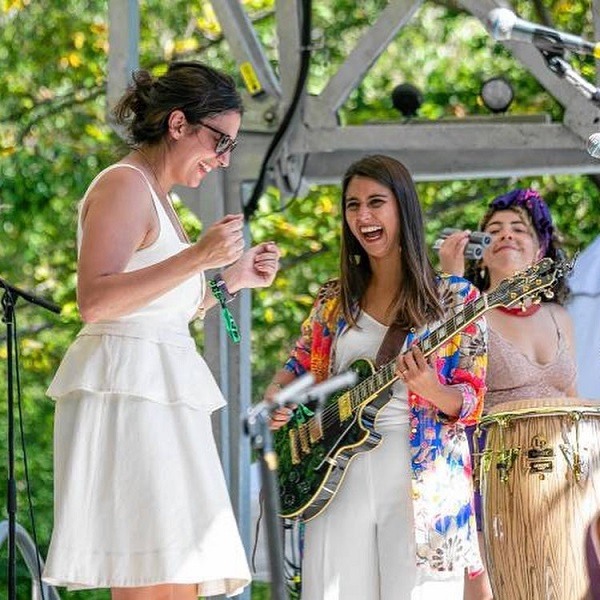
Playing on Tiny Desk (a series of live concerts organized by the radio program All Songs Considered in the United States) is always a prestige for any artist or group that performs on that platform, which is inviting Latin singers more frequently every time.
The girls were at a festival in Albuquerque, New Mexico, where they had the opportunity to meet the curator of Tiny Desk, who would invite Ladama to record their session in Washington D.C. shortly thereafter.
Lara considers that this was a great opportunity to spread their work due to the large number of people who always tune in to Tiny Desk, in addition to the many artists they knew after their appearance on the platform.
For her part, María Fernanda commented that, on that same occasion, they took the opportunity to bring instruments from their own countries so that the Tiny Desk audience could get to know them. She also stressed that this session will be an important audiovisual document for history that will serve as an inspiration for other musicians in the future.
It was a great achievement after all that hard work.

The members of Ladama have also been focusing on music classes for the community at large, mostly in schools and universities. In their four countries, they have given workshops of all kinds related to music in the languages they speak, which are, English, Spanish and Portuguese.
the artist emphasized that they always try to do this type of activities together in the very countries where they offer live performances. They have total freedom to do things separately, but they prefer to carry out these activities supporting each other.
Although they offer classes to anyone who is interested, Latino children are a very important group for Ladama, as many of them often have some problems of identity and adaptation to the United States. When they arrive at school in this country, they often disguise or even hide their Latino roots in order to fit in with their peers, so these classes are an opportunity for them to reconnect with that identity they begin to leave behind.
These workshops and classes also serve as additional income for the group, as they can not only support themselves through tours and festivals. These educational activities are another way to diversify their earnings and have more stable inflows of money.
He is a Venezuelan singer-songwriter whose interest in music began at a very young age, participating in various children’s programs on the radio station in his hometown and in Maturin, the capital of the state of Monagas.
In 1970 he won the first “Festival De La Canción Inédita” held in Caripito.
Then he moved to Carúpano, where he began to sing with different musical groups of that city, such as “Los Bravos” and “Soles De Media Noche”.

Later he was called by the “Combo Melorítmico” of Maturín, where he stayed for a year. He always wanted to sing in the capital.
In 1976 his dream came true when he was called to be a part of the Front Train Orchestra “Los Satélites”, for seven (7) months, the proposed goals began to be different and began to work to achieve them. In 1979 he joined the “Orquesta Ideal”, with which the song “Contigo Besos Salvajes” was played all over the country and was successively imposed among the first places.
In 1981 he joined the “Supercombo Los Tropicales” of Maracaibo, then the “Noche Caliente” orchestra and later the “Porfi Jimenez” orchestra.
In 1985 he joined the orchestra of Renato Capriles: “Los Melódicos”, which gave him the greatest and best experience, given the popularity, prestige and discipline imposed by its director.
In 1986, as a soloist, he recorded his first LP of tropical music under the name “El Jr. de la música tropical” for the record label “Sur Americana del Disco”, , with the name “El Jr. de la música tropical.”
In December 1987 he received a wonderful offer from the record label “Top Hit (T.H.. ) and in 1988 he records his first LP, as a “sensual salsero” for Venezuela, titled “Amanecí Contigo” under the pen of José “El Flaco” Bermúdez, who is also the creator of the style that pushes him towards the international market, where all his songs hit with great acceptance and have his greatest impact in Peru (his second home as he usually calls it), starting his successful career as “Hildemaro, El Sonero Del Amor”.
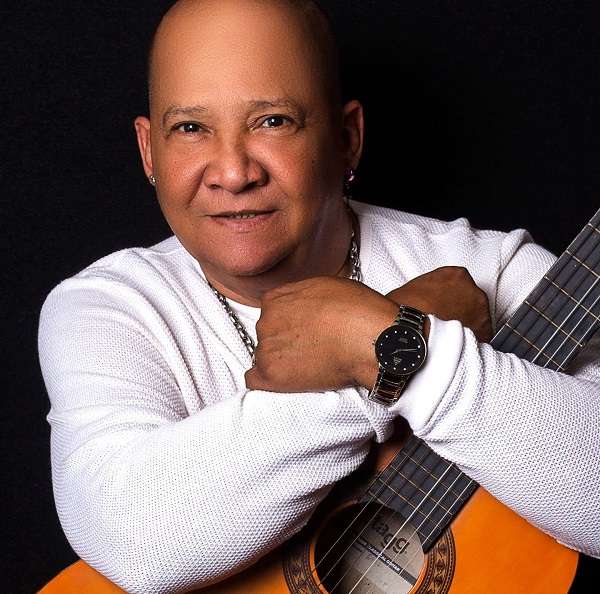
In 1989 he recorded his second LP entitled “Sin Tabú”, which went gold a few weeks after its release, and this album took him back to Peru, where he is considered one of the main idols of Salsa Sensual. Panama, Mexico, Colombia, Ecuador, Argentina, Chile, Dominican Republic, Puerto Rico, Costa Rica, United States, Europe (Spain, Italy, France, Holland, Switzerland, among others), Asia (Japan), among many other countries, have joined his successful career.
In 1993 he recorded his fifth album under the name “Al Natural”.
In 1994 he was invited to participate in the recording of the album “Con Ganas” by the Cuban Issac Delgado, where he performed a duet of a song composed by José L. Cortes called “Que Pasa Loco”, which quickly became an international success and took him to other latitudes.
In 1995 he released his sixth production with the title “Lo Que Siento”. One year later he signed a contract with the Mexican label “Balboa Records”, where he recorded the album “La Mejor Salsa Con Hildemaro”.
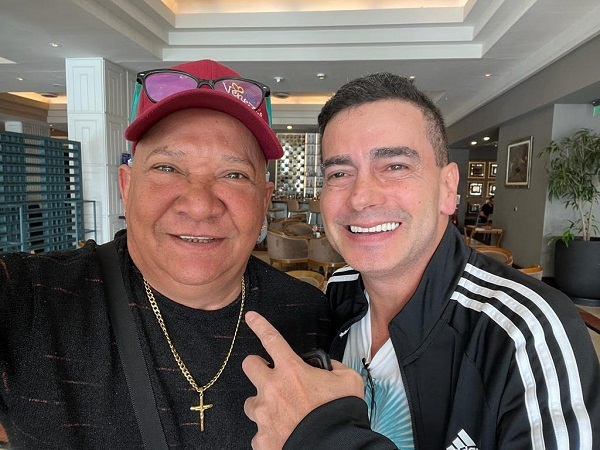
In 1999, he was invited by the Venezuelan group “Melody Gaita”, along with other artists, to record a tribute song to his friend and colleague Oscar D’ León.
In 2001, “Orquesta La Constelación” decided to record an album with several artists, in which he participated with two (2) songs (Peruvian waltzes), “Cuando Llora Mi Guitarra”, in duet with Andy Montañez, and “Jamás Impedirás”, which allowed him to sound nationally and internationally.
In 2016, he begins to sound again in the radio stations with the song “Que Voy a Hacer Sin su Amor”.
In addition to his talent to sing Salsa Romántica, he is recognized for his interpretation of the Bolero. And on stage he has shared the stage with artists of the stature of: Oscar De León, Tito Rojas, Tito Gómez, Paquito Guzmán, Andy Montañez, Maelo Ruiz, Viti Ruiz, Gilberto Santa Rosa, David Pavón, Ismael Miranda, El Gran Combo de Puerto Rico, Tony Vega, Nino Segarra, José Alberto “El Canario”, among many others.

Among his many facets is his love for sports, especially volleyball, which he has practiced since he was very young. He is an honorary member of the FUCUFOCA Foundation, which has been responsible for the organization of the Festival de la Canción Inédita de Caripito for fifty-one (51) years. Faithful collaborator of the Friends of Palencia Foundation and sponsor of several institutions.
Through his foundation HH Productions, he has carried out social actions such as Collaboration in the construction of the Virgen del Rosario Church in Caripito;
Donations of medicines and food to the needy, assistance to sports teams with equipment and clothing, organization of charity concerts and support of the “Amigos de la Palencia” Foundation.
Through his foundation HH Productions, he has carried out social actions such as Collaboration in the construction of the church “Virgen del Rosario” in Caripito;
Donations of medicine and food to people in need, help to sports teams with equipment and clothing; Realization of benefit concerts and concerts of popular attraction in collaboration with the end of year festivities of his hometown.
He has always given value to new talents, helping them in their first steps with his advice and teachings, such as Angel “Tu Angel”, Hildemaro Jr. “La Continuación”, Gilberto Hugas, among others.
Between the years 2022 and 2023 he will celebrate his forty (40) uninterrupted years of artistic life, with a long international tour in countries such as: Colombia, Bolivia,
Also Read: Carlos “Nene” Quintero comes from a family of musical prodigies
That same year, the group released its first album under the Daro label, entitled Al Pasito, with Jairo Varela and Alexis Lozano as directors, Nicolás Cristancho “Macabí” on piano, Francisco García on bass, Luis Pacheco on congas and singers Jorge Bazán, Saulo Sánchez and Héctor Viveros.
Two years later, Niche’s second production, Querer es poder, was released. The song “Buenaventura y Caney”, included in the album, became the first composition of the group to become a hit in Colombia, said Jairo Varela.
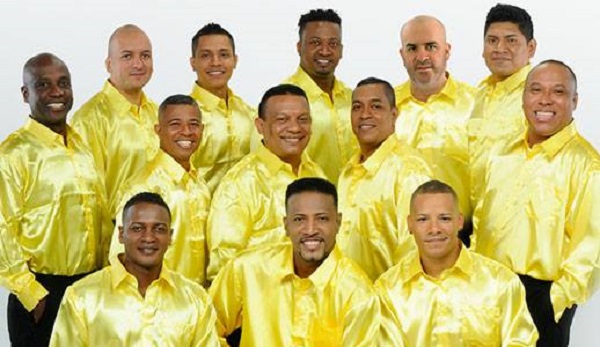
In 1983 After a tour of the United States in which they performed before several colonies of Colombians and a short stay in Buenaventura, the group decided to settle in Cali in 1983.
In 1984 and after releasing the albums Prepárate (1982) and ¡Directo desde Nueva York! (1983), Jairo Varela composed and produced the song “Cali Pachanguero”, which brought the group to national and international stardom.
The song, included in the 1984 album No hay quinto malo, was chosen as the official song of the Cali Fair.
After the success of No hay quinto malo, the group began to tour constantly throughout Colombia and other Latin American countries, becoming the most important orchestra in Colombia.
The album Triunfo, Niche’s sixth discographic production, was released in
The inclusion of Gómez further boosted the group’s career throughout Latin America. That same year the album Me huele a matrimonio was released, with Gómez and Varela sharing the lead vocal duties.
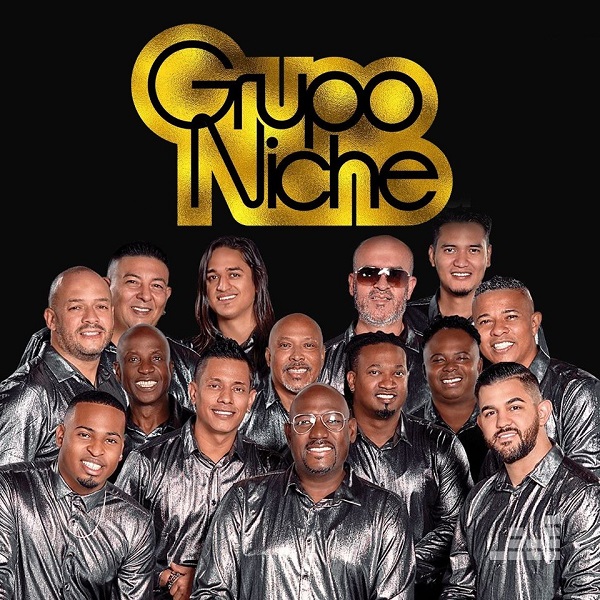
Later, another Puerto Rican joined the group, pianist Israel Tanenbaum, who would eventually leave the group to join a parallel group to Niche, Orquesta Guayacán.
Taking advantage of the group’s growing popularity, in 1987 an album of new versions of songs previously released by the group entitled Historia Musical was released.
That year, the director Jairo Varela fired a group of musicians due to their claims for high fees.
Varela hired some new musicians and recorded the album Tapando el hueco, a production that became an instant hit especially for the songs “Nuestro sueño” and “Cómo podré Disimular”.
After the release of the album, Grupo Niche became a sensation in Latin America, especially in countries such as Venezuela and Peru.
In 1989, the group gave a concert at the Campo de Marte in Lima, where it attracted more than one million people, a record number in that country.
In 1990, after the departure of singer Tito Gómez, the group released the album Cielo de tambores, Grupo Niche’s most successful production to date. The same year of its release, Cielo de tambores ranked third on Billboard magazine’s tropical music chart in the United States.
The album’s success was based on the quality of compositions such as “Busca por dentro”, “Sin sentimiento”, “Debiera olvidarla” and “Cali ají” and the massive popularity of the song “Una aventura”. Charlie Cardona and Javier Vásquez provided the vocals for the album.
From that moment on, the group enjoyed international popularity, touring constantly in countries such as the United States, Peru, Mexico and Colombia, as well as making some presentations in Europe.
In 1992 the group released another successful album entitled Llegando al 100% with Charlie Cardona as lead vocalist. The songs “Hagamos lo que diga el corazón” and “No tuve a quién decirle amor” stand out from this production.
After the release of two compilation albums, the group released Etnia, an album recognized especially for the compositions “La Canoa ranchá” and “La magia de tus besos”. The vocalists on this production were Willy García, Álvaro Granobles and Javier Vásquez.
Jairo Varela was captured and imprisoned in 1995 after returning from a tour of the United States.
His experience in jail was reflected in the lyrics of several songs on the next Niche album. 1997’s A prueba de fuego became another commercially successful production for the group.

The song “Eres”, sung by Willy García, achieved strong radio airplay and its video clip was equally popular.
A year later the album Señales de humo was released, which could not match the success of the previous production.
The group closed the 1990s with the release of the album A golpe de folklore, an album in which the group returned to its musical roots, exploring the folklore of the Pacific coast and emphasizing the “salsa brava dura”.
In 2001, Jairo Varela decided to move Grupo Niche’s headquarters to Miami in order to better focus on the group’s international touring demands.
That year the group published Propuesta, an album that was nominated for a Latin Grammy in the “Best Salsa Album” category, along with productions by prominent artists such as Isaac Delgado, Oscar D’León, Tito Puente, Gilberto Santa Rosa and Tito Rojas, great salsa artists.
In 2005 the group performs for the first time in Japan. That same year the album Alive was released.
In 2007 Varela suffers a heart attack that forces him to quit smoking. Two years later he released a new album entitled Robando sueños, promoted by the single “Un día después” with Elvis Magno on lead vocals. Jairo Varela stated that it was the best song he had ever written in his life.
The death of Jairo Varela.

After his death, a large number of songs were recorded on demos and written down on sheets of paper.
Some of these compositions were recorded and included in the posthumous 2013 album Tocando el cielo con las manos.
Yanila Varela, Jairo’s daughter, succeeded him as the group’s director.
At the end of 2014, the group shared the stage with the Gran Combo de Puerto Rico at Madison Square Garden in New York City.
In August 2015 José Aguirre took over the musical direction of Grupo Niche replacing Richie Valdés. That same year the idea of releasing an album with songs composed by Varela that failed to become hits arose.
The idea was finally embodied in a new record production released on October 2, 2015 titled 35 Aniversario, promoted with the single “Niche como yo”, a song composed by Jairo Varela in 1978.
The album received a Grammy nomination for Best Traditional Tropical Latin Album, a Latin Grammy nomination for Best Salsa Album and a Lo Nuestro Award nomination for Album of the Year in the Tropical category.
New stage 2020
Grupo Niche is currently formed by singers Alex Torres, Luis Araque and Alejandro Iñigo, percussionists Juanito Murillo, Fabio Celorio and Diego Camacho, pianist Víctor González, bassist Sergio Munera and musicians Edgardo Manuel, Edward Montoya, Carlos Zapata, Oswaldo Salazar and Paul Gordillo on wind instruments, under the direction of José Aguirre. At the end of the year, Grupo Niche won a Latin Grammy award for the best salsa album of 2020 with “40” and in March 2021 they will win the Anglo Grammy.