After having contact for days and overcoming some pitfalls, we could finally get to talking with producer, composer, and multi-instrumentalist Sebastián Natal, who kindly attended and revealed his views on the path he has followed to become the great artist he is today.
Sebastián Natal’s beginnings
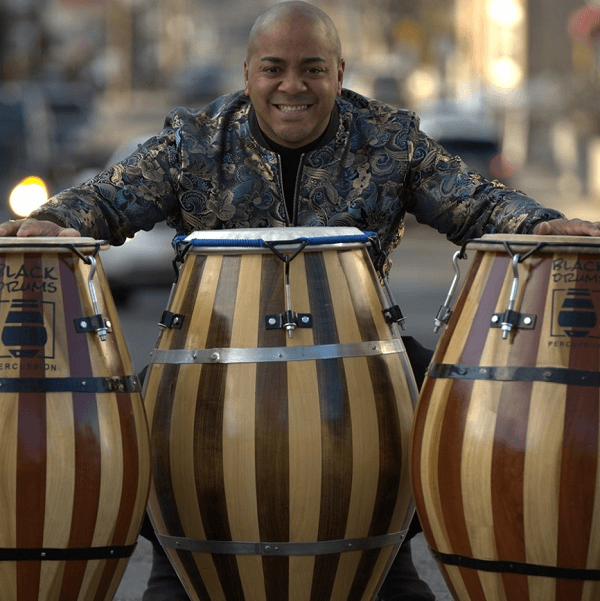
First, Sebastián appreciated our interest in learning a little more about him and began to describe his native country’s musical and cultural context at the time. First of all, the artist was born in Montevideo, Uruguay, where a tropical music movement was established by then, considering many genres from the tropics and the Caribbean, such as salsa, bachata, merengue, cumbia, guaguancó, and many more.
Obviously, these genres did not originate in Uruguay, as bomba is Puerto Rican, salsa is Cuban, and bachata is Dominican. However, there were quite a few groups and musicians who used these tropical roots to create their own identity. Outside of Montevideo, other provinces listened much more to cumbia and charanga.
The orchestras that played these rhythms were dedicated to developing covers of salsa songs, but by bringing them into other genres that were emerging at the time, such as plena, plena danza, and bomba, among others. Sebastián grew up with this sonority in his country, so the whole musical environment he was exposed to abroad became very familiar to him and easy to assimilate. From the early ‘nineties, as a young boy, he began to absorb all the influence from the dawn of romantic salsa and iconic songs such as “Aquel Viejo Motel,” “Cinco Rosas,” “Sin Sentimiento,” “Amores Como El Nuestro,” and many others of its kind.
It is worth adding that Sebastián comes from a family of musicians, starting with his own father, Yeneca Natal, who was the musical director and pianist for Grupo Sensación. Music always surrounded him, so it can be said that he was meant to follow this path.
When and why Sebastián left Uruguay and moved to New York
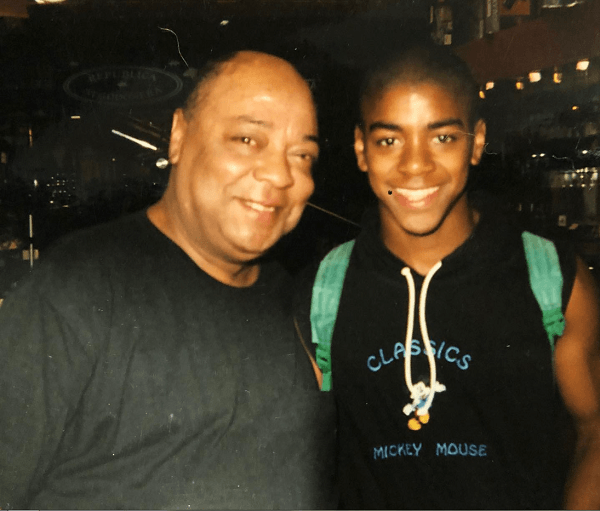
In 2005, at just 21 years old, Sebastián joined the Sonora Borinquen, which was the most popular orchestra at the time. Thanks to them, he had the opportunity to tour the United States and Canada, where he could see environments and ways of working that were completely different from what he was used to. Two years later, he toured the United States again, but by then he already saw the country as a new destination to advance his career.
Unfortunately, Uruguay was becoming too small for the plans he had for his development in salsa, which sparked his curiosity about the Big Apple and all it had to offer him musically speaking.
By 2008, he decided to move to New York for a few months, but so many doors opened for him that he never left and continues to live there to this very day.
Sebastián, the multi-instrumentalist
The first instrument Sebastián came in contact with was the piano, which he started playing it at age four and from which he graduated at age 11. Since he had not attended high school yet, he could not study a master’s degree to continue his musical education. In addition, he was a child who wanted to play football and do the usual things for his age, so a few years later, his father made him join an Afro-Uruguayan music group. In that orchestra Sebastián played piano and bass, which allowed him to further develop his skills with those instruments.
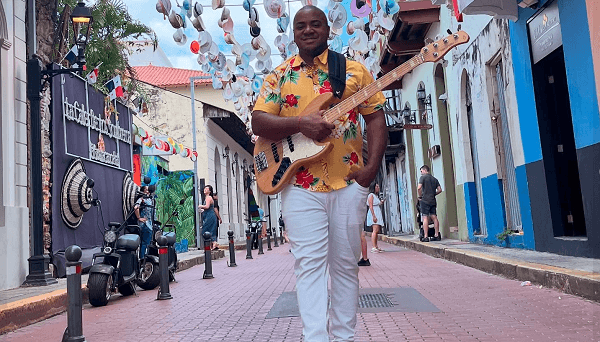
After that, he began to create his own tropical music band, inspired by the Venezuelan orchestra Los Adolescentes. All the members were minors, and, as well as in the previous group, Sebastián also played piano and bass.
Sebastián as a producer and composer
Regarding his role as a producer and composer, Sebastián confessed that he has no idea how he came to learn these areas of music. He did emphasize that he always lets his music and his feelings flow to deliver the message he wants to convey in each of his pieces. After that, he defines the ideas and adds the music.
He says he greatly admires professional lyricists and composers. He admits he is neither the best nor the worst composer, but he always tries to reach his own heart to convey what he feels.
Sebastián Natal Y Grupo Sensación
The idea of Grupo Sensación started with the orchestra of the same name where his father worked in 1982, but unfortunately the group did not have much impact due to how closed that environment was at the time. There were a number of orchestras that got the best contracts, and it was very difficult for the rest to achieve. Over time, Yeneca left Grupo Sensación and managed to join several of these more established orchestras to gain more reputation.
Soon after, when Sebastián moved to the United States, he almost immediately noted that the Uruguayan community needed a tropical orchestra, but he did not know what name give it. With the passing of his father on October 19, 2010, he chose to use the name “Grupo Sensación” as a way to continue the legacy of his father and the tropical movement born in his country so many years ago.
Artists he has collaborated with
Sebastián has had the opportunity to collaborate with artists of the stature of Nino Cegarra, Oscar D’León, José Alberto “El Canario,” Domingo Quiñones, Tony Vega, Roberto Blades, Cheo Feliciano, Tito Nieves, Viti Ruiz, and many more. However, few were the ones with whom he has truly been able to have a conversation or a close connection beyond purely profesional relationships.
“You can only say you played with someone if you’ve had a connection with that person. I’ve been able to play with great artists, but many times they don’t even know who I am. That’s why I don’t include them on my resume. Now if they call you back, then you can say you did things very well and that there’s someone really interested in you,” said Sebastián on this interesting subject.
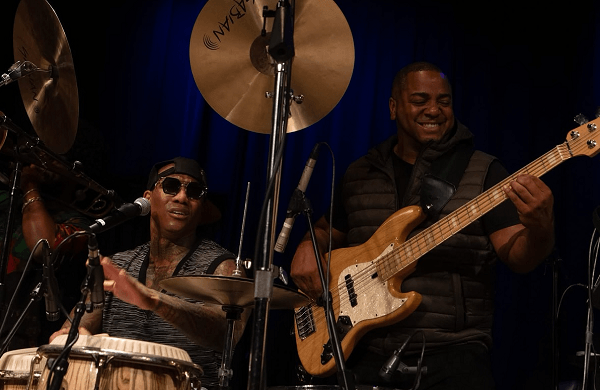
The cases of Bill Murray and Camila Cabello were completely different, as he managed to record songs with them through his friend and fellow musician, Pedrito Martínez, whom he describes as “the best percussionist in the world”. It was also Martínez who connected him with the world-famous composer and guitarist Eric Clapton, with whom he performed at the American Airlines Center in Dallas—one of the most beautiful experiences he has had in his career and his life in general.
Read also: Bandleader and conga player Tony Rosa tells us how he built his career

- Dominican bandleader and musical director Orlando Santana talks about La Makina and his career in general - March 25, 2026
- Uruguayan composer and multiinstrumentalist Sebastián Natal and his band Grupo Sensación - March 25, 2026
- Bandleader and bongosero Ray Degaldo is here to talk about his life and career - February 28, 2026