From Classical Cradle to the Jazz and Bossa Nova Revolution
That musical heritage is essential to understanding the greatness of Antonio Adolfo.
Being born into a home where the violin from the Rio de Janeiro Municipal Theater orchestra was part of the daily landscape shaped his sensibility from the cradle.
Although he grew up surrounded by the classical discipline of his father, his destiny lay within the keys, jazz, and the revolution of Brazilian popular music (MPB).
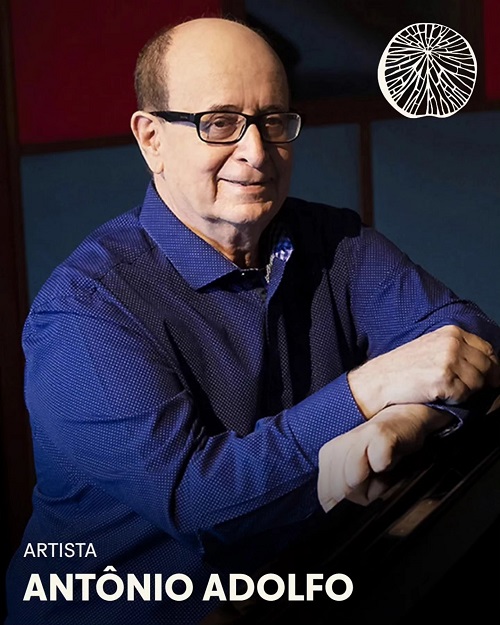
The son of a classical violinist, Antonio Adolfo was born in the bohemian neighborhood of Santa Teresa, Rio de Janeiro, under the sign of Aquarius in 1947. At the young age of 16, the young pianist was already part of the exclusive bossa nova club brewing in the famous Beco das Garrafas alley, leading ensembles that stood at the forefront of the scene, such as Conjunto Cinco and the Samba Trio 3-D.
Shortly after, he participated in the iconic musical Pobre menina rica by Carlos Lyra and Vinicius de Moraes, beginning to make a name for himself in the industry.
Starting in 1967, by forming a creative partnership with lyricist Tibério Gaspar, Adolfo became one of the great catalysts of modern melody in Brazil, composing massive hits like “Sá Marina” and “Juliana.”
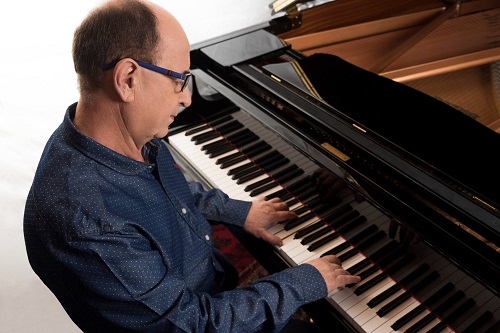
At the same time, leading the group Brazuca, he established an electronic pop tone that was highly sophisticated for its time (with tracks like “Teletema” and “Ana Cristina”), culminating in the blistering musical highway of “BR-3″—a song that sparked great controversy and shook the core of the era’s music festivals.
A Pioneering Spirit and International Acclaim
After playing as a member of the backing band for the legendary Elis Regina on two European tours, and refining his technique in Paris with the renowned classical maestro Nadia Boulanger—in addition to studying in Brazil under masters Guerra-Peixe and Esther Scliar Antonio Adolfo was ready to take another giant leap.
In 1977, in an act of bravery and pioneering spirit, he released the album Feito em Casa (Homemade) under his own record label, Artezanal.
This was the opening kickoff for a liberating movement: the independent record industry in Brazil, triggering the rise of artistic dynamics that diverged from traditional market rules. Under this self-managed system, Adolfo recorded both original material (including children’s music that promoted free play) and foundational revisions of pianeiro classics, transforming the works of Ernesto Nazareth and Chiquinha Gonzaga for the contemporary piano.
This versatility proved that, as a performer and creator, Adolfo had achieved a rare distinction: mastering contemporary language from a place of timelessness.
Since 1985, the maestro has focused much of his energy on his music school, the Centro Musical Antonio Adolfo, while also participating in international events as an educator, without ever setting aside his stage career.
His profound work with the music of Chiquinha Gonzaga and jazz has earned him prestigious awards and nominations. Furthermore, he is the author of seven textbooks on Brazilian music published by Lumiar, a video lesson, and two books published abroad. For eight years, he proudly served as the Latin American representative for the IAJE (International Association for Jazz Education).
In recent years, Antonio Adolfo has returned to the stage more frequently, performing either in a solo piano format or with a group. From one of his performances at a U.S. university alongside his daughter, singer Carol Saboya, came an acclaimed live album released both in Brazil and abroad: Antonio Adolfo & Carol Saboya Ao Vivo / Live. This success has been followed by recording productions highly praised by international critics, such as Here and There / Aquí y Allá.
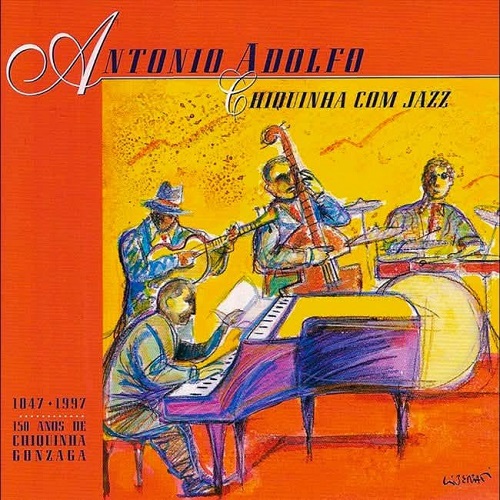
Discographic Gem: “Chiquinha Com Jazz” (1997)
A perfect example of his genius for fusing Brazilian roots with the freedom of jazz is his 1997 album dedicated to the pioneer Chiquinha Gonzaga.
Tracklist:
Atraente
Cordão Carnavalesco
Lua Branca
Angu
Gaúcho (Corta-Jaca)
O Forrobodó
Corte Na Roça
Satan
Ismênia
Faceiro
O Abre Alas
Personnel:
Antonio Adolfo: Piano and musical arrangements
Gabriel Vivas: Double bass
Ivan Conti: Drums
Claudio Spiewak: Acoustic guitar
Contributor:
Also Read: Carlos “Nene” Quintero comes from a family of musical prodigies

- Teresa Carreño: The Walkyrie of the Piano Who Conquered the World - September 29, 2026
- Charlie Palmieri The Giant of the Blancas y las Negras - September 29, 2026
- Ray Barretto: The Unshakable Beat of Latin Jazz and Salsa - September 29, 2026