Latinoamerica / Brazil
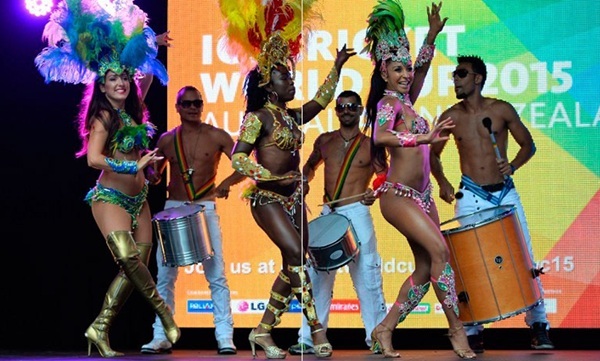
When traveling to Brazil, one encounters a wide variety of Latin rhythms, the most prominent being samba—Brazil’s national music and dance. It began to spread rapidly from Rio de Janeiro (the country’s capital for much of the 20th century) to become the most popular and traditional music across the entire nation.
This musical rhythm is of African origin and features a syncopated beat; in short, samba’s roots trace back to Africa—specifically Angola—during the era when inhabitants were enslaved and brought to the Americas, evolving from a predecessor dance form.
The rhythm is world-famous, particularly due to the Brazilian Carnival in Rio de Janeiro, where the dance is known for its exhibitionist and erotic flair. It is also sometimes called the “Brazilian waltz,” as it is a flirtatious, lively dance celebrated for its sensual hip movements. However, the meaning of samba varies by region; for example:
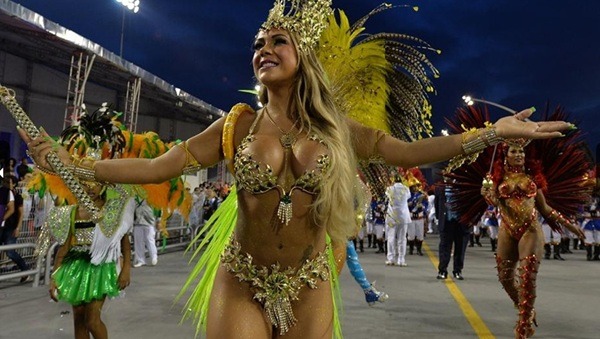
*Samba de Bahia* is influenced not only by *batuque* but also by African dances like *lundu* and *maxixe*; its songs feature simple lyrics, a rapid swaying motion, and repetitive rhythms. In contrast, samba from Rio de Janeiro is tied to life in the poorest neighborhoods (*favelas*); the lyrics address urban life, the working class, and the hardships of existence, yet do so in an entertaining—and sometimes humorous—way. Meanwhile, the samba of São Paulo focuses on the blending of different ethnic groups.
With Italian influences, the lyrics of its songs tend to be somewhat more elaborate.
Today, there are various types of samba, distinguished by the following rhythms:
- Samba comum: Characterized by a rhythm section containing the main beat—usually played on a *surdo* or *tantan* bass drum. The *cavaquinho*—a small, four-stringed instrument related to the guitar and similar to the Hawaiian ukulele—is used to establish the samba rhythm; the *cavaco* also serves to bridge the harmonic and rhythmic sections. Its presence typically distinguishes “authentic samba” from softer variations like bossa nova. Another key element is the *pandeiro* (tambourine), the most prominent percussion instrument, which provides the most “complete” rhythmic pattern. The *violão* (acoustic guitar) is also a standard feature; its role in samba popularized the seven-string guitar variation.
- Partido alto: Characterized by a driving *pandeiro* rhythm, played by striking the center of the instrument with the palm of the hand. The harmony in *partido alto* is always in a major key. It is usually performed by a percussion ensemble (*surdo*, *pandeiro*, *tamborim*) accompanied by the *cavaquinho* and/or *violão*. *Partido alto* is commonly structured in two parts: a chorus and verses.
- Pagode: The most widespread form of samba in Brazil, originating in the 1980s. It is sung at most parties and informal gatherings and is a staple in bars and open-air cafés. The lyrics are playful, usually dealing with romantic entanglements or lighthearted subjects.
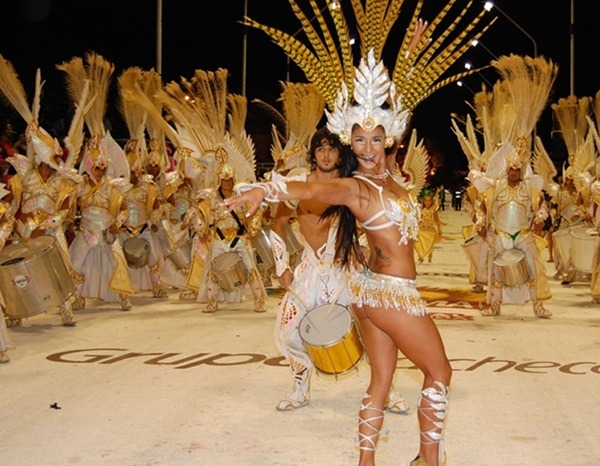
Samba Dancers
Three new instruments were introduced by the group Fundo de Quintal and others at the *Cacique de Ramos* venue:
- The *tantan*:** A more dynamic version of the *surdo*.
- Small banjo: Usually features a lead vocalist accompanied by *cavaquinho*, *violão*, and at least one *pandeiro*.
- Samba de breque: An extinct style of samba characterized by the incorporation of spoken sections, usually dialogue. Singers required excellent vocal ability as well as the skill to perform different voices. The lyrics typically told stories and were humorous.
- Samba-canção: A radio-friendly, romantic style with a more relaxed tempo. Samba-canção was Brazil’s primary counterpart to popular Latin American rhythms like the tango and bolero, featuring themes ranging from the lyrical to the tragic.
- Samba-enredo: A song performed by a samba school; it emerged in Rio de Janeiro during the 1930s. It is internationally renowned due to Rio’s status as a major tourist destination during Carnival, and because percussion groups worldwide have formed with this style as their inspiration. These songs are frequently recorded and played on the radio in the period leading up to Carnival.
- Neopagode: A newer rhythm within the pagode genre—often frowned upon by serious sambistas—characterized by lyrics focused on sex and a more sensual vocal style, although some artists who perform this genre also include more traditional sambas in their sets.
Generally, these songs are performed by male vocalists accompanied by the *cavaquinho* and a large percussion ensemble, producing a dense, complex texture known as *batucada*. The style emphasizes the second beat of the measure. Rio de Janeiro’s percussion ensembles have inspired the formation of similar groups around the world, particularly in Western countries.
These groups generally do not use vocalists or *cavaquinhos*, focusing instead on percussion grooves and numerous rhythmic breaks. Such groups perform year-round, unlike in Brazil, where activity is concentrated in the months leading up to Carnival.
- Bossa nova: Essentially a type of samba played with jazz instruments and sung with soft vocals.
- Samba-reggae: a popular new type of samba from Bahia that originated in 2001.
- Samba de roda: a ritual dance preserved in some cities in Bahia.
- Jongo: the equivalent of “Samba de roda” in Rio de Janeiro.
Among the various rhythms within the samba genre, it stands out as one of the most joyful, shining in all its glory during the Brazilian Carnival—an event eagerly awaited each year by Brazilians and by thousands of tourists from every corner of the globe who gather in Rio to witness the Samba Parade and celebrate in true Brazilian style.
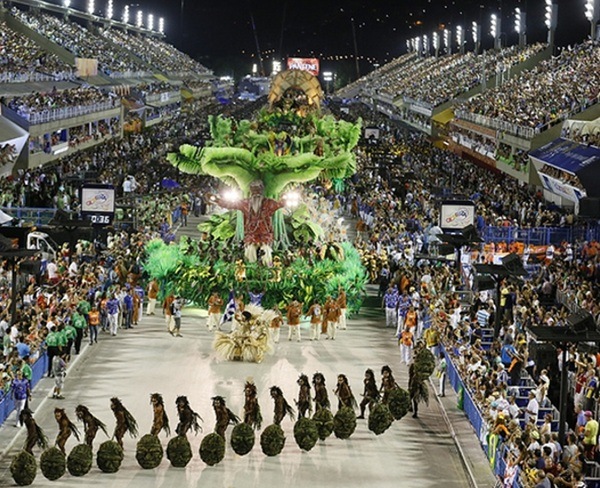
The event is broadcast worldwide for those unable to attend “The Greatest Party on Earth.” This major parade at the Sambadrome is meticulously organized, with each participant playing a specific role and costumes changing every year. While tickets to the Sambadrome are required for the parade itself, free access is available during rehearsal days on the weekends leading up to the start of the Rio Carnival.

- The Brazilian spirit finds its expression in the samba. What is samba? - September 26, 2026
- Odessa International Dance Festival 2016 - September 19, 2026
- Mambo City Congress – 28 Apr 2017 01 May 2017 - September 19, 2026