• Skip to primary navigation
  • Skip to main content

International Salsa Magazine

  • Home
  • Previous editions
    • 2026
      • ISM / January 2026
      • ISM / February 2026
    • 2025
      • ISM / December 2025
      • ISM / November 2025
      • ISM / October 2025
      • ISM / September 2025
      • ISM / August 2025
      • ISM / July 2025
      • ISM / June 2025
      • ISM / May2025
      • ISM / April 2025
      • ISM / March 2025
      • ISM / February 2025
      • ISM / January 2025
    • 2024
      • ISM / December 2024
      • ISM / November 2024
      • ISM / October 2024
      • ISM / September 2024
      • ISM / August 2024
      • ISM / July 2024
      • ISM / June 2024
      • ISM / May 2024
      • ISM / April 2024
      • ISM / March 2024
      • ISM / February 2024
      • ISM / January 2024
    • 2023
      • ISM / December 2023
      • ISM / November 2023
      • ISM / October 2023
      • ISM – September 2023
      • ISM – August 2023
      • ISM July 2023
      • ISM Edition June 2023
      • ISM – May 2023
      • ISM April 2023
      • ISM March 2023
      • ISM February 2023
      • ISM January 2023
    • 2022
      • ISM December 2022
      • ISM November 2022
      • ISM October 2022
      • ISM September 2022
      • ISM August 2022
      • ISM July 2022
      • ISM June 2022
      • ISM May 2022
      • ISM February 2022
      • ISM January 2022
    • 2021
      • ISM December 2021
      • ISM November 2021
      • ISM October – 2021
      • ISM September 2021
      • ISM August 2021
      • ISM July 2021
      • ISM May 2021
      • ISM April 2021
      • ISM June 2021
      • ISM March 2021
      • ISM February 2021
      • ISM January 2021
    • 2020
      • ISM December 2020
      • ISM November 2020
      • ISM October 2020
      • ISM September 2020
      • ISM August 2020
      • ISM July 2020
      • ISM June 2020
      • ISM May 2020
      • ISM April 2020
      • ISM March 2020
      • ISM February 2020
      • ISM January 2020
    • 2019
      • ISM December 2019
      • ISM November 2019
      • ISM October 2019
      • ISM Septembre 2019
      • ISM August 2019
      • ISM July 2019
      • ISM June 2019
      • ISM May 2019
      • ISM April 2019
      • ISM March 2019
      • ISM February 2019
      • ISM January 2019
    • 2018
      • ISM December 2018
      • ISM November 2018
      • ISM October 2018
      • ISM September 2018
      • ISM August 2018
      • ISM July 2018
      • ISM June 2018
      • ISM May 2018
      • ISM April 2018
      • ISM March 2018
      • ISM February 2018
      • ISM January 2018
    • 2017
      • ISM December 2017
      • ISM November 2017
      • ISM October 2017
      • ISM September 2017
      • ISM August 2017
      • ISM July 2017
      • ISM June 2017
      • ISM May 2017
      • ISM April 2017
      • ISM March 2017
      • ISM February 2017
  • Download Salsa App
    • Android
    • Apple
  • Spanish

Artists

Alberto Gonzalez talks about his book on Hector Lavoe and his experience with ‘‘El Jibarito de Ponce’’

As an artist, one of the most noble actions to be taken is to honor the great artists whose legacy inspired later generations, including those who pay homage to them today. Proof of this is the talented bandleader, composer, singer, and now author, Alberto González, whom we thank for sharing his story and various facets of his life with us, including his role as the author of a new book about “the singer of all singers,” Hector Lavoe. 
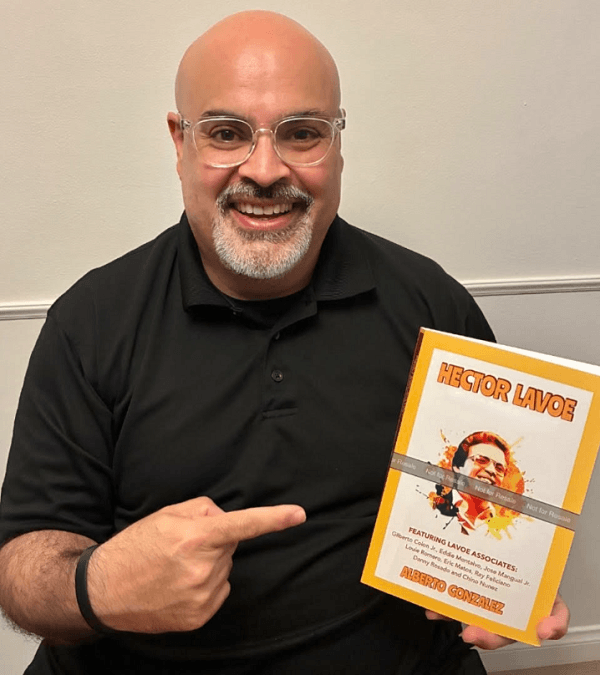
Alberto and his book on Hector
Author Alberto Gonzalez with a version of his book ”Hector Lavoe and Associates”

Alberto’s initial interest in music

Alberto’s initial interest in music began with an aunt from Puerto Rico who went to live with him and his parents in Chicago. She loved the music of Raphael and Sandro, so her nephew listened to them practically every day and ended up falling in love with their music and how they sang.

Little by little, Alberto began to learn their songs and was unknowingly taking his first steps toward becoming a professional singer. However, it did not stop there; he also listened to the trio music that his parents enjoyed and eventually to the salsa albums that his older brother began bringing to the house. Those salsa albums really caught Alberto’s attention.

Among the artists his brother listened to were Eddie Palmieri, La Sonora Ponceña, El Gran Combo de Puerto Rico, Willie Colón, and the one who would become his greatest inspiration, Héctor Lavoe.

Eventually, his brother became a professional trumpet player and played with various salsa orchestras in Chicago. Since he always heard Alberto singing songs at home, in 1979, he suggested that he audition for a new band of young salsa musicians his manager was putting together. For the audition, Alberto was tasked with learning and singing the popular Willie Colón and Héctor Lavoe song “Voso.”

Fortunately, his audition was a great success, and Alberto was asked to join La Típica Leal 79. The story behind the band’s name is interesting: Carlos Caribe Ruíz, the manager of the group, decided on the name Típica Leal because most of the members of his previous band, La Juventud Típica, decided one day to quit; they left him. For that reason, he decided to create a new band, and he made sure to add the word “Leal” (loyal in English) to the band’s name. His hope was that the new band, made up mostly of teenagers, would be loyal and not leave, just like the previous band did.

Sometime later, Alberto would go on to sing with a band called La Inspiración Latina, and he also worked briefly with Orquesta Yambo. In 2001, he moved to Los Angeles, where he began working with Johnny Polanco y Su Conjunto Amistad, becoming one of their main vocalists and traveling the world with them and the band.
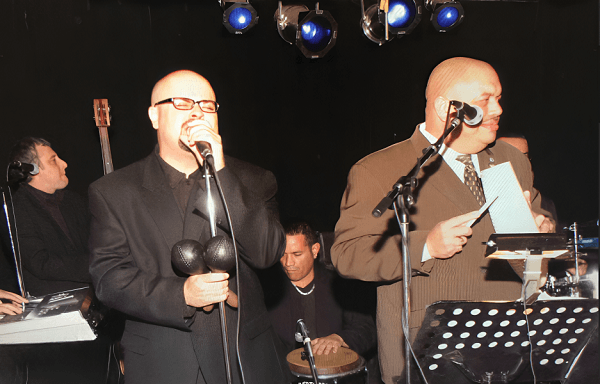
Alberto and Johnny Polanco
Alberto Gonzalez playing with Johnny Polanco Y Su Conjunto Amistad

Orquesta Salsa Caliente

When he left Johnny Polanco’s group, Alberto finally felt ready to form his own group, and that is how Orquesta Salsa Caliente was born. He has been leading the band for many years now and has even traveled with the band to Africa and Bermuda.

Over the past few years, Alberto has concentrated mainly on his work as an author. While he continues to perform, his primary focus has been on his debut book ‘‘Hector Lavoe and Associates.’’

Alberto’s Hector Lavoe Experience

In 1979, after auditioning and doing well with the song “Voso,” 15 year old Alberto officially became a member of La Tipica Leal 79.Caribe, the band’s manager, then asked him to learn a few more Hector Lavoe (and Willie Colon) songs. Since Hector was his favorite singer, he gladly learned the songs. Since his voice was somewhat similar to Hector’s, his bandmates began to affectionately call him “Baby Lavoe.”

In the fall of that same year, Alberto learned that Héctor and his orchestra were going to be performing in Chicago. Once he found that out, he asked Caribe to please take him to see Héctor, and, if at all possible, to introduce him to Héctor. Thankfully, he did get to go to that show, and he did meet Héctor. It was during that show, and during one of Héctor’s breaks, that he was able to take a photo with his favorite singer. Alberto still cherishes that photo to this very day. That night, he realized that Héctor was a “man of the people” due to his humility and how he treated others. The photo and his experience with Héctor were some of the main reasons why he decided to write a book about Lavoe. Over the years, many have criticized Héctor and have focused primarily on the negative aspects of his life. Sadly, many people are not familiar with the other side of Héctor, the humble, generous, and kind side of Lavoe. They will learn more about that side of Héctor in the new book.

Well, about a year and a half after first meeting Héctor, La Típica Leal 79 was booked to open for Celia Cruz and Héctor Lavoe. That show would take place at one of the most acclaimed dance halls in the city, where many of the greatest salsa artists performed over the years. That night, Alberto was able to share another conversation with Héctor, and he also took another photo with him. Héctor was generous with his time; he was kind and very accommodating. That’s something that Alberto never forgot.

This and other experiences are documented by the author in the book. Alberto actually interviewed about sixteen of Héctor’s former musicians, and eight of them are featured in the book. You’ll learn about their musical experiences, and you’ll be able to read about their experiences with “El Jibarito de Ponce,” Héctor Lavoe. These are the musicians that are featured: Gilberto Colon Jr., Eddie Montalvo, Jose Mangual Jr., Louie Romero, Eric Matos, Ray Feliciano, Danny Rosado, and Chino Núñez.

Alberto called the book “Héctor Lavoe and Associates,” and that title was somewhat inspired by Willie Colón’s 1978 compilation album “Willie Colón and Associates.”
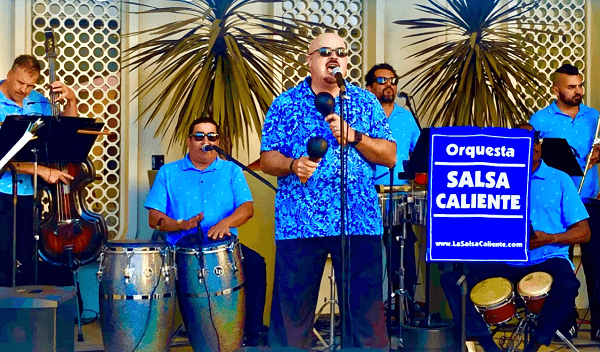
Alberto and Salsa Caliente
Alberto Gonzalez and his orchestra Salsa Caliente

A few Lavoe stories from the book

Among the many anecdotes that can be read in the book, Alberto told us one in which, on one occasion, a couple of Héctor Lavoe’s musicians had their vehicle broken into, and all of their instruments were stolen. When Héctor found out what had happened, he bought them new instruments and told them not to worry about paying him back. He did not charge them a penny.

Here’s another story. During a show, one of Héctor’s trumpet players accidentally dropped his trumpet on the floor and damaged it beyond repair; the instrument was unplayable. What did Héctor do? Héctor gave him $1,000 to go buy a new trumpet and, once again, didn’t charge him a penny.

These are just a few of the many stories regarding Héctor Lavoe that you’ll be able to read in the more than 400 pages of the book. The book will be officially launched in the coming months. For more information, please visit: www.hectorlavoebook.com.
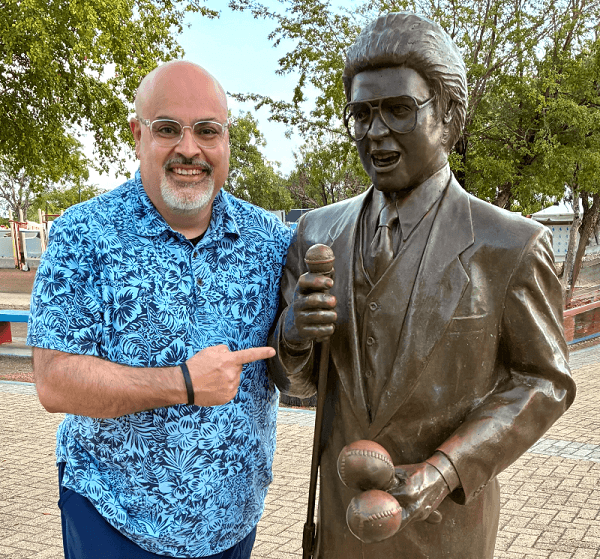
Alberto and Hector in Ponce
Alberto Gonzalez next to the statue of Hector Lavoe in Ponce, Puerto Rico

Read also: Puerto Rican American bandleader and singer Elle Jay is proud of her roots
How Money Is Made Today: Recording Artists, Record Labels, and Digital Platforms

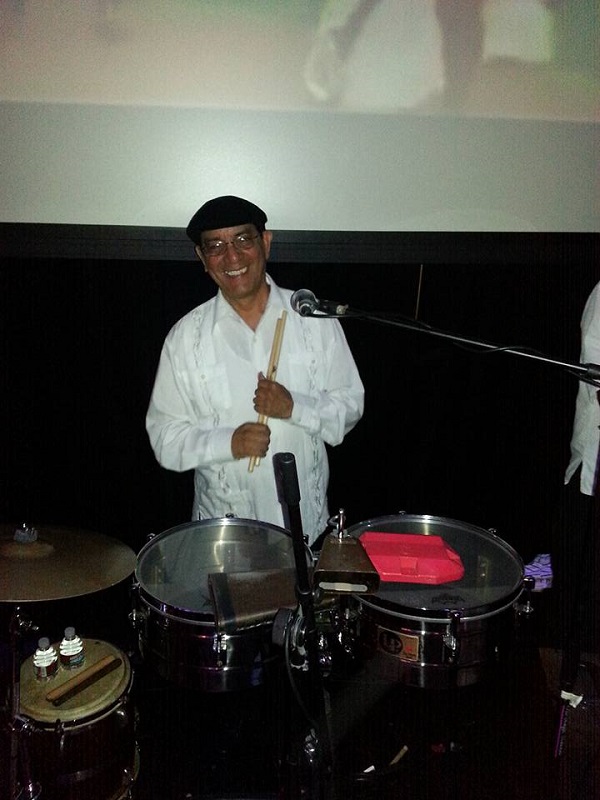
Carlos Navarro is a renowned multi-percussionist, producer, bandleader, and singer, known for leading the Orquesta Son y Clave. Here are some key details about him and his music:

  • Musical Style: He specializes in genres like salsa, mambo, merengue, and Latin jazz.

  • Orquesta Son y Clave: The band has gained popularity in recent years, even sharing the stage with world-class artists like The Rolling Stones.

  • Collaborations: He has worked with major talents in Latin music in Los Angeles, including Tito Nieves, Luis Barbarán, and others.

  • Family Connection: He is the brother of the famous singer Cherry Navarro.

    Carlos Navarro reconocido multi-percusionista, productor, bandleader y cantante, conocido por liderar la Orquesta Son y Clave
    Carlos Navarro reconocido multi-percusionista, productor, bandleader y cantante, conocido por liderar la Orquesta Son y Clave

1). What’s the current process for recording, music production, and royalty distribution?

The current process begins with recording, which can now be done in professional studios or in home studios equipped with high-quality technology. Next is music production, which includes editing, mixing, and mastering to ensure the material meets industry standards.

Once the final product is complete, it’s distributed digitally through aggregators or distributors who place it on platforms like Spotify, Apple Music, and YouTube, among others. As for royalties, these are mainly collected by collective management societies and the platforms themselves, who distribute the income based on streams, downloads, or licenses, assigning it to the author, performer, and producer as stipulated in their contracts.

2). What is the impact of digital platforms that artists use to release their music?

Digital platforms have transformed the music industry by democratizing access. Today, any artist, regardless of their fame or resources, can distribute their music globally. The biggest impact is visibility: a song can reach millions of listeners without the need for a traditional record label.

However, there is also the challenge of market saturation, which requires artists to accompany distribution with solid strategies for digital marketing, branding, and social media presence.

3). How are the revenues distributed once the product is complete?

Revenue distribution varies according to contractual agreements, but generally, it’s split between authors and composers (publishing royalties), performers and producers (master recording royalties), and the distribution company or label.

In the digital environment, streaming platforms pay a percentage for each stream, which first goes to the digital distributor and is then divided according to the percentages agreed upon in publishing and production contracts. This system makes good administrative management essential so that everyone involved receives what they’re owed.

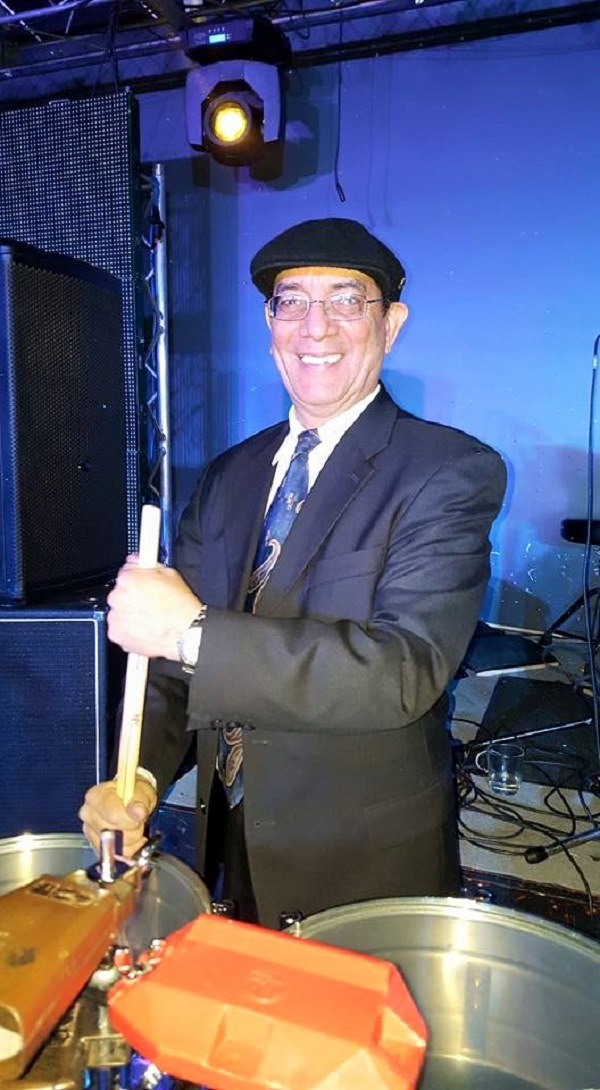
At The Blind Tiger Super Club in Santa Barbara California. Son y Clave Orchestra Carlos Navarro. Great venue.

4). Name some current business models for producing a record.

  • Independent Digital Distribution: The artist pays a digital distributor (e.g., DistroKid, CD Baby, TuneCore) and keeps most of their rights.
  • Record Label Contract: The label invests in production and promotion in exchange for a percentage of royalties and even the master rights.
  • Licensing and Sync: Producing music geared toward films, commercials, and video games, generating income from usage licenses.
  • Crowdfunding: Fans support the funding of the album in exchange for exclusive rewards.
  • 360 Deal: The label or company handles not only production and distribution but also concerts, merchandise, and image rights, in exchange for a larger percentage.

5). What strategies can artists use to monetize their work in the digital environment?

  • Streaming and Digital Downloads: Maximizing presence on Spotify, Apple Music, Deezer, etc.
  • YouTube and Content ID: Monetizing through views, ads, and copyright control.
  • Digital and Physical Merchandise: T-shirts, vinyl records, NFTs, and exclusive products.
  • Social Media and Subscriptions: Platforms like Patreon or TikTok offer the possibility of direct income from fans.
  • Licensing and Sync: Offering music for TV series, films, video games, and advertising campaigns.
  • Virtual Concerts and Exclusive Experiences: Monetized live streams, digital meet-and-greets, or access to exclusive content.

6). What do you think about creating a digital platform among us, the Latin musicians, where the profits go to the artists?

I think that’s an extremely valuable and necessary proposal. A digital platform created by and for Latin musicians would have a direct impact on the independence and sustainability of our artistic projects. By eliminating traditional intermediaries and ensuring most of the profits go directly to the artists, it would foster a fairer and more equitable industry.

Furthermore, this kind of initiative would not only allow for a better distribution of income but also the creation of a strong community where we can support each other, give visibility to emerging talents, and preserve the cultural identity of our music. In a market dominated by global platforms that prioritize volume over quality, having our own space would be a strategic tool to strengthen our voice as Latin artists and give true value to our creative work.

Carlos Navarro
Carlos Navarro

Also Read: How Money is Made Today as a Recording Artist with Record Labels and Digital Platforms

Sheila E. A drummer with a Latin heart

European Union

Guided by the forces of family, faith, and music, Sheila E. has made a name for herself as one of the most talented musical icons over the decades. With a fearless nature and a passion for sharing her gifts with others, Sheila truly follows the beat of her own drum. She touches the lives of so many, with her dynamic music career at the heart of everything. Sheila’s eagerness to share her music, openness as an author, and fire for her ministry make her such a relatable, inspirational figure for people of all ages.

Sheila E.
Sheila E.

Born into a musical family, Sheila Escovedo (Sheila E.) has been driven by an inner rhythm her entire life. As a young girl, she was immersed in the diverse music scenes of the Bay Area-influenced and inspired by her percussionist father Pete Escovedo; musical uncles Coke Escovedo, Alejandro Escovedo, Mario Escovedo, and Javier Escovedo; and godfather Tito Puente. Growing up in the Escovedo household, musical instruments were for everyone. “Nobody cared as long as you could keep time (or have a good time),” she writes in her memoir, The Beat of My Own Drum.

“The idea to record another solo album was actually spawned while I was writing the autobiography”, recalls Sheila E. “I realized that some of the experiences I was writing about should be songs. That’s when I also began looking back at songs I’d written several years earlier and forgotten about, but whose themes needed to be talked about in the book. Both fed each other”.

As the musical half of Sheila E.’s storied life and career, Icon pulsates from start to finish with colorfull fusions of the pop, R&B, funk, rock, Latin and jazz influences that shaped her unique style.

“The 16-track set opens with the soaring “Butterfly,” the first of four interludes that subtly yet powerfully illuminate the versatile talent behind the music. “Butterfly” reflects part of the journey in my book,” explains Sheila E., nicknamed butterfly by a family friend. “It’s who I am as a person. I always wanted to fly, to be the first female astronaut on the moon. It’s me running track, running free. That’s how I play.” The album takes off from there, with most songs produced live, specifically solos, in one or two takes. “I’m used to playing live,” says Sheila E., who also produced the project. “Why would I punch in my soul?”

She unleashes that soul on feisty first single, “Mona Lisa.” Drawn from Sheila E.’s Latin roots, the track vibrantly chronicles a story about a woman who never lost sight of her dream: to perform. That’s just one of several potential singles on Icon. “Fiesta” opens with guest rapper B. Slade’s teasing declaration, “Just drop that beat on that.” T

Sheila E. Photo 1
Sheila E. Photo 1

hen the hot club jam powers up as Sheila E. drums out an infectious beat throbbing with intensity-“Can’t nobody rock a party like Sheila E.,” raps B. Slade-before closing with her coquettish laugh. A mid-tempo downshift yields the feel-good track “Lovely Day.” Its message about focusing on the bright side of life takes the song on a surprising turn as it morphs into a gospel/funk vibe reminiscent of Sly Stone.

Joining Sheila E. on her musical reverie are two singular storytellers in their own right: singer Ledisi and pioneering rapper MC Lyte. The latter’s signature edgy flow spices up the saucy themed “Nasty Thang,” while outlining the drama and glamour that often com 1 es with a life in the music industry. Ledisi adds a poignant touch to “Girl Like Me,” an honest, empowering message about surviving abuse.

An abuse survivor herself, Sheila E. originally penned the song to perform with her 2007 female band C.O.E.D. (Chronicles of Every Diva). Rounding out Icon is a new version of the funky tour de force “Leader of the Band.” The song features Sheila and the E Family (father Pete and brothers Juan and Peter Michael) as well as Prince, on piano. “I love playing this song,” says Sheila E., “so I re-recorded, while still leaving a little room for Prince. It’s about how I was influenced by my pops [the legendary Pete Escovedo] and [songwriter/producer/ musician] George Duke.

That a female can be in charge and bring it just as hard.” Icon ends as it begins with another moving interlude, “Now Is the Hour.” A duet featuring Sheila E. and her beloved “moms,” Escovedo matriarch Juanita, the clip dates back to Sheila E.’s childhood. Family, faith and music were guiding forces for Sheila E. growing up in the Bay Area. In addition to percussionist dad Pete, the Oakland, Calif. native counts former Santana member/Azteca founder Coke Escovedo, solo recording artist Alejandro Escovedo, The Dragons front man Mario Escovedo and from The Zeroes Javier Escovedo as uncles

Fellow Latin star Tito Puente was her godfather. In addition to being weaned on Latin jazz and Motown, Sheila E. was exposed to a diverse array of Bay Area acts and artists. Those influences ranged from the rock of Jefferson Airplane and the Grateful Dead to the R&B/pop of the Pointer 1 Sisters and the funk of Tower of Power and Sly & the Family Stone. “I used to sit on the corner outside of the local community center with Twinkies and 7-Up listening to Tower of Power, Sly and Larry Graham rehearse,” recalls Sheila E. “The sounds of the Bay Area molded me.”

Sheila E. Photo 2
Sheila E. Photo 2

So it’s no surprise that after such a music-immersive childhood, the gifted drummer/percussionist began amassing an impressive string of credits playing not only with her dad but also with pioneering talents like George Duke, Marvin Gaye, Lionel Richie and Herbie Hancock. Following a Bay Area gig in the late ’70s, Sheila E. met Prince backstage.

Their Purple Rain recording sessions-including her vocals on the 1984 classic “Erotic City”-morphed into launching her solo career that same year. Debut album The Glamorous Life spun off the Grammy Award-nominated top 10 hit of the same name plus a second top 40 single “The Belle of St. Mark.”

Between her ’80s tenure as drummer, songwriter and musical director for Prince’s backup band, Sheila E. released three more solo albums (Romance 1600, Sheila E. and Sex Cymbal) and scored two more classic hits with “A Love Bizarre” and “Hold Me” a romantic ballad. After taking some time away from the spotlight, she then decided to tap into her Latin Jazz roots and under the name E-Train, released (Writes of Passage and Heaven).

Sheila E.’s fierce, dynamic verve onstage has made her a major concert draw since the ’90s. Along the way, she has acted in several films (“Krush Groove,” “The Adventures of Ford Fairlane,” “Chasing Papi”) and launched various music projects (E Train, The E Family). Adding to her arsenal of credits such names as Ringo Starr (as a member of Ringo Starr’s All Star Band in 2001, 2003 and 2006), Gloria Estefan and Beyoncé as well as performing on the 2012 Academy Awards with pop hitmaker Pharrell Williams and composer Hans Zimmer.

Sheila E. in concert

She was the first female Music Director for a late night talk show (“The Magic Hour” with Magic Johnson) and received an Emmy® nomination as Musical Director for “Fiesta Latina – A Performance at The White House.” Sheila E. was recently among the rost 1 er of stars chosen to perform at the Kennedy Center Honors whose 2013 honorees included artists Herbie Hancock, Billy Joel and Carlos Santana. Away from the spotlight, music doubles as a source of healing and giving back for Sheila E. In tandem with the city of Oakland, she staged the first annual “Elevate Oakland” benefit concert in February of 2014.

A host of Bay Area artists and other acclaimed musicians performed at the city-donated Fox Theatre. The goal: to raise funds to improve student academic achievement and attendance through music and arts programming. But this isn’t Sheila E.’s first time giving back. Between gigs, she has also crisscrossed the country, speaking at schools and colleges, shelters, church organizations, music classes and clinics about music’s effect on her life and career. “Sharing music in any way I can is my ministry,” she 1 says. And that was part of the inspiration for penning the autobiography “The Beat of My Own Drum.” Several years ago Sheila E. publicly acknowledged she was an abuse survivor

“The book was the beginning of the healing,” says Sheila E. “I’d talked about the abuse in my ministry and addressed it in some of the song lyrics I’d written. But it was challenging to sit down and really write about it in detail for the book. But through pain comes realization, understanding and the opportunity to help others overcome those challenges.” After ringing in 2014 in concert with Sergio Mendes on New Year’s Eve at Disney Hall, Sheila E. is now ready for her Icon debut.

Sheila E. Icon
Sheila E. Icon

With no Google or YouTube artist script to follow back then, she says her career drive was propelled by one thing: “I just did it because I loved it. And that’s what Icon represents. I started all this as Sheila Escovedo then became this persona named Sheila E. Now Sheila E. and Sheila Escoved 1 o are the same person, still making music that comes from the heart.”

Rudy Regalado. The legend of percussion

North America / USA / California

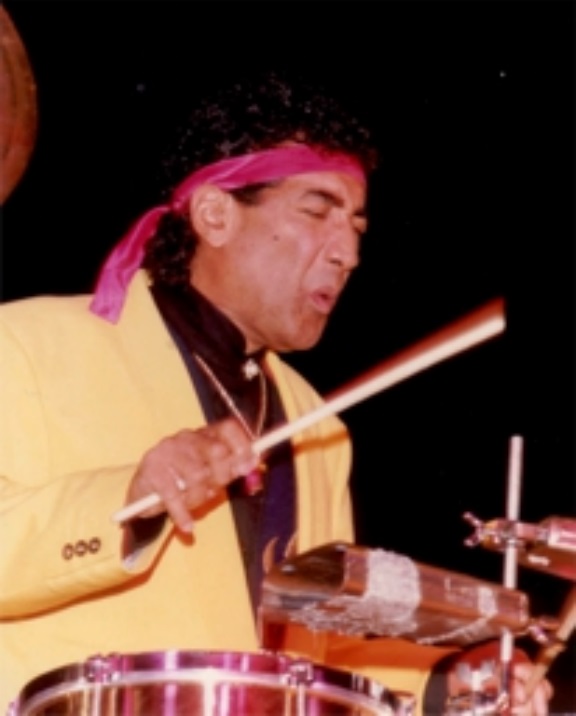
Rudy Regalado was a composer/ educator and one of the top Latin Rock Timbaleros based in the area of East Los Angeles, California during the 1970s and the second more famous Latin percussionist after Tito Puente. His legacy has been exceptional, 23 recorded albums, participated in big Festivals from USA and shared the best platforms with the best in the world. This artist was well known for his style, his contagious rhythm and eccentric presence.

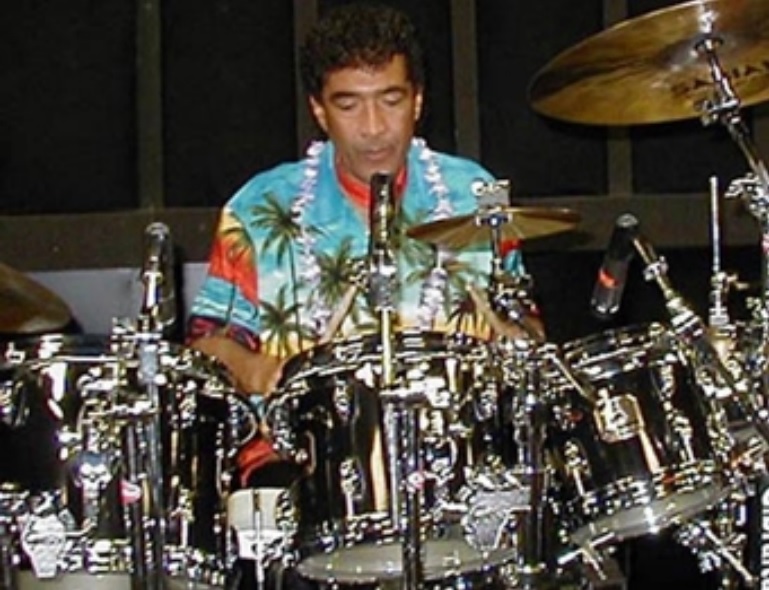
Photo 1: Rudy Regalado

Rudy Regalado was a genuine and outstanding timbales maestro; he was inspired as a child by big bands Machito and Tito Rodriguez, who were two of favorites he became interested in playing music and the Timbales.

His beginnings in this instrument go back at the end of the 1950s. During that period as s teenager, he learned to play the drum and timbales in home town (Caracas-Venezuela). For 1963 and with desire to eat the world with his music he moved to Puerto Rico and started playing in hotels and clubs in the San Juan area with Julio y su combo, the first house bands he played with in Puerto Rico’s at Hotel Caribe Hilton. They were the backup house band for all the famous musicians that performed in the Island in 1965; at the same time he studied harmony and percussion at Pablo Casals Conservatory of music.

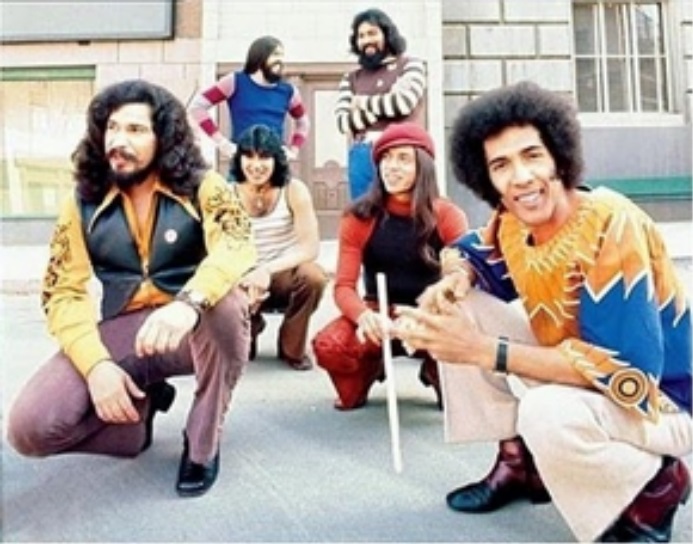
Photo 2: Rudy Regalado

A decade later the restless Venezuelan timbalero migrated to Southern California, where he joined playing with local jazz and Latin groups before joining with the extremely popular Latin Rock Band called El Chicano.

The timbalero of timbaleros spent twelve years with El Chicano, singing and playing the timbales in 5 albums, which was included in Top 40 hits during the 1970s with the songs “Viva Tirado” and “Tell Her She’s Lovely”. El Chicano also created the theme song for the television series Baretta, which ran on ABC from 1975 to 1978.

After, Rudy formed his own Latin Jazz All-Star / Salsa Band in 1983, which included a selected group of musician from Los Angeles. Initially known as Todos Estrellas, the band eventually became known as Chévere (aan expression of Venezuelan popular slang) and appeared at the PlayBoy Jazz Festival, Disneyland and Fiesta Broadway, among other engagements. The band also performed overseas in summer festivals in Canada, Hong Kong, Indonesia, Kuala Lumpur, Malaysia, Singapore, Thailand and throughout the European continent.

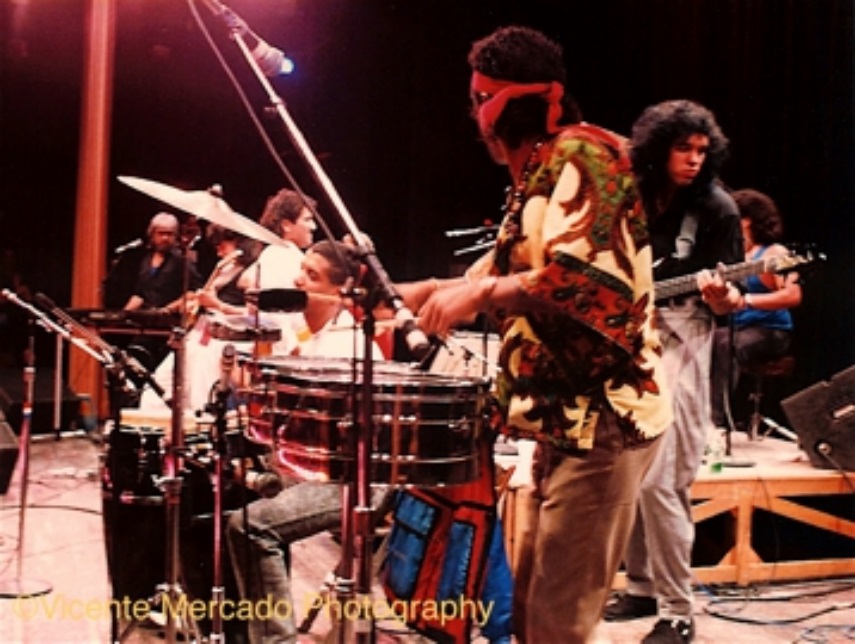
Photo 3: Rudy Regalado

As part of an El Chicano reunion in 2009, the Timbales maestro performed during the 40th anniversary of Woodstock festival at the Golden Gate Park Music Concourse in San Francisco, where the group actually celebrated their own 40th Anniversary, and last played with them at the Greek Theatre of Los Angeles in front of over a 100,000 screaming fans.

In addition, he participated in a variety of sessions with the Zawinul Syndicate, Quincy Jones, Alphonse Mouzon, Caravana Cubana.

Photo 4: Rudy Regalado

Rudy also toured with Aretha Franklin in charge of her percussion section, was a drummer for Los Melódicos in its 1980 tour of United States, and performed on the Tonight Show, the Nancy Wilson Show and American Bandstand. His film credits include The Skeleton Key (2005), as well as the television series Pepe Plata (1990) and Clubhouse (2004).

Héctor José Regalado better known as Rudy Regalado passed away on November 4th, 2010, in Las Vegas – Nevada, where he died from complications of pneumonia at the age of 67.

Photo 5: Rudy Regalado

Currently, his daughter Norka Tibisay Regalado founded in 2013, the Rudy Regalado Foundation. The goal of the foundation is to provide inner city music programs with instruments and financial support. “Let no child be left behind due to lack of funds”. In February, 2014, they donated over 2500 instruments and donated $2000.00 to help with cost for instructors. Her goal is to get financial support from big companies and the community in order to reach many more music programs; she is also working on bringing music programs inside children´s hospital to help the healing process to their mentally ill children and burned survivors.

Rudy Regalado will be forever remembered as one of the greatest Latin exponents of Salsa / Jazz sound of all time, undoubtedly, The Legend of Timbales (January 29, 1943 (Caracas – Venezuela) – Covember 4, 2010 (Las Vegas – Nevada).

Photo 6: Rudy Regalado

For additional information or to make a donation, please contac Norka Regalado at 323.270.8176 or go to website www.rudysfoundation.org/

Creator of Afro-Rican Jazz William Cepeda talks about this subgenre

When we talk about the best characteristics of Puerto Rican artists, innovation is definitely one of them, and our guest is an excellent example of this. Grammy nominee and composer William Cepeda was born and raised in Loiza, known as the heart of “Little Africa” in Puerto Rico, so we can sense that this had much to do with his later artistic inclinations. We will talk about this and other things in the next paragraphs of this gripping story. 

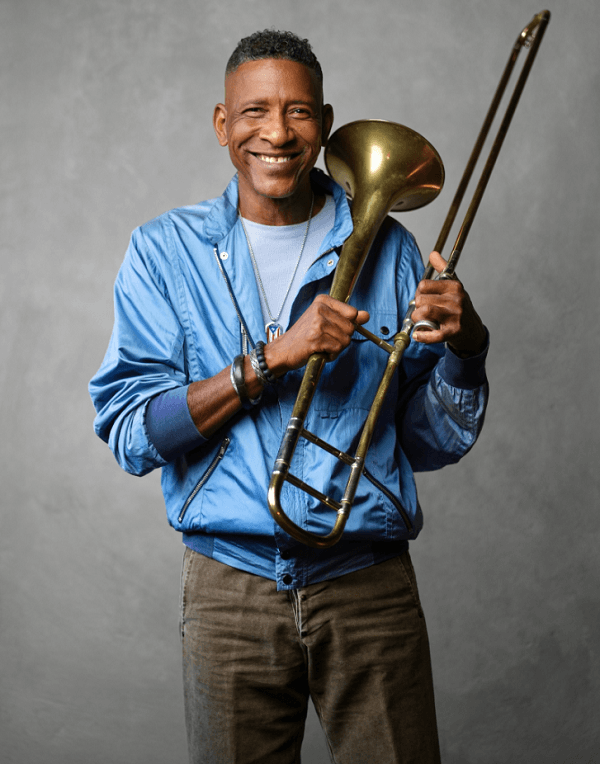
Musician William Cepeda
This is Puerto Rican Grammy nominee, composer, and musician William Cepeda

What got William interested in music

The environment in which William grew up had everything to do with his interest in music as a serious profession. In Loiza, Puerto Rican bomba was one of the most listened genres by the community, and cultural events based on it were passed down through generations. It was there that a very young William began attending the colloquially known as “bombazos” and connecting with this music from an early age.

Practically the whole town was involved in these traditions, including his family, so he could not escape all these activities carried out year after year. In fact, his grandparents and some of his uncles and cousins were musicians, so it was common for the young boy to see them play their instruments and know what that was about.

When he turned 14, he finally began seriously studying music, especially the theory part. Although one of his options to study was accounting, this career would never overcome his enormous taste for music, so he never materialized this interest.

How William got started professionally in music 

While still an inexperienced teenage musician, William started playing percussion with some local groups, one of them being La Orquesta Zodiac, composed of a group of salsa veterans with more than 50 years of professional experience. Although these gigs were already paid, the young man still saw music as a side hobby. 

However, long time later, he would completely change his mind after noticing that his skills and opportunities could take him further than he thought possible.

William Cepeda at the festival
William Cepeda at the Luminato Festival in Toronto

Afro-Rican Jazz

Having already a more or less consolidated career, William was part of the invention of Afro-Rican Jazz, which can be defined as a concept that celebrates Puerto Rico’s heritage and its African roots while offering a new version of the jazz that everyone knew, giving it a touch of modern flavor that was absolutely innovative for the time. 

Growing up in an environment where traditional Puerto Rican music was so present and having experience only with local groups, he still had a long way to go as an artist. His outlook started to broaden by going to study at Berklee in Boston and then to do a master’s degree in New York, which in turn led him to play with American groups and musicians such as Dizzy Gillespie, James Brown, Miriam Makeba, and many other famous jazz musicians.

Gillespie became one of his biggest mentors when playing with him and his group The United Nations Orchestra, which included Cuban, Colombian, Dominican, Panamanian, and Brazilian musicians. It was precisely because of this great diversity of nationalities and influences that the orchestra received this name. However, there were no Puerto Rican musicians or music, so Gillespie gave William the opportunity to become the youngest member and create a subgenre product of a mixture of jazz and some styles from his place of origin. 

William told us that many Boricuan musicians used to play Latin jazz based on Cuban music, but none of them had ever ventured to create a subgenre of jazz with a Puerto Rican base. That was when the artist realized that something had to be done about it, so he chose to fuse jazz with Puerto Rican music and later named his group Afro-Rican Jazz.

He also continued to experiment with genres until he found something he called “Plena jazz,” the name he used for one of his albums and the result of mixing plena, another traditional genre born in the neighborhoods of Puerto Rico, and jazz. He also made a symphonic rumba album at the time. 

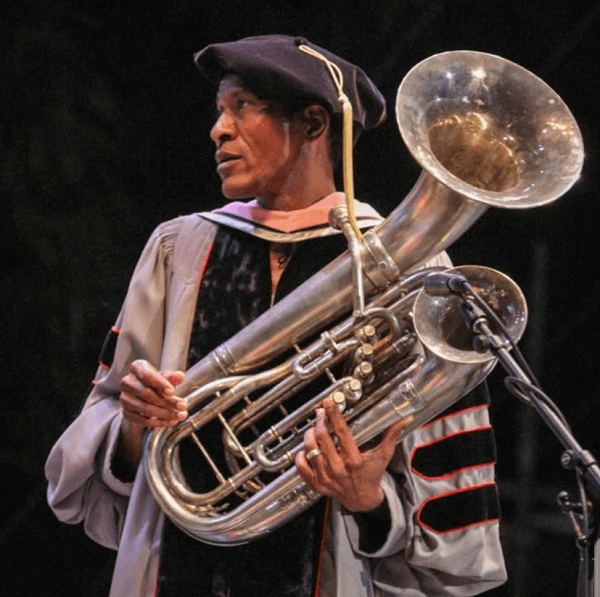
William Cepeda and his doctorate
William Cepeda receiving his honorary doctorate from Berklee College of Music

Dizzy Gillespie’s protégé

Although William was influenced by a number of artists, when we check out his story his history, there is no denying that the South Carolinian trumpeter was the greatest influence and role model for the young man. 

With respect to this stage of his life, William recalls with affection that Dizzy was always very attentive to his development within the group, to the point that he came to see him as an artistic father. As we said before, he knew nothing about jazz or American music when he left Puerto Rico, but Dizzy and his musicians were “a second university” where he learned what no educational institution could teach him, something he thanks to them.

“Dizzy saw talent in me, so he always pushed me to be better every day. He encouraged me, protected me, and guided me in my development as a musician,” he said of his teacher.

Artists he has collaborated with

William has collaborated with countless great Latin artists such as Celia Cruz, Rubén Blades, Eddie Palmieri, Tito Puente, Marc Anthony, Oscar D’León, and many others. Most of these contacts came about thanks to references of acquaintances, combined with the percussionist becoming known to the public for some time, which generated many recommendations. 

All the above artists also influenced him to a certain extent, but he also says that he liked and still likes other genres such as classical music, jazz, the folklore of other countries, and many others.

Read also: Argentine tango bassist and Latin Grammy winner Pedro Giraudo returned to his roots

  • « Go to Previous Page
  • Page 1
  • Interim pages omitted …
  • Page 11
  • Page 12
  • Page 13
  • Page 14
  • Page 15
  • Interim pages omitted …
  • Page 111
  • Go to Next Page »

International Salsa Magazine (ISM) is a monthly publication about Salsa activities around the world, that has been publishing since 2007. It is a world network of volunteers coordinated by ISM Magazine. We are working to strengthen all the events by working together.