• Skip to primary navigation
  • Skip to main content

International Salsa Magazine

  • Home
  • Previous editions
    • 2026
      • ISM / January 2026
      • ISM / February 2026
    • 2025
      • ISM / December 2025
      • ISM / November 2025
      • ISM / October 2025
      • ISM / September 2025
      • ISM / August 2025
      • ISM / July 2025
      • ISM / June 2025
      • ISM / May2025
      • ISM / April 2025
      • ISM / March 2025
      • ISM / February 2025
      • ISM / January 2025
    • 2024
      • ISM / December 2024
      • ISM / November 2024
      • ISM / October 2024
      • ISM / September 2024
      • ISM / August 2024
      • ISM / July 2024
      • ISM / June 2024
      • ISM / May 2024
      • ISM / April 2024
      • ISM / March 2024
      • ISM / February 2024
      • ISM / January 2024
    • 2023
      • ISM / December 2023
      • ISM / November 2023
      • ISM / October 2023
      • ISM – September 2023
      • ISM – August 2023
      • ISM July 2023
      • ISM Edition June 2023
      • ISM – May 2023
      • ISM April 2023
      • ISM March 2023
      • ISM February 2023
      • ISM January 2023
    • 2022
      • ISM December 2022
      • ISM November 2022
      • ISM October 2022
      • ISM September 2022
      • ISM August 2022
      • ISM July 2022
      • ISM June 2022
      • ISM May 2022
      • ISM February 2022
      • ISM January 2022
    • 2021
      • ISM December 2021
      • ISM November 2021
      • ISM October – 2021
      • ISM September 2021
      • ISM August 2021
      • ISM July 2021
      • ISM May 2021
      • ISM April 2021
      • ISM June 2021
      • ISM March 2021
      • ISM February 2021
      • ISM January 2021
    • 2020
      • ISM December 2020
      • ISM November 2020
      • ISM October 2020
      • ISM September 2020
      • ISM August 2020
      • ISM July 2020
      • ISM June 2020
      • ISM May 2020
      • ISM April 2020
      • ISM March 2020
      • ISM February 2020
      • ISM January 2020
    • 2019
      • ISM December 2019
      • ISM November 2019
      • ISM October 2019
      • ISM Septembre 2019
      • ISM August 2019
      • ISM July 2019
      • ISM June 2019
      • ISM May 2019
      • ISM April 2019
      • ISM March 2019
      • ISM February 2019
      • ISM January 2019
    • 2018
      • ISM December 2018
      • ISM November 2018
      • ISM October 2018
      • ISM September 2018
      • ISM August 2018
      • ISM July 2018
      • ISM June 2018
      • ISM May 2018
      • ISM April 2018
      • ISM March 2018
      • ISM February 2018
      • ISM January 2018
    • 2017
      • ISM December 2017
      • ISM November 2017
      • ISM October 2017
      • ISM September 2017
      • ISM August 2017
      • ISM July 2017
      • ISM June 2017
      • ISM May 2017
      • ISM April 2017
      • ISM March 2017
      • ISM February 2017
  • Download Salsa App
    • Android
    • Apple
  • Spanish

Biography

Leo Pacheco Sonero del barrio and beloved example of father and friend was lead vocalist of the Orquesta Renovación under the direction of the tumbador Nico Monterola.

On May 17, 1948, Alejo Veliz Pacheco was born in Las González, Miranda State.

Under the musical influence of his father, an outstanding Afro-Venezuelan drummer, his debut as a professional took place in 1973, when he became the lead vocalist of the Renovación, after the departure of Orlando Castillo “Watussi” to the orchestra of Porfi Jiménez.

Leo Pacheco Sonero del barrio and beloved example of a father and friend

An advanced group, which emerged on February 6, 1973, under the musical influence of Harlow y la Perfecta, became the ideal competition to the “Galician” Dimensión Latina.

Under the direction of tumbador Nico Monterola, La Renovación, despite not having much luck, presented in its ranks timbalero Alfredo Cutuflá, (great Venezuelan timbalero, with a brilliant career in France), then Cheo Navarro (Director of Bailatino), the future trombonists of Oscar D’ León, the Piñango brothers: Nené and Taito.

This is the first recording for the album of La Renovación, one of the best Venezuelan salsa groups of the 70s. La Renovación since its foundation had in its ranks a select group of musicians that in the future would make a brilliant career in our salsa, needless to say that this group in its different stages has always tried to maintain a very fat and hard sound in the style of the good bands of New York”.

Orquesta Renovación under the direction of the tumbador Nico Monterola

This LP gathers many good songs but there is one in particular that I like very much and it is “Guaguancó a Barlovento”, authored by Orlando Watussi, who was also founder of this group, but he left before the recording of this first album.

Rafael García on bass, Félix Suárez “Shakaito” (future director of the Bronko), Hungria Rojas (later Oscar D’ León’s bongos player) and the vocalization of Leo Pacheco, who recorded with them, (5) Cinco Producciones: Echa Pa’ lante (1974); Llegó la Renovación (1975); Pare Cochero (1975); Lo máximo es Renovación (1976) and A todo el mundo le gusta (1976).

Due to some problems he left La Renovación and went on tour to Colombia with Nelson Henríquez, commitments that prevented him from joining the newly formed orchestra of Oscar D’ León, who observed in Leo his great conditions to do the chorus and second voice, (as a substitute for the work done by Wladimir Lozano in Dimensión Latina), and in a nightclub, Oscar told him: “Leo was looking for you, because the two of us, for whatever comes out …”, “here there is nothing else…”, “here we are going to bust everybody…”.

In fact, after Rodrigo Mendoza’s departure in March 1977, the band replaced him thanks to Leo Pacheco’s very special timbre to do the chorus and second voice, with some songs that served as witnesses, such as the unforgettable: Juramento, Fuego de Amor, Capullito de Azucena, Cruel Desilusión (Con la Crítica de Oscar), among others.
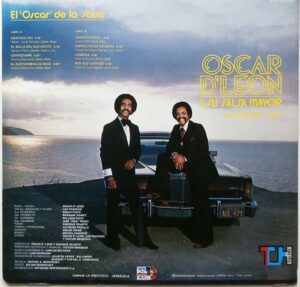
Oscar D'Leon Y Su Salsa Mayor El Oscar De La Salsa
Oscar D’Leon Y Su Salsa Mayor El Oscar De La Salsa

The last days of May 1977, the breakup of Oscar D’ León’s Salsa Mayor is announced, where the bassist-singer in record time reassembles his orchestra dismantling the Renovación itself, while Leo Pacheco, together with the timbalero Alfredo Padilla, Henry Camba, William Puchi, Miguel Pacheco, José “Pipo” Pérez form: “Nuestra Orquesta La Salsa Mayor”, with whom he recorded three anthological albums: De frente y luchando (1978); Strong & Hots (1979); Sello de garantía (1979).

He continued his musical activity in the following years with La Crítica, Combo Venezuela and other groups.

“There was a lot of history left to tell, impossible to tell in this opportunity for reasons of space, although we hope it will be the beginning of a series of works on Venezuelan Salsa, which unfortunately we begin with the sad news of the death of Leo Pacheco, who left us with the fullness of his vocal cords and strength, which impressed the doctors on the day of his death when he resisted 8 hours with a heart attack while driving home in Ocumare del Tuy in his native Miranda state”.

For July 2023 the Lutier, Percussionist and friend Maestro Nico Monterola made a well-deserved tribute with a single titled:

“Tribute to Leo Pacheco”.

Sonero of the neighborhood and beloved example of father and friend.
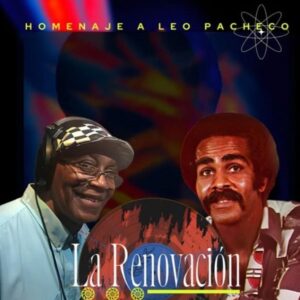
Leo Pacheco Sonero del barrio and beloved example of a father and friend


Source: Jose “Cheo” Guevara of Asocosalsa 74

Also Read: “Canelita Medina” Caribbean popular music loses one of its best exponents
The void left by Felix ”Pupi” Legarreta

Pupi’s life  

Cuba has given the world a large number of artists who have left the name of the country very high, so it is always a good moment to talk about them. Such is the case of arranger, composer, singer and musician Felix ”Pupi” Legarreta, who sadly left this world last month.   

Given that this great exponent of Cuban music and the charanga genre is no longer with us, we think it is a great opportunity to remember a little of his career and all the way to becoming the great artist he was.    

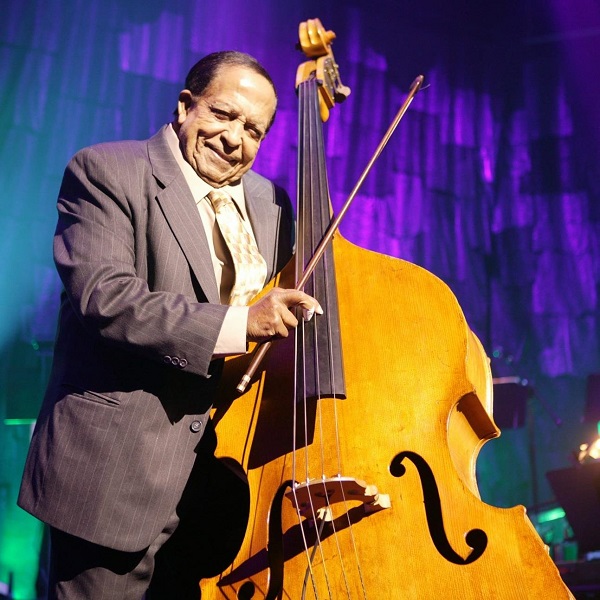
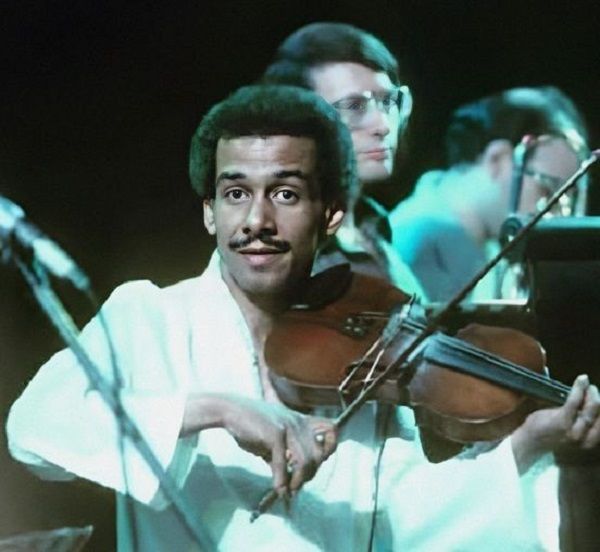
Pupi playing the violin
Pupi Legarreta playing the violin on stage

Pupi’s childhood   

Felix Legarreta was born in 1940 in the city of Cienfuegos, Cuba, and from the very early age, his father nicknamed him ”pupi”, as he would be called for the rest of his artistic life. ‘’Puppy in Spanish means ”cachorro” (a very young dog), so this pronunciation was very interesting to Americans.   

Around this same time, Pupi was not really interested in music as a profession, as his thing was carpentry at the time. However, he began being affected by severe asthma attacks due to the dust used in his daily work, so it was recommended to his father to take him away and make him dedicate himself to something else that would not damage his health. 

This is how the young boy decided to become a barber and met a friend with whom he started taking music lessons, which could be considered as the first contact he would have with music. 

The first instrument Pupi played was the violin. He admits it was not easy to learn how to play it, but with effort and dedication, he managed to become really good at music. However, he was faced with another challenge that would complicate the realization of his new dream: lack of money.    

Like the majority of families in Cuba at that time, Pupi’s was also going through a complex economic situation, so buying everything he needed for his musical training was very difficult. However, it did not stop his father from getting down to work and raising the money necessary to buy his son his first violin. 

In a 2010 interview, Pupi revealed that it took his father more than two years to raise 60 pesos to buy a used violin at a pawn shop, as it was the only way he could afford the instrument for the young boy.    

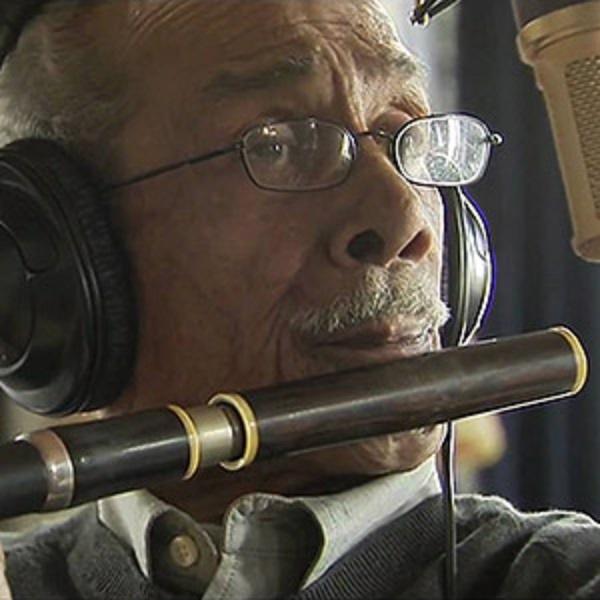
Pupi playing a flute
Pupi Legarreta playing a flute in a studio

Formal beginnings in music 

When he decided to travel to Havana, he was given the opportunity to play Orquesta Sensación, with which he earned about eight pesos a month to cover some of his basic expenses. It was very difficult for him to live with that little, but music helped him to support himself.     

However, little by little he worked his way up and earned the respect of his fellow musicians, who consider him for their own projects.    

In 1959, music also allowed him to travel to the United States, specifically to the state of California, but it would not be too long before he decided to try his luck in New York. Once there, he collaborated with artists such as Mongo Santamaría, Charlie Palmieri, Johnny Pacheco, Machito, Tito Puente and many more.    

Fania All Stars   

In 1964, he started collaborating with the Fania All Stars, which had more than 24 instruments, including trumpets, pianos, basses, singers and more. Pupi was so shocked that he could not refuse to work with the world-famous orchestra, as this number of musicians was something he had never seen before. 

In total, he recorded between five to seven albums with La Fania on which Pupi was taken into account when issuing opinions about his work. If the artist considered something was not quite right and wanted to change it, the orchestra did whatever was necessary to satisfy him with the results of the recordings. 

The only criticism that the Cuban issued towards the orchestra is regarding the excessive focus on the Puerto Rican market, in fact, the vast majority of musicians were Puerto Rican. This caused them to neglect other markets that may be useful for Fania. However, this does not exclude all the positive things that came for those involved during the time this union lasted. 

When his time in the orchestra ended, he was working for an electricity company in New Jersey, but his family was in Philadelphia, so he decided to move permanently to this city, where he remained till the day he died.   

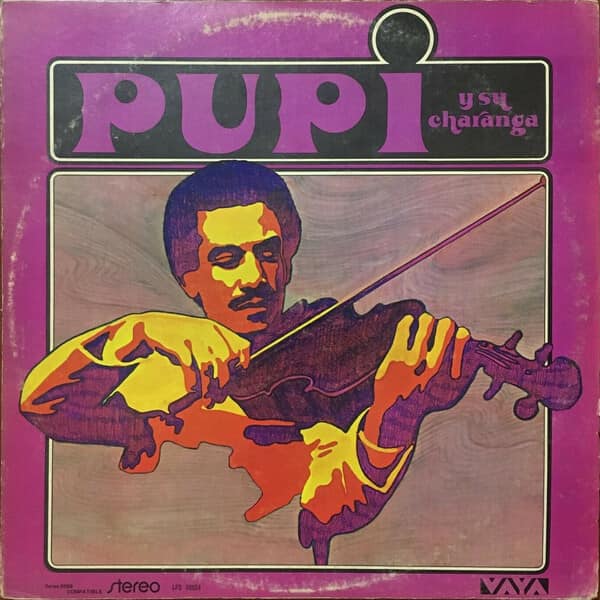
Album cover for Pupi
Album cover for ”Pupi Legarreta Y Su Charanga”

Death 

In the afternoon of July 3, 2023, Félix ”Pupi” Legarreta’s relatives issued a statement giving the deplorable news of the artist’s death the day before at the age of 83.    

His daughter Frances Legarreta posted the following on her social networks on the already mentioned day: “I announce with great sadness the death of my father, Pupi Legarreta, on July 2, 2023, in Philadelphia, Pennsylvania. He is survived by his wife Frances, his son Michael, his grandchildren, great-grandchildren and his daughter Otie in Puerto Rico”.   

In addition to the above, he revealed that his father expressed his desire to be cremated and not to be veiled in a memorial service. She also asked that her entire family’s privacy to be respected in view of the pain that its members were going through. 

Read also: Carlos Medrano from Sabor De Mi Cuba tells us about his long musical history 

Israel “Cachao” Lopez Sobrado in fame and respect in the seventies was dedicated to maintain the tradition at the highest level

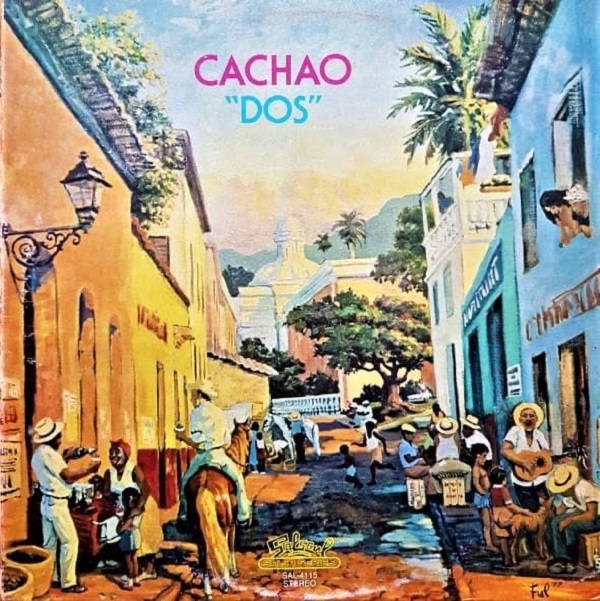
“Cachao Dos” for the year 1977.

It will be enough to mention the name of this celebrity to open a whole range of creativity and genius embodied in what is considered a cult discography.

Since 1931, the year in which he started musically as a member of the Havana Philharmonic Orchestra, the precocious Israel would give a foretaste of the talent he had and that, as time went by, would be consummated hand in hand with his right-hand man and musical accomplice, Orestes “Macho” López, his older brother.

Certainly, music was impregnated in the DNA of the López family, a generating machine of musicians by tradition, something that Lázara Cachao, Israel’s niece and daughter of his deceased younger brother Orlando “Cachaito” Lopez, reaffirms: “The tradition of being musicians comes from the grandparents and great-great-grandparents, all the Cachao are musicians”.

Israel “Cachao” López Sobrado

Regarding his transcendence, he and his older brother Orestes are said to be the creators of the Mambo, a rhythmic variation of the Danzón and a genuine musical expression that would mark a before and after in Latin music.

However, and as it is known, this contribution would change its clothing and would reach worldwide popularity when it reached the hands of another “inventor” born in Matanzas, Cuba, named Dámaso Pérez Prado, who as it is known, gave it another treatment and musical twist reaching surprising popularity.

“Cachao”, after a 31-year stay with the Havana Philharmonic Orchestra, decided to leave Cuba, settling for many years in New York City.

As it is understandable, his presence in this city was more than important for the musical guild and music fans.

He was nothing less than one of the managers and protagonist of the famous Jam Sessions recorded by the Panart whose presence was capitalized among many others by Tito Puente, Tito Rodríguez and Eddie Palmieri.

From the first one we could say, a whole school, a musician with a deep knowledge of his double bass and creator of his own style, bow in hand, and as a prolific composer, with approximately three thousand compositions together with his brother “Macho” López.

The years in New York were musically very good for Israel Lopez as well as in Las Vegas and finally Miami, where he lived until his last days.

Making a discography of him is quite a task and a challenge. However, after his arrival, I remember with great pleasure his collaboration for the album Latin Explosion by Joe Cain and his orchestra in 1964, where among others, Listen dos Trompetas and Mungo, Mungo Baby stand out.

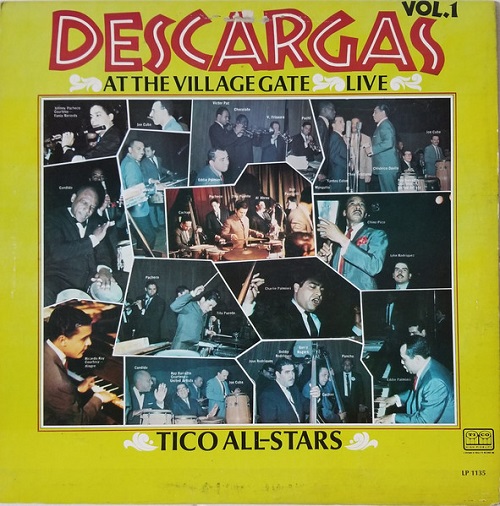
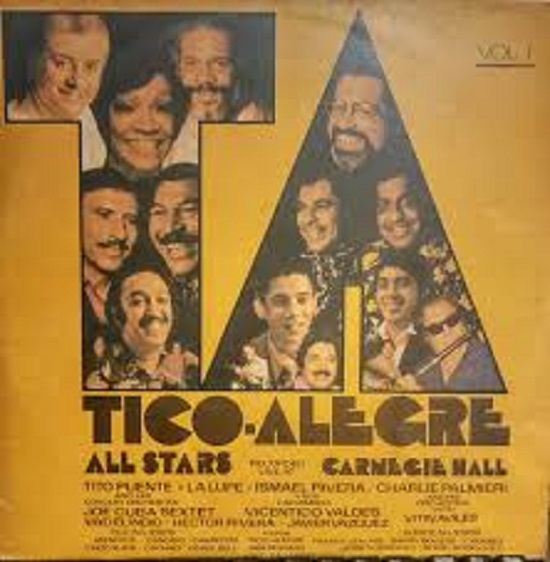
Esta es mi Orquesta, theme/performance of Tito Rodriguez’s musicians emulating what Stan Kent and his Big Band did, or those performances as special guest in the famous Descargas at The Village Gate Live and Tico All Stars, among many others.

The Village Gate Live
Tico All Stars
Tico All Stars

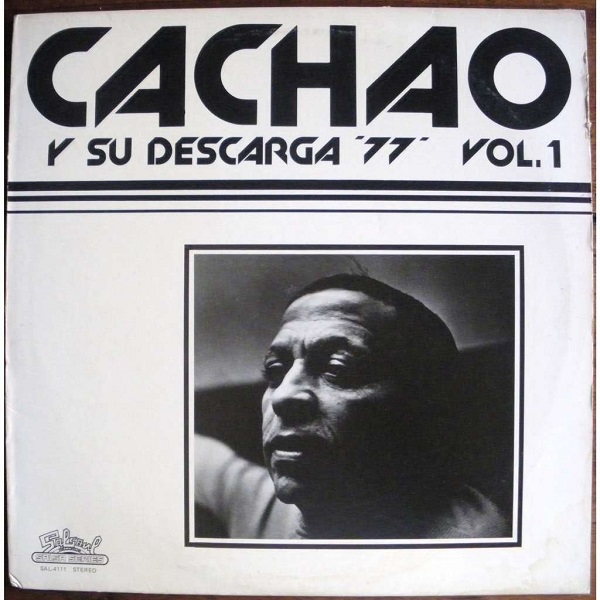
In the seventies, Cachao, with his fame and respect, dedicated himself to maintain the tradition at a supreme level, and from that period, punctually 1977, Cachao will present two epic works, the first one entitled Cachao y su Descarga Vol. 1 and then Cachao Dos, both recorded for Salsoul Records under the production of René López and Andy Kaufman.

Cachao y su Descarga Vol. 1

The latter contains only a total of five tracks, but they are well fulfilled in their purpose of maintaining a fierce defense of the rhythms that Gran Cachao has been proclaiming for years.

This album, like everything else recorded by the double bass player, is genuine and of supreme quality, something that is due to Israel’s responsible and dynamic character, something that the leader Julio Castro can attest to, having not only known him personally but also having worked with his orchestra La Única, which arrived in NYC for a prolonged stay of a little more than half a year.

Cachao Dos
Cachao Dos

Repertory

Ko Wo Ko Wo: (Guiro): Julito Collazo

Israel “Cachao” López: Contrabajo

Julito Collazo: Vocal, Chekere, Conga

Mario Muñoz “Papaito”: Campana

Diane Cardona: Coro

Marcelino Guerra: Coro

Héctor “El flaco” Hernández: Coro

Zunny López: Coro

Frankie Rodríguez: Coro

Fela Wiles: Coro

Jóvenes del Ritmo: (Danzón): Israel López

Israel “Cachao” López: Contrabajo

Julián Cabrera: Congas

Gonzalo Fernández: Flauta de Madera

Oswaldo “Chihuahua” Martínez: Timbales

Charlie Palmieri: Piano

Rolando Valdés: Guiro

Cuerdas:

“Pupi” Legarreta: Violín

Alfredo de la Fe: Violín

Eddie Drenon: Violín

Yoko Matsuo: Violín

Carl Héctor: Violín

Patricia Dixon: Cello

Centro San Agustín: (Danzón-Cha): Israel López

Israel “Cachao” López: Contrabajo

Carlos “Patato” Valdés: Congas

Gonzalo Fernández: Flauta de Madera

Lino Frío: Piano

Rolando Valdés: Guiro

Nelson González: Tres

Mario Muñoz “Papaito”: Percusión

Alejandro “El negro” Vivar: Trompeta

Alfredo “Chocolate” Armenteros: Trompeta

Rafael “Felo” Barrios: Coro

Roberto Torres: Coro

Trombón Melancólico: (Descarga): Israel López

Israel “Cachao” López: Contrabajo

Manny Oquendo: Timbales

Charlie Palmieri: Piano

Barry Rogers: Trombón

José Rodríguez: Trombón

Andy González: Campana

Frankie Rodríguez: Percusión

Gene Golden: Percusión

Milton Cardona: Percusión

Rafael “Felo” Barrios: Coro

Roberto Torres: Coro

Chambelona (Popurrí de Congas): Neri Cabrera

Israel “Cachao” López: Contrabajo

Julito Collazo: Bombo

Lino Frías: Piano

Mario “Papaito” Muñoz: Percusión

Oswaldo “Chihuahua” Martínez: Percusión

Virgilio Martí: Percusión

Eugenio “Totico” Arango: Coro

Rafael “Felo” Barrios: Coro

Read Also: Carlos “Patato” Valdés one of the best percussionists in the history of Latin Jazz

Cachao

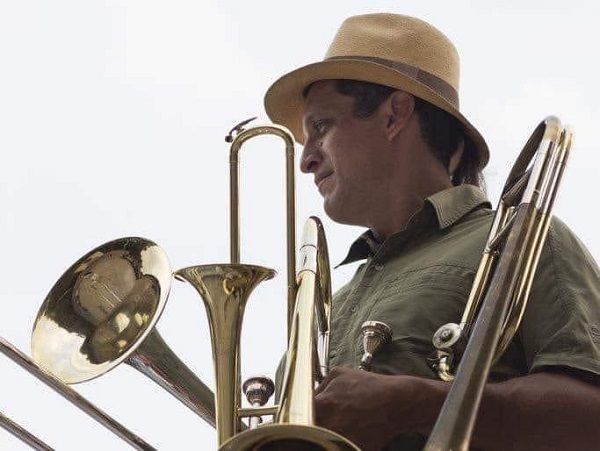
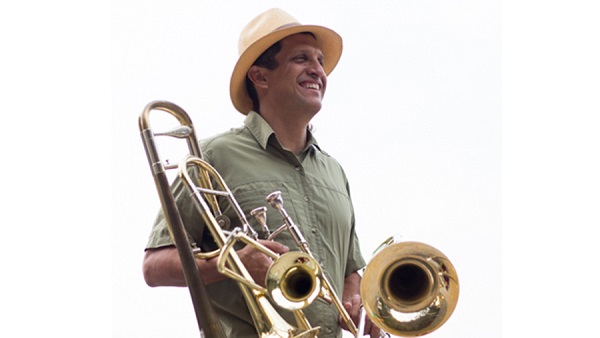
Adrian Suarez Composer, arranger, trombonist and percussionist

Trombonist Adrian Suarez’s musical career began when he was very young at a music school.

“From the age of five they put us to study theory and solfège, and four years later I managed to get my hands on an instrument.”

However, once he was able to play an instrument, he took a break to dedicate himself to baseball. “It was at the age of 14 that an uncle took me to some Latin percussion lessons and soon after that I started with the trombone.”

On April 23, 1969, in Caracas, Venezuela, Adrian Suarez was born.

Excellent composer, arranger, trombonist, percussionist and researcher.

Bachelor of Arts (UCV-1994), he studied music, trombone and composition at the Escuela Superior José Ángel Lamas.

He also studied Afro-Caribbean percussion and Afro-Venezuelan percussion (1985-1990). He was a researcher and advisor for the foundation of ethnomusicology and folklore, fundef, between 1993 and 1995.

Adrian Suarez Composer, arranger, trombonist and percussionist

He studied composition at the Cátedra Latinoamericana de Composición Antonio Estévez, with maestro Juan Carlos Núñez from 1994 to 1996. In Germany he obtained a master’s degree in composition.

As a professional, he has collaborated with the Papel Musical Magazine (1992); he has been a researcher and advisor for the Foundation of Ethnomusicology and Folklore (FUNDEF) under the direction of Dr. Isabel Aretz; and he has worked as a documentary advisor for visual arts exhibitions.

He studied composition with Helmut Lachenmann and Marco Stroppa. In 2001 he received his master’s degree in composition from the Staatliche Hochschule für Musik und Darstellende Kunst in Stuttgart, Germany.

Since 1999 he has been a founding member of the international group of composers Aspect, based in Germany, and since 1991 of the Musikós Association in Caracas. He participated in the Latin American Composition Chair Antonio Estévez, under the direction of Juan Carlos Núñez (1994-1996).

He has received numerous awards, including the Unique Prize of the Manuel Enrique Pérez Díaz National Composition Competition (CONAC, Caracas, 1998) for his work “Soledades”, “Hommâge à Octavio Paz”, for two guitars and harp, the Municipal Music Prize (Caracas, 2002 and 2017), the National Culture Prize (2010) as well as the Prize of the Ibero-American Composition Competition for Symphonic Band Ibermúsicas-Oaxaca (2016).

El 23 de abril de 1969, en Caracas, Venezuela, nació Adrian Suarez

He has worked as author and director of musical-dramaturgical shows in Venezuela, including titles such as: “Lamas siempre” (1995), “Proyecto Música e Hipótesis Aleatorias” (1997), “Atavismos del Sol y de la luna” (2000), “Maithuna” (2009), “Watunna” (2010), “Meñé Ruwa, los dueños del canto” (2011) the first musical theater play in the continent for instrumental ensemble and two shamans and “La salsa es trombón” (2012, 2015, 2017).

He led a band integrated by a group of the best musicians of the salsa scene nationwide: Tuky Torres, on piano; Carlos Rodríguez, bass; Víctor Cardona, on timbal and bongo; Freddy Rivas, congas; Johan Muñoz, trombone; Eliel Rivero, trombone. Special guests included soneros Edgar Dolor Quijada, Reinaldo Torcat, as well as a group of batá drummers.

Creator of the Ensemble Lux Aeterna, dedicated to the interpretation of spiritual and sacred works of all times. He is also founder of the Akoustikos New Music Festival in 2009.

As a trombonist, he has cultivated popular music from all over the continent, with special emphasis on Venezuelan and Caribbean music. His work as a researcher, composer and performer has allowed him to take his work and music to several countries in the Americas, Europe, Africa and Asia.

La carrera musical de Suárez inició desde cuando era muy joven en una escuela de música

“It won’t be a master class in history,” says Venezuelan musician and composer Adrián Suárez with a chuckle; in reality it is a musical show, with hints of theater and dance, that will show the public the evolution of the trombone, and its relationship with the salsa genre from prehistoric times to contemporary times.

Adrián Suárez brings sacred sounds and turns them into music.

Suárez won the Second Iberoamerican Composition Contest for Symphonic Band Ibermúsicas, in the Mexican city of Oaxaca, with his work Aerofanía, retumbos místicos para banda sinfónica.

Salsa is trombone, Suárez assures, “It is a beautiful show that is not only educational, but also seeks to inspire the audience through the values and feelings it promotes”.

The artist and researcher’s expectation is that his audience will be completely involved with the sound and ambience: “To completely move the energy, since it is not only music to dance to, it is to sit down and listen to it carefully”.

Víctor Porfirio Baloa Díaz, more commonly known as Porfi Baloa

Adrián Suárez

“Canelita Medina” Caribbean popular music loses one of its best exponents
Canelita, the Venezuelan sonera, died on Tuesday, July 4, 2023. It was recently announced that the singer had to undergo surgery to implant a hip prosthesis.

The 84 year old artist was the mother of Venezuelan interpreter Trina Medina.

Canelita Medina y Dj. Augusto Felibertt

Rogelia Medina, popularly known as “Canelita” and nicknamed by the media as “La sonera de Venezuela” and “La sonera del Caribe”, leaves today at the age of 84 after having delighted the Caribbean and her country like birds, with all the strength of her tenderness.

Songs such as: “Tanto, tanto, tanto” “Besos brujos” “Lágrimas negras” among others will remain forever in our hearts.

Canelita, la sonera de Venezuela

She had an unmistakable voice, both for her timbre and her sweetness, for that particular way of intoning with such a sweet strength, because she never wanted to impose herself. She was always herself, with a gift for people, and a truly unforgettable charisma.

What Venezuela, the Caribbean and Latin American popular music have just lost is not little, because she also represented effort, prudence and that femininity that dictated a lesson, even in the choice of her repertoire.

Life

She was born on March 6, 1939 in La Guaira, in the central Venezuelan coastline that she truly loved. Whether it was in the area of El Playón, near Caraballeda, or in the town of Anare or towards Catia de la Mar, Rogelia experienced the joy of the sea air and the way of being of those born on the coast, with drums, joy, cadence and music always. They have their own codes.

She is not the most Cuban of the Venezuelan women, as some media erroneously affirm. No and no. She is the greatest Venezuelan interpreting the Cuban son and much beyond, because she interpreted other Caribbean and Venezuelan genres with extraordinary solvency.

She always knew, and soon the rest of her countrymen knew, that she was born to sing. The musical environment at that time was not very favorable for women, much less in son or guaracha. Like many other women in Venezuela and the Caribbean, she started on the radio.

“Canelita Medina”
“Canelita Medina”

This is what she told researcher Jairo Aponte, from Puerto Cabello. When asked about her first contact with show business, Rogelia answered: “It was because of some friends I had who knew that I liked to sing. There was a program on the radio station Ondas Populares called Buscando Estrellas (Looking for Stars) and they insisted.

They encouraged me so much that I went to the program. The first time I was bleeped, the audience bleeped me, but the second time in the same program the accompanying orchestra was the Sonora Caracas and they suggested me to rehearse before competing again.

Then, hidden, we rehearsed “Saoco” sung by Celia Cruz. I returned the following week and won the contest, and best of all, from that moment on I stayed with the Sonora Caracas, with whom I stayed for eight years”. It was 1957.

In 2022 a tribute was made to him at the Museum of Afro-American Art located in San Bernardino, Caracas. Trina Medina, Betsayda Machado and Juan José “el Indio” Hernandez participated in the meeting.

Peace to his soul, God receive you in a beautiful place.

Great you are Canelita.

When it comes to compositions, Luis “Tata” Guerra is widely known internationally

Read Also: Trina Medina

  • « Go to Previous Page
  • Page 1
  • Interim pages omitted …
  • Page 17
  • Page 18
  • Page 19
  • Page 20
  • Page 21
  • Go to Next Page »

International Salsa Magazine (ISM) is a monthly publication about Salsa activities around the world, that has been publishing since 2007. It is a world network of volunteers coordinated by ISM Magazine. We are working to strengthen all the events by working together.