• Skip to primary navigation
  • Skip to main content

International Salsa Magazine

  • Home
  • Previous editions
    • 2025
      • ISM / December 2025
      • ISM / November 2025
      • ISM / October 2025
      • ISM / September 2025
      • ISM / August 2025
      • ISM / July 2025
      • ISM / June 2025
      • ISM / May2025
      • ISM / April 2025
      • ISM / March 2025
      • ISM / February 2025
      • ISM / January 2025
    • 2024
      • ISM / December 2024
      • ISM / November 2024
      • ISM / October 2024
      • ISM / September 2024
      • ISM / August 2024
      • ISM / July 2024
      • ISM / June 2024
      • ISM / May 2024
      • ISM / April 2024
      • ISM / March 2024
      • ISM / February 2024
      • ISM / January 2024
    • 2023
      • ISM / December 2023
      • ISM / November 2023
      • ISM / October 2023
      • ISM – September 2023
      • ISM – August 2023
      • ISM July 2023
      • ISM Edition June 2023
      • ISM – May 2023
      • ISM April 2023
      • ISM March 2023
      • ISM February 2023
      • ISM January 2023
    • 2022
      • ISM December 2022
      • ISM November 2022
      • ISM October 2022
      • ISM September 2022
      • ISM August 2022
      • ISM July 2022
      • ISM June 2022
      • ISM May 2022
      • ISM February 2022
      • ISM January 2022
    • 2021
      • ISM December 2021
      • ISM November 2021
      • ISM October – 2021
      • ISM September 2021
      • ISM August 2021
      • ISM July 2021
      • ISM May 2021
      • ISM April 2021
      • ISM June 2021
      • ISM March 2021
      • ISM February 2021
      • ISM January 2021
    • 2020
      • ISM December 2020
      • ISM November 2020
      • ISM October 2020
      • ISM September 2020
      • ISM August 2020
      • ISM July 2020
      • ISM June 2020
      • ISM May 2020
      • ISM April 2020
      • ISM March 2020
      • ISM February 2020
      • ISM January 2020
    • 2019
      • ISM December 2019
      • ISM November 2019
      • ISM October 2019
      • ISM Septembre 2019
      • ISM August 2019
      • ISM July 2019
      • ISM June 2019
      • ISM May 2019
      • ISM April 2019
      • ISM March 2019
      • ISM February 2019
      • ISM January 2019
    • 2018
      • ISM December 2018
      • ISM November 2018
      • ISM October 2018
      • ISM September 2018
      • ISM August 2018
      • ISM July 2018
      • ISM June 2018
      • ISM May 2018
      • ISM April 2018
      • ISM March 2018
      • ISM February 2018
      • ISM January 2018
    • 2017
      • ISM December 2017
      • ISM November 2017
      • ISM October 2017
      • ISM September 2017
      • ISM August 2017
      • ISM July 2017
      • ISM June 2017
      • ISM May 2017
      • ISM April 2017
      • ISM March 2017
  • Download Salsa App
    • Android
    • Apple
  • Spanish

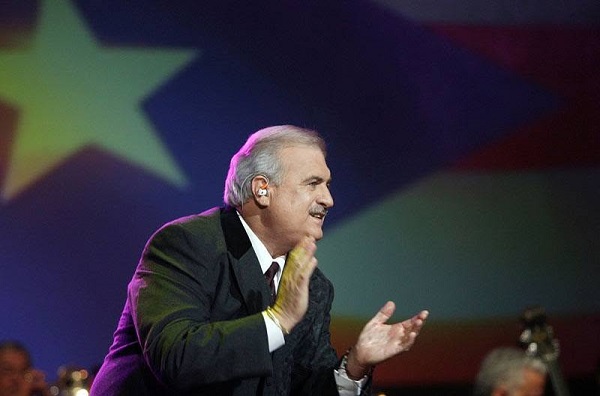
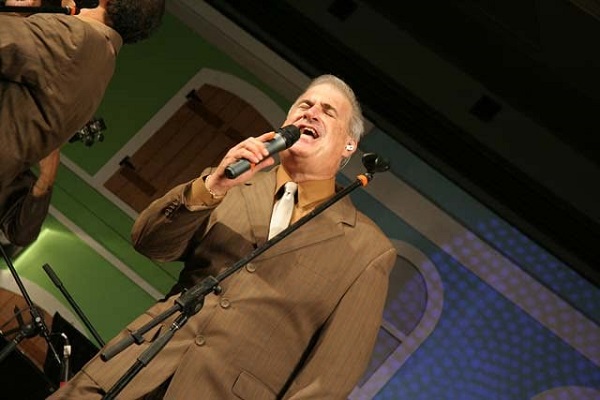
Biography

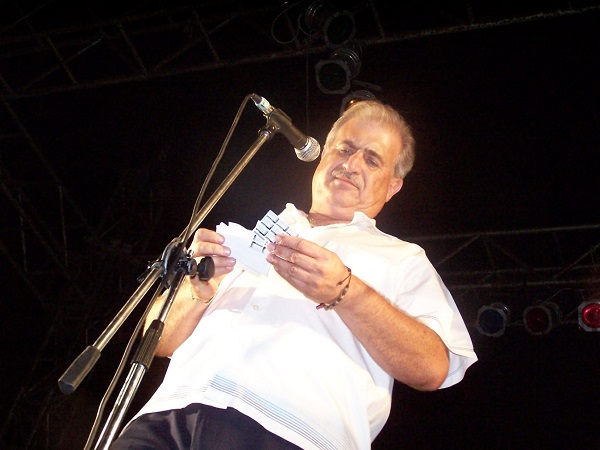
Ángel Luis Canales is a renowned Puerto Rican singer and composer known as “El Diferente” (The Different One) for his particular and irreverent style

Angel Canales was born on June 29, 1950, in Santurce, Puerto Rico.

During his childhood, around the age of 8 or 10, he moved with his family to New York City, where he lived in East Harlem (Upper Manhattan). Musical influences indicate that from a young age, he was strongly influenced by the music of Cortijo y su Combo and Ismael Rivera.

Before or concurrently with his musical career, he worked in the jewelry business; he was a messenger and later learned to cut and polish diamonds, a skill that allowed him to self-finance his musical career and pay high salaries to his musicians.

Ángel Luis Canales is a renowned Puerto Rican singer and songwriter known as El Diferente for his unique and irreverent style.

Musical Career

His Beginnings: He started as a timbalero in Ray Jay’s orchestra, where he debuted as a singer, replacing the lead vocalist.

His first album (1970), titled “Brujería,” was released in 1970 and recorded under the Alegre Records label, with musical direction by Mark Dimond. Hits from this production include “El Barrio,” “Yo No Tengo Pena,” and the title track.

Notable Hits: Among his most popular songs are: “Nostalgia,” “Sol de Mi Vida,” “Perico Macoña,” “Lejos de Ti,” “Hace Tiempo,” “El Cantante y la Orquesta,” “Sabor de los Rumberos Nuevos,” “Bomba Carambomba,” and his celebrated rendition of the bolero “Dos Gardenias.”

His Unique Style is recognized for its unorthodox approach and distinctive vocal timbre, which earned him the nickname “El Diferente” (The Different One).

He was a highly independent artist who self-financed his albums and founded his own record label, Celanac Records.

Tours and Retirement

International Tours: He toured internationally, visiting countries such as Panama (his first), Venezuela (where he performed at the Poliedro de Caracas in 1982), Colombia, and Peru. It is said that he never performed with his orchestra in his native Puerto Rico.

He retired in the late 1990s, deciding to leave the stage.

Currently, he is reportedly battling Parkinson’s disease, which has limited him and led him to choose silence and retirement, although he occasionally attends private events. He is currently 75 years old.

Àngel Luis Canales, y el pianista, compositor y arreglista Gilberto el pulpo Colòn

50 Years Since the Launch of “Sabor” (1975)

The Album: The album titled “Sabor” by Angel Canales was released under the Alegre Records label in 1975.

Only a boricua (Puerto Rican) who has been absent from their homeland knows what it’s like to be away from Puerto Rico when winter arrives in New York City. Or when you’re inside a taxi or walking the congested streets of the Bronx or the Latino barrio, and all you see around you are skyscrapers and more skyscrapers. The anxiety and sense of helplessness that overwhelm your spirit in the concrete jungle can only be calmed by memories.

50 years ago, on Monday, November 10, 1975, the unique voice of Puerto Rican singer Ángel Luis Canales consoled the thousands of boricuas oppressed by nostalgia with his composition “Lejos De Ti” (Far From You). It was a confession and affirmation of his Puerto Rican identity, in which he asserts that his love for his homeland will never die, even though he was raised in New York.

The song is a guaguancó with lyrics that evoke images of old San Juan, Villa Palmeras and its rich bomba heritage, Boca de Cangrejos, fried fritters on the grill, and the river that crosses through the old Ancón de Loíza Aldea, where his grandmother lived. “Lejos De Ti” remains the most remembered track from “Sabor,” an album produced by Joe Cain, recorded in late 1974, and released by Alegre Records on Monday, November 10, 1975.

Angle Canales Sabor 1975 Photography By Dominique

This album is considered one of the best salsa releases of the 1970s.

Canales’ Style: Canales favored a different style of interpreting Afro-Caribbean rhythms, combining elements from Héctor Lavoe, Ismael Rivera, Vicentico Valdés, and Paquito Pérez (the singer of the Orquesta Zodiac of Loíza). He extended the melodies with his nasal voice, challenging the poetry of the montunos, but going off-key and mispronouncing some words. His diction was far from perfect.

Production: The architect of Canales’ success was Colombian pianist Edy Martínez, who arranged seven of the eight tracks on this session, from cut #2 to #8. Due to a prior commitment with Mongo Santamaría’s band, he left his compatriot José Madrid in charge of the piano performance on this record.

Under Martínez’s direction, Canales embraced fame. “Sabor” was his second album between 1970 and 1971, he had recorded the “Brujería” session with pianist Mark Alexander “Markolino” Dimond, who founded Conjunto Sabor after spending several years with Willie Colón’s band.

Canales reappeared four years later with the Orquesta Sabor los Rumberos Nuevos with an arrangement by Louie Cruz. That same year, 1975, Larry Harlow produced Mark Dimond’s classic “Beethoven’s V” featuring vocalists Frankie Dante and Chivirico Dávila. “Sabor” was a huge hit.

Tours and Artistic Choices: The singer toured Europe, the United States, and South America, where Colombians, Panamanians, and Peruvians remember him fondly to this day, despite health issues forcing him to retire from the stage.

During the golden age of salsa, singers were expected to master all genres, and boleros were no exception. His vocalization on “La Hiedra” (a track written by Saverio Saratini and Vincenzo D’Acquisto) and “No Te Acostumbres” (a track belonging to Doris Aghian’s catalog) is notable for its theatricality, a trick Canales employed to mask the limitations of his voice.

Salsa dancers who thrive on piano, trombone, and percussion solos will be delighted with “Sabor Los Rumberos Nuevos,” “Sol De Mi Vida” (dedicated to his wife Brunilda), “El Cantante y La Orquesta,” and the hit “Hace Tiempo” (with its memorable chorus: ay, ay, ay, no me hagas padecer así – oh, oh, oh, don’t make me suffer like this).

Legacy: Before becoming a professional singer, Canales worked as a jeweler. A look at the covers of his first two albums is enough to conclude that he was a pioneer in the use of bling-bling in salsa. As a composer, Canales was a solid chronicler of barrio life. The story told in “Perico Macoña” is a good example: a man who smokes a joint and loses all self-control, insulting his own friends with his abrupt comments.

The re-issue of “Sabor” is a fitting tribute to the memory of the late Joe Cain.

Credits

  • Trombone: Juan Torres, Ricardo Montañez
  • Trumpet: Tom Malone
  • Baritone Saxophone, Flute: Emérito Benítez
  • Piano: José Madrid
  • Bass: Eddie Testo
  • Congas: Antonio Tapia
  • Timbales: Gadier Quiñones
  • Bongo: Aldemaro Luis Rivera
  • Producer: Joe Cain
  • Musical Director: Juan Torres
  • Recorded at: LE Studio NYC, December 1974
  • Engineer: Sandy Sina
  • Arrangements: Edy Martínez (except “Sabor Los Rumberos Nuevos” by Louie Cruz)

Torres, Montañez, Tapia, and Quiñones had previously collaborated with Canales on Markolino Dimond’s “Brujería” album.

Collaboration:

  • GonZalsa
  • L’Òstia Latin Jazz
  • Dj. Augusto Felibertt
  • Jaime Torres Torres
  • Fania Record
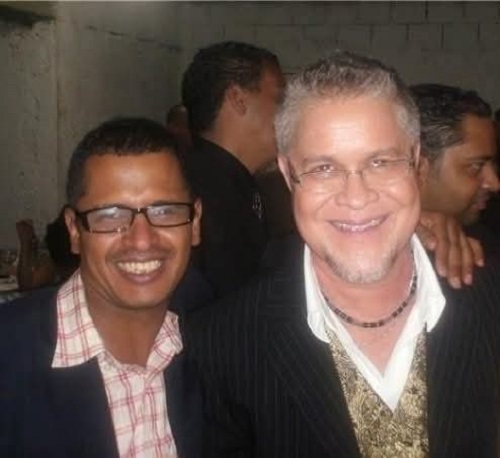
Angel Canales «El Diferente» recibiendo la produccion de Danilo Cajiao Titulada»Mi Perdicion» año 2020

Also Read: Angel Canales «El Diferente» receiving the production from Danilo Cajiao titled »Mi Perdicion» year 2020.

Charlie Sierra was a prominent Puerto Rican timbalero, recognized for his long musical career and virtuosity on the instrument

Carlos Manuel Sierra Sánchez, better known in the music world as “Charlie Sierra,” was born on October 10, 1956, in Vega Baja, Puerto Rico.

Charlie Sierra fue un destacado timbalero puertorriqueño

An excellent percussion musician from Barrio Sabana, Charlie Sierra recorded with important figures in music such as Don Mario Ortiz, Andy Montañez, Raphy Leavitt, Marc Anthony, Oscar D’León, Julito Alvarado, and many others. He even recorded the album Bravo by the Fania All-Stars in 1997.

To the worldwide community of salsa fans (salsómanos), he was a member, along with Chago Martínez, Tito De Gracia, Edgardo Morales, and Edwin Clemente, of the Gran Cumbre de Timbaleros (Great Summit of Timbaleros) that emerged in Puerto Rico’s rumbero (Afro-Cuban rhythm/rumba) scene during the penultimate decade of the 20th Century.

Charlie Sierra fue un destacado timbalero puertorriqueño reconocido por su larga trayectoria musical y su virtuosismo en el instrumento

Among these five virtuosos, the majority of the recording sessions in the Puerto Rican market were divided. The others were, practically, second choices for producers.

This fortunate circumstance allowed him to develop an impressive discography as a session musician, which includes the most stellar names in salsa. Likewise, he traveled across a large part of the globe as a member of the backing bands for many of those stars.

Our biographical subject was a child when he began, without a teacher, to learn the bongos and drums which he also played on recordings and on stage and the timbales, leading him to be identified as a fundamentally intuitive musician.

At the age of thirteen, he moved with his family to Bayamón, and it was during his time as a student at the Nuestra Señora del Rosario School that he began to show signs of his talent.

At fourteen, he enrolled in the Ernesto Ramos Antonini Free School of Music (Escuela Libre de Música), where he was a disciple of the Argentine master Samuel Lipchik.

During that time, he also advanced his knowledge of the flute, guitar, and piano, instruments he would never cultivate professionally, as percussion was always his great passion.

Papo Lucca, Charlie Sierra y Cheo Feliciano

However, his time at the Free School of Music was relatively brief (1972-1974). He soon began his professional career, gaining his first experiences with the Orquesta Rica and the Orquesta Tabú.

During this period, he received private lessons from the renowned professor Raúl Berríos Sánchez.

Fully immersed in the music scene, his name began to gain relevance in the salsa world following his tenure with the original Orquesta Mulenze, led by bassist Edwin Morales, during the 1976-1978 period.

At that time, this organization focused its work on providing accompaniment to solo singers affiliated with the genre, both national and foreign, who visited the island. He had the opportunity to travel with several of them: Santos Colón, Celia Cruz, Cheo Feliciano, Chivirico Dávila, Pellín Rodríguez, Yayo El Indio, etc.

From the Orquesta Mulenze, he moved to the lineup of Raphy Leavitt & La Selecta (1978-1979), with whom he had the opportunity to record hits like “La cosquillita,” vocalized by Tony Vega. He later worked with the orchestra led by pianist Tito Valentín, which featured Marvin Santiago as the vocalist.

He then joined trumpeter Mario Ortiz’s orchestra (1982-1984); he collaborated in the founding of the backing bands for the great sonero (Cuban son singer) Carlos «Cano» Estremera (1984) and the equally admired Tony Vega (1988).

In the interim, he worked independently and constantly recorded with other groups and a large number of soloists. He maintained this intense work routine until the present.

In 2009, Charlie Sierra organized his own orchestra, Paso Nivel, with which he recorded the album Ganas de bailar (Paso Nivel, CD-10692).

The album prominently features singer Efraín «Pichi» Gaetán, and included special guests such as Cheo Feliciano, Ismael Miranda, Andy Montañez, and Gilberto Santa Rosa, as well as Primi Cruz, Darvel García, and Héctor Luis «Pichie» Pérez.

Charlie Sierra was a distinguished Puerto Rican salsa timbalero, recognized for his long musical career and his virtuosity on the instrument.

He passed away on October 23, 2024, at the age of 67. Throughout his career, he collaborated with artists of the stature of Andy Montañez, Celia Cruz, Cheo Feliciano, and Bobby Cruz.

Musical Career: He began his career with the Orquesta Mulenze in 1970 and later joined Raphy Leavitt & La Selecta’s band.

Charlie Sierra y Orestes Vilato

Notable Collaborations:

He worked with Andy Montañez for over 25 years, being a key piece in his orchestra. He also collaborated with artists like Celia Cruz, Cheo Feliciano, Gilberto Santa Rosa, Bobby Cruz (on the hit “Sonido Bestial”), Tito Valentín, among others.

Own Orchestra: In 2009, he founded his own orchestra called Paso Nivel, with which he recorded the album “Ganas de bailar” (Desire to Dance).

 Collaborators:

L’Òstia Latin Jazz

Also Read: Orestes Vilato. Cuban multi-percussionist.

Anthony Carrillo The Legendary and Virtuoso Bongocero for Batacumbele and

Anthony Carrillo was born in New York City on 117th Street and Lexington Avenue, a neighborhood marked by significant complexities in terms of violence and drugs. This is why his father decided to move the family back to Puerto Rico in 1972.

Anthony Carrillo el Virtuoso del Bongo

“I remember that when I opened my eyes the second day, I heard the music of Willie Colón and Héctor Lavoe”.

Me opening my eyes, and the smell of the earth. It’s a scene I’ll never forget in my life.”

Once in Puerto Rico, his father continued to play music and was connected with musicians such as David “La Mole” Ortiz, who would later become a great mentor and collaborator for Anthony.

In the mid-1970s, Anthony and his brother began collaborating with the Areito Folkloric Ballet.

Anthony Carrillo: Master Percussionist

Master percussionist Anthony Carrillo comes from a proud Puerto Rican musical heritage. Although perhaps best known for his performances alongside his childhood friend and famous LP artist, Giovanni Hidalgo, Carrillo has performed with numerous renowned musicians throughout his career, including Eddie Palmieri, Gonzalo Rubalcaba, Paul Simon, and Harry Belafonte.

Anthony Carrillo Mis Raíces 1997

He was also an integral member of the outstanding percussion ensemble, Batacumbele, and, in contrast, the Puerto Rican metal band, PUYA. Piano legend Eddie Palmieri has referred to Carrillo as “the best bongocero in the universe.”

Under his own name, Anthony Carrillo has released three CDs, which include the historic first rumba recordings from Puerto Rico. His most recent performances include the off-Broadway musical “I Like it Like That” in 2017, and recording bongos with Puerto Rican artist Residente on his recent track “Hijos del Cañaveral.”

In April 2018, his Latin jazz group, AA team, released two original singles featuring Carrillo on bongos, drums, and vocals.

In August 2018, his dance orchestra, YÁMBAWA, released a four-track EP with originals and English-language pop standards infused with Spanish rap. He has stated that these two productions form his most prolific and inspired body of work in his career so far.

AA Team YÁMBAWA
AA Team YÁMBAWA

Musical Origins

Anthony Carrillo was born in New York City of Puerto Rican ancestry. From childhood, he expressed a special interest in music. His father, Mr. Roman “Don Nan” Carrillo, was his first teacher.

Through his father, Anthony Carrillo was exposed to the music of “Ramito” (one of the greatest exponents of folkloric music in Puerto Rico) and Rafael Cortijo.

Anthony’s earliest influences were “Papi Andino” (Ramito’s bongocero) and Roberto Roena (Cortijo’s bongocero).

When he was only nine years old, Anthony Carrillo’s family returned to Puerto Rico.

It was then that his father asked David Ortiz “La Mole” who was considered one of the best Rumberos in Puerto Rico to teach his son the techniques and patterns of Rumba. By age 13, Anthony was already part of the touring National folkloric group Areito, directed by Mrs. Irene Mcleane.

Anthony Carrillo Y Yova Rodriguez

In the early 1980s, Anthony Carrillo became a member of the famous folkloric group, La Familia Cepeda, the foremost exponents and keepers of the traditional “Bomba” and “Plena” styles.

Collaborators:

Yova Rodriguez

Planet Drum

Also Read:  Papo Vázquez the Pirate & Troubadour of Our Latin Music

Carlos “Cano” Estremera was a legendary Puerto Rican salsa singer, widely known as “El Dueño del Soneo” (The Owner of Soneo)

Why “El Dueño del Soneo”?

He earned this nickname due to his extraordinary and almost unbeatable ability for soneo, which is the part of a salsa song where the vocalist has the freedom to improvise lyrics, phrases, and rhymes over the musical base, elevating the track’s energy and the connection with the audience.

El Dueño del Soneo
El Dueño del Soneo

Cano Estremera was famous for his quick wit, rapid rhyming, and extensive vocabulary, qualities that established him as one of the greatest soneros in history, often compared to figures like Ismael Rivera and Héctor Lavoe.

He started in Latin percussion and also with the group Barrio Latino, then he was with Los Pleneros del Quinto Olivo, and later, at the young age of 18, he joined La Orquesta Mulenze, with whom he recorded the track “Mala Lengua” in 1976. The voice that replaced Cano Estremera in Orquesta Mulenze was the great Pedro Brull, who recounts that he had to thoroughly study Cano Estremera’s style to join Edwin Mulenze’s orchestra.

Undoubtedly, one of the greatest successes in Cano Estremera’s career was accepting, in 1978, the invitation to be the lead singer of maestro Bobby Valentín’s orchestra, “El Rey del Bajo” (The King of the Bass).

His first song recorded with Bobby Valentín’s orchestra was the iconic track “La Boda de Ella” (Her Wedding), by the Puerto Rican composer Roberto Angleró, with no suspicion that it would soon become one of the essential elements of Puerto Rican popular culture.

Cano Estremera was famous for his mental agility

Cano Estremera was a unique sonero. He was an artist with an identity and immense talent that was very distinct from the normal or commercial. He established his style from the very first day he became known. There was no style in the genre like “El Cano’s.”

Bobby Valentín was always looking for sound and voices, and Luigi Texidor was leaving the group, and that’s when “Cano” joined with a very different talent.

‘Bobby Valentín Presenta al Cano Estremera’ turns 40.

Cano Estremera’s first solo album, accompanied by Valentín’s orchestra. Produced by ‘El Rey del Bajo’ (The King of the Bass) and released by the Bronco Records label (BR-124) on Thursday, October 7, 1982. It includes the hits: Por qué Me Citas, Buen Corazón, El Caimán, Awilda, Casa En El Campo, etc.

'Bobby Valentín Presents Cano Estremera 1984

‘Bobby Valentín Presents Cano Estremera 1984

When he decided to go his own way as a solo singer, Cano Estremera did not have the support of the salsa industry’s machinery at the time. Despite this, with hard work and talent, Cano Estremera decided to fight alone with his music, personally producing everything from his album covers, musical arrangements, tours, and even the distribution of his musical works.

He was always a defender and fiercely protective of the genre. His style and demeanor were always controversial, and that was the magic that captivated his audience throughout his long career—always entertaining, creative, melodious, and above all, prodigious when he stepped onto a stage.

Solo Career: He separated from Bobby Valentín at the end of 1984 to form his own orchestra, further consolidating his career and his title with albums like “Dueño del Soneo”.

Cano Estremera y Dj. Augusto Felibertt

Death: He died on October 28, 2020, at the age of 62, after years of health problems related to pulmonary fibrosis, for which he received a double lung transplant in 2018.

Also Read: The owner of the Soneo’s solo career Cano Estremera

Sammy Figueroa is an exceptional percussionist known for his versatility and for playing in a multitude of musical styles

Sammy Figueroa, a percussionist with an excellent career.

Sammy Figueroa was born in the Bronx, New York, in 1948. He is the son of bolero singer Charlie Figueroa, whom he never knew, as his father passed away at the age of 32.

Sammy moved to Puerto Rico as a child to live with his grandparents and escape the Bronx’s gang violence.

Sammy Figueroa is an excellent percussionist who has stood out for his versatility, playing in a multitude of musical styles

At 18, he started his professional career with bassist Bobby Valentín’s band. Throughout his career, he has stood out for his versatility, playing in a multitude of musical styles and contributing to nearly 400 albums, ten of which are platinum.

He has collaborated with major pop artists like David Bowie, Chaka Khan, and Mariah Carey, as well as with distinguished jazz musicians such as Miles Davis, Sonny Rollins, Quincy Jones, and George Benson. In 1977, he became a founding member of the Latin rock fusion group Raíces.

In 2001, Sammy Figueroa moved to South Florida and formed his own group, Sammy Figueroa and His Latin Jazz Explosion. His albums And Sammy Walked In and The Magician were nominated for a Grammy for Best Latin Jazz Album.

Sammy Figueroa, a percussionist with an excellent career

Sammy Figueroa, a percussionist with an excellent career

His 2023 album, Searching for a Memory / Busco Tu Recuerdo, is a tribute to his father. The project, produced by his wife, Rachel Faro, with whom he has also co-produced other albums, allowed Sammy to reconcile with his father’s legacy. On this album,

Sammy sings on a record for the first time and transforms his father’s classic boleros into modern Latin jazz arrangements. The album was nominated for a Latin Grammy in the “Best Jazz/Latin Jazz Album” category.

Sammy Figueroa has received numerous awards, including two Percussionist of the Year awards from the National Academy of Recording Arts and Sciences (NARAS), two Drummie Awards for Best Hand Percussion, and a Best Percussionist award from the Jazz Journalists Association.

Discovered by jazz flutist Herbie Mann, Figueroa became a well-known session and studio musician, touring and recording with The Brecker Brothers, Average White Band, Morrissey – Mullen, The Mahavishnu Orchestra John McLaughlin, and Miles Davis.

He has also appeared with Blondie, Sonny Rollins, David Sanborn, Quincy Jones, Dave Grusin, George Benson, Chet Baker, Stanley Clarke, Grover Washington Jr., Al Jarreau, Lena Horne, Joe Williams, Mark Murphy, Mike Mainieri, Néstor Torres, Chico O’Farrill, Mike Stern, Chuck Loeb, Bobby Watson, Dave Valentin, Arturo Sandoval, Paquito D’Rivera, Rubén Blades, Eddie Palmieri, Bobby Valentín, Tania Maria, Mariah Carey, James Taylor, Dr. John, Mick Jagger, David Bowie, Celine Dion, Blues Traveler, Natalie Merchant, David Lee Roth, Hall & Oates, Joe Cocker, Rickie Lee Jones, Annie Lennox, Whitney Houston, Anita Baker, Grace Jones, James Ingram, Diana Ross, Roberta Flack, Aretha Franklin, and many others.

Some of the R&B hits he is featured on include Sister Sledge’s “We Are Family,” Luther Vandross’s “The Night I Fell In Love,” and Ashford & Simpson’s “Solid (as a rock),” as well as most of Nile Rodgers and Bernard Edwards’ hits on the Chic and Sister Sledge record labels.

Michel Camilo wrote the song “And Sammy Walked In” in his honor, and it was also recorded by Giovanni Hidalgo. Two of his CDs, And Sammy Walked In and The Magician, have been nominated for Grammy Awards in the “Best Latin Jazz Album” category. Figueroa hosts a Latin jazz show on WDNA-FM in Miami, Florida.

Sammy Figueroa was born in the Bronx, New York, in 1948

If you’re not very familiar with Sammy Figueroa’s work, you can try an experiment with this album: listen closely to see if you can guess what his instrument is. In a medium-sized combo, what instrument seems to take center stage? The answer: it’s impossible to guess, which says something about Figueroa’s maturity as a leader.

It’s also surprising to see how pared down his forces really are this sextet sounds like a big band. (Spoiler alert: he’s a percussionist.) It also says something about him that the term “Explosion” is a misnomer for his band. There are no pyrotechnics, no crazy tempos, and no wildly layered rhythms here.

But there are some very impressive horn arrangements (check out “Cha Cha Pa’ Ti” and the lovely “Cuco y Olga”), along with some of the sweetest, most tender ballads to appear on a jazz album of any genre in recent years (“Queen from the South” and “Zuliana” are the best examples).

For a percussionist acting as a bandleader, giving this kind of sustained, loving attention to compositions that only make a tenuous use of his talent is further proof of Figueroa’s taste and maturity. Let’s hope Figueroa keeps going in this vein. Rick Anderson.

Sammy Figueroa & His Latin Jazz Explosion – Urban Nature (2011).

Sammy Figueroa & His Latin Jazz Explosion - Urban Nature (2011)
Sammy Figueroa & His Latin Jazz Explosion – Urban Nature (2011)

Tracks:

  1. Gufillo (Silvano Monasterios)
  2. Urban Nature (Gabriel Vivas)
  3. Latin What? (Michael Orta)
  4. Zuliana (Silvano Monasterios)
  5. 7th Door From The Left (Silvano Monasterios)
  6. Cuco y Olga (Nicholas Martines)
  7. Cha Cha Pa’ Ti (Gabriel Vivas)
  8. Queen From The South (Silvano Monasterios)
  9. Funny Talk (Gabriel Vivas)

Musicians:

  • Sammy Figueroa (Percussion)
  • Silvano Monasterios (Piano)
  • Gabriel Vivas (Acoustic bass)
  • John Michalak (Sax)
  • Alexander Pope Norris (Trumpet)
  • Nomar Negroni (Drums)

Guest Musicians:

  • Ed Calle (Sax)
  • Mike Orta (Piano)
  • José Gregorio Hernández (Percussion)

Website: Sammy Figueroa

By:

Dj. Augusto Felibertt

L’Òstia Latin Jazz

Also Read: Carlos “Nene” Quintero comes from a family of musical prodigie

  • « Go to Previous Page
  • Page 1
  • Page 2
  • Page 3
  • Page 4
  • Interim pages omitted …
  • Page 20
  • Go to Next Page »

International Salsa Magazine (ISM) is a monthly publication about Salsa activities around the world, that has been publishing since 2007. It is a world network of volunteers coordinated by ISM Magazine. We are working to strengthen all the events by working together.