• Skip to primary navigation
  • Skip to main content

International Salsa Magazine

  • Home
  • Previous editions
    • 2026
      • ISM / January 2026
      • ISM / February 2026
    • 2025
      • ISM / December 2025
      • ISM / November 2025
      • ISM / October 2025
      • ISM / September 2025
      • ISM / August 2025
      • ISM / July 2025
      • ISM / June 2025
      • ISM / May2025
      • ISM / April 2025
      • ISM / March 2025
      • ISM / February 2025
      • ISM / January 2025
    • 2024
      • ISM / December 2024
      • ISM / November 2024
      • ISM / October 2024
      • ISM / September 2024
      • ISM / August 2024
      • ISM / July 2024
      • ISM / June 2024
      • ISM / May 2024
      • ISM / April 2024
      • ISM / March 2024
      • ISM / February 2024
      • ISM / January 2024
    • 2023
      • ISM / December 2023
      • ISM / November 2023
      • ISM / October 2023
      • ISM – September 2023
      • ISM – August 2023
      • ISM July 2023
      • ISM Edition June 2023
      • ISM – May 2023
      • ISM April 2023
      • ISM March 2023
      • ISM February 2023
      • ISM January 2023
    • 2022
      • ISM December 2022
      • ISM November 2022
      • ISM October 2022
      • ISM September 2022
      • ISM August 2022
      • ISM July 2022
      • ISM June 2022
      • ISM May 2022
      • ISM February 2022
      • ISM January 2022
    • 2021
      • ISM December 2021
      • ISM November 2021
      • ISM October – 2021
      • ISM September 2021
      • ISM August 2021
      • ISM July 2021
      • ISM May 2021
      • ISM April 2021
      • ISM June 2021
      • ISM March 2021
      • ISM February 2021
      • ISM January 2021
    • 2020
      • ISM December 2020
      • ISM November 2020
      • ISM October 2020
      • ISM September 2020
      • ISM August 2020
      • ISM July 2020
      • ISM June 2020
      • ISM May 2020
      • ISM April 2020
      • ISM March 2020
      • ISM February 2020
      • ISM January 2020
    • 2019
      • ISM December 2019
      • ISM November 2019
      • ISM October 2019
      • ISM Septembre 2019
      • ISM August 2019
      • ISM July 2019
      • ISM June 2019
      • ISM May 2019
      • ISM April 2019
      • ISM March 2019
      • ISM February 2019
      • ISM January 2019
    • 2018
      • ISM December 2018
      • ISM November 2018
      • ISM October 2018
      • ISM September 2018
      • ISM August 2018
      • ISM July 2018
      • ISM June 2018
      • ISM May 2018
      • ISM April 2018
      • ISM March 2018
      • ISM February 2018
      • ISM January 2018
    • 2017
      • ISM December 2017
      • ISM November 2017
      • ISM October 2017
      • ISM September 2017
      • ISM August 2017
      • ISM July 2017
      • ISM June 2017
      • ISM May 2017
      • ISM April 2017
      • ISM March 2017
      • ISM February 2017
  • Download Salsa App
    • Android
    • Apple
  • Spanish

Europe

Michael Nathan “Conga King”

Europe / London / England

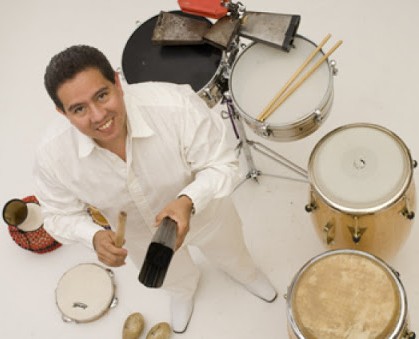
Michael Nathan Conga King  hails from London, England (South Kensington) and now resides in California’s Bay Area.  He’s a percussionist/conguero, specializing in Latin, Funk, R&B, Dance, POP, House, Neo Soul and Old School.

Michael Nathan
Michael Nathan “ Conga King ” in concert

Conga King plays weekends in the Bay Area with International DJ’s at some of the hottest clubs including Alameda Islands, The Churchward Pub as well as with his band, MeritageMusic, at wineries, tasting rooms and hotels throughout Northern California’s Wine Country.

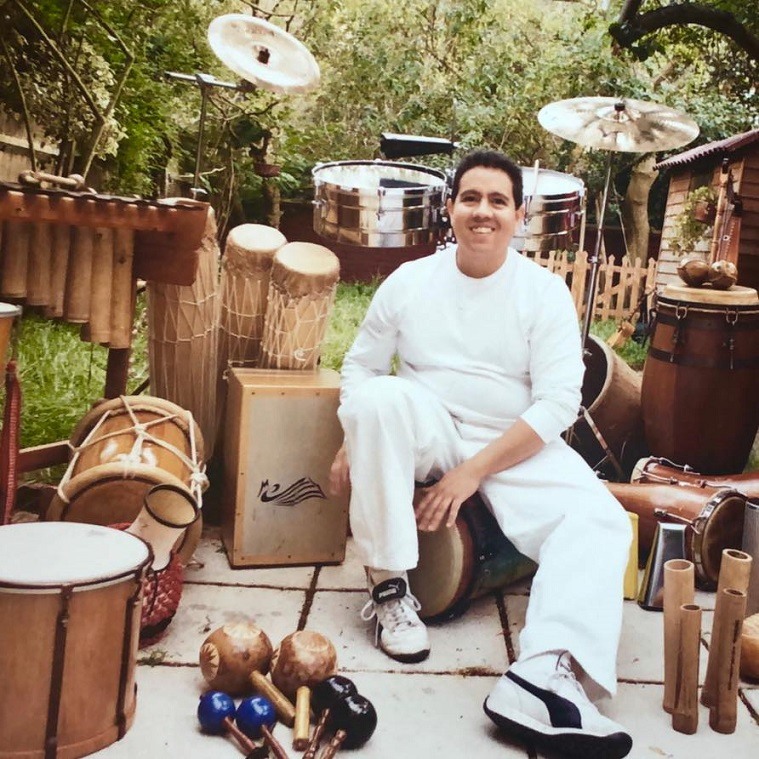
Conga King ordered his custom set of Gon Bops California Series back in 2005 and has been playing them exclusively ever since.  Playing a quinto, conga, tumba, super tumba, bongos and a cajon, Michael Nathan is all-in with Gon Bops!

Facebook: https://www.facebook.com/OfficialMichaelNathan


Miles Bould, Percussionist / Drummer

Europe / England / London 

Miles Bould is currently MD and drummer for Shaun Escoffery

Miles Bould was born in London took up Saxophone and Clarinet at a young age and was strongly musically influenced by his father, a producer who had worked with such Jazz luminaries as Gil Evans, Dizzy Gillespie, Stan Tracey and Tubby Hayes – many of these great musicians went on to be family friends.

Miles Bould on stage

In particular Dizzy noticed Miles’ musical passion turn specifically to percussion at around 10 years old and set him on his path as a percussionist by giving him three of his touring congas.

At age 15 Miles was jamming and working in clubs playing various styles of music; predominantly Latin, Jazz, Funk and Reggae.

He then joined his first serious Funk band ‘Sava Jazz’. Through that followed a meeting with guitarist Dominic Miller (Sting).

Dominic took Miles under his wing and they toured and have done many sessions together over the years. He was also spotted by Robert Palmer who he then began recording and gigging with.

Miles Bould in concert

He then met Julia Fordham who was very instrumental in helping Miles get more connected in the session scene. She hired him to tour and eventually record with her.

He went on to record and tour extensively with a broad spectrum of artists, including Sting, Daryl Hall, Joe Cocker, Level 42, Cher, Eternal, The Lighthouse Family, Julia Fordham, Incognito, The Pasadenas, The Beloved, Suggs, Shara Nelson, Simply Red etc. as both a percussionist and drummer.

He also recorded a sample CD with fellow percussionist Danny Cummings called ‘The Rhythm of Life’ which has been used by artists including Pat Metheny, George Michael, Brownstone, NYPD Blue.

It has also been used by many film composers. This was followed by another 2 sample CDs, Audiovirus a loop break beat collaboration with Miles and Mike Westergaard called ‘Intravenous’ and another specific drum and percussion CD by Miles called ‘The Progression’.

He also gigged with his own bands ‘Goosebump’, a Funk Rock band signed to Warner Chappell, and ‘Peoplespeak’ A Fusion project – Steps Ahead used one of their compositions ‘Agitate the Gravel’ for their 1992 album Ying Yang. He toured extensively with Billy Ocean and went on to co-write the title song on his 2010 album “Because I Love You”

Miles Bould
Miles Bould

The next few years saw Miles recording albums and gigging with more artists including quite a broad spectrum of artists including Beyonce, Michael Jackson, Joan Armatrading, Jermaine Jackson, Valerie Etienne (Galliano) Desert Eagle Discs, Gerard Presencer, Shaun Escoffery, Brand New Heavies, Russell Watson, Morcheeba, Daniel Beddingfield, Dominic Miller, Nigel Kennedy etc.

His current band ‘USONiC’ were nominated for a MOBO award in 2011 for best jazz act with their album ‘EVOLUTION’, which features Scott Henderson and Scott Kinsey of Tribal Tech.

Miles has his own professional recording studio where he currently carries out drum and percussion sessions remotely (full equipment spec on request).

Miles Bould Tribute
Miles Bould Tribute

Miles is touring and has just recorded a duet album with Dominic Miller for ECM records called “Silent Light”.

Miles is currently MD and drummer for Shaun Escoffery.

Argentinian Flamenco – Maria Lopez Tristancho

Europe/ Spain / Andalusia / Huelva

María López Tristancho

Since in the summer of 2006, this young singer from Huelva (June 1984) fulfilled the illusion of publishing her first album, artistically, the life of Argentina María López Tristancho, artistically known as Argentinian has taken an absolute turn.

Maria Lopez Tristancho live

María López Tristancho, Her stage name is personal, inherited from his paternal grandmother. Few record debuts are remembered with such an impact on a flamenco artist, but it seems that this time, talent and luck have taken this young woman by the hand, who is experiencing an absolutely sweet moment, because the following months have only endorse its good start:

Her work deserved the Critics’ Award for Best Disc of Cante Revelation, at the same time that it dominated the top positions in the success lists of the main radio formulas of Andalusian music: number one in Radiolé and Canal Fiesta in several occasions and reissue of the album with remixed songs to celebrate this good reception, which has also been endorsed with television appearances on Quintero’s La Noche or María Jiménez’s Bienaventurados, in addition to its live recording for Radio 3’s Los Conciertos.

María López Tristancho and the orchestra

And in the meantime, Argentina shows that she is not just a singer of a record, reaping enormous success also in her live performances and before such important stages as the Festival De Cajón and the Fiestas de la Mercé in Barcelona, ​​Bienal de Málaga en Flamenco, Festival Flamenco Pa’Tos in Madrid or their concerts in Huelva, Seville or Zaragoza.

Far away, still close in time, are his numerous performances for the Andalusian clubs and his training period at the Cristina Heeren Foundation in Seville. Performances where Argentina has been becoming an artist on the go, waiting for his opportunity, who knows if it has come to him happily.

María López Tristancho and the orchestra

In 2008 we must highlight, among many others, the great successes achieved in Madrid as part of the Veranos de la Villa Festival in the incomparable setting of Jardines de Sabatini, in the Gran Teatro Falla in Cádiz and in Bilbao’s Semana Grande.

Argentina Flamenco
Argentina Flamenco

Ivano Zanotti

Europa / Italy / Montefredane

Ivano  Zanotti had a noticeably precocious drum groove, since the early age of 8.

Ivano Zanotti had a noticeably precocious drum groove, since the early age of 8. In his teens, he studied with Maestro Mauro Gherardi, learning drum secrets and modern techniques, all while studying at the Bologna Music Conservatory G.B.

Ivano Zanotti and his instruments

Martini, where he earned his degree in Classical Percussion.

After an intense and widespread background with some of Bologna’s finest underground bands including Gli Atroci, Splatterpink, S.I.P.

Tonic, Zois and ART, Ivano toured the United States in 2006 with Manolo Badrena of Weather Report, in 2008 and 2009 with Black Smokers and in 2010 with Hammond Organ legend Brian Auger.

Ivano Zanotti in profile on stage

In the meantime, he started collaborating with Ligabue’s lead Guitar Federico Poggipollini, becoming his live and studio drummer and with former Vasco Rossi guitarist Maurizio Solieri, with whom he’s been playing since 2012.

In 2007, he played with Alan Sorrenti, composer of “Figli dell Stelle”.

Ivano Zanotti has established a solid reputation as one of Italy’s finest drummers, recording for Italian Rock legend Vasco Rossi on his Sono Innocente album, on his song “Cambiamenti” and on Maestro Francesco Guccini’s last album.

In 2016, Zanotti played drums and helped organize a one-of-a-kind concert in the Arena di Verona, supporting the fight against femicide.  Gathering many famous Italian female singers, including Gianna Nannini, Fiorella Mannoia, Patty Pravo, Loredana Bertè, Elisa, Paola Turci, Irene Grandi, Alessandra Amoroso and Emma, the memorable event produced a live DVD entitled “Amiche In Arena”.

Photo of Ivano Zanotti on stage

Ivano is currently touring with Loredana Bertè, I Musici di Francesco Guccini, Federico Poggipollini and LIGABUE.

Ivano uses Alex Acuna Bells , the Red mountable Tambourine, the Daniel de los Reyes Signature Cajon and Tumbao Pro Bongos.

Ivano Zanotti
Ivano Zanotti

https://www.facebook.com/IvanoZanottiTheBigDrummer/

https://www.facebook.com/ivano.zanotti.5

Wilmer Sifontes “Music is one of the most important things in society”

Music has no boundaries, it has the magical power to bridge social and cultural divides. Such is the case of percussionist Wilmer Sifontes, born in Caracas on March 21, 1968, a year of great events worldwide, a native of the parish of La Vega.

In 1992 he travelled to the United Kingdom for the first time to participate with the Entreverao Group in the World Music Festival “Spirit of The Earth” of the BBC in London.

Thanks to his (Wilmer Sifontes) participation with this group, he got several offers to return to the United Kingdom, so from 1996 he decided to settle down definitively in that country.

His musical duality has allowed him to work with different musical groups and bring the intoxicating rhythms of the American continent to those latitudes. He tells us that; “Fortunately, music is a universal language, it is the flag that one carries and allows you to make your way in other spaces”.

Wilmer, sometimes we imagine that the passion for music comes from a family inheritance, I see that this is not the case with you, how were your musical beginnings?

“In my family there are no musicians, however, as a child I always listened to music, on the way to my house there were places where the orchestras rehearsed, and that I liked it, I started playing salsa, it was always my forte, the music worm began at 10 years old, when the theme of Pedro Navaja with Ruben Blades and Willie Colon was in fashion, in the classroom a classmate imitated that little grave on the desk, this impressed me so much that from that moment the message came to me and I said -this will be my thing-“.

Wilmer Sifontes and his drums

That would be his entrance to the world of music

 “Yes, that was a message -but look at it-, I was a sportsman -I played Volleyball and Basketball-, and my sportsman friends wanted to be musicians, they were all adults and I was always with them as a boy, but they had no musical skills, no instruments, this prompted me to look for someone who would help me get into music, so, through my cousin I met the bassist José Machado

-he belongs to a family of musicians from La Vega-, they were my first teachers, they were always rehearsing and I saw, -a visual teaching – because I was a kid, they had a Cuban Son group called “Los Machados”.

At some point he played with them

 “After a while we started playing with the “Machados”, people were impressed to see such young boys playing, from him I received my first drumsticks, although I wanted to play bongo”.

How was that evolution?

 “In the neighborhood I continued with different groups, then with my cousin we created the “Orquesta La Conclave” and here we developed, we played in all the cultural events”. “We were rehearsing at Catia and Jesús Gómez -one of the singers of Sonero Clásico del Caribe- was always passing by and one day he told us that he needed a timbalero and a pianist, that if we wanted to work with him and we said yes, they played every night at La Caneca, a very famous place that was on Sucre Avenue in Catia”.

“This was my first night job, then I went to Silencio and played in different clubs”.

Wilmer Sifontes in the company of various artists

He is an empirical musician

“I made several attempts to study but… It was a little difficult, there were very rigorous classical schools at the time and I could not enroll, in one I went – La Lamas- together with my cousin, we took the exam and they scratched us (laughs), it is a very nice anecdote, we both sang without knowing the Black Tomasa”.

How does it come to perfection then?

 “I was playing by ear, it wasn’t something formal, as he already works in the nights in the clubs, a friend told me that in the Central University of Venezuela, Alberto Borregales and Orlando Poleo were giving classes, when I arrived I saw a great amount of people and I said: -whoa, here they are not going to accept me with that crowd- by chance, the teacher Borregales, makes a small group due to the little space that there was in the classroom, and at that moment I was going to evaluate them to decide who was left and who was not, fortunately I passed the test and I stayed”.

The experience of the street helped him

“(laughs), yes.”

Formally, Borregales was their teacher

 “Yes, but my first teachers were the Lp, besides the radio, I listened to a program called “Latin America the Cosmic Race”, with Borregales I entered with a greater discipline, he taught me to analyze, he indicated us what to read, what to listen. Later I was with Poleo in Caricuao, then in San Agustín and eventually went to Sarria. In the neighborhood I learned from Carlos “Tabaco” Quintana, he was one of my favorites, he was my inspiration, he was a timbalero with a terrible swing, excellent, in the neighborhood there were many good ones”.

“Apart from them I also learned from; Daniel Milano Mayora, Jesus Milano Palacios, in the Aquiles Nazoa Library -of Caricuao-, the Bigott Foundation and the Grupo Autóctono de la Vega”.

How was that jump from salsa to folklore?

 “I was offered to join the Grupo Autóctono de la Vega, with a great trajectory -it must be 40 or 50 years old by now- there is no role for the amount of people who have passed through there, it is the first group that makes the San Juan demonstrations in Caracas, this is from the Rivas and Ochoa family, it was my first school of folklore, they did dances, sports and then it was dedicated only to folklore music, both have been my teaching, I did not leave either of them”. “Then I played with many other folk and salsa groups, music is one of the most important things in society.”

The Grupo Autóctono de la Vega opened its doors to him, but the Agrupación Entreverao marked his future

“Yes, Entreverao marked my future, let’s say it was a show group, a quartet, its musical structure was very particular, harp, bass, drums and singer, then the percussion was introduced, the percussionist Rhay Herrera was their Director, I got a lot of experience with this group, we had a lot of work and learning, with them we made the first trip to the UK in 92”.

Wilmer Sifontes on stage

How did you decide that London would be your destination, why not another place more tropical, warmer, you did not think that you would face another culture, another language, another climate?

 “I was playing with Erick Franchesky, at that time he had 3 songs stuck in New York, we were going to go four or five of the band, it was almost confirmed, but it didn’t happen, music is like that, sometimes it offers you villas and castles and tomorrow you have nothing.” “I also had other proposals to come to the United Kingdom, the first thing that came out was this, that is, my destiny wanted me to come here”.

“Being out of your country, you learn other things, and that’s one of the particularities of my work, you learn to be more tolerant with people, as I know a lot of folklore from other places has allowed me to arrive, the culture is different to ours, is strong above all if you do not master the language, even if it is the basics, the climate if it was a shock, this is a fridge, (laughs)”.

I can’t imagine the English dancing and listening to Salsa, do they like the genre?

 “In the 90’s Salsa was very fashionable around here, there were many places to play, the acceptance of the music is excellent, when the Salsa boom, everyone wanted to learn to dance it, there are clubs to learn to dance, they have fallen in love with Latin American culture, they have been very receptive to those we have come to work with”. “I am the first Venezuelan to make a legal Folkloric Group in this country”.

Tell us a little about that project; AfroAmerica Project

 He founded it in 2007, it is an official group of typical and traditional Afro-Venezuelan music, people love Latin American music, they receive it very well, the name is due to a magazine that Jesus “Chucho” Garcia made, which speaks of Afro-Cuban music”.

 He continues to work with this project

“Yes, it is a group like Un Solo Pueblo, 90% is Venezuelan music, fulia, tambor, parranda, Calipso, Larense music, there are people who are outside Venezuela and do not know their music, then, we must show what we are, show our culture”.

Photo of Wilmer Sifontes and his instruments

What groups have you worked with in the UK?

 “Any number of bands, when I arrived in the UK I started with a man named Kora, he played an African harp, his band was World Music, his music was a mix of African rhythms and the idea was to play Latin American percussion, as I have the virtue of playing different styles of music work with him”.

“Although I did a lot of Salsa in the early years, the other bands I remember are Conjunto Sabroso, Hussein Zahawy, Tumbaito, Ensamble Criollo, La Papayera, Salsa Nueva, The Voices of Naturale, La Charanga Rivera, Tango Tierra, Ensamble Criollo, Clara Rodríguez, Ola Onabule, AfroAmerica Project, Cubanito, Chacón y Su Timba, Bahareque, Salsa Céltica, Kora Colours, Los Charlys Orchestra, Classico Latino, Bilongo all Stars, among others”.

It’s easy for him to move through different genres

“Yes, I owe this to my country, thanks to all that learning I have been able to do so many things and share with so many people in different parts of the world.”

Thanks to this duality you have worked with and accompanied different artists, which ones do you remember?

“Among those I remember are Herman Olivera, Willie González, Maelo Ruiz, José Mangual Jr, Luisito Carrión, Roberto Torres,Tony Vega, Pedro Brull, Tito Gómez, Tito Nieves, Cano Estremera, Giovanni Hidalgo, Andrés Cepeda, Aterciopelados, Leroy Burges, Rodolfo Arcardi, Henry Fiol, Alci Acosta, and the Bands and groups in Venezuela are; Orquesta la Grande, Catatumbo, Entreverao, Criollo y Sabroso, Orquesta la Raza, and with whom I have participated are; Grupo Cosecha, Grupo Autóctono, Jesús Ruiz, La Gran Compañía and Eric Franchesky -who- among many others”.

Wilmer Sifontes in the studio with his instruments

Celtic Sauce, explain that to me, it sounds a little strange

“It’s a Scottish group that mixes Celtic music with Salsa, with them I started doing substitutions for the timbalero, it’s very nice and interesting, they use the traditional instruments of Scottish Folk and the instruments of Salsa and Latin Jazz, they have also mixed it with pop, with rock, with Indian music, that gives them a unique and characteristic sound to this group, with this group I have traveled the world”.

Another band you have worked with is Sidestepper, very famous for fusing elements of Antillean and Colombian music with electronic music.

“Yes, the band was formed in Colombia, by the English producer Richard Blair, he revolutionized the traditional sounds of the region by mixing them with avant-garde sounds, with them I made an interesting work”.

Tell us about the Salsa Nueva Project

“That is the project of the Venezuelan pianist Elena Riu, is the fusion of Salsa with classical arrangements, you can be listening to a kind of montuno, a tumbao’ on the piano and the minute it disappears and leaves a passage well classic, is Latin in classical music, had original themes, is a theme that is called sal-si-ta -so separated-, had songs by Ruben Blades, Ismael Rivera, very cool.

“She needed a rhythmic element and invited me to accompany them, two months later we recorded an album in a church”.

 How do you feel about conducting one of the most popular bands in London, El Conjunto Sabroso?

“It has given me a lot of foundation and satisfaction, it was founded by Mrs. Luisa Elena Caicedo, since I arrived here I started to work with them, she listened to my references and called me to make substitutions, then I was their director and assistant director”.

Wilmer Sifontes in the studio

With you, the saying goes… No one is a prophet in his own land

“I think that yes, many people have been prophets, but… after death or after many years -laughs-, I don’t know, at this moment it is so difficult to put a definition to this, although I believe that nobody is a prophet in his land”.

From whom or from whom has he taken his musical influence?

 “There are several, the list is long, Carlos “Tabaco” Quintana, Orlando Poleo, Alberto Borregales, Alfredo Villamizar, Orestes Vilato, Tito Puente, Dave Wackel, Ray Barreto, Un Solo Pueblo, Guaco, Paquito de Rivera, Giovanni Hidalgo, Paoli Mejias whom I had the pleasure to meet and accompany, El Trabuco Venezolano, La Fania All Star, Irakere Orchestra, and Puerto Rican and New York Salsa, among many others”.

How has your musical growth been?

 “I have learned a lot from each culture, from the Colombian, Cuban, Argentinean, African, knowing the folklore of other places teaches you a lot, sharing with people from all over makes you grow and learn every day, this is part of the particularity of my profession.”

How do you see the market right now, there is a great variety of music, everyone has their own style, what do you think of all this new, but sometimes not good?

 “I don’t know if it’s taking a turn or not, the truth is that Europe is different, it has another kind of market, which is not that I’m involved, previously there were many festivals, pop and rock are the popular music of this country, but, reggaeton has been influenced by society, it has been injected with a lot of money, apart from the impact of social networks, it reaches more people, social networks have changed the way music is sold in the world.

“People are scared of reggaeton, for me it depends on who is doing it, the market has changed because of the networks, anyone makes music, anyone plagiarizes music from others, we are in a time of change and music does not escape from it.”

What do you think about tributes and copies, is the musician’s creativity running out?

“When people are alive it is always good to highlight their contribution to the world, there will always be a reference to someone, but it is good that people are creative, and there are the brazen ones who shoot the songs and put other lyrics on them, it is like winning people over with other people’s work”.

“The musical genius has not declined, what happens is that there are no promotions, people who do not do commercial work, it costs a little more to reach, fight against the great machines that bet on other things, musical geniuses are born for generations, are counted.”

Wilmer Sifontes and his records

The first production of the Conjunto Sabroso is entitled “Ya tengo lo que quería, realmente”

 “You never get to have everything you want, but at that moment, we had what we wanted, in that production there are arrangements by Naty Martínez”.

Among your personal projects, which ones would stand out and what new proposals do you bring to the public?

“I was the founder of Ensamble Criollo, we still work with this, AfroAmerica Project, Wilmer Sifontes y Su Combo Caribe, Will Sifontes and his Latin Sound and I’m still working with Conjunto Sabroso as musical director, besides, I’m making a solo album, -let’s say it’s called Latin Jazz- it’s a mix of everything, of my musical career, I already have 3 numbers, there will be duets, quartets, guests, the production is going to be called “Handmade”.

If you were to choose between folklore and salsa

“I’ll take them both, they’re different loves, I still do folklore, salsa and fusions.”

What recommendation do you have for the relay generation

“My recommendation is that they prepare themselves, musically, but first of all their idiosyncrasy, we have to have very clear the bases of what we are and develop them with modern techniques and other elements from other countries, to have discipline, today it is easier to have the information, there are more institutes, the internet”.

Wilmer Sifontes
Wilmer Sifontes


By Eling Blanco, ISM Journalist Correspondent, Caracas, Venezuela


  • « Go to Previous Page
  • Page 1
  • Interim pages omitted …
  • Page 17
  • Page 18
  • Page 19
  • Page 20
  • Page 21
  • Interim pages omitted …
  • Page 43
  • Go to Next Page »

International Salsa Magazine (ISM) is a monthly publication about Salsa activities around the world, that has been publishing since 2007. It is a world network of volunteers coordinated by ISM Magazine. We are working to strengthen all the events by working together.