• Skip to primary navigation
  • Skip to main content

International Salsa Magazine

  • HOME
  • Previous editions
    • 2026
      • ISM / September 2026
      • ISM / August 2026
      • ISM / July 2026
      • ISM / June 2026
      • ISM / May 2026
      • ISM / April 2026
      • ISM / March 2026
      • ISM / February 2026
      • ISM / January 2026
    • 2025
      • ISM / December 2025
      • ISM / November 2025
      • ISM / October 2025
      • ISM / September 2025
      • ISM / August 2025
      • ISM / July 2025
      • ISM / June 2025
      • ISM / May2025
      • ISM / April 2025
      • ISM / March 2025
      • ISM / February 2025
      • ISM / January 2025
    • 2024
      • ISM / December 2024
      • ISM / November 2024
      • ISM / October 2024
      • ISM / September 2024
      • ISM / August 2024
      • ISM / July 2024
      • ISM / June 2024
      • ISM / May 2024
      • ISM / April 2024
      • ISM / March 2024
      • ISM / February 2024
      • ISM / January 2024
    • 2023
      • ISM / December 2023
      • ISM / November 2023
      • ISM / October 2023
      • ISM – September 2023
      • ISM – August 2023
      • ISM July 2023
      • ISM Edition June 2023
      • ISM – May 2023
      • ISM April 2023
      • ISM March 2023
      • ISM February 2023
      • ISM January 2023
    • 2022
      • ISM December 2022
      • ISM November 2022
      • ISM October 2022
      • ISM September 2022
      • ISM August 2022
      • ISM July 2022
      • ISM June 2022
      • ISM May 2022
      • ISM February 2022
      • ISM January 2022
    • 2021
      • ISM December 2021
      • ISM November 2021
      • ISM October – 2021
      • ISM September 2021
      • ISM August 2021
      • ISM July 2021
      • ISM May 2021
      • ISM April 2021
      • ISM June 2021
      • ISM March 2021
      • ISM February 2021
      • ISM January 2021
    • 2020
      • ISM December 2020
      • ISM November 2020
      • ISM October 2020
      • ISM September 2020
      • ISM August 2020
      • ISM July 2020
      • ISM June 2020
      • ISM May 2020
      • ISM April 2020
      • ISM March 2020
      • ISM February 2020
      • ISM January 2020
    • 2019
      • ISM December 2019
      • ISM November 2019
      • ISM October 2019
      • ISM Septembre 2019
      • ISM August 2019
      • ISM July 2019
      • ISM June 2019
      • ISM May 2019
      • ISM April 2019
      • ISM March 2019
      • ISM February 2019
      • ISM January 2019
    • 2018
      • ISM December 2018
      • ISM November 2018
      • ISM October 2018
      • ISM September 2018
      • ISM August 2018
      • ISM July 2018
      • ISM June 2018
      • ISM May 2018
      • ISM April 2018
      • ISM March 2018
      • ISM February 2018
      • ISM January 2018
    • 2017
      • ISM December 2017
      • ISM November 2017
      • ISM October 2017
      • ISM September 2017
      • ISM August 2017
      • ISM July 2017
      • ISM June 2017
      • ISM May 2017
      • ISM April 2017
      • ISM March 2017
      • ISM February 2017
      • ISM January 2017
    • 2016
      • ISM December 2016
      • ISM November 2016
      • ISM October 2016
      • ISM September 2016
      • ISM August 2016
  • Spanish
  • Download Salsa App
    • Android
    • Apple

Events

Liz Rojas and John Narvaez share their experience with the San Francisco Salsa Festival

The San Francisco Salsa Festival is one of the most important Latin music events in The Bay Area and California in general, so we could not miss it. Eduardo Guilarte, senior editor of International Salsa Magazine attended on our behalf to witness firsthand everything that happened over the three days of the festival, as in previous years. 

To learn a little more about the most important facts related to the festival, Elizabeth Rojas and John Narvaez have made room in their busy schedule to talk with us and relate some elements and details of this fifteenth edition, which we are infinitely grateful. 
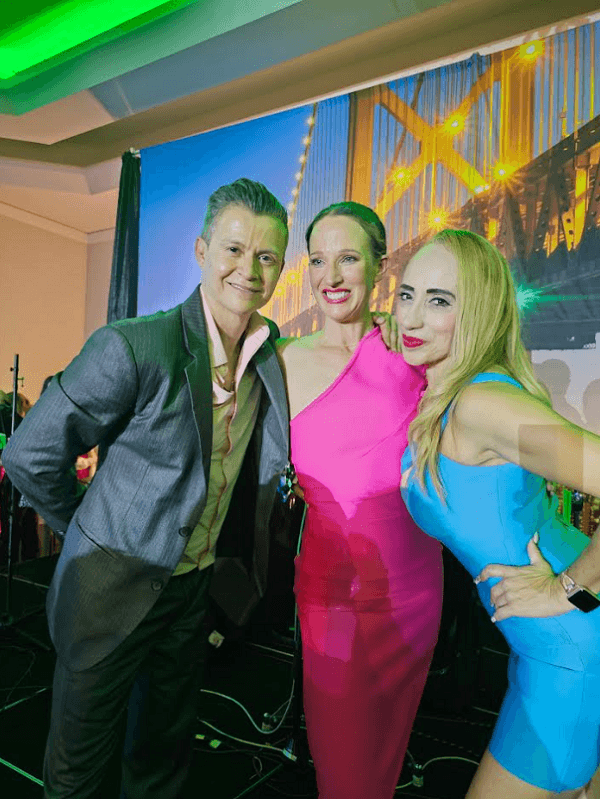
John, Liz, and Angie at the festival
John Narvaez, Angie Seminario y Liz Rojas

How was the 15th edition of the San Francisco Salsa Festival organized? 

Liz tells us that the organization of this edition started last year immediately following the previous festival to avoid wasting time and handle contingencies as soon as possible. Whenever they complete an edition, they immediately start to organize the next one, since all the details to keep in mind are too many to leave them for another time.

Liz and John always have to confirm orchestras and artists in advance, but they have a very efficient team of friends and partners to help them with everything related to the event. For this reason, every year it has become easier to make the preparations faster and more efficiently.

Novelties compared to other years

As for the novelties of this edition compared to other years, it could be shown that there was much more influx of people wanting to enjoy the activities offered. In addition to that, the dancers made sure that the program included more guests for classes, dance workshops on Friday, shows and competitions, which in turn helped to attract more interested public.

Another innovative detail was the invitation to local teachers in order to attract their students and people from their academies in general.
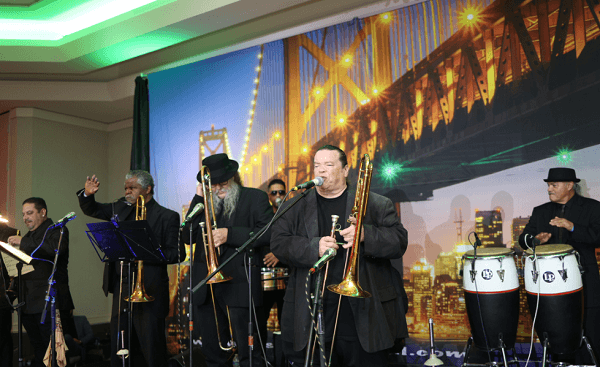
Latin Rhythm Boys at the festival
The Latin Rhythm Boys playing at the San Francisco Salsa Festival

Adding to all this, Liz and John sought to take much more into account the bachata dancers and artists in order to offer a little more variety in terms of musical genres and not just salsa.

Situation with the Orquesta La Máxima 79

No matter how majestic an event can be, there are always facts that can tarnish a little the satisfaction of organizers with all that has been achieved. This not so pleasant situation was the regrettable absence of the orchestra La Máxima 79, which was unable to travel to the United States at the last minute because of visa related issues.

John described how the days went by and the visas for the members of the group were not issued, to the point that the immigration department had not even conducted the first interviews. Because of this, they began to consider the possibility that La Máxima might not perform their show as planned. 

However, this didn’t stop them from having a card up their sleeve, so replacing La Máxima 79, they hired the amazingly talented Ray de La Paz, whose concert was amazing and delighted the audience with his fabulous show. They had to do much more publicity in the last few days due to the unforeseen change, but fortunately, it was all worth it.

They met Ray de La Paz in Hong Kong in 2004 during one of his shows where they were dancers on stage with him. Although they did not know him at the time, they really liked how he sang, so they called him up for the festival. They proposed to him to participate through Javier Cabanillas, another musician hired for the festival, who was a friend of his and kindly provided them with his contact information to invite him.
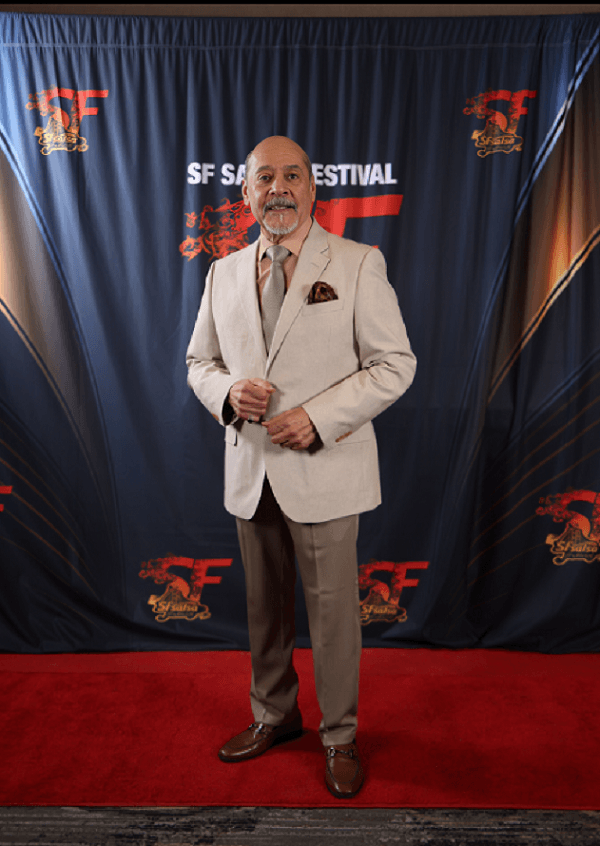
Ray at the festival
Ray de La Paz on the red carpet at the San Francisco Salsa Festival

When we wanted to know how the organization deals with last-minute inconveniences, Liz commented that they already had a plan B for such an eventuality. The main organizer of the event, Angie Seminario, and John had already talked about what to do in a situation of this kind. Likewise, they did not wait for the last moment to replace the missing orchestra, but acted quickly and worked on an alternative in parallel. At this point, John highlighted the importance of cultivating good connections and relationships with many musicians, so that they can count on them in emergencies.

Despite everything, they do not give up and will do whatever it takes to bring La Máxima to the festival next year. They are already working on this issue with the company’s lawyer.

The hardest thing to organize the San Francisco Salsa Festival

Together with last-minute absences, another problem which Liz and John face when organizing the festival is the hotel booking process for the time planned. Booking for the selected days and times of the festival and the multiple activities to be developed can turn to a headache, even more so than the organization of the workshops and concerts.

Also, the economic and time requirements can be very complex depending on what an event needs. The fines imposed by the government on venues that exceed the time limits with their events are well known, so planning failures should be avoided at all costs. 

John also added that it is always very complicated to deal with people and the selection process of the best staff to work with is not always easy. ”We always look for people who are equal or better than us. We make sure to surround ourselves with people who are even smarter and more capable than us so that they can see what we can’t” said the dancer and entrepreneur.

John, Anfie, Liz, and Ray at the festival
John Narvaez, Angie Seminario, Liz Rojas, and Ray de La Paz

How John and Liz feel now in comparison to the first festival

When compared this latest edition with the first one, John says that both he and Liz are extremely proud of what has been achieved so far. The artist assures that for him it is a great honor to be able to have Liz by his side, then thanks her for accompanying him and making the festival and the rest of the things they have achieved possible. 

Meanwhile, Liz fully agrees with her partner and also said she feels very proud of what they have accomplished all these years. Since we have seen other artists doing big dance events, John and I set out to achieve the same thing someday and we are very proud to have been able to make it possible” said the dancer ending her speech.

Julio at the festival
Julio Bravo playing the maracas during Ray de La Paz concert

Read also: Kiki Valera and his talented and special family’s great legacy

Oscar Dudamel continues to achieve dreams and presents “La Rumba Me Llama”

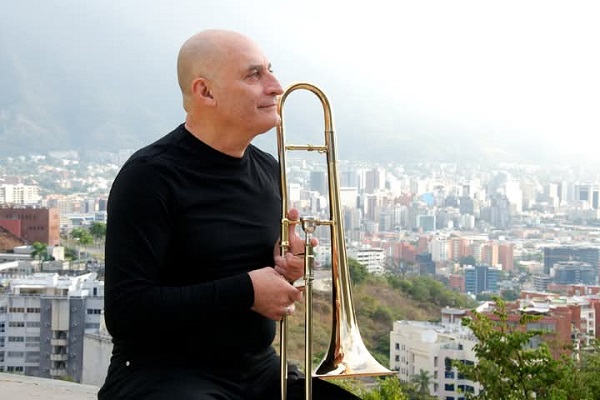
Legendary Venezuelan trombonist Oscar Dudamel expands his musical vision with a new single that fuses the essence of classic salsa with his unmistakable style, which is why he does not hesitate to express “La Rumba Me Llama”.

This song is part of his upcoming album “Sueño Alcanzado”, a production that will be released on May 30 and represents the culmination of years of musical research, fusing the classic salsa sound with jazz influences and the romantic tradition of boleros.

El legendario trombonista venezolano Oscar Dudamel

In “La Rumba Me Llama”, Dudamel brings his trombone to the forefront of a vibrant composition that captures the essence of the rumba as an inescapable call. With a musical structure that evokes the great salsa orchestras and an impeccable instrumentation.

The piece stands out for its meticulous arrangements, powerful brass and an irresistible cadence, faithful to the spirit with which Dudamel has approached his music. The track is an invitation to the dance floor and a testament to the rhythmic power that has defined his career.

The album Sueño Alcanzado not only takes its name from a personal concept of triumph, but also from one of his most significant pieces.

The title track was born in an intimate creative encounter in Caracas, Venezuela, with Maestro Alberto Crespo, composer Eliel Rivero and Solange Ramírez, mother of his son Gustavo Dudamel.

Oscar y Gustavo Dudamel

Dedicated to her son and with her special participation on violin, this piece encapsulates the spirit of a project that transcends the musical to become a testimony of life.

More than a nostalgic production, “Sueño Alcanzado”, of which the song “La Rumba Me Llama” is part, is the reflection of an evolution. The music that accompanied him since his childhood now takes a new form under his direction, in a creative process that has brought together talented musicians with whom he shares the same vision.

His orchestra, based in Madrid, has become the vehicle to continue taking his proposal to international stages, demonstrating that salsa is still alive in every note and every drum beat.

“La Rumba Me Llama” is now available on all digital platforms and is just a preview of ‘Sueño Alcanzado’, Oscar Dudamel’s new album, consolidating his legacy with authenticity and mastery.

Oscar Dudamel Virtuoso Musician, Trombonist and Orchestra Conductor.

Oscar Dudamel, a Venezuelan trombonist, discovered his passion for salsa as a child when he first heard “La Murga” by Willie Colón. Although his formal musical training began with Maestro Pablo Canela and later continued within El Sistema as a classical musician, that early experience left a profound mark on him, inspiring his dream of playing the trombone and solidifying his love for salsa as his ultimate passion.

Dudamel was born on January 14, 1961, in Barquisimeto, Venezuela. He grew up in a musical family where every gathering was celebrated with music, fostering his passion for the art from a young age. His parents purchased him a trombone, and he began his studies at the Yamaha Music Academy.

Oscar Dudamel sigue alcanzando sueños

At the age of 7, he was enrolled in a music academy under the guidance of Maestro Pablo Canela, a composer and prominent figure in the music of the Lara State region of Venezuela.It was there that he started his training with the Cuatro, the traditional Venezuelan instrument, and the guitar, which became his first instruments.

In addition to his Cuatro training, Dudamel began studying and playing various percussion instruments, further broadening his musical repertoire.

His academic training took place at the Lara State Conservatory in Barquisimeto, and at the National System of Youth and Children’s Orchestras and Choirs of Venezuela, also known as El Sistema.

During his teenage years, he became a member of the Youth Orchestra of Lara State (El Sistema Lara) and the Liceo Mario Briceño Iragorry Band, where he had the opportunity to expand his musical knowledge and explore various genres.

Dudamel entered a new phase of his life when he enrolled at the Vicente Emilio Sojo Music Conservatory to study theory and solfège, continuing his trombone studies under the guidance of his maestro, Óscar Vivenes.

Over the years, he became a member of the Lara Youth Symphony Orchestra of Lara, part of the national network of Venezuela’s El Sistema orchestras, actively participating in classical music.

However, his fascination with the Caribbean rhythms of salsa never disappeared. Thus, he combined his classical training with his passion for salsa, performing with renowned artist and sharing the stage with legends of the genre, such as Héctor Lavoe, Ismael Rivera, Ismael Miranda, Celia Cruz, Justo Betancourt, Marvin Santiago, and other great artists.

In Caracas, Venezuela, he founded his own orchestra, with which he had the opportunity to share the stage with notable figures such as Rubén Blades, Gilbert Santa Rosa, Luis Enrique, Guaco, Oscar D’ León, and many others.

Dudamel’s surname is synonymous with music. He is the father of Gustavo Dudamel, one of the most acclaimed classical music conductors in the world. Gustavo’s well-known fondness for salsa stems from his father, who recently fulfilled his lifelong dream of releasing a solo album titled Sueño Alcanzado, dedicated to his son.

Dudamel currently resides in Madrid, Spain, where he leads his ensemble, Oscar Dudamel y su Orquesta, performing salsa alongside his Venezuelan musician friends and colleagues at Café Berlín Madrid.

Oscar Dudamel y Dj, Augusto Felibertt

‍Research Sources:

Contact: Katie Baloian of Radio Notas (Compartiendo Ideas)

Alberto Crespo (Pianist and Arranger)

Dj. Augusto Felibertt

Café Berlin in Madrid

Also Read: Mariana “The Sonera of Venezuela and for the world”

Cheo Linares is a Singer, Composer, Sonero, Poet and Caraqueño

National Culture Award 2023-24 and the Artistic Glories of Venezuela Award.

José Gregorio Linares Carrasco is one of the great singers, composers and defenders of Venezuelan Salsa,

Cheo Linares born in the city of Caracas-Venezuela, he has been part of groups such as La Salsa Mayor, Salsa Mágica, el Trabuco Venezolano and Saxomanía.

José Gregorio Linares Carrasco es uno de los grandes cantantes compositor y defensor de la Salsa Venezolana

He is one of the most important composers of Venezuela.Linares has just been distinguished with the National Culture Award 2023-24 in the music category, so it is his first musical release since this important recognition, which surely is an encouragement to continue his work.

Last Saturday, January 11, 2024, Venezuela’s Minister of Culture, Ernesto Villegas, announced the winners of the National Culture Award 2023-24 and the Artistic Glories of Venezuela Award 2024.

The names of the artists, teachers and researchers favored by the jury as winners of the 2023-24 National Culture Award were announced by Venezuelan Minister of Culture Ernesto Villegas.

In the Music Mention, the flute master Antonio Toñito Naranjo stood out “for his career as a performer and trainer of generations of Venezuelan flutists and for his contribution to Venezuelan culture”, according to Villegas.

Antonio Naranjo is an extraordinary musician, composer and musical director, as well as a member of the group El Cuarteto, which he formed together with his brother Telésforo Naranjo and brothers Miguel and Raúl Delgado Estévez (+).

Also linked to music, but in the Popular Culture category, the National Culture Award was granted to Rafael Salazar “for his long and uninterrupted career as researcher, musicologist, composer and cultural promoter”.

It is worth mentioning that Rafael Salazar has been one of the most outstanding researchers, compilers and disseminators of Venezuelan popular culture, in addition to being the author of books dedicated to folklore.

Cheo Linares es un Cantante, Compositor, Caraqueño, Sonero y Poeta

Several extraordinary musicians received honorary mentions in the National Culture Award, such as cuatrista Daniel Enrique Gil Rosado, llanero singer Cristóbal Jiménez, master composer Henry Martínez, oriental singer Hernán Marín, and members of Los Guaraguao, Eduardo Martínez, José Gerardo Cordero and José Manuel Chachata Guerra.

Artistic Glories of Venezuela

The Artistic Glories of Venezuela award deserved a special mention, which was given to great singers such as Cecilia Todd, Lilia Vera and Biella da Costa. The first two are part of the living history of Venezuelan folklore and their voices are part of the national heritage. Biella da Costa is one of the leading figures of jazz in Venezuela.

The award was also presented to Jesús Sevillano, a singer who was part of the historic Quinteto Contrapunto. It was also received by the stupendous composer and salsa singer Cheo Linares and the popular singer José Montecano, brother of Alí Primera.

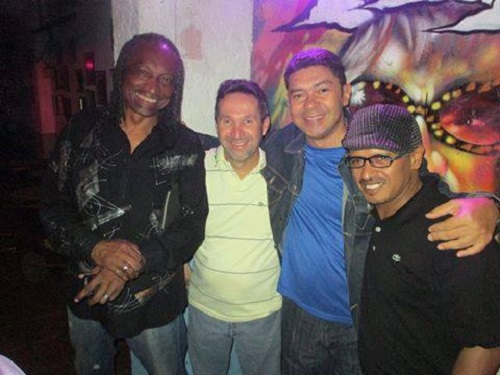
Orlando Watussi, Jose G. Acero, Cheo Linares y Dj, Augusto Felibertt

Mario Díaz, an enormous exponent of the central joropo, was also recognized as an Artistic Glory of Venezuela, as was the great composer and oriental singer Perucho Aguirre.

The same award went to the Simón Bolívar System of Children’s and Youth Choirs and Orchestras, and groups such as the parranda La Flor de Cojedes, the Teatro Negro de Barlovento or Los Cañoneros, excellent representatives of merengue rucaneao, were not left behind.

In the world of rock ‘n’ roll, the group Los Tres Tristes Tigres, the mythical Ivo, and more recently, the singer Colina, famous for his pop hits in the 80’s, shone.

Tags: Antonio Toñito Naranjo, Biella da Costa, Cecilia Todd, Chachata cultura, Eduardo Martínez, Ernesto Villegas, Glorias Artísticas de Venezuela Hernán Marín Jesús Sevillano, José Gerardo Cordero, José Montecano, lilia Vera, Los Guaraguao, Mario Díaz, Perucho Aguirre. National Culture Award and Rafael Salazar.

Cheo Linares was not even 20 years old when something unexpected happened to him. Another young man, Gonzalo Martinez, came to his house looking for him to invite him to sing with La Salsa Mayor. It was perhaps 1983.

Cheo says that his aunt was the one who opened the door and then told him: “Hey, Cheo, they are looking for you. They are asking if you want to sing in La Salsa Mayor…”. Cheo, shirtless, came out. He couldn’t believe it.

Cheo Linares y Dj, Augusto Felibertt

“Venezoa is a term I created to name the Venezuelan salsa music lover, to whom I dedicate this production, which in turn I extend to the salsa brothers of the planet, this CD was made with all the love, mysticism and professionalism of the musicians, technicians and designers who participated in it, to them I present my most sincere and expressive thanks for the support provided. Grateful to all the people who have supported my career, especially journalists, announcers, DJs, collectors and promoters, for all, blessings, love and light …”.

Cheo Linares.

Source: Radio Café Atlántico

Also Read: Marcial Isturiz from Capaya with soneos and melodic phrases and his popular “Agua pa’ los Gallos “Puerto Rico

15 Panama Jazz Festival

Latin America / Panama / Panama

Once again, Panama makes its appearance beginning the year at the City of Knowledge and Casco Antiguo – Panama Jazz Festival in its 15th edition, thanks to the “Danilo Pérez” Foundation, where it gives us the opportunity to enjoy music in a healthy way, once again becoming the The largest Jazz stage in the Region, where musicians and fans from different countries such as Costa Rica, Colombia, Chile, USA, Mexico, among others, will participate from January 15 to 20.

15 Panama Jazz Festival

Its director Danilo Pérez mentions “From the heart of America to the world” giving us a message, which is not just to make and carry out a festival but to show everyone his dedication worldwide by showing us his cultural project that consolidates creativity, exchange and talent. , with a strong commitment to Panamanian education and social welfare, returns with a strong artistic billboard.

Performing artists include the Wayne Shorter Quartet; Latin jazz legend Chucho Valdés; the Brazilian singer, Luciana Souza; the legendary American pianist, Ran Blake, the master composer and pianist, Bill Dobbins accompanied on stage by the Global Jazz Big Band and the Panamanian cumbia patrons, Samy and Sandra Sandoval. Not to mention that the musical billboard is also strengthened with the participation of Panamanian bassist Santi Debriano along with saxophonist Craig Handy, pianist Bill O’Connell and drummer Will Calhoun, as core members of this musical banquet.

Others that will perform are the Panamonk Revisited trio, made up of maestro Pérez together with the Grammy-winning percussionist, Terri Lyne Carrington and bassist Ben Street, who will share this celebration with other renowned ones such as the Italian saxophonist Marco Pignataro and his Almas Antiguas quartet, with the Panamanian saxophonist Carlos Agrazal as a special guest; the Panamanian saxophonist Luis Carlos Pérez, and the famous Pan-African Jazz Project, made up of the Chilean saxophonist Patricia.

Collash of the 15th Panama Jazz Festival

Zárate Pérez, the Panamanian Luz Acosta (voice and bass) and Graciela Núñez (violin) and the Egyptian musicians Hesham Galal and Balquei.

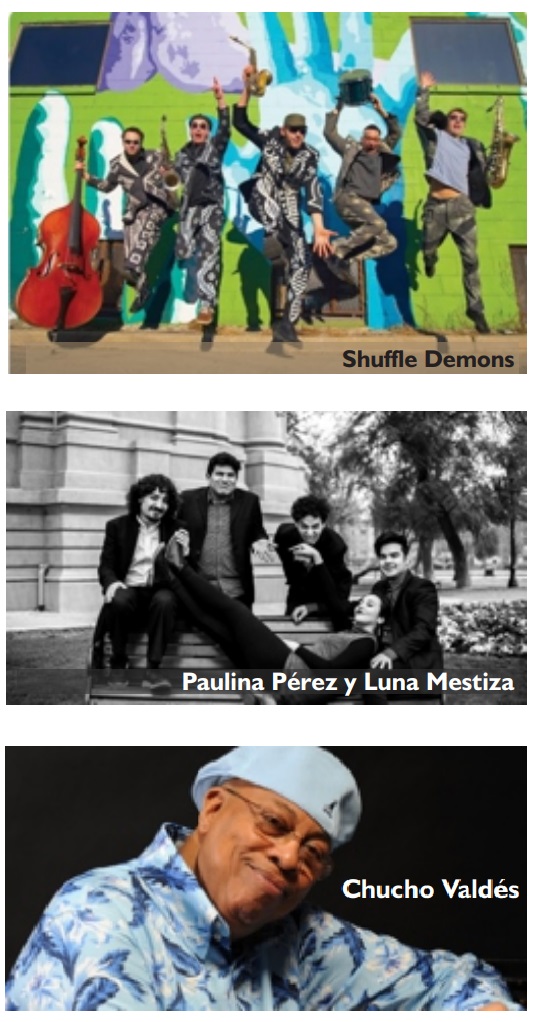
The Global Stage will be back this year, which will be a stage to enjoy in style with bands from different latitudes such as Rubén Amador and Yahuba (Puerto Rico), The Shuffle Demons (Canada), Paulina Pérez and Luna Mestiza (Chile), Josean Jacobo & Tumbao (Dominican Republic), Marco Pignataro (Italy), Yogev Shetrit Trio (Israel), Fundación Armonía Colectiva (Costa Rica), Four On a Swing (India) and Shea Welsh (United States); and Panamanian talents German Pinzón Jiménez, Tambo Jazz Collective, Digger Descendants Calypso Band, Proyecto Shuruca and Pureza Natural.

In addition, there will be highly prestigious educational institutions, Berklee College of Music, Berklee Global Jazz Institute, New England Conservatory, Thelonious Monk Institute of Jazz, New York Jazz Academy and Crossroads High School, which offer great support every year.

And of the institutes that will be: Berklee Global Jazz Institute, New England Conservatory, Thelonious Monk Institute Of Jazz and New Yorl Jazz Academy.

Artists of the 15th Panama Jazz Festival

And the schedule of activities to be carried out are:

Schedule of the 15th Panama Jazz Festival

One of the most important details of the festival is that auditions, countless educational clinics, as well as the VI Latin American Music Therapy Symposium, the I Classical Music Exchange Program and the II Symposium of Musical, Artistic and Cultural Expressions will be held. of Afro-descendants in Panama with the main theme El Calypso:

A unique Latin rhythm being known as an African and Afro-American music that began in Trinidad and Tobago, later being very popular in the highlands of Venezuela, San Andrés and Providencia in Colombia, Trinidad and Tobago, Puerto Rico and others from the Antilles, where they use instruments such as the stellpan (steel drums), trumpet, trombone, flute, Spanish guitar, electric bass, saxophone, congas, bongos, maracas. This rhythm varies depending on the country where it is performed, giving a unique touch to studying Calypso to all fans or interested in it.

For more information about the Festival, you can contact them through:

  • WebSite: http://panamajazzfestival.com/
  • Facebook: https://www.facebook.com/PanamaJazzFest/
  • Instagram: https://www.instagram.com/panamajazzfestival/
  • Twitter: https://twitter.com/PanamaJazzFesti
  • Email: [email protected]
  • Phone: +507 317-1466


Marcial Isturiz from Capaya with soneos and melodic phrases and his popular “Agua pa’ los Gallos “Puerto Rico

In 2023 Sergio George, the famous “magician” who produced the artistic career of famous salseros and artists, said that salsa was “dead” and called on new artists to resurrect it and support each other as urban singers do.

Marcial Isturiz de Capaya

This caused commotion and controversy among salseros and made them doubt without a doubt what is the reality that salsa lives and more with the progressive physical departure of emblematic legends who made history in the world, coupled with the proliferation of the so-called “DJ” who multiply many times the nostalgia of the public for living the times of said legends and who became a trend due to this fact. In 2024 we saw how important salsa concerts were held in our country Venezuela where foreigners who had not visited us for a long time did so and so we enjoyed what some call “the last of the Mohicans”, as well as Venezuelans who took to various stages making it clear that, if they continue creating, either by adjusting the sound of the old and modernizing with quality staging or simply delighting with their career and style what they have already established.

We think that there is a lot missing since there is plenty of musical talent and a new generation in every sense, but not who listens to them and supports them, this being a truth bigger than the size of the sun.

Marcial Isturiz
Marcial Isturiz

After this necessary reflection we want to talk about Marcial Isturiz who was born in the sandunguera town of Capaya, Barlovento in the Miranda State of VENEZUELA, and we put it in capital letters because this “extraordinary sonero who wandered through the streets of Petareña hitting any pot he found in his path, finding out where and at what time the “arayé” was lit, always on the “hunt” for a good opportunity”, a quote was written by Ángel Méndez in his book “Entren que Caben Cien” describing how clear this man has been since childhood in pursuing and having the firm certainty of where he had to go to achieve his dream. He understood, from my point of view, that he who perseveres succeeds and we have seen his professional growth during all these years, thirty years recently completed, being a musician performing several instruments, going on to be also a composer and arranger, accompanying with his voice in duos of consecrated stars and groups, renowned orchestras as well as others not so well known, his voice being a characteristic seal that draws the attention of his followers, a sonero that we can say “gets lost from sight”.


A man who has earned the respect and affection of the public wherever he goes and to name one of the presentations in which he has demonstrated his “people skills”, we had the opportunity to travel and share with him closely accompanying him Sonero Clásico del Caribe in that free event that the Barquisimetanos salseros put on at the end of January 2024 to Ramón Méndez, where by the way Marcial took advantage of the invitation to perform the National Anthem the day before at the Cardenales – La Guaira Game, impeccably. Undoubtedly, that presentation was an omen of good fortune for what would be a year full of success.


Marcial Isturiz began hitting a home run this 2025 by performing on January 5 in Puerto Rico on the “Island of Enchantment”, at the traditional Three Kings Eve dance at the Sheraton Hotel, Convention District, with Don Perignon and La Puertorriqueña, with salsa figures such as Herman Olivera, Pedro Bull, Pichie Pérez, Joe González, Rico Walker, Josué Rosado, Jerry Rivas, Gilberto Santa Rosa and of course our Marcial Izturiz.

Joe, Rico, Marcial, Herman

We saw him singing choruses with these greats, specifically next to Herman Olivera and Rico Walker waiting for his turn like each of those called to this meeting until Peter Perignon introduced him for the first time with his Orchestra La Puertorriqueña and said that the person responsible for that invitation and presence of our sonero there was his friend Gilberto Santa Rosa.

Briefly, Perignon told the audience that he knew Marcial since he was part of Bailatino and he fell in love with that group, since then he had been following him and now recently in his participation with the Latin Dimension he knew that Marcial with this performance made his dream of being in that country come true.

Saying good night to Puerto Rico he performed the song “La Familia” (authored by José Curbelo and musical arrangement by Louie Ramírez, inserted in the production titled Indestructible by Ray Barretto and his Orchestra in the voice of Tito Alen for the year 1973) with soneos and melodic phrases and his popular “agua pa’ los gallos Puerto Rico” left established what this Venezuelan is made of, acclaimed and congratulated by his peers on stage.

Joy is not enough for what we salseros in Venezuela feel for this representation that should not be overlooked because if there are soneros from Venezuela and with class: Marcial Isturiz is one of them; with his own style and professionalism, this is how our “Mayor of Capaya” was seen next to these greats, comfortable, safe and proudly waving our tricolor wherever he goes.


At Swing Latino we say congratulations to Marcial, keep doing your thing without resting like until now, because later it will be too late:

AGUA PA’ LOS GALLOS  y

¡Ponle Sabor!

Source: Giorgenling Méndez from Swing Latino

Also Read: Salsa at its best, led by the leader of La Puertorriqueña: Don Perignon

  • « Go to Previous Page
  • Page 1
  • Interim pages omitted …
  • Page 15
  • Page 16
  • Page 17
  • Page 18
  • Page 19
  • Interim pages omitted …
  • Page 42
  • Go to Next Page »

International Salsa Magazine (ISM) is a monthly publication covering salsa activities around the world and has been publishing since 2007. It is a worldwide network of volunteers coordinated by ISM Magazine. Together, we work to strengthen salsa events around the world.