• Skip to primary navigation
  • Skip to main content

International Salsa Magazine

  • Home
  • Previous editions
    • 2025
      • ISM / November 2025
      • ISM / October 2025
      • ISM / September 2025
      • ISM / August 2025
      • ISM / July 2025
      • ISM / June 2025
      • ISM / May2025
      • ISM / April 2025
      • ISM / March 2025
      • ISM / February 2025
      • ISM / January 2025
    • 2024
      • ISM / December 2024
      • ISM / November 2024
      • ISM / October 2024
      • ISM / September 2024
      • ISM / August 2024
      • ISM / July 2024
      • ISM / June 2024
      • ISM / May 2024
      • ISM / April 2024
      • ISM / March 2024
      • ISM / February 2024
      • ISM / January 2024
    • 2023
      • ISM / December 2023
      • ISM / November 2023
      • ISM / October 2023
      • ISM – September 2023
      • ISM – August 2023
      • ISM July 2023
      • ISM Edition June 2023
      • ISM – May 2023
      • ISM April 2023
      • ISM March 2023
      • ISM February 2023
      • ISM January 2023
    • 2022
      • ISM December 2022
      • ISM November 2022
      • ISM October 2022
      • ISM September 2022
      • ISM August 2022
      • ISM July 2022
      • ISM June 2022
      • ISM May 2022
      • ISM February 2022
      • ISM January 2022
    • 2021
      • ISM December 2021
      • ISM November 2021
      • ISM October – 2021
      • ISM September 2021
      • ISM August 2021
      • ISM July 2021
      • ISM May 2021
      • ISM April 2021
      • ISM June 2021
      • ISM March 2021
      • ISM February 2021
      • ISM January 2021
    • 2020
      • ISM December 2020
      • ISM November 2020
      • ISM October 2020
      • ISM September 2020
      • ISM August 2020
      • ISM July 2020
      • ISM June 2020
      • ISM May 2020
      • ISM April 2020
      • ISM March 2020
      • ISM February 2020
      • ISM January 2020
    • 2019
      • ISM December 2019
      • ISM November 2019
      • ISM October 2019
      • ISM Septembre 2019
      • ISM August 2019
      • ISM July 2019
      • ISM June 2019
      • ISM May 2019
      • ISM April 2019
      • ISM March 2019
      • ISM February 2019
      • ISM January 2019
    • 2018
      • ISM December 2018
      • ISM November 2018
      • ISM October 2018
      • ISM September 2018
      • ISM August 2018
      • ISM July 2018
      • ISM June 2018
      • ISM May 2018
      • ISM April 2018
      • ISM March 2018
      • ISM February 2018
      • ISM January 2018
    • 2017
      • ISM December 2017
      • ISM November 2017
      • ISM October 2017
      • ISM September 2017
      • ISM August 2017
      • ISM July 2017
      • ISM June 2017
      • ISM May 2017
      • ISM April 2017
  • Download Salsa App
    • Android
    • Apple
  • Spanish

Interviews

Carlos Medrano from Sabor De Mi Cuba tells us abut his long musical history

There is a tremendous amount of Cuban artists who have had to fight against economic adversity there is in their country, but this has not prevented them from getting ahead and fulfilling their dream of making a living from their art. One of them is the bandleader of Sabor De Mi Cuba Band, Carlos Medrano, with whom we had the pleasure to talk for this report.    

Carlos Medrano was born in the city of Havana, Cuba, and became interested in music when he was very young. The first instruments with which he began experimenting were the bongo and the conga, which had a huge importance in the training the artist would follow until he became the professional musician he is today. Here are some of the topics we cover in a long but pleasant conversation via Zoom.   

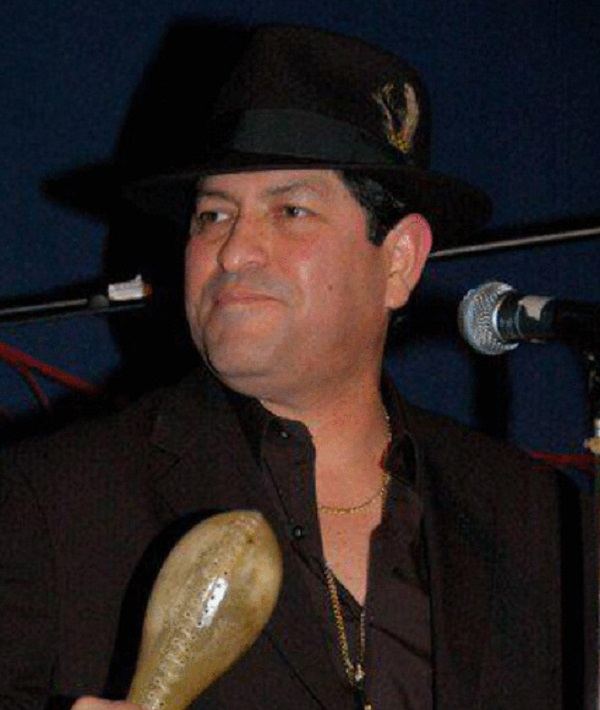
Bandleader Carlos Medrano
Carlos Medrano, bandleader of Sabor De Mi Cuba

Topics covered with Carlos Medrano 

When talking about his first experiences with music, Carlos told us he has always been surrounded by musical sounds since his childhood, which was spent in the neighborhoods of El Vedado and Old Havana.    

When he lived in El Vedado, his grandfather used to make poetry and do recitations, while he accompanied him with the drum, but he was in more direct contact with the musical world in Old Havana, a place where there were many rumberos and renowned musicians who were always playing in those parts.   

A very young Carlos always saw comparsas and street concerts from her home window and people always joined them making sounds with bells, pans or anything they had. 

During the decade of the 90’s, Cuba saw a big boom in tourism, resulting in the appearance of numerous traditional Cuban music groups and the cafes and clubs in the area were filled with sextets with professional musicians. They were looking to play in these places to get tips from tourists and have travel and employment opportunities,” said Carlos.    

I always looked at the work these artists were doing, especially tres players and bongos players. That’s how I learned to play the bongo: by watching and listening to what others were doing. I tried to imitate the sounds they made with a metal bucket or whatever I had at home to learn”, he continued.    

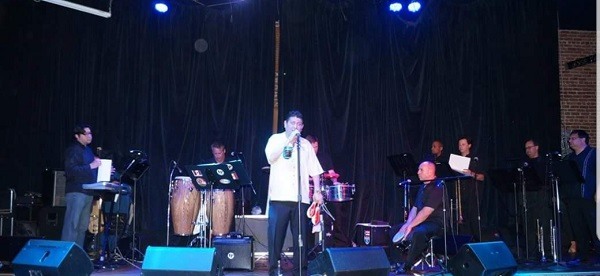
Carlos Medrano on stage
Carlos Medrano performing on stage with his band

Professional training of Carlos Md¡edrano and and limitations found 

After junior high school, he met a friend of his father who would be key in his training as an artist and his name is José Antonio Oviedo. Although his father saw no problem in this fascination of Carlos with music, he always told him not to drop out of school and to pursue a university career. 

When he began taking lessons with José Antonio, the level of demand was such that he felt he was in a formal school. He taught him to read music in a way that had nothing to envy to an art institute, which Medrano will always be very grateful for. 

In addition to that, near his home, there is a sector called ”Cueva De Humo” where there are excellent musicians and rumberos. It was there that Carlos got to meet Juan Ernesto Santana, Ernesto Gatel Coto from Rumberos de Cuba and many more. ”I was lucky that most people liked me and they always explained to me everything I needed to play as it should be” he added.   

With all these insights, there came a point when he decided to devote himself to the world of music and put aside other ambitions he had such as studying law, which was a shock to his family at the time. 

That is when his mentor José Antonio did the necessary procedure for him to present the Escuela de Superación Profesional de Arte “Felix Varela y Morales” admission exam, which he passed without major setbacks thanks to his training up to that point. 

Although his admission to the institution was relatively simple, it was not long before Carlos faced another equally difficult challenge: getting the necessary resources and instruments to receive a good training. 

”I didn’t have my own instruments until I started playing professionally with maestro Orlando Sánchez. I had my first bongo thanks to my father’s friends, who helped me to have my own things, but that never limited me” said the percussionist on this topic. 

In a time of so many shortages, it was clearly not easy to study, but Carlos was always looking for ways to fulfill his activities, whether it was raising money, borrowing instruments, practicing with other similar implements, sharing school instruments with his classmates, among other things.    

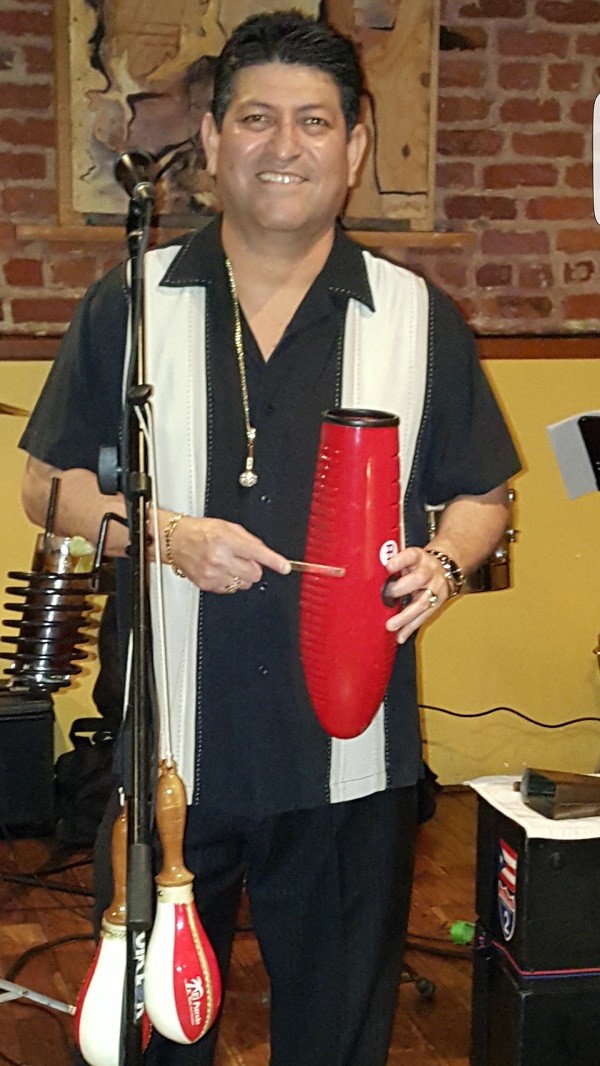
Carlos Medrano paying the drums
Carlos Medrano playing the drums on stage

Great inspirations and mentors   

One of his biggest inspirations was his cousin Stanley, who was a professional percussionist. He always advised Carlos to never classify himself in one instrument, but to always learn to play a little bit of everything to become a needed man, so that bands would always consider him for their tours and projects.    

Another of the great mentors he had has been Ignacio Jarabe, who has taught him many of the best ”tricks” a percussionist may need when playing one of these instruments. ”I still have solo sheet music that he wrote and some of his book manuscripts, which I don’t know if they were ever published, but they are still important reference sources for me”, said Carlos about Jarabe. 

We cannot forget to mention percussionist Eliel Lazo, with whom Carlos had amazing chemistry from the beginning. Lazo had contact with the best AfroCuban jazz musicians of the time and came to travel to many places thanks to his training in percussion instruments, which inspired Medrano to follow in his footsteps. After about one year of studying with this great musician, he was able to perform at La Fiesta Del Tambor and went on to be a finalist in several categories.   

Once he started plating professionally, the first person to call him was the maestro Orlando Sanchez, who in addition to offering him his first formal opportunity in this field, taught Carlos many other things which he had not learned so far. He has him up on a pedestal and thanks him for everything he has learned. 

Another person to whom the artist is very grateful is José Luis Quintana, better known as Changuito, who told him that ”the good conga player has to listen to the orchestra. You have to be able to hear the piano, the bass and the other instruments. You have to look for your space between the rest of the musicians”.   

Another important figure who cannot be left out is Yaroldy Abreu, a mmusician who spent hours rehearsing with Carlos at his house. They focused a lot on technical and creative resources during these classes. Medrano considers him one of the best percussionists and musicians in the world due to his extensive knowledge in every field of music.  

Carlos recording at home
Carlos Medrano recording music at home

Sabor De Mi Cuba   

It all started with a contest called ”Joyas” which specializes in promoting young Cuban talents who present their art to a qualifying jury and seek to carve a name for themselves in the industry.    

Carlos was fortunate that one of the judges told him and drummer Pablo Calzado ”you two shall go along with me”. The artist spent some time working with this person, who took him to play in other orchestras so that he could learn from the best until developing his own style.  

This happened after he moved to the United States and was still acquiring experience with other musical groups. That is when he realized he wanted to do things in a different way and get involved in other genres and rhythms that he had not tried before.    

There came a day when a bass player friend of his told him that if he wanted to come up with his original ideas, he had to embody them himself and not wait for others to do it. Carlos never saw himself creating his own band, but he decided to began composing his own music and he succeeded. 

Then, he started writing usic, contacting great arranger friends of his who helped him reassemble the idea of what he wanted to do. Once he had a repertoire, they advised him to record an album and give life to everything he had done, which gave birth to his first album ”Sabor De Mi Cuba”. 

The first song he wrote in his life was called ”La Habana” and was basically inspired by everything Carlos lived in his country and the longing he feels for not being able to be in his country, walk its streets, party with his friends, visit its special places, among other things. What he relates there is his life in the city where he was born and his desire to be able to go back there. 

His main motivation to make the album was the possibility of doing something different from anything he saw in the music scene around him at the time.   

Carlos does not think of himself as a professional composer, far from it, as he feels he still has a lot to learn in that field, but he hopes to reach the level of the artists who inspired him in his youth.   

Read also: Héctor “Rudy” Regalado and his great career 

Jerry Rivas, career, and support for the Spaha Salsa Gallery Museum

The Spaha Salsa Gallery Museum has been the recipient of a good number of objects donated by artists and their families after they had died. This time, it is the turn of Jerry Louis Díaz Rivas, better known as Jerry Rivas in the music scene, who is one of the main singers of El Gran Combo de Puerto Rico.   

We want to use his pleasant visit to our museum and his forty-sixth anniversary with El Gran Combo to talk a little about his great career and everything achieved in his long musical career over the past decades.   

Jerry with Johnny
El Gran Combo De Puerto Rico singer Jerry Rivas and Johnny Cruz

Life and career of Jerry Rivas   

Jerry Diaz was born in the city of Tampa, United States, on August 25, 1955 and his parents were of Puerto Rican origin, so it is undeniable that Puerto Rican heritage greatly influenced the path he would take later on.   

About five years later, Jerry and his family moved to the city of Bayamón, Puerto Rico, where he began to take his first steps in the world of music with the guitar, the Puerto Rican cuatro and the Cuban tres, counting on the support of professor Carlos Seguí to learn to play the latter. However, shortly after, he would decide that singing was his thing. 

While still a young teenager, he was part of various groups such as Grupo Complicación, Conjunto Cojoba and Grupo Chaney, being in all cases a very important part of the body of musicians who were in these bands.   

His big great came in 1976 when Don Rafael Ithier, who was interested in the artist to be part of El Gran Combo De Puerto Rico, after he was recommended by Don Quique Lucca, who thought of this boy as replacement of the legendary Andy Montañez, singer of the group for more than 14 years.   

Jerry signing a tres
Jerry Rivas signing the Cuban tres he donated

Although it was not believed that Jerry could fill the shoes of his predecessor, his talent, effort and support from the music director of the orchestra, made him consolidate in the institution along with the rest of his colleagues and become one of the longest-serving members of El Gran Combo. 

International fame came with the album ”El Gran Combo En Las Vegas” thanks to the song ”La Clave”, in which he proved his vocal abilities to new levels. After that, he achieved his consecration as an international star with the album ”Happy Days” thanks to the song ”El Menú”.   

After that, everything that followed for Jerry was success with the orchestra, which resulted in approximately 30 recordings in a span of 45 years with El Gran Combo de Puerto Rico, his musicians and the extraordinary team behind the group.    

Other details of his life and support to the Salsa Museum  

In addition to being a vocalist for El Gran Combo de Puerto Rico, Jerry also participated in backing vocals with other great musicians for their respective musical works such as Willie Rosario, Bobby Valentín, Yuri Buenaventura, Gilberto Santa Rosa, La Sonora Ponceña, Adalberto Santiago and many others.   

Jerry with Johnny and the tres
Jerry and Johnny with the tres and the jacket Jerry donated to the museum

In each of these projects, the Puerto Rican artist has always given his personal touch and his unmistakable vocal chords, so it is normal that he is considered a legendary voice within the salsa movement not only in his country, but also worldwide.   

Due to all of the above, it is a true honor for the Spaha Salsa Gallery Museum to receive this great musical luminary in its facilities, where he was welcomed by its president and founder, Mr. Johnny Cruz. 

Some photos on the Cruz’s official Facebook page, it is evident that both shared a very pleasant time remembering things from the past and talking about music. In addition, Jerry donated one of his shirts and a Cuban tres to the museum so that they can be exhibited to the public along with the rest of the objects in its collection.   

We thank Jerry for his kindness, generosity and great talent, which we hope will continue to accompany us in the years to come. 

Read also: Tommy Olivencia Jr’s career and support for the salsa museum 

“Djane Shina” a passion turned into reality

Since I can remember my passion is music expressed in all its forms, I was always surrounded by family and friends musicians, who contributed to increase my love for it, said Djane Shina.

My surnames Rojas Salazar, both symbolize flavor; rumba; happiness; love; humility and dedication, with my families I learned everything I know about the rhythms especially Salsa, my parents Jaime and Ligia, my 5 brothers, my uncles and cousins are a part of what I am today …. “Djane Shina, the queen of Salsa.

Djane Shina a Passion Turned into Reality

Shinaury Thais, the queen, because that’s what my mother called me (R.I.P), the queen of the house, the little monkey among her monkeys.

I was born on October 28th, caraqueña and caraquista, I am from the most beautiful parish “23 de Enero” in the Mirador sector, and even though I only lived there for 2 years I always kept its essence, in February of 73 we moved to my beloved town ‘La Victoria’ in Aragua State, to the urbanization Las Mercedes, in the most salsa area that exists “Madera 15”, named after the Madera Group of San Agustin.

I grew up surrounded by neighbors all music lovers and parties, almost all organized by my brothers at home, Vinyl parties, which scratched so much to put them and to leave them out of their cover, a girl surrounded by people with different orchestral tastes but all of Salsa, there I learned to dance, sing and play instruments, were unique moments, to see those gatherings and end up picking up and cleaning everything so my parents would not be upset.

As soon as I grew up and became a teenager I took charge of the parties as Djane Shina inviting my people and their friends, who became my brothers in life and now my fans.The sound systems were several, one better than the other as the years passed, and manipulated by me, I began to share my tastes and my ability to put people to enjoy a whole night, the “Pioneer” equipment was everyone’s, I took it to every house I could, along with my LPs and cassettes, and at the time the CD case.

Djane Shina the Salsa Queen

A very nice experience as a Djane because people knew that when I was one of the guests at their meetings I took control of the music, always as a contribution to the celebration, there was never any charge, as I said at the beginning this is my passion and I do it from my heart.

When I was a child I practiced the cuatro, I was in the show band of my school “Unidad Educativa Colegio Brito” directed by the teacher Carlos Gonzalez, I started with the cymbal, followed by the grenadier, then the redoblante to finish with the trombone.I

Received lessons with my teacher Williams Puchi (R.I.P), it should be noted that my greatest inspiration to play this instrument was my brother Oscar Bauter Salazar, military musician, and for me, the best trombonist in Venezuela.

Djane Shina de La Victoria para el Mundo

When I was 18 years old, apart from sports (athletics, cycling, aerobics and power), I practiced percussion with my friends and teachers Humberto Rodriguez and Boris Pedra, playing the congas, bongo, timbal, and minor percussion clave, maracas, güiro, among others, here my inspiration was my beautiful uncle Oscarcito Rojas, for me the best conguero in the country.

Throughout my life I saw the formation of different orchestras and salsa groups by my brothers and neighboring friends, in them I participated in rehearsals and learned a lot to sing, over the years I could participate and organize groups of Christmas music and bagpipe as a soloist and with the minor percussion in the companies where I worked.

My life has always revolved around music and art and in the midst of that, wanting to be a professional musician I became a graduate in Business Administration, I had two beautiful daughters Yaima and Victoria, which are my greatest pride and motivation to move forward bringing happiness to the world with my talent.

Currently Shinaury Thais Rojas Salaza Lcda. in Business Administration works as a Publicist in the digital newspaper “Salsa Escrita”.

Currently Shinaury Thais Rojas Salaza Lcda. in Business Administration works as a Publicist in the digital newspaper "Salsa Escrita".
Currently Shinaury Thais Rojas Salazar Lcda. in Business Administration works as a Publicist in the digital newspaper “Salsa Escrita”.

Shinaury Rojas

Contact: +058 4244009655

Shinaury Rojas (shina

Read also: Salsa and its detractors “Caiga quien Caiga”

Alex Sánchez “Salsa has always had a special place. It is a genre that will never go out of style ”.

Latin America / Venezuela / Miranda

Mulato en Rumba his greatest bet Alexis José Sánchez:

He is a versatile artist, who like many other musicians begins his training from home, with his brothers he learned to play the cuatro and the guitar, this motivated him to continue his formal studies at the School of Music “José Lorenzo Llamozas”, where he also studied trumpet alongside maestro José “Cheo” Rodríguez; He jointly studies Afro-Latin percussion with maestro Orlando Poleo, Barloventeña percussion with Alfredo “Pandilla” Bolívar and Arturo Piñango, African percussion with José Shalons and Yonder Rodríguez.

At the “Nicomedes Marrero” Cultural Training Center in Tacarigua, he took piano lessons with professor Manuel Sepúlveda, Afro-Venezuelan percussion with maestro Alexander Livinalli and Choral Direction in the free art workshop of “Río Chico”.

Photo- Alex Sánchez
Photo by Alex Sánchez

Although he was born in the city of Caracas, all his life he has lived in the Barlovento region, an area with a great cultural and musical richness, there he also performs the role of teacher, being a facilitator of the Afro-Barloventeña, Afro-Venezuelan and Afro-Venezuelan percussion chairs. Afro-Latin, in School District No. 4.

From a very young age he has been linked with the traditions of his town; Tacarigua. This young man is an active part of the cultural development of the area and together with his wife Yermy Martínez and his mother-in-law Zenaida Gamboa, founders of the group “Danzas Tacarigua”, they are in charge of training the youth of relief, in order to keep the demonstrations alive. traditional barloventeñas for many generations.

Sánchez, assures us that he has a great responsibility, to preserve the legacy that the Africans left in their path through our land, that despite the obstacles he gets along the way to carry out his work, he is overcoming them one by one with perseverance and dedication. that love he feels for music, his family, his traditions and his other passion for teaching.

Salsa and Venezuelan Folklore, two different worlds, each rich and varied in rhythms and styles, however, it takes them by the hand, something that is not strange in a country where the mixture abounds, that we Venezuelans are the product of an ethnic and cultural mix.

How were your beginnings in music?

“I started in music at home with my brothers. I learned with them to play cuatro and guitar. That was the fundamental basis of what has been my musical career up to now and it also inspired me to continue with formal studies in music ”.

Your musical training has been very broad. Why did you decide precisely to specialize with the trumpet?

“I decided on the trumpet, since it has been the traditional instrument in my family, first my great-grandfather Gregorio Machado, then my great-uncle“ Perucho ”Machado and my brother Wilman”.

A man from Caracas who decides to emigrate to Barlovento Why not Barquisimeto or another region?

“My whole family is from Barlovento, since I was born I have lived here in Tacarigua, Brión municipality. After studying music I realize the musical wealth that exists in this region. That is why I decide to bet on the musical production of my homeland and also be part of that artistic movement that represents Barlovento and that has given so much to our country ”.

Composing and arranging music, the work that leads its creators and orchestras to position themselves in the first places. Which of your works as a composer and arranger have been positioned in that place?

“That is the dream of every arranger, to achieve that an orchestra reaches the first places of popularity and in sales. I haven’t had that luck yet, but it’s my dream as a songwriter. I have arranged for many orchestras that have been quite popular and are playing in various countries ”.

Alex Sánchez
Mulato in Rumba your biggest bet

There are many orchestras for which you have done this work, could you name them?

“I have arranged for orchestras and singers such as: Bailatino, Cheo Linares and his Orchestra, Víctor Cardona and the Salsa Machine, Cheo Navarro and his Tribute, Francisco Pacheco and his People, Hildemaro Jr., Orquesta Sarayé (Colombia), Orquesta La Suprema (Panama), Orlando Watussi and my musical project “Mulato en Rumba”, among other national artists “.

Percussion is another of its virtues, of the different rhythms. Which of them is more difficult to teach or learn?

“Percussion is a world that allows you to express yourself and make contributions based on its rhythmic quality. All rhythms have difficulties, but their great musical richness and the magic of the ancestral charge make it possible for us to digest them naturally ”.

“I invite the musicians and the community in general to come to Barlovento to learn about the regional culture, so that they learn to play Mina, Culo e puya, Quitiplás, Fulía and Parranda.”

In the vineyard of the Lord there is everything and for everyone. What has been the most difficult thing about this profession?

“Music gives you a lot of satisfaction, but around it there are circumstances that create disappointments – they can scam you, you have friction with colleagues, etc. – you will find obstacles, but I think that all this is overcome with perseverance and dedication to work. That is what it takes to stay in the musical world ”.

The Music Producer is the architect of a record. What do you feel at the end of each record? What do you feel at the end of each work done?

“Music production is hard work, bringing together musicians, writing and selecting songs, directing, molding and creating a pleasing product for the public, where feelings are reflected on paper, which in turn become sounds that will mark the life of anyone who is a music lover. That is the greatest satisfaction ”.

Each era has its ups and downs, do you think you can make a living from music?

“Of course, if we think of music as an industry we can find that starting from being a composer, arranger, through instrumentalist, singer, among other things, always keeping in mind the quality of the work to be able to sell it, it can be said that we are prepared to live from what we love to do ”.

How does it feel to be part of the cultural development of Barlovento?

“It is a great responsibility to know and feel that you are the bearer of such an important heritage for the development of the culture of an area where the legacy of the Africans who populated our lands will always prevail. Maintaining, disseminating and promoting the culture of my people through workshops, talks and exhibitions will guarantee that tradition is not lost and that these children and young people, just like I started, will be the future protagonists of the traditional Barlovento demonstrations. ”

Tell us about the Black Theater of Barlovento and Danzas Tacarigua. How do you undertake the preparation of the new generations so that the traditions last over time?

“The Black Barlovento Theater, a group that has 43 years of artistic experience, also proudly carries the cultural heritage of the Miranda State. It is and has been a great school for me for 27 years when I made my first presentation with this great family. I say that it is a great school because it is characterized by being an avant-garde group and that it has given me the green light and total confidence to develop and put into practice all the knowledge acquired musically throughout my career through the different productions of the theatrical works brought to the scene ”.

“Following this example and great experience with the Black Theater of Barlovento, we have been working with the Danzas Tacarigua group, directed and founded by my wife Yermy Martínez and my mother-in-law Zenaida Gamboa for 20 years, training children and adolescents in terms of traditional Venezuelan culture, emphasizing the Barloventeña. They are currently part of the main actors in the traditions of my Tacarigua people. It is an arduous work in favor of the diffusion of the same ”.

His wife is an active part of the Cultural development of the young people of Barlovento, here we could say that “Next to a great man goes a great woman”?

“When one is passionate and responsible with what he does, with his profession, his home, that is accompanied by a great companion, I thank my wife very much, a large part of who I am and what I have achieved is accompanied by her great support, she is passionate about what she does, and that gives me a lot of strength ”.

Salsa and Venezuelan Folklor take you by the hand, how does it unfold between these two worlds?

“Despite the fact that they are two different worlds and from different markets, I have tried to take them by the hand, since from a very young age I was linked with the tradition of my town and the Barloventeño region in general, participating in the demonstrations held throughout of the holiday calendar. The salsa world has helped me understand and handle our culture in a more respectful way through arrangements, compositions, and also when interpreting it”.

Flyer Alex Sánchez
Alex Sánchez & Mulato in Rumba

How do you see the sauce right now?

“Salsa has always had a special place. It is a genre that will never go out of style. We must thank the DJs very much, who, whether they like it or not, have been a fundamental part of the salsa being maintained over time, since the media have lost that interest in promoting and promoting new salsa talents for their music. respective development.

In Venezuela the salsa movement has suffered a lot, since orchestras and producers have had little support at the level of the music industry, since it has diverted its attention to urban genres, which according to them is the most commercial. Despite all this panorama, many musicians, singers, producers have made efforts to continue working in favor of Venezuelan salsa with what we call “record pocket” -hahaha-. All this so that his musical work does not remain only in a dream ”.

Barlovento and its sauce, what can you tell us about “Trabuco Barlovento”? “Trabuco Barlovento is an initiative of my cousin Richard Frías. He told me one day at a salsa concert held in Mamporal, seeing that the great stars were accompanied by musicians from Barlovento, -with all those musicians who are there you can make a blunderbuss that represents Barlovento- and that is how the group was born ” Trabuco Barlovento ”, with more than 10 years of artistic life and 1 recording production to be finished.

I remember that among those musicians who accompanied the artists were Rodolfo Rada (trumpet), Ángel González (saxophone), Darlin Palacios (trombone), among others who are today the fundamental pillar of this group. It has 14 members, where I work as the musical director and main arranger of this prestigious group”.

Orlando Poleo, a national and international percussion reference. What anecdotes do you have of his training with him?

“Orlando Poleo arrived in Tacarigua in 1986 as a percussion teacher at the” Nicomedes Marrero “Cultural Training Center, which was a great experience for me, since he was venturing into the world of Afro-Caribbean music”.

“I remember that once he came with his orchestra“ Casino ”and as he was quite advanced in his classes, he rewarded me by playing a song. It was the glory for me to play with the maestro. It was a great experience for the musicians of Tacarigua and other nearby towns because it helped improve playing techniques and understanding of the use of the clave. Much of that learning I apply to create arrangements. ”

He is a teacher and a student, what is more difficult for you to teach or learn?

“Both are difficult, because to teach well you must learn well.”

You are working with a new musical proposal. What do you have in store for us with the Mulato en Rumba project?

“Mulato en Rumba is my biggest bet. This movement has more than 15 years, began as “Alex Sánchez and his Orchestra” to accompany artists and participate in ¬estas and salsa events in the area. One day recording for another orchestra, we met my brother Edward Plater, my compadre Yoryi Pacheco and I fine-tuning details of what we had already recorded. We saw each other’s faces and said -Why don’t we make an orchestra that is ours? -; we always record and produce for others ”.

“It is then that we decided to set up and start this musical project with our own songs composed by Yoryi Pacheco and myself and arrangements made by me as well. The main members are: Yoryi Pacheco (singer), Edward Plater (trumpet), José Madera Niño (tumbadora), Jonal Rivero (trombone), Rodolfo Frías (bassist) and Alex Sánchez (trumpet, piano and musical direction). Soon our first record production will be ready, which has been done uphill because it is financed by “Pocket record”

–”jajajajajajaja”-.

That name sounds like ¬esta, joy and sauce. How was the name Mulato born in Rumba?

“This name was given to him by my friend and brother Cheo Linares. I told him that we had a new project and he told me

-The mulattoes are going to start partying in Barlovento- and from that moment we call ourselves “Mulato en Rumba”.

Alex Sánchez
Alex Sánchez playing the trumpet

Creativity is in decline in Venezuela, you are a composer and arranger and many of the Salsa orchestras are betting on versions or tributes, they do not risk innovating, creating or inventing. What do you think about this matter?

“I think that covering is very fashionable, I think that for many people it is easier to live attached to the shadow of another than to risk producing their own.

Perhaps it is fear of failure due to the lack of support for the artist that exists in our country. There are those who do take risks and bet on other markets (other countries), where the appetite for good music is always thanks to the fact that in those countries there are people eager for new things. In our country that culture of wanting to hear something new and as the saying goes: “-No one is a prophet in his land-” has been lost.

If you bet on innovating and creating, what are the themes of your production?

“We have 10 songs, 2 versions and the other 8 songs are unpublished, we bet on ourselves, not to be in the shadow of others, here the lyrics and music are by José Madera Niño, and my person, Yoryi Pacheco also writes some of the topics. In the version of “Tú mi Delirio” I sing ”.

“The song, get ready, Dancer, the lyrics and the music are by Freddy Junior Solórzano.”

The support of the media is important to show the work done by national talent. Do you feel that there is little dissemination by the media to show the work done by the different groups?

“-Well-, in previous questions I have said that there is no support from the mass media. Hopefully that will end one day and they give importance to Venezuelan music and talent as much as they give it abroad.

La Payola, many criticize it and want it to disappear, however, there are musicians who contribute to this scourge that hurts everyone. Would you ever pay to play?

“I don’t agree with the Payola. Colleagues have told me that if they have done it that it is a rather shameful situation, since many times they have to play without any remuneration in exchange for playing on the radios several times a month. Personally, I would never pay for what he calls Payola ”.

What would be the good and not so good things about this beautiful but tough profession?

“I think there are more good things than bad things, and more when we take music as a profession. The musical world is very satisfying, since it makes you live unique experiences that fill your soul and spirit with joy ”.

Teacher, musician, arranger, music producer What do you feel you need to do?

“Learn, learn and keep learning to make good music and also be able to make” Mulato en Rumba “recognized nationally and internationally.”

His daughters have grown up in an environment full of music, tradition, folklore, they have the musical vein Sánchez, would you like them to be musicians, what legacy would you leave them?

“Hopefully they decide to be musicians, I would never force them to do something they don’t want to, because I think that everyone should do what they really like and are passionate about. The legacy that I will leave you will be all I can do in my musical life, since a large part of what I do is for my family. My daughters at their young ages have already been immersed in the artistic world, they sing, dance and participate in the cultural manifestations of our people. ”

In a word, who is Alex Sánchez?

“A fighter”.

Barlovento and Venezuela in one sentence

“My homeland, My Dear Homeland”.

Eiling Blanco Latin America Corresponded


Yma América

Yma América “Every time I go out to play, to sing, I show my training and above all I put the name of Venezuela up and without speaking much.”

Yma América, she reaffirms that; We have done a good job, making our Latin music and culture known.

The trace that many Venezuelan artists, who have decided to settle abroad, are leaving behind is passing through the world, because they distinguish themselves by their achievements and place the name of Venezuela in a big way, making their fellow citizens proud of their successes, such is the case of Yma América Martínez, born in Caracas and based in Germany for almost 30 years.

With a musical vein that he inherited from his parents who points us out, they were the fundamental pillar in his training and career, and why not, for having grown up in one of the most musical parishes in Caracas, the San Agustín del Sur neighborhood, Marín sector, from where great characters have come out including his uncle the choreographer and dancer Carlos Enrique Orta (+), who traveled with his dance company, “Coreoarte” great stages throughout the world.

His musical beginnings were with a group created by his father “Los group created by his father “Los Azulitos Juveniles” where he sang aguinaldos with his sisters and neighbors, and then entered the San Agustín Choir at Don Pedro School “Fe y Alegría”.

(Yma América) She received her academic preparation at the “José Ángel Lamas” School of Music and the “Simón Bolívar” National and Youth Orchestra, to continue her cello studies in Paris at the “Ecole Normale de Musique de Paris” and song and composition at the CODARTS of the World Conservatory of Music in Rotterdam.

Yma América
Yma América

Yma América is a singer, musician, songwriter, arranger, plays the violoncello and the cuatro. It’s clear and powerful voice makes it very popular throughout Europe. He has worked with different groups; Kimbiza, Latin Sampling, Francisco Zumaqué, Connecting Latina, Mirta & The Goalgetters, Duo Ymaya, Cubop City Big Band, among others. He has participated in major jazz and classical music festivals, such as the Ruhr Guitar Festival, the North Sea Jazz Festival, the RuhrTriennale, the MusikTriennale Köln and the Elblandfestspiele. In 2004 his record made her the winner of the international competition “Voice and Guitar” in Saarbrücken – Germany, obtaining the first prize with the Colombian guitarist Andrés Mendoza Villamil.

Another relevant fact in the life of this artist can be seen in the song “Play it”, a song that he composed and sang for the commercial of the Bacardi company, which became a success in the summer of 1998 and 2000. He participated in the musical “King of The Lions” with WDR Big Band in the main role of Lilipuz’s children’s concert “Die schlaue Mama Sambona”; and has performed more than 30 times with the production “Adventure Weltumrundung” of the Fly & Help Foundation.

She has on her shoulders the responsibility of a great project that he has in Germany and wishes to perform in his native country, to make music with percussion for deaf people called “FEEL SOUNDS”, due to this proposal in 2010 he was awarded La Disability Policy of the Cologne Innovation Award (KIB).

He assures us that; “The language of music is the same throughout the planet,” with this phrase we enter to discover the virtues, dreams and desires of the interviewee.

How is Yma América defined?

“It is not easy to answer this, but I think I am a very patient and calm person, I would say too much. I do not give myself a bad life, fortunately I have done what I wanted, thanks to the support of my parents and family in general”. “I am a character who, thanks to the gods, things and opportunities have been offered to me, some have taken advantage of them, some have not, there are some that I have not realized in time that they have been there waiting for me and I have lost.

But I can say that I have lived my life, with the ups, downs, good and bad, without involving anyone and thus I have been leading and learning.”

Part of his training was obtained through the Conservatory of Music “José Ángel Lamas” and the National and Youth Orchestra “Simón Bolívar”

What do you thank and how he gives back his training with them?

“I thank you for part of my training as the musician that I am, because the other part I owe to my family and my people where I come from.” “-Retribute-“, I think that every time I go out to play, to sing, I show my training and above all I put the name of Venezuela up and without speaking much”.

What do you think of the phrase “Nobody is a Prophet in his Land”?

“-Sincerely do not know what you mean-“. “I don’t think I would have started singing professionally if I had stayed in Venezuela. I was quiet there, I played Violoncello in the National and Youth Orchestra of Venezuela, I played and made substitutions for cellists in the Philharmonic Orchestra of Venezuela and in the Municipal Orchestra of Caracas, I sang solo of vacilón in each party and family celebration, and Actually I was very calm in my house. ”

“I don’t think I’m a” prophet “where I am, I always do my best and people value it and often criticize it, of course.”

Why did you choose Germany and not another Latin American country? How many years have you lived in German Colony?

“I left Caracas in 1986 to Paris-France, thanks to my grandmother working in a wealthy family home and they offered to help a family member to study abroad, specifically in France because they had relatives there. First my uncle Carlos Enrique Orta – Choreographer-dancer with a lot of international professional career – left, many years before and then I wanted to “take the floor” after a while ”.

“Actually I wanted to study violoncello for 1 year in Paris and return to Venezuela, but at the end of my 1st year of study at the “Ècolle Normale de Musique de Paris”, they offered me to stay and I did not refuse. The last year of studies in Paris I did not have much money to live and in Köln-Germany lived the musicians of ‘COREOARTE’ (Dance company created by my uncle Carlos Enrique Orta with dancers and musicians of San Agustín), at that time I was leaving every weekend, on Fridays after school, from Paris to Köln and I returned on Monday at 6 am and arrived directly to classes in the afternoon.

I did that because we played; Renis Mendoza, Felipe “Mandingo” Rengifo, Charles Peñalver, Orlando “El Diablo” Blanco and I was in the street to collect some money and brighten the streets and faces of the Germans, and with that I could buy food for the whole week in Paris until the following Friday that I was returning to Köln … and so for many months until after finishing my studies, I decided to move to Köln and the first months I lived at the home of Renis Mendoza who shared his apartment with another ‘Coreoarte’ boy and then I got my room sharing an apartment with a German girl. ”

Yma América
Yma América

“I lived first in Paris from 1986 to 1990, 4 years and from 1990 to the present day in Köln, next year I am 30 years old based in Germany, I say “I have my bed in Köln “, because in reality I am almost never in my home, thanks to the music and the life that has given me so much ”

“I never thought, nor have I imagined living in another country in Latin America, I think that from here, I’m going to my house … Pa ‘Venezuela (to Venezuela)!”

How has been the receptivity of the German public with Latin rhythms, there was no resistance?

“At this moment there is a stagnation in the development of activities with Latin music, but in the same way there is more and more receptivity, I know we have done a good job, making our Latin music and culture known, there are several Salsa bands with German musicians, there are more and more dancers, more dance classes, many have understood the message and others interpret it to its wave but there is a lot of atmosphere and places with Latin music, with Dj of Salsa-Merengue and the crap they call Reggaeton music”.

“I must say that some years ago there were more Salsa orchestras with German musicians and there were more Salsa Festivals that unfortunately has been reduced by the phenomenon” Salsa Dj “I think and I am almost certain, because it is cheaper and people dance the same. That has done a lot of damage to live music. ”

What memories do you have of being under the baton of these great maestro Abreu, Aldermaro Romero, Carlos Riazuelo and Yehudi Menuhin?

“I don’t really remember at this moment any particular experience or directly with them. Although I had more contact with José Antonio Abreu, the experience was the same as with many of the ONJV members. But of all of them, the security with which they could dominate and control the amount of musicians an Orchestra has, and especially that in style and classical pieces, the feeling that is transmitted is that of the conductor and not that of the conductor musician or performer. Of course they were wonderful experiences. ”

How many compositions have you performed?

“Honestly, not many, about 12 but arrangements have been made, played and recorded, only 4.”

Your parents have been promoters of your career, how do you thank them?

-Chacha! –

“My parents are the reason for my profession, from them is that this Yma America that you are interviewing for my work has come out. Thanks to their way of being, their offspring, their education, I thank them for what I am and what I have done … My life. ”

Are you constantly growing anecdotes of your time at the “Normal School of Music in Paris” and the “Conservatory of World Music”?

“In Paris, I think, having to change the mentality of learning everything little by little and without hurry like in Venezuela, to the need to charge the “batteries” because here they do not wait, I have to go for it and comply daily, in addition to that that impelled me to learn the French language faster ”.

“And in Holland, going from being a student to being the singer of the Cubop City Big Band of the Prof. of the conservatory Martin Verdonk (percussion), Leslie López (bassist) and directed by the drummer Prof. Lucas van Merkwijk that was strong, especially at the beginning that it was to understand how they interpreted Latin music that is something other than Latin Jazz, there we started with Mambo of one, and as Leslie López was the bassist of Puerto Rico there was a balance and there we were learning and obtaining experiences all alike. ”

How do you feel about working alongside the Dutch percussionist and producer Lucas Van Merwijk and being the vocalist of the hit band “Cubop City Big Band”?

-Chévere! – assures us

“Working with Lucas and with those wonderful musicians, people with an extraordinary musical level, is very relaxed, zero stress, there we have all learned, failures and successes have gone hand in hand with everyone. Next year (2020), with CUBOP CITY Big Band we will be 25 years old together and surely something good will be done, something wonderful is being cooked, with maestro Edy Martínez – Colombian pianist, composer and arranger -, of course, also thanks to the Lucas’s wife, Roosje who does a great job, is the organizer/ manager of that crowd and all the tours. ”

Have you surrounded yourself and trained with musicians who, due to their quality and career, are considered the best, what do you think you still have to do?

“I have done and learned many things from life, both personally and musically, I believe and I know that I am missing a lot, now I have to do and learn.”

Hasn’t language been an obstacle?

“No, musically speaking, no, the language of music is the same on the entire planet.” “The French language I had to learn quickly because I came from Venezuela directly to the Conservatory of music, in Holland the classes are in English and I did not have to learn Dutch and the German language has been strong in other daily situations or life in general.”

In which festivals have you participated in both Europe and Venezuela?

– Oh! – “How many exactly I cannot tell you, but in these 30 years living in Germany and making music professionally there have been many, in almost all of Europe.”

There is a project with deaf people in Germany, which we hope can also be carried out in Venezuela. Tell us about that musical project and why did you decide that this topic should be precisely?

“TO FEEL (FEEL) – SOUNDS (SOUNDS), but as my name I put” FEEL SOUNDS “in view of the fact that the sense of touch is much more developed in deaf people and my work is based on making music with percussion, so that the vibration of sound is what they feel. ”

“It is a project that I have had in mind for many years, 1980, when I was studying” Hospitality and Tourism Administration “at the University College of Caracas and doing a field job in San José de Río Chico, at the end of my activity and visiting people, they gave me a party, drums and fulías until dawn, there were 5 drummers, dad and 4 children and in the end dad tells me that one of them was deaf. And the young man played very well, I never imagined he could be deaf, he played perfect and we even danced salsa. And from there I had the idea of working and teaching percussion to the deaf. ”

“After all that time, it was that in one of those turns that gives life, I had the courage and I started studying” German Sign Language “and I planned my workshops, I went to the deaf schools in Köln, many percussionist friends helped me Renis lent me his drums and plays with us each presentation at the end of the workshops, other friends lent me his rehearsal room to teach, my Sign Language teacher supported me looking for money to move on … and so…

This year I will be 10 years of having developed it here in Germany and the experience has been wonderful, every day I learn more and more of that world that I cannot imagine, but seeing everyone’s face when they feel the vibration of the sound when they play a drum – event listeners, people without hearing problems – that feeling is uniquely Fascinating! ”.

Yma América
Yma América

Working with children and adults with special conditions is a great challenge. What do you feel when you see that experience come true?

“I feel that I must move on, I have already been invited to several cities in Germany, the Netherlands and Poland and I want to continue doing it, take it to my country and fulfill my desire to develop it there, carry it out, execute it and make it known in my Venezuela.

Although several years ago I attended a conference held by FEVENSOR Federation of the Deaf of Venezuela, with the assistance of several Latin American countries, Spain and Australia, I made an exhibition and presentation of several deaf young people who attended, with the participation and collaboration of Naifer Hernández and Juan Carlos “El Indio”, Betancourt percussionists from San Agustín / Marín, but everything remained there. Of course, I must always be present in order to move forward, it is like that.

I lack the financial support because the program, project, the subjects, the desire, the yearning and the cravings are already there, but I keep moving and insisting, searching and “cursing” until I find the support itself. ”

What new projects are coming?

“We recently started with a new project for the Latin American Music Trio, from Mexico to Argentina, with Prof. Thomas Böttcher, German pianist, Renis Mendoza Venezuelan percussionist, also from San Agustín / Marín and I singing and playing Violoncello, we are in the preparations, making videos, propaganda, looking for program and composing, also in conversations and looking for an agency to sell it and move it forward. The 25th anniversary of Cubop City Big band next year, has finished looking for the musical program for those celebratory concerts. ”

“Continue with my musical project“ FEEL SOUNDS ”, teaching my classes and music workshops to groups of children, youth and deaf adults and from January 1st, start giving talks on this new proposal to students of” Education and Special Pedagogy “to keep moving forward with this and carry it forward until it reaches Venezuela and the entire world. ”

What does the San Agustin parish mean to you?

“It is the neighborhood where I was born, there is all my childhood and adolescence, I love it and I respect its inhabitants very much, besides there is my family whom I love with all my being, there have always been many valuable people, thanks to that work that artists have been doing and all that cultured and fighter generation that lives and has always maintained that training and information contact with the new generations. San Agustín is the good people who live there, the rest is everywhere in the world”.

Yma América
Yma América

Venezuela in one word?

“-MUSIC-” in capital letters.


Eiling Blanco Latin America Correspondent 


  • « Go to Previous Page
  • Page 1
  • Interim pages omitted …
  • Page 32
  • Page 33
  • Page 34
  • Page 35
  • Page 36
  • Interim pages omitted …
  • Page 47
  • Go to Next Page »

International Salsa Magazine (ISM) is a monthly publication about Salsa activities around the world, that has been publishing since 2007. It is a world network of volunteers coordinated by ISM Magazine. We are working to strengthen all the events by working together.