• Skip to primary navigation
  • Skip to main content

International Salsa Magazine

  • HOME
  • Previous editions
    • 2026
      • ISM / June 2026
      • ISM / May 2026
      • ISM / April 2026
      • ISM / March 2026
      • ISM / February 2026
      • ISM / January 2026
    • 2025
      • ISM / December 2025
      • ISM / November 2025
      • ISM / October 2025
      • ISM / September 2025
      • ISM / August 2025
      • ISM / July 2025
      • ISM / June 2025
      • ISM / May2025
      • ISM / April 2025
      • ISM / March 2025
      • ISM / February 2025
      • ISM / January 2025
    • 2024
      • ISM / December 2024
      • ISM / November 2024
      • ISM / October 2024
      • ISM / September 2024
      • ISM / August 2024
      • ISM / July 2024
      • ISM / June 2024
      • ISM / May 2024
      • ISM / April 2024
      • ISM / March 2024
      • ISM / February 2024
      • ISM / January 2024
    • 2023
      • ISM / December 2023
      • ISM / November 2023
      • ISM / October 2023
      • ISM – September 2023
      • ISM – August 2023
      • ISM July 2023
      • ISM Edition June 2023
      • ISM – May 2023
      • ISM April 2023
      • ISM March 2023
      • ISM February 2023
      • ISM January 2023
    • 2022
      • ISM December 2022
      • ISM November 2022
      • ISM October 2022
      • ISM September 2022
      • ISM August 2022
      • ISM July 2022
      • ISM June 2022
      • ISM May 2022
      • ISM February 2022
      • ISM January 2022
    • 2021
      • ISM December 2021
      • ISM November 2021
      • ISM October – 2021
      • ISM September 2021
      • ISM August 2021
      • ISM July 2021
      • ISM May 2021
      • ISM April 2021
      • ISM June 2021
      • ISM March 2021
      • ISM February 2021
      • ISM January 2021
    • 2020
      • ISM December 2020
      • ISM November 2020
      • ISM October 2020
      • ISM September 2020
      • ISM August 2020
      • ISM July 2020
      • ISM June 2020
      • ISM May 2020
      • ISM April 2020
      • ISM March 2020
      • ISM February 2020
      • ISM January 2020
    • 2019
      • ISM December 2019
      • ISM November 2019
      • ISM October 2019
      • ISM Septembre 2019
      • ISM August 2019
      • ISM July 2019
      • ISM June 2019
    • 2016
      • ISM December 2016
      • ISM November 2016
      • ISM October 2016
  • Spanish
  • Download Salsa App
    • Android
    • Apple

July

Alexander Masucci endorses The Salsa Museum and our work

We have been blessed to be supported by great artists over recent years, but on this very special occasion, we have won the support of music executive, producer, composer, and promoter Alex Masucci, the brother of legendary lawyer, businessman, and co-founder of the Fania All-Stars, Jerry Masucci. 

Now, we will talk a little about the story of this great Latin music figure for everyone to know him beyond his family ties.

Producer Alexander Masucci
Music executive and producer Alexander Masucci

Who is Alex Masucci, and how were his beginnings?

Alex Masucci was born on November 11, 1949, and grew up in Brooklyn, New York, along with his parents, Urbano and Elvira Masucci, and his brother, the renowned music executive Gerald Masucci, better known to all as Jerry Masucci. He worked part-time for Fania Records still in his teens, attended the University of the Americas in Mexico City and graduated in business administration. Years later, along with Ray Aviles, he founded A&R Film Distributors in the early 1970s, the same year they distributed of “Our Latin Thing.”

Participation in Fania Concerts

Continuing with his activities with the Fania All-Stars, he also supported the production of several of their most important live concerts, among which we can mention the one at Yankee Stadium on August 24, 1973, which received more than 45,000 people. Another of the great events in which Masucci participated was a Celia Cruz concert together with the Fania All Stars at the Stade du Hain in Kinshasa, Zaire, which received about 80,000 people who were able to enjoy “La Guarachera de Cuba” and her companions of that night.

Subsequently, he produced a few performances on big stages such as Madison Square Garden and throughout the United States.
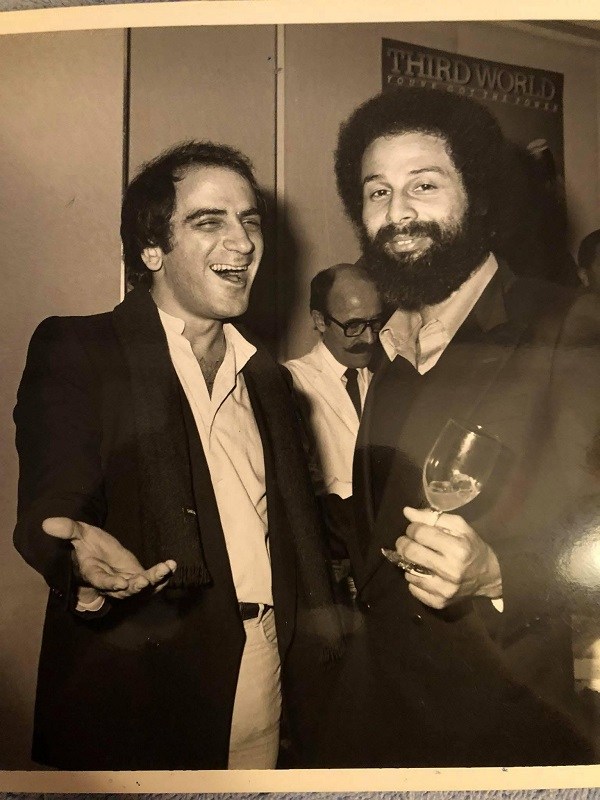
Alex Masucci and William Stewart
Alex Masucci and former drummer of the internationally renowned Third World band William Stewart

Island Records and Boardwalk

Alex also had a very fruitful journey at Island Records, where he was called upon by its founder Chris Blackwell to be part of the special projects division, a time during which he managed to sign and produce successful albums by Invisible Man’s Band, Third World Band, and Bob Marley himself. In fact, the Jamaican artist managed to get his music heard on American urban radio.

As for Boardwalk Records, he was also able to work with the aforementioned record label thanks to music entrepreneur and filmmaker Neil Bogart, who urged Alex to join the company and deal with great artists of the stature of Ringo Starr and Joan Jett.

Masucci and Cruz
Alex Masucci next to Johnny Cruz

Return to Latin Music and Newer Projects

After the very pleasant experience of having worked together in previous years, Blackwell contacted Alex again and proposed once more that they join in a new project that he would name Island Miami, to which Alex gladly said yes. Sometime later, Blackwell left Island, which led him and Alex to partner their recently created company Palm Pictures with Masucci Entertainment. Thanks to this alliance, they managed to sign the Cuban orchestra Carlos Manuel Y Su Clan.

Currently, the executive founded his own company Haz-Mat Entertainment, with which he created music and film projects, among which we can include the documentary on the history of Fania Records.

Read also: Puerto Rican singer Héctor Luis Pagán greets us and supports us

Enjoy the Tempo Latino 31st edition with the best of Latin music in Europe

That has been a very long year waiting a new edition of the biggest Latin music event in Europe! This July, fans of our music will finally be able to enjoy the 31st edition of Tempo Latino, which is one of the largest international festivals of Afro-Cuban, Afro-Caribbean, and Latin music. During the four days of the festival, the audience can enjoy the best of salsa, Latin jazz, mambo, timba, and fused rhythms every year.

This festival is usually held in the small village of Vic-Fezensac in southwestern France, since 1994, which is when its first edition took place. Nowadays, the event is typically held during the last days of July and the first days of August. 

Tempo Latino 2026
One of the arts for Tempo Latino 2026

A little of the history of Tempo Latino

As mentioned previously, the festival began, and is still held, in Vic-Fezensac, a small village of around 3,700 inhabitants located in the Gers, which is well known for its bullfighting tradition. This association was founded in 1993 by music lover and Latin music DJ Eric Duffau, an artist who sought a different alternative to traditional commercial communities and aimed to bring traditional musical roots to the heart of Europe.

The first edition, which took place in the summer of 1994, aimed to transform the small French village into the mecca of salsa, Cuban son, and Afro-Latin jazz for four days a year.

An initiative that began as a small project has grown into one of the biggest salsa festivals of the world, which already enjoys the support of 500 local volunteers who organize into neighborhoods and homes. To this day, Tempo Latino has achieved a perfect balance between an ambitious production and a local and friendly atmosphere. It should also be stressed that it has been held on a regular basis since 1994, except for 2020 and 2021 due to the COVID-19 pandemic.

Evolution and golden age

The festival expanded so much thanks to its authenticity and freshness that it has come to be known as “The One” and has established itself as a mandatory stop for the greatest Latin music glories, including Celia Cruz, Eddie Palmieri, Rubén Blades, Willie Colón, Tito Puente, Los Van Van, El Gran Combo de Puerto Rico, La Sonora Ponceña, Oscar D’León, Cheo Feliciano, Ismael Miranda, Johnny Pacheco, and many others.

Maite Hontelé Y La Novia

Similarly, since its foundation, the festival has also served as a springboard for new musical talent, including solo artists and groups performing salsa brava, Latin hip-hop, Afro-Cuban funk, and other genres from places such as Cuba, Colombia, Venezuela, Puerto Rico, and New York. 

Activities beyond the concerts

Tempo Latino has come to a point where it is no limited only to stage performances, which are still the main attractions for attendees. They also offer dance workshops, which are designed for both amateurs and professional dancers interested in learning more about the roots and evolution of Latin rhythms.

Similarly, the festival also offers music and percussion workshops, introducing both amateur and professional musicians to important topics such as the clave, rhythm, and a bit of the history of Latin and Afro-Cuban music. In the case of percussion workshops, instructors teach students how to play the congas, timbales, bongos, and campana. As for wind instruments and musical combos, classes are given in trombone, trumpet, and saxophone.

We also cannot fail to mention the international market, where attendees can buy all sorts of things from our countries, such as instruments, clothing, traditional cuisine, handicrafts, souvenirs, and more.

Orquesta Akokan, which is going to perform in this edition

Stages and structuring of the festival

Another of the great attractions of Tempo Latino is its “geo-rhythmic” network of locations, where you can find both concerts and peripheral activities that can be enjoyed simultaneously. Below are some of those that will be available for the 2026 edition:

  • Tempo Arena: This stage is located in the Vic-Fezensac bullring, known for its open acoustics and intense energy every night of the festival. Among the top artists that will perform there are Maïté Hontelé Y La Novia, Orquesta Akokán (Friday, July 31), Matt Bianco, Rogê (Saturday, August 1), Alfredo Rodríguez, and Tony Succar (Sunday, August 2).
  • La Conga (Tempo Social Club): This other stage is also very popular because it has a beachy vibe with real sand and operates from early morning until late into the night. As for the artists who will be performing, we can mention the queen of Argentine electronic cumbia, La Yegros, DJ Çarava, and DJ Lafuriosa.
  • Camp Tempo: This open-air format is packed every year with new musical proposals, alternative fusions, brass bands, and street groups that give life to the village during the day. In the 2026 edition, some of the alternative bands will include Chicos y Méndez, Chicharrón, Pixvae, and Aguanomas. 
  • Saint-Pierre Church: This venue is solely and exclusively reserved to small, intimate acoustic concerts where, as a general rule, only pianists and Latin jazz artists perform in the festival’s most solemn format.

Read also: How Artificial Intelligence changed the music biz forever

The Art of Immortalizing Lavoe: The Cultural Bridge of a Young Designer

Through the digital book “Lavoe entre colores,” Victoria Rivas fuses editorial illustration and a passion for salsa to connect new generations with the legacy of “El Cantante de los Cantantes.”

Victoria Analig Rivas Rojas, an artist, illustrator, and graphic designer, was born in Valencia, Carabobo State, Venezuela. At just 20 years old, she holds a Bachelor of Fine Arts degree with a major in Graphic Design from the Arturo Michelena University.

Victoria Rivas Licenciada en Artes, mención Diseño Gráfico

Since she was a young girl, her passion for art and music grew, deeply influenced by her salsa-loving, dancing, and music-aficionado (melómana) family.

Her childhood was surrounded by people who loved the arts. She began painting mandalas as a hobby, and since then, she has created numerous paintings and murals both inside and outside her native country, all of which are showcased on her Instagram account, @victoriarivasart.

A través del libro digital Lavoe entre colores, Victoria Rivas fusiona la ilustración editorial y la pasión por la salsa

Her love for music, especially salsa, motivated Victoria to develop her Undergraduate Thesis based on the history of the genre and the biography of her idol. In doing so, she created an illustrated digital book about the life and work of the singer and musician Héctor Lavoe, one of the most prominent artists in the genre.

Concerned by the widespread lack of knowledge among youth her age regarding salsa and the figure of Héctor Lavoe, Victoria utilized the knowledge acquired throughout her degree to preserve and convey this information through illustration.

To achieve this, she employed a qualitative methodology, working with a population and sample of academic experts in the field a musicologist, a graphic designer, and a seasoned salsa connoisseurconducting in-depth interviews with them.

As a result, she successfully demonstrated that illustration is a key tool, functioning as a cultural bridge between words and emotion.

She accomplished this through a digital format that provides easy access for newer generations, people unfamiliar with the subject, and fans of both art and salsa.

This is how “Lavoe entre colores” (LEC) [Lavoe Among Colors] was born an illustrated digital book that immortalizes the life and work of “El Cantante de los Cantantes” and the history of salsa.

“Lavoe entre colores” (@lavoeentrecolores) is structured into 64 pages, which unfold across 11 sections divided into Side A and Side B, emulating the classic cassette tape format.

The book summarizes the singer’s life in chronological episodes, using the titles of his songs as chapter names. It was designed over the course of more than 250 work hours, featuring vibrant, colorful undertones that invite the reader to linger and return.

“Every stroke represents my pride in uplifting Héctor’s name.”

Victoria Rivas

(An Illustrated Digital Book on the Life and Work of Singer and Musician Héctor Lavoe)

El Arte de Inmortalizar a Lavoe El Puente Cultural de una Joven Diseñadora

Djane

Also Read: Djane Shina A Passion Turned into Reality

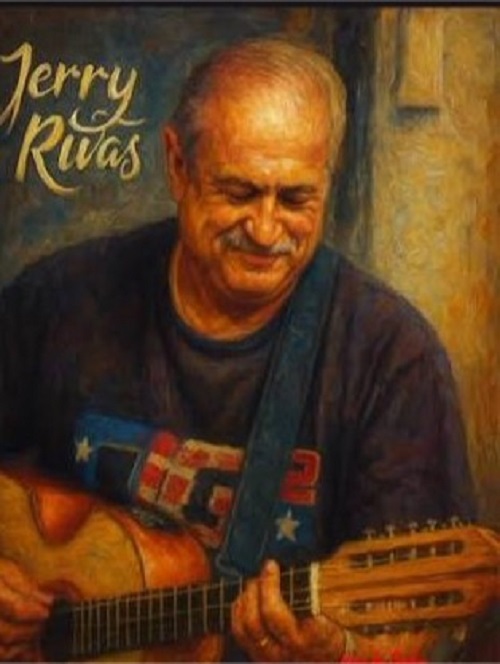
The Senior Mulato Jerry Rivas and His Half-Century Legend with El Gran Combo de Puerto Rico

From the chords of the Puerto Rican cuatro to the eternal voice of “Los Mulatos del Sabor”

Few names resonate with as much power, respect, and relevance in the salsa firmament as that of Jerry Rivas.

Born in Tampa, Florida, but with his soul deeply rooted in the heart of Orocovis through his parents’ heritage, Jerry Louis Rivas Díaz has carved his name in letters of gold into the history of Caribbean music.

El Mulato Mayor Jerry Rivas y su Leyenda de Medio Siglo con El Gran Combo de Puerto Rico

Nearing 50 years as the lead vocalist for El Gran Combo de Puerto Rico, Rivas is more than just a singer; he is a living institution of salsa, a definitive sonero of his era, and the guardian of a legacy that continues to keep the entire world dancing.

Roots, Strings, and the Making of a Self-Taught Musician

Jerry’s history with Puerto Rico formally began in 1960, when his family moved back to the “Isla del Encanto” to settle in Bayamón.

There, the young Jerry began to breathe in the folklore and rhythms that defined the Boricua identity. What many do not know is that long before commanding microphones and international stages, Jerry was deeply passionate about string instruments.

As a fundamentally self-taught musician and singer, his first great love was the guitar. Over time, his musical curiosity led him to master the Puerto Rican cuatro, the island’s national instrument par excellence.

De los acordes del cuatro puertorriqueño a la voz eterna de Los Mulatos del Sabor

Not content with just that, he decided to delve deeper into the roots of Afro-Caribbean music, learning the secrets of the Cuban tres under the tutelage of the renowned professor Carlos Seguí.

This solid foundation as an instrumentalist not only shaped his ear but also gave him an impeccable sense of rhythm and timing that would later define his unique style for soneo (improvisational singing).

The Path to the Top: From Local Bands to a Historic Recruitment

Before the spotlight of El Gran Combo fell upon him, Jerry Rivas honed his craft throughout the island’s musical circuit, leaving his mark on every project:

  • Grupo Complicación: His teenage musical battleground, where he served as a guitarist for three years.
  • Conjunto Cojoba: A group he joined in 1972, sharpening his stage presence.
  • Conjunto Chaney (1974): Jerry was part of the select group of founding musicians of this project, which years later would become a powerhouse of romantic salsa.
  • Latin Brass (1976): The definitive showcase where his voice truly began to shine on its own.

It was precisely in 1976 when destiny knocked on his door. Following the shocking departure of the iconic “Niño de Trastalleres,” Andy Montañez who left the orchestra after 14 golden years to join Venezuela’s Dimensión Latina El Gran Combo found itself facing one of the most difficult transitions in its history. Replacing a legend seemed like an impossible task.

However, the keen eye of Don Quique Lucca (founder of La Sonora Ponceña) did not fail. Don Quique recommended the young Jerry to Don Rafael Ithier. After hearing him perform, Ithier didn’t hesitate: in 1977, Jerry Rivas officially joined the “University of Salsa.”

Nacido en Tampa, Florida, pero con el alma arraigada en las entrañas de Orocovis por la herencia de sus padres, Jerry Louis Rivas Díaz

Nearly 50 Years of History at “The University of Salsa”

Joining such a demanding institution in the midst of an era-defining shift was a monumental challenge. Audiences initially viewed the new member with skepticism, but Jerry, armed with unwavering humility and immense talent, never tried to imitate his predecessor; instead, he forged his own legend.

Across nearly five decades, his voice has immortalized anthems of the global salsa songbook. Essentials on any dance floor like “Azuquita pa’ el café,” “Ojos chinos,” “Y no hago más na’,” “El menú,” “Cupido,” and “La clave” carry his unmistakable stamp.

His elegant performance style, combined with his sharp wit and deep respect for the dancer, solidified the orchestra’s golden age and ensured the transition was a resounding success.

“Joining El Gran Combo was a tremendous school and responsibility. Replacing Andy was no easy feat, but Don Rafael Ithier gave me the confidence to just be myself on stage.” Jerry Rivas, looking back on his beginnings.

Pocos nombres resuenan con tanta fuerza, respeto y vigencia en el firmamento de la salsa como el de Jerry Rivas.

The Present and Vibrant Legacy of an Eternal Sonero

Now in 2026, the tropical music landscape has changed drastically, but El Gran Combo de Puerto Rico remains unshakeable at the top.

Jerry Rivas stays incredibly active, leading the vocal front of “Los Mulatos del Sabor” alongside the orchestra’s newer generations, Anthony García and Joselito Hernández. This blend of Jerry’s veteran wisdom and the energy of the new vocalists has injected a refreshing vitality into the group.

Jerry Rivas is not just a survivor of salsa’s golden age; he is the living bridge connecting the rich traditions of the 20th century with contemporary audiences.

From his days tuning strings in Bayamón to packed stadiums across Europe, Latin America, and the United States, his journey stands as a testament to discipline, passion, and love for his culture.

We wish lifelong health, inspiration, and continued success to this eternal maestro who, besides being one of salsa’s most beloved voices, has never ceased to be, in every sense of the word, a complete musician. Long live the music of Jerry Rivas, and let the drums keep rolling!


Jerry Rivas y Papo Rosario

Also Read: The Gran Combo of Puerto Rico “Los Mulatos del Sabor”

Puerto Rican Trombonist and percussionist Arturo Vazquez Jr. from Projecto 7 Salsa & Latin Jazz Band

Trombonist and percussionist Arturo Vazquez Jr. is joining us today to talk about his career and his current band, Projecto 7. This salsa and jazz band features an interesting mix of Latin genres and is often invited to popular local venues in Illinois, where Arturo and his bandmates live, including Two Brothers Roundhouse, Joe’s on Weed, and MCM Pub.

Here is a summary of how much we talk about his early years, the foundation of the band, and his current professional activities.

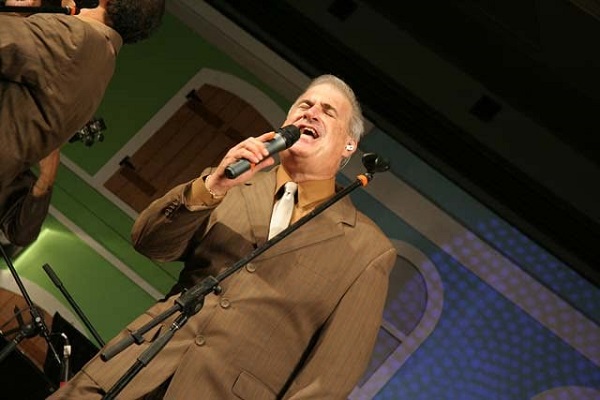
Arturo Vazquez singing
Percussionist and trombonist Arturo Vazquez Jr singing live

Arturo’s beginnings in music while he was still a child 

As usual, before delving into other issues, we wanted to know a little about Arturo’s beginnings in music to establish a chronology, and he told us that he expressed interest in this world when he was just a 10-year-old boy. His grandfather was a musician, and he and his colleagues often organized parties in the municipality of Patillas, Puerto Rico, where the family lived, and jíbara music was always present in everyday life.

The first instruments he learned to play were the timbales and the bongo, but after his grandfather passed away, he was given the accordion his grandfather had played, although unfortunately it did not really catch his attention. That was why he remained focused on percussion. Furthermore, knowing how important it is to get a proper academic education, he studied at the Free School of Music in Puerto Rico for a time, but due to the financial difficulties that his parents were experiencing at the time, they decided to move with their son to New York.

In the mentioned city, he continued his percussion studies at the School of Liberal Arts, being Willie Colón and Tito Puente his greatest inspirations to become a professional musician.

Years later, specifically in the 1970s, his parents found work in Chicago and moved there. That was where Arturo studied high school and met many aspiring percussionists, so the competition was brutal. Therefore, the orchestra’s conductor offered him the trombone spot and gave him a large bass trombone. 

projecto 7 led by Arturo
This is Projecto 7 Salsa & Jazz Band led by Arturo Vazquez

After he graduated, he began studying at the University of Illinois in Chicago, where he learned to read music and improvise with Professor J.J. Johnson during symphony orchestra concerts. Once he had gained a more or less acceptable experience in trombone practice, he remembered why or who inspired him to play in the first place, so he began playing in way Willie Colón would. That was not very common in his time, since most trombonists were classical musicians, but he did not care at all, so he started to entirely focus on salsa.

At the same time, he also specialized as a bomba and plena percussionist, so he trained at the Segundo Ruíz Belvis Cultural Center with maestro Rafael Cepeda, better known as “The Patriarch of Bomba and Plena” in Puerto Rico, who traveled to Chicago to teach percussion alongside AfriCaribe, a nonprofit cultural organization led by bandleader and singer Evaristo “Tito” Rodriguez. That was how Arturo also learned to play the pandereta and the barril, but with a focus on bomba and plena.

Professional opportunities before Projecto 7

Before creating his own group, Arturo gained considerable musical proficiency. In the area where he lived in Chicago, there were many gangs recruiting young people to sell drugs, resulting in the emergence of numerous initiatives that sought to keep kids off the streets such as El Congreso Puertorriqueño, whose main goal was to introduce them to Latin music. It was then that the artist met a record label called Caribe, thanks to which he made his first recording as a trombonist with the Orquesta La Unión. This was essentially one of several orchestras that served as a warm up for major groups and artists such as Hector Lavoe, Willie Colón, Ismael Miranda, Ray Barretto, and many others.

Projecto 7 playing at the Cubby Bear
Projecto 7 Salsa & Jazz Band playing at the Cubby Bear in Chicago

Before becoming a soloist, he put aside his career as a musician for more than 10 years because it was not enough to support his family, which already included two daughters. During those years, he studied psychology at the University of Chicago, studied therapy and rehabilitation at the University of Puerto Rico, and taught psychology and therapy at the Elgin Community College.

He worked in Puerto Rico from 1981 to 1988, when he moved to Miami to test the atmosphere in the city, but competition among Latino, especially Cubans, made it impossible for him to make a name for himself there, so he went to try his luck in Elgin, located about 31 miles from Chicago, where he eventually worked as a professional therapist and psychology professor. 

Projecto 7 Salsa & Latin Jazz Band

His group, Projecto 7, started at a parranda in which Arturo and Los Hnos Rodriguez in Elgin. The artists invited him to join them and propose new things for the project. When the brothers’ orchestra disbanded, Arturo received a call from a former member of Orquesta La Selecta, Joe González, who moved to Elgin to care for his sick father. González proposed Arturo and other musicians to form a new group called Projecto 7, since there would be seven artists in the group.

Since then, they have made efforts to keep the same lineup of musicians, including musical director, pianist, and bassist Juan Rivera; trombonist Tony Morales; singer Ricky Rodríguez; and bongo player Luis Angel Palermo.

Read also: Steel pan percussionist Brad Shores shows us the best of Caribbean music in Florida

  • Page 1
  • Page 2
  • Page 3
  • Interim pages omitted …
  • Page 14
  • Go to Next Page »

International Salsa Magazine (ISM) is a monthly publication covering salsa activities around the world and has been publishing since 2007. It is a worldwide network of volunteers coordinated by ISM Magazine. Together, we work to strengthen salsa events around the world.