• Skip to primary navigation
  • Skip to main content

International Salsa Magazine

  • HOME
  • Previous editions
    • 2026
      • ISM / March 2026
      • ISM / February 2026
      • ISM / January 2026
    • 2025
      • ISM / December 2025
      • ISM / November 2025
      • ISM / October 2025
      • ISM / September 2025
      • ISM / August 2025
      • ISM / July 2025
      • ISM / June 2025
      • ISM / May2025
      • ISM / April 2025
      • ISM / March 2025
      • ISM / February 2025
      • ISM / January 2025
    • 2024
      • ISM / December 2024
      • ISM / November 2024
      • ISM / October 2024
      • ISM / September 2024
      • ISM / August 2024
      • ISM / July 2024
      • ISM / June 2024
      • ISM / May 2024
      • ISM / April 2024
      • ISM / March 2024
      • ISM / February 2024
      • ISM / January 2024
    • 2023
      • ISM / December 2023
      • ISM / November 2023
      • ISM / October 2023
      • ISM – September 2023
      • ISM – August 2023
      • ISM July 2023
      • ISM Edition June 2023
      • ISM – May 2023
      • ISM April 2023
      • ISM March 2023
      • ISM February 2023
      • ISM January 2023
    • 2022
      • ISM December 2022
      • ISM November 2022
      • ISM October 2022
      • ISM September 2022
      • ISM August 2022
      • ISM July 2022
      • ISM June 2022
      • ISM May 2022
      • ISM February 2022
      • ISM January 2022
    • 2021
      • ISM December 2021
      • ISM November 2021
      • ISM October – 2021
      • ISM September 2021
      • ISM August 2021
      • ISM July 2021
      • ISM May 2021
      • ISM April 2021
      • ISM June 2021
      • ISM March 2021
      • ISM February 2021
      • ISM January 2021
    • 2020
      • ISM December 2020
      • ISM November 2020
      • ISM October 2020
      • ISM September 2020
      • ISM August 2020
      • ISM July 2020
      • ISM June 2020
      • ISM May 2020
      • ISM April 2020
      • ISM March 2020
      • ISM February 2020
      • ISM January 2020
    • 2019
      • ISM December 2019
      • ISM November 2019
      • ISM October 2019
      • ISM Septembre 2019
      • ISM August 2019
      • ISM July 2019
      • ISM June 2019
  • Spanish
  • Download Salsa App
    • Android
    • Apple

Latin America

Ramón “Mongo” Santamaría “I wanted to do something that sounded like home”.

April 7, 1917, Mongo Santamaría was born in the Jesús María neighborhood of Havana, Cuba.

Exceptional percussionist of Latin Jazz and related rhythms, whose first name was Ramón Santamaría.

Mongo left to continue playing his Congas hard in the sky on February 1st, 2003.

“I wanted to do something that sounded like home”. With these simple words, Ramón Santamaría Rodríguez “Mongo Santamaría” spoke of his essence.

The purpose of his music pursued a sonority and a memory, possibly located in Cuba, in Jesús María, a marginal neighborhood where he grew up and enjoyed a tradition attached to the drum, to religion, to the street and from where this great Cuban percussionist drank infinitely.

But surely those drums also came to him from far away, from the Congo, where his grandfather came from to be a slave on the island and who also filled his head with sounds full of meanings and colors, which he later masterfully spread around the world.

The name of Mongo Santamaría (Havana, April 7/1917 – Miami, Feb. 1/2003) is, for the glory of all music, an inevitable reference of Cuban percussion.

Since he was a child he knew that his thing was to play the drum and he was lucky enough to belong to a family of empirical musicians, singers and drummers who supported him in the learning and mastery of these instruments.

During his time in Cuba, already a professional musician, he participated in numerous groups that little by little gave him a place among the most outstanding percussionists of the time. Some names of these groups are El Conjunto Boloña, Lecuona Cuban Boys, with whom he was able to participate in the recording of his first album, Conjunto Matamoros, Segundo Grupo de Arsenio Rodríguez, among others.

Each group had its own style and stamp, but in each of them Santamaría put his personal “touch”.

At the prestigious Tropicana cabaret he played with Chano Pozo as a member of Armando Romeu’s orchestra.

From that moment on, his career would not stop. Conjuntos, Septetos de Son were the perfect selection to complete the sap from which he would draw all his style and technique.

Later, from carnival to carnival, he would gather with other percussionists to play in the comparsas and experience the festive musical atmosphere par excellence of those years.

Alongside him played other friends who soon became a Cuban reference in the United States: Patato Valdés and Armando Peraza.

As part of the Tropicana orchestra and located in a show in Mexico, he decided to settle there as did many musicians of his time and came to play with Pérez Prado and Benny Moré.

It was precisely in the latter orchestra where he met Clemente Piquero “Chicho”, another Cuban percussionist whose style made him rethink the role of percussion in Cuban popular orchestras.

Mongo Santamaría belongs to the second wave of Cuban percussionists who arrived in New York in 1950.

His new idea of restructuring and designing his own style in the use of Cuban percussion was perfectly in tune with the reality that a few years earlier was being experienced in the music produced and sold in New York, after the arrival of the Cuban rumbero Chano Pozo.

“The rhythm produced by the conga organizes all the percussion of a band, from which melodies and counter-melodies can be experimented with.”

“I think percussion is the base from which things come out.”

Already in the United States, Mongo plays with Gilberto Valdés, again he is part of Pérez Prado’s orchestra and finally with Tito Puente’s, where he stayed for 7 years. Once in the line of Afro-Cuban jazz, so popular at the time, he joined George Shearing’s group and later the vibraphonist Cal Tjader.

With his own orchestra, he accompanied La Lupe, one of his favorite singers, and undertook projects of novel formats for the time, such as small formations of brass trio, piano, bass, percussion and drums, at a time when jazz bands predominated.

Mongo Santamaría, perhaps without the theatricality to which Chano had accustomed the New York public, focused all his strength on achieving his own sonority, with a fusion of Cuban styles and genres, perfected and deepened in the introduction of Afro-Cuban rhythms with a naturalness and using colorful timbre elements by using several tumbadoras in his set.

His creativity is highly demonstrated in the great amount of music that is part of his catalog of works and the quality becomes indisputable when seeing the amount of outstanding jazz interpreters that version and recreate his work.

In 1959 he recorded Tambores y cantos, which contains the song Afro blue, which over the years became “a jazz anthem of all times”, according to Nat Chediak, author of the Latin Jazz Dictionary.

His long recording career (50 albums), testifies to the musical activity that this great percussionist carried out throughout his professional career. He worked with American jazz legends such as Chick Corea, Herbie Hancock, flutist Hubert Maws, Dizzy Gillespie, trumpeter Marty Seller, among other musicians who today still pay tribute to this Cuban conguero who was the architect of the fusion of rhythm & blues rhythms and Afro-Cuban music, recognized the connection of Cuban music to African roots and placed the congas in an indispensable instrument for the determination of Latin jazz.

In 1977 Mongo Santamaría received the American Grammy Award for “Best Latin Recording” for the work Dawn.

In 1999, Rhyno Record Company, based in Los Angeles, California, recognizing his contribution to Latin Jazz, released the “box set” (CD) Skin On Skin: The Mongo Santamaría Anthology (1958-1995), which includes 34 of his most successful pieces (from his rumba albums, his LP with La Lupe and his projects in the fusion of Jazz and Latin) and an extraordinary literature about his career written by actor Andy García, musician Poncho Sánchez and other connoisseurs of the Latin Jazz genre such as José Rizo, Luis Tamargo, Joel Dorn and Miles Pelich.

The legendary musician was extremely honored and grateful for the distinction Rhyno gave him by introducing this historic anthology to the world. As stated in the conversation with Jaime Torres, Mongo said:

“This is the fruit of many years of work, music made with taste and love.”

May he rest in peace and eternal glory to him.

From Peru and based in France we have Wálter Antonio Rebatta Hinostroza is a brand new and spectacular percussionist.

We are honored to present in this new release, one of the most outstanding figures of Latin music, representing the brother country of Peru, who has put the name of the musicians born in Inca lands very high in the world.

With you, directly from France, we have as a special guest Wálter Antonio Rebatta Hinostroza, a brand new and spectacular percussionist, who was born on September 14, 1973, in Bella Vista, Callao, Peru, being artistically known as “El Chato”.

Welcome Wálter to Salsa Escrita “La Columna Salsera de Barquisimeto, Venezuela”. It is a great pleasure to have you as a special guest in International Salsa Magazine, www.SalsaGoogle.com.

Thank you very much to you, my friend, Professor Carlos, for the invitation to your well read and recognized column and I take this opportunity to give a sincere greeting to all Venezuelans who are like my brothers.

How did you start in music? Well, teacher in my neighborhood called Ventanilla, in Peru, I grew up and since I was a child I breathed musical air, where at the age of 6 years old I was already playing “El Cajon”, traditional Peruvian Creole instrument, under the tutelage of my older brother Kike Rebatta, who took me later to learn other percussion instruments and prepare me with music theory, and then enter the music school of the renowned teacher Edelmi Chavez, and thus join the ranks of the most renowned orchestras in my country, such as: La Iniciativa, Orquesta la Grande, Banana Latin Jazz, among others.

Wálter, which international orchestras and artists have you accompanied? I have accompanied and worked with “Los Hermanos Colón” from Puerto Rico and among many groups, I have had the honor of being on stage with my Venezuelan brothers, Hildemaro “El Sonero del Amor”, with whom I have a great friendship, as well as with the master timbalero Alfredo Villamizar, from whom I have learned a lot and from whom I must thank through his column Salsa Escrita. “Chato”, you are currently based in the French city of Grenoble and we would like to know how is the salsa movement, especially in Europe. In fact, professor, in 1995, I came to Europe with the “Orquesta Salsa Perú” and I met Mr. Rodolfo Guerra, with whom a great friendship was born and I became part of the “Orquesta Sincopa Latina”, directed by him, being present in his productions: Salsa que te pasa, Demasiado corazón, Mi bachata, Puerto Rico, Todo, Escándalo, Mi silencio, Mi toque, Habla conmigo and Azafata. Wálter, I have heard that you have accompanied great salsa artists in their presentations, tell me who? I have had the honor of accompanying the late Tito Gómez, Willie González, Luisito Carrión and the great Venezuelan sonero Orlando José Castillo “Watussi”.

Also, let me tell you professor, that I have worked in the Italian television Media Set, in the very popular program “Notte Vola”, also in 2002, I participated in the Tour of the Queen of Salsa, Celia Cruz, along with the orchestra of the prestigious world famous violinist Alfredo de La Fe.

Likewise, my friend Carlos, in 2004, I performed in numerous events with Latin jazz groups, among them “El Royal Cuba”, of the Cuban musician and singer Eduardo Céspedes.

In 2007, I participated in the prestigious and famous festival of San Remo with the singer Daniele Silvestri, with whom I have recorded in his productions. In 2009, I participated in the Italian tour “Terromotati Dil Abruzzo”, conducted by the famous singer Laura Pausini and later that same year I participated again in a tour in the United States for charity with Pausini again.

Excellent Wálter, and what can you tell us about the orchestra you are currently working with and what are your future projects? Professor Carlos, at present I am an official musician of the renowned orchestra “Mercadonegro” and in relation to my projects, is to form my own group and perhaps dabble in bachata, but without leaving aside the salsa, since living in Europe I have met many bachateros. And something very important, my friend Colmenárez, I am also working on the project of my Venezuelan compadre, the musician Edwin Sanz, whom I would like you to interview at some point.

Very good Wálter, congratulations for your career, what are your contacts on digital platforms?  My Facebook is: Wálter Antonio Rebatta Hinostroza and my whatsapp: +41 77 5122633.

We want to wish you the best on behalf of Salsa Escrita “La Columna Salsera de Barquisimeto” and that you continue to put the name of Peru on high in all the stages of the world.

Thank you a thousand times, Professor Carlos Colmenárez, for taking me into account and thus make my career known and offer my greetings, thanks and respect to all the salseros of the world through International Salsa Magazine, www.SalsaGoogle.com and long live salsa, Peru and Venezuela, united forever…!

Frederlyn Mayora returns to Venezuela to sing Salsa Romántica to the dancing public.

Last Friday, April 22, at 7:00 p.m., a concert was presented at the Juana Sujo Hall of the Casa del Artista, in Quebrada Honda, Caracas. Tickets are already on sale at popular prices.

After several years out of the country, Venezuelan singer Frederlyn Mayora returns to Venezuela to relaunch his musical career and sing Salsa Romántica to Venezuelan dancers and music lovers.

Mayora, who has been part of the orchestras of Tony Vega, Maelo Ruiz, Jose Alberto “El Canario”, Luisito Carrion and Tito Nieves, among others, arrives in the country with a single called “Viernes Romantico” that promises to be a hit in a short time.

“I want everyone to know what I am doing and what I come to do in Venezuela”, said the singer who now has his own orchestra.

The singer will be in Venezuela until the end of his musical production loaded with romantic Salsa, ballads and merengues.

On April 1 and 2, Mayora offered a couple of concerts called “After Party de los Hermanos Primera”, that is to say, he performed in a well-known venue of the CCCT as soon as the presentation of the renowned singers Servando and Florentino was over, and it was a full house.

On Friday, April 8, at 4:00 pm, he will offer a press conference at the Doris Wells Hall of the Casa del Artista in order to announce in detail the entire agenda that he will fulfill on Venezuelan soil.

On Friday, April 22, he offered a concert at the Juana Sujo Hall of the Casa del Artista, located on Amador Bendayán Boulevard, Quebrada Honda, Caracas.

The event was scheduled for 7:00 pm. The occasion will be propitious to record a video click.

All Frederlyn Mayora’s events and presentations are in charge of her manager, Humberto Gonzalez, president of Producciones Salsayer.

A little bit of history

Frederlyn Alejandro Mayora Martínez, was born on July 27, 1982, in the populous Sucre Parish, west of Caracas, Venezuela.

He is a musician, singer and percussionist. At the age of 9 he began his musical studies, especially in percussion. He belonged to the estudiantina Héctor Pacheco and spent several years at the Bigott Foundation, where he received master classes with Professor Rodolfo González.

When Mayora turned 15 years old, he decided to focus his musical career as a singer and it is when the producer Humberto González, currently director of the Salsayer Orchestra, took him to sing in several salsa groups in Venezuela, among them, “Herencia”, “Neo Latino” and “El Combo Antillano”, among others.

In 2003 he moved to Spain, specifically to Galicia. There he became part of the orchestras “Panama”, “Filadelfia” and “Orquesta TV”, among others. His artistic commitments reached the beautiful city of Santander, located in the North of Spain, where he performed ballads, salsa and merengue.

In addition to the aforementioned orchestras, Frederlyn Mayora has been the lead voice in groups such as “Ekilibrio”, “La Junior”, “Mandinga Star Band”, “Puma Band”, “Patatín Orquesta” and the “Máquina de la Salsa” and has accompanied in the chorus, since 2002 to date, renowned singers such as “Maelo” Ruiz, José Alberto “El Canario”, Tony Vegas, Luisito Carrión and Charlie Aponte, former member of the Gran Combo de Puerto Rico.

Balance of the work carried out at the level of Social Media in Venezuela.

Publication of the Briefing

Noti-America (01-04-2022) Mexico

La Patilla (El Farandi) (02-04-2022) Venezuela

https://www.elfarandi.com/2022/03/30/briefing-vuelve-a-venezuela/

Notimundo (03-04-2022)

Press Conference

Day: Friday, April 8, 2022

Place: Doris Wells Hall of the Casa del Artista.

Attended by representatives from 10 media outlets and Instagram accounts. Examples: Venevisión, Portal La Patilla, Rumbas Venezuela, Intervez, Diario La Calle, Noticiero Digital, Analítica, El Universal, Tendencia Internacional and Radio Tiuna, among others.

Press releases published in digital media

Analitica.com (11-04-2022) Venezuela

https://www.analitica.com/emprendimiento/noti-tips/de-vuelta-al-barrio-toma-caracas-de-la-mano-del-salsero-frederlyn-mayora/

Tendencia Internacional (11-04-2022) Venezuela

https://www.tendenciainternacional.com/2022/04/11/de-vuelta-al-barrio-toma-caracas-de-la-mano-del-cantante-salsero-frederlyn-mayora/

Contraste Noticias Newspaper (12-04-2022) Venezuela

https://www.diariocontraste.com/2022/04/de-vuelta-al-barrio-toma-caracas-de-la-mano-del-salsero-frederlyn-mayora/

Vida y Arte (14-04-2022) Venezuela

http://www.vidayarte.com/farandula/cantante-salsero-frederlyn-mayora-esta-de-vuelta-al-barrio

Intervez (14-04-2022) Venezuela

Business and Destinations (15-04-2022) Venezuela

Cantante salsero Frederlyn Mayora regresa a Venezuela con “De vuelta al barrio”

La Calle Newspaper (17-04-2022) Venezuela

Mentions on Instagram accounts

@TendenciaInternalcional

@caracas_view

@augustofelibertt (Dj)

TV Programs, Portals and Radio

Wednesday, April 6, 2022

Venevisión, Channel 4. Presentation in the program “Sábado Sensacional” on the occasion of the 50th Anniversary.

Thursday, April 7, 2022

Globovision, Channel 33. Interview

Tuesday, April 12, 2022

Portal La Patilla. Interview. Broadcasted on April 20, 2022

Thursday, April 21, 2022

Program “Asi Suena”, Channel 8, with Rubén Jiménez. Broadcasted on Sunday 24-04-2022

Radio program 24-04-2022

“Ni tan Bravo”, with Isnardo Bravo. FM Center La Romántica 88.9 FM

This is a balance of the presence he has had in the media.

Wednesday, April 27, at 8:00 am, he was on Televen, Channel 10, in the program “Con lo actual”.

Sources

Salsayer Press Director: Yira Yoyotte, journalist. 0424-105-61-66. E-mail: [email protected]

Facebook: Frederlyn Mayora

Memo Arroyave, entre las voces más importantes e impecables del Caribe

Considered as one of the faithful representatives of Venezuelan salsa, the young vocalist Guillermo José “Memo” Arroyave, born on July 22nd in the city of Caracas, arrives to “Salsa Escrita” for an exclusive interview.

Memo Arroyave, continues to project himself with more and more quality and professionalism, characteristics that define him in the Caribbean music genre at the national and international levels.

In a pleasant and enjoyable conversation with Memo, he told us about his career and his current and future projects.

Memo Arroyave, welcome to Barquisimeto’s salsa column “Salsa Escrita”; it is a great pleasure for us to have you as our special guest and we would like you to tell us about your beginnings in your artistic career.

-Thank you Carlos for the opportunity you are giving me to reach your readers in a direct and fraternal way.

Memo Arroyave

Memo Arroyave, among the most important and impeccable voices of the Caribbean

My beginnings in the world of music and show business date back approximately to 1996, when I was a student of the successful Venezuelan Rafa Galindo (R.I.P.D.), the musical legend of our country.

Then I ventured into the stages forming part of different groups in Caracas, such as Partitura Latina, Orquesta Gente Novel, Orquesta Ensueños, Galaxy Latin Band, El Código Salsero, among others.

-Memo, which artists have you shared the stage with, what can you tell us about them? Professor Carlos, I have had the opportunity to share the stage and accompany, on occasions, as a soloist and others as a backing vocalist, national and international artists of the stature of: Andy Montañez, Ismael Miranda, Viti Ruiz, Christian Fernandez, Adalberto Santiago, Pupy Santiago, Paquito Guzman, Roberto Blades, Jose Mangual Jr, Max Torres, Wichy Camacho, Willman Cano, Nino Segarra, Nelson Arrieta, Marcial Istúriz, Mandinga Star Band, Wílmer Lozano, Wiwi Buznego, Wílmer Cobos, Cheo Valenzuela, Miguel Araujo, Erick Franchesky, Irving Manuel, Ángel Flores, Samir Bazzi, Manuel Guerra y su Orquesta, and in December 2019, I shared the stage with Hermán Olivera, Luisito Carrión and Frankie Vásquez.

-Regarding current projects, what can you tell us about them? I am part of several projects simultaneously my friend Carlos, among which stand out: Orquesta Puma Band, Victor Cardona y la Máquina de la Salsa, La Rumba Sonora de New York, Afro Códigos and recently I was invited to participate in the 10th Anniversary album of “Los Rumberos del Callejón”.

Well Memo, for all that you have given us to know about your talent and dedication, you are an obligatory reference of the salsa show and we would like to know about your most recent and future projects.

-In fact, I recently recorded and released the song “Si falta el Aire”, a composition by the Spaniard David Santisteban, with arrangements by Enmanuel “Cerebro” Romero and under my production.

 Memo Arroyave
Memo Arroyave, continues to project himself with increasing quality and professionalism.

It was recorded in Caracas, Mexico, Miami, and New York, mixed and mastered in the Venezuelan capital, as part of my first musical production. Other of my hits are: “Y lloré”, “No Puedo estar sin ti”, which I did a duet with Rafael “El Pollo” Brito. And as a scoop for your salsa column “Salsa Escrita”, I already have the next promo ready and it is a duet with NG2 from Puerto Rico and last week was the release of the song with José Madera Niño “3º Mundo”, titled: “Me gustas pero…”, which is sounding strong and last year I recorded for a Colombian pianist, but he is based in Washington, United States, which made an album called “10” and among other singers participate: Rodrigo Mendoza, Mariana “La Sonora de Venezuela”, Marcial Istúriz, Gonzalo Díaz, Mike Barrios, which is a talentazo of Zulia state, who is currently in Mexico, my person and other people from other countries.

Soon I will be in the production that is in the process of mixing and where Argenis Carruyo, Oscar Arriaga, Wichi Camacho, and others also participate.

-Excellent Memo, I understand that in addition to your facet as a singer, you also dabble in the media?

That’s right professor, let me tell you that I am the nephew of Fernando Sosa Leal, I have done radio and television since 2002; I started with a radio program in the state of La Guaira, I was the director of the musicalization of Azul 95. 9 FM, then we did “Mundo Latino”, there I was as an animator with Fernando Sosa Leal and Luis Arturo in CMT, then in TVES, but I leave the project to devote myself more to my singing career and also went several times to Puerto Rico to the editions of the National Salsa Day, World Salsa Congress, to give coverage from there for all Venezuela and the Caribbean and recently as the producer of Strike 13 with Fernando Sosa Leal in his Bowling program for Meridiano TV.

Carlos, I wanted to thank you for the focus you give to the singer through your salsa column, if I may say individually and not so much as choristers, which of course is important, but in your work and interviews we have read the support and contribution you give to our musical productions and recordings with orchestras, since this way we make ourselves known to music lovers as well as to the public.

Finally, I want to thank you for your time and congratulate you for this work that you do with a lot of enthusiasm, with desire and that should be appreciated not only by me but by all musicians, artists who are giving it their all and that, if it were not for people like you, it would be even more difficult.

-Your social networks? Through @memomedicen, they are my accounts in R.R.S.S. Thanks, Memo for this connection we had and thank you for accepting the invitation to Salsa Escrita “La Columna Salsera de Barquisimeto”, through International Salsa Magazine, www.salsaGoogle.com, we would also like to have you performing in our twilight city and musical capital of Venezuela and remind all artists that we are to serve them in an unconditional way in favor of our Latin music and obviously the Venezuelan talent that is unquestionably superior every day.

See you next time and let’s keep salseando!

Article of Interest: Henry Valladares, a brilliant, versatile, and disciplined percussionist
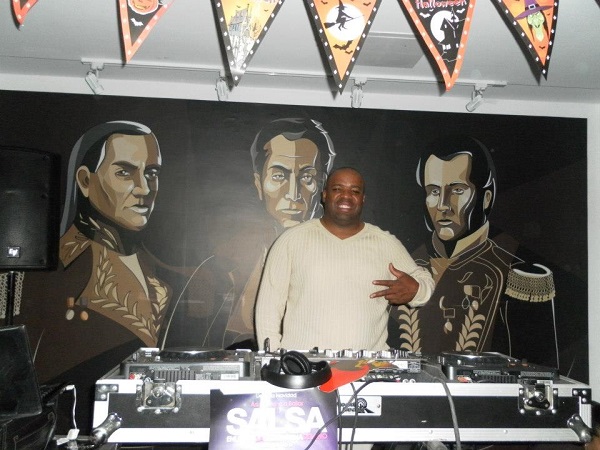
To speak of Leonardo Ortiz Chacón is to speak of a musical institution of Mexico

Performer of the tres, composer, arranger, music and radio producer, director and founder of Combo Ninguno since 1983.

He studied at the Faculty of Music of the UV, in JAZZUV, in Musinetwork in Boston MA and with teachers Luis Martinez, Carlos Tercero and Edgar Dorantes, he is a teacher of Musical Education in the Ministry of Education of Veracruz and since January 2019 participates in the direction of the Papakilistli Orchestra of the same Secretariat.

He has collaborated in television as musical director of the program “Cómo suena la clave” in TV Más. He is currently producer and host of the program “Cadencia Caribe”.

Since 1983 in Xalapa, the members of Combo perform dance music from the Antilles, integrating a repertoire with their own creations and original arrangements to themes of other authors in different musical genres such as son, guaracha, mambo, merengue, danzón, bolero, etc, achieving in their thematic diversity, a unique sound full of references to their native state of Veracruz.

He has taught workshops of appreciation and execution of Caribbean music and has participated as a lecturer and speaker on this subject in countless events, have been presented in Spain, Cuba, United States and Canada.

Accessing different forums from the small and improvised street space to large venues with capacity for tens of thousands of spectators such as the Azteca stadium or the Salsa Fest in Boca del Rio.

He has performed at prestigious cultural festivals such as the Cervantino, the Quimera, the Afro-Caribbean of Veracruz, the Vancouver Folk Festival and the International of Houston, at Fairs such as the San Marcos and the Expo Sevilla, Carnivals such as the one of Veracruz, Havana and the Mardi Gras in New Orleans and Galveston Texas.

Maestro Leo, how can you define yourself in the music scene?

Leonardo Ortiz Chacón is to speak of a musical institution in Mexico.
Leonardo Ortiz Chacón Tres player, composer, arranger, music and radio producer

I see myself as someone captivated by this music since I heard it for the first time, thanks to it I have been able to enjoy unforgettable moments and for many years I have not had a day in my life without doing something related to music. Be it as a performer, manager, broadcaster, props man, audio manager, producer, etc.

I understand that you have had many presentations abroad?

For me there have been many and I would like to have more. I think I have been fortunate to take advantage of the opportunities that have presented themselves with Combo Ninguno. I must say that personally I would never have been able to be in the places where music has taken me.

As part of your presentations you toured the U.S. How pleasant was the experience?

At one time we participated in a project to promote tourism in the State of Veracruz and we continually visited the State of Texas and then extended to Louisiana and Colorado, thanks to this an American promoter invited us to tour from coast to coast presenting a show of music and dance that began in New Hampshire and continued in New York, Pennsylvania, Illinois and other states to conclude in California after performing in New Mexico and Arizona. The program of the presentations was with original repertoire and Mexican authors.

What did it mean to you to perform for the first time in such a musical country where many great exponents of the island of Cuba came from?tional in 1989 at the Na Theater of Cuba

For me this was one of the memorable moments that I thank to music, the fact of participating with Combo Ninguno in a Gala dedicated to Mexico, in such an important place in Cuba, the country where this music was born.

I tell you that my emotion was so great that at the beginning of our performance, I could not complete the first verse of the song with which we opened, it was El jarocho by Lino Carrillo, I had to sing: Jarocho yo soy señores and I only said Jarocho, the rest was a sort of incomprehensible sounds that I could emit with a lump in my throat.

Have you had an endless number of participations in Cultural Festivals, which is the one that leaves a mark on you in your own country?

I can’t say one in particular, I remember presentations at anti-nuclear rallies where there were children, young people, adults and elderly people that were not festivals strictly speaking, a Cervantino festival where in the middle of a downpour people danced in the Alhóndiga de Granaditas under an impressive downpour, the Festival de la Nueva Canción Mexicana where we performed for the first time in 1983. And I could go on mentioning many more.

How did the Como Suena La Clave Festival come about?

 Combo Ninguno
Combo Ninguno

This festival arises with the intention of being a showcase where to make visible and position the Mexican orchestras with original proposal. Trying to promote, preserve and spread salsa music made in Mexico.

At first the orchestras were invited to play original arrangements of songs by other composers, then they were asked to play music by national composers and nowadays they are asked to play original music complemented of course with songs by national composers.

You don’t stop, you continue harvesting and now the project Coloquio Musical Afroantillano is born, why make this new proposal?

I think that in Mexico little is reflected and little is written about this genre. It seems that when we take the music out of the dance floor, we lose the rhythm and also the step.

For some time now, most of the debates on this subject have taken place backstage and in the places where musicians and some dancers gather to refresh themselves after the events. Recently, social networks have continued with this exercise, I must point out that for decades the main topic to be discussed has been: Does salsa exist or not? Should it be called salsa or son? And I believe that among other issues, we have left aside fundamental matters such as the creative part, the economic aspect and the diffusion.

Based on this consideration and thanks to the support of Rafael Figueroa, the Festival Como suena la clave, the Centro de Estudios de la Cultura y la Comunicación of the Universidad Veracruzana and the Red de estudios de la Música Afroantillana en México convened the Colloquium La música afroantillana en México: confluencias y divergencias where the participants in a framework of cordiality and respect have made valuable contributions that will be included in a report that will be released as a digital multimedia document for free distribution.

Do you think that the music called salsa is evolving worldwide?

I don’t have the slightest doubt about it, just as I don’t hesitate to mention that due to diffusion factors we only know a small part of the new salsa music that is being made in many places and that perhaps most of the music that is more accessible to us on digital platforms is not the best.

Have you experienced the best times in music today, and what do you think is missing?

Among other things, today and always it will be necessary to contribute new music that increases the cultural heritage of this genre. We need to talk about our present without forgetting the past, about our environment and our daily life in a globalized world. We need to speak our own language and disseminate these productions in the best possible way, trying to overcome the reluctance of many towards what is new and what does not come from the places where this music has traditionally been produced.

Already with seventeen record productions, now that you have worked on them, which is the production that has marked the history of Combo Ninguno? What has been the one that has left the greatest mark on you?

Undoubtedly the most significant record production is the first one, in it, as in each of the subsequent ones, our desires and also our possibilities and limitations are recorded musically. The most present record you have now is the one you are making or that you intend to make. Each record becomes a part of your musical history and your own life.

Have I heard salsa with the jalapeño touch mentioned because of that phrase?

In our case it is an advertising phrase that alludes to the hot sauce.  Salsa with jalapeño flavor. Initially it was used for our presentations in the United States where the chili peppers are called jalapeños. Today we use it by writing jalapeños with an x.

Combo None other cultural heritage that we have while we are still alive that you feel after 39 years in the music industry?

I’m looking forward to at least as many more. Looking back I realize that Combo Ninguno became a life project that has filled my days with music, so there will always be little I can do for music.

What do you expect from Leonardo Ortiz Combo Ninguno?

I have two record productions pending with Combo Ninguno, one of them is already quite advanced and I hope to finish both this year. I hope to give continuity to the Festival Como suena la clave and continue participating and enjoying everything that has to do with salsa made in Mexico.

Maestro, what would you like to say goodbye with and what message would you like to leave to the new generations?

I would invite them, besides the musical study, to try to make their contribution and leave their name in the salsa made in Mexico, to document their creativity in our reality and then communicate it in their creations, I would also ask them to debate and collaborate with their colleagues.

DISCOGRAPHY

 In their discographic work we can see a style that can be projected without problems towards the universal, but that does not cease to feed on their own Veracruz identity by offering us a combination of traditional and original pieces that exude Veracruz and Afro-Hispanic Caribbean flavor.

 To date they have made seventeen recordings, seven exclusively of combo none:

– Tumba Verde (1987)

– Traigo este son (1990)

– Son de amor (1994)

– Carnaval Veracruzano (2001)

– Con Sabor a Veracruz (2005)

– La Bruja recorded at the 17th Afro-Caribbean Festival Veracruz 2011 (2012)

– Inventario- Combo Ninguno, of which the singles Descarga de las flores, Calaveritas de Azúcar and Alambre, cuero y madera have been presented.

 And ten productions in which they intervene with other groups:

– Son 13 rolas antinucleares (1989).

– Somos indios (1995)

– Homenaje a Luis Martínez, recorded live at Barlovento de Xalapa in the 1st.

Festival Como Suena la Clave 1997 (1998)

– Tribute to Carlos Pitalúa, recorded live at Barlovento de Xalapa in the 2nd Festival Como Suena la Clave 1998 (1998).

Festival Como Suena la Clave 1998 (1999)

– From Son to Danzón (2000)

– Tribute to Emilio Domínguez, recorded live at Barlovento de Xalapa in the 3rd Festival Como Suena la Clave 1998 (2000)

3rd Festival Como Suena la Clave 2004 (2010)

– Con sabor a Veracruz-RTV music (2012)

– Tribute to Toña la Negra, a recording that records the V Festival Como Suena la Clave

Clave Festival held in Veracruz, Veracruz, Ver (2013)

– Salsa a la veracruzana, recording of the VI Festival Como Suena la Clave held in Veracruz, Veracruz, Veracruz, Veracruz (2015).

Veracruz, Ver (2015)

– Al Son del Covid, record of the VII Festival Como Suena la Clave held in Veracruz, Veracruz, Veracruz (2015).

virtual way in December 2020.

Erika Muñoz (La Mulata Rumbera)

Article of Interest: Maestro Jorge Anselmo Barrientos Silva, conductor, arranger and composer

  • « Go to Previous Page
  • Page 1
  • Interim pages omitted …
  • Page 74
  • Page 75
  • Page 76
  • Page 77
  • Page 78
  • Interim pages omitted …
  • Page 90
  • Go to Next Page »

International Salsa Magazine (ISM) is a monthly publication about Salsa activities around the world, that has been publishing since 2007. It is a world network of volunteers coordinated by ISM Magazine. We are working to strengthen all the events by working together.