• Skip to primary navigation
  • Skip to main content

International Salsa Magazine

  • Home
  • Previous editions
    • 2026
      • ISM / January 2026
      • ISM / February 2026
    • 2025
      • ISM / December 2025
      • ISM / November 2025
      • ISM / October 2025
      • ISM / September 2025
      • ISM / August 2025
      • ISM / July 2025
      • ISM / June 2025
      • ISM / May2025
      • ISM / April 2025
      • ISM / March 2025
      • ISM / February 2025
      • ISM / January 2025
    • 2024
      • ISM / December 2024
      • ISM / November 2024
      • ISM / October 2024
      • ISM / September 2024
      • ISM / August 2024
      • ISM / July 2024
      • ISM / June 2024
      • ISM / May 2024
      • ISM / April 2024
      • ISM / March 2024
      • ISM / February 2024
      • ISM / January 2024
    • 2023
      • ISM / December 2023
      • ISM / November 2023
      • ISM / October 2023
      • ISM – September 2023
      • ISM – August 2023
      • ISM July 2023
      • ISM Edition June 2023
      • ISM – May 2023
      • ISM April 2023
      • ISM March 2023
      • ISM February 2023
      • ISM January 2023
    • 2022
      • ISM December 2022
      • ISM November 2022
      • ISM October 2022
      • ISM September 2022
      • ISM August 2022
      • ISM July 2022
      • ISM June 2022
      • ISM May 2022
      • ISM February 2022
      • ISM January 2022
    • 2021
      • ISM December 2021
      • ISM November 2021
      • ISM October – 2021
      • ISM September 2021
      • ISM August 2021
      • ISM July 2021
      • ISM May 2021
      • ISM April 2021
      • ISM June 2021
      • ISM March 2021
      • ISM February 2021
      • ISM January 2021
    • 2020
      • ISM December 2020
      • ISM November 2020
      • ISM October 2020
      • ISM September 2020
      • ISM August 2020
      • ISM July 2020
      • ISM June 2020
      • ISM May 2020
      • ISM April 2020
      • ISM March 2020
      • ISM February 2020
      • ISM January 2020
    • 2019
      • ISM December 2019
      • ISM November 2019
      • ISM October 2019
      • ISM Septembre 2019
      • ISM August 2019
      • ISM July 2019
      • ISM June 2019
      • ISM May 2019
      • ISM April 2019
      • ISM March 2019
      • ISM February 2019
      • ISM January 2019
    • 2018
      • ISM December 2018
      • ISM November 2018
      • ISM October 2018
      • ISM September 2018
      • ISM August 2018
      • ISM July 2018
      • ISM June 2018
      • ISM May 2018
      • ISM April 2018
      • ISM March 2018
      • ISM February 2018
      • ISM January 2018
    • 2017
      • ISM December 2017
      • ISM November 2017
      • ISM October 2017
      • ISM September 2017
      • ISM August 2017
      • ISM July 2017
      • ISM June 2017
      • ISM May 2017
      • ISM April 2017
      • ISM March 2017
      • ISM February 2017
  • Download Salsa App
    • Android
    • Apple
  • Spanish

Latin Music

Ralph Rivera’s rol in the promotion of Latin Culture

Just as we have talked about musicians and singers who have left to the Puerto Rican culture in the highest in the rest of the world, it is also time to highlight the role of other figures who have contributed immensely to the way in which the Island of Enchantment is perceived by others: the cradle of several of the best artistic exponents from Latin America. One of them is Ralph Rivera.

From the Spaha Salsa Harlem Museum, we have always sought to promote Latin culture by giving space to figures who do their part in making sure we are respected on an artistic level. Such is the case of writer, producer and financial executive Rafael J. Rivera-Viruet, better known as Ralph Rivera, to whom we will dedicate the next lines of this article.   

Financial Executive Ralph Rivera
Puerto Rican financial executive and writer Ralph Rivera

Who is Ralph Rivera?   

Ralph Rivera was born in a coffee farm in the municipality of Utuado, the third largest municipality in Puerto Rico, which is located behind Ponce and Arecibo and is part of the mountainous region known as La Cordillera Central.   

Like many other Puerto Ricans of the time, his parents were seeking a better future for themselves and their child, so they made the decision to move to New York City, United States, thus becoming part of ”The Great Migration” in the 1940s, which consisted of a massive exodus of Puerto Ricans to Uncle Sam’s country as a result of its growing dominance over the island and the devastation caused by ”The Great Depression”, with which Puerto Rico was greatly affected.   

Once in the United States, the family settled in the South Bronx, where little Ralph spent his childhood and youth being part of New York’s public school system. It was full of children who wanted to get out of poverty through education and hard work. Ralph was certainly no exception, as he wanted the same thing and would do what he could to make it happen.   

Over the years, the young man acquired all the knowledge he could in the area he was most passionate about: business. Of course it was not an easy road, but Ralph managed to reach important positions in this field. When he worked for the auditing firm Price Waterhouse, he was hired by the talent agency Ashley Famous to handle the company’s financial affairs.  

Ralph’s beginnings were not easy
Ralph’s beginnings were not easy, but at the end he achieved all his goals

When he gained enough experience, he went for bigger challenges in his career. That was when he met his greatest mentor, fellow executive Marvin Josephson, with whom he created mergers and acquisitions in order to found International Creative Management (ICM) the Behemoth Talent Agency. 

Moving to Los Angeles 

At this point, Ralph had already fulfilled many of the dreams he had set out to achieve professionally, but he still has plenty to prove in the field. It turns out that, in the 1980s, he was given the opportunity to move to Los Angeles to work closely with Martin Starger, former president of ABC television, and Sir Lew Grade, who at the time was the head of Marble Arch Productions, a famous entertainment company in England. 

‘‘Sophie’s choice” and ”On Golden Pond” are among the projects the entrepreneur took on with the company, but his aspirations just kept growing and led him to work with Marvel Comics and Stan Lee himself on the television animation production side. Some of the Marvel titles Ralph worked on include ”Iron Man”, ”Spider Man”, ”The Fantastic Four” and many others.   

In the mid-1990s, he returned to his native island of Puerto Rico and settled in its capital, San Juan, to focus on producing documentaries about Hispanic American culture, including politics, cinema and, of course, music.   

Ralph’s book
Cover of the book ”HOLLYWOOD Se Habla Español

Ralph as a writer   

The multifaceted executive is not limited to the aforementioned facets, but is also a writer and author of the acclaimed book ”HOLLYWOOD: Se Habla Español”, which has won multiple awards since its release. 

In the text, Ralph describes some of the most important achievements of Hispanics in Hollywood films over the last century, stories that should make all of us Latinos who read them proud. They are proof that all the effort we have put into being recognized worldwide has finally paid off despite the obstacles.

Johnny Cru ISM corresponde in New York City


Read also: Pedro »Pacholo» Segundo apoya al Spaha Harlem Salsa Museum 

Vocalist of La Moderna Tradición Eduardo Herrera and his fascinating story

This time, we are very pleased to have been able to talk with a talented Venezuelan who has left the name of his country well off thanks to his talent and professionalism. We are talking about bandleader and singer Eduardo Herrera, who was kind enough to speak exclusively to us and give us details on his personal and professional life so that we can get to know a little more about him.    

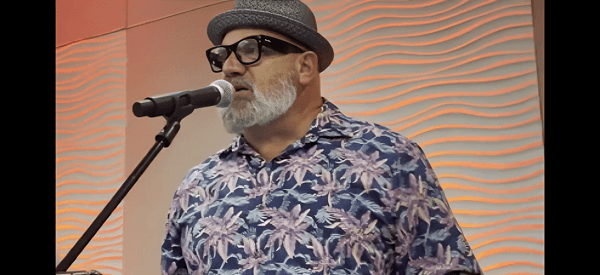
Venezuelan singer Eduardo Herrera
This is vocalist of La Moderna Tradición and Venezuelan singer Eduardo Herrera

How did Eduardo Herrera become interested in music?   

Eduardo comments that his parents always spent their time singing in a very cheerful way since he was a child, so his best childhood memories are with music. 

He grew up in Caracas, so he always had close contact with all kinds of music and listened to a great variety of artists starting with Celia Cruz, La Sonora Matancera, La Billo Caracas Boys, Los Melódicos, Benny Moré, Oscar D’ León, Daniel Santos, Los Adolescentes La Dimensión Latina, La Fania, among others. These artists strongly encouraged him to lean towards salsa in the 1970s.   

In his hometown, he began playing with the Teresa Carreño Chamber Choir, which was his first professional contact with music and, in his own words, was a great school for him during his time there. 

In 1987, being already in the state of California, United States, there was an orchestra called Radiante that played Puerto Rican salsa. Eduardo worked with them for a year until he joined Orquesta Sensual, whose strength was romantic salsa that was fashionable at the time.   

After that, he also worked with Orquesta Charanzón, which at that time was led by Anthony Blea, a famous violinist from the Bay Area. It was with this band that he began to fully discover Cuban music and develop a great passion for it, which would lead him to continue along this path in the following years.    

In those years, he played with an unlimited number of orchestras with which he gained a lot of experience and learned to perform properly on stage. However, his big break came with the Orquesta La Moderna Tradición in 2021, when he was offered to participate with the group in some projects.   

Even so, the latter did not prevent him from working with other groups of this style throughout the San Francisco Bay Area, as he has no problem with playing with anyone who wants to invite him.   

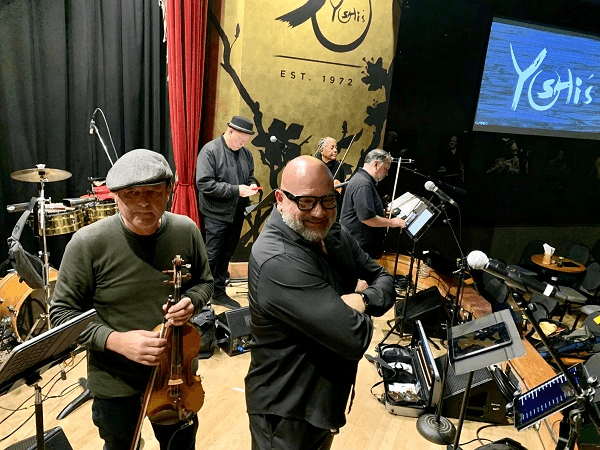
Eduardo Herrera and Tregar Otton
Eduardo Herrera next to director, arranger, composer and violinist Tregar Otton at Yoshi’s

Reasons to leave Venezuela and go to the United States   

Like any other immigrant, Eduardo’s primary reason for leaving his country was the search for new opportunities. Eduardo goes on to explain that he was awarded a scholarship by the famous Gran Mariscal de Ayacucho fellowship programme and managed to obtain his degree in biology in the United States, but unfortunately with the change of government, the things that were promised to him and other fellows such as jobs and revalidations were not kept. As a result, the young man was left in a limbo that made it nearly impossible for him to practice biology.    

With his options reduced to almost zero in Venezuela, Eduardo had no choice but to return to the United States, where he started working as a high school teacher until 2023, when he finally retired from his basic profession. In total, he taught for more than 40 years at the secondary level. During most of this time, he combined his school activities with his second profession, which was music.   

Other areas of music explored by Eduardo 

The singer explained to us that his voice has always been his most important instrument when he gets on stage, but he also confesses to having experimented with hand percussion instruments such as the maracas and the güiro. He pointed out that both are very easy to learn at first glance, but they have their level of complexity once you try them. 

At present, he only uses his voice in the orchestras in which he currently plays.  

Orquesta La Moderna Tradición   

”La Moderna Tradición reached out to me at the beginning to record one of their CDs and I started singing backup and the harmonies, which is how you should always get you started in any group. When you master those areas and have the talent, you may think about being a soloist and that’s exactly what happened with me” Eduardo started saying about the issue. 

La Moderna Tradición’s music was mostly instrumental at that time and they wanted Eduardo for their second album, which would include choirs for the first time, but the group had no singer at that time. In view of the good results offered by the vocalist, he found himself in frequent demand to give voice to other old numbers, but now with a singer.   

Years later, he finally received the proposal to be part of the orchestra as such, together with Ramón ”Monchi” Estévez on vocal. Already for the third album, all the songs had a singer, who was Eduardo most of the time. 

From then on, the artist has continued to be part of La Moderna Tradición with some interruptions because he moved from the Bay Area to the Central Valley in Manteca, which made it more complex for him to play with the orchestra on weekday evenings. 

At the same time, he worked with the group Vissión Latina, Carlos Caro’s orchestra or any other that invited him to play on weekends, which were on his days off. 

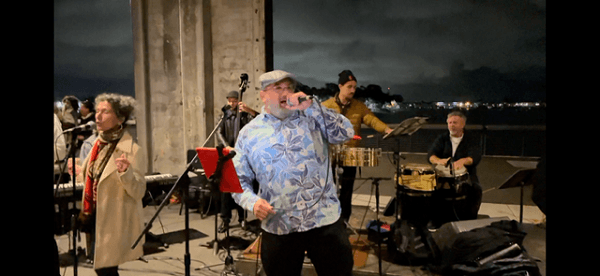
Eduardo Herrera performing
Eduardo Herrera performing live

What Eduardo has learned from La Moderna Tradición and other artists he has played with 

The most important things Eduardo says he has learned from the great artists he has played with are the study, humility, knowing your limits and the development of the love of music. He says the latter is fundamental, because if you do not love music, you will not do the job right.   

”With music, you sacrifice your time and the pay you receive in return does not always go according to what you do, but it is something you’re supposed to do for the love you have for the craft. If you do not love what you do, you will hardly do it well and use your skills in it” said Eduardo. He added that ”you are an eternal student and you never know everything about everything. There is always something to learn from other singers and seeing any of them on stage is an opportunity to emulate what they do as long as it is useful for your career. 

He also said that ”the ego of many artists is a really depressing thing because it prevents them from moving forward and takes their focus away from what is really important, which is the love of the genre and the opportunity to learn as much as you can”.  

Complex moments for Eduardo personally and professionally  

Eduardo mentioned to us that one of the hardest moments for him personally and professionally was his move outside of the Bay Area, which we had already talked about. Being so far away from the area where he did most of his performances was a blow to him, as he had to be near his wife and children.   

Eduardo was very late from work and his wife had a job which made her to leave home for several days, so it was up to him to stay with the children during all that time. For the artist, his family comes first every time and no job or hobby goes above that. 

His responsibilities with his children let him to distance himself from music little by little, since not being always available to play, orchestras would look for other singers to replace him. This made his opportunities to sing to be reduced, but Eduardo assures that the sacrifice has been worth it, as quality time with his children is the most main thing for him. 

Eduardo’s plans to create his own orchestra  

Eduardo was able to conduct an orchestra for a few months, which allowed him to see what the work of a director would be like and the truth is that he did not like it. ”During the time that I was conducting an orchestra, I could see I don’t have the right personality for it. I’m not good for working with adults who are irresponsible and many musicians tend to be late for the engagements and not to take this profession very seriously. I’m a very perfectionist person who has very high standards and I don’t expect anyone to work less than me, so I know it would be torturous for me to have a responsibility of that magnitude,” Eduardo said. 

He says that being a bandleader is far beyond what he wants to do with music and that he wanted to keep developing as a singer. In addition to this, going back to the family issue, such a position would have forced him to be away from his family again and that was something he was not willing to do. 

He also took into account the little stability offered by music as a profession. His work as a biology teacher was much more stable and allowed him to have secure income without having to worry about the bad times of orchestras. He loves music to a fault, but does not like uncertainty and insecurity.  

Eduardo Herrera and Maru
Eduardo Herrera performing with Maru Pérez-Viana, La oderna Tradición manager and chorister

Other groups  

In addition to playing with La Moderna Tradición, he also works with a Cuban group called Pellejo Seco, with which he recorded an album that is currently being remastered in Cuba. The material was recorded just before September in California, but will soon be released to the public. 

Eduardo works directly with Ivan Camblor, director of the orchestra and professional tres player. In this part of the conversation, the artist was very complimentary about Camblor and highlighted his great potential as a bandleader and musician. 

Something he likes about Pellejo Seco is that his main genre is Cuban son and it focuses a lot on very rural and traditional Cuban rhythms, so he can explore other elements different from what he does with La Moderna Tradición. They are very different groups with different genres and different characteristics. 

Read also: Nicaraguan singer and guitarist Yelba Heaton in an exclusive interview 

Ezequiel Lino Frías Gómez was an excellent musician, pianist, arranger and composer.

Ezequiel Lino Frías Gómez was born on April 10, 1915 in Havana, Cuba.

Lino Frías y Daniel Santos

Musician, Pianist, Arranger, Composer. He began his artistic career in the early 30’s, working with singer and composer Joseito Fernandez, in the orchestra of Raimundo Pla.

Later he became part of the Fantasía Orchestra.

At the end of the decade he worked with the Septeto Carabina de Ases.

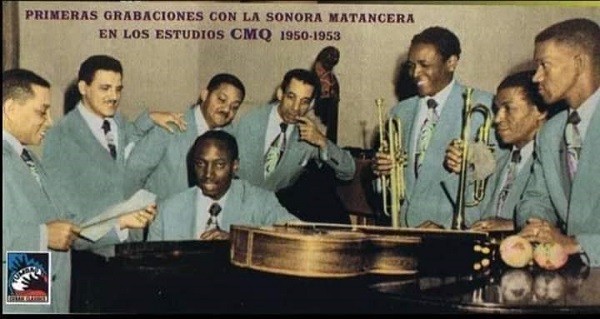
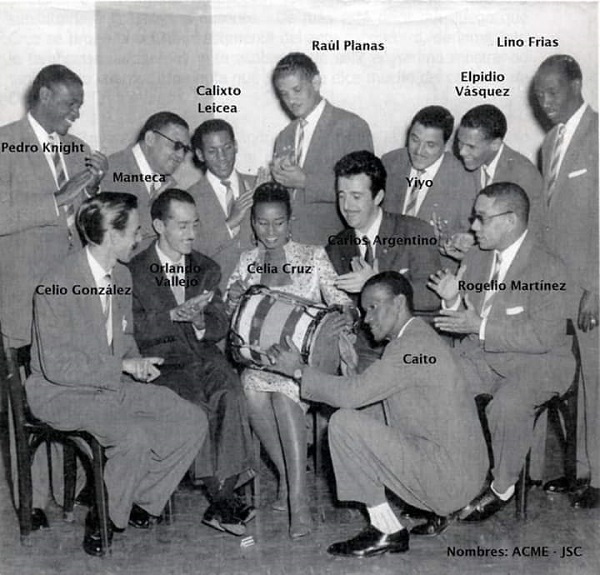
Some time later he joined Arsenio Rodríguez’s Conjunto Todos Estrellas in September 1940, remaining in it until November 1943, leaving his place to Adolfo Oreilly Panacea, to join the Sonora Matancera in 1944, until 1976, where he contributed in an important way both in the composition and musical arrangements, imposing his particular piano solos.

In 1974 he helped found with Armando Sánchez the Conjunto Son de la Loma.

Upon his retirement from La Sonora Matancera, the Puerto Rican producer René López invited Lino, together with Israel “Cachao” López, to revive the descargas he had already recorded in the fifties, assembling a Típica together with “Cachao”.

Sonora Matancea
Sonora Matancea

In his independent years Lino worked with Johnny Pacheco and Carlos “Caito” Diaz.

He accompanied great artists in recordings, in that period in New York, such as La Lupe, Olga Guillot, Daniel Santos, Carmen Delia Dipini, Bobby Capo, among others.

He died on May 22, 1983 in New York, USA.

Lino Frías, who for twenty-two years was the pianist of the Sonora Matancera, composed the very popular Mata Siguaraya in 1951.

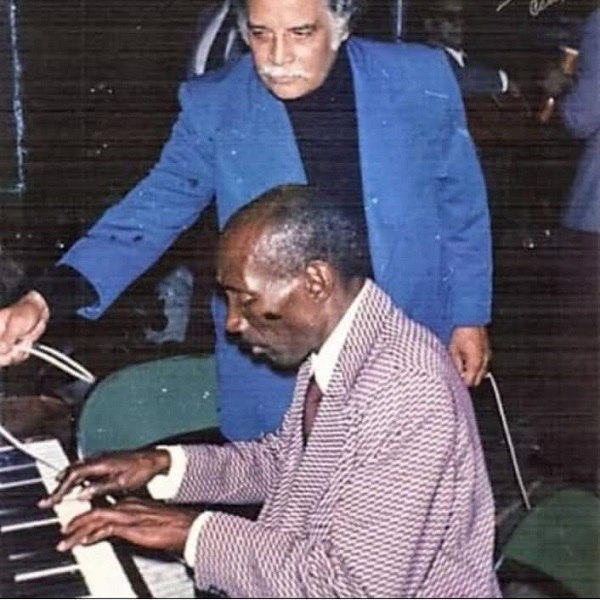
One of the most popular photos of the Sonora Matancera.

In it we can see Lino Frías from his piano looking at Celia Cruz, great interpreter of Mata Siguaraya, together with Benny Moré and Oscar D’León.

Ezequiel Lino Frías Gómez was born in Havana and died in New York in 1983.

Lino studied piano at the Havana Conservatory. For a time, in the 1930s, he played in the Raimundo Pia y Rivero Orchestra, whose singer was Joseito Fernandez. He would later play in the Orquesta Fantasía.

In 1939 he joined the Septeto Carabina de Ases, led by Mariano Oxamendi, guitarist and second voice, and with Bienvenido Grande, singer and harpsichord player, Nilo Alfonso, double bass, José Bergerey, maracas and third voice, Ramón Liviano Cisneros, tres player, Florencio Coco Morejón, bongos player, and Félix Chappotín, trumpet player.

In 1944, Lino joined the Sonora Matancera as a pianist, where he remained until 1976.

In the 1960s, Frías joined the movement that created the so-called salsa music, alongside Fania All Stars, Johny Pacheco, Bobby Rodríguez, Carlos Patato Valdés y Caíto, Carlos Manuel Díaz (Matanzas 1905-New York 1990), among others.

Don Adolfo, a Puerto Rican timbalero, worked with Lino Frías in a group that included some of the most renowned musicians and singers of the 1950s and 60s: Olga Guillot, Daniel Santos, Lucecita Benítez, Bobby Capó, Marco Antonio Múñiz, Carmen Delia Depiní, Chucho Avellaneda, Sergio González Siaba and La Lupe, among others.

In 1974, parallel to his work as a pianist in the Sonora Matancera, Lino Frías created the ensemble Son de la Loma, with the participation of Cuban-Niuyorquinos such as Marcelino Guerra, Rapindey (Cienfuegos 1914-Spain 1996), author of Convergencia, and Pedro Rudy Calzado (Santiago de Cuba 1929-New York 2002).

Celia Cruz y La Sonora Matancera

Due to arthritis, in 1976 Lino left the Sonora. His place is taken by Javier Vázquez, (Matanzas 1936), son of the double bass player Pablo Vázquez.

It is said that the death of Lino Frías, in 1983, was a hard blow for his great and faithful friend Celia Cruz (Havana 1925-New Jersey 2003).

In addition to Mata Siguaraya, Lino Frías composed Pan de piquito, Óyela, gózala, Vamos todos de panchanga, Cañonazo, Vive la vida hoy, Suena mi bajo, Convencida, Afecto y cariño, Has vuelto a mí, Baila Yemayá.

Also Read: Israel “Cachao” López Sobrado en fama y respeto en los años setenta se dedicó a mantener la tradición a nivel supremo

The Rumbón of Caracas! Oscar D’ León, Víctor Manuelle, Grupo Niche, Jerry Rivera and Lion Lázaro unite in a show with Invershow!

The city of Caracas is getting ready for a night of pure salsa and joy! Invershow is pleased to announce an unprecedented event that will make the Simón Bolívar Monumental Stadium vibrate on June 20, 2024.

¡El Rumbón de Caracas! Invershow

An all-star cast of Latin music stars will come together to offer an experience full of rhythm and flavor.

Oscar D’ León: The legendary “Sonero del Mundo” arrives in Caracas to share his passion and music with all attendees.

With decades of experience on the international stage, Oscar D’ León is an undisputed icon of salsa music. His incomparable charisma and talent ensure a night full of emotion and rhythm.

Victor Manuelle: Known as the “Sonero de la Juventud”, Victor Manuelle is a true master of romantic salsa.

His songs, full of feeling and passion, have conquered the hearts of millions around the world. Get ready to enjoy hits such as “Tengo Ganas”, “Que Suenen los Tambores” and many more, in an unparalleled performance.

¡El Rumbón de Caracas!

Grupo Niche: Directly from Colombia with their characteristic style and contagious energy.

Known for their fusion of salsa, cumbia and tropical sounds, Grupo Niche promises a memorable party.

Songs such as “Cali Pachanguero”, “Gotas de Lluvia” and “Una Aventura” will be just some of the gems that will delight the audience.

Lion Lázaro: One of the best known emerging artists at national level, with his unmatched talent he will make the audience dance with hits such as: “Que levante la mano”, “Pa’ mi gente”, “Muevelao” and of course his most recent promotional single “Súmbate”.

Salsa takes Caracas in one night. An event that only Invershow makes possible. For more information, visit mitickera.com and find out the details.

Tickets on sale at:

Mitickera (CCCT, Level C2)

Camil Deli (Los Palos Grades)

Cashea APP

Valeven

Join the biggest rumba of the year and let yourself be carried away by the rhythm of salsa!

Naelyn Avila: Communications Department

Invershow has established itself as a leader in the organization and production of events, offering the most advanced technology, innovation, qualified and committed staff to meet the highest standards of quality for its realization.

¡El Rumbón de Caracas! Invershow

Extensive experience in the world of events!

Our experience has allowed us to produce numerous events of diverse categories such as: concerts, exhibitions, fairs, press conferences, conventions, seminars.

PRODUCTION: We are a leading company in the entertainment market, specialized in pre-production, production and post-production.

SCENOGRAPHY: We offer art and technique of design and decoration of scenic spaces, visual elements that realistically constitute…

ADVERTISING: We have a team of professionals capable of understanding the needs of the consumer, analyzing

AUDIOVISUAL: We help you to create mass communication mechanisms that transmit your message through traditional channels…

PROTOCOL: We have qualified personnel to provide a reception service, personalized attention and can handle…

LIGHTING: We have the best technology in lighting for stages, concerts, effects and architectural ambience.

BULLETIN: We are a leading company in the sale of tickets and access control for all types of events nationwide.

CO-PRODUCTION: Our experience allows us to provide support to production companies, in order to produce quality events.

We are the leading company in the organization and production of events. Our main strength is based on taking care of every detail with the greatest commitment to service, from the organization, production, infrastructure and advertising.

ADDRESS: California de las Mercedes Street, Torre Avila Building. 5th floor

CONTACT: [email protected] [email protected] 0212-505.39.90

Also Read: Gilberto Santa Rosa is a Puerto Rican singer, songwriter and sonero better known as “El Caballero de la Salsa” (The Gentleman of Salsa)

Veruska Verdú woman full of Barloventeña roots currently doing artistic work in Peru

On January 26, 1993 was born in the city of Caracas Venezuela, Cristina Veruska Verdú Mendoza, a woman full of Barloventeña roots.

Currently doing artistic work in Peru,

Veruska Verdú woman full of Barloventeñas

Premiering the songs “ME CANSE DE TI, LA NEGRITA, Y PASITO A PASITO” This is the first advance of “Caminando”, solo album that the Venezuelan artist plans to release this year and which will include songs of her authorship.

Third finalist of “LA VOZ PERU” season 2022, a program of great artistic relevance, where for the first time in the program a participant arrives as a foreign singer to the final.

Singer in Tonny Succar’s orchestra in Peru with Mimy Succar.

Special participation in the video clip, QUIMBARA of the producer Tonny Succar.

Participates hand in hand with the great musician and international producer Tito Manrique creator of the Salsa criolla, nominated to the Latin Grammy and winner of VIÑA DEL MAR. Participating in a solo track on his album Abriendo Caminos with the song and video of the song Taita Bilongo (Peruvian salsa/afro fusion).

From the production of Puerto Rican composer Eduardo Zayas and his project ¨EZ la Banda¨ sings with another legend of salsa singer Rafy Andino singer of the MULENZE Orchestra the song ¨Sabor y Sandunga¨, also recorded a song with Luchito Muños “Dos puntos de vista”.

Veruska fue invitada especial en dos temas de la producción llamada “Huerta de Soneros” con el tema ¨Yo soy la Rumba¨ y otro junto al legendario cantante Johnny Vega (cantante de Cortijo y su Combo) ¨Nació para cantar¨, igual del compositor Eduardo Zayas.

Veruska Verdú, a woman full of Barloventeño roots, is currently doing artistic work in Peru.

Also invited to the production of producer Gerson Zayas, performing the song “Cuando deje de amarte”.

Works with producer and pianist Kike Purizaga, Mario Cuba, singer Carlos Mosquera, with Juan Medrano “Cotito” known as the voice of the cajo of Peru and many more.

Along with producer Alberto Crespo and Daniel Espinoza, recording choirs for the film of Ricardo Rey and Bobby Cruz with Rodrigo Mendoza and Wilmer Lozano.

She is invited to work with international musician Alfredo Naranjo in his project “El Guageo” with singer Edgar Dolor Quijada.

Later they work together with the great Venezuelan musician Nene Quintero in the “Be Jazz Sessions” project also winner of the Pepsi Awards 2019 which sold out all their concerts during the framework of its activities which had international reach.

She sings as a special guest with the classic Sonero del Caribe.

She shares the stage as a duo with Rodrigo Mendoza, singer of Dimensión Latina and of great worldwide trajectory.

She is part of the project “Salsa Master” with the participation of Edgar dolor Quijada, Marcial Isturiz, Rodrigo Mendoza and percussionist Cheo Navarro.

Veruzska was also a special guest in the orchestra “RUMBEROS DEL CALLEJON” of Carlos Padron in which she participates in its production along with the staff of artists such as Wilmer Lozano, Rodrigo Mendoza, Gonzalo Diaz, Memo Arroyave, and international artists such as Tito Nieves, Gilberto Santa Rosa, Maelo Ruiz and Domingo Quiñonez.

He began his musical career when he was only eight years old in the Afro-Venezuelan genre (traditional Venezuelan Afro music). Where he participated in various festivals being in first place in each of them.

Later he joined the ranks of the prestigious “Orquesta Latino Caribeña” of the orchestra system which is directed at that time by the great maestro Alberto Vergara, orchestra with great projection and impact in the country (Venezuela), participating in major festivals in countries like the United States and Colombia captivating the public with his voice.

Pasito a Pasito · Veruska Verdú

All the power of her voice, the flavor and the feeling.

Songs from the album that she is recently finishing the recording of

La Negrita

Pasito a Pasito

Me Canse de ti

It is a great joy for me to share this event with you. My dear friend Veruska Verdu does not stop growing and now she is going all out with the help of Takina Records to make a Celia Cruz Tribute in style.
By: Alberto Valles Salazar.

Also Read: Virginia Ramirez is the artist of the XXI century, the Princess of Piano and Voice, the hope that will save the new generations of anti-music

  • « Go to Previous Page
  • Page 1
  • Interim pages omitted …
  • Page 45
  • Page 46
  • Page 47
  • Page 48
  • Page 49
  • Interim pages omitted …
  • Page 78
  • Go to Next Page »

International Salsa Magazine (ISM) is a monthly publication about Salsa activities around the world, that has been publishing since 2007. It is a world network of volunteers coordinated by ISM Magazine. We are working to strengthen all the events by working together.