• Skip to primary navigation
  • Skip to main content

International Salsa Magazine

  • Home
  • Previous editions
    • 2026
      • ISM / January 2026
      • ISM / February 2026
    • 2025
      • ISM / December 2025
      • ISM / November 2025
      • ISM / October 2025
      • ISM / September 2025
      • ISM / August 2025
      • ISM / July 2025
      • ISM / June 2025
      • ISM / May2025
      • ISM / April 2025
      • ISM / March 2025
      • ISM / February 2025
      • ISM / January 2025
    • 2024
      • ISM / December 2024
      • ISM / November 2024
      • ISM / October 2024
      • ISM / September 2024
      • ISM / August 2024
      • ISM / July 2024
      • ISM / June 2024
      • ISM / May 2024
      • ISM / April 2024
      • ISM / March 2024
      • ISM / February 2024
      • ISM / January 2024
    • 2023
      • ISM / December 2023
      • ISM / November 2023
      • ISM / October 2023
      • ISM – September 2023
      • ISM – August 2023
      • ISM July 2023
      • ISM Edition June 2023
      • ISM – May 2023
      • ISM April 2023
      • ISM March 2023
      • ISM February 2023
      • ISM January 2023
    • 2022
      • ISM December 2022
      • ISM November 2022
      • ISM October 2022
      • ISM September 2022
      • ISM August 2022
      • ISM July 2022
      • ISM June 2022
      • ISM May 2022
      • ISM February 2022
      • ISM January 2022
    • 2021
      • ISM December 2021
      • ISM November 2021
      • ISM October – 2021
      • ISM September 2021
      • ISM August 2021
      • ISM July 2021
      • ISM May 2021
      • ISM April 2021
      • ISM June 2021
      • ISM March 2021
      • ISM February 2021
      • ISM January 2021
    • 2020
      • ISM December 2020
      • ISM November 2020
      • ISM October 2020
      • ISM September 2020
      • ISM August 2020
      • ISM July 2020
      • ISM June 2020
      • ISM May 2020
      • ISM April 2020
      • ISM March 2020
      • ISM February 2020
      • ISM January 2020
    • 2019
      • ISM December 2019
      • ISM November 2019
      • ISM October 2019
      • ISM Septembre 2019
      • ISM August 2019
      • ISM July 2019
      • ISM June 2019
      • ISM May 2019
      • ISM April 2019
      • ISM March 2019
      • ISM February 2019
      • ISM January 2019
    • 2018
      • ISM December 2018
      • ISM November 2018
      • ISM October 2018
      • ISM September 2018
      • ISM August 2018
      • ISM July 2018
      • ISM June 2018
      • ISM May 2018
      • ISM April 2018
      • ISM March 2018
      • ISM February 2018
      • ISM January 2018
    • 2017
      • ISM December 2017
      • ISM November 2017
      • ISM October 2017
      • ISM September 2017
      • ISM August 2017
      • ISM July 2017
      • ISM June 2017
      • ISM May 2017
      • ISM April 2017
      • ISM March 2017
      • ISM February 2017
  • Download Salsa App
    • Android
    • Apple
  • Spanish

Latin Music

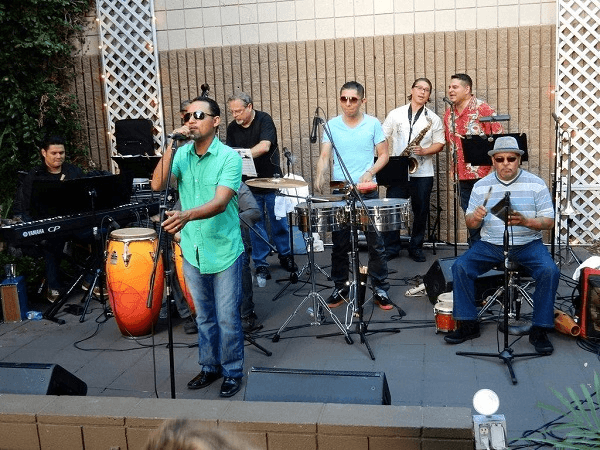
Singer and manager of Cambalache Pancho Chavez

Peru continues to give much to talk about with regards to salsa and the guest we have this time is clear proof of that. We are talking about the talented singer and backup singer Francisco ”Pancho” Chávez, who has been kind enough to talk to us to reveal unpublished details of his life and career in his native country and, of course, in the United States. 

Pancho, who currently serves as vocalist and manager of the Orchestra Cambalache, has a very long career in the U.S. Latin music scene, to the point that his group has established itself as one of the top salsa bands in the northwestern United States. It is a great honor for us to have an artist of this stature in this January 2024 edition.  

Pancho from Cambalache
Francisco ”Pancho” Chavez, manager and lead singer of Cambalache

Pancho’s Musical beginnings 

Pancho’s first contact with music happened thanks to his mother’s family, many of whom were musicians. Although the young man never go into business in his country, he was able to see how to handle things thanks to his relatives until moving to the United States in 1997. 

One or two years later, someone gave him a double album by El Gran Combo de Puerto Rico that, he says, he played a million times because he really liked it. This material was one of his great inspirations to dedicate himself to salsa as a genre and nobody could change his mind.   

It was in Seattle that he started making music with college friends when he was already living in the United States, implying that he was not yet formally dedicated to music. In fact, Pancho was studying business at the time and was looking for a small musical group with other young college students he met around 1999.   

This group turned out to be Cambalache, which he founded along with Colombian musician Camilo Suarez. This would be the first and only group to which the Peruvian has belonged, so everything he knows about music and the industry was learned with this same project.   

He always stood out for his talent to sing and do vocals, but he also learned to play some instruments such as the congas, timbales, bongos, cowbells, among others. He also learned a bit of sound engineering and can work a little in this area, although he recognizes that he is not yet an expert.   

Pancho and Maelo
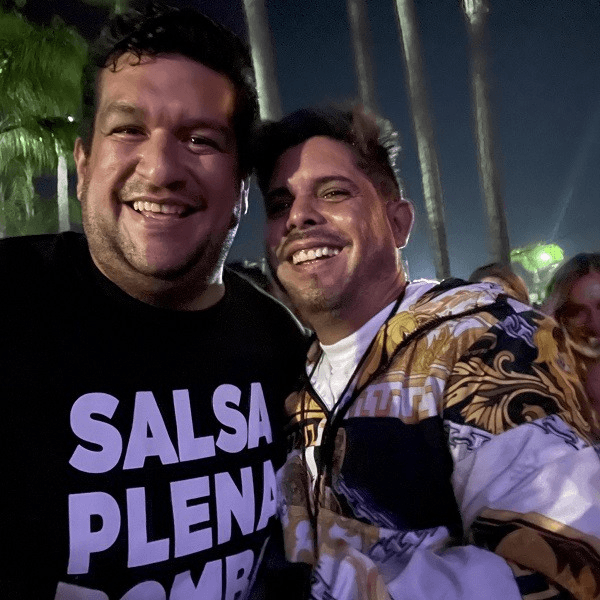
Puerto Rican salsa singer Maelo Ruiz and Pancho Chavez

Recruiting talent for Cambalache   

Pancho says that there were not many Latinos at the university back then, so he and Camilo forged a strong friendship and shared many common interests, especially music. 

At the time, both were facing the economic problems typical of a college student and saw music as an opportunity to make a little extra money during their summer vacation. Camilo knew other musicians, so he contacted them and proposed them to join the orchestra they were creating. 

Pancho and Camilo had thought of a group of five or six people, but there were so many interested in joining the orchestra that the first rehearsals included about 13 people. In the end, solely for economic reasons, they only accepted nine members, of which only he remains.   

All these members, including Camilo himself, ended up working with other artists and groups and obtaining new opportunities in the musical field.   

Clasiqueando 

Cambalache’s first album was ”Clasiqueando”, which was released almost 20 years ago. Pancho assures that the acceptance to the material was very nice, even though the details are not so refined and worked.   

The success they had was a surprise for Pancho and the rest of the group, since the scope they expected was local. “We were surprised that people called us from many countries saying they had heard the album and loved it. There were even companies in countries like Japan and Italy that wanted to buy us songs for distribution” Pancho said on the issue. 

It was a great start for everything that came next for the group in the years to come.   
Pancho and Porfi
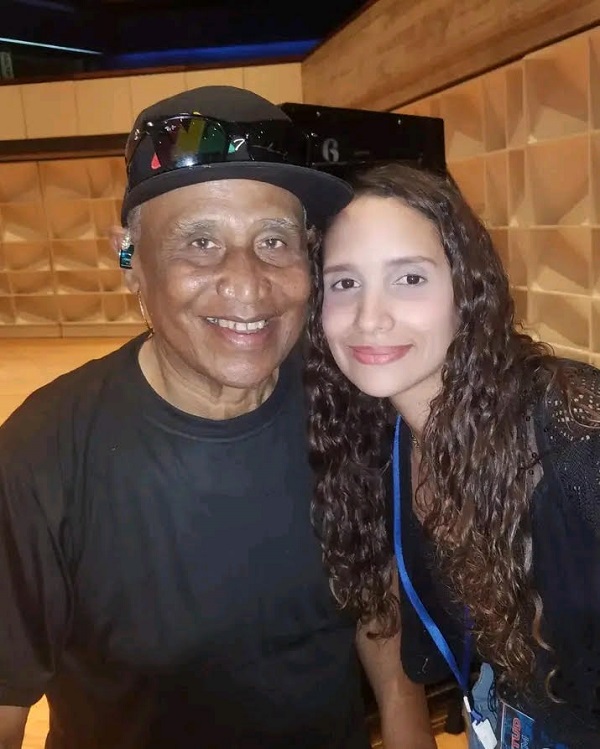
Pancho Chavez and Venezuelan arranger, producer, and musician Porfi Baloa

Why choose Seattle 

Pancho and his musicians chose Seattle as their base of operations because he and all the members of Cambalache have lived there for many years. That is exactly the city the Peruvian chose to make his living there and he never left it. 

It is also in Seattle where they all have their jobs and occupations outside of music and where they meet to rehearse and deal with all the affairs related to the orchestra. 

In the beginning, it was very hard for them because the Latino audience was not very large when they created the project. However, that has been changing, and today, many Latinos live in the city and maintain their Latino customs, including music.   

Other tasks besides music 

In addition to being the vocalist and manager of the orchestra Cambalache, Pancho is also a business administrator and manages his own event company whose main element is, of course, music. In this company, Pancho and his staff are in charge of hiring artists and bands for private events. Of course, Cambalache is involved in the operation of this project. 

The event center managed by the Peruvian singer has a capacity for 500 people and has its own stage. He rents it to hold events there and has all types of clients waiting.   

They have hired artists such as Gilberto Santa Rosa, Tito Nieves, El Gran Combo de Puerto Rico, Willie González, Conjunto Bahía, Frecuencia Latina, among others. 

Read also: Producer and saxophonist Martin Franco talks about his passion for music 

Musical history of Roosevelt Cordova ”El Presidente de La Salsa”

Just as the case of Cuba and Puerto Rico, Peru has also given birth to many salsa exponents worthy of being highlighted and one of them is the talented Roosevelt Cordova, artistically known as ”El Presidente de La Salsa”. 

The sonero has a very interesting career behind him, so we decided to contact him and know a little more about his personal and professional life. Roosevelt responded by thanking us for the opportunity and finally, we were able to agree on a day and time to talk about issues of interest around his figure.  

Roosevelt El Presidente de La Salsa
This is Roosevelt Cordova ”El Presidente de La Salsa”

His taste in music since he was a child 

As has happened with many other salseros, Roosevelt also fell in love with music when still a child, but without knowing at the time that this is what he would dedicate his life to later. 

He always saw his family enjoying music at amateur level, which awakened in him a taste for this branch of art. However, his journey in this world did not begin with salsa, but with Peruvian waltzes and Creole music. It was not until he turned 17 that he became interested in salsa because an uncle of his signed him up for a contest called ”Buscando Un Sonero”, taking third place among 84 participants in total. 

Thanks to his performance in the contest, he was proposed to join the orchestra Camagüey, but his father refused because of all the excesses that an artist must face and he considered that his minor son was not ready for that. On the contrary, he preferred his son to be interested in other activities such as sports and leave music for later.  

In addition to this, the great references in which Roosevelt was inspired to follow his path have been El Gran Combo de Puerto Rico, Willie Rosario, Gilberto Santa Rosa, Héctor Lavoe, La Fania All Stars, among others.   

Roosevelt in Los Angeles 

It wasn’t until Roosevelt, at the age of 25, left for the United States that he could pursue his dreams and become the artist he dreamed he would be.   

He did not initially plan to devote himself to music, as he simply wanted to progress in life like any other immigrant, but it was not long before he decided to take the bully by the horns and return his great passion. It is then when he recorded an entire Peruvian Creole music album, but soon left this genre to return to recording salsa. 

This is how he began to seize every opportunity to participate in salsa orchestras to gain experience little by little.   

The first group he belonged to was La Sonora Santiaguera, which he joined in 1998, but from then on, there were many others with which Roosevelt learned much of what he knows today as an artist. 

Roosevelt in La Sonora and El Conjunto
Roosevelt Cordova belonged to La Sonora Santiaguera and Johnny Polanco Y Su Conjunto Amistad

One of the most important orchestras he belonged to was Johnny Polanco Y Su Conjunto Amistad. After all the experience gained so far, Roosevelt was encouraged to personally look for Johnny to talk to him at El Floridita, where El Conjunto Amistad performed weekly. 

The artist told the leader of the group he was a singer and wanted a chance in his group. After hearing him sing with his musicians that same night, Johnny invited him over to his home to give him a cassette with all the songs he had to learn to work formally with them. Two weeks later, he was already making his debut with Johnny and El Conjunto Amistad. His entry into the group coincided with the farewall of the lead singer, something that was just perfect for Roosevelt. 

Other groups 

After leaving El Conjunto Amistad, Roosevelt continued his career and joined Ángel Lebrón y Su Sabor Latino, with whom he recorded a full album. Some time later, he joined Guapacha Latin Jazz led by the Venezuelan Gil Tower, with whom the Peruvian has an excellent personal relationship, despite having separated professionally. 

In 2011, he became part of Conjunto Oye, which Roosevelt thinks is the best moment of his career because he was able to be himself within the orchestra and express his art with independence, something difficult in his previous groups. It was here that he had the growth he really needed to get ready and to take up greater challenges in the future.   

Solo career  

The information we found about his solo career revealed that Roosevelt went solo in 2019, but he corrected us by saying that, in reality, his first solo album ‘‘Un Nuevo Cantante” was recorded in 2018, which is when he really decided to open paths on his own. 

Although he says he is grateful to all the bands he has played in, he also adds that there comes a point in life where every artist wants to build his own path when he already fulfil the conditions for that. In his case, he already had experience in singing, composing and creating useful contacts, so he gave himself the opportunity to try. The best thing is that his wife supported him at all times and, today, she continues to be his rock in whatever he sets out to do.   

He also noted that he dreams of having his own orchestra someday and that it is important to have dreams in order to get where you want to be.  

Roosevelt singing
Roosevelt Cordova singing on stage


Roosevelt Cordova ”El Presidente de La Salsa”

When we wanted to know the origin of his artistic name, he laughingly told us that it is all abut his first name. Let us remember that Franklin Delano Roosevelt was President of the United States and his last name coincides with the singer’s first name. 

When someone approached him to ask for a picture and asked his name, he said he had the same name as former U.S. President Roosevelt. Since this situation constantly repeated, his wife proposed him to use this to create a stage name for himself. That is how ”El Presidente de La Salsa” was born. 

Llegó La Navidad 

Currently, Roosevelt is currently promoting his new Christmas song ”Llegó La Navidad” of his own authorship. The idea of composing the song came from his wife and daughter, who insisted that it was time for him to release music written by himself.   

So, he started the writing with the chorus and, from there, continued with the rest of the song. This is a technique he uses regularly when composing, as he ensures that people always remember the chorus more than the rest of the lyrics, so he always strives to have a catchy chorus that stands out in the public’s mind. 

Read also: We bring trombonist Félix O. Rodriguez from Santurce to ISM 

If you want to listen to Tasty Salsa tune in to Ritmo Sabor y Salsa with Nesmary J. Gómez

Nesmary J. Gómez H. was born in Venezuela, Miranda state, city of Los Teques on January 9, 1995.

If you want to listen to Salsa sabrosa tune in to Ritmo Sabor y Salsa, there's no other way to listen to it
If you want to listen to Salsa sabrosa tune in to Ritmo Sabor y Salsa, there’s no other way to listen to it

Nesmary is a young student of social communication at the Bolivarian University of Venezuela, Announcer of the Ritmo Sabor y Salsa program.

From an early age she felt attracted to the salsa genre and at 3 years old she sang Pedro Simon (dumb things) of the Colón orchestra when she turned 7 she already danced songs by Oscar D’ León and the Latin Dimension.

Afirma Nesmary  Gómez que gracias a su abuela materna y quién ha sido fiel seguidora del sonero del mundo “Mi abuela Gloria Hueck a ella le debo todo lo que soy una mujer inigualable una madre para mi luego de la trágica muerte de mi mama, fue mi abuela quien me crío y crecí a su lado escuchando desde Óscar D León hasta un Ismael Rivera, Henry Fiol”.

With 12 Years she fell in love with the radio by being a very active listener of all the radios of the town making herself known by almost all the announcers earning the heart and affection for being the number 1 listener of different programs.

Being in the first year of basic education he had the experience of airing an educational program on the community radio Urquia 97.5FM being this radio the first to open its doors to him.

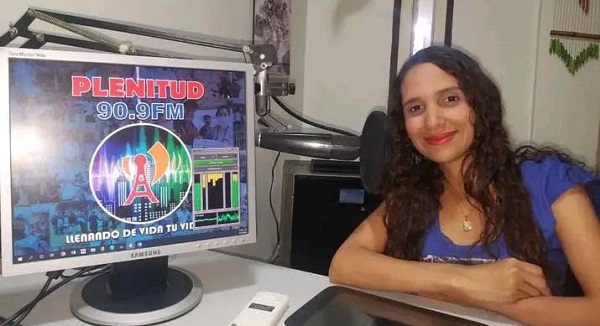
Nesmary Gómez y Carlos Marrero en Radio PLENITUD 90.9FM

After 3 years she is taken into account for a new project as co-producer “El baúl de los recuerdos” on the community radio of Carrizal 91.5FM with the physically disappeared Jhonny Tovar, who with his great support was able to highlight the talent of this young woman, said project had a duration of 2 years.

The opportunities remained present and is called by the director of a commercial radio Carlos Daniel Piñango man who fully trusts this young prospect of broadcasting and is included as a second voice in the El Hormiguero RV program where he was nourished every day more when working with The announcer Mario García is a long-distance man who so far is a reference on Altomirandina radio.

When life began to smile at her a hard blow after the death of her second child made that young woman passionate about the voiceover lose the desire to live “I remember that by that moment I felt the desire to die, depression and pain led me to a bad emotional and physical state.

Thanks to our heavenly father who gave me strength to get up” The best way not to be overcome by pain was a radio booth starting as an audio operator in different live programs, in addition to motivating himself to create a project of the salsa genre called Salsa and Control project that lasted 4 years and was interrupted by situations beyond his will.

This talented young woman continues to prepare herself day by day to be an example of overcoming and show that obstacles can be overcome with perseverance and perseverance “There is no pain that separated us from what we like, on the contrary when you have pain the best thing is to take refuge in what we are so passionate about and mainly in God”.

Nesmary Gómez y Rodrigo Medoza

For 1 year and a half has been airing a proposal that is giving something to talk about Ritmo Sabor y Salsa is Nesmary Gómez’s project on Radio PLENITUD 90.9FM Monday Wednesday and Friday between 2:00 – 4:00pm from where this year 2023.

Has been sharing in exclusive interviews with great exponents of the genre such as Mauricio Silva, Viti Ruiz, Pedro Arroyo, Edgar Joel, Lus “Perico” Ortiz, Gus Colón, Fernando Cancel, Antonio Cartagena, among many other artists.

Who appreciate the existence of this program that gives the audience the opportunity to know their musical trajectory in chronological order.

“I am one of the few people who think and feel that artists must be honored in life, let’s not wait for them to leave this earthly plane to pay tribute and place their songs, let’s give him that great satisfaction that You can enjoy it in life” said space recently premiered the segment “La Clave de la Salsa”.

In honor of that percussion instrument, to those two cylindrical wooden sticks on which many of the music of the Caribbean are built and for this case the salsa known as the key, in this segment the story of 2 songs that sounded insistently and that are still kept in the memories and taste of the public is known.

Nesmary Gómez y Elio Pacheco

Nesmary recently received his speech certificate at the Elac of Santa Rosa University. Being one of the few female voices in Los Teques and all the Altos Mirandinos that has the perfect formula to brighten your afternoons in the company of a great audio operator known as Carlos “Lolo” Marrero the duo that is delighting you and dictating catedra quoting those words of the renowned singer Roberto Lugo “If you want to listen to a tasty salsa tune in to Ritmo Sabor y Salsa there is no hay más na”.

Also Read: Lizna Tovar winner in the category Voice Over of the year 2022 in Canary Islands Tenerife

The Cali Fair is the main and most important event in the city.

Get to know the Cali Fair.

It is the biggest event of our city and a cherished symbol of our cultural identity. Every year from December 25th to 30th, Cali residents reaffirm their unwavering passion for life, salsa, and joy.

The Fair’s origins trace back to an exclusively bullfighting event. Historians note that this celebration lasted an entire month. Priorly, festivities were held in the grand halls within hotels and clubs, with Antillean-inspired music.

The Cali Fair is the most important and the most important event in the city

The Cali Fair in Colombia offers a variety of events, including the Salsódromo parade featuring classic and antique cars, the Superconcert, and the great verbena. This maximum event of the city showcases the folklore and culture of its people.

The Cali Fair has a mythical origin, with its birth rooted in history. Unfortunately, a colossal explosion resulted in the immediate death of nearly 4,000 people and left at least 12,000 injured.

For an entire year, our city experienced a deep depression, compounded by socioeconomic hardships.

Around 1.1 million people attend annually.

The event showcases a historical tour of the city’s streets and the collections of Cali. Participants drive vintage vehicles manufactured during the early 1900s while dressed in period costumes alongside their loved ones.

Symbol of our caleñidad.

Symbol of our caleñidad.

Fair exemplifies the unique qualities of our community, transforming and showing resilience.

This fair is a timely invitation to reconstruct socio-affective bonds, safeguard traditions, and strengthen culture.

The Cali Fair is a unique, inclusive and diverse space where, within the framework of the festival, the exercise of a responsible, civic, supportive and respectful citizenship is valued, which as one makes alive the exercise of citizenship with a deep intention to strengthen vital elements for life in citizenship, in a bid to unite the city in purposes that contribute to the common good in a constructive dialogue that recognizes who we are to meet again in the difference, ratifying that the Cali Fair is and will continue to be joy that inspires.
Cali is Salsa.

If you are in Cali during the Feria you will live the best days of your life, where Salsa, dance, gastronomy and the warmth of its people will make you fall in love with La Sucursal del Cielo.
The city where there are more than 100 dance schools and more than 2,000 dancers and where the World Salsa Festival is held every year.

Cali is Gastronomy.

Cali is a universe of flavors, a city with a rich gastronomic offer, invaluable gift
gastronomic offer, a priceless gift from the cultures that converge in the Sultana del Valle, such as the mestizo peoples of the Andes, the indigenous and Afro-Colombian
indigenous and Afro-Colombian peoples.

To enjoy all these wonderful dishes in Cali there are five gastronomic zones: Peñón, Granada, Ciudad Jardín, Parque del Perro and Zona T (Calle 9 between carreras 56 and 66).

Cali is Tourism.

Santiago de Cali is strengthened in tourism to show the world all its virtues in nature, culture, sports, among others.

Feria de Cali 2023
Feria de Cali 2023

We are a destination that inspires locals and visitors with the human quality of its inhabitants, the traditional flavors and dozens of tourist resources that you have to know. There are more than 44 festivals and 50 events every year, welcome!

Feria de Cali

Also Read: Arabella la Sonera Mayor de Colombia in her Callejón on a Sunday in Barrio with Chico Matanza

Juan Valdez Byte Dominican musician, arranger, composer and singer-songwriter.

Juan Valdez Born in San Juan de la Maguana on June 24, 1962. Son of Mrs. Martha Ramona Ybert and Mr. Jose Ignacio Valdez (Kiko), he is the eldest of 6 siblings (all musicians).

Juan Valdez Byte Dominican musician, arranger, composer and singer-songwriter

He started in his father’s band (also a musician) La Gran Dimensión, he was the first saxophonist of the municipal music band of his town where he studied solfeggio and saxophone with maestro Plinio Feliz. Later he studied piano at the school of fine arts of the same town.

Juan Valdez Ybet at the age of 19 he moved to Santo Domingo, capital of the Dominican Republic, where he became a pianist and arranger for the Rosario Brothers Orchestra, Aramis Camilo, Alex Bueno, Sergio Vargas, Alex Mansilla and Canaveral, pianist for Juan Luis Guerra and 440, then director and arranger for Luis Diaz, Michel El Buenon, Asdrubar, Felix Manuel, Big Bang Congreso del Bolero, Felix De Oleo, Jaqueline Estevez, Anthony Rios, Camboy Estevez, Homenaje a Felix del Rosario, among others.

He was also Director of the Television Programs: Buen Provecho with Yaqui Nuñez, Viceversa with Mariela Encarnación and Georgina Duluc, En Resumidas Cuentas and Sábado de Corporan.

Juan Valdez Ybet he has participated as a pianist in concerts and studio recordings with Aramis Camilo, Alex Bueno, Sergio Vargas, Luis Diaz, Michel El Buenon, Asdrubar, Felix Manuel, Felix De Oleo, popular concerts, Orquesta Sinfónica Nacional conductor Jose A. Molina, Grupo Cañaveral, Wilfrido Vargas, Fernando Villalona, Sandy Reyes, Henry Garcia, Grupo Licuado de Crispin Fernandez, Maridalia Hernandez, Milly Quezada, Juan Luis Guerra, Andy Montañez, Paquito Guzman, Tito Gomez, Zacarias Ferreira, Eddy Herrera, Hermanos Rosario, Kaki Vargas, Hector Acosta y Toros Band, The New York Band, Grupo Ilegales, Manuel Tejada, Jorge Taveras, Rasputin, Pablo Martinez, Marcos Hernandez, Luis Miguel del Amargue, Aniversario Telemicro, among others.

He has made Musical Arrangements (Orchestrator) for: Aramis Camilo, Alex Bueno, Sergio Vargas, Luis Diaz, Michel El Buenon, Asdrubar, Felix Manuel, Felix De Oleo, National Symphony Orchestra, Placido Domingo Jr, Grupo Canaveral, Wilfrido Vargas, Fernando Villalona, Sandy Reyes, Henry Garcia, Milly Quezada, Zacarias Ferreira, Olga Tañon, Manny Manuel, Mayra y Celines, Placido Domingo Hijo, Hermanos Rosario, Kaki Vargas, Hector Acosta y Toros Band, The New York Band, La Coco Band, Grupo Ilegales, Rasputin, Pablo Martinez, Jailine Cintron, Grupo La Linea, Premios Casandra, Primera y Segunda del Merengue, Que Viva El Merengue, Dimanchy, Conjunto Quisqueya, Giselle, Isha, Pakole, Manolé, Yanfourd, David Kada, Shadow Blow, Vakero, Gingers for Brugal, Coca Cola and Pastas La Famosa.

Juan he is also a professor of Piano and Popular Latin Orchestration at the National Conservatory of Music (CNM) since 2001 to date. He has been nominated for the Cassandra Awards since 1987 until the last Sovereign Awards.

Juan Valdez ByteBorn in San Juan de la Maguana on June 24, 1962.

Recognized by the green valley foundation in his town, by the city council and the syndic.

Recognized by the Grammy awards as an arranger and musician.

Arranger:

The Rosario Brothers: El Chicharron, Buena Suerte.

Aramis Camilo: Nena, Si la Ven, El Alicate, Hellow, Al Maestro Con Cariño, La india, A La Talalala, I Will Always Love You, Si Yo Pudiera (Salsa), Ya Te Digo Adiós.

Alex Bueno: Como Nadie (lyrics, composition and arrangement), Soy Rebelde, Una Lagrima Por tu Amor, Nuestro Juramento, Quien Soy Yo Sin Ella, Número C.

Quien Soy Yo Sin Ella, Número Cero.

Sergio Vargas: Marola, La Ventanita, La Pastilla, Bamboleo, Perla Negra, Se Acabo, Me Muero, El Merengue Se Baila Pegao, Dias de

Junio, Yo Soy, Muele, Maquina Olandera, Dudas, Por H o por R (Composicion y Arreglo), Perfume de Rosas, En Esta Casa Humilde, A Dar Amor, Tu Vacilandome, Tu Ausencia, Causas y Azares, Lejos, Ciclon, Que No Halla, Mas Fronteras, Amor De A Ratos, Que Linda, Mujeres, Dile Mas, Baile ae, Si Volvieras, Palo Palo, Eres Tu, Ramona, Musica para la fiesta, Soy Sergio, Ay Ombe, El Dolorcito, Jugue sin saber, Aunque mal paguen ellas, Magia, Sin Ella Sufro, Llore Llore, Lucerito.

Benny Sadel: Que pasará, Te He Prometido, Mis manos en tu cintura (Arrangement and Chorus), Homenaje a Wilfrido, Rompamos El Contrato, Quiero Ser, Por Que Yo Quiero, En Esta Navidad, Por Ti, Un Mal Sueño, Así Es La Vida, Yo Te Daba Amor.

Juan Valdez Byte
Juan Valdez Byte

Wilfrido Vargas: El Baile Del Perrito, Por La Plata Baila El Mono.

Fernando Villalona: Yo Soy Aquel, Sin Ti, Que Chuleria, Hoy Le Pido Al Señor, No Te Rindas (Bachata).

Rubby Perez: I Must Do It.

Eddy Herrera: Carolina, Callejón Sin Salida, Vete, Dueno De Nada, Desde Que Te Conoci, Lo Tiene Todo.

Hector Acosta (El Torito): Menos Que Nada, Sin Tu No Me Quieres, Déjala, Si Me Recuerdas (Salsa).

New York Band: Quien Piensas Tu Que Soy, Me Quedé Con Las Ganas.

Pochi y La CocoBand: Olvida Las Penas.

Diomedes: Balsie, Las Estrellas Brillaran, El Negro Chombo, Locos De Amor (Karen Records).

Kaki Vargas: Los Mosquitos Puyan (Complete Album), No Cojas Sola Pa Allá, El Hombre De Mamá, Muchachita De Los Limones, Arisleyda, Mampote, among others.

Juan Valdez Ybet

Also Read: Betsy Colombian Salsa, Bolero and Son Cubano Singer

  • « Go to Previous Page
  • Page 1
  • Interim pages omitted …
  • Page 56
  • Page 57
  • Page 58
  • Page 59
  • Page 60
  • Interim pages omitted …
  • Page 78
  • Go to Next Page »

International Salsa Magazine (ISM) is a monthly publication about Salsa activities around the world, that has been publishing since 2007. It is a world network of volunteers coordinated by ISM Magazine. We are working to strengthen all the events by working together.