• Skip to primary navigation
  • Skip to main content

International Salsa Magazine

  • HOME
  • Previous editions
    • 2026
      • ISM / March 2026
      • ISM / February 2026
      • ISM / January 2026
    • 2025
      • ISM / December 2025
      • ISM / November 2025
      • ISM / October 2025
      • ISM / September 2025
      • ISM / August 2025
      • ISM / July 2025
      • ISM / June 2025
      • ISM / May2025
      • ISM / April 2025
      • ISM / March 2025
      • ISM / February 2025
      • ISM / January 2025
    • 2024
      • ISM / December 2024
      • ISM / November 2024
      • ISM / October 2024
      • ISM / September 2024
      • ISM / August 2024
      • ISM / July 2024
      • ISM / June 2024
      • ISM / May 2024
      • ISM / April 2024
      • ISM / March 2024
      • ISM / February 2024
      • ISM / January 2024
    • 2023
      • ISM / December 2023
      • ISM / November 2023
      • ISM / October 2023
      • ISM – September 2023
      • ISM – August 2023
      • ISM July 2023
      • ISM Edition June 2023
      • ISM – May 2023
      • ISM April 2023
      • ISM March 2023
      • ISM February 2023
      • ISM January 2023
    • 2022
      • ISM December 2022
      • ISM November 2022
      • ISM October 2022
      • ISM September 2022
      • ISM August 2022
      • ISM July 2022
      • ISM June 2022
      • ISM May 2022
      • ISM February 2022
      • ISM January 2022
    • 2021
      • ISM December 2021
      • ISM November 2021
      • ISM October – 2021
      • ISM September 2021
      • ISM August 2021
      • ISM July 2021
      • ISM May 2021
      • ISM April 2021
      • ISM June 2021
      • ISM March 2021
      • ISM February 2021
      • ISM January 2021
    • 2020
      • ISM December 2020
      • ISM November 2020
      • ISM October 2020
      • ISM September 2020
      • ISM August 2020
      • ISM July 2020
      • ISM June 2020
      • ISM May 2020
      • ISM April 2020
      • ISM March 2020
      • ISM February 2020
      • ISM January 2020
    • 2019
      • ISM December 2019
      • ISM November 2019
      • ISM October 2019
      • ISM Septembre 2019
      • ISM August 2019
      • ISM July 2019
      • ISM June 2019
  • Spanish
  • Download Salsa App
    • Android
    • Apple

May

Liz Rojas and John Narvaez share their experience with the San Francisco Salsa Festival

The San Francisco Salsa Festival is one of the most important Latin music events in The Bay Area and California in general, so we could not miss it. Eduardo Guilarte, senior editor of International Salsa Magazine attended on our behalf to witness firsthand everything that happened over the three days of the festival, as in previous years. 

To learn a little more about the most important facts related to the festival, Elizabeth Rojas and John Narvaez have made room in their busy schedule to talk with us and relate some elements and details of this fifteenth edition, which we are infinitely grateful. 

John, Liz, and Angie at the festival
John Narvaez, Angie Seminario y Liz Rojas

How was the 15th edition of the San Francisco Salsa Festival organized? 

Liz tells us that the organization of this edition started last year immediately following the previous festival to avoid wasting time and handle contingencies as soon as possible. Whenever they complete an edition, they immediately start to organize the next one, since all the details to keep in mind are too many to leave them for another time.

Liz and John always have to confirm orchestras and artists in advance, but they have a very efficient team of friends and partners to help them with everything related to the event. For this reason, every year it has become easier to make the preparations faster and more efficiently.

Novelties compared to other years

As for the novelties of this edition compared to other years, it could be shown that there was much more influx of people wanting to enjoy the activities offered. In addition to that, the dancers made sure that the program included more guests for classes, dance workshops on Friday, shows and competitions, which in turn helped to attract more interested public.

Another innovative detail was the invitation to local teachers in order to attract their students and people from their academies in general.

Latin Rhythm Boys at the festival
The Latin Rhythm Boys playing at the San Francisco Salsa Festival

Adding to all this, Liz and John sought to take much more into account the bachata dancers and artists in order to offer a little more variety in terms of musical genres and not just salsa.

Situation with the Orquesta La Máxima 79

No matter how majestic an event can be, there are always facts that can tarnish a little the satisfaction of organizers with all that has been achieved. This not so pleasant situation was the regrettable absence of the orchestra La Máxima 79, which was unable to travel to the United States at the last minute because of visa related issues.

John described how the days went by and the visas for the members of the group were not issued, to the point that the immigration department had not even conducted the first interviews. Because of this, they began to consider the possibility that La Máxima might not perform their show as planned. 

However, this didn’t stop them from having a card up their sleeve, so replacing La Máxima 79, they hired the amazingly talented Ray de La Paz, whose concert was amazing and delighted the audience with his fabulous show. They had to do much more publicity in the last few days due to the unforeseen change, but fortunately, it was all worth it.

They met Ray de La Paz in Hong Kong in 2004 during one of his shows where they were dancers on stage with him. Although they did not know him at the time, they really liked how he sang, so they called him up for the festival. They proposed to him to participate through Javier Cabanillas, another musician hired for the festival, who was a friend of his and kindly provided them with his contact information to invite him.

Ray at the festival
Ray de La Paz on the red carpet at the San Francisco Salsa Festival

When we wanted to know how the organization deals with last-minute inconveniences, Liz commented that they already had a plan B for such an eventuality. The main organizer of the event, Angie Seminario, and John had already talked about what to do in a situation of this kind. Likewise, they did not wait for the last moment to replace the missing orchestra, but acted quickly and worked on an alternative in parallel. At this point, John highlighted the importance of cultivating good connections and relationships with many musicians, so that they can count on them in emergencies.

Despite everything, they do not give up and will do whatever it takes to bring La Máxima to the festival next year. They are already working on this issue with the company’s lawyer.

The hardest thing to organize the San Francisco Salsa Festival

Together with last-minute absences, another problem which Liz and John face when organizing the festival is the hotel booking process for the time planned. Booking for the selected days and times of the festival and the multiple activities to be developed can turn to a headache, even more so than the organization of the workshops and concerts.

Also, the economic and time requirements can be very complex depending on what an event needs. The fines imposed by the government on venues that exceed the time limits with their events are well known, so planning failures should be avoided at all costs. 

John also added that it is always very complicated to deal with people and the selection process of the best staff to work with is not always easy. ”We always look for people who are equal or better than us. We make sure to surround ourselves with people who are even smarter and more capable than us so that they can see what we can’t” said the dancer and entrepreneur.

John, Anfie, Liz, and Ray at the festival
John Narvaez, Angie Seminario, Liz Rojas, and Ray de La Paz

How John and Liz feel now in comparison to the first festival

When compared this latest edition with the first one, John says that both he and Liz are extremely proud of what has been achieved so far. The artist assures that for him it is a great honor to be able to have Liz by his side, then thanks her for accompanying him and making the festival and the rest of the things they have achieved possible. 

Meanwhile, Liz fully agrees with her partner and also said she feels very proud of what they have accomplished all these years. Since we have seen other artists doing big dance events, John and I set out to achieve the same thing someday and we are very proud to have been able to make it possible” said the dancer ending her speech.

Julio at the festival
Julio Bravo playing the maracas during Ray de La Paz concert

Read also: Kiki Valera and his talented and special family’s great legacy

Los Boleros Latin Band Bandleader Rudy Furlan kindly talked to us

Cuban music has managed to conquer so many hearts around the world that even many who were not born on the island have come to feel a great fascination for it. Such is the case of the bandleader and leader of Los Boleros Latin Band, Rudy Furlan, with whom we were able to talk for a few minutes about his career and his band.

Rudy playing the guitar
Rudy Furlan playing the guitar for the camera

How Rudy got started with music

Although Rudy was born in Guatemala, he moved to the United States when he was just three months old and has lived in the country ever since. His parents loved music and having parties at home, where various members of the family brought out guitars and broke into song to lighten the mood.

Most of his parents’ friends loved to sing boleros and the Latin classics of the time, which Rudy found pleasant and enjoyed musical activities of the adults around him to the point that he wanted to participate in those impromptu gigs within his means.

Soon after, he started taking guitar lessons at the age of nine, but it was at 16 that he started to take music more seriously and realized that he wanted to play the genres his parents always listened to such as bolero, cumbia, Cuban son, danzón, among others. Only drawback he found was that he could not find boys his age who wanted to play that kind of music, added to the fact that the communication possibilities that we enjoy today did not exist. 

So, Rudy had no choice but to start forming small bands with kids who lived on his block and play rock and other local genres that were normally played back then. However, this whole situation changed when he placed an ad on Craigslist (online classified company). That is when he finally managed to get the people he needed to play what he finally wanted to play and how he wanted to play it.

Rudy at the museum
Rudy Furlan at the Motown Museum in Detroit

Los Boleros Latin Band

Rudy finally fulfilled his dream of playing his parents’ favorite music as an adult and managed to recruit a group which he named Los Boleros Latin Band. The artist chose this name as a tribute to the genre he liked to listen to since his childhood, plus he likes how the name sounds.

In the early 2000s, he set up the band’s website to have an internet presence, which was not very common for Latin bands in Northern California in those years. There was so much rock and soul in that area, but Latin music did not have the boom that it has acquired today.

Practically from day one, they managed to have a lot of work in many events, which led several talented musicians to contact Rudy to work with him. One of them is vocalist Felix Samuel, who comes from Cuba and joined Los Boleros Latin Band in 2009. Felix comes from a family of professional musicians, so it was easy for him to integrate into his family’s craft and exercise it with the same talent and momentum as his relatives.

Something interesting to say about Samuel is that his talent began getting noticed, so he was recruited by an HBO producer to soundtrack the film ‘‘Hemingway & Gellhorn’’ with Nicole Kidman and Clive Owen.

Another important member of the band is Zareen Tangerine, who is also a vocalist in the group and joined it in 2000, making her one of the first to join Los Boleros Latin Band.

Another fundamental part of the band is David Somers, who is currently the group’s saxophonist, although he also plays the flute to perfection. 

Among other members, we can also mention bassist David Pinto, percussionist Dominic Cabrera and Oswaldo Carvajal, who also plays for La Moderna Tradición. 

Dominic, David, Felix, David, Rudy, and Zareen
Percussionist Dominic Cabrera, singer Felix Samuel, saxophonist David Somers, bandleader Rudy Furlan, and singer Zareen Tangerine

Great references and inspirations for the music Los Boleros Latin Band makes

A few years ago, Rudy bought an album by Buena Vista Social Club, which he says changed his life completely and made him change direction in terms of the music. He listened to the material every day for months, to the point that he even memorized the songs and started playing them with his guitar.

When forming Los Boleros Latin Band, his musicians played many songs from that album and other great artists such as Eliades Ochoa, Ibrahim Ferrer, Compay Segundo, Omar Portuando and many others. 

Those already mentioned were some of the greatest inspirations Rudy and the members of the band had for their project, this being the vision with which the artist wants to go on through time as far as possible.

Read also: Producer, composer, and guitarist Oscar Almonte innovates with Dominican music

Renzo Padilla “El Borincaico”

Latin America / Peru / Lima

Renzo Padilla (Renzo Antonio Padilla Reyes) was born in Barrios Altos in Lima, Peru, on July 12, 1979. In search of a better future, in 1993 his parents decided to travel to the city of Buenos Aires.

Renzo Padilla. At the age of 15, Renzo began his career as a backing singer with the “New Band Salsa” Orchestra. His time with this group was brief, because later he would join the Orquesta La Original, made up of Peruvian musicians based in Buenos Aires.

Renzo Padilla
Renzo Padilla
Photo of Renzo Padilla in concert

In the year 2000 he moved to New York City, fulfilling a dream that he thought was impossible. That same year he signed a contract with the Grupo Fuerza Juvenil, he participated for two years in this group that was nominated for the Billboard awards in 2002.

He meets the timbalero Jimmy Delgado and he offered him a project to record, so Renzo resigns from Fuerza Juvenil and decides to record with Delgado, his first single titled Salsa con Dulzura. After this recording he was invited to accompany the most renowned artists in the world of salsa, such as: Frankie Hernández, Cheo Feliciano, Ismael Miranda, Cano Estremera, Ismael Quintana, David Pabón, Roberto Roena, Marvin Santiago, Meñique, Ray Barreto. , Adalberto Santiago, Cuco Valoy, Junior González, Paquito Guzmán, Yolanda Rivera, Luigi Texidor, José Bello, Pedro Conga, Cheo Andujar, Anthony Cruz, Luisito Carrion, Maelo Ruiz, Tito Nieves.

Renzo Padilla in concert
Renzo Padilla
Renzo Padilla

Another of his dreams came true when he met the master Willie Colon, he was invited by him to perform a song by Hector Lavoe, in a New York nightclub. He was also invited by El Gran Combo de Puerto Rico on several occasions.

In 2003, Ray Barreto and Adalberto Santiago met again, in which he participated as a chorister at the prestigious Carnegie Hall in New York.

Renzo Padilla in concert 2
Renzo Padilla on stage

In 2006 with bassist Ray Martínez he recorded his second album Alto Nivel, and recorded two songs with the Narváez Orchestra. In 2008 he sang with Jimmy Delgado at the Leyendas de la Salsa Concert, along with a lineup of artists such as Luis Perico Ortiz, Richie Ray, Bobby Cruz, Lalo Rodríguez and Adalberto Santiago.

Renzo also sang in the second part of the Legends of Salsa Concert in tribute to Ismael Quintana, where Tony Vega, Luis Perico Ortiz, Lalo Rodríguez, Héctor Tricoche performed, among others.

In 2009 he was a soloist with the Lavoe All Stars Orchestra, made up of musicians from Willie Colon and Hector Lavoe, such as Professor Joe Torre, José Mangual, Jimmy Delgado, Eddie Montalvo, Reynaldo Jorge, Milton Cardona.

Renzo Padilla and the orchestra

In 2010 he was called by the New York group “Our Latin Thing”, to share the stage with Victor Manuel.

On the other hand, Renzo began to develop his talent as a composer. One of his compositions Donde Esta Tu Amor was recorded by Puerto Rican singer Maelo Ruiz.

In 2014 he got together with Jacob Plasse to form the Melaza Group, in which all the songs are his. In that same year, he participated in the largest salsa group, the “Fania All Stars”, and also sang for the recording of the Narváez Orchestra’s album 65 Infantería.

In 2015 he participated as a backing vocalist and as a singer in the concerts of the piano emperor Eddie Palmieri.

Renzo Padilla singing in concert

In October 2016 he was part of the Eddie Palmieri Orchestra that traveled to Lima to perform a concert at the National Stadium. He has been a vocalist for Los Hermanos Lebrón.

In 2017 he had a successful tour of different cities in Japan. Currently he continues to sing in Lima and on tour around the world.

Renzo Padilla singing

This talented Peruvian singer is considered one of the promises of salsa. He will continue in his rising career of success and international recognition.

Orestes Vilato

North America / USA / New York

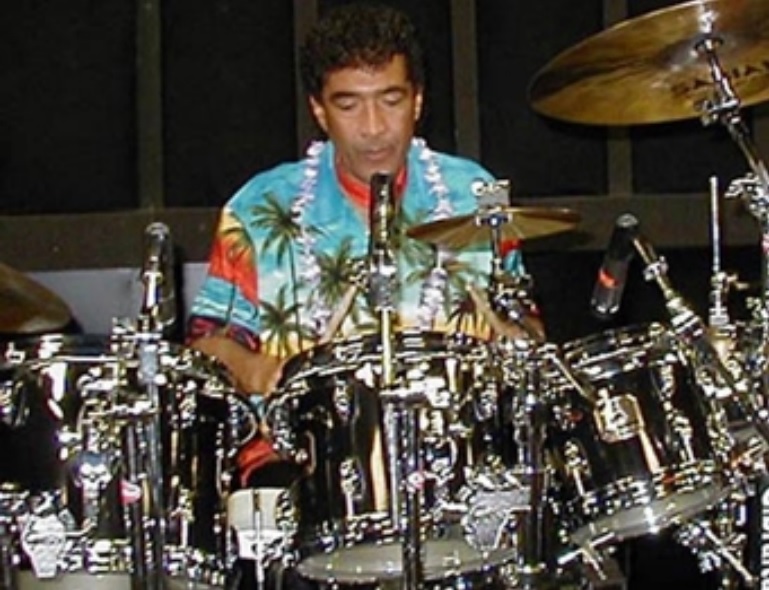
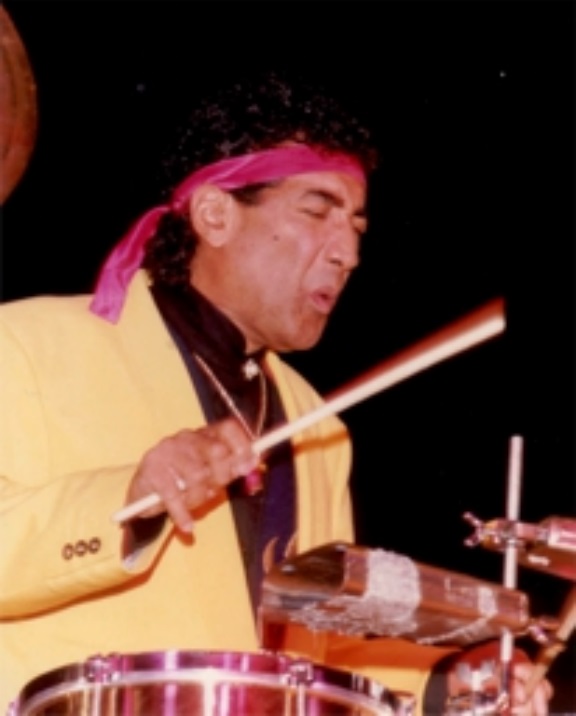
Orestes Vilato. Cuban Multi-Percussionist.

Cuban multi-percussionist, Orestes Vilato, is undoubtedly one of the greatest figures in the history of the Cuban drums known as timbales.

Orestes Vilato
Orestes Vilato

During the fifties, the Vilato family moved to New York, salsa capital of the world, where young Orestes would rise to fame as an innovator of his beloved traditional instrument, “Los Timbales”.  While living in New York for 25 years, Orestes was intimately involved with many musical organizations that played seminal roles in shaping the course of Latin Music around the world.

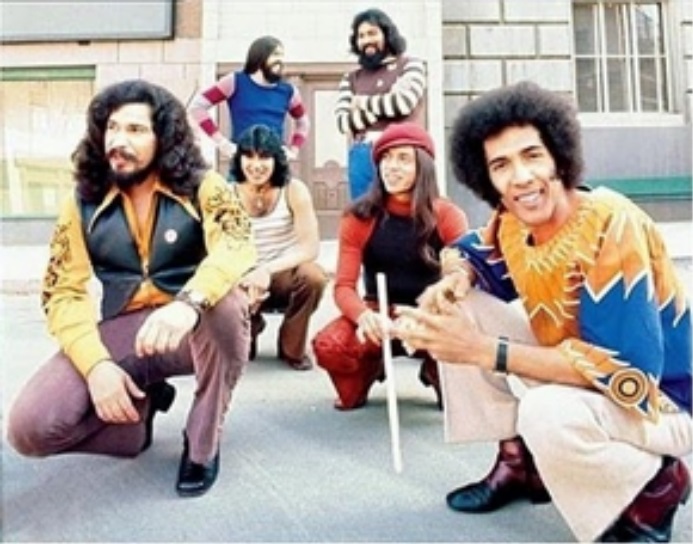
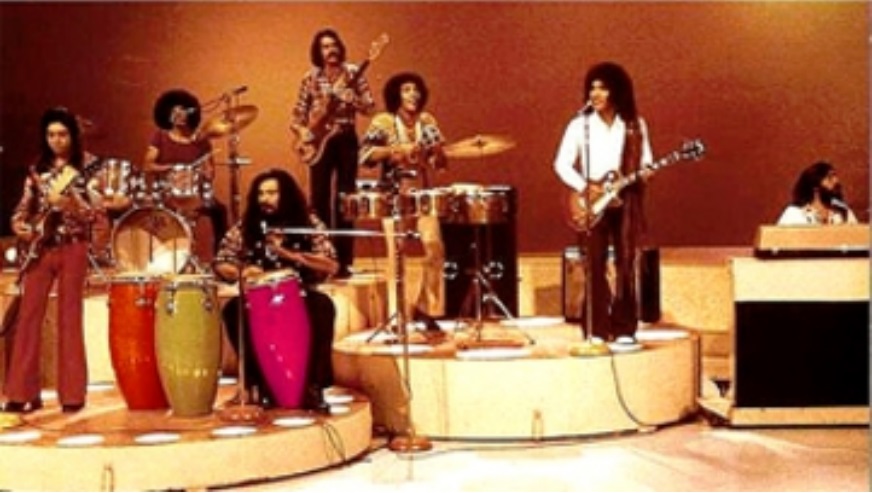
Among the many groups were: Fania All Starts (founding member), Ray Barretto, Tipica 73 (founding member), Los Kimbos (founder-director), Tito Puente, Johnny Pacheco, Cheo Feliciano, Ismael Rivera, Joe Cuba, Eddie Palmieri, Ruben Blades, La Lupe, Celia Cruz, Rolando La Serie, Chico O’Farril, Lionel Hampton, Los Chavales de Espana, Cal Tjader.

Other artists with whom he has recorded or worked include: Winton and Bradford Marsalis, Paco De Lucia, Whitney Houston, Linda Ronstadt, Aretha Franklin, Willie Nelson, Herbie Hancock, McCoy Tyner, Cachao, Andy Garcia, Emilio Estefan, Gloria Estefan, Paquito de Rivera, Dave Valentin, Mongo Santamaria, Armando Peraza, John Santos, Rebeca Mauleon, Giovanni Hidalgo and Raul Rekow.

Orestes Vilato - Photo
Orestes Vilato – Photo

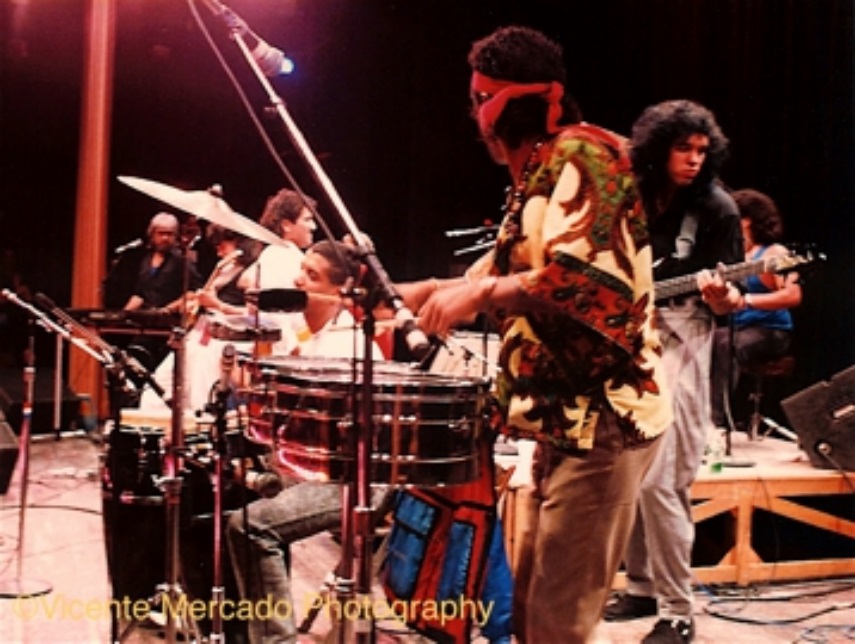
In 1981, Mr. Vilato moved to the San Francisco Bay area, where he still resides with his family.   From 1980 to 1989 he recorded and toured with the renowned Carlos Santana Band.

Orestes was nominated for a Grammy in 1995 (Latin Jazz category) for his CD, Ritmo Y Candela With Patato and Changuito. In 2009 his solo CD Its About Time was nominated for a Latin Grammy.

Orestes has recorded several movie sound tracks that include:  Our Latin Thing, Mambo Kings, Carlito’s Way, Steal Big Steal Little, The Bird Cage, Dance With Me, Just A Ticket, Things To Do In Denver and The Lost City.

He has been a special guest artist in multiple Jazz Festivals around the country and Puerto Rico including the San Jose Jazz Festival.   He has performed and taught at numerous music conservatories including The Berkeley School of Music, UCLA, Fresno University, Standford University as well as many conservatories overseas.

Orestes was given tribute at Yerba Buena Garden, Monterey and San Francisco Jazz Festivals.

Photo of Orestes Vilato

Orestes’ style is one of the most imitated and emulated among recording-performing artists.

Melómana – Salsa has a woman’s name

Latin America / Venezuela / Caracas

The Salsa World by Melómana

Born on July 2 in the populous and musical parish of San Agustín del Sur, she reserves the year of her birth, which, although it does not weigh her down, assures that they are years of hers and each one has earned them by hand.

She studied at the Don Pedro “Fe y Alegría” school, and although he has prepared himself for life, he does not like to talk about titles. Consider that these do not define the human being, because the higher you get, the more humble you must be. At this point in his life, with fewer shocks, he finds himself pursuing another professional dream.

Music lover from her mother’s belly, affirms that they fed her with a bottle to the rhythm of the Matanzas sound and other rhythms of that golden age. She feels a great passion for her friend salsa, the one that doesn’t let anyone down.

Asocosalsa - Melómana - Salsa
Asocosalsa – Melómana – Salsa

She has been President of Asocosalsa San Agustín for nearly 5 years, an Association of Salsa Collectors in Venezuela, which was born 44 years ago by Elio Navas, with the purpose of highlighting and publicizing the great musical talent that Venezuela has. , today is one of the largest collectors’ associations in the country, with almost 48 representatives nationally and internationally.

Attending the different events that take place in some places of the capital city, he realized that very few media echo the great work that the country’s musicians do to show their talent.

This is how she began to leave a photographic record of each one of them, that is when Elio Navas called her to create an Asocosalsa page with the name of the parish where she lives: and that is how “Asocosalsa San Agustín” was born.

The rest is embodied in its two Facebooks, where it seeks to make the micro visible and turn it into a macro; They are already part of the history of salsa, each one contributing their grain of sand to highlight what is ours and that the salsa does not decline. Because as our friend says: It’s no use having everything, if you don’t contribute or leave a positive mark in your time in this world.

Asocosalsa - Melómana - Salsa
Asocosalsa – Melómana – Salsa

And how not to love salsa if he was born and grew up where the thing started!!

Salsa has a woman’s name…

Salsa is the seasoning that gives joy to the days.

Salsa always cheers you up, because its rhythm is contagious and moves the hip to the cadenced woman.

Salsa enters your skin and shakes your veins, it makes you forget all your sorrows with its melodious rhythm. Salsa fills your being with its tasty rhythm and makes your friends enjoy feet, oh what a tasty rhythm!

  • « Go to Previous Page
  • Page 1
  • Page 2
  • Page 3
  • Page 4
  • Page 5
  • Page 6
  • Interim pages omitted …
  • Page 14
  • Go to Next Page »

International Salsa Magazine (ISM) is a monthly publication about Salsa activities around the world, that has been publishing since 2007. It is a world network of volunteers coordinated by ISM Magazine. We are working to strengthen all the events by working together.