• Skip to primary navigation
  • Skip to main content

International Salsa Magazine

  • HOME
  • Previous editions
    • 2026
      • ISM / March 2026
      • ISM / February 2026
      • ISM / January 2026
    • 2025
      • ISM / December 2025
      • ISM / November 2025
      • ISM / October 2025
      • ISM / September 2025
      • ISM / August 2025
      • ISM / July 2025
      • ISM / June 2025
      • ISM / May2025
      • ISM / April 2025
      • ISM / March 2025
      • ISM / February 2025
      • ISM / January 2025
    • 2024
      • ISM / December 2024
      • ISM / November 2024
      • ISM / October 2024
      • ISM / September 2024
      • ISM / August 2024
      • ISM / July 2024
      • ISM / June 2024
      • ISM / May 2024
      • ISM / April 2024
      • ISM / March 2024
      • ISM / February 2024
      • ISM / January 2024
    • 2023
      • ISM / December 2023
      • ISM / November 2023
      • ISM / October 2023
      • ISM – September 2023
      • ISM – August 2023
      • ISM July 2023
      • ISM Edition June 2023
      • ISM – May 2023
      • ISM April 2023
      • ISM March 2023
      • ISM February 2023
      • ISM January 2023
    • 2022
      • ISM December 2022
      • ISM November 2022
      • ISM October 2022
      • ISM September 2022
      • ISM August 2022
      • ISM July 2022
      • ISM June 2022
      • ISM May 2022
      • ISM February 2022
      • ISM January 2022
    • 2021
      • ISM December 2021
      • ISM November 2021
      • ISM October – 2021
      • ISM September 2021
      • ISM August 2021
      • ISM July 2021
      • ISM May 2021
      • ISM April 2021
      • ISM June 2021
      • ISM March 2021
      • ISM February 2021
      • ISM January 2021
    • 2020
      • ISM December 2020
      • ISM November 2020
      • ISM October 2020
      • ISM September 2020
      • ISM August 2020
      • ISM July 2020
      • ISM June 2020
      • ISM May 2020
      • ISM April 2020
      • ISM March 2020
      • ISM February 2020
      • ISM January 2020
    • 2019
      • ISM December 2019
      • ISM November 2019
      • ISM October 2019
      • ISM Septembre 2019
      • ISM August 2019
      • ISM July 2019
      • ISM June 2019
  • Download Salsa App
    • Android
    • Apple
  • Spanish

North America

Timbalero Manolito Rodríguez Debuts a Fresh Sound as Musical Director of La Zónica

On Friday, March 27, 2026, Manolito Rodríguez and La Zónica performed at La Respuesta, a unique venue a hall where diverse musical genres blend, creating an atmosphere where a dance concert serves as the artists’ formal introduction to the public. The ensemble has been working together since August 2025, when the new orchestra was formed under the leadership of the virtuoso timbalero.
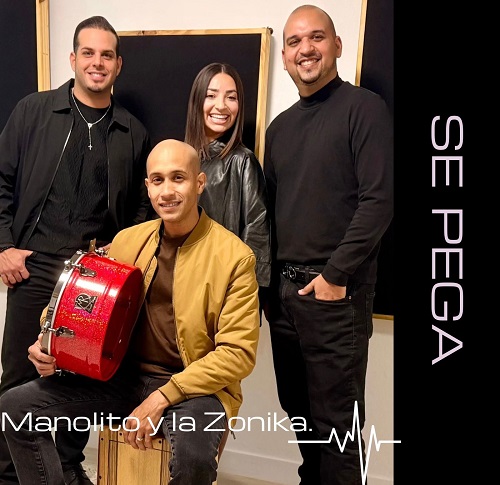
Timbalero Manolito Rodríguez arrives with a renewed energy as musical director of La Zónica

When Manolito began assembling the group, he sought out songs that resonated with him, such as “Gente Luminosa” and “A Mi Medida.” He has also been working with unreleased compositions by Anthony García and Leni Prieto. La Zónica marks a new chapter for the timbalero as the director of his own orchestra. Nevertheless, they continue to perform hits from Manolito’s previous era, now brought to life by the vocal front: Ángel Pomales, Joelis Crespo, and Gabriel Cotto. Manolito has promised to step back from singing to focus entirely on his instrument and musical direction.

The director of La Zónica hopes the dance concert at La Respuesta on March 27 marked a turning point for the band. “It’s an event we’ve been working on with great intensity,” Manolito says with enthusiasm. With energy and conviction, the timbalero adds: “I want to leave a legacy like El Gran Combo de Puerto Rico, like Sonora Ponceña, like Roberto Roena’s Apollo Sound, or Willie Rosario’s band. I want people to say in 25 years, ‘Look, that’s Manolito’s La Zónica.’ It’s a long road, but it’s possible.”

As if that weren’t enough, a new line of Meinl Percussion instruments, inspired by the young Puerto Rican timbalero, is now available.
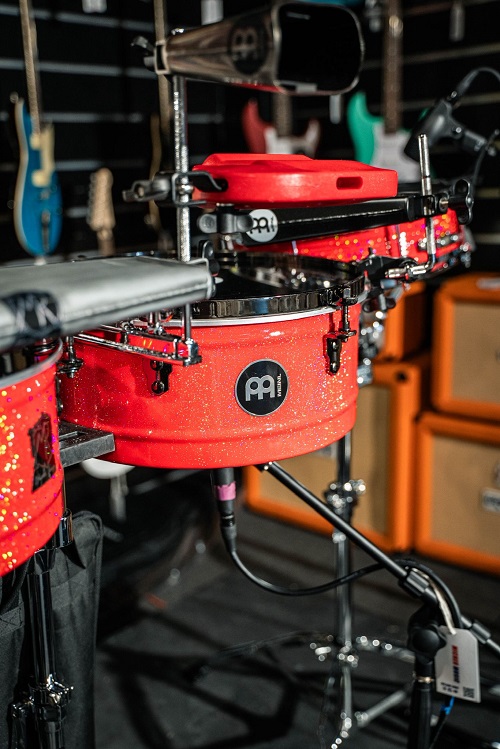
The new line of instruments - from Meinl Percussion - inspired by Manolito
The new line of instruments – from Meinl Percussion – inspired by Manolito

A Prodigy’s Journey

The career of this salsa virtuoso began early. Manolito Rodríguez is a percussionist, musical director, singer, and dancer. While he was still in middle school, piano genius Papo Lucca invited him to record on the 45th-anniversary album, Homenaje a Tres Grandes del Teclado. “At that time, I was just entering the Escuela Libre de Música; I was in ninth grade,” the timbalero recalls. Four years later, upon graduating from the Ernesto Ramos Antonini ELM in San Juan, Manolito earned the timbalero chair with Sonora Ponceña on Papo Lucca’s recommendation. “Don Quique” accepted him, and the young musician remained with the group for four years.

Puerto Rico’s salsa stages watched Manolito Rodríguez grow up, flanked by musical institutions such as Sonora Ponceña, his now-colleague Willie Rosario, and Roberto Roena’s Apollo Sound.

His skill as a percussionist grew by leaps and bounds, and his versatility was tested on multiple fronts. In fact, his vocals were featured with the orchestra Del Sur al Norte, led by the renowned director, arranger, and producer, trumpet master Julito Alvarado. “Julito was the first one who gave me the opportunity to record as a singer,” Manolito acknowledged in an interview.

Manolito Rodríguez and La Zónica performed at La Respuesta, a different venue.

Thanks to his interactions with salsa veterans since childhood, Manolito served as musical director for various youth projects along the way. This included Revolución Juvenil in high school and Manolito y su Trabuco, an orchestra that performed every Wednesday at El Doble Seis in Caguas.

Legacy and Discipline

According to Manolito himself now a music professor—he owes much of his career to the support of his mother and grandmother, who nurtured his musical interests and encouraged him to pursue formal training. Today, the instrumentalist considers himself a “music worker” who approaches his craft with respect and maturity.

His new orchestra, La Zónica, finds him with a different mindset: he wants to concentrate on the timbales and direction. He considers Master Willie Rosario—who treats him as a protégé one of his greatest influences as a timbalero-bandleader. Rodríguez shares that when he read the authorized biography of “Mr. Afinque” (Willie Rosario, El Rey del Ritmo by researcher Robert Téllez) and saw himself mentioned, he was overcome with emotion. “My eyes welled up. I didn’t expect it,” he says. “Since I started taking things seriously, Willie has always mentored me.”

Despite his vast experience, the young musician felt deeply blessed to be chosen to fill in for the leader of “the band that delights” (la banda que deleita) on several occasions, and to perform at the Willie Rosario Centenary concert at the Coliseo de Puerto Rico. “I feel very fortunate because Willie is a very serious person, someone highly respected in the world of salsa with an impeccable career. He is a true role model.”

Following the passing of Roberto Roena, Rodríguez was also entrusted with the legacy of the Apollo Sound—a testament to the confidence and solidity he projects despite his youth. “Wow, yes. It was an honor,” he recalls nostalgically. “Roberto was the first person to give me a big break in Puerto Rico,” referring to his participation in the 1998 Día Nacional de la Zalsa at the Juan Ramón Loubriel Stadium in Bayamón.

The timbalero Manolito Rodríguez

On Sunday, March 22, 2026, Manolito Rodríguez returned to the Día Nacional de la Zalsa as the timbalero and director of La Zónica, a project that debuted last November during Sonora Ponceña’s 70th-anniversary concert. The current lineup includes: Airemyelisse Díaz (bass), Reinaldo Burgos (piano), Savier Díaz (congas), Manolito Rodríguez (timbales/director), Carlos Arroyo (bongo), Víctor “Yuca” Maldonado (baritone sax), Efraín Martínez (tenor sax), Rubén Díaz (trumpet), and Jan Santana (flugelhorn).

Manolito is well aware that “people pay to be entertained,” as he mentioned in a Zoom interview, and he views himself as a craftsman of music. He feels fortunate to be a full-time musician. “That’s what keeps me grounded. I get paid to make music. I am a music worker with great aspirations who trusts his talent and knows he must stay focused.”

Bella Martinez Puerto Rico

Also Read: Sessions from La Loma brings together salsa fans from all over the world in Puerto Rico


Puerto Rican bandleader and musician Diana Sosa talks about her many projects in Nashville, Tennessee

We had a wonderful and very nice conversation with Puerto Rican percussionist, timbalera, conga player, and cuatro player Diana Sosa, who kindly told us about all the projects she has in the pipeline. Her husband and bandmate, guitarist and vocalist Chuck Nelson, put us in touch with her so we could learn more about both the project they share and the one she has undertaken on her own.

Then these are the things the talented Puerto Rican shared with us on this warm Sunday before Easter.

Diana Sosa is playing
Diana Sosa is posing for the camera while playing the timbales

How Diana got into the world of music

Diana was born and raised in Puerto Rico, where she began to love music and play, but not professionally yet. She was just experimenting with some traditional instruments of her homeland, such as the Puerto Rican cuatro, which she even studied with a private teacher. 

At the age of 39, she moved to Nashville, Tennessee, where she finally got her first big opportunities in music, and the background she brought for years helped her a lot. It all started with a short rehearsal she was invited to, and from there, she has done nothing but prove what she is really made of. 

Of course, she keeps studying and preparing to improve every day. When she is not learning to play with fellow musicians like John Santos, she is taking online courses to solve any doubts she may have.

Diana’s first opportunity with The Bicho Brothers

The first serious group that gave Diana the opportunity to develop professionally—and with which she keeps to playing to this day is The Bicho Brothers, a classic rock band whose members really appreciated the contribution provided by Diana. For this reason, it is she who brings that Latin flavor, the product of her heritage and years of training in these genres.

Something that really attracted the audience was that she was the only woman in the group and, incidentally, she played the timbales, which was uncommon back then. In addition, she added atypical sounds to certain well-known songs, which was also remarkable.

Diana Sosa and the rest of the Bicho Brothers
The Bicho Brothers from left to right: Jeff Krinks (guitar and vocals), Ron Krasinski (drums), Diana Sosa (timbales, congas, percussion, and Puerto Rican cuatro), Chuck Nelson (guitar and vocals), and Kenny Zarider (keyboards and vocals)

Another important personality who encouraged her to follow this route was the great producer Bill Cuomo, who told her she was very good at playing but needed to improve her technique. Twenty years later, it can be said that she took him at his Word seeing all she has achieved since then. From that point on, there have been many other projects and opportunities that make her very happy and keep her fulfilled.

Soul Sacrifice

Soul Sacrifice is a Santana tribute band founded in 1969 that has won a high reputation in Nashville by becoming one of the best tributes to Santana to date. The mix of familiar melodies and infectious rhythms they play at every show transports audiences to the biggest classics of the legendary Latin rock group created by Carlos Santana.

The band also includes some of the same members of The Bicho Brothers, such as the cases of Diana and Chuck due to all the years they have spent playing together, but including Cuban musician John Santos. He plays a fundamental role in making people feel they are listening to the original Santana rather than an imitation, which is why both he and Diana are key to the band’s performance.

Diana Sosa with Diana's Mambo Maniacs
Diana Sosa playing with Diana’s Mambo Maniacs

Diana’s Mambo Maniacs

Diana also has her own project, which she decided to call Diana’s Mambo Manics. This Latin music group was founded in the early summer of 2025 as part of Hispanic Heritage Month. In that time of year, there are always many festivals dedicated to Hispanic and Latin music in the United States and around the world, so Diana and a group of musicians she had been in contact with for some time took the opportunity to play wherever they were able to make themselves known.

Among some of the musicians in the band we can mention John Santos as singer and timbalero, whose presence is essential at every show. The group also includes conga player Josvany Cordero, bassist Isoel Villareal, pianist Kenny Zarider, trumpeter Joe Mercado, and trombonist Huge Lindsay.

The main difference between this band, The Bicho Brothers and Soul Sacrifice is that it plays exclusively Latin music, but of the great artists in the 1950s and 1960s who performed at the Palladium Ballroom, the Copacabana, El Corso, Chez José & 3 and 1, among many others. Diana feels that, to a certain extent, she pays tribute to her parents, who used to go dancing and enjoying these rhythms to some of these places in their youth.

However, not all are covers. She is about to release an original song featuring Puerto Rican cuatro player Prodigio Claudio, but she did not have the details to share with us yet.

Diana and Tito Puente Jr.
Diana Sosa Playing with Tito Puente Jr.

Read also: Bandleader and bongosero Ray Degaldo is here to talk about his life and career

Paoli Mejías A Talent Forged in the Streets and Discipline with a New Sound in Latin Jazz

From legendary sideman to the leader of a limitless musical vanguard.

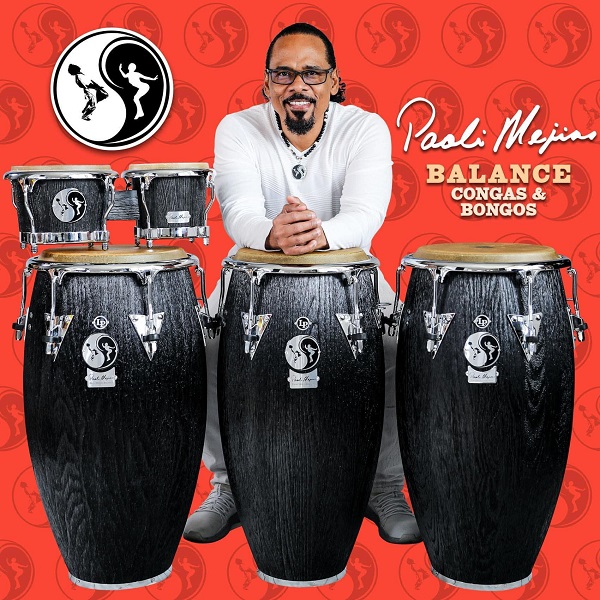
Paoli Mejías is a pivotal figure in the evolution of contemporary percussion, renowned for his seamless fusion of Latin jazz with masterful conga technique.

Paoli Mejias: From accompanying legends to leading a musical vanguard without borders

Paoli Mejias: From accompanying legends to leading a musical vanguard without borders

While he is an exceptional multi-percussionist, his command of the congas has established him as one of the most in-demand soloists in the world.

He is distinguished by a melodic style; he doesn’t just keep time he makes the drums “sing,” utilizing precise tuning and astonishing speed.

After touring the globe alongside icons such as Eddie Palmieri, Tito Puente, Seis del Solar, Chick Corea, and Marc Anthony, Mejías has solidified his status as an international benchmark. His vast musical, folkloric, and cultural knowledge positions him today not only as a percussion virtuoso but as a visionary leading his own quintet.

With a career marked by success, Mejías has produced three high-caliber independent albums: Mi Tambor (2004), which received a Latin Grammy nomination, Transcend (2006), and Jazzambia (2008).

Paoli Mejías, a talent forged in the streets and through discipline

Paoli Mejías, a talent forged in the streets and through discipline

These works have placed the Puerto Rican percussionist at the forefront of the genre, earning glowing reviews in the world’s most influential publications, including JazzTimes, DownBeat, Jazziz, and Modern Drummer.

A Talent Forged in the Streets and Discipline

Born in Río Piedras, Puerto Rico, on March 7, 1970, Paoli discovered his calling at the age of twelve. Inspired by the records of Carlos “Patato” Valdés and Ray Barretto, and the innovation of groups like Batacumbele and Irakere, he bought his first conga and began a self-taught journey.

Without formal teachers, he learned the language of percussion by mimicking the sounds emanating from his favorite vinyl records.

Paoli Mejía with Nuevo Sonido en el Jazz Latino

Paoli Mejía with Nuevo Sonido en el Jazz Latino

His true training took place in the effervescent musical atmosphere of San Juan, absorbing the styles of his mentors in street rumbas.

His professional debut came via Rafú Wagner (former vocalist for Bobby Valentín), and while still a teenager, he was already collaborating with renowned local artists such as José Nogueras, Glenn Monroig, and Charlie Sepúlveda.

The Leap to the Global Stage

His impeccable technique and melodic sensitivity quickly made him the preferred sideman for the greats. For over eight years, he was a key member of maestro Eddie Palmieri’s orchestra, recording on historic projects like Masterpiece/Obra Maestra (with Tito Puente), which won a Grammy Award.

Paoli Mejías is a fundamental figure when discussing the evolution of contemporary percussion

His discography now exceeds 20 commercial productions, including the nominated Acuarela de Tambores.

This exposure to world music enriched his creative fire. As Elmer González noted in Latin Beat: “Through Mi Tambor, Paoli achieves a watercolor of rhythms and textures that make this album one of the best Afro-Latin jazz productions released as a leader, and he aspires to continue a career forged on the stages of the world’s most important festivals.”

Beyond the Traditional Genre

Today, Paoli Mejías’ group offers a style that transcends labels. His proposal fuses the “Salsa Gorda” of the big orchestras with Puerto Rican bomba and plena, incorporating nuances of Greek, Flamenco, Indian, and African music. The result is a vibrant experience where the audience ceases to be spectators and becomes participants.

His versatility was cemented at the Heineken Jazz Festival, where critics highlighted his absolute mastery of minor percussion, timbales, bongos, and ethnic instruments like the Nigerian Udu, hailing him as one of the most complete percussionists of our time.

Paoli was there: Eddie Palmieri, Tito Puente, Seis del Solar, Chick Corea and Marc Anthony

Paoli was there: Eddie Palmieri, Tito Puente, Seis del Solar, Chick Corea and Marc Anthony

Beyond his role as a performer, the “Maestro” shares his knowledge by conducting clinics at prestigious institutions such as the University of Washington, the University of New Mexico, and the Puerto Rico Conservatory of Music.

Sponsored by leading brands like Latin Percussion and Sabian, Paoli Mejías continues to elevate the legacy of Latin jazz into exciting new dimensions.

Member of Santana

Paoli Mejías is a world-renowned percussionist who was a member of the band Santana, led by Carlos Santana.

Joining Santana: Paoli joined the group in 2013, taking over the conga chair. His arrival brought an impressive technical energy and rhythmic depth, establishing him as a fundamental piece of the band’s world tours for several years.

Source: Paoli Mejías

Photos: Paoli Mejías Archives / © Martin Cohen

Also Read: Carlos “Patato” Valdés: One of the Greatest Percussionists in Latin Jazz History

Actress, comedian, and singer Carmen Nydia Velázquez tells us about the best of her career

Through a very kind friend of our editor Eduardo Guilarte, María del Carmen, we have been fortunate to make contact with the extremely talented Puerto Rican actress, comedian, and singer Carmen Nydia Velázquez, with whom we had the opportunity to talk with for our report on Bad Bunny’s Super Bowl halftime show.

It turns out that her career is so fascinating that we obviously had to talk to her and know much more about her artistic journey, both in her native Puerto Rico and abroad. Without further ado, these are the highlights of our conversation.

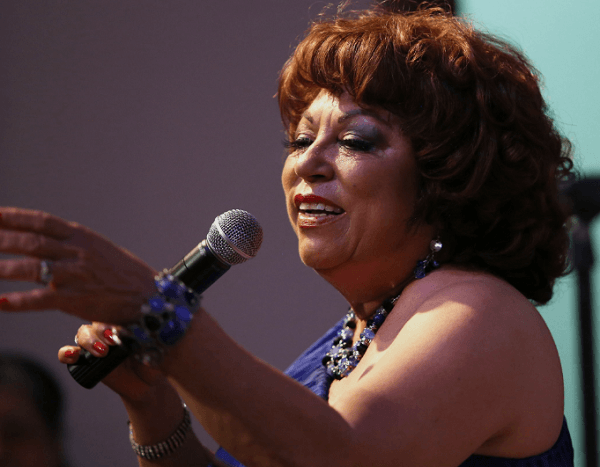
Carmen Nydia cantando
Carmen Nydia Velázquez singing live

Carmen’s education and start in acting

When it came to her academic background, theater always caught her attention, but she also loved to sing. These tastes led her to study drama at the University of Puerto Rico, where she brought out her histrionic talent and showed just how good she would be at doing comedy in the future.

Even before graduating, she already worked in theater and appeared in Francisco Arrivi’s play *Vejigantes*. At that time, she was in her last academic year, and the play was a tribute to the great Puerto Rican actress Lucy Boscana, who had died back then. For many years, Boscana played the character of Toña, and Carmen did the same when it was her turn in this new version, which had so much impact that it led to a film based about the same story.

Then, in the 1970s, she joined the musical group Moliendo Vidrio, led by Gary Núñez, and was there for about 11 years, while doing theater and television. The group took up a lot of Carmen’s time and was part of the New Song movement in those days.

Kiosko Budweiser and Susa Cruz

In 1983, Carmen first portrayed who is still considered one of her most iconic characters to this day, Susa Cruz. Channel 7, known at the time as Teleluz, first aired the comedy segment Kiosko Budweiser, featuring the beloved Susa alongside other iconic characters such as Epifanio, Johnny El Men, Humberto, and El Negrito.

Carmen Nydia and Victor
Carmen Nydia Velázquez (Susa) and Víctor Alicea (Epifanio)

When Teleluz ceased to exist, Carmen took a break from the character to continue her theatrical activities and start singing professionally. However, later, Channel 4, Guapa Televisión, called the actors back to do the segment again, which is when it became a media phenomenon and gave immense fame to the characters, especially Susa and Epifanio.

The high popularity of the show and its stars made them appear on TeleOnce, which continues to air today, and Telemundo, where they are recurrent figures during the regular programming.

People enjoyed Susa and Epifanio so much that they have even hosted a radio show, and both Carmen and Víctor Alicea (Epifanio) will soon celebrate their 38th anniversary as an artistic couple, though they have not yet decided what to do for that day. 

Tiempo de Cantar

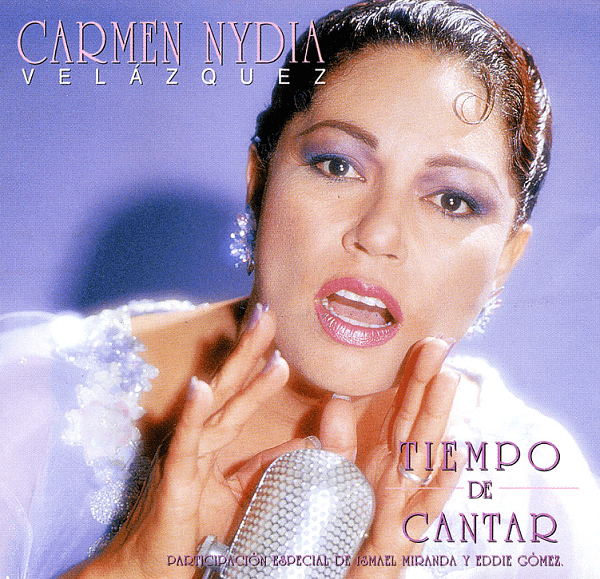
By the late 1990s, she released an album of boleros titled “Tiempo de Cantar,” which was her first solo production. It all started with a show by Susa and Epifanio in the south of Puerto Rico, where they met a musician friend of hers named Cacho Montalvo. 

He has spent many years urging her to go back to singing, but she ws not entirely sure due to all the professional commitments she already had, added to the fact that she did not have very fond memories from the time in which she had to promote her own music of the New Song movement which, being so traditional, did not receive the media coverage it deserved. This killed Carmen’s enthusiasm, as she took for granted that she would never sing professionally again.

However, Montalvo and Carmen’s husband “conspired” to some extent to convince her, and they succeeded. On the album, the artist pays tribute to the songs she grew up with and used to hear on the radio as a child, achieving a result she loved. 

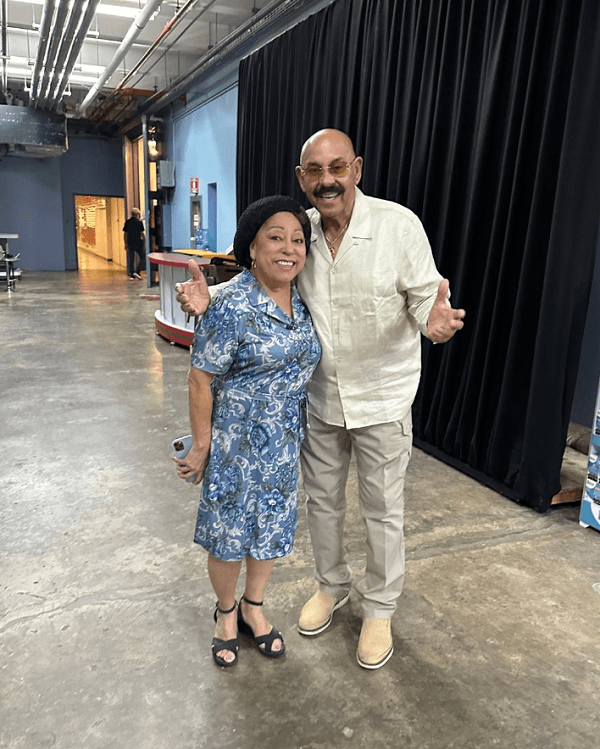
Carmen Nydia and Oscar
Carmen Nydia Velázquez y Oscar D’ León

Her solid background in theater gave her the ability to convey her feelings through her voice and expressions, which made her have a wide acceptance. In fact, she is now a member of the Music Hall of Fame in Puerto Rico, a venue dedicated to romantic and bohemian music that hosts live events featuring artists associated with those genres. 

Hacienda Susa

Among the many projects she was involved in, Carmen also ran a restaurant and activity center called “Hacienda Susa.” She describes this stage of her life as interesting, yet exhausting and demanding at the same time.

Due to the success she had on television, the project did very well, so she and her team were there doing shows for visitors from all over the island practically every day. The problem was that it was too much work for her at the time, and she told us that sometimes, she had to leave the hacienda to perform a show outside, return to meet her commitments there and then close the venue. 

The above, added to the fact that everyday fewer people were coming to the venue and the extremely high rent Carmen had to pay, made her ask herself if it was really worth continuing with the project in exchange for those dividends. That was when she finally got tired of it and decided to close the venue indefinitely to focus on what she was truly passionate about: acting.

Album by Carmen Nydia
Cover of the album ”Tiempo de Cantar” by Carmen Nydia Velázquez

Read also: Background and reactions to Bad Bunny’s halftime show in The Super Bowl

Profile of Raimundo Elpidio Vázquez Lauzurica: The Guardian of the Rhythm in Sonora Matancera

The heir to a musical dynasty that defined the sound of the “Dean of Latin Ensembles”

On March 15, 1934, the Jesús María neighborhood in Havana saw the birth of one of the most solid figures in Cuban syncopation: Raimundo Elpidio Vázquez Lauzurica. Known worldwide as “Elpidio Vázquez,” his destiny was written between the strings of a double bass and the mystique of Cuba’s most iconic musical group.

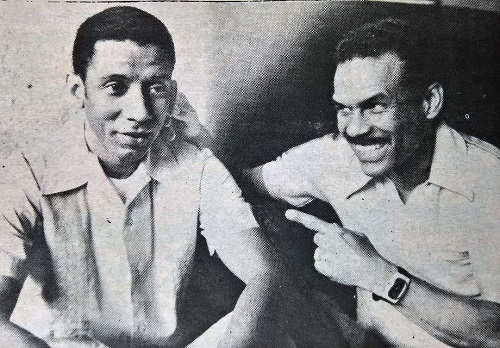
As the son of the legendary Pablo Vázquez Gobín (“Bubú”) and the older brother of master pianist Javier Vázquez, Elpidio did not just inherit an instrument he inherited a historical responsibility.

Javier Vazquez y Elpidio Vazquez

His formal connection with Sonora Matancera began in 1952, when he started subbing for his father. It didn’t take long for his talent to secure him the permanent spot, becoming the rhythmic backbone of the institution until the end of his career.

Legacy and Musical Contributions: Beyond the Double Bass

Elpidio Vázquez was not just a performer; he was a sonic architect. His ability to maintain a precise tumbao allowed Sonora Matancera to preserve that unmistakable harmonic signature that captivated the entire continent.

In addition to his technical prowess, Elpidio shined as a composer, contributing tracks that became essential hits:

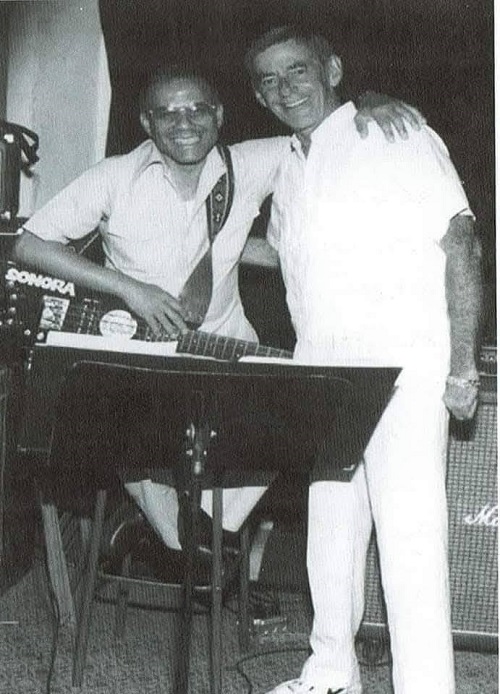
Elpidio y Vazquez y Celio Gonzalez
  • “Le dio con la sartén”: A guaracha recorded by the “Flaco de Oro” (The Golden Thin Man), Celio González, in late 1959.
  • “La negrita inteligente”: A gem performed by the Queen herself, Celia Cruz, in 1961.

His versatility led him to explore other musical horizons. He participated in the vibrant Cuban descarga (jam) sessions alongside Osvaldo “Chihuahua” Martínez and collaborated on historic recordings with giants of salsa and bolero, such as Ismael Rivera, Daniel Santos, Johnny Pacheco, Justo Betancourt, and Roberto Torres.

The Double Bass: Unlike many bassists of the salsa era who quickly transitioned to the Baby Bass or the electric bass, Elpidio is remembered for his mastery of the acoustic double bass, maintaining that organic, deep sonority of traditional, evolved Cuban son.

Recognition and Saying Goodbye to the Stage

One of the most memorable chapters of his career took place in 1989, during the 65th-anniversary celebration of Sonora Matancera. Organized by Gilda Mirós, Elpidio rocked world-renowned stages like Carnegie Hall and New York’s Central Park, reaffirming the band’s timeless relevance.

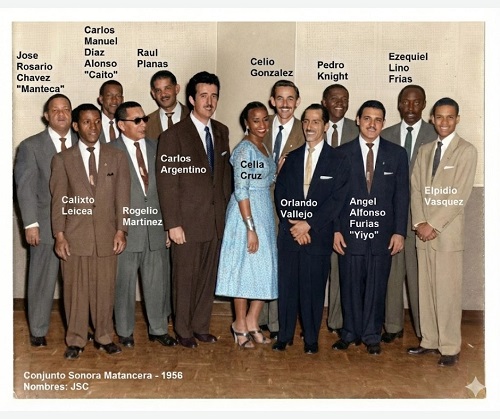
La Sonora Matancera en el año 1956

Career with Sonora Matancera

  • The Historic Handover: In 1952, Elpidio took on the responsibility of replacing his father on the double bass for Sonora Matancera. This was no small task, as he had to maintain the characteristic tumbao that had defined the group’s sound for decades.
  • Sonic Signature: He is credited with imprinting a robust harmonic stamp and a rhythmic stability that allowed Sonora to back the biggest stars of the era (Celia Cruz, Nelson Pinedo, Bienvenido Granda, etc.) with flawless precision.
  • Exile and Continuity: Like the rest of the group, he left Cuba in 1960, continuing his career abroad and participating in Sonora’s prolific New York era and their international tours.

A historical footnote: After the death of Rogelio Martínez, it is said that Elpidio was designated as the group’s musical director by public deed. However, in a gesture of humility and after decades of dedication, he preferred to retire in New Jersey, letting his brother Javier take the helm for the orchestra’s new era.

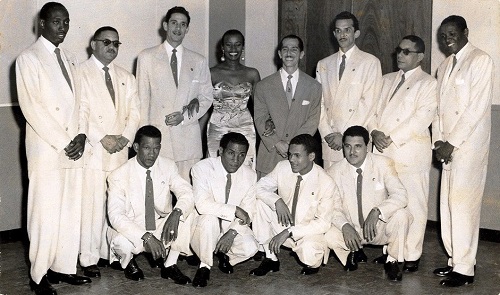
Sonora Mattancera
Sonora Mattancera

Today, the figure of Elpidio Vázquez remains a symbol of artistic fidelity and musical excellence the bridge between the tradition of “Bubú” and the modernity of New York salsa.

Also Read: La Sonora Matancera musical congregation of long trajectory and its sound quality, is one of the most popular in the Caribbean island “Cuba”

  • Page 1
  • Page 2
  • Page 3
  • Interim pages omitted …
  • Page 129
  • Go to Next Page »

International Salsa Magazine (ISM) is a monthly publication about Salsa activities around the world, that has been publishing since 2007. It is a world network of volunteers coordinated by ISM Magazine. We are working to strengthen all the events by working together.