• Skip to primary navigation
  • Skip to main content

International Salsa Magazine

  • HOME
  • Previous editions
    • 2026
      • ISM / May 2026
      • ISM / April 2026
      • ISM / March 2026
      • ISM / February 2026
      • ISM / January 2026
    • 2025
      • ISM / December 2025
      • ISM / November 2025
      • ISM / October 2025
      • ISM / September 2025
      • ISM / August 2025
      • ISM / July 2025
      • ISM / June 2025
      • ISM / May2025
      • ISM / April 2025
      • ISM / March 2025
      • ISM / February 2025
      • ISM / January 2025
    • 2024
      • ISM / December 2024
      • ISM / November 2024
      • ISM / October 2024
      • ISM / September 2024
      • ISM / August 2024
      • ISM / July 2024
      • ISM / June 2024
      • ISM / May 2024
      • ISM / April 2024
      • ISM / March 2024
      • ISM / February 2024
      • ISM / January 2024
    • 2023
      • ISM / December 2023
      • ISM / November 2023
      • ISM / October 2023
      • ISM – September 2023
      • ISM – August 2023
      • ISM July 2023
      • ISM Edition June 2023
      • ISM – May 2023
      • ISM April 2023
      • ISM March 2023
      • ISM February 2023
      • ISM January 2023
    • 2022
      • ISM December 2022
      • ISM November 2022
      • ISM October 2022
      • ISM September 2022
      • ISM August 2022
      • ISM July 2022
      • ISM June 2022
      • ISM May 2022
      • ISM February 2022
      • ISM January 2022
    • 2021
      • ISM December 2021
      • ISM November 2021
      • ISM October – 2021
      • ISM September 2021
      • ISM August 2021
      • ISM July 2021
      • ISM May 2021
      • ISM April 2021
      • ISM June 2021
      • ISM March 2021
      • ISM February 2021
      • ISM January 2021
    • 2020
      • ISM December 2020
      • ISM November 2020
      • ISM October 2020
      • ISM September 2020
      • ISM August 2020
      • ISM July 2020
      • ISM June 2020
      • ISM May 2020
      • ISM April 2020
      • ISM March 2020
      • ISM February 2020
      • ISM January 2020
    • 2019
      • ISM December 2019
      • ISM November 2019
      • ISM October 2019
      • ISM Septembre 2019
      • ISM August 2019
      • ISM July 2019
      • ISM June 2019
    • 2016
      • ISM December 2016
      • ISM November 2016
  • Spanish
  • Download Salsa App
    • Android
    • Apple

North America

Puerto Rican salsa singer Jai Ramos spoke to us of his life and projects

First years and military life

We are talking with Puerto Rican salsa singer Jai Ramos. How are you feeling? Glad to have you here.

I’m feeling fine. Thank you very much for the invitation. I feel blessed to be able to release my songs, but more important is the opportunity I have to be here talking to you and your audience.

person with clave in your hand
During his youth, Jai Ramos listened to ballads and popular music

Why did you choose salsa as your main genre? Was it to do with your environment or your roots?

It had much to do with my roots. When I started to lean towards music, I listened to ballads and various popular music singers that we had in Puerto Rico such as Chuco Avellanet, Lucecita, Lissette, among others. I also listened to other international artists such as Nino Bravo.

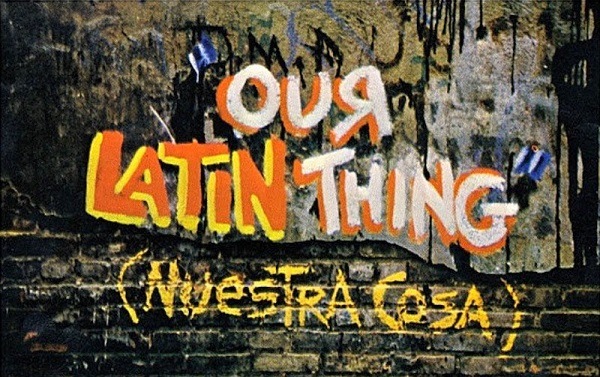
However, what made the switch was to go to the movies to see Our Latin Thing with the Fania stars. That’s when I made the change to salsa.

It’s very interesting because most of the artists you mentioned are boleristas or balladers, in other words, it was a huge change.

That’s correct.

You belonged to the United States Army, how did you combine your military career with your musical activities?

Interesting and very valid question. Even though I became interested in music, the places where I wanted to take music lessons would not accept me. After I finished school and became an adult, I joined the military and started to get exposure to different local music groups after arriving in the United States. That’s how I began to develop in my spare time. Admittedly, it was difficult, but where there’s a will, there’s a way.

I’ve talked to several Puerto Rican artists who were also in the U.S. Army at various ranks.

Did you get to coexist with other artists and salseros there? If so, do you think that helped you pursue your career in music?

Absolutely. Ar first, I met a lot of people who had a lot of musical experience in their spare time even though they were serving in the armed forces and they were the ones who provided me with the knowledge needed to improve this balance. With the passage of time, I also got to know people with musical experience who are very famous today such as Angel Santos. He and I served in the armed forces at the same time and retired at about the same time, so he chose composition, while I chose music performance.

I made a career in the army for 22 years of service. During all that time, I met many people and today I have communication with many of them even though we’re now civilians.

Jai Ramos
Jai Ramos shared with many other salsa artists during his time in the army

What Ramos learned from other artists

You got to share and sing along with artists such as Ray Barreto, Celia Cruz, Grupo Niche, Oscar D’ León, Nino Segarra, among many others. What did you learn from each of them?

Good question. They all taught me that they were still human beings and have a duty to the people in spite of being so famous. They were all very humble and that gave me to understand that they are flesh and blood people like us, but that they achieved success because of their talent.

When I was on a military base in Atlanta, I had an enormous exposure to many of them and it was Mr. Enrique Mercado who invited me to be part of his orchestra, which opened up for many great artists such as Celia Cruz, Ray Barreto, Grupo Niche, Eddie Palmieri, Conjunto Libre and the King of timbales Tito Puente. When I met them, I realized that they are devoted to people, prompted me to move forward in this career.

In musical and technical matters, what did these artists teach you?

Discipline and professionalism. Many people think that music is just entertainment, but those working on it see it as their profession. I also perceived the pride of providing entertainment for people, but always with quality. I understood that idea and started to apply this in my life.

Jai Ramos and family
Jai Ramos with all his family

What did you learn not to do?

Some of the musicians who accompanied orchestras had certain habits that I was able to observe and I became convinced that I did not wanted to copy them. Sooner or later, I knew that such habits would eventually affect anyone.

I want to clarify that I did not see these things in any of the artists. That is why they are so professional, since they always behave well, both on and off stage. At the same time, they are humble enough to speak directly to a person like me who approached them to ask questions and get some advice.

What led you to have a solo career after having belonged to several orchestras?

I’ve always loved to be a lead singer, but I wasn’t the only one in the orchestra. However, something I noticed while being part of an orchestra is that I was always subjected to the music projects of our musical director, which stopped me from implementing my own ideas and my own music. That’s why I ventured to pursue a solo career and implement what God has put in my heart and mind.

You had already told me about your most recent release “Seguimos Como El León”, a tribute to Angel Santos Junior. Why did it take you to embark on this project? Why pay tribute to Angel Santos Junior?

Thank you for that question. I want to keep giving credit where credit is due. Angel and I were very close friends and I’m using the past tense because unfortunately he passed away on 15 April 15 this year. When I came here to San Antonio, he was one of the first musicians I met and I shared with him in many performances. As I mentioned before, he and I were in the army at the same time.

One of the things Angel has achieved was to create many successful compositions. When I decide to launch my own project, one of the people that I had in mind to get an original song was Angel. When I called him and asked if he had something available, he told me that he only has one song, which was “Seguimos Como El León”. By that time, I knew he was having health problems, but I had no knowledge that he had already been evicted.

cover jai ramos
Cover of the song “Seguimos Como El León”

When I listened to the lyrics, I didn’t realize that he was giving a message about himself for when he left. Almost all of his compositions had a joking or small-town tone, but this one is a message of overcoming.

By the time we finished the song, maestro Nino Segarra and yours truly agreed to record the project, master it and record it. Then, I shared it with Angel so that he could listen to it and I told him that we gave him credit. Nino Segarra and I thought it was important that everyone who listened to the song always knew that it was one of his compositions.

When we were getting ready to do the release, we learned that he passed away. So, I proceeded to communicate with his family to ask permission from them to use his image and pay tribute to him with that song. They agreed, so I changed the cover and the title of the song to make it look like a posthumous tribute to Angel and thus to perpetuate his name.

What did you learn from Angel Santos artistically and musically?

He was my mentor in this release. I carried out the project, but he mentored me into most of the steps I followed. The biggest lesson I learned from him in the last years was how to be an independent producer and how to implement the ideas I had in mind.

You have songs with titles such as “Seguimos Como El León” and “Lo Que Dios Me Dio”. We can note that these songs are focused on bringing positive messages and about personal growth. Why are these aspects so important to you? Why reflect them in your music?

I am a servant of the Lord. In my spare time, I am a minister at a church. With all the things happening today, I felt in my heart that I had to be part of the solution and bring a positive message in the midst of what is going on.

My musical proposal is based on messages about personal growth with the idea of getting people closer to the Creator.


cover jai ramos lo que dios me dio
Cover of the song “Lo Que Dios Me Dio”

You can read: This is Roger Danilo Páiz Pérez from Danilo Y Su Orquesta Universal

Perspectives of our senses in being an excellent Dj. and or Musicalizer

It is known as Disc Jockey (also known with the abbreviation of DJ, and its Anglo-Saxon pronunciation of Deejay) or disyóquey to “the person who selects and mixes recorded music of his own or of other composers and artists, to be listened to by an audience”.

Musicalizador: is that person who can extract a periodic and varied list of an equis amount of songs of proven success loaded in the storage system.

Many people and/or dancers express the controversy of the musicalizadores and Dj’s. Of the rumbas salseras of all the times nowadays that call it of (Salsa Guateque and Baúl).

With respect to the content or musical selection that they place or propose each one to give to understand to the public rumbero dancer.

Today there are many musicalizers and above all self-appointed “Dj`s” and they use to call themselves from one day to another and what they do not know that to reach this art they must study and know the art of basic music such as harmonies, theory and solfeggio, to be more complex.

First, one thing is to be a Dj and another musicalizer, both have to know music, but the Dj is responsible for making the mix of one over the other in couplings of the song without distorting the original revolutions or Bpm that makes you feel the harmony of both in one. Making the dancers flow and make the place feel good and cool.


The Djs and musicalizers have a difficult task to bring the creativity and the magic to put to dance to their public some traditional and others demanding to be able to over carry a rumba or danceable night.

This work has been difficult, but also easy to have an ear to select a song with a good sense of lyrics and above all with a harmonious and contagious arrangement that gives pleasure at the time of dancing. Making of them the work of how and when to place the melody to make the hook between the public/dancer.

The public rumbero, dancer…It is hard to understand that going out one night and feeling the atmosphere with something musical that not only you like, but also your partner or whoever you ask to dance likes the theme. Remember that not only the song makes the night enjoyable, but also the sound of the song and the people around you.

On the other hand, there is the audience that is not even a dancer. Many have the bad sense to bother with a drink in hand, dance alone, even take pictures and record the musicians and / or DJs. They get in the way of those who really want to enjoy the dance floor.

The criticisms are constructive to be better for the next dance, remember that there is a lot of music from the older music stirring memories of the public. As well as the newest, given that the music is modern and evolving.

With this I do not mean that all are bad, on the contrary there are good musicians and DJs par excellence that I follow for many years. But there is a large group that is coming out in this that lacks some of the conditions mentioned above.

For DJ’s

  1. If you are going to play a number, play the original. The musicians, composers, arrangers and dancers will thank you for it.
  2. Music with instrument downloads are UNCOMFORTABLE FOR DANCING. Know how to choose which solos are danceable. Give swing to the dancer.
  3. Don’t cut the end of the music, or mix it up. It takes away the happy moment of that final punch.
  4. Just because it’s fast doesn’t mean it’s danceable; listen and see how people enjoy the different tempos in the music.
  5. Hey…the guajira, the son montuno, the chachacha…whatever you call it, it’s part of the genre. Why do you have to ask for it and they look at you funny? Out of every three to four salsas, a chacha goes down very well.

Papo Rosario with his “Salsa de La Buena” at the Spanish Harlem Salsa Gallery Museum

Papo Rosario and his “Salsa de La Buena”

We are incredibly pleased to talk about Luis Alberto Rosario, better known as Papo Rosario, who can be considered one of the most beloved salseros by people who have enjoyed his music for decades. In addition to being a very cloase and kind man to everyone around him, his musical and acting talent is undeniable.

Isidro Infante next to Papo Rosario

After having sung along with El Gran Combo de Puerto Rico for more than 40 years, Rosario makes his debut as a soloist with his first recording work “Salsa de La Buena”, in which he receives the full support of maestro Isidro Infante. Both Rosario and Infante are part of Salsaneo Records, which is close to becoming one of the most important music labels thanks to its contemporary salsa. Thanks to the counselling and advice received from Isidro, Papo has managed to create one of the most important and interesting albums in 2002.

One of the things that makes the album stand out is the great amount of danceable rhythms, positive lyrics, good vocals and fresh sonority. It is evident that the essence of the artist always stands out and he does not let himself be dragged along by what he learned during his time in El Gran Combo. While it is true that there are some traits learned from his friend and former colleague Jerry Vivas, Rosario seems pretty determined to distance hemself from the past and focus on a vastly different future.

Rosario and Infante recording in the studio

What “Salsa de La Buena” is 

“Salsa de La Buena” has many tracks that can perfectly mark a before and after in current Latin music. It starts with a beautiful hymn to optimism and perseverance called “Gracias”, which is one of the four songs composed by the pen of maestro Infante. In the case of “Salsa de La Buena”, the song that gives its name to the entire album, speaks of the connection the singer has with his people as an exponent of the salsa genre. The arrangements and piano melodies are reminiscent of what Richie Ray and Bobby Valentín did when they sang “Los Reyes de La Salsa”.

Isidro also shows his great talent with “Los refranes de Don Yeyo”, a beautiful piano solo where you can see how important the Caribbean collection of proverbs is for the culture at large.

Johnny Cruz with Papo Rosario

Promotion for Papo Rosario’s album 

In a conversation between Papo Rosario and Johnny Cruz, director of the Spanish Harlem Salsa Gallery Museum, the two talk about this recording work and the artist tells how did the whole process go.

Rosario has said that both he and Infante had studied together, but had built their careers separately until they met again recently. That’s when he proposed him to make some arrangements to his songs, but they ended up collaborating to make the album in full. The main objective of the record production was to bring a positive message to the peoples and do what God has put on their shoulders.

In the same way, he pointed out that the salsa museum was quite empty the last time he went, but he was surprised to see that all those spaces have been filling up with truly valuable objects for salsa and its fans.

From there, they gave their regards to Isidro Infante and invited him to the museum to join them and talk about “Salsa de La Buena” and other issues that arise.

Johnny Cruz, Papo Rosario and Rubio Boris

        By Johnny Cruz, ISM Correspondents, New York, New York City

Carlos Molina Jr. presents his book El Legado, 100% real salsa stories

Carlos Molina and El Museo de La Salsa

It makes us very happy to talk today about Carlos Molina Jr. and El Museo de La Salsa in Colombia, place that has become a salsa library with all the information the Latin public wants to get about their favorite artists. The popularity that this proposed reading has achieved is no coincidence, as it compiles the old, the new and the best of our Latin roots to raise anyone interested awareness of it.

Carlos Molina Jr., director of El Museo de la Salsa

Carlos Molina Jr., director of El Museo de La Salsa, knows everything that a proper salsero should know about this beautiful musical genre, since much of his life has been tied to this kind of music and the biggest stars who have excelled in it. Let us not forget that Daniel Santos himself had a chance to hold him when he was just a baby, which says a lot about the path taken by Molina growing up.

This man has so many things to say and stories to tell that he has written a book in which all this data can be read in great detail.

“El Legado”

Molina explained recently that the book arose due to his intention in paying tribute to his father, Carlos Alfredo Molina. He said that he had already worked on a documentary in his honor and wanted to use that same script for a text in which the most important stories of both his progenitor and himself could be read.

Carlos Molina Jr. next to Oscar D’ León

Molina Jr.’s father became known as “El Fotógrafo de La Salsa” in the middle and maintained a close relationship with several of the most famous artists of the genre. Such was his closeness that he even managed to attend many of their rehearsals and forged bonds of friendship that many can only dream of.

It was Molina Sr.’s work as a photographer that allowed his son to create El Museo de La Salsa and turn it into a place of pilgrimage where all lovers of the genre should visit at least once. The room has approximately 700 photographs, which are part of an archive of 300,000 negatives.

Childhood and adulthood surrounded by artists

Molina Jr.’s childhood was definitely not common, as his father’s profession allowed him to stay in constant contact with many big names in the industry. He got to witness a very important number of rehearsals and grew up forming a very special relationship with music.

Johnny Pacheco and Carlos Molina Jr.

He also managed to form the same relationship with several well-known singers, some of whom write the foreword for El Legado such as Willie Rosario, Andy Montañez and Papo Lucca. From the very beginning, the three luminaries maintained a very close relationship with the museum and did not hesitate to participate in the text when asked to do so.

“El Legado” tells completely true stories

The book is already on sale at the Museo de La Salsa, but it can also be found on Amazon, so anyone who wishes to read some of the most important salsa stories ust has to order their copy and enjoy everything the material has to offer.

Molina Jr. also commented that he still expects many more copies of the book to be printed and made available at “la Red de Bibliotecas Públicas de Cali”.

Celia Cruz and Carlos Molina Jr.

        By Johnny Cruz, ISM Correspondents, New York, New York City

Jazz, soul and rap singer Danay Suárez has an incredible talent

Cuban talent for the world

Danay Suárez (https://www.facebook.com/danaysuarezoficial) is a Cuban jazz, soul and rap singer who has achieved a lot of international notoriety in recent years thanks to her talent and dedication in each of her musical works. We are honored to talk to her and this is what we asked her:

Danay Suárez has given concerts in many cities of the United States and Europe

Questions for Danay Suarez

I have been able to see that you are a self-taught artist. Would you say that your musical progress was to do with ear or do you already have any formal education related to music?

I was trained as a lyric singer by one of the most important musical theater companies in Cuba (Opera de la Calle). My training involved rhythm, harmony, music theory and acting classes. Most of my musical progress is to do with living my career, improving my thoughts, stage, recording studios, reaching culture, entering various musical genres and meeting and collaborating with musicians from around the world.

You’ve gone into jazz, soul, reggae, traditional Cuban music and hip hop. However, it can be said that you started with socially conscious rap and were even called “The queen of Latin rap”. Did you experiment with all these rhythms and genres at the same time or in stages during your career?

I sing several genres because I am not static or orthodox, creativity inspires me, I need to move my ideas and explaining them with rhythm is a great and good challenge. Which is why I combine the freedom delivered by jazz gives to move the words and the possibility afforded by rap to create a speech with creating pleasant and danceable moments, perhaps alluding to reggae because this genre allows you to intellectualize while dancing. I listen to a lot of music and think I might go to new places and be inspired by new sounds.

Danay Suárez has been known as The Queen of Latin Rap

We saw a spectacular video of you singing your song “Yo Aprendí” with The Kennedy Center Orchestra. How can two seemingly different genres join in something so special? Tell us how was that experience, how they became interested in you for that project and how these musical elements came together. 

I don’t think two different genres came together, my arrangement for the symphony was very similar in its harmonic and melodic base. Making art and taking all the things we do to a level of excellence is what makes the worlds integrate and complement each other without being forced. For me the symphony is the complete picture, I place a high value on my words and I think many of them are divinely inspired, visual, parables, timeless most of the time. Sometimes I feel that only a symphony can support them at the highest level. Living my lyrics as I have imagined them is a dream come true, a dream fulfilled I want to repeat many times.

You have made music for Netflix and already some video games. How did they come to you? Why do you think they became interested in your music?

Together with my publishing company Kobalt Music, I was given proposals on synchronizing such as these video games, series, and some offers I’ve refused because I belive that they do not build anything of value that can be linked to the message of my songs. You never know what makes people connect with my music, but they can be the rhythm, the word, or the artist.

This Cuban singer has made music for Netflix and video games

Last year, you released your album “Vive”, which is very different from what you have been doing and come any closer to Christian music.

“Vive” is a thoroughly evangelical album because it was born in a period of deeped intimacy with the Lord, all my work is partly biographical and a portrait of the moment I’m living or I got over it, so I can already it. Those who know my work can see the sincerity through the music of each stage I’ve lived. At the end, the most honest approach I can offer to my music is my own testimony.

You have been in the United States and several European countries. How has been the responses of your music been in all these places? How are you perceived there?

The reception has always been extraordinary, people cry at my concerts and I know it’s because they listen to any advice that can transform their lives, they have a vivid and real moment, which is sealed with values that make good. That motivates me to always bring life to my people with the songs, I know that there is a thirsty world from which I’ve been part and that’s why I do not take lightly to make music, I do not even treat it strictly as a business. What I do is I finance my music through other businesses to allow me do things correctly. In the case of the non-Spanish speaking public, my answer is that music is a universal language that is felt and enjoyed in the same way when it’s genuine.

Danay Suárez next to Colombian singer Juanes


Home

  • « Go to Previous Page
  • Page 1
  • Interim pages omitted …
  • Page 99
  • Page 100
  • Page 101
  • Page 102
  • Page 103
  • Interim pages omitted …
  • Page 135
  • Go to Next Page »

International Salsa Magazine (ISM) is a monthly publication about Salsa activities around the world, that has been publishing since 2007. It is a world network of volunteers coordinated by ISM Magazine. We are working to strengthen all the events by working together.