Latin America / Mexico / Guadalajara
Maná is a Mexican quartet founded in 1987 in Guadalajara, Mexico, whose sound is based in Latin rhythms, Latin rock, Latin pop and rock in Spanish. The band features members: Fernando Olvera (rhythm guitar, harmonica and vocal), Juan Calleros (Bass and double bass) Alejandro González (drums and vocals) y Sergio Vallín (lead Guitar and vocals).
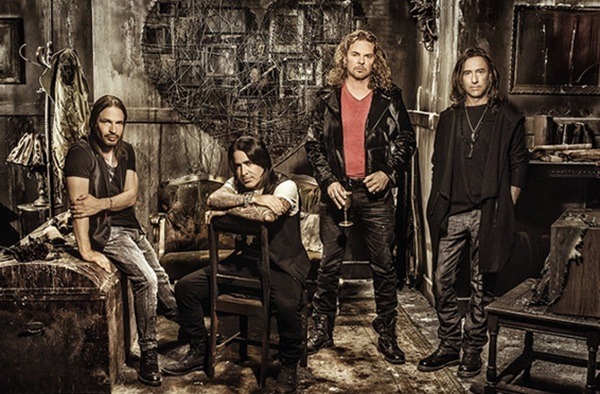
Originally, towards the end of the 70s, Maná had the name “The Green Hat Spies” and played covers of groups they admired, including The Beatles, Led Zeppelin, The Police, The Rolling Stones, among others.
This band soon changed the name to the Green Hat abbreviation and finally in 1980 the quartet adapted to Spanish as Sombrero Verde. Its members Fher Olvera, such as voice; Gustavo Orozco, electric guitar; and Calleros brothers:
Juan on bass, Ulysses the electric guitar and Abraham on drums played in bars in his hometown (Guadalajara-Mexico), as the band will play rock in their own language, being the first groups to venture to compose their own songs, even when the rock in Spanish was not a global trend.
Under the latter name recorded 2 musical productions, which failed to achieve much popularity.
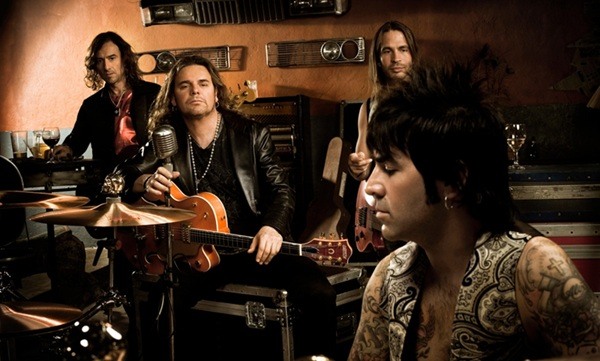
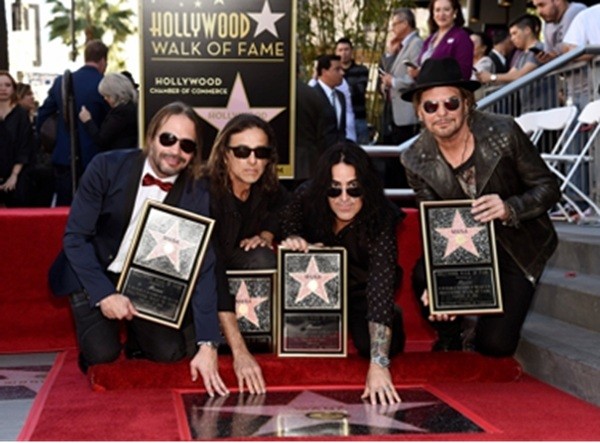
Currently, the group has won multiple awards: 4 Grammy, 8 Latin Grammy, 5 MTV Video Music Awards Video Latin America, 5 Juventud Awards, 19 Billboard Latin Music and 15 Lo Nuestro Awards. In addition, addition, the band has sold over 40 million records worldwide, making it the group’s most successful of all time Latin rock and taking international commercial success in Mexico, Australia and Spain, and so then gaining popularity and exposure throughout Latin America, United States, Western Europe, Asia and the Middle East.
Current Members
- José Fernando Emilio Olvera Sierra (Fher): Vocal, guitar y harmónica
- Juan Diego Calleros Ramos (Juan Calleros): Bass
- Sergio Vallín Loera (Sergio Vallin): Guitar, choirs
- Alejandro González Trujillo (Álex “el Animal” González): Drum, vocal, choirs and percussions
Discography of international Mexican band Maná, are composed of 8 studio albums, 3 live albums, 6 compilation albums, 5 video albums, 54 singles and 37 music videos.
DISCOGRAPHY
Maná (1987)
In search of his international projection: Maná, the name of the group was elected by the significance of the word in the Polynesian language: “Positive Energy”, signed with Polygram record and they released its first album and third -in general- of the band Maná, going on sale on May 12, 1987, an album that would strengthen the Rock movement in Spanish.
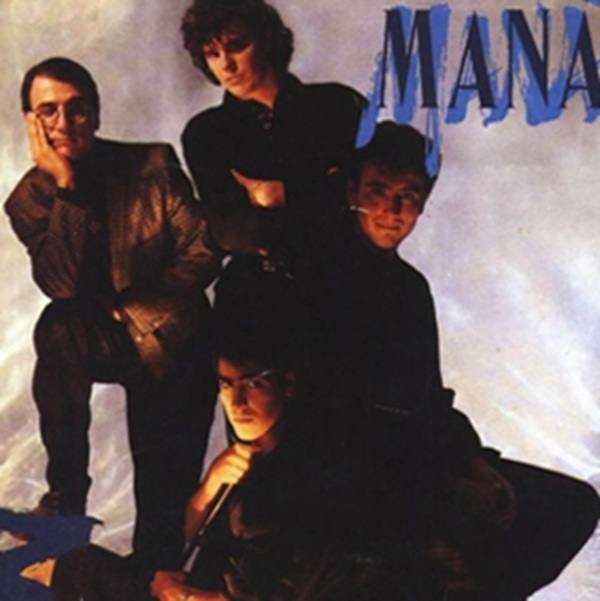
Among its 10 singles are: Robot, Mentirosa, Bailando, México, Entré por la ventana, Cayó mi nave, Mueve tus caderas, En la playa, Lentes de sol y Queremos paz. The total duration of this production is 35:20.
Despite some success, that first recording as Maná not entirely satisfied left the group. Various friction with the seal by the desire to maintain the identity of the group against the commercial interests, led Mana to sign
Falta amor (1989)
This album was released on July 2, 1990, under the seal Warner Music. Includes single known Rayando el sol. After the bad experience of the first album, Fher and Alex were aware of the risks involved in getting into the hands of a producer who saw the group as a purely commercial concept, so chose to start on a path from which there has been sectioned since: they assume production of all discs.
With that in mind recorded the album that does not get success until a year after its release thanks to the single “Rayando el sol”, which becomes the first big hit for Maná; singles “Pérdido en un barco”, “Estoy agotado” and “Buscándola” also come to like people. On the other hand, this album also highlights two songs that are characterized by its high degree of social commitment: “Falta amor”, dedicated to street children, and “La puerta azul” which presents their opposition to drugs.
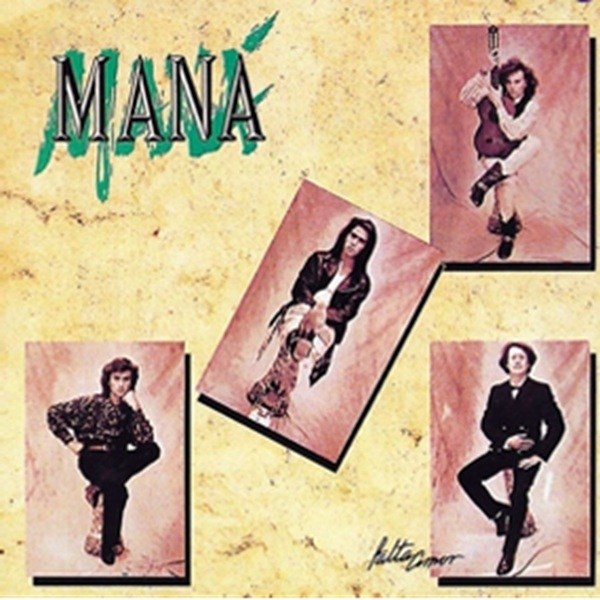
The group performed 112 presentations in Mexico and their first massive concert outside the borders of their country, in the Coliseo General Ruminahui of Quito, Ecuador.
“Falta Amor” album sold nearly 1 million copies, had 10 gold records, 5 platinum, 2 Double Platinum and 1 Triple Platinum, besides been recognized by Billboard as the Best Album and give its authors recognition as best Pop-Rock Group.
¿Dónde jugarán los niños? (1992)
In 1991 Maná facing the first change in its lineup with the departure of Ulises Calleros, who since then is the manager of the group. This meant the arrival of two new members: keyboardist Iván González and guitarist César “El Vampiro” López.
With this new formation recorded in Los Angeles in 1992 ¿Dónde Jugarán Los Niños?, album is a real milestone in the history of the group and the rock in Spanish, staying for 97 weeks on the Billboard list of albums more sold in Latin America. The album was released for sale on 27 October 1992. Currently, ¿Dónde Jugarán Los Niños?, it has sold over 10 million copies worldwide making it the bestselling album in the history of Rock in Spanish.
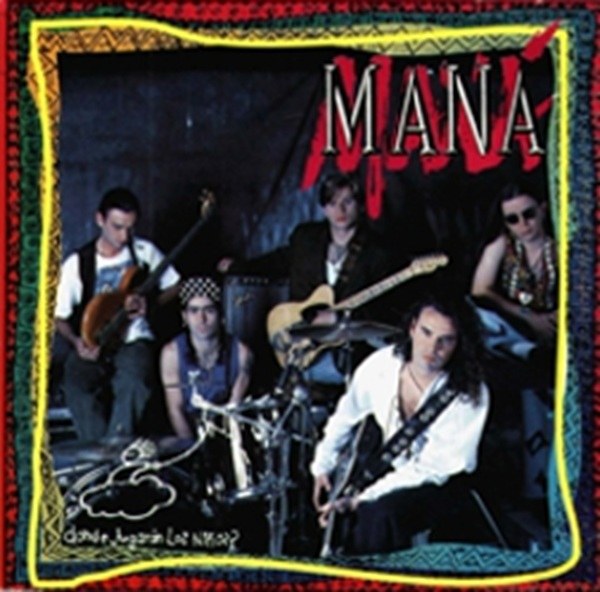
8 singles simple of this production of 12 songs topped the charts of popularity throughout the Spanish-speaking America and have become classics from their repertoire: “Vivir sin aire”, “¿Dónde jugarán los niños?”, “De pies a cabeza”, “Como te deseo”, “Oye mi amor”, “Cómo diablos”, “Te lloré un río” y “Me vale”.
Maná globalization begins in 1993 with a promotional machinery of first level and a series of 268 concerts in more than 17 countries. The tour was a success and positioned the band between the Latino community in the US and in markets like Chile and Argentina.
Argentina and Spain, two historically difficult terrain to reach for non-native Latin artists were also conquered by the phenomenon Maná thanks to the song “Vivir sin aire” reached first place in the charts of both countries, which do not it had happened in 26 years. This single is a worthy prize at MTV Latino Video Music Award for best video of the year.
This album was the only race Mana as a quintet. ¿Dónde jugarán los niños? Was relaunched with two remixes on February 15, 1994.
Maná en vivo (1994)
With its new status in the international scene of Latin pop rock, the trio Fher, Alex and Juan released the live album Maná (1994) with the idea of capturing the energy and every moment they live during their performances.
The double album was recorded between August and September 1994, during the group presentations at the Universal Amphitheatre in Los Angeles, the San Diego Sports Arena in San Diego, the Aragon Theatre in Chicago, the Teatro Gran Rex in Buenos Aires, the Stadium Nacional de Chile in Santiago and the Standard room in Barcelona. Again, Billboard magazine honored with the award for Best Rock/Poplive Album of the year.
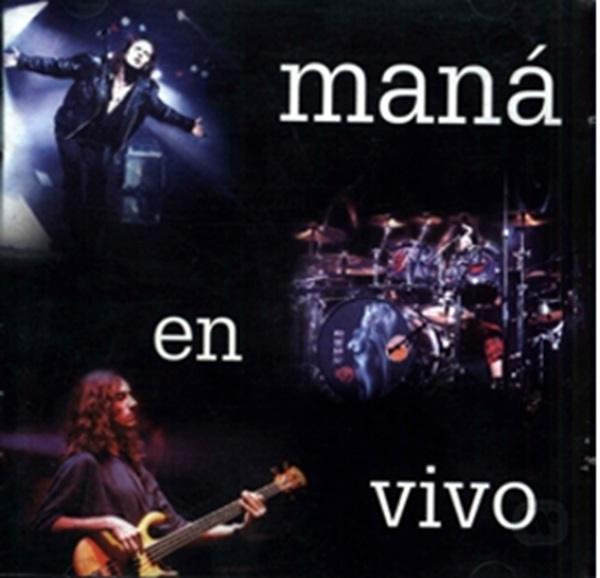
CD1 has 10 singles: De pies a cabeza, Oye mi amor, Refrigerador, ¿Dónde jugarán los niños?, Soledad, Huele a tristeza, Te lloré un río, Estoy agotado, Perdido en un barco y Buscándola.
Likewise, the CD2 has 8 singles: La chula, El rey (José Alfredo Jiménez Cover), Como diablos, Me vale, Rayando el sol, Como te deseo, La puerta azul (Acoustic) (Bonus Track) y Vivir sin aire (Acoustic) (Bonus Track).
Cuando los ángeles lloran (1995)
Anxious to return to their original quartet format, Maná has the third and final change in their lineup. The band auditioned more than 80 guitarists from Mexico, Argentina, Chile and the United States, until finally in Aguascalientes (Mexico) find the talent they were looking, Sergio Vallin, whose sensitivity, technique and versatility to give a luster different sound guitar in the productions of the band. With this new lineup recorded and released the album Cuando los ángeles lloran (1995) between Los Angeles (USA) and Puerto Vallarta (Mexico).
This production is distinguished by a remarkable evolution in the lyrics and the sound of the group. The singles “Déjame entrar”, “No ha parado de llover” and “Hundido en un rincón” not only represented a success in the radio, if not that the corresponding video had a great rotation in the music channels and won several awards for their quality.
The album gave them their first American Grammy nomination and the Billboard Award for Best Rock Album / Latino Pop, which set a record of 6 Billboard Awards received over a period of 3 years.
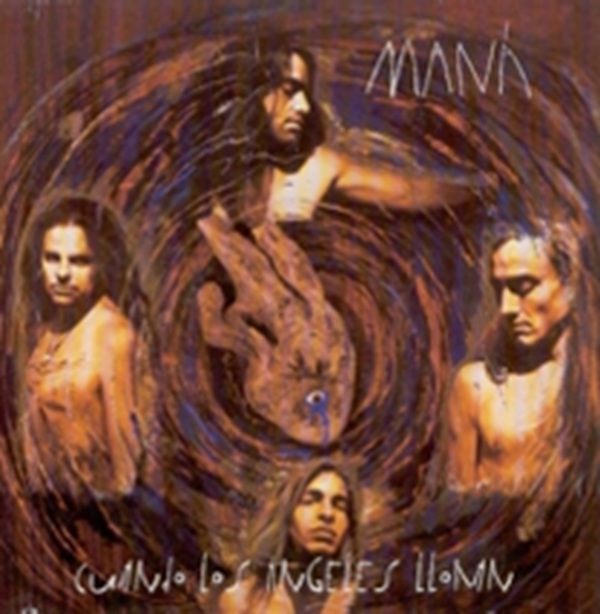
With this new album the group began its tour on May 12, 1995, with a total of 52 concerts in 13 countries, this in a period of less than five months, which showed the phenomenon Maná means.
During their visit to Spain in the same year, the group performed at the Plaza de Toros de Las Ventas with absolute plenty in each place they visited.
Cuando los ángeles lloran with their respective concert tour meant for the band other achievements, such as: the inclusion of Maná at the festival Montreaux Jazz and the Midem conference, which took place in Switzerland and France, respectively, something never before achieved. And they also participated with a theme in the film My Family, at the request of director Francis Ford Coppola.
In mid-April 1996, Maná continued an extensive and expected tour throughout Mexico and the United States. This tour earned them important articles in prestigious magazines such as Rolling Stone, Time, Details, People Magazine, Newsweek and Pollstar.
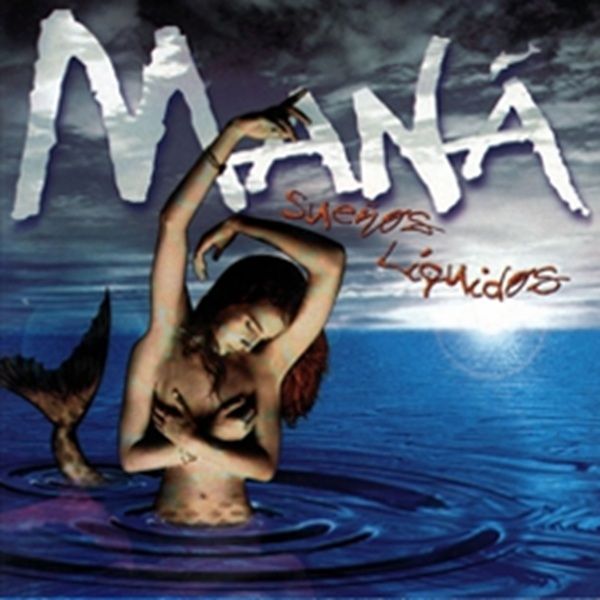
Sueños líquidos (1997)
This production was recorded in a beautiful house overlooking Banderas Bay, in Conchas Chinas. The result was an energetic mixture of rock, pop and Latin rhythms that go from Bossanova to Flamenco, through the Caribbean cadence of reggae. Important singles like “En el Muelle de San Blas”, “Hechicera”, “Clavado en un bar” y “Como dueles en los labios” emerge from this album.
The album was released in October 1997 and was released simultaneously in 36 countries; debuted in the first place on the Billboard Hot Latin 50 Chart.
On 30 January 1998 the band began its most ambitious tour, Sueños Líquidos World Tour in Chile, later visited Uruguay and Mexico.
Among the presentations that stand out in the Sueños Líquidos Tour 98 are those of Bolivia, Colombia, Peru, Costa Rica, Nicaragua, Venezuela, Chile, Puerto Rico, Honduras, and El Salvador.
Other presentations most important are the concerts at the National Auditorium, room in which Maná broke the record, because it was the first time that a band of this genre is presented seven consecutive times on this stage.
Maná signed with the agency Creative Artists Agency (CAA) and thus joined the impressive list of represented that included Bon Jovi, Alanis Morissette, Eric Clapton, Madonna, Depeche Mode, Carlos Santana, Bob Dylan, George Michael, among others.
Their first tour with CAA began August 21, 1998 in Los Angeles and covered more than 30 cities with a total of 36 concerts in arenas and amphitheaters, most of them with sellout. Important presentations took place at the Universal Amphitheatre in Los Angeles and at the Rosemont Horizon Arena, where broken record by becoming the first Latin pop rock group in supply lasts. This tour was the biggest by a Latin pop rock group in America.
The band is nominated for the sixth consecutive time the prizes awarded by Billboard magazine for Sueños Líquidos, in the category Best Pop Rock Album of the Year, taking the coveted prize. On 24 February 1999 they had the first American Grammy awarded to a Mexican pop rock band.
Also in December 1998, Fher receives an invitation from Carlos Santana to participate in his new album. Fher composes “Corazón espinado”, a theme which open borders to the Latin music, after putting this single in the top of Europe, Asia and America. The recording was made in the cities of Los Angeles and San Francisco (California), where was born a great friendship between the two musicians.
As a result of this collaboration, Alex and Fher receive the Grammy award as producers and writers of the song, in addition to performing with Santana toured the United States and Mexico. The group shared arenas, auditoriums and stadiums in the United States and Mexico with Carlos Santana, on an extensive tour that started from 29 July 1999 until December of that same year with a total of 43 presentations.
MTV “Unplugged” (1999)
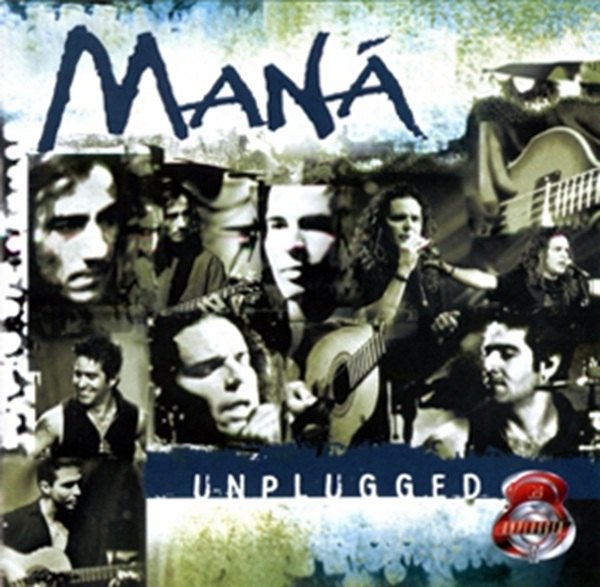
The MTV video chain had spent several years asking Maná their participation in the series of recordings Unplugged, without the band could have access to the request because of commitments that meant their recordings and extensive touring.
Finally the conditions for the project were given, so the March 9, 1999 the band recorded a Maná Unplugged in Miami intimate before an audience of 70 lucky fans. In this material the group includes hits from their repertoire, plus 3 versions in acoustic mode; it also contains the musical interlude Coladito, the percussion duel between Alex Gonzalez and guest musician Luis Conte, where you could appreciate the skill of both performers.
On 22 June 1999 the material is released for sale simultaneously throughout the American continent, reaching the top of sales in the TOP 50 Latin Billboard magazine, which the band repeated the feat of being the only group Latin rock to do so. So far, this album remains one of the best sellers for television, plus it was the first Latin artist to release a material of this type (CD/DVD).
The first single came off of this production, original theme of Juan Gabriel, “Se me olvidó otra vez” remained for more than 5 consecutive weeks in first place in the radio charts for much of Mexico and Latin America. “Te solté la rienda”, by composer Jose Alfredo Jimenez was another hit single that was obtained from this recording.
In early January 2000, Maná receives the news of their nomination for a Grammy in the category of Best Latin Pop Album for their album Unplugged, this was the third consecutive time that the group was nominated for the prestigious awards.
In mid-April in the city of Miami were celebrated the Billboard Awards Latin Music, in which Maná got 2 major awards, the first for Best Rock Album Pop Latino for their production MTV Unplugged, and the second award to the Black Forest for Ecological Foundation, called Spirit of Hope which is given only to those artists who have distinguished themselves by performing altruistic for the environment and human rights.
In these same dates the group receives a recognition granted to them for the first time, the prize awarded by the chain of rental and sale of videos and largest US and music, BlockBuster Award for Best Latin Artist.
In September the group attends the first annual Latin Grammy in which was winning 3 Grammy for their participation in the album by guitarist Carlos Santana.
Revolución de amor (2002)
In early 2002 the band encloses to compose and make demos of what would be their next studio album five years after the launch of Sueños líquidos. Revolución de amor was launched the August 20, 2002, album in which the search for the band shows its essence by mixing with rock sound of the sixties and seventies, and other fusions of Latin music.
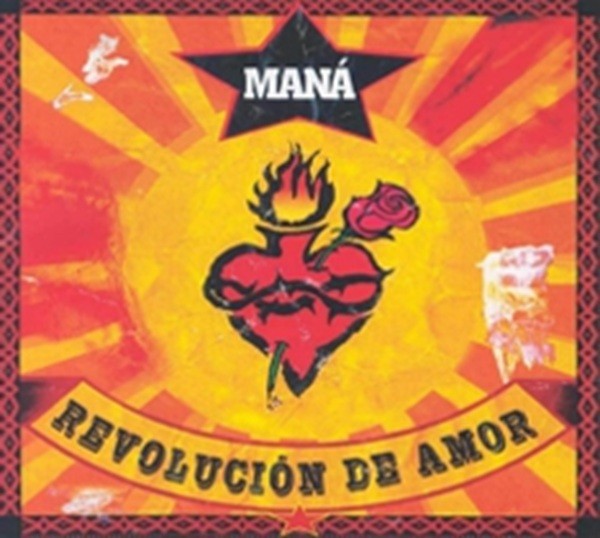
This, their sixth studio album, was shot entirely in Los Angeles between February and May 2002 and was attended by Carlos Santana and his guitar on “Justicia, Tierra y Libertad”, as well as Ruben Blades in “Sábanas frías”. Notably, the guitarist Sergio Vallin, participated, singing the theme “¿Por qué te vas?”, Dedicated to his parents.
Revolución de amor reached the first place in sales in Spain, Latin America and the United States for five consecutive weeks. It had the most outstanding singles “Ángel de amor”, “Eres mi religión” y “Mariposa traicionera”.
Thanks to its success in Italy, the singer Zucchero invited to participate in the song “Baila morena” duet is a success both in America and in Europe. Maná returns the gesture singer to invite him to participate in the song “Eres mi religión” but now in Italian, which was then, included in a special edition of the album Revolución de amor edited in Europe.
On September 29, 2002 Maná adventured to a new two-year tour that would like never before into the international market. The tour took the group not only to cities in the United States, Mexico, Latin America and Spain, also new places like Italy, France, Germany and Brazil. In total, the group performed more than 100 concerts in 24 countries.
During their stay in Europe, the band participated in the special Pavarotti & Friends alongside Zucchero, where they were presented with stars like Bono, Eric Clapton, Lionel Ritchie, Queen, Deep Purple, Ricky Martin and Andrea Bocceli. Maná received two nominations in the 4th annual Latin Grammy that took place in Miami on September 3, 2003, taking the award for Best Rock Album by a Duo or Group.
Esenciales (2003)
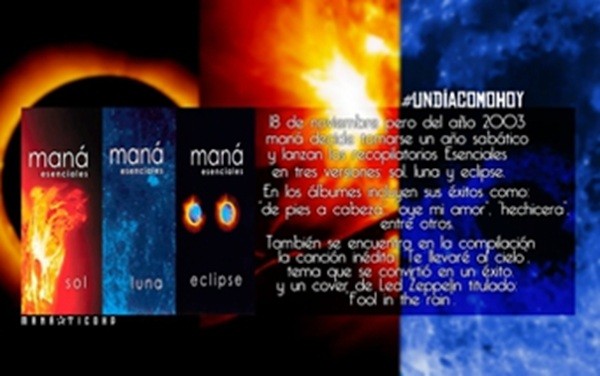
Esenciales is a compilation in CDs released by Maná on 18 November 2003. Three CDs with its most important songs until that year, divided into three themed discs: Sun, with its danceable songs; Moon, its themes with romantic touch; and, Eclipse, the best of their themes in general (which only came out in the Americas). The discs contain an unreleased track: “take you to Heaven”; and Cd Sun contains a cover of Led Zeppelin’s “Fool In The Rain”, recorded by Maná in the disc tribute to the band.
By way of gratitude to their fans, decide to put on sale on December 12, 2004 the DVD called “Acceso Total”, which includes images Revolución de Amor Tour (2002- 2003), never before seen in dressing rooms, allowing the fans have “full access” to experience living Maná on tour.
Amar es combatir (2006)
Miami was the recording of this CD with the band performed a fusion of rock, pop, Latin music, reggae, drum and bass. Produced by Fher and Alex, like their previous albums, Amar es combatir was released on August 22, 2006 and is published in 40 countries worldwide, reaching number 4 on the Top 200 Albums of Billboard magazine in the United States, a record for a production only reached entirely in Spanish for the album Fijación Oral Vol. 1 Shakira.
Their first single, “Labios compartidos”, remained for eight consecutive weeks at the top of the Latin charts radio and is named among the most recognized Latino US media as one of the most heard songs and awarded 2006.
The singles that followed, “Bendita tu luz” (a duet with Juan Luis Guerra), “Manda una señal” and “Ojalá pudiera borrarte” are also positioned at the top of the charts. These add a fifth single, “El rey tiburón”, which is managed to stand out because it is becoming less common than a 5 easy production derived therefrom, given the difficult situation being experienced by the industry.
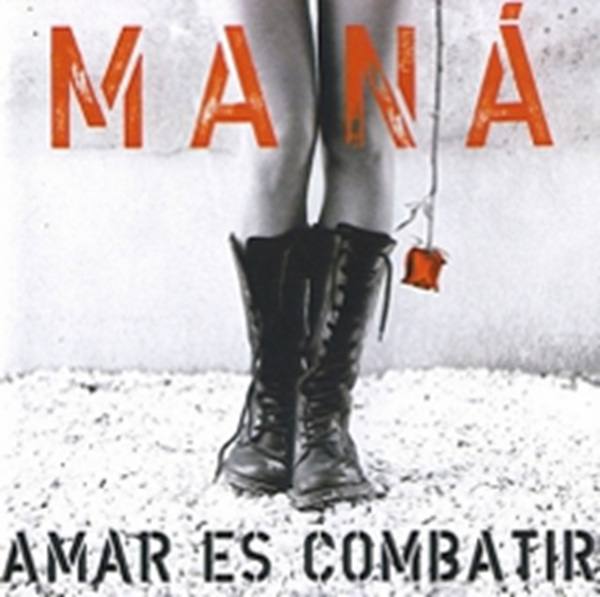
in November 2006 the group participates in the 7th edition of the Latin Grammy Awards, where in addition to performing with Juan Luis Guerra with an excellent interpretation of their successes, which earned them a heartfelt ovation from those attending the event and which was one of the climactic moments of the evening, are honored for career achievement and accomplishments in music.
In February 2007, after receiving 5 nominations for the awards Billboard Latino, 4 nominations for the awards Lo Nuestro and American Grammy for Best Album Alternative or Urban Rock, Maná began their “Amar es combatir” Tour, with the increased production the group has had so far (more than 60 tons of equipment), which would give 116 concerts over a period of a year and a half.
Among the most prominent awards that the band obtained by this production is an American Grammy in the category of Best Album Alternative Rock or Urban, 3 awards Lo Nuestro for Rock Album of the Year, Rock Artist of the Year and Song Rock of the Year; 2 Latin Billboard Alternative Rock Album for the Year and Pop Airplay theme of the Year Duo or Group.
Arde el cielo (2008)
On April 29, 2008 Maná presented in Los Angeles on CD / DVD called Arde el cielo, which was recorded during Amar es combatir Tour in the Jose M. Agrelot Coliseum of Puerto Rico in March 2007.
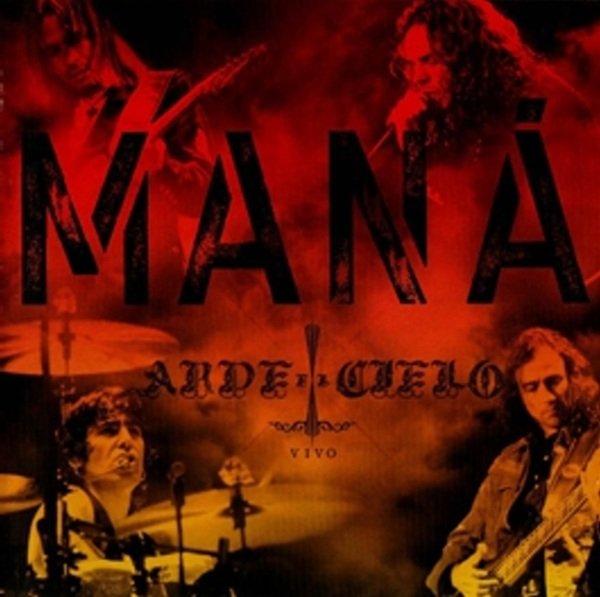
The material contains 12 live tracks that represent and review the history of Maná, from “Rayando el sol” to “Labios Compartidos” through “El rey” and songs as well known as “En el muelle de San Blas” or “Vivir sin aire”, and two previously unreleased studio recordings. The first of these new songs is “Si no te hubieras ido”, a song by Marco Antonio Solis and versioned by other artists, but in which Maná was able to put their unique stamp.
The second new song on the CD is “Arde el cielo” a theme composed by Fher and produced in conjunction with Álex González. Both themes were hits in 2008.
Drama y luz (2011)
Drama y luz represents a milestone in the career of Maná. This is an album gestated for over 1.000 days with their thousand and one nights.
The project began to take shape in June 2008 and ended in early April 2011. During those 34 months were composed, arranged and recorded more than forty demo songs. Only a rigorous selection of thirteen saw the light.
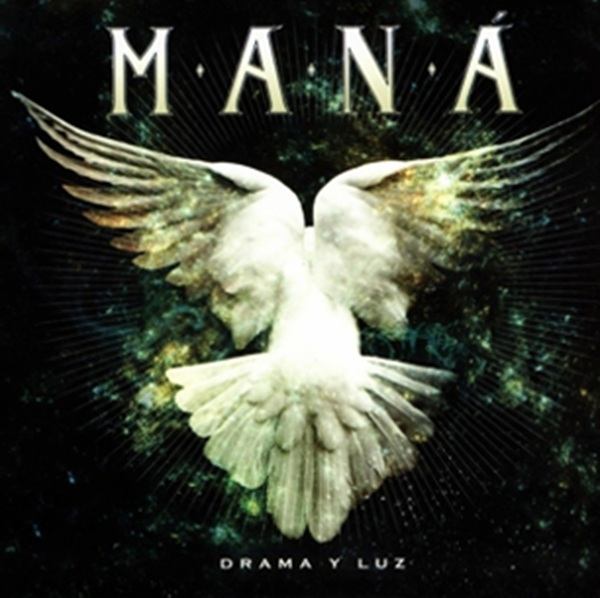
The first single of Drama y Luz is “Lluvia al corazón”, a theme that carries a message of hope in the dark clouds of an uncertain future by living in a half-dead planet, where humanity must not lose faith.
The second single is “Amor clandestino” a theme that became another new hit Maná. The third single “El verdadero amor perdona” is another success that sounded on the radio in its version with Prince Royce, which reached the top Latin songs and Latin Pop Airplay. Their fourth and final single of this production Drama y Luz is called “Mi reina del dolor”, a track that gradually climbed famous for its great rhythm, guitars and drums.
Exiliados en la bahía (2012)
Exiliados en la bahía is a compilation that was released on August 28, 2012 in which include the successes that the band has had throughout their 20 year career, it has two live tracks, Lluvia al corazón and El verdadero amor perdona that were recorded in the Drama y Luz World Tour in Buenos Aires, Argentina.
The first single is “Hasta que te conocí”, a cover of Juan Gabriel. Also, it contains “Un nuevo amanecer” an unreleased track.
Cama incendiada (2015)
This is the ninth studio album (and eleventh overall) of the band. It was released for sale on April 21, 2015.
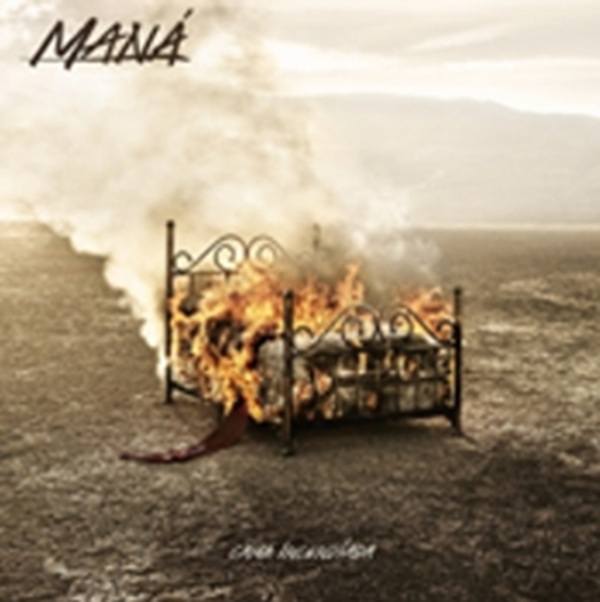
The first single was Mi verdad which has the support of the Colombian singer Shakira, the second single is the prison after the July 24 came a version electronic with American DJ Steve Aoki breaking completely with the musical patterns that we had used the band. The third single from the album is the theme Ironía, the official video was released on October 12.

- The Brazilian spirit finds its expression in the samba. What is samba? - September 26, 2026
- Odessa International Dance Festival 2016 - September 19, 2026
- Mambo City Congress – 28 Apr 2017 01 May 2017 - September 19, 2026