• Skip to primary navigation
  • Skip to main content

International Salsa Magazine

  • HOME
  • Previous editions
    • 2026
      • ISM / March 2026
      • ISM / February 2026
      • ISM / January 2026
    • 2025
      • ISM / December 2025
      • ISM / November 2025
      • ISM / October 2025
      • ISM / September 2025
      • ISM / August 2025
      • ISM / July 2025
      • ISM / June 2025
      • ISM / May2025
      • ISM / April 2025
      • ISM / March 2025
      • ISM / February 2025
      • ISM / January 2025
    • 2024
      • ISM / December 2024
      • ISM / November 2024
      • ISM / October 2024
      • ISM / September 2024
      • ISM / August 2024
      • ISM / July 2024
      • ISM / June 2024
      • ISM / May 2024
      • ISM / April 2024
      • ISM / March 2024
      • ISM / February 2024
      • ISM / January 2024
    • 2023
      • ISM / December 2023
      • ISM / November 2023
      • ISM / October 2023
      • ISM – September 2023
      • ISM – August 2023
      • ISM July 2023
      • ISM Edition June 2023
      • ISM – May 2023
      • ISM April 2023
      • ISM March 2023
      • ISM February 2023
      • ISM January 2023
    • 2022
      • ISM December 2022
      • ISM November 2022
      • ISM October 2022
      • ISM September 2022
      • ISM August 2022
      • ISM July 2022
      • ISM June 2022
      • ISM May 2022
      • ISM February 2022
      • ISM January 2022
    • 2021
      • ISM December 2021
      • ISM November 2021
      • ISM October – 2021
      • ISM September 2021
      • ISM August 2021
      • ISM July 2021
      • ISM May 2021
      • ISM April 2021
      • ISM June 2021
      • ISM March 2021
      • ISM February 2021
      • ISM January 2021
    • 2020
      • ISM December 2020
      • ISM November 2020
      • ISM October 2020
      • ISM September 2020
      • ISM August 2020
      • ISM July 2020
      • ISM June 2020
      • ISM May 2020
      • ISM April 2020
      • ISM March 2020
      • ISM February 2020
      • ISM January 2020
    • 2019
      • ISM December 2019
      • ISM November 2019
      • ISM October 2019
      • ISM Septembre 2019
      • ISM August 2019
      • ISM July 2019
      • ISM June 2019
  • Download Salsa App
    • Android
    • Apple
  • Spanish

Search Results for: All Stars

Papo Vázquez the Pirate & Troubadour of Our Latin Music

Papo Vázquez Enjoying the Bell.

Angel Vásquez, “Papo Vásquez”, was born on February 24, 1958 in Philadelphia, Pennsylvania, USA.

Papo Vazquez
Papo Vazquez

By age 15, Papo Vázquez was playing with local American bands in Philadelphia and accompanying guest artists such as Eddie Palmieri.

At just 17, he moved to New York and was hired to play for trumpet player Chocolate Armenteros’ band, and soon began playing and recording with other top artists on the salsa scene such as The Fania All-Stars, Ray Barreto, Willie Colón, Grupo Folklórico Neoyorquino, Eddie Palmieri, Larry Harlow, and Hector Lavoe.

Vazquez also became a key player in the burgeoning New York Latin jazz scene of the late 1970s, performing with Jerry Gonzalez, Hilton Ruiz, and more.

He began his studies with Slide Hampton, eventually recording and performing Slide Hampton’s World Trombones.

Papo Vázquez Photo by Ernie Gregory (Gone but not forgotten) Thank you Ernie!PV

A Grammy-nominated trombonist, composer, arranger, NEA Master Artist, he has a 50-plus year career in jazz, Latin and Afro-Caribbean music.

Musical Director of the National Puerto Rican Day Parade Orchestra, (NYC/WABC) 2016, 2017, 2018, 2019.

Commissioned by Wynton Marsalis to compose music for Jazz and Art series, conducted and performed with the J@LC orchestra, CD release August 2019 New York Pops Education, Board of Education certified, 2018 and 2019

New music commissioned for Afro Latin Jazz Alliance for the “Nueva Música” concert series.

Nominated for Grammy for Papo Vázquez’s Mighty Pirates, Marooned/Isolated, 2008

Born in 1958 in Philadelphia, Pennsylvania, although his early formative years were in Puerto Rico.

He went on to play and/or record with jazz luminaries Tito Puente, Dizzy Gillespie’s United Nations Orchestra, Chico O’Farrill, Ray Charles, Slide Hampton’s World of Trombones, Jerry Gonzalez Fort Apache, among many others. By the age of 22, Vazquez had traveled the world.

Papo Vázquez Mighty Pirates Troubadours 2023

Vázquez was deeply moved by jazz from a young age. His appreciation and knowledge of indigenous Caribbean music provides him with a unique ability to fuse Afro-Caribbean rhythms with the freer melodic and harmonic elements of progressive jazz.

Beginnings

After spending his early years in Puerto Rico, he grew up in the heart of North Philadelphia’s Puerto Rican community. He purchased his first trombone from a friend for $5 and joined the elementary school band.

At the age of 14, an uncle recommended him to a local salsa band, where he met trumpeter Jimmy Purvis. Purvis inspired Papo’s lifelong passion for jazz by giving him two records: J.J. Johnson’s Blue Trombone and John Coltrane Live at the Village Vanguard. By 15, Vazquez was performing with local Latin bands in Philadelphia and accompanying visiting New York artists such as Eddie Palmieri.

He was a founding member of Jerry Gonzalez’s Fort Apache and Conjunto Libre, as well as the popular Puerto Rican Latin fusion band Batacumbele.

With Batacumbele he performed, composed, arranged and recorded several albums from 1981 to 1985. Upon his return to New York, he joined Tito Puente’s Latin Jazz Ensemble, traveling with them as principal trombonist and touring Europe with Dizzy Gillespie’s United Nations Orchestra.

Leader, Composer and Innovator.

Vázquez has always been deeply moved by jazz, and specifically cites the music of John Coltrane and J.J. Johnson as having influenced him most. In addition, his appreciation and knowledge of the indigenous music of Caribbean peoples gives him a unique ability to fuse Afro-Caribbean rhythms, specifically those of Puerto Rico, with the freer melodic and harmonic elements of progressive jazz.

During his time in Puerto Rico with Batacumbele in the 1980s, he began experimenting with “bomba jazz,” a fusion of jazz and traditional Puerto Rican bomba. In 1993 he recorded his first album as a leader, Breakout. He continued to collaborate with a variety of Latin Jazz artists, contributing Overtime Mambo to Hilton Ruiz’s Manhattan Mambo and Contra Viento y Mareo to Descarga Boricua, Vol. 1.

In 1999, he released a live recording with a number of leading New York Latin and jazz artists, including bassist Andy Gonzalez, saxophonist Michael Brecker, among others. The release of Pirates & Troubadours At the Point, Vol. 1 was followed the next year by At The Point, Vol. 2.

Mighty Pirates Troubadours Songs del Yucayekepor Papo Vazquez
Mighty Pirates Troubadours Songs del Yucayeke
por Papo Vazquez

This project evolved into the Pirates Troubadours, an “Afro-Puerto Rican jazz band” that includes musicians such as Roberto Cepeda of Puerto Rico’s Familia Cepeda folklore group, Milton Cardona and Anthony Carrillo on percussion, and John Benitez, among others. The group performed at festivals around the world and released Carnival in San Juan in 2003, followed by From The Badlands in 2007.

Interest grew as a composer.

He was the first artist to receive a composer commission (Iron Jungle) for the Afro-Latin Jazz Orchestra, then a resident orchestra at Jazz at Lincoln Center.

His first classical composition, Palomita Suite Afro-Caribeña which to date was the first time Bomba y Plena had been performed with a Chamber Orchestra, was commissioned by the Bronx Arts Ensemble and premiered at the Hostos Center for Arts and Culture in the Bronx in 2004.

In 2007, on a commission from the Bronx River Arts Center, he wrote Sube el Río (River Rising) for its Mighty Pirate Orchestra for its 20th anniversary concert “Bronx River Sounds.”

Discography

Papo Vázquez Mighty Pirates Troubadours – Capítulo 10: Breaking Cover, Picaro Records 2020
Cuarteto Papo Vázquez – GV J.S. Bach, Picaro Records 2017
Papo Vazquez Mighty Pirates Troubadours – Spirit Warrior, Picaro Records, 2015
Papo Vazquez Mighty Pirates Troubadours – Oasis, Picaro Records, 2012
Papo Vázquez The Mighty Pirates – Marooned / Aislado, Picaro Records, Nominación al Grammy 2008
Papo Vázquez Pirates Troubadours – From The Badlands, Picaro Records, 2007
El Niño Josele – 2011
Tego Calderon – The Underdog / El Subestimado, Jiggiri Records, 2006
Shakira & Wyclef Jean – Tema de la final mundial de fútbol (“Bamboo”), 2006
Ray Barretto – Normas rican-ditioned, Zoho Music, 2006
Los Pleneros de la 21 Para Todos Ustedes, Smithsonian Folkways, 2005 – Nominación al Grammy,
Bebo Valdes – Bebo de Cuba, Calle 54, 2005 – Grammy, Mejor Álbum de Jazz Latino
Papo Vázquez Pirates Trovadores – Carnaval en San Juan, Cu-Bop Records, 2003
Wayne Shorter – Alegria, Verve, 2003 – Grammy, Mejor álbum instrumental de jazz
Jack Bruce – Sombras en el aire, Sanctuary Records Group, 2001
Freddie Cole Rio de Janeiro Blues, Telarc
Chico O’Farrill “Carambola” Fantasía
Banda sonora de la película Mo ’Better Blues de Spike Lee
Papo Vázquez “Piratas y trovadores – En el punto Vol. I” Cubop
Papo Vázquez “Piratas y trovadores – At the Point Vol. 2” Cubop
Milton Cardona “Cambucha” Clave americana
Arturo O’Farrill “Bloodlines” Fantasy
Chucho Valdés “All Stars Bronx Lebanon New Directions Project” RMM
“Jammin ‘in the Bronx” Papo Vázquez Band, Chucho Valdes & The Machito Orq RMM
Chart Busters con el Dr. Lonnie Smith, Lenny White, Hiram Bullock, Craig Handy, Papo Vázquez, et.al. Chico O’Farrill Fantasía “Pure Emotion”
Steve Berrios Fantasía del “primer mundo”
Descarga Boricua “Descarga Boricua” Tierrazo
Dave Valentin “Tropic Heat” GRP
Juan Luis Guerra 440 “Fogarate” 440
Papo Vázquez “Breakout” Timeless
Ruben Blades “Amor y Control” “Antecedente” & “Caminando” Sony
Hilton Ruiz “Manhattan Mambo” Telarc y “Hands on Percussion”
RMM Tito Puente “Fuera de este mundo” Tito Puente “100” RMM
Jerry Gonzalez Fort Apache Band “Obatala” “Live in Berlin” Enja & “Ya Yo Me Cure” American Clave
New York Latin Jazz All Stars “Feliz Navidad”
Bobby Valentin “Presenta al Cano Estremera” – Bronco Records
Batacumbele “Con Un Poco de Songo” & “En Aquellos Tiempos” Tierrazo
Ray Barretto “Ricanstruction” Fania
Slide Hampton “Mundo de trombones” WEST54
Chico O’Farrill “Calle 54”
Fania All Stars “Habana Jam” Fania
Willie Colon & Ruben Blades “Siembra” Fania
Willie Colon y Celia Cruz Fania
Héctor La Voe “De Ti Depende” – Feliz Navidad, Fania
Mon Rivera “Vuelvo a Vivir” Fania

Sources:

© 2017 por Papo Vázquez. Creado con orgullo.

Textos www.jazzismomedellin.com

Also Read: Eddie Palmieri brought salsa for the first time and live from Sing Sing Penitentiary in New York

Saxophonist and flutist Dave Victorino talks to International Salsa Magazine

Dave Victorino is a saxophonist and flutist who plays various Latin genres such as salsa, Latin jazz and swing in the city of Los Angeles, California. The American musician has been kind enough to talk exclusively with International Salsa Magazine about various topics, including his beginnings, current career and existing projects. We hope that our esteemed readers will like the details of this conversation. 

Saxophonist Dave
This is saxophonist and flutist Dave Victorino

Young Dave’s beginnings in music

Dave recalls that his taste in music led one of his cousins to give him a flute so that he could start playing an instrument and see what happened. However, over time, the young man preferred the saxophone, which he found he liked much more at the time. He reckons that his interest in music began when he was just a 12 or 13-yeard-old.

His interest in the saxophone began with a friend of his mother’s who was a teacher of that instrument, so he was the first to teach him how to play it properly and, even after so many years gone by, he continues to remember everything he learned with him. 

Education

Dave graduated with a degree in music education from Cal State Los Angeles and assured us that one of his greatest mentors there was saxophonist Barney Martinez, a very important figure in Latin jazz at the time. This was a time of great learning for what was to come professionally, and that knowledge continues to help him a lot. 

He also studied with other important music teachers and professors who complemented his musical training almost perfectly. 

What has Dave learned from his greatest collaborations?

Throughout his career, Dave has collaborated with groups such as The Henry Mora Big Band, Temptations, Al Viola, Fred Ramirez, Little Anthony and The Imperials and many others. Obviously, all these personalities have had something important to teach the musician when sharing the stage with him.

Dave refers to Henry Mora as one of his greatest mentors in this whole process, as he had much more experience than the artist, so he had a lot to learn and imitate from him. 

Each professional experience is one more step on the road to excellence that Dave and any artist looks for in his work, which is achieved through practice and spending time with more experienced teachers.

Dave playing
Dave Victorino playing the saxophone live

Great inspirations

When we wanted to know Dave’s greatest inspirations, he could not help but first mention the group El Chicano, with which he played in the early 1980s. One of its founding members and singer Bobby Espinosa, who showed him some recordings of the Fania All Stars and Johnny Pacheco while playing one of the best solos Dave had ever seen. In fact, the artist considers Pacheco his favorite flutist from the very moment he first heard him. 

He also commented that he really likes the way Stan Getz, a Californian saxophonist whose main genres were jazz and pop, played.

How his love for Latin music was born

Dave’s first contact with Latin music was with the group El Chicano, but then came other groups that playing genres that caught his attention.

For several years in the 1980’s and 1990’s, he played in a park three times a week and, on those same days, a DJ would play music by Johnny Pacheco himself, El Gran Combo de Puerto Rico and other salsa groups. He became so fascinated with everything he heard that, little by little, he began to transform his repertoire into one that also included salsa and Latin jazz.

Initially, he only cared about playing this music without understanding the lyrics, but then he began studying and learning a little Spanish to get a better performance in his work. However, he assures that this detail has never posed a problem or a limitation to get good performances in Latin music.

Dave and Barbara
Dave Victorino playing with singer Barbara Reed

Music Classes

Another interesting thing about Dave is teaching. He currently teaches saxophone, flute, clarinet and piano to a good number of students, who have taught him the virtue of patience and determination to always learn something new.

His students are of different ages and he teaches various levels.

Dave and Anthony
Dave Victorino playing with saxophonist Anthony Gil

También lee: Eddie Muñíz continues to head Swing Sabroso

Renzo Padilla “El Borincaico”

Latin America / Peru / Lima

Renzo Padilla (Renzo Antonio Padilla Reyes) was born in Barrios Altos in Lima, Peru, on July 12, 1979. In search of a better future, in 1993 his parents decided to travel to the city of Buenos Aires.

Renzo Padilla. At the age of 15, Renzo began his career as a backing singer with the “New Band Salsa” Orchestra. His time with this group was brief, because later he would join the Orquesta La Original, made up of Peruvian musicians based in Buenos Aires.

Renzo Padilla
Renzo Padilla
Photo of Renzo Padilla in concert

In the year 2000 he moved to New York City, fulfilling a dream that he thought was impossible. That same year he signed a contract with the Grupo Fuerza Juvenil, he participated for two years in this group that was nominated for the Billboard awards in 2002.

He meets the timbalero Jimmy Delgado and he offered him a project to record, so Renzo resigns from Fuerza Juvenil and decides to record with Delgado, his first single titled Salsa con Dulzura. After this recording he was invited to accompany the most renowned artists in the world of salsa, such as: Frankie Hernández, Cheo Feliciano, Ismael Miranda, Cano Estremera, Ismael Quintana, David Pabón, Roberto Roena, Marvin Santiago, Meñique, Ray Barreto. , Adalberto Santiago, Cuco Valoy, Junior González, Paquito Guzmán, Yolanda Rivera, Luigi Texidor, José Bello, Pedro Conga, Cheo Andujar, Anthony Cruz, Luisito Carrion, Maelo Ruiz, Tito Nieves.

Renzo Padilla in concert
Renzo Padilla
Renzo Padilla

Another of his dreams came true when he met the master Willie Colon, he was invited by him to perform a song by Hector Lavoe, in a New York nightclub. He was also invited by El Gran Combo de Puerto Rico on several occasions.

In 2003, Ray Barreto and Adalberto Santiago met again, in which he participated as a chorister at the prestigious Carnegie Hall in New York.

Renzo Padilla in concert 2
Renzo Padilla on stage

In 2006 with bassist Ray Martínez he recorded his second album Alto Nivel, and recorded two songs with the Narváez Orchestra. In 2008 he sang with Jimmy Delgado at the Leyendas de la Salsa Concert, along with a lineup of artists such as Luis Perico Ortiz, Richie Ray, Bobby Cruz, Lalo Rodríguez and Adalberto Santiago.

Renzo also sang in the second part of the Legends of Salsa Concert in tribute to Ismael Quintana, where Tony Vega, Luis Perico Ortiz, Lalo Rodríguez, Héctor Tricoche performed, among others.

In 2009 he was a soloist with the Lavoe All Stars Orchestra, made up of musicians from Willie Colon and Hector Lavoe, such as Professor Joe Torre, José Mangual, Jimmy Delgado, Eddie Montalvo, Reynaldo Jorge, Milton Cardona.

Renzo Padilla and the orchestra

In 2010 he was called by the New York group “Our Latin Thing”, to share the stage with Victor Manuel.

On the other hand, Renzo began to develop his talent as a composer. One of his compositions Donde Esta Tu Amor was recorded by Puerto Rican singer Maelo Ruiz.

In 2014 he got together with Jacob Plasse to form the Melaza Group, in which all the songs are his. In that same year, he participated in the largest salsa group, the “Fania All Stars”, and also sang for the recording of the Narváez Orchestra’s album 65 Infantería.

In 2015 he participated as a backing vocalist and as a singer in the concerts of the piano emperor Eddie Palmieri.

Renzo Padilla singing in concert

In October 2016 he was part of the Eddie Palmieri Orchestra that traveled to Lima to perform a concert at the National Stadium. He has been a vocalist for Los Hermanos Lebrón.

In 2017 he had a successful tour of different cities in Japan. Currently he continues to sing in Lima and on tour around the world.

Renzo Padilla singing

This talented Peruvian singer is considered one of the promises of salsa. He will continue in his rising career of success and international recognition.

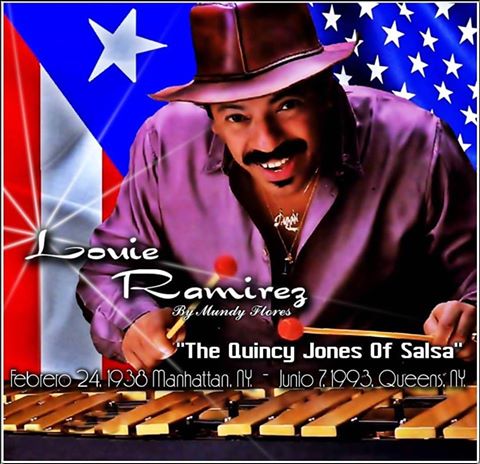
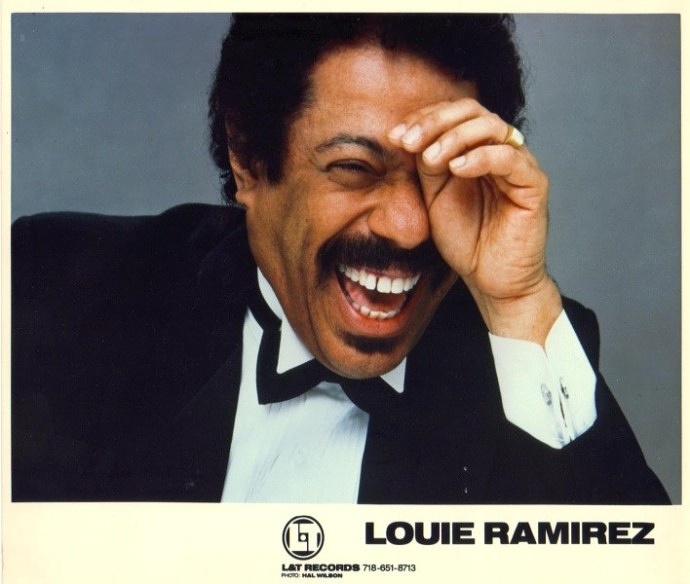
Louie Ramírez. The Hidden Talent of Salsa Ahead of its time

North America / USA / New York

Louie Ramírez.

Music often requires characters who are always behind the scenes and support the work of singers and performers with their talent, who are ultimately the ones who “put on their face” and become popular. Sometimes, however, these anonymous characters rise to fame in order to perform their own work and even become more popular than any popular singer.

In the case of Pop, this character is called Quincy Jones, of whom it is enough to say that he has been an arranger for Frank Sinatra and a producer for Michael Jackson. A nobody”. In the case of Salsa, these characters have been symbolized by Jones’ emulator, a guy named Louie Ramírez who has done everything with everyone.

Louie Ramírez
Louie Ramírez

One afternoon in 1994, Ramírez was driving his car down the highway that would take him to Variety Studios in New York. It was going to be a quick session since he only needed one song to complete his 20th album as conductor. Perhaps that was why he was nervous and that filled him with anxiety. Minutes later he couldn’t resist the feeling and had to pull over to the side of the car. He had not finished doing it when a cardiac arrest ended his life.

Louie Ramírez
Louie Ramírez

Louie Ramirez was a genius. The classic man to whom everyone turns for advice and solutions to their problems. It didn’t matter if they were young or old musicians. The fact was, Louie had the answer, and visiting him was like rubbing Aladdin’s lamp. That was a characteristic that always accompanied him, from that first recording “Conozca a Louie Ramírez” in 1963.

He was 20 years old at the time and had already stood out for composing some pachangas and arranging for Pete and Tito Rodríguez’s orchestras. The commentator Dick Sugar then presented it like this: Ramírez breaks the image of the director of a group that uses the talent of other composers and becomes a follower of a rhythm. No, Louie Ramírez is a creator in his genre.

Louie Ramírez Photo
Louie Ramírez Photo

That talent did not go unnoticed by the new Czar of Latin music in New York, Jerry Masucci, who hired him as a star for Fania Records and at the same time, as an arranger for the orchestras and ensembles that belonged to the record company. Ramírez was soon involved in work and was only able to record two albums during the sixties, “Good news” and “Alí Babá”.

On that last album appeared the hit that allowed him to be a famous artist, El Títere, a true Salsa classic. The theme was sung by Rudy Calzado, the third of the soneros that Louie had used without finding the ideal. That was a burden that accompanied him as a director during the seventies, when he used singers of the stature of Pete Bonet, Tito Allen, Jimmy Sabater, “Azuquita” Rodríguez, Adalberto Santiago, and even Rubén Blades.

Louie Ramírez
Louie Ramírez

It was with Blades, precisely, that he made an anthological album, “Louie Ramírez and his friends”, in which the song Paula C was included, with an arrangement of those that deserve -hats off-. By then, Ramírez was considered in New York as the most progressive arranger that Salsa had, thanks to the brilliant work done for the Fania All Stars. An excellent job had been the instrumental arrangement of Juan Pachanga, to be sung by Blades, of Canta Canta for a performance by Cheo Feliciano, and of the entire album “Algo nuevo” that Tito Rodríguez sang with Louie’s orchestra.

But the high point of Ramírez’s career came in 1980 when Joni Figueras, representative of the K-Tel International label, hired him to arrange the ballads Todo se derrumbó and Estar Enamorado de Manuel Alejandro. The album, which included these and other tracks, was released two years later under the title “Hot Night” and was recorded by Louie’s own orchestra.

Louie Ramírez - Salsa Progresiva
Louie Ramírez – Salsa Progresiva

This is how the Salsa-ballad or Salsa-romántica was born in a job that Ramírez continued until his death, making attempts at Latin Jazz from time to time, which he loved. That is why he recorded an album in tribute to Cal Tjader, where Louie was director, producer, composer and arranger, in addition to playing the timpani and his favorite instrument: the vibraphone.

Louie Ramírez was a genius in arranging, in a career where those of Guantanamera and Isadora stand out for Celia Cruz, El Guiro de Macorina for Johnny Pacheco and El Caminante for Roberto Torres. Apart from this, there are his works for the Alegre and the Cesta All Stars. Regarding this profile of Ramírez, the critic Eleazar López defined it very well:

Louie Ramírez - salsero
Louie Ramírez – salsero

It is not easy to arrange for a dance band, especially when it comes to a group that cultivates the hot tropical genre. Many musicians feel influenced by Jazz and the result of their orchestrations leaves a void in the dancer. Others arrange simple, but so simple that they repeat and copy themselves, and the result is tiresome music, without any degree of creativity: music that says nothing, that leaves nothing. Louie Ramírez has found the perfect balance… that’s why he always stays current.

Louie Ramírez flyers

Gabrielito Y La Verdad shines in Los Angeles

We are so pleased to have spoken with Mexican singer-songwriter and percussionist Gabriel González, who gladly embraced the opportunity to share with us a little of his personal story with music and the beginning of his band Gabrielito Y La Verdad. This project has brought him great joy and personal satisfaction since its foundation, as well as the possibility of meeting some of the today’s largest artists and being on stages where Gabriel never imagined playing.   

Gabriel is the leader of La Verdad
Mexican percussionist Gabriel González,who is the leader of Gabrielito Y La Verdad

Gabriel’s beginnings in music   

Gabriel’s first contacts with music occurred when he was just a seven year old boy in East of Los Angeles. That city had a place called ”El Mercadito” where there were amateur contests the boy always took advantage of to practice his singing and this start his career as a vocalist.   

Being in his native Mexico, he became interested in regional Mexican music, ranchera, guatango, boleros, son and many others. When he moved to the United States with his family, he also began to know son jarocho, son jalicience and son montuno.    

The first group he played and toured with was the Los Angeles Chicano rock band Quetzal, which is the one that gave him his first job opportunity and with which he would stay for some time until his interests shifted definitively.   

As he left Quetzal, Gabriel resumed his interest in son montuno and thereafter in salsa as well. From then on, he became so good at these genres that he played with most of the salsa orchestras in Los Angeles and its nightclubs, which attracted the interest of many promoters who invited him to new places. In fact, he himself says that sometimes he would be called to play at venues without knowing which band he would be playing with that night.   

Gabriel posing for the camera
Percussionist Gabriel González posing for the camera with some of his instruments

Salsa orchestras in which Gabriel participated   

In California, there were many salsa orchestras in which Gabriel participated and one of the most important was Johnny Polanco Y Su Conjunto Amistad. The artist sang with the late Polanco on a few occasions over several years, as they respected each other professionally and never missed any opportunity to show it on stage.   

The singer-songwriter also played with the Orquesta de Ángel Lebrón Y Su Sabor Latino on many occasions. The conguero and orchestra leader also relied heavily on the Mexican and what he had to offer, so he did not hesitate to call him whenever he needed him.   

Gabrielito Y La Verdad 

Gabriel had already gained so much popularity that, one night, he was invited to a concert whose flyer announced him as ”Gabrielito Y Su Orquesta”, meaning that he had already his own importance outside of being a simple element of support for groups and artists better known than him. The best thing about this is that the event was a complete success, leading the musician to think about creating his own orchestra, which he later named ”Gabrielito Y La Verdad”.   

From that moment Gabriel founded Gabrielito Y La Verdad, it has been ten years, in which he has dedicated himself to tour all over California and considers that his journey has been very successful and filled with gratification.    

In view of the success and fans amassed by the orchestra during this time, Gabriel decided it was time to make original music and write his own songs, while acknowledging that his thing is singing and playing percussion because that is at what he excels.   

Gabriel and Bruno Mars
Bruno Mars and Gabriel González during a musical event

Gabriel’s contact with other artists   

Gabriel and his orchestra have also had the opportunity to share with great music luminaries, from whom he has been able to learn many things and apply them to his own career. Among the artists and groups he has shared the stage with are Juan Gabriel, Los Van Van, Cubanismo, Los Cuban All Stars, Silk Sonic and Bruno Mars. 

In every case, Gabriel was impressed with the discipline and professionalism of each of the above-mentioned artists or orchestras, but at the same time, how humble and pleasant they were off the stage. 

In Bruno Mars’ case, he attended one of Gabriel’s shows along with the rest of his musicians without any of them noticing that the singer-songwriter was listening to them play with great interest. The artist was so fascinated with the orchestra that he invited it to open for him at a private party he would soon have in Las Vegas, an experience that was a great honor for the Mexican and the rest of the group.  

From this anecdote Gabriel learned that he must always give his best in his work, since he does not know who may be watching him. 

Read also: Omar Ledezma Jr. and Pacific Mambo on tour in Europe 

  • « Go to Previous Page
  • Page 1
  • Interim pages omitted …
  • Page 9
  • Page 10
  • Page 11
  • Page 12
  • Page 13
  • Interim pages omitted …
  • Page 58
  • Go to Next Page »

International Salsa Magazine (ISM) is a monthly publication about Salsa activities around the world, that has been publishing since 2007. It is a world network of volunteers coordinated by ISM Magazine. We are working to strengthen all the events by working together.