• Skip to primary navigation
  • Skip to main content

International Salsa Magazine

  • HOME
  • Previous editions
    • 2026
      • ISM / May 2026
      • ISM / April 2026
      • ISM / March 2026
      • ISM / February 2026
      • ISM / January 2026
    • 2025
      • ISM / December 2025
      • ISM / November 2025
      • ISM / October 2025
      • ISM / September 2025
      • ISM / August 2025
      • ISM / July 2025
      • ISM / June 2025
      • ISM / May2025
      • ISM / April 2025
      • ISM / March 2025
      • ISM / February 2025
      • ISM / January 2025
    • 2024
      • ISM / December 2024
      • ISM / November 2024
      • ISM / October 2024
      • ISM / September 2024
      • ISM / August 2024
      • ISM / July 2024
      • ISM / June 2024
      • ISM / May 2024
      • ISM / April 2024
      • ISM / March 2024
      • ISM / February 2024
      • ISM / January 2024
    • 2023
      • ISM / December 2023
      • ISM / November 2023
      • ISM / October 2023
      • ISM – September 2023
      • ISM – August 2023
      • ISM July 2023
      • ISM Edition June 2023
      • ISM – May 2023
      • ISM April 2023
      • ISM March 2023
      • ISM February 2023
      • ISM January 2023
    • 2022
      • ISM December 2022
      • ISM November 2022
      • ISM October 2022
      • ISM September 2022
      • ISM August 2022
      • ISM July 2022
      • ISM June 2022
      • ISM May 2022
      • ISM February 2022
      • ISM January 2022
    • 2021
      • ISM December 2021
      • ISM November 2021
      • ISM October – 2021
      • ISM September 2021
      • ISM August 2021
      • ISM July 2021
      • ISM May 2021
      • ISM April 2021
      • ISM June 2021
      • ISM March 2021
      • ISM February 2021
      • ISM January 2021
    • 2020
      • ISM December 2020
      • ISM November 2020
      • ISM October 2020
      • ISM September 2020
      • ISM August 2020
      • ISM July 2020
      • ISM June 2020
      • ISM May 2020
      • ISM April 2020
      • ISM March 2020
      • ISM February 2020
      • ISM January 2020
    • 2019
      • ISM December 2019
      • ISM November 2019
      • ISM October 2019
      • ISM Septembre 2019
      • ISM August 2019
      • ISM July 2019
      • ISM June 2019
    • 2016
      • ISM December 2016
  • Spanish
  • Download Salsa App
    • Android
    • Apple

Search Results for: All Stars

Ismael ‘Pat’ Quintana, born in Ponce Puerto Rico, began his musical career in 1961 alongside Eddie Palmieri and La Perfecta

Ismael ‘Pat’ Quintana, born in Ponce, Puerto Rico, began his musical career in 1961 alongside Eddie Palmieri and La Perfecta

smael 'Pat' Quintana, born in Ponce, Puerto Rico, began his musical career in 1961 alongside Eddie Palmieri and La Perfecta
smael ‘Pat’ Quintana, born in Ponce, Puerto Rico, began his musical career in 1961 alongside Eddie Palmieri and La Perfecta

Commemorating one more anniversary of the departure of the Maestro: Ismael Quintana (Ponce, June 3, 1937-Colorado, April 16, 2016) was a Puerto Rican singer and composer of salsa, bolero and other genres of Caribbean music.

He began his musical career in 1961 alongside Eddie Palmieri and La Perfecta, and later continued as a solo singer.

In 1970, he signed with Fania Records and joined the Fania All Stars, in addition to recording more solo albums.

By 2012, his health condition prevented him from continuing to perform and he stopped giving concerts.

In April 2016, he died of a heart attack at his residence in Colorado in the United States at 78 years of age and paid the first tributes.

Quintana was the singer who gave the name salsa to Afro-Caribbean music, after having heard it in Venezuela.

Ismael ‘Pat’ Quintana, born in Ponce, a town rich in culture on the beautiful island of Puerto Rico, moved to New York when he was very young. It was in the South Bronx that he fell in love with Latin music.
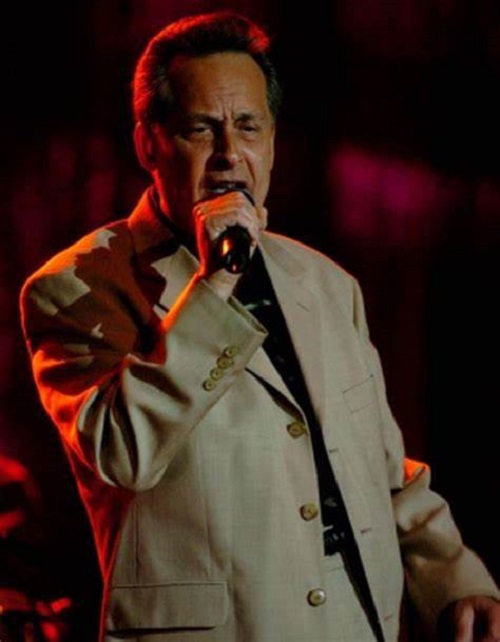
Ismael 'Pat' Quintana
Ismael ‘Pat’ Quintana

During these early years, he played percussion with a variety of bands throughout New York City.

He persevered and eventually joined Angel Natel’s orchestra as a teenage bongosero.

During one memorable night in 1959, the band was asked to play a particular number for one of the club’s dancers.

Natel’s singer was not familiar with the song, but Ismael was. He stepped up to the microphone, performed the song and in the process electrified the crowd with his talented voice. That night launched a magnificent career, a career that would eventually position Quintana as one of the most prominent vocalists in Latin music.

In 1961, visionary keyboardist Eddie Palmieri decided to leave the sanctuary of Tito Rodriguez’s eminent orchestra to pursue the dream of forming his own band.

Eddie was present when Quintana auditioned for Orlando Marin’s popular orchestra.

The pianist would eventually track him down and offer him the opportunity to become the lead singer of his new orchestra, La Perfecta.

This proved to be a vital move in Eddie’s quest to become one of the top Latin music bandleaders. Their alliance would last 12 years.

Together, Quintana and Palmieri pushed the boundaries of progressive salsa, creating dissonant improvisations that fused the raw tradition of Afro-Caribbean music (exemplified by the singer’s hardcore sonics) with a relentless desire to experiment (illustrated by Palmieri’s choice of electronic keyboards, use of structures borrowed from other musical formats, as well as meandering solos that had their own idiosyncratic logic).

Quintana inició su carrera musical en 1961 al lado de Eddie Palmieri y La Perfecta

The 1965 album Azúcar Pa’Tí is probably the aesthetic pinnacle of their collaboration. It featured classic salsa anthems such as “Oyelo Que Te Conviene”, included here for your listening pleasure.

Another unforgettable moment was Eddie’s decision to record a double LP set in the Sing Sing penitentiary.

Quintana’s voice sounds appropriately impassioned on that socially significant 1972 concert recording.

By 1973, Quintana had decided to embark on a solo career. He signed a contract with UA Latino Records and recorded two albums of excellent quality.

Quintana En 1970, firma con el sello Fania Records

The second of these two releases gave him the opportunity to sing tangos and ballads, backed by a spectacular orchestra led by South American arrangers Héctor Garrido and Jorge Calandrelli.

Surprisingly, the singer has stated in interviews that he prefers to dance ballads and boleros rather than sing more fast-paced material.

Quintana’s first work for Vaya Records was recorded in 1974, It included the hit “La Blusita Colorá”, which is featured in this collection.

The singer also collaborated with keyboardist and bandleader of La Sonora Ponceña Papo Lucca, as well as Ricardo Marrero.
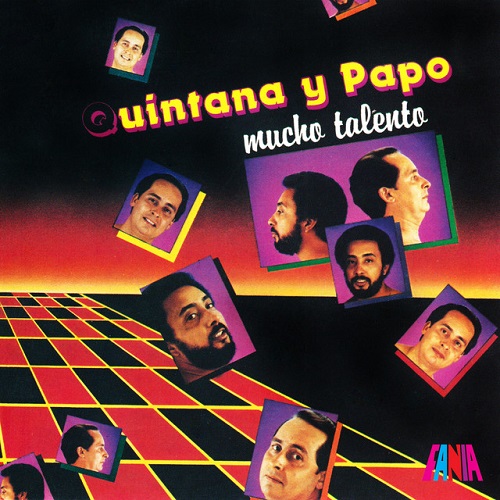
Quintana y Papo Mucho Talento

In 1975, Quintana was invited to join the legendary Fania All-Stars as one of their lead vocalists.

He appeared in the movie Salsa and participated in many of the combo’s historic performances, delivering a blistering version of the self-written “Mi Debilidad” at Yankee Stadium.

When not traveling the world with the All-Stars, Quintana could be found in the recording studio, working on material that appeared on his albums for Vaya Records.

Ismael Quintana’s name appears on many classic albums from the salsa explosion of the 1970s, both as a background singer and as a percussionist.

His phenomenal vocal abilities have obscured the fact that he is one of the most exciting maracas players in the genre.

He is also an innovative composer, having written many of the songs that make up Eddie Palmieri’s seminal albums of that era.

Quintana is also known as one of the nicest guys in the Latin music business.

A true professional who is never late for his concerts and a devoted family man who doesn’t smoke or drink.

Ponce in Puerto Rico has given birth to several legendary Latin singers, from Héctor Lavoé and Cheo Feliciano to Ednita Nazario and Pete ‘El Conde’ Rodríguez. Ismael Quintana is yet another luminary from that region.

This Latin Heritage compilation is a well-deserved tribute to one of salsa’s best. Fania All Stars.

By:

Marino Del Jesus

Historia Salsera

Dj. Augusto Felibertt

Also Read: The Royalty of our Latin Music Pete “El Conde” Rodríguez first singer signed by Fania Records label

This is Indiana composer, arranger, music teacher, and trumpet player David Hardiman

Our interviewee today is very special because of the talent and the enormous academic background he has, so we are very pleased to have been able to talk with him. We are talking about the arranger, composer, trumpeter, pianist and music teacher David Hardiman, whom we welcome to International Salsa Magazine.

This is David Hardiman
Music teacher and musician David Hardiman holding his trumpet

A little bit of David’s story

The artist from Indianapolis, Indiana, began his tale telling us a little bit about how he started getting interested in music, which was when he was in fourth grade. That is when he started learning to play the trumpet and piano, taking advantage of the fact that he had one at home.

Unlike other children and young people who find other interests and hobbies besides music, David never stopped and kept playing the trumpet until high school, during which time he played in the marching band, the orchestra, the jazz band and the concert band of the institution.

Years later, he attended Indiana University where he also played in the marching band and concert band. He received his bachelor of music education through which he obtained a lot of classical training that he would later apply to his artistic career, but he did not stop there, as he also began to participate in ensembles with which he played R&B and jazz.

When he returned to his hometown Indianapolis, he was hired by a band with which he started playing blues, tap and jazz at parties, weddings and other events of this type.

In addition to that, he also taught instrumental music for over 11 years at the elementary level. He also taught flute at the fourth grade level and prepared children of those ages to be introduced to instruments until their formation in high school, something very similar to his case when he got started in this world.

The young musician already wanted to expand his horizons and thought about leaving the nest and moving from his home state to try his luck elsewhere, but first he obtained his master’s degree in music education in 1970. This was the final step that would make him realize that he was ready to take flight farther away from home.

David playing the trumpet
David Hardiman playing the trumpet live

Berkeley

In 1971, David went to Berkeley, California, where he began to teach at King Junior High School, which he describes as an excellent experience that taught him a lot about music at the educational and practical level. His teaching specialized in the orchestral and symphonic part of classical-oriented music. At the same time, he spent much of his time playing for clubs and private parties with various orchestras and bands. 

One of his fellow teachers at King Junior High School named Grey Gomez taught at the elementary level and was a trombone player. Gomez told David that he needed a trumpet player for a group called ‘’The Aliens’’, so he proposed him to join the band and play with him at The New Yorker club. This would be the first time the musician played Latin music, more specifically salsa.

Introduction to Latin music in San Francisco

By then, David was looking for new challenges, so he decided that he could not teach at low levels at King Junior High School for life, so he began working part-time at the City College of San Francisco. Parallel to this, he played with another band for various basketball and soccer games during breaks.

Soon after, the musician began directing the big band in the aforementioned institution and teaching at the middle college level outside of San Francisco. When he became a full-time professor at the City College, he was much more exposed to Latin music and genres, which was contrasted with his hometown, as Indiana is not known for its large number of Latin orchestras and musicians. 

David at 12 years old
Young David Hardiman playing the trumpet at 12 years old

In the Bay Area, he began to have much more contact with people from other nationalities and cultures, especially Latinos, which made him listen to various Latin music groups and play with others. He even opened up for great artists such as Celia Cruz and the Fania All Stars.

He also played with the group Café Canela, whose genres are a very interesting combination of salsa, chá chá chá and many more.

San Francisco All Star Big Band 

About 50 years ago, parallel to what he did with other orchestras, he created his own big band named San Francisco All Star Big Band, with which he has played for all kinds of events such as festivals, university parties, religious services, weddings, birthdays, charity balls, nightclubs, among others. 

With this orchestra, he has a few albums which can be found on YouTube and other similar platforms and they are ‘’It’ll be alright’’, ‘’Portrait of David Hardiman’’, and ‘’Music Around The World’’.

Portrait of David Hardiman
Cover of the album ”Portrait of David Hardiman”

Read also: Puerto Rican singer Max Rosado and what he had achieved in Washington DC

Puerto Rican singer Max Rosado and what he had achieved in Washington DC

Puerto Rican singer Max Rosado is one more example of everything Puerto Ricans have accomplished and continue to achieve on a musical level in the United States, so it is a great pleasure for us to speak with this phenomenal artist about his life and career in the following lines. Below are the most important topics covered in our conversation with Rosado.

Max posing for the camera
Max Rosado singing for the camera

What caught Max’s attention in music in the first place?

Since he was very little, Max always had a great love for music and this is largely due to his mother, who loved salsa and instilled this taste in her son from a very young age. She loved La Fania All Stars, Hector Lavoe and Frankie Ruiz, who were practically the first artists Max listened to as a child.

As he grew up, he also listened to other salsa exponents such as Jerry Rivera, Rey Ruiz and Luis Enrique, who strengthened in the youngster his taste for romantic salsa which was very fashionable at the time. 

Since he was six or seven, Max was already singing those songs he always listened to on the radio, but he did not take formal music classes until he was 17, which is when he took his artistic inclinations much more seriously. Moreover, at the university level, he started to get involved in bomba, plena and salsa ensembles, thanks to which he met Ramon Sanchez, who is Jerry Rivera’s musical director and arranger for many other artists such as Jerry himself, Frankie Ruiz and Gilberto Santa Rosa. 

Professional start in music

The mentorship he received through these ensembles he played with helped him enormously and his first professional contact with salsa was in 2011 with Rey Ruiz, for whom he worked doing backing vocals and with Guillermo Calderon, who gave him the opportunity to do some dates with them.

Max during a celebrating of a quinceañera
Max Rosado during the celebrating of a quinceañera

He was also able to work with great arranger Tommy Villariny, who worked for El Gran Combo de Puerto Rico. Gilberto Santa Rosa and finally his son Oscar Villariny. Thanks to this contact, Max may have formed part of the orchestra Villariny Salsa Project for some time.

All these experiences were teaching him what he needed to know about the Puerto Rican musical environment and the musicians of his homeland. He has also been able to improve as an artist and have more experience in the genre.

All this adds up to his training at the university with classes related to piano, arrangements, improvisation and other areas of music to understand it and his colleagues so much better.

The 7th St. Band

Back in 2020, Max was planning on forming his own band and finally becoming independent. When he left Puerto Rico and moved to Washington DC in 2018, he met people like Leonardo García, Dominic Patrick Noel and Eduardo Padua, who were also working on their own projects and aroused the artist’s interest in exploring the idea of creating his orchestra again.

It was then that, the following year, he started to perform with his own group in Cincinnati, specifically at an event known as Salsa On The Square. Since then, he could finally make his dream come true and sing live with his own project, with which he has been able to travel to various cities.

As for the name of the group, The 7th St. Band, it owes it to the name of the street Max grew up in Puerto Rico, but he translated it into English to give it that American touch it has.

Max and Villariny Salsa Project
From left to right, Max Rosado, Villariny Salsa Project (composed of Oscarito Villariny and Victor Gabriel), Michelle Brava, and Kayvan Vega

What has Max learned from the artists he has worked with?

Just like Max has worked with Jerry Riera and Ray Ruiz, he also did the same with Luisito Carrion, Ismael Miranda, Jose Alberto El Canario, Daniela Darcourt, among many others. When we wanted to know what he learned from these big names in the industry, he explained that he tends to observe other artists and their engagement with the public to learn well from each one. In the case of Daniela Darcourt, he told us that her talent, interpersonal gifts and human warmth pleasantly surprised him and he was glad to have been able to meet and work with her.

By working with El Canario, Max noted that he was ”a master of the stage” who has an exceptional and admirable audience management. Talking again about Jerry Rivera, it was an honor for him to have worked with ”El Niño Bonito” of the 90’s whose songs are still chanted with the same feeling as many years ago.

Something that Max admires about all of them is the way they have maintained their positions over the years. He himself notices it in his shows when he plays some of their iconic songs and makes people go crazy with happiness. These are timeless lyrics and artists that Max hopes to belong to one day. 

Max and Noel
Max Rosado next to Argentine singer and songwriter Noel Schajris, who is also a former member of the duo Sin Bandera

Read also: Dina y Los Rumberos makes Portland and its surroundings dance

What a pleasure to talk to Pablo Pérez ‘‘El Alcalde de La Salsa’’

It is a pleasure to talk to Latin music artists who have left our genres in a high place all over the world and today it is the turn of the great American producer, composer and percussionist Pablo Perez, also known as ”El Alcalde de La Salsa”, who we were lucky enough to interview to know his fascinating story with music. We say to our dear readers that they cannot miss it.

Pablo playing
Pablo Pérez ”El Alcalde de La Salsa” playing the bongos live

How Pablo became interested in music 

From the beginning, Pablo made it very clear that since his childhood he has been interested in music, to the point of beginning to study it at school, as his taste was great since then. To what we must add that the time when he grew up in Trenton, New Jersey, was marked by a total command of salsa, which greatly influenced the young boy. However, he clarifies that he liked all types of genres like ballads, boleros, cha cha chá, merengue, classical music, among others. 

He grew up listening to all sorts of artists and groups such as La Fania All Stars, Ray Barretto, Willie Colón, Johnny Pacheco, Spanish Harlem Orchestra and many others. To some extent, all of them have influenced the style he applies to his own work today.

World traveler

Throughout all this process of being involved with music and learning what he knows today, he came to live in a lot of Latin countries like Puerto Rico, Venezuela, Ecuador, Argentina, Panama, Costa Rica, among others. During all these travels and stays, Pablo dedicated himself at all times to play and present his music to the populations of those places.

In the same way, each of these places has given something new to his style and, in them, he was able to hear new versions of other songs that he knew before. He himself did a new version of the llanera song ”Quierela más que yo” by Venezuelan singer Luis Silva, making it into a salsa song and giving it his own touch. ”I’ve always wanted people to connect with me through my music and I’m always looking to do new, danceable and interesting things,” Pablo said on the subject.

The artist has always liked to mix different sounds and instruments, so he had the idea of creating a trombone orchestra (the first instrument of his career) and seing how it worked. Finally, this group included two trombones, two trumpets and a baritone in order to obtain a bigger sound, helping with a ”baby bass” (an electric double bass model designed by Ampeg), and a piano.

Pablo in the studio
Pablo Pérez recording in the studio

The Pablo Pérez Project and Orquesta Yanes

Although it is true that Pablo’s first major project was The Pablo Pérez Project in 2005, prior to that, he already had a group called Orquesta Yanes (2001), with which he recorded two albums back then. During that time, what was used were LPs and cassettes, one of them being a recording made in Belgium (country where he also lived) and called ”Pablo Pérez con el paisaje latino”. This was the same name of a group he created with local and Latin European musicians in Europe.

At the same time, the musician was also part of other orchestras in his native New Jersey as well as in Puerto Rico and some of them were ”El Nuevo Sonido”, ”Paquito Y Su Tumbao”, ”Peligro” and many others.

Time in Belgium

One of the most important events in Pablo’s career during his time in Europe was his involvement in the album ”Algo Diferente” by Mexican musician Héctor Islas y Su Pachuco 21. The artist referred to Islas as a very good person and a great singer whom he met in the aforementioned country and it was not long before they worked together.

Hector invited him to join his orchestra as a timbalero and they both toured the rest of Europe together, taking their music to anyone who wanted to listen to them in those territories. Later, the Mexican went to Cuba to make a series of recordings in which he asked Pablo to play the bongos.

During their tours, they were able to play alongside El Gran Combo de Puerto Rico, Jerry Rivera, Original de Manzanillo, Sin Damas, La Fania All Stars, La India and many more.

Pablo and Luis
Luis González ”El Tsunami de La Salsa” next to Pablo Pérez

El Alcalde de la Salsa

A very interesting facet Pablo had was that of a politician in 2014, when he ran for mayor of Trenton, New Jersey. Although targets were not met, the artist explains that this decision to compete gave him many positive experiences with the community.

One of the biggest endorsements he received at the time came from Willie Colón, whom he had known for many years. When the trombonist asked Pablo about his motivations for running for office, he replied that what he wanted was to help the community from a better position. That is when Colón nicknamed him ”El Alcalde de La Salsa” (The Mayor of Salsa), which Pablo liked so much that he decided to use it for the rest of his career.

It is worth mentioning that he also received the endorsement of Tito Nieves during his aspirations for political office.

Music played a crucial role in the campaign events, since the artist’s orchestra was very attractive to people, especially for the fundraisers that Pablo and his team carried out. Likewise, it was a good tool for the former candidate to connect with the community, especially the Latino community. 

It was in this same period that he made contact for the first time with his current bassist and arranger Michael Colón, pianist Efraín ”Juanito” Dávila and other musicians with whom he was able to form his orchestra, which helped him a lot during his political career to gain the sympathy and attention of people. 

When asked if he would be interested in running for public office, he assured that this stage of his life is over and that he prefers to concentrate solely on music for now. 

Willie and Pablo
Willie Colón endorsing Pablo Pérez’s campaign

Read also: How freelance musicians are viewed today

Papo Vázquez the Pirate & Troubadour of Our Latin Music

Papo Vázquez Enjoying the Bell.

Angel Vásquez, “Papo Vásquez”, was born on February 24, 1958 in Philadelphia, Pennsylvania, USA.

Papo Vazquez
Papo Vazquez

By age 15, Papo Vázquez was playing with local American bands in Philadelphia and accompanying guest artists such as Eddie Palmieri.

At just 17, he moved to New York and was hired to play for trumpet player Chocolate Armenteros’ band, and soon began playing and recording with other top artists on the salsa scene such as The Fania All-Stars, Ray Barreto, Willie Colón, Grupo Folklórico Neoyorquino, Eddie Palmieri, Larry Harlow, and Hector Lavoe.

Vazquez also became a key player in the burgeoning New York Latin jazz scene of the late 1970s, performing with Jerry Gonzalez, Hilton Ruiz, and more.

He began his studies with Slide Hampton, eventually recording and performing Slide Hampton’s World Trombones.

Papo Vázquez Photo by Ernie Gregory (Gone but not forgotten) Thank you Ernie!PV

A Grammy-nominated trombonist, composer, arranger, NEA Master Artist, he has a 50-plus year career in jazz, Latin and Afro-Caribbean music.

Musical Director of the National Puerto Rican Day Parade Orchestra, (NYC/WABC) 2016, 2017, 2018, 2019.

Commissioned by Wynton Marsalis to compose music for Jazz and Art series, conducted and performed with the J@LC orchestra, CD release August 2019 New York Pops Education, Board of Education certified, 2018 and 2019

New music commissioned for Afro Latin Jazz Alliance for the “Nueva Música” concert series.

Nominated for Grammy for Papo Vázquez’s Mighty Pirates, Marooned/Isolated, 2008

Born in 1958 in Philadelphia, Pennsylvania, although his early formative years were in Puerto Rico.

He went on to play and/or record with jazz luminaries Tito Puente, Dizzy Gillespie’s United Nations Orchestra, Chico O’Farrill, Ray Charles, Slide Hampton’s World of Trombones, Jerry Gonzalez Fort Apache, among many others. By the age of 22, Vazquez had traveled the world.

Papo Vázquez Mighty Pirates Troubadours 2023

Vázquez was deeply moved by jazz from a young age. His appreciation and knowledge of indigenous Caribbean music provides him with a unique ability to fuse Afro-Caribbean rhythms with the freer melodic and harmonic elements of progressive jazz.

Beginnings

After spending his early years in Puerto Rico, he grew up in the heart of North Philadelphia’s Puerto Rican community. He purchased his first trombone from a friend for $5 and joined the elementary school band.

At the age of 14, an uncle recommended him to a local salsa band, where he met trumpeter Jimmy Purvis. Purvis inspired Papo’s lifelong passion for jazz by giving him two records: J.J. Johnson’s Blue Trombone and John Coltrane Live at the Village Vanguard. By 15, Vazquez was performing with local Latin bands in Philadelphia and accompanying visiting New York artists such as Eddie Palmieri.

He was a founding member of Jerry Gonzalez’s Fort Apache and Conjunto Libre, as well as the popular Puerto Rican Latin fusion band Batacumbele.

With Batacumbele he performed, composed, arranged and recorded several albums from 1981 to 1985. Upon his return to New York, he joined Tito Puente’s Latin Jazz Ensemble, traveling with them as principal trombonist and touring Europe with Dizzy Gillespie’s United Nations Orchestra.

Leader, Composer and Innovator.

Vázquez has always been deeply moved by jazz, and specifically cites the music of John Coltrane and J.J. Johnson as having influenced him most. In addition, his appreciation and knowledge of the indigenous music of Caribbean peoples gives him a unique ability to fuse Afro-Caribbean rhythms, specifically those of Puerto Rico, with the freer melodic and harmonic elements of progressive jazz.

During his time in Puerto Rico with Batacumbele in the 1980s, he began experimenting with “bomba jazz,” a fusion of jazz and traditional Puerto Rican bomba. In 1993 he recorded his first album as a leader, Breakout. He continued to collaborate with a variety of Latin Jazz artists, contributing Overtime Mambo to Hilton Ruiz’s Manhattan Mambo and Contra Viento y Mareo to Descarga Boricua, Vol. 1.

In 1999, he released a live recording with a number of leading New York Latin and jazz artists, including bassist Andy Gonzalez, saxophonist Michael Brecker, among others. The release of Pirates & Troubadours At the Point, Vol. 1 was followed the next year by At The Point, Vol. 2.

Mighty Pirates Troubadours Songs del Yucayekepor Papo Vazquez
Mighty Pirates Troubadours Songs del Yucayeke
por Papo Vazquez

This project evolved into the Pirates Troubadours, an “Afro-Puerto Rican jazz band” that includes musicians such as Roberto Cepeda of Puerto Rico’s Familia Cepeda folklore group, Milton Cardona and Anthony Carrillo on percussion, and John Benitez, among others. The group performed at festivals around the world and released Carnival in San Juan in 2003, followed by From The Badlands in 2007.

Interest grew as a composer.

He was the first artist to receive a composer commission (Iron Jungle) for the Afro-Latin Jazz Orchestra, then a resident orchestra at Jazz at Lincoln Center.

His first classical composition, Palomita Suite Afro-Caribeña which to date was the first time Bomba y Plena had been performed with a Chamber Orchestra, was commissioned by the Bronx Arts Ensemble and premiered at the Hostos Center for Arts and Culture in the Bronx in 2004.

In 2007, on a commission from the Bronx River Arts Center, he wrote Sube el Río (River Rising) for its Mighty Pirate Orchestra for its 20th anniversary concert “Bronx River Sounds.”

Discography

Papo Vázquez Mighty Pirates Troubadours – Capítulo 10: Breaking Cover, Picaro Records 2020
Cuarteto Papo Vázquez – GV J.S. Bach, Picaro Records 2017
Papo Vazquez Mighty Pirates Troubadours – Spirit Warrior, Picaro Records, 2015
Papo Vazquez Mighty Pirates Troubadours – Oasis, Picaro Records, 2012
Papo Vázquez The Mighty Pirates – Marooned / Aislado, Picaro Records, Nominación al Grammy 2008
Papo Vázquez Pirates Troubadours – From The Badlands, Picaro Records, 2007
El Niño Josele – 2011
Tego Calderon – The Underdog / El Subestimado, Jiggiri Records, 2006
Shakira & Wyclef Jean – Tema de la final mundial de fútbol (“Bamboo”), 2006
Ray Barretto – Normas rican-ditioned, Zoho Music, 2006
Los Pleneros de la 21 Para Todos Ustedes, Smithsonian Folkways, 2005 – Nominación al Grammy,
Bebo Valdes – Bebo de Cuba, Calle 54, 2005 – Grammy, Mejor Álbum de Jazz Latino
Papo Vázquez Pirates Trovadores – Carnaval en San Juan, Cu-Bop Records, 2003
Wayne Shorter – Alegria, Verve, 2003 – Grammy, Mejor álbum instrumental de jazz
Jack Bruce – Sombras en el aire, Sanctuary Records Group, 2001
Freddie Cole Rio de Janeiro Blues, Telarc
Chico O’Farrill “Carambola” Fantasía
Banda sonora de la película Mo ’Better Blues de Spike Lee
Papo Vázquez “Piratas y trovadores – En el punto Vol. I” Cubop
Papo Vázquez “Piratas y trovadores – At the Point Vol. 2” Cubop
Milton Cardona “Cambucha” Clave americana
Arturo O’Farrill “Bloodlines” Fantasy
Chucho Valdés “All Stars Bronx Lebanon New Directions Project” RMM
“Jammin ‘in the Bronx” Papo Vázquez Band, Chucho Valdes & The Machito Orq RMM
Chart Busters con el Dr. Lonnie Smith, Lenny White, Hiram Bullock, Craig Handy, Papo Vázquez, et.al. Chico O’Farrill Fantasía “Pure Emotion”
Steve Berrios Fantasía del “primer mundo”
Descarga Boricua “Descarga Boricua” Tierrazo
Dave Valentin “Tropic Heat” GRP
Juan Luis Guerra 440 “Fogarate” 440
Papo Vázquez “Breakout” Timeless
Ruben Blades “Amor y Control” “Antecedente” & “Caminando” Sony
Hilton Ruiz “Manhattan Mambo” Telarc y “Hands on Percussion”
RMM Tito Puente “Fuera de este mundo” Tito Puente “100” RMM
Jerry Gonzalez Fort Apache Band “Obatala” “Live in Berlin” Enja & “Ya Yo Me Cure” American Clave
New York Latin Jazz All Stars “Feliz Navidad”
Bobby Valentin “Presenta al Cano Estremera” – Bronco Records
Batacumbele “Con Un Poco de Songo” & “En Aquellos Tiempos” Tierrazo
Ray Barretto “Ricanstruction” Fania
Slide Hampton “Mundo de trombones” WEST54
Chico O’Farrill “Calle 54”
Fania All Stars “Habana Jam” Fania
Willie Colon & Ruben Blades “Siembra” Fania
Willie Colon y Celia Cruz Fania
Héctor La Voe “De Ti Depende” – Feliz Navidad, Fania
Mon Rivera “Vuelvo a Vivir” Fania

Sources:

© 2017 por Papo Vázquez. Creado con orgullo.

Textos www.jazzismomedellin.com

Also Read: Eddie Palmieri brought salsa for the first time and live from Sing Sing Penitentiary in New York

  • « Go to Previous Page
  • Page 1
  • Interim pages omitted …
  • Page 9
  • Page 10
  • Page 11
  • Page 12
  • Page 13
  • Interim pages omitted …
  • Page 59
  • Go to Next Page »

International Salsa Magazine (ISM) is a monthly publication about Salsa activities around the world, that has been publishing since 2007. It is a world network of volunteers coordinated by ISM Magazine. We are working to strengthen all the events by working together.