• Skip to primary navigation
  • Skip to main content

International Salsa Magazine

  • HOME
  • Previous editions
    • 2026
      • ISM / March 2026
      • ISM / February 2026
      • ISM / January 2026
    • 2025
      • ISM / December 2025
      • ISM / November 2025
      • ISM / October 2025
      • ISM / September 2025
      • ISM / August 2025
      • ISM / July 2025
      • ISM / June 2025
      • ISM / May2025
      • ISM / April 2025
      • ISM / March 2025
      • ISM / February 2025
      • ISM / January 2025
    • 2024
      • ISM / December 2024
      • ISM / November 2024
      • ISM / October 2024
      • ISM / September 2024
      • ISM / August 2024
      • ISM / July 2024
      • ISM / June 2024
      • ISM / May 2024
      • ISM / April 2024
      • ISM / March 2024
      • ISM / February 2024
      • ISM / January 2024
    • 2023
      • ISM / December 2023
      • ISM / November 2023
      • ISM / October 2023
      • ISM – September 2023
      • ISM – August 2023
      • ISM July 2023
      • ISM Edition June 2023
      • ISM – May 2023
      • ISM April 2023
      • ISM March 2023
      • ISM February 2023
      • ISM January 2023
    • 2022
      • ISM December 2022
      • ISM November 2022
      • ISM October 2022
      • ISM September 2022
      • ISM August 2022
      • ISM July 2022
      • ISM June 2022
      • ISM May 2022
      • ISM February 2022
      • ISM January 2022
    • 2021
      • ISM December 2021
      • ISM November 2021
      • ISM October – 2021
      • ISM September 2021
      • ISM August 2021
      • ISM July 2021
      • ISM May 2021
      • ISM April 2021
      • ISM June 2021
      • ISM March 2021
      • ISM February 2021
      • ISM January 2021
    • 2020
      • ISM December 2020
      • ISM November 2020
      • ISM October 2020
      • ISM September 2020
      • ISM August 2020
      • ISM July 2020
      • ISM June 2020
      • ISM May 2020
      • ISM April 2020
      • ISM March 2020
      • ISM February 2020
      • ISM January 2020
    • 2019
      • ISM December 2019
      • ISM November 2019
      • ISM October 2019
      • ISM Septembre 2019
      • ISM August 2019
      • ISM July 2019
      • ISM June 2019
  • Download Salsa App
    • Android
    • Apple
  • Spanish

Search Results for: All Stars

Oskar Cartaya “My Music, My Friends, My Time” He counted with the collaboration of illustrious friends such as Eddie Palmieri, Giovanni Hidalgo, Dave Valentín and Justo Almario.
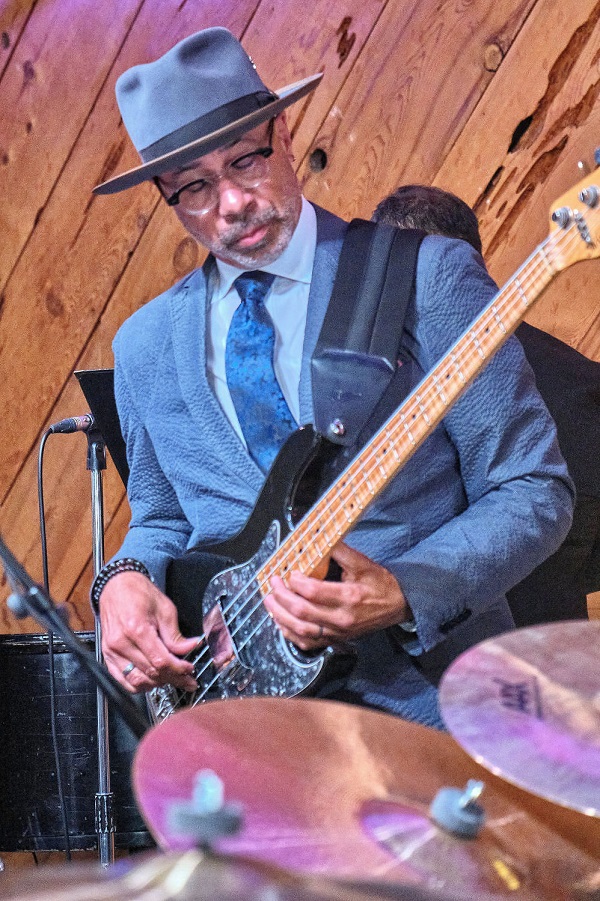
Friendship and personal relationships seem to have always played a key role in Oskar Cartaya‘s recording career.

This was demonstrated Cartaya in his first recording, “My Music, My Friends, My Time” (2004) in which he had the collaboration of illustrious friends such as Eddie Palmieri, Giovanni Hidalgo, Dave Valentín and Justo Almario.

Bajista, arreglista, compositor y productor neoyorquino de nacimiento y bayamonés

This is also demonstrated by the second one, “Lifetime Friends”, which he co-led with trumpeter Humberto Ramírez and which was chosen as one of the best Puerto Rican productions of 2015.

For the bassist, arranger, composer and producer – born in New York and raised in Bayamon – connections with other people are a vital element for the development of any musician.

Those connections coupled with the tenacity Cartaya has always shown to continually improve himself as a musician allowed him to be part of the legendary progressive jazz-rock group Spyro Gyra for five years, produce albums for Willie Colón or Herb Alpert, and play with a long list of stars including Jennifer López, Christina Aguilera, Rubén Blades, Héctor Lavoe, Tito Nieves, Tania María, Arturo Sandoval, Steve Winwood and Randy Brecker, among others.

To all of them he has lent the sound of his electric bass, able to insert itself with total naturalness in modern jazz, Cuban rumba, Spanish flamenco or Brazilian cadences, but without ever losing its funky essence, which gives rhythmic impulse to the musical genre before him. For Cartaya, music is not a profession, but a passion of life.

That passion manifested itself at a very early age, when he told his Cuban-born father that he wanted to be a musician when he was just 10 years old. He completed his initial studies at the Escuela Libre de Música de San Juan, which he remembers with pride and affection.

Oskar Cartaya
Oskar Cartaya

However, he has affirmed that his first real musical school were the records of Willie Colón and Héctor Lavoe, which he listened to at full volume in his room.

At the Escuela Libre de Música he was able to meet teachers and classmates who today are great masters of Latin music and colleagues of his, such as Humberto Ramírez himself. He also studied at the Conservatorio de Música de Puerto Rico.

Cartaya recalls that, although he studied chamber music in school, his real passion was Latin music…until he discovered jazz, thanks to an album by the great bassist Stanley Clarke. A new world opened up to his ears.

“I found a freedom in jazz that I didn’t find in Latin styles,” the musician said in an interview. “In salsa, for example, the maximum is when you are playing as part of a unit. Unlike jazz, whose pinnacle is when all the musicians improvise and go crazy playing, but everyone knows what they are doing.”

At 18, Cartaya moved to Los Angeles, where he began studying at the Musicians Institute of Technology. There he practiced for 15 hours a day, a devotion that brought him his first recognition: being accepted as a professor at the prestigious institution, two years after graduating from it.

However, his restless spirit and continuous desire to improve led him to make what he has described as the best decision of his life, moving to New York City. In the Big Apple – the place many consider the jazz capital of the world – he had the privilege of playing and recording with the late Argentine pianist Jorge Dalto; with Willie Colón and Rubén Blades; Celia Cruz, Tito Puente and Dave Valentín.

“I learned a lot, matured and saw firsthand what it was like to be on my own,” the bassist said in an interview about this period of his life. “If the opportunity was going to be given to me, it wasn’t going to come to my house. I would have to look for it.” And so he did.

At that time he also had the opportunity to meet the late rock icon Prince, at his Paisley Park, Minneapolis studios, and to become a member of Spyro Gyra. By being accepted into that group over 10 other bass players auditioning for the position, Cartaya realized that success belongs to those who work hard and have faith in themselves.

“I was able to show a lot of people that there’s nothing worse than feeling bad about yourself if you don’t try,” he said in an interview. “All the nights I played for free or for five bucks to earn a chance were well worth it.”

In 1997, the bassist produced the “Passion Dance” recording project for veteran trumpeter Herb Alpert, an experience he has described as a new learning experience in his career, as well as a chance to expose himself to a wider audience.

“My Music, My Friends, My Time,” released in 2004, is a fusion of Latin, Brazilian, American and Flamenco rhythms that was very well received by critics.

“My Music, My Friends, My Time”

“I wanted to do a project that would fill that gap that exists between Latin music and the world. I truly believe that the world needs to know that Latin musicians can do countless things within music, without throwing away their roots,” Cartaya said of the recording.

“Lifetime Friends,” produced alongside Ramirez, was described upon its release in 2015 as “an album of a cohesive and jubilant band,” in which all participating musicians – representatives of the new jazz generation in Puerto Rico – have a chance to stand out. “It’s the album we always wanted to make… to describe almost 40 years of friendship,” Cartaya and Ramírez indicated.

Cartaya
Cartaya

In 2017, Oskar presented the production “Bajo mundo” in tribute to the great Cuban bassist Israel “Cachao” López. This intense, exuberant album, with a multiplicity of rhythms, colors and guest musicians was distinguished as one of the most outstanding productions of the year by the National Foundation for Popular Culture.

It also won a Latin Grammy Award nomination in the category of Best Latin Jazz Album.

Source: Rafae Vega Curry

National Foundation for Popular Culture

“This biography is part of the archives of the National Foundation for Popular Culture. In our interest to disseminate knowledge about our great figures, it may be cited as a basis for research studies or as an assignment for pedagogical purposes, as long as credit is given to the Foundation and its author, if indicated. All rights reserved. The reproduction of the same in any printed, technical or mass media, with or without commercial purposes, is not authorized without prior written request to the Foundation and its consequent approval”.

Also Read: “The Sun of Latin Music” the first Grammy Award for Salsa Eddie Palmieri’s historic album
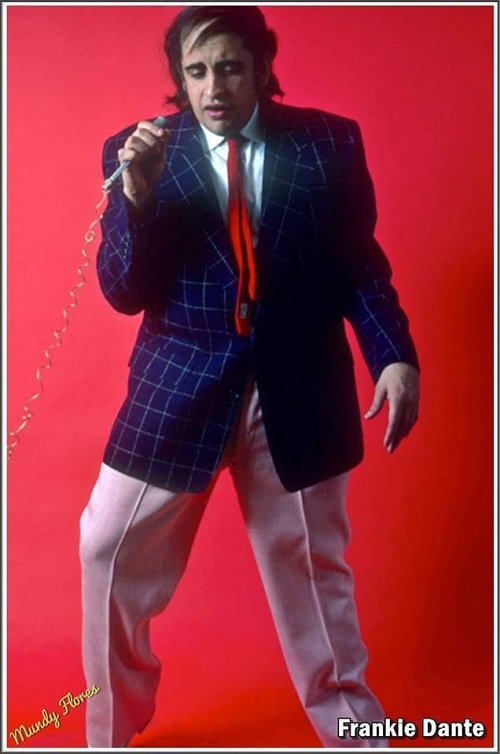
Lenin Francisco Domingo Cerda, better known as Frankie Dante, the “Underground” and “Irreverent” of Salsa in New York in the 60’s and 70’s.

“Cerda If I were president, if I were a president, there would be no armed forces, wars would end, the boys would go home where they belong.”

Lenin Francisco Domingo Cerda, mejor conocido como Frankie Dante el “Underground” e “Irreverente” de la Salsa en New York

Lenin Francisco Domingo Cerda, known as Frankie Dante, was born in Santo Domingo, Dominican Republic, on September 15, 1945.

He traveled to New York City in search of the sound of the barrio, influenced by Willie Colón and Eddie Palmieri with his Orquesta La Perfecta.

Frankie Dante, always characterized for being an authentic sonero, who interpreted the stories of the Latin barrio.

In 1968 under the label Cotique he appears in the album “Los Coquetones”, where Ismael Quintana also participated, the great influence in his development as a vocalist, this album is produced by Mr. George Goldner.

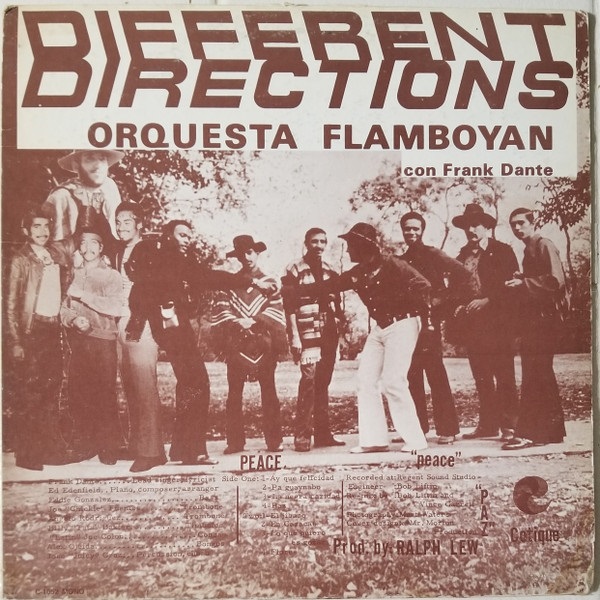
Cerda records a second production with La Orquesta Flamboyán, entitled: “Different Directions”, following the line implemented by maestro Eddie Palmieri with La Perfecta, where he continues the emphasis on social issues, raised in his first musical work, this time with the production of Ralph Lew.

Orquesta Flamboyan Con Frank Dante Different Directions1970
Orquesta Flamboyan Con Frank Dante Different Directions
1970

Launches the album: “Se Viste de Gala”. Resuming his social commitment, he includes the piece “Venceremos”, accompanied by the electric guitar played by Harry Vigianno, who also plays the tres in this production.

In 1972, Frankie Dante is invited by Larry Harlow to produce a new album entitled: “Orquesta Flamboyán Con Larry Harlow”.

Here Frankie achieved hits such as: “La Cuna del Son”, “Yo Te Seguiré”, “Vive La Vida Hoy” and “Presidente Dante”.

The album featured the participation of Larry Harlow on piano and musical production, Ray Romero and Jerry Gonzalez on Congas, Ismael “Pat” Quintana and Milton Cardona on backing vocals.

This album is considered as a recognition of Frankie Dante’s talent when he was asked by the “Wonderful Jew”, Larry Harlow to record together.

Frankie shows all his irreverence by substituting the montuno for a political speech in the manner of a candidate.

As a representative of the Underground current, Dante prefers to perform in a bohemian way in Clubs such as: El Caborrojeño and the Cheetah.

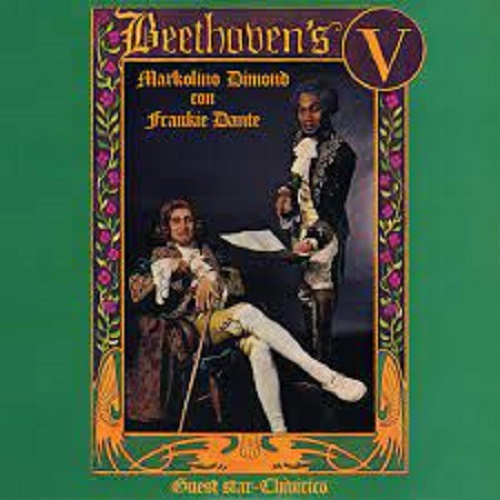
While in these clubs he meets pianist Marcolino Demond and they release the historic album: Beethoven’s V.

One of his best productions was with the extraordinary musician and pianist Markolino Dimond, who had played with Willie Colón, the album was titled: Markolino Dimond Con Frankie Dante Beethoven’s where in addition to his extravagances he imposed a different way of playing.

The album included five compositions by Marcolino Dimond: “Sabrosón”, “Camarones”, “El Quinto De Beethoven”, “Maraquero” and “Ahora Sí”, two songs with reserved author’s rights: “Los Rumberos” and “Yo No Tengo Amigo” and the hit “Porque Adore” by maestro Tite Curet Alonso.

Markolino Dimond Con Frankie Dante Guest Star Chivirico* Beethoven's V
Markolino Dimond Con Frankie Dante Guest Star Chivirico* Beethoven’s V

Dante and Marcolino were a duo without precedents, taking into account that both had the stigma of rebelliousness.

The album features Frankie Dante and Chivirico Davila on vocals and Yayo “El Indio”, Pete “El Conde” Rodriguez and Ismael “Pat” Quintana on backing vocals.

Other great musicians that participated in the band are Nicky Marrero – Timbales, Bongos; Pablito Rosario – Bongos; Barry Rogers – Trombone; Mike Collazo – Timbales, Eddie “Guagua” Rivera – Bass; Lewis Kahn – Trombone; Reinaldo Jorge – Trombone and Frank Malabé – Congas.

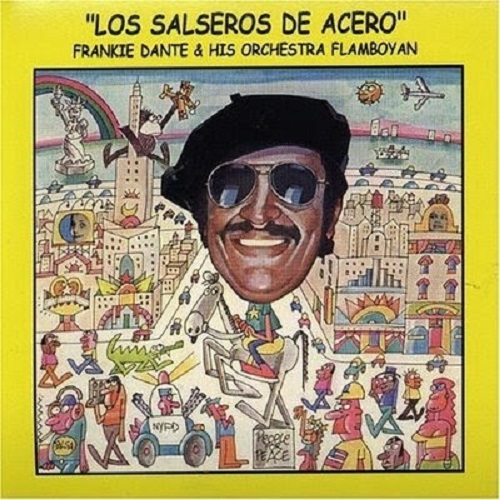
 In 1976, again with Marcolino, he released: “Los Salseros de Acero”, in an attempt to reunite the original line-up of Los Flamboyán with Joe “Chickie” Fuentes on trumpet, Ángelo Rodríguez on trombone and Alex Ojeda on timbales, plus the participation of stars of the moment such as: Charlie Palmieri, Tito Puente and Ricardo Marrero, in what was called: Flamboyán All Star Band.

Frankie Dante & His Orchestra Flamboyan Los Salseros De Acero

Among the songs on the album were “Ciencia Política” by Frankie Dante and “Chupa El Pirulí” composed by the wonderful Ciego Arsenio Rodríguez.

That year he published his seventh album “The Flamboyán All Star Band Frankie “Be Bop” Dante”, also recorded for Cotique Records, which included songs such as: “El Pipón”, “Son Retozón” and “Mumbo Jumbo”, compositions by Frankie Dante himself and a version of the song “María Cervantes” by the Puerto Rican Noro Morales.

Sonny Bravo, Norberto Cruz and Marty Sheller participated in the arrangements; Charlie Palmieri – Arrangements and Director and Mr. Ralph Lew as Producer.

The album also counted with the participation of other great musicians of the salsa movement such as: Leopoldo Pineda – Trombone, Ray Maldonado – Trumpet, Frankie Malabé – Congas, Orestes Vilató – Timbales, Ronnie Cuber – Sax and Flute, Willie Colón – Chorus and Tito Allen – Chorus.

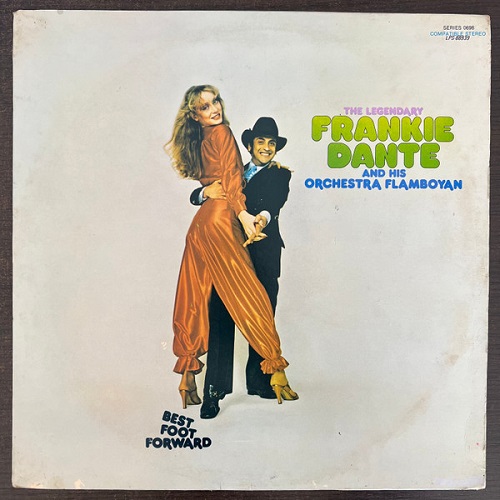
One of Cotique’s recordings was entitled “Frankie Dante and his Orquesta Flamboyán Best Foot Forward”, a compilation album with Frankie’s hits such as: “Paz”, “Los Rumberos”, “Presidente Dante”, “Venceremos” and the well known song “Yo Te Seguiré” written by the great Catalino Tite Curet Alonso.

The Legendary Frankie Dante And His Orchestra Flamboyan Best Foot Forward

His last recording appearance would happen in 1979 with the release of “Los Rebeldes”, where he decided to name his group: Frankie Dante Y Los Rebeldes.

This album has songs such as: “Los Congresistas” by Frankie Dante, a version of the song “Semilla De Caña Brava” by Cuban Luis Martinez Griñan “Lily” and “Vuelve El Rumbero” by Puerto Rican Johnny Ortiz.

Also participating in the recording were: Sal Cuevas – Bass, Louie Cruz, Marty Sheller, and Louie Ramirez in the Arrangements, Alberta Dering – Artistic Director, Ralph Lew as Producer and Milton Cardona as Musical Director.

Dominican Frankie Dante developed his musical career in New York City, where he died of cancer on March 1, 1993.

Dante, emulating his compatriot Johnny Pacheco, settles in the city of skyscrapers and takes with his “precursor” lyrical talent in terms of social conscience in salsa. With good artistic sense he perceives that the sound of the neighborhood and its hurtful musical style will be the main axis of the new concept that is born in the land of Uncle Sam.

“He recognizes in the almost adolescent Willie Colón a style to follow, he is enormously attracted to that “sour” way of arranging the songs, the maestro Eddie Palmieri and his Orquesta La Perfecta (already in full swing) also influence the young Dante as well as Ismael “Pat” Quintana’s way of interpreting, a style that Frankie incorporates immediately in his first production in 1968 under the Cotique label (Ref. CS-1043) titled Los Coquetones”.

Sources and Bibliography:

  • http://www.megaupload.com/pt/?d=FR6AAPU0
    • http://ww.malianteo.com
    • http://www.salsajazz.com/i
    • http://apostolsalsero.soy.es/frankie-dante-la-orquesta-flamboyan/
    • Latinastereo 100.9 FM nuestra música

Also Read: Nicky Marrero is an innovator, timbalero and bongo player, living legend of our Afro-Latin and Caribbean music.

The Conga Room closes its doors, but says goodbye in style

People dancing at The Conga Room

Recently, we learned some unfortunate news for the Latin music scene and the community in general and it is that The Conga Room, one of the most important nightclubs in Los Angeles, will close its doors this March, which has shocked those who used to frequent the cheerful and colorful place to forget their everyday problems for a few hours of dancing.   

This great place was opened in 1999 by businessman Brad Gluckstein thanks to the support of leading figures in the entertainment industry such as businesswoman, actress and singer Jennifer Lopez, actor Jimmy Smits, actor Paul Rodriguez and actress Sheila E. 

Although it first opened its doors on Wilshire Boulevard in 1999, it was moved to L.A.A. LIVE about nine years later. After the change of venue, there were personalities interested in investing in The Conga Room due to the great project it represented at the time, such as rapper and member of the Black Eyed Peas William Adams (better known as will.i.am), actor of Puerto Rican descent Amaury Nolasco, former basketball player Baron Davis and former basketball player Trevor Ariza. 

It was these great figures in music, acting and sports who made The Conga Room one of the most recognized meeting places for Latin music fans and its greatest exponents. 

Jimmy Smits and Paul Rodriguez at The Conga Roo
Jimmy Smits and Paul Rodriguez celebrating The Conga Room’s 20th anniversary some years ago

The achievements of The Conga Room all these years  

During the years following as of its reopening, The Conga Room became an iconic place for music lovers and contributed greatly to the development of the Latin music and cultural scene in Los Angeles. 

During 25 years of operation, it has not only brought the best singers and DJs from California and the United States in general, but also managed to create a lively environment composed of all kinds of cultures that transcended musical genres, to the point that there were people of all nationalities dancing to the same rhythms without any problem, proving once again that music is a universal language we can all understand perfectly.  

And speaking of music, its little stage witnessed more than 500 live shows that included big stars such as Celia, Cruz, Johnny Pacheco, Willie Colón, Tito Puente, Ocar D’ León, Tito Nieves, Gilberto Santa Rosa, Carlos Santana, Elvis Crespo, Los Van Van, Buena Vista Social Club, Alejandro Sanz, Juanes, Fito Paez, Jerry Rivera, Eddie Santiago, Tony Vega, Zacarias Ferreira, Invasión Latina, Andy Montañez, Atercipelados, Aleks Syntek, Beto Cuevas, among many others. As for newer idols, The Conga Room has also received Ivy Queen, J Balvin, Maluma, Bad Bunny, Luis Fonsi and many more.   

It should also be mentioned that; while The Conga Room’s approach is to promote salsa, merengue and bachata; the nightclub is not limited to Latin genres. In fact, there have been great performances by rock, hip hop and R&B artists such as Prince, Stevie Wonder, Lenny Kravitz, Justin Timberlake, Avicci, Snoop Dog, Ed Sheeran, Andy Grammer, Jamie Foxx and on and on.  

This shows that The Conga Room was not limited to the original concept of its founders, but sought to go above and beyond to increase its assistance every day. Its management knew how to reinvent itself in spite of trends and circumstances, which is why it managed to survive so long.   

Oscar D’ Leon at The Conga Room
Oscar D’ Leon performing at The Conga Room

The Conga Room’s definitive closure and farewell show 

The Conga Room was inaugurated with music, so it must also say goodbye with music, so it will offer a private concert this March 27th featuring famous personalities who will meet at the club that day to say goodbye in style.   

The main star of the event will be the renowned Puerto Rican singer Gilberto Santa Rosa, who will be one of those responsible for livening up the night for the show attendees with his greatest hits. Likewise, the host will be Jimmy Smits and he will be accompanied by Paul Rodriguez in the hosting of the show, who were bot very important in club maintenance for so long.  

As for the reasons for the closure, founder Brad Gluckstein has issued statements saying that the ravages of the pandemic, the few events at the convention center and the difficulties in booking national artists with AEG Live (a company focused on the production and promotion of musical events) have made the business model of The Conga Room no longer viable in today’s economy. Not to mention that cost of living, inflation and high interest rates have changed the priorities of potential consumers. 

However, despite the sadness that Gluckstein and the rest of those involved in the Conga Room project have, the businessman pointed out that not everything related to this mythical place will be forgotten, since Conga Kids, a non-profit organization aimed at promoting the social-emotional well-being of children through dancing, will continue to operate as before. This beautiful sister project of The Conga Room will keep its doors open despite the setbacks for the sake of the kids. 

Read also: ”Alma Del Barrio” celebrates 50 years of operation 

Nestor Torres

North America / USA / New York

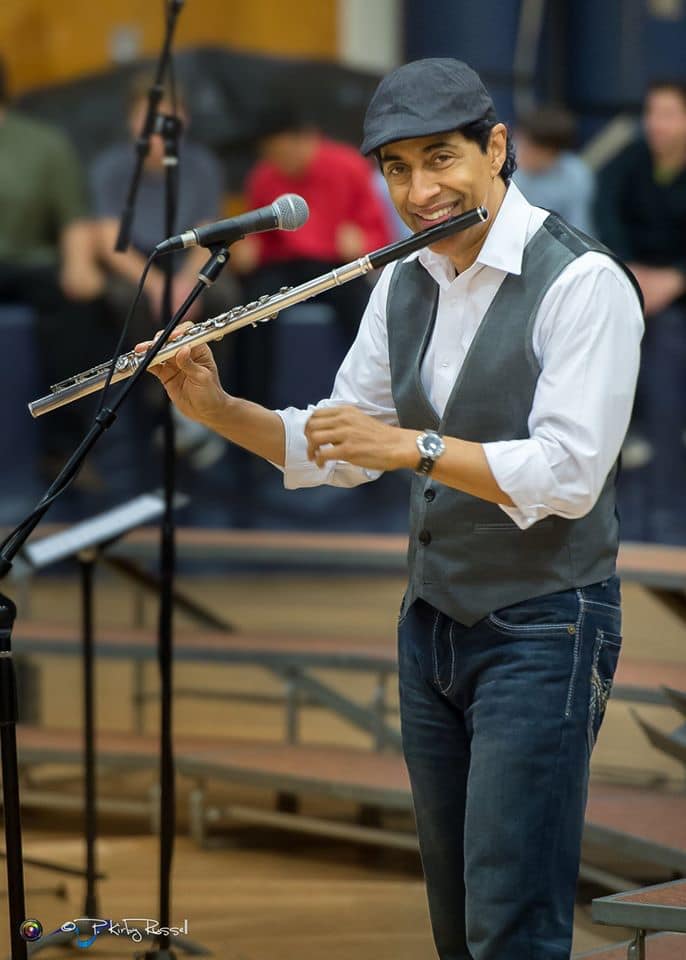
If a flute could talk and sing, it would certainly be in the voice of Nestor Torres

If a flute could talk and sing, it would certainly be in the voice of Nestor Torres, for he speaks through his instrument. Equally fluent in Jazz, Classical and Latin sounds, his fluid versatility sets him apart.

Nestor Torres
Nestor Torres

Nestor’s total command of his instrument allows him a freedom of expression that is at once captivating and liberating, powerful and genuine.

Born in Mayaguez, Puerto Rico, Nestor Torres has played music all his life. His parents (His father, a gifted musician himself, and his mother, an educator and business woman) gave him a set of drums at age 5, and later took up the flute (at age twelve).

He moved to NYC with his family in his teenage years and went on to study at Mannes School of Music and later at the New England Conservatory of Music in Boston.

At that time he was also able to learn to improvise in a style of Cuban Dance music called ‘Charanga’, which helped to shape and develop Nestor’s melodic and danceable sound.

In 1981, Nestor moved to Miami, where he continued to develop his unique sound – and a strong following. Since then he has – and continues to – tour all over the world.

He has also performed and recorded Ricky Martin, Tito Puente, Herbie Hancock, Gloria Estefan, and many more.

Nestor Torres has recorded 14 Cd’s to the date. His 5th & 7th records, Treasure of the Heart and My Latin Soul, were nominated for a Latin Grammy, and his production This Side Of Paradise won the Latin Grammy award in the Pop instrumental category on September 11, 2001.

“Of course it was a great honor and privilege to win the Grammy,” Torres reflects. “That being said, the fact that I was to receive it on 9/11 gave my work and my music a stronger sense of mission and purpose. Terrorism and violence come from ignorance, anger, and hopelessness.

Music inspires and empowers; it soothes the human heart and enlightens the spirit. I have made it my prime point to create music and live my life in a way that does just that.”

From that experience, together with a commission to compose and perform for the Dalai Lama, Nestor Torres produced Dances, Prayers & Meditations For Peace in 2005.

In his brand new CD, Nouveau Latino, Nestor Torres returns to his Latin roots with a fresh approach, impeccable musicianship, and irresistible improvisations. Featuring songs from stars like Celia Cruz and Ruben Blades, Torres’ interpretations of these great Latin hits appeal to those discovering the songs for the first time as much as those who remember them.

In addition to his achievements in the studio and on the stage, Torres is also recipient of two honorary doctorate degrees; one in 1994 from Barry University, and the other in 2000 from Carlos Albizu University, for his commitment to youth education and cultural exchanges.

Nestor Torres
Nestor Torres

NESTOR TORRES: Facts & Career Highlights

• Classical and Jazz flute studies at Mannes School of Music, and New England Conservatory of Music.

• Early improvisational ‘on the job training’ playing in Cuban and Latin Dance bands including Ray Barretto, Eddie Palmieri, Celia Cruz and Tito Puente.

• Regular featured guest at the ‘Salsa Meets Jazz At The Village Gate’ series in NYC.

• Has toured Japan repeatedly, including collaborations with Herbie Hancock, and Wayne Shorter.

• Collaborations: with James Moody, Jon Faddis, Chris Botti, Larry Coryell, Hubert Laws, Arturo Sandoval, Michel Camilo, Paquito D’ Rivera, Danilo Perez, David Sanchez, Pablo Zigler, Makoto Ozone, Patrice Rushen, Bob James, George Duke, Wallace Roney, Peter Nero and Clare Fisher, among many, many others.

• Jazz Festivals: Capitol Jazz Festival, JVC Jazz Festivals; in Los Angeles and in NYC with Eddie Palmieri; Aspen Snowmass; Maui; Heineken in Puerto Rico and Dominican Republic; Sedona; Atlanta…. Among many others.

• Symphonic: Has performed with the New World, Singapore, Springfield Missouri, Charleston, Signature (Tulsa, OK), Puerto Rico, and Stanford Symphonies; Philly Pops Orchestra; and the Naples, Florida; Malaysia, and Florida Philharmonics.

• Recordings to date (14): ‘Colombia En Charanga’, ‘Afro Charanga Volume 2’, ‘No Me Provoques, ‘Morning Ride’, ‘Dance of the Phoenix’, ‘Burning Whispers’, ‘Talk To Me’, ‘Treasures Of The Heart’, ‘Canciones Primeras’, ‘This Side Of Paradise’, ‘My Latin Soul’, ‘Sin Palabras’ (Without Words),‘Dances, Prayers & Meditations For Peace’, and ‘Nouveau Latino’.

• Grammys: His Latin-jazz composition “ Luna Latina” (from Treasures of the Heart) was nominated in 2000 for a Latin Grammy as well as his CD ‘My Latin Soul’ in 2002. In 2001, he won a Latin Grammy for his CD ‘This Side of Paradise’.

• Two Honorary Doctorate degrees from Miami-based Universities – one in 1994 from Barry University and the other in 2000 from Carlos Albizu University – for his commitment to youth education and cultural exchange as an Ambassador of Peace and Culture.

Nestor Torres
Nestor Torres

Current location

Miami, FL USA

General Manager

Ivette Delgado/ [email protected]

Influences

My Father, Hubert Laws, Miles Davis,Tito Puente, Richard Egues & Orchestra Aragon

Contacto de prensa

Wanda Jimenez/ [email protected]

Representative

The Jazz Agency
[email protected]
818-813-5299

https://www.facebook.com/NestorTorresMusic/

Felipe Pirela | The Bolero of America

North America / USA / New York

Felipe Pirela:

En mi barrio el empedrao
Parroquia Santa Lucia
Había una barbería
Que era muy populachera
Te lavaban en ponchera
La silla se reclinaba
Y Luis el perro pelaba
Al son de una periquera

Felipe Pirela
Felipe Pirela

This is the sound of the tasty gaita performed by the group Sabor Gaitero and Los Gaiteros de Pillopo. It refers to a barbershop in a picturesque neighbourhood of Maracaibo in the Venezuelan state of Zulia. It was in this popular neighbourhood of Maracaibo, El Empedrao, that Felipe Antonio Pirela Morón was born in 1941. It was probably in this popular barbershop that he got his first haircut, and it was certainly in some corner of the neighbourhood that he took his first steps as a singer, perhaps interpreting gaitas or some other popular genre. The young Felipe was far from imagining that he would become “El Bolerista de América” (The Bolero of America).

The son of a bricklayer, Felipe Pirela Monsalve, and a housewife – an artist at heart – Lucia Morón de Pirela, the boy began his musical career as a child, supported by his mother, in small radio singing competitions. Incredibly, at the age of 13, together with some boys from the neighbourhood and his two brothers, he founded the group Los Happy Boys, which performed in various venues in Maracaibo, without even imagining that he would later become the main star of Billo’s Caracas Boys, a group that, upon arriving in Venezuela, debuted under the same name, Billo’s Happy Boys, directed by the Dominican maestro Billo Frometa.

At the beginning of his singing career, Felipe specialized as a bolerista, performing songs by prominent singers such as the Chilean Lucho Gatica, the Cuban bolerista Olga Gillot and Venezuela’s favorite tenor Alfredo Sadel.

Felipe Pirela
Felipe Pirela

Radio Caracas Television had the honor of making Felipe’s image public for the first time in 1957, through an amateur program in which Felipe placed third. Unfortunately, there were no video recording systems in those days, so there is no record of this historic achievement. Later, the now defunct and legendary Venezuelan regional television station from Maracaibo, Ondas del Lago, served as a springboard for Felipe, who was one of its founding artists.

These performances allowed him to sign a contract with the station in 1958, after which he moved to Caracas, where he performed on Radio Caracas and in various nightclubs.

Shortly thereafter, he returned to Maracaibo to join the orchestra Los Peniques, with whom he recorded his first album in 1960 and began his professional career.

Like most of the artists, baseball players and boxers from Maracaibo, Felipe was a man of humble origins, pobre del pobre, with limited economic resources, who for a time missed opportunities to be noticed despite his immense talent.

Felipe Pirela
Felipe Pirela

Fortune smiled on him when Maestro Billo Frometa heard him sing, at a time when the arranger, director and musician from Quisqueyano was preparing to restructure his band, Billo’s Caracas Boys, and at the same time hired another singer from Maracaibo, the remarkable José “Cheo” García. This hiring gave an enormous boost to the already famous Billo’s Caracas Boys; the band acquired great international prestige, performing throughout America and Europe, popularizing the immortal mosaics that for many years enlivened the parties and were the favorites of the Venezuelan public.

Not for nothing, Billo’s Caracas Boys Orchestra has been called the most popular in Venezuela, the Caracas and Venezuelan clubs, Latin American countries and even the European continent (Tenerife, Spain) showed full houses during the band’s performances. In these performances, the acclaim for Felipe Pirela was total. Huge demonstrations of support, full houses and legions of fans followed the “crooner” on his tours.

When Venezuela’s favorite tenor, Alfredo Sadel, left the popular genre and his country to devote himself to opera, Pirela almost immediately replaced him in the favorite place of Venezuelans.

In 1961, “El Bolerista de América” recorded with a string orchestra conducted by Billo, the long playing Canciones de Ayer, including old songs and songs of that time, a recording that marked his resignation and departure to Mexico, where he also had memorable successes.

Felipe Pirela boleros with guitars

In 1964 he married Mariela Montiel, a marriage that resulted in the birth of a daughter, Lennys, and in which La Retirada was quickly marked by the fact that Amor se Escribe con Llanto (Love is Written with Crying) and that it probably does not last a lifetime.

Canada and Mexico witnessed his successes in ’67 and his return to Venezuela. Successful performances in Miami that same year motivated him to reside in the United States, where he tried to structure his own record company, a project that came to nothing and he was deeply disillusioned and returned to Venezuela, later residing in Puerto Rico, where he was taking La Última Copa when he was tragically assassinated in 1972.

For some, his career was marked by Sombras Nada Más, but for the vast majority, “El Bolerista de America” remains in the memory as one of the most unique stars of Latin American music of all time.


For Mario Cabrera Bello

Mario Cabrera Bello


  • « Go to Previous Page
  • Page 1
  • Interim pages omitted …
  • Page 34
  • Page 35
  • Page 36
  • Page 37
  • Page 38
  • Interim pages omitted …
  • Page 58
  • Go to Next Page »

International Salsa Magazine (ISM) is a monthly publication about Salsa activities around the world, that has been publishing since 2007. It is a world network of volunteers coordinated by ISM Magazine. We are working to strengthen all the events by working together.