• Skip to primary navigation
  • Skip to main content

International Salsa Magazine

  • HOME
  • Previous editions
    • 2026
      • ISM / May 2026
      • ISM / April 2026
      • ISM / March 2026
      • ISM / February 2026
      • ISM / January 2026
    • 2025
      • ISM / December 2025
      • ISM / November 2025
      • ISM / October 2025
      • ISM / September 2025
      • ISM / August 2025
      • ISM / July 2025
      • ISM / June 2025
      • ISM / May2025
      • ISM / April 2025
      • ISM / March 2025
      • ISM / February 2025
      • ISM / January 2025
    • 2024
      • ISM / December 2024
      • ISM / November 2024
      • ISM / October 2024
      • ISM / September 2024
      • ISM / August 2024
      • ISM / July 2024
      • ISM / June 2024
      • ISM / May 2024
      • ISM / April 2024
      • ISM / March 2024
      • ISM / February 2024
      • ISM / January 2024
    • 2023
      • ISM / December 2023
      • ISM / November 2023
      • ISM / October 2023
      • ISM – September 2023
      • ISM – August 2023
      • ISM July 2023
      • ISM Edition June 2023
      • ISM – May 2023
      • ISM April 2023
      • ISM March 2023
      • ISM February 2023
      • ISM January 2023
    • 2022
      • ISM December 2022
      • ISM November 2022
      • ISM October 2022
      • ISM September 2022
      • ISM August 2022
      • ISM July 2022
      • ISM June 2022
      • ISM May 2022
      • ISM February 2022
      • ISM January 2022
    • 2021
      • ISM December 2021
      • ISM November 2021
      • ISM October – 2021
      • ISM September 2021
      • ISM August 2021
      • ISM July 2021
      • ISM May 2021
      • ISM April 2021
      • ISM June 2021
      • ISM March 2021
      • ISM February 2021
      • ISM January 2021
    • 2020
      • ISM December 2020
      • ISM November 2020
      • ISM October 2020
      • ISM September 2020
      • ISM August 2020
      • ISM July 2020
      • ISM June 2020
      • ISM May 2020
      • ISM April 2020
      • ISM March 2020
      • ISM February 2020
      • ISM January 2020
    • 2019
      • ISM December 2019
      • ISM November 2019
      • ISM October 2019
      • ISM Septembre 2019
      • ISM August 2019
      • ISM July 2019
      • ISM June 2019
    • 2016
      • ISM December 2016
  • Spanish
  • Download Salsa App
    • Android
    • Apple

Search Results for: All Stars

Juan Sebastian Bar “The Temple of Jazz and Salsa in Caracas”

In the heart of the city, there is a refuge of sophistication and art: Juan Sebastián Bar.

Delight your palate with our cocktails, each a fusion of classic flavors and contemporary notes, while live jazz and salsa create the most special melodies.

In the heart of the city, lies a refuge of sophistication and art, Juan Sebastián Bar.

Aldemaro Romero, Alfredo Sadel, Billo Frómeta, Dámaso Pérez Prado, Tito Puente, Bobby Capó, Pedro Vargas, Leo Marini, Libertad Lamarque, Ray Barreto, Lucho Gatica, Olga Guillot, Marco Antonio Muñiz, Julio Gutiérrez, Vicky Carr, Armando Manzanero, Sergio Mendes.

They all passed through Juan Sebastián Bar, the so-called temple of jazz, but which is actually a brotherhood of music lovers. For 43 years it has been a reference in Caracas’ nightlife, even with its ups and downs. Every night, from Tuesday to Saturday, it offers a space for disconnection.

That brick cave, with its cork walls and the bar illuminated with bottle bottoms, has its anecdotes, the first one sinceevery night the famous saxophonist Victor Cuica threatened them and the second one. It stars the maestro Aldemaro Romero in a taxi heading to the place, one of his usual places to eat and drink.

The taxi driver who is already approaching the place located in El Rosal, comments: “poor those people who could not complete the facade and left it in bricks.” The scene speaks of that ostentatious and cosmopolitan Caracas of the seventies and eighties. The truth is that over the years the area was transformed into a financial district of large glass towers and the two-story brick house became the after office on Venezuela Avenue.

The name of the establishment, founded by Eleazar López Contreras -yes, the grandson of the former president of Venezuela- is a play on words with the name of the composer Juan Sebastián Bach, who holding a pair of cutlery serves as the logo for the business, under the design of Jorge Blanco, the famous illustrator who created the character of the Castaway.

In choosing the place, they considered other equally humorous options such as Bar Thoven.

The musical repertoire ranges from jazz to salsa. In the place you can listen to virtuosos of these genres such as Frank Sinatra, Ella Fitzgerald, Tonny Bennet, Héctor Lavoe and Willie Colón, among others.

Alfredo Naranjo, a percussion virtuoso who has left his mark on the international music scene, will delight us once again with his incomparable talent.

Alfredo Naranjo, a percussion virtuoso who has left his mark on the international music scene, will delight us once again with his incomparable talent

He recently participated in the Chicago International Festival and has received a Latin Grammy nomination for his unparalleled percussion performance on the album: Soy Puro Teatro: Tributo a La Lupe by Mariaca Semprún and with her, he also recorded a version of the gaita María la bollera.

Considered one of the greatest exponents of salsa and Latin jazz, Alfredo Naranjo has a long career that began at an early age at the Conservatory of Music of the National Youth Orchestra.

In 1986 he joined the Gran Mariscal de Ayacucho Orchestra, and then continued his training at the University of Long Island, New York.

He has played with artists such as Dave Samuels, Tito Puente, Ray Charles, Alex Acuña and Carlos “Nené” Quintero, and groups such as Guaco and Ensamble Gurrufío. Cheo Feliciano referred to him as “the best vibraphonist in salsa.”

He has been the leader of El Guajeo, a fundamental piece of contemporary Caracas. He has recorded albums such as Cosechando (1993), A través del tiempo (1997), Vibraciones de mi tierra (1999), Alfredo Naranjo y El Guajeo I y II (2001 y 2006), México Music Fest (2011), Lado A Lado B (2015) and Be Jazz Sessions (2018), an album that was awarded at thePepsi Music Awards in the Jazz Album category.

Enjoy a unique evening in a sophisticated atmosphere, where the passion for music is breathed in every corner.
Let yourself be seduced by the enveloping rhythms of Latin music in a sophisticated atmosphere.

Every Wednesday, Dj. Augusto Felibertt transports us through a unique musical journey.

Every Wednesday, DJ Augusto Felibertt takes us on a unique musical journey.

We look forward to seeing you at @Juansebastianbar to enjoy an unforgettable evening!

Wednesday to Saturday from 5:00pm on Venezuela Avenue and Mohedano Street, El Rosal.
Reservations at 0414-3080587

Also Read: Gato Barbieri was an excellent and virtuoso Argentine saxophonist par excellence

Edwin “El Calvito” Reyes. From combat to Beats

North America / USA

After participating in the largest military coalition in the history of the United States, Edwin “El Calvito” Reyes has shown that the phrase “If you dream that you can achieve it” is totally true. Dreams are achievable with perseverance, dedication and talent, qualities that this dreamy Sonero has, who will launch his record label soon for all Salseros lovers who support the new blood of the Salsa.

Edwin was born in Trujillo Alto (Puerto Rico) in 1974 and when he was 19 years old, he began his artistic career, playing and doing concerts of Plena (Folkloric Puerto Rican Music) in his hometown. Five years later “El Calvito” Reyes enlisted in the US Army in order to give a better future to his family, after a terrible work accident in his previous job (He was an Electrician).

Edwin “El Calvito” Reyes - Photo
Edwin “El Calvito” Reyes – Photo

During this year of change (1997) Edwin had his first opportunity in front of the American public as vocalist leader in a consolidated orchestra in these lands, “Papo salsa and his Tumbao” in Fort Stewart Army Post, GA, thanks to the expert eyes of Víctor Paris and Mr. Godreau, “Papo Salsa”.

From March 2003 to 2007, Edwin “El Calvito” Reyes went to combat four times in Iraq and once fought in Afghanistan, but he always felt the need to help relieve the stress of all the soldiers who were in those circumstances like him. In this way he created Saturdays of Salsa in combat for which he received help in the first instance from an U.S. civilian specialist in communications, Mr. Pérez, who contributed a large part of the necessary sound equipment to carry out this incredible idea at the beginning.

Later, Edwin with his percussionist and DJ skills in 2005 returns to Iraq but this time better prepared to carry out the Saturdays of Salsa parties during the fight. During this year he had his first performance in front of a crowd of soldiers and civilians accompanied by an orchestra of 14 musicians live, among which were: the Puerto Rican and master pianist José Pomales, Willie Báez, Julio De La Rosa, and Javier Solivan, among others …

Edwin “El Calvito” Reyes in concert

Everyone playing outdoors in the main dining room at Camp Liberty where the stage was. From this success, the band continued its touches until 2007 in this warlike country with an orchestra of more than 15 pieces: Piano, Bass, Trumpets, Trombones, Tenor Sax, Conga, Timbale, Bongo / Bell, Drums, Vocalists and a sound master, with which this wonderful orchestra made a total of 25 presentations.  “We were flown like true artist, in helicopters from one base to another, to just perform and then return back to our original base… Playing at Saddam’s Palace (a true palace made of concrete and marble) was the highlight. Also, at Camp Slayer where the biggest dancing crew gathered was an adrenaline rush for us… All with the help of great people who really felt like I felt; boost our own moral in combat!” told us Edwin.

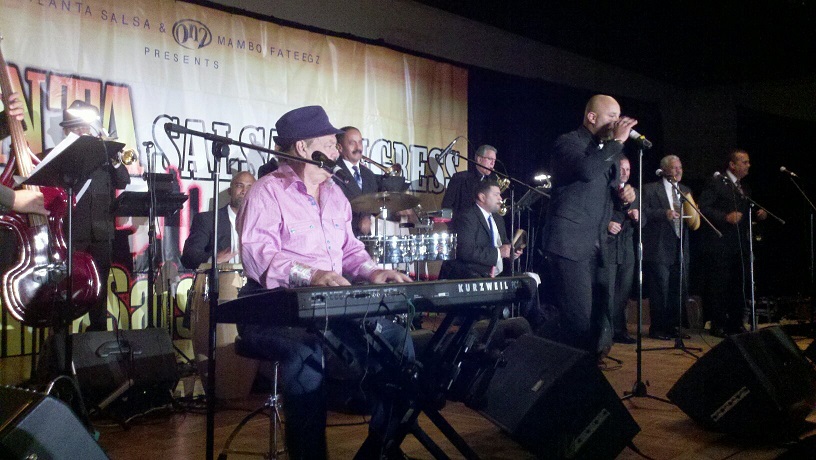
In parallel to his military career, “El Calvito” Reyes participated in the Latin Music Orchestra in the city of Savannah, GA, “Ron con Anís” by the dead musician David Mercado and of which in 2006 he would be its owner under the new name “Orquesta con Clase” reaching objectives such as: leading the Latin American Services Organization (LASO) Festival in Savannah with more than 6,000 attendees; They were the “Guests of Honor” for the Fiesta Atlanta Festival at the Olympic Centennial Park in Atlanta, Georgia, performing in front of 10,000 people. Also, they served as the backup band for: Salsa Legend, Larry Harlow, the 2011 Hotalanta Salsa Congress, and many more.

Edwin “El Calvito” Reyes on the radio

In 2011 he is part of a selection of elite musicians of the U.S. Army to form a Latin music band called “One & Only” idea of creation by The Army Marketing & Research Group (AMRG) and carried out by the musicians Carlos Negrón and Albert Sánchez. This band, similar to U.S. Army Jazz Ambassadors sang Salsa, Merengue, Bachata and other Latin rhythms for the entertainment of their audience. During his tenure in this band he performed at the annual conventions of the League of United Latin American Citizens (LULAC), which is the largest nonprofit organization in America. He helped many Latinos obtain millionaire scholarships, he was master of ceremonies on three occasions contributing with his knowledge on “The importance to stay positive and reach that goal” and “How the army life will impact your life”.

From 2012 to 2016, he was the Official in charge of the Ensemble. He achieved the inclusion of more musicians to the group including female talent. He had the privilege of meeting political figures such as Michelle Obama, Hillary Clinton and Ricky Rosello (current Puerto Rico’s Governor), as well as acting in front of world-renowned stars such as: his idol Gilberto Santa Rosa, Olga Tañón, Tito Nieves, Jennifer Lopez, and many luminaries of the country’s Hispanic television.

Edwin “El Calvito” Reyes, leader, visionary and humble was also the host of a radio show called “My Salsa Show” in WHCJ 90.3fm at Savannah State University. From there derives his nickname “El Calvito”, thanks to one of his fellow broadcasters of the station and since then he is known as Edwin “El Calvito” Reyes by all his fans.

Edwin “El Calvito” Reyes

“ … I play Timbales, Conga, Bongo, Bata, Campana and all minor percussion… I ask not to be considered a master percussionist, as I’m learning the craft of all, but so far I have mastered the playing and singing simultaneously.”

This Sonero, percussionist has composed several songs and has made numerous covers. “You are My Wife” (2016) with arrangements by Castor Ugarte was his first composition with lyrics inspired by his wife.

His most recent single “Mi Tierra Querida”, al Son de Bolero, (2018) showed that doing what he loves has been one of his best keys to his resounding ascent in this career. This composition of the “Virtuoso de la Salsa” Rey Torcat with arrangements of the same Edwin with Eric Maldonado (Owner and Master Engineer at Paris Recording Studios, Tampa, FL) and on the piano, Adam Perez, has been a symbol of hope for all Puerto Rican emigrants based in the U.S. “Mi Tierra Querida” was awarded by the Akademia Music Award for Best Song back in April 2018.

“Mi Ritmo se llama Zalsa” is a theme that he launched this year and invites the dancers to perform their best steps on the track with its fast paced. Lyric by Rey Torcat, produced by Eric Maldonado, and with the participation of: Archie Pereira (piano), Kevin Pagan (Bass), Luis Chafalote (trumpets), José León (trombones) and Ricardo Rodríguez (saxophone Bari). This song currently ranks # 1 in Salsa Tune in Barcelona, Spain, based on the Record Pool of “Gussi DJ” on Tune in Radio.

Photo of Edwin “El Calvito” Reyes

“Soneros de Sangre Nueva” is another song of his authorship and the third that works in conjunction with Rey Torcat. In this single they share together the interpreters: Josean Rivera “El Nuevo Amolador”, Edwin Lebron “Xtraordinario”, Nandy “El Sinsonte” (Conquistador Del Elemento) and Gumbay Navedo (Carmen Sol). Also, the musicians of great trajectory, such as: Banny Maldonado, Grammy Winner, (Timbales), Edwin “Pirulo” Reyes (Congas) and Kokoand Take (Bongo / Bell) and in the choirs the Lead vocalist of the legendary CORPORACION LATINA, Edgardo “Bambino” Otero participated in this hit. Similar to his two previous unreleased tracks “Mi Tierra Querida” and “Mi Ritmo se llama Zalsa”, “Soneros de Sangre Nueva” has had a great acceptance and support from the public knowledgeable appreciative about the new Salsa representation worldwide.

The covers “Ya te Olvide” (2017) original song by the successful Mexican singer Marco Antonio Solis, recorded in the state of Kansas with arrangements by Carlos Ugarte and “RAN KAN KAN. Just for the King”(2009), tribute to Tito Puente under the production of one of the best percussionists, David Lugo with different choirs, Xilofono or Marimba, Trombones, and solos by Conga and Timbal, have screened” El Calvito “Reyes at the top of the most outstanding relief Soneros Salseros today.

Edwin “El Calvito” Reyes performing at the concert

With 25 years of musical experience and more than 10,000 presentations around the world, Edwin has stepped on the best stages including the World Peace Festival at the Olympic Stadium in Seoul (South Korea) in front of 82,000 people. He also had appearances in more than 20 Salsa Social events in many clubs throughout the peninsula, participated in the Salsa Beach Festival in Pusan and in two Asia Salsa Congreses with the master trombonist’s band, Greg Peña.

“Salsa is my therapy,

Edwin, who currently resides in Palm Coast, Florida, and after 22 years of service in the U.S. Navy and retired as Chief Warrant Officer, is preparing his debut album to be released in 2019 and doesn’t discard in the future to continue working on behalf of Hispanic communities around the world as a motivational coach, always bringing optimism and hope for a better future for the Latins.

Edwin “El Calvito” Reyes - A New Design - Made with PosterMyWall
Edwin “El Calvito” Reyes – A New Design – Made with PosterMyWall

All his music can be downloaded NOW on all digital platforms.

For more information, please visit www.ElCalvitoReyes.com or follow him in all his social networks as Edwin El Calvito Reyes.

Video: https://youtu.be/XMRTsFvpT0A

Virgilio Martí participated as aVirgilio Martí participated as a vocalist in the Grupo Folklórico Experimental Newyorkino in which he composed the song “Cuba Linda”

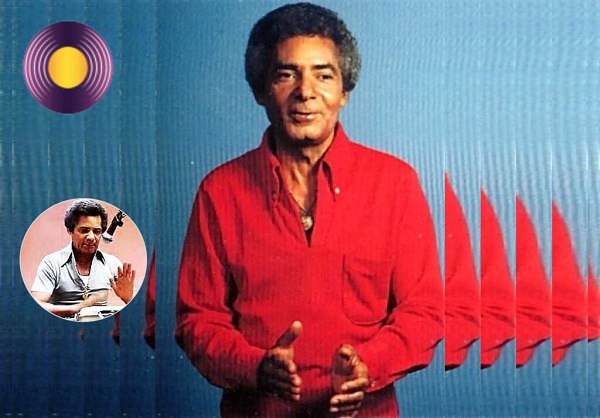
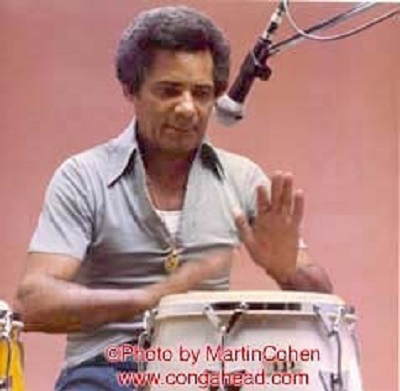
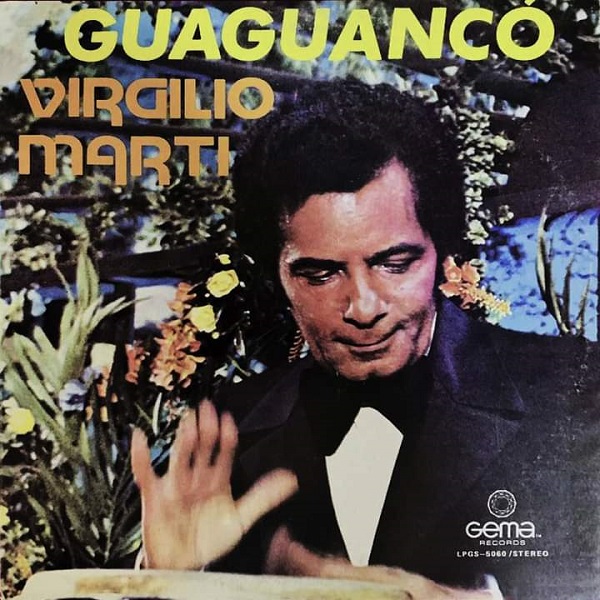
Virgilio Martí, born in the year 1919 Havana, Cuba, Rino Rumbero, Singer, Composer, Arranger, Percussionist, Actor and Orchestra Director, well known since the late 40’s, especially as a guaguancó singer.

He began touring the world in 1949 and met his later wife in 1960 in Peru.

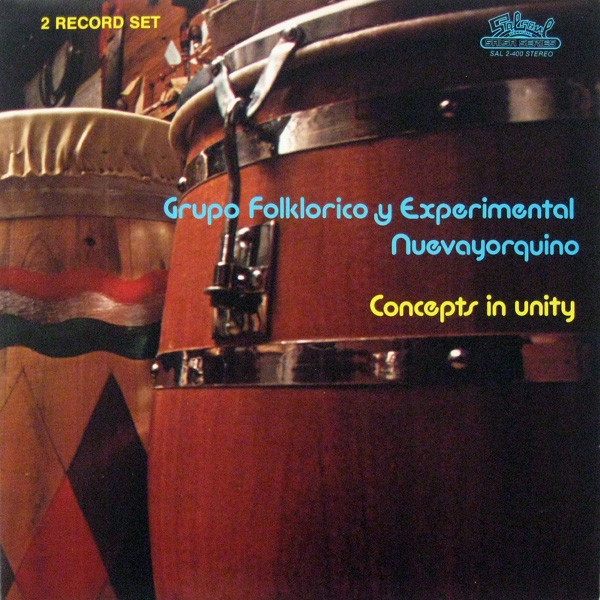
Virgilio Martí participated as a vocalist in the Grupo Folklórico Experimental Newyorkino in which he composed the song "Cuba Linda".
Virgilio Martí participated as a vocalist in the Grupo Folklórico Experimental Newyorkino in which he composed the song “Cuba Linda”.

That same year, he settled in New York, participating in the local scene.

He participated in the LP “Patato y Totico” in 1967, he also participated with his brother Eloy Martí, in a Quintet accompanied by Gene Golden, for the year 1979.

Israel López (Cachao), Arsenio Rodríguez, Héctor Cadavieco, Francisco Valdés, Papaíto, Tony Mayari and Mario Cadavieco also worked on that album.

He participated in the “Grupo Folklórico Experimental Newyorkino”, where he was their vocalist and percussionist, in 1975. During his stay with them, he composed the song “Cuba Linda”.

"Grupo Folklórico Experimental Newyorkino, donde fue vocalista y percusionista del mismo, en 1975
“Grupo Folklórico Experimental Newyorkino, donde fue vocalista y percusionista del mismo, en 1975

Another work of Martí of great remembrance is the album entitled: “Saludando A Los Rumberos”, published by the Caimán label in the early 80’s and in which the Cuban acts as vocalist and main star. In it, Martí is involved with talents such as: Tony Cofresí, Andy and Jerry González, Yomo Toro, Paquito Pastor, Ray Romero, Claudio Roditti and Ignacio Berroa, among others.

Virgilio Martí, born 1919 Havana, Cuba.

“Iya Modapue”, constitutes in itself, a guaguancó with open rumba being at the same time the favorite number of the “Grupo Folklórico”, and even the first groove that was recorded.

The levels of experimentation and the freedom to unload several rhythms in a single musical performance are the factors producing the attraction of the musicians for “Iya Modupue” (which means Thank You Mother).

The vocal part is in the hands of Virgilio Martí. The trumpet of “Chocolate” Armenteros, the trombones of José Rodríguez and Reinaldo Jorge, the flute of Gonzalo Fernández and the percussion of Frankie Rodríguez stand out.

“Se Me Olvidó” – a bolero by Lolita de la Colina – but adapted in guaguancó to the style of the Grupo Folklórico, which, by the way, turned out to be the piece with the greatest radio airplay in the tropical environment and, therefore, the one that would open the doors to the group. The song was performed by Virgilio Martí, who also plays the congas. In “Se Me Olvidó”, the violin of Cuban Alfredo de la Fe, the quinto of Julito Collazo, the street redoblante of Jerry González and a Mexican marimba played by Andy González in counterpoint to the notes of the double bass, also played by Andy, stand out.

Here it is worth mentioning that Alfredo de la Fe is a virtuoso violinist and among his many performances, I remember his work with Eddie Palmieri, Larry Harlow (the wonderful Jew), the Fania All-Stars and the avant-garde Típica 73.

In the early 80’s he formed a band with brothers Andy and Jerry González, and percussionist Ignacio Berroa.

It is worth mentioning Virgilio Martí’s 1985 performance in the film by Cuban filmmaker León Ichaso entitled: “Crossover Dreams” (Sueños truncados). In it, the Havana native plays the role of “Cheo Babalú” and sings the song “Llora Timbero”.

In this film production made in New York City, the actor Rubén Blades, who plays the role of “Rudy Veloz”, also participates. There they sing the song “Todos Vuelven”.

In 1990, he contributed to the “Soundtrack” of the movie Azúcar Amarga.

He maintained a great skill in converting songs from other genres into rumba arrangements. We can mention the adaptation of the song by Brazilian composer Jorge Ben, “Más Que Nada”, which appears on the LP with Patato y Totico. Martí died on October 17, 1995. (Tom Data “Facebook”)

Virgilio Marti - Guaguanco (1979)
Virgilio Marti – Guaguanco (1979)

Virgilio Marti – Guaguanco (1979)

Tracks:

  1. Amanecer (Armando Manzanero)
  2. Todos vuelven (Rafael Otero)
  3. A tus pies (D.R.) (Agustin Lara)
  4. My childhood (Laureano Martinez)
  5. Saluting the rumberos (Manolo Albo)
  6. I’m going to divide it (R. Livi)
  7. Acanapon (D.R.)
  8. The little handkerchief (D.R.)
  9. Que susto (Virgilio Marti)
  10. Odiame (Rafael Otero)

Information realized (June 1, 2024)

Sources:

DiscoGS

Spotify Virgilio Marti

Virgilio Marti Youtube

Also Read: Justo Betancourt Querol Cuban sonero and singer famous for his interpretation of the song “Pa’ bravo yo”

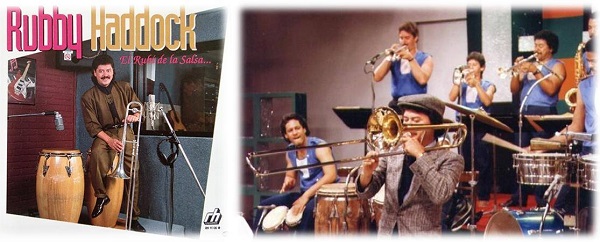
Rubby Haddock is one of the greatest exponents of our most danceable Latin Music in the Island of Enchantment

Our orchestra was born at the end of 1969, year in which we also began to record the 1st production “Presenting” which was released at the end of 1970.

Many talented musicians have passed through our orchestra such as Juancito Torres, Mario Ortiz, Rey Santos, Frank Morell, Hugo Dumont and many more that we will mention later.

Rubby Haddock is one of the greatest exponents of our most danceable Latin Music in the Island of Enchantment

Singers such as Sergio Cariño, Juan Acosta, Raul Carbonell Jr., Tony Rivas, Cucho Caro, Andres Reyes, Pedro Arroyo, Ricky Ramos, Tito Gomez, Yolanda Rivera, Eddie Rosario and Johnny Maldonado.

Rubby Haddock is one of the greatest exponents of good Latin music. His orchestra is known as one of the most danceable “Big Bands” on the Island.

He is called “El Maestro” by his followers and fellow artists. Because of his long artistic career, exposed to the world of show business, Rubby has become one of the best connoisseurs in the history of Latin music.

Born in Manhattan, New York on February 6th to Puerto Rican parents. His mother lived in Miami most of her life and in the late 60’s his father, Ruben Haddock who was a musician in New York, founded the most famous Dance Club in Puerto Rico, MIRAMAR CENTER when he owned El Club Coameño in Rio Piedras and El Club Caborrojeño in Bayamon.

A glorious time where his Producer Father brought to the Island of Puerto Rico the biggest stars of Latin music such as: TITO RODRIGUEZ, TITO PUENTE, LA LUPE, EDDIE PALMIERI, RICKY RAY, JOEY PASTRANA, JOE CUBA, WILLY COLON, HECTOR LAVOE, LARRY HARLOW, ISMAEL MIRANDA, CHIVIRICO DAVILA, TNT BAND among others, besides being manager and producer of ROBERTO Y SU NUEVO MONTUNO.

Rubby Haddock grew up with his father as a teenager in Puerto Rico within the entire business operation of Don Ruben, knowing these top stars of our music and hence the vein of musician and producer during his artistic career and experience in show business.

Celebrating the Rubi of Salsa Rubby Haddock. One of the greatest exponents of good Latin music

Rubby Haddock studied piano but showed that his passion was playing trombone.

For the years 1972 under the label UNIART, Rubby Haddock launches his first record production, “PRESENTING ORCH HADDOCK” becoming a powerful hit on the Island with the musical cut MONACILLO Y CORREA COTTO as some of the hits of this production.

In this first stage of Rubby’s musical career are among the different recordings: “PRESENTING”, “ASI ME LLAMAN”, “LA LEYENDA”, “DE REGRESO”, “UNLIMITED”, “2ND CONCIERTO FAMILIA TH”, “THE ENTERTAINER”, “THE ENTERTINER 2”, “OTRA VEZ”, “SALSA TROPICAL”, “EL RUBI DE LA SALSA”, “PASAPORTE MUSICAL”, “EL RUBI DE LA SALSA” and “PASAPORTE MUSICAL”.

In the second stage of his career, in 1978, when Rubby was the most popular in Puerto Rico with the song “Son Los Nervios”, one of the songs that propelled merengue on the island, Rubby surprised everyone by joining the U.S. Armed Forces in San Antonio Texas and Washington State, where in addition to completing medical courses, he also completed his Bachelor of Music Education at the Universities of Puget Sound and Pacific Lutheran.

In the 9th Infantry Div. Rubby became a member of the 9th Infantry Division Band where in addition to the Division Military Orchestra, Rubby most enjoyed the experience of being a member of the JAZZ ENSEMBLE BAND and the Big Band Jazz.

It didn’t take long for some of these great musicians to come and join Rubby’s Orchestra… At the request of a great Puerto Rican friend, and high ranking Army officer Eddie Velez, Rubby agreed to form his Orchestra back in Tacoma Washington State.

Remembering beautiful moments lived outside of his homeland until 1980, when he returned to Puerto Rico for a recording contract with the firm TH RECORDS, In this “come-back” in his return to Puerto Rico for the 80’s Rubby produces one of his most successful works: “De Regreso” with songs like: A Mi Jibarita, El Amor, Maria Teresa, Sra. Temptation with singers Raul Carbonell and Tony Rivas.

At the end of the 80’s Rubby Haddock ventured into Puerto Rican television, Wapa TV and Telemundo Channel 2, as producer of shows such as “Un puertorriqueño para la Historia (José Feliciano)”, New Year’s Eve Specials, etc.

Rubby Haddock y Sus Amigos, where the most prestigious artists such as: José José, José Feliciano, Mongo Santamaría, Barry Rogers, Eddie Palmieri, Julio Angel, and many more paraded in this section produced within the Midday Show. …. This show remained on the air for five and a half years.

Rubby Haddock
Rubby Haddock

By 1992 Rubby Haddock y su Orquesta represented Puerto Rico in the Puerto Rican Pavilion at Expo 1992 in Seville, Spain.

In the mid 90’s, although Rubby still continued as the Director of his Orchestra, he also ventured as an Entrepreneur with his own commercial Advertising Agency, where in addition to directing the entire operation of the agency Haddock & Haddock Adv, he was also the Creative, being in charge of all the production of Radio, Press and Television commercials for all the clients of the Agency.

By that time Rubby had already founded his own Recording Studio (Pentagrama Round), where he produced his three most recent productions of this decade in addition to sharing recordings for artist friends such as: Omar Alfano with Son By 4, it was from this studio that hits such as “A puro Dolor” were released.

His recording engineer was the outstanding engineer Sonny Hernandez. With him he shared works with artists such as: Danny Rivera, Andrés Jiménez, Ismael Miranda, Elvis Crespo, Melina León, Edwin Colon Sayas, Trió Borinquén, and others.

In 2000 Rubby moved to the United States where he currently lives. His fans constantly ask him to re-form his Orchestra because they miss his music and they also ask him for a compilation of his hits and a “Historia DVD” exposing the History of his Salsa, which seems to be Rubby Haddock’s next endeavor as an Artist.

Rubby has 3 sons, the first 2 Reuben Haddock and Rubby Haddock Jr, dedicated their careers to the business world and his youngest son Randy Haddock, who currently lives in New York, is a musician, singer and composer, already demonstrating great talent and the vein that comes from Don Ruben (grandfather) and Rubby (his father).

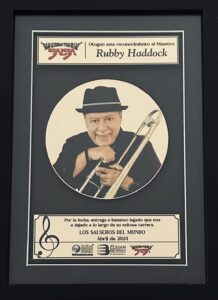
A very special thanks to Edgar Berrio and all the staff of Las Leyendas Vivas De La Salsa #8 for this great recognition, on behalf of Rubby Haddock and his family

Sources:

https://www.rubbyhaddock.com/news

pequi34 via Musica.com

Also Read: Jerry Ferrao says in salsa key: “My life is a drum”.

Patrón Latin Rhythms manager talks about the band and its plans

Patrón Latin Rhythms is one of those many bands from the San Francisco Bay Area that continue to demonstrate the taste the inhabitants of the area and its surroundings have for Latin music and other rhythms stemming from it. For this reason, we decided to talk to Vanessa Ojeda, the band manager, to know more in depth her work and everything that has to do with the group.   

Vanessa, manager of Patrón
This is Vanessa Ojeda, manager of Patrón Latin Latin Rhythms

Vanessa’s beginnings in music   

Vanessa told us that music has always been present in her life, as she remembers, from an early age in San Leandro, California. Her father was responsible for managing musical groups, so he taught his daughter all he knew about the administrative and business part.   

In fact, the young woman recalls that, since she was five years old, she already saw her father playing his trade and explaining some things about it. As she got older, she gained more responsibilities and learned more about the internal functioning of a group. She started answering e-mails, drawing up contracts, making reservations, among other things.   

When her father sadly passed away about three years ago, Vanessa had to learn to do the rest of the things on her own, so she greatly appreciates the prior learning she experienced before the time came.    

Today, she is in charge of all the band’s contacts, social networks, publicity, promotion, musician fees, hotel bookings, travel, among other tasks.   

Beginnings of Patrón Latin Rhythms   

Vanessa explained that it was her father who initially selected the musicians and talent that made up the band. He began by looking for the congueros, whom he took home to determine who was the best choice for the group. He also had some friends who were dedicated to music and he knew they would do a great role if they joined his project, so he contacted them to make the proposal. 

Later, the first musicians selected to be part of the group created their own orchestra, which led Vanessa’s father to look for new musicians and a different name to the proposal that he had in mind and search for the right talent for it. This is how Patrón Latin Rhythms was born. 

Vanessa comments that her father was a lover of the musical work by Poncho Sanchez, Tito Puente, Santana, among other artists of this style, so he was looking for musicians who could emulate those sounds and ways of playing. He also wanted the new members of the new 10-piece band to understand what he wanted at that time, which was the salsa of the time. 

As for the name of the band, Vanessa and her father wanted something attractive and playful for the audience, so after thinking about many things, they decided that ”patrón” was a memorable term and that made them think of something or someone ”strong” and ”with character”, just as they wanted the band’s music to be.   

Patrón plays Latin and American music
Patrón Latin Rhythms is capable of playing both Latin and American music without any problem

Musical background of the musicians 

Another thing Vanessa’s father was very careful with was knowing very well the background of each of the musicians he selected and, of course, ensuring that they came from reputable bands. ”My father knew many of the musicians before forming the group, so he knew they would do an excellent job if he gave them the chance. In fact, some of them are still with me despite my father’s death and the time elapsed,” said Vanessa.   

The permanence of most of the old team is considered by Vanessa as a sign that Patrón Latin Rhythms is much more than just a job for its members. It is also like a family that they take care of and strive to make it better every day.    

This was achieved thanks to the training provided by her father, who always made sure that Vanessa knew all the details related to the band’s operation so that she would be able to take care of it and its members after his passing. One of the most important things he taught her is that she should always treat others as she would like to be treated, which she has very much in mind to this day.   

Genres played by Patrón Latin Rhythms   

Regarding the genres played by the group, Vanessa said that they have tried to incorporate a lot of salsa into their repertoire recently. Her father was a big fan of Latin rock, which occupied a privileged place in the band’s work, but when Vanessa took the reins of the project, she began incorporating a little more salsa and diversify the rhythms played by Patrón Latin Rhythms. To this we must add that she likes R&B a lot, so it was also taken into account to be part of the group’s repertoire.    

It is precisely this blend of genres that the group always seeks to achieve is what guarantees them a mixed audience in which all nationalities and tastes converge. Something that stands out from the group’s musicians is that many of them have their own salsa repertoire due to the experience they bring from other orchestras, which helps them attract audiences of different generations.   

In addition to that, Latin and American public tend to enjoy Patrón Latin Rhythms’ music depending on the genre being played at any given time.   

 Patrón playing live
Patrón Latin Rhythms playing live

How Patrón Latin Rhythms handles arrangements on the covers 

At the time of creating a cover of a well-known song, the musicians of the group take into account the characteristics of the audience they are going to entertain that day, and one of them is the crowd size. If the audience is big, they know they should play faster songs, but if the group of attendees is smaller, then they start with something softer and calmer.   

However, in all their performances, they try to vary all genres so that their shows do not become monotonous and the audience does not get bored. In fact, their repertoire has included from songs by Marc Anthony or Santana to others by Bruno Mars or the group Chicago, which shows how diverse a Patrón Latin Rhythms concert can be.    

On this subject, we can say that each musician is a fundamental part of the orchestra, as each one plays a role in each song they are going to play because not everyone can play everything. In fact, Vanessa tells an anecdote in which one of the musicians quit and it was difficult for the rest of the them to play the chords and the percussion part of certain songs he played. For the same reason, each member and instrument is of vital importance in the band and it is not always easy to cover some of them. 

Read also: Eric Maldonado from La Paris All-Stars’ work behind the scenes 

  • « Go to Previous Page
  • Page 1
  • Interim pages omitted …
  • Page 34
  • Page 35
  • Page 36
  • Page 37
  • Page 38
  • Interim pages omitted …
  • Page 59
  • Go to Next Page »

International Salsa Magazine (ISM) is a monthly publication about Salsa activities around the world, that has been publishing since 2007. It is a world network of volunteers coordinated by ISM Magazine. We are working to strengthen all the events by working together.