• Skip to primary navigation
  • Skip to main content

International Salsa Magazine

  • HOME
  • Previous editions
    • 2026
      • ISM / May 2026
      • ISM / April 2026
      • ISM / March 2026
      • ISM / February 2026
      • ISM / January 2026
    • 2025
      • ISM / December 2025
      • ISM / November 2025
      • ISM / October 2025
      • ISM / September 2025
      • ISM / August 2025
      • ISM / July 2025
      • ISM / June 2025
      • ISM / May2025
      • ISM / April 2025
      • ISM / March 2025
      • ISM / February 2025
      • ISM / January 2025
    • 2024
      • ISM / December 2024
      • ISM / November 2024
      • ISM / October 2024
      • ISM / September 2024
      • ISM / August 2024
      • ISM / July 2024
      • ISM / June 2024
      • ISM / May 2024
      • ISM / April 2024
      • ISM / March 2024
      • ISM / February 2024
      • ISM / January 2024
    • 2023
      • ISM / December 2023
      • ISM / November 2023
      • ISM / October 2023
      • ISM – September 2023
      • ISM – August 2023
      • ISM July 2023
      • ISM Edition June 2023
      • ISM – May 2023
      • ISM April 2023
      • ISM March 2023
      • ISM February 2023
      • ISM January 2023
    • 2022
      • ISM December 2022
      • ISM November 2022
      • ISM October 2022
      • ISM September 2022
      • ISM August 2022
      • ISM July 2022
      • ISM June 2022
      • ISM May 2022
      • ISM February 2022
      • ISM January 2022
    • 2021
      • ISM December 2021
      • ISM November 2021
      • ISM October – 2021
      • ISM September 2021
      • ISM August 2021
      • ISM July 2021
      • ISM May 2021
      • ISM April 2021
      • ISM June 2021
      • ISM March 2021
      • ISM February 2021
      • ISM January 2021
    • 2020
      • ISM December 2020
      • ISM November 2020
      • ISM October 2020
      • ISM September 2020
      • ISM August 2020
      • ISM July 2020
      • ISM June 2020
      • ISM May 2020
      • ISM April 2020
      • ISM March 2020
      • ISM February 2020
      • ISM January 2020
    • 2019
      • ISM December 2019
      • ISM November 2019
      • ISM October 2019
      • ISM Septembre 2019
      • ISM August 2019
      • ISM July 2019
      • ISM June 2019
    • 2016
      • ISM December 2016
  • Spanish
  • Download Salsa App
    • Android
    • Apple

Search Results for: All Stars

The Conga Room closes its doors, but says goodbye in style

People dancing at The Conga Room

Recently, we learned some unfortunate news for the Latin music scene and the community in general and it is that The Conga Room, one of the most important nightclubs in Los Angeles, will close its doors this March, which has shocked those who used to frequent the cheerful and colorful place to forget their everyday problems for a few hours of dancing.   

This great place was opened in 1999 by businessman Brad Gluckstein thanks to the support of leading figures in the entertainment industry such as businesswoman, actress and singer Jennifer Lopez, actor Jimmy Smits, actor Paul Rodriguez and actress Sheila E. 

Although it first opened its doors on Wilshire Boulevard in 1999, it was moved to L.A.A. LIVE about nine years later. After the change of venue, there were personalities interested in investing in The Conga Room due to the great project it represented at the time, such as rapper and member of the Black Eyed Peas William Adams (better known as will.i.am), actor of Puerto Rican descent Amaury Nolasco, former basketball player Baron Davis and former basketball player Trevor Ariza. 

It was these great figures in music, acting and sports who made The Conga Room one of the most recognized meeting places for Latin music fans and its greatest exponents. 

Jimmy Smits and Paul Rodriguez at The Conga Roo
Jimmy Smits and Paul Rodriguez celebrating The Conga Room’s 20th anniversary some years ago

The achievements of The Conga Room all these years  

During the years following as of its reopening, The Conga Room became an iconic place for music lovers and contributed greatly to the development of the Latin music and cultural scene in Los Angeles. 

During 25 years of operation, it has not only brought the best singers and DJs from California and the United States in general, but also managed to create a lively environment composed of all kinds of cultures that transcended musical genres, to the point that there were people of all nationalities dancing to the same rhythms without any problem, proving once again that music is a universal language we can all understand perfectly.  

And speaking of music, its little stage witnessed more than 500 live shows that included big stars such as Celia, Cruz, Johnny Pacheco, Willie Colón, Tito Puente, Ocar D’ León, Tito Nieves, Gilberto Santa Rosa, Carlos Santana, Elvis Crespo, Los Van Van, Buena Vista Social Club, Alejandro Sanz, Juanes, Fito Paez, Jerry Rivera, Eddie Santiago, Tony Vega, Zacarias Ferreira, Invasión Latina, Andy Montañez, Atercipelados, Aleks Syntek, Beto Cuevas, among many others. As for newer idols, The Conga Room has also received Ivy Queen, J Balvin, Maluma, Bad Bunny, Luis Fonsi and many more.   

It should also be mentioned that; while The Conga Room’s approach is to promote salsa, merengue and bachata; the nightclub is not limited to Latin genres. In fact, there have been great performances by rock, hip hop and R&B artists such as Prince, Stevie Wonder, Lenny Kravitz, Justin Timberlake, Avicci, Snoop Dog, Ed Sheeran, Andy Grammer, Jamie Foxx and on and on.  

This shows that The Conga Room was not limited to the original concept of its founders, but sought to go above and beyond to increase its assistance every day. Its management knew how to reinvent itself in spite of trends and circumstances, which is why it managed to survive so long.   

Oscar D’ Leon at The Conga Room
Oscar D’ Leon performing at The Conga Room

The Conga Room’s definitive closure and farewell show 

The Conga Room was inaugurated with music, so it must also say goodbye with music, so it will offer a private concert this March 27th featuring famous personalities who will meet at the club that day to say goodbye in style.   

The main star of the event will be the renowned Puerto Rican singer Gilberto Santa Rosa, who will be one of those responsible for livening up the night for the show attendees with his greatest hits. Likewise, the host will be Jimmy Smits and he will be accompanied by Paul Rodriguez in the hosting of the show, who were bot very important in club maintenance for so long.  

As for the reasons for the closure, founder Brad Gluckstein has issued statements saying that the ravages of the pandemic, the few events at the convention center and the difficulties in booking national artists with AEG Live (a company focused on the production and promotion of musical events) have made the business model of The Conga Room no longer viable in today’s economy. Not to mention that cost of living, inflation and high interest rates have changed the priorities of potential consumers. 

However, despite the sadness that Gluckstein and the rest of those involved in the Conga Room project have, the businessman pointed out that not everything related to this mythical place will be forgotten, since Conga Kids, a non-profit organization aimed at promoting the social-emotional well-being of children through dancing, will continue to operate as before. This beautiful sister project of The Conga Room will keep its doors open despite the setbacks for the sake of the kids. 

Read also: ”Alma Del Barrio” celebrates 50 years of operation 

Nestor Torres

North America / USA / New York

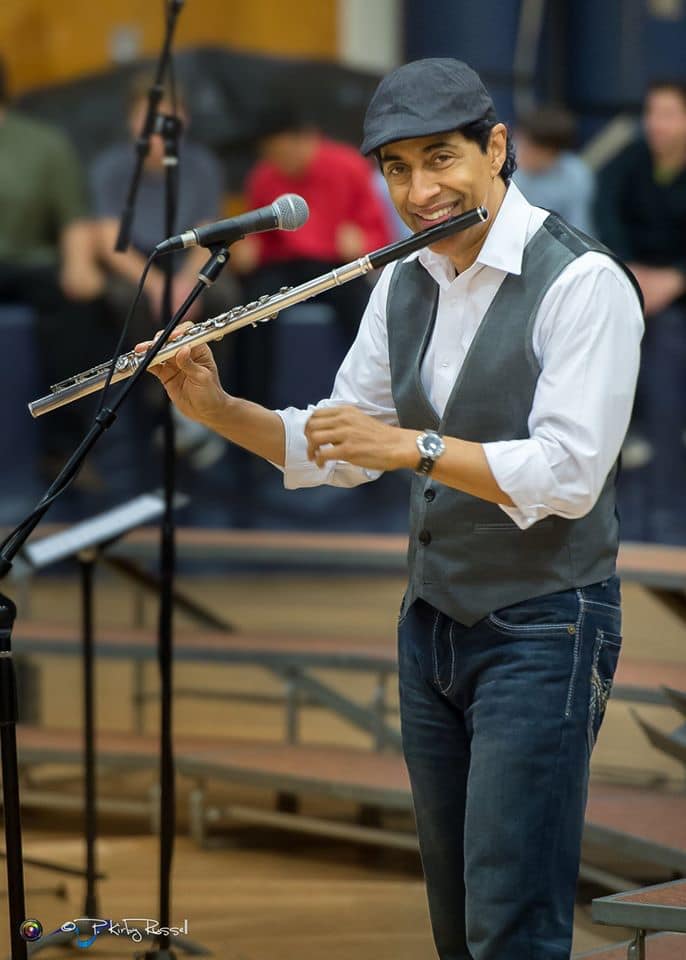
If a flute could talk and sing, it would certainly be in the voice of Nestor Torres

If a flute could talk and sing, it would certainly be in the voice of Nestor Torres, for he speaks through his instrument. Equally fluent in Jazz, Classical and Latin sounds, his fluid versatility sets him apart.

Nestor Torres
Nestor Torres

Nestor’s total command of his instrument allows him a freedom of expression that is at once captivating and liberating, powerful and genuine.

Born in Mayaguez, Puerto Rico, Nestor Torres has played music all his life. His parents (His father, a gifted musician himself, and his mother, an educator and business woman) gave him a set of drums at age 5, and later took up the flute (at age twelve).

He moved to NYC with his family in his teenage years and went on to study at Mannes School of Music and later at the New England Conservatory of Music in Boston.

At that time he was also able to learn to improvise in a style of Cuban Dance music called ‘Charanga’, which helped to shape and develop Nestor’s melodic and danceable sound.

In 1981, Nestor moved to Miami, where he continued to develop his unique sound – and a strong following. Since then he has – and continues to – tour all over the world.

He has also performed and recorded Ricky Martin, Tito Puente, Herbie Hancock, Gloria Estefan, and many more.

Nestor Torres has recorded 14 Cd’s to the date. His 5th & 7th records, Treasure of the Heart and My Latin Soul, were nominated for a Latin Grammy, and his production This Side Of Paradise won the Latin Grammy award in the Pop instrumental category on September 11, 2001.

“Of course it was a great honor and privilege to win the Grammy,” Torres reflects. “That being said, the fact that I was to receive it on 9/11 gave my work and my music a stronger sense of mission and purpose. Terrorism and violence come from ignorance, anger, and hopelessness.

Music inspires and empowers; it soothes the human heart and enlightens the spirit. I have made it my prime point to create music and live my life in a way that does just that.”

From that experience, together with a commission to compose and perform for the Dalai Lama, Nestor Torres produced Dances, Prayers & Meditations For Peace in 2005.

In his brand new CD, Nouveau Latino, Nestor Torres returns to his Latin roots with a fresh approach, impeccable musicianship, and irresistible improvisations. Featuring songs from stars like Celia Cruz and Ruben Blades, Torres’ interpretations of these great Latin hits appeal to those discovering the songs for the first time as much as those who remember them.

In addition to his achievements in the studio and on the stage, Torres is also recipient of two honorary doctorate degrees; one in 1994 from Barry University, and the other in 2000 from Carlos Albizu University, for his commitment to youth education and cultural exchanges.

Nestor Torres
Nestor Torres

NESTOR TORRES: Facts & Career Highlights

• Classical and Jazz flute studies at Mannes School of Music, and New England Conservatory of Music.

• Early improvisational ‘on the job training’ playing in Cuban and Latin Dance bands including Ray Barretto, Eddie Palmieri, Celia Cruz and Tito Puente.

• Regular featured guest at the ‘Salsa Meets Jazz At The Village Gate’ series in NYC.

• Has toured Japan repeatedly, including collaborations with Herbie Hancock, and Wayne Shorter.

• Collaborations: with James Moody, Jon Faddis, Chris Botti, Larry Coryell, Hubert Laws, Arturo Sandoval, Michel Camilo, Paquito D’ Rivera, Danilo Perez, David Sanchez, Pablo Zigler, Makoto Ozone, Patrice Rushen, Bob James, George Duke, Wallace Roney, Peter Nero and Clare Fisher, among many, many others.

• Jazz Festivals: Capitol Jazz Festival, JVC Jazz Festivals; in Los Angeles and in NYC with Eddie Palmieri; Aspen Snowmass; Maui; Heineken in Puerto Rico and Dominican Republic; Sedona; Atlanta…. Among many others.

• Symphonic: Has performed with the New World, Singapore, Springfield Missouri, Charleston, Signature (Tulsa, OK), Puerto Rico, and Stanford Symphonies; Philly Pops Orchestra; and the Naples, Florida; Malaysia, and Florida Philharmonics.

• Recordings to date (14): ‘Colombia En Charanga’, ‘Afro Charanga Volume 2’, ‘No Me Provoques, ‘Morning Ride’, ‘Dance of the Phoenix’, ‘Burning Whispers’, ‘Talk To Me’, ‘Treasures Of The Heart’, ‘Canciones Primeras’, ‘This Side Of Paradise’, ‘My Latin Soul’, ‘Sin Palabras’ (Without Words),‘Dances, Prayers & Meditations For Peace’, and ‘Nouveau Latino’.

• Grammys: His Latin-jazz composition “ Luna Latina” (from Treasures of the Heart) was nominated in 2000 for a Latin Grammy as well as his CD ‘My Latin Soul’ in 2002. In 2001, he won a Latin Grammy for his CD ‘This Side of Paradise’.

• Two Honorary Doctorate degrees from Miami-based Universities – one in 1994 from Barry University and the other in 2000 from Carlos Albizu University – for his commitment to youth education and cultural exchange as an Ambassador of Peace and Culture.

Nestor Torres
Nestor Torres

Current location

Miami, FL USA

General Manager

Ivette Delgado/ [email protected]

Influences

My Father, Hubert Laws, Miles Davis,Tito Puente, Richard Egues & Orchestra Aragon

Contacto de prensa

Wanda Jimenez/ [email protected]

Representative

The Jazz Agency
[email protected]
818-813-5299

https://www.facebook.com/NestorTorresMusic/

Felipe Pirela | The Bolero of America

North America / USA / New York

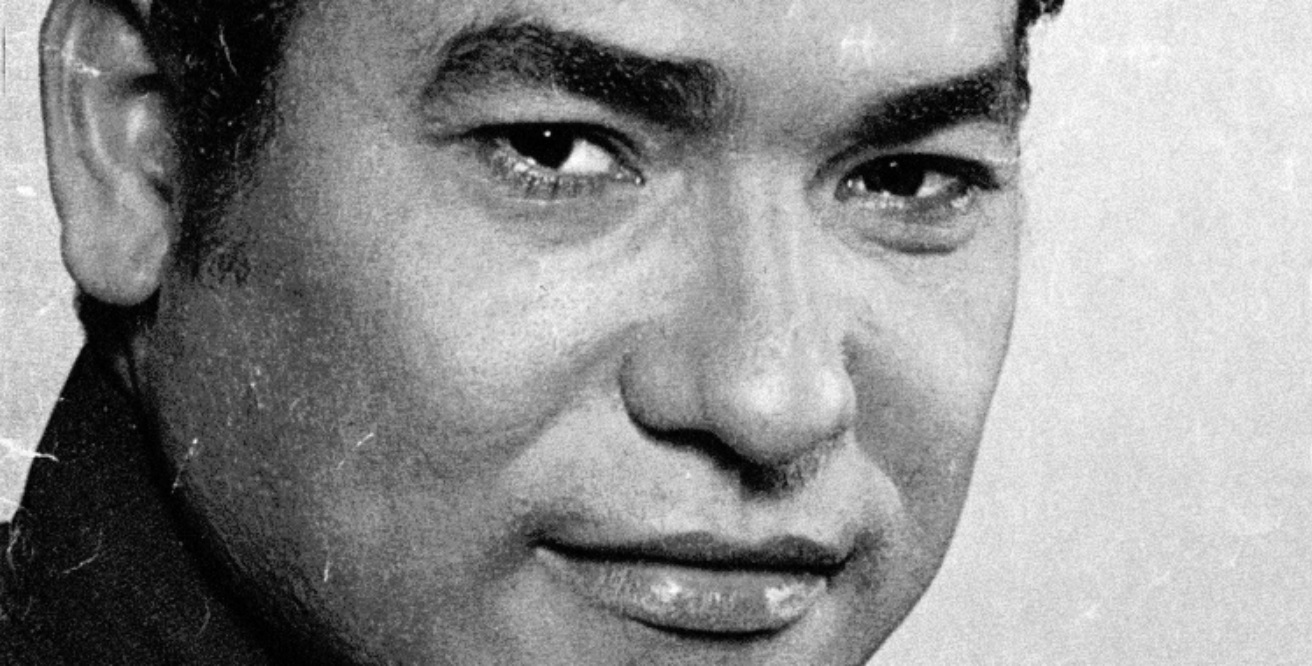
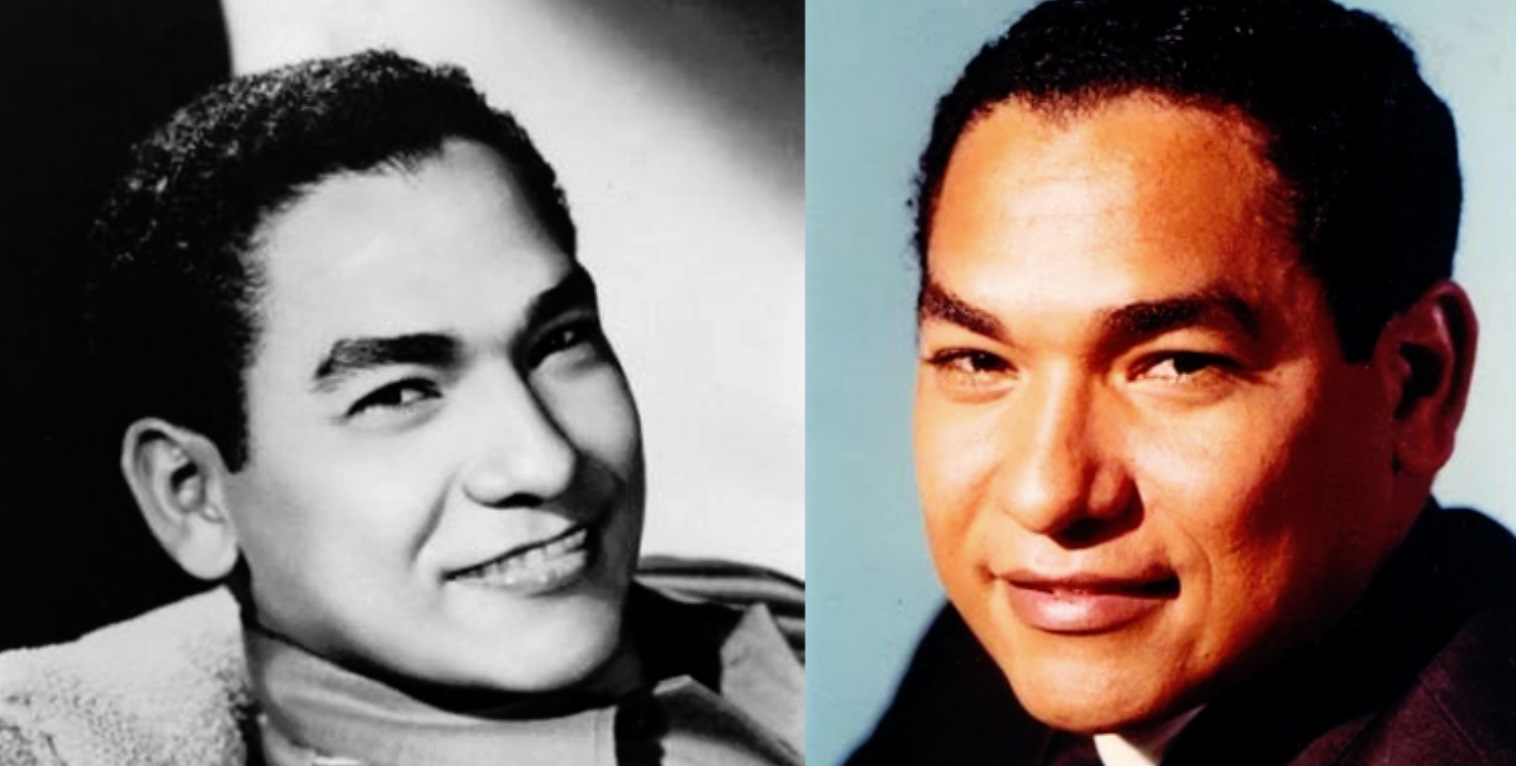
Felipe Pirela:

En mi barrio el empedrao
Parroquia Santa Lucia
Había una barbería
Que era muy populachera
Te lavaban en ponchera
La silla se reclinaba
Y Luis el perro pelaba
Al son de una periquera

Felipe Pirela
Felipe Pirela

This is the sound of the tasty gaita performed by the group Sabor Gaitero and Los Gaiteros de Pillopo. It refers to a barbershop in a picturesque neighbourhood of Maracaibo in the Venezuelan state of Zulia. It was in this popular neighbourhood of Maracaibo, El Empedrao, that Felipe Antonio Pirela Morón was born in 1941. It was probably in this popular barbershop that he got his first haircut, and it was certainly in some corner of the neighbourhood that he took his first steps as a singer, perhaps interpreting gaitas or some other popular genre. The young Felipe was far from imagining that he would become “El Bolerista de América” (The Bolero of America).

The son of a bricklayer, Felipe Pirela Monsalve, and a housewife – an artist at heart – Lucia Morón de Pirela, the boy began his musical career as a child, supported by his mother, in small radio singing competitions. Incredibly, at the age of 13, together with some boys from the neighbourhood and his two brothers, he founded the group Los Happy Boys, which performed in various venues in Maracaibo, without even imagining that he would later become the main star of Billo’s Caracas Boys, a group that, upon arriving in Venezuela, debuted under the same name, Billo’s Happy Boys, directed by the Dominican maestro Billo Frometa.

At the beginning of his singing career, Felipe specialized as a bolerista, performing songs by prominent singers such as the Chilean Lucho Gatica, the Cuban bolerista Olga Gillot and Venezuela’s favorite tenor Alfredo Sadel.

Felipe Pirela
Felipe Pirela

Radio Caracas Television had the honor of making Felipe’s image public for the first time in 1957, through an amateur program in which Felipe placed third. Unfortunately, there were no video recording systems in those days, so there is no record of this historic achievement. Later, the now defunct and legendary Venezuelan regional television station from Maracaibo, Ondas del Lago, served as a springboard for Felipe, who was one of its founding artists.

These performances allowed him to sign a contract with the station in 1958, after which he moved to Caracas, where he performed on Radio Caracas and in various nightclubs.

Shortly thereafter, he returned to Maracaibo to join the orchestra Los Peniques, with whom he recorded his first album in 1960 and began his professional career.

Like most of the artists, baseball players and boxers from Maracaibo, Felipe was a man of humble origins, pobre del pobre, with limited economic resources, who for a time missed opportunities to be noticed despite his immense talent.

Felipe Pirela
Felipe Pirela

Fortune smiled on him when Maestro Billo Frometa heard him sing, at a time when the arranger, director and musician from Quisqueyano was preparing to restructure his band, Billo’s Caracas Boys, and at the same time hired another singer from Maracaibo, the remarkable José “Cheo” García. This hiring gave an enormous boost to the already famous Billo’s Caracas Boys; the band acquired great international prestige, performing throughout America and Europe, popularizing the immortal mosaics that for many years enlivened the parties and were the favorites of the Venezuelan public.

Not for nothing, Billo’s Caracas Boys Orchestra has been called the most popular in Venezuela, the Caracas and Venezuelan clubs, Latin American countries and even the European continent (Tenerife, Spain) showed full houses during the band’s performances. In these performances, the acclaim for Felipe Pirela was total. Huge demonstrations of support, full houses and legions of fans followed the “crooner” on his tours.

When Venezuela’s favorite tenor, Alfredo Sadel, left the popular genre and his country to devote himself to opera, Pirela almost immediately replaced him in the favorite place of Venezuelans.

In 1961, “El Bolerista de América” recorded with a string orchestra conducted by Billo, the long playing Canciones de Ayer, including old songs and songs of that time, a recording that marked his resignation and departure to Mexico, where he also had memorable successes.

Felipe Pirela boleros with guitars

In 1964 he married Mariela Montiel, a marriage that resulted in the birth of a daughter, Lennys, and in which La Retirada was quickly marked by the fact that Amor se Escribe con Llanto (Love is Written with Crying) and that it probably does not last a lifetime.

Canada and Mexico witnessed his successes in ’67 and his return to Venezuela. Successful performances in Miami that same year motivated him to reside in the United States, where he tried to structure his own record company, a project that came to nothing and he was deeply disillusioned and returned to Venezuela, later residing in Puerto Rico, where he was taking La Última Copa when he was tragically assassinated in 1972.

For some, his career was marked by Sombras Nada Más, but for the vast majority, “El Bolerista de America” remains in the memory as one of the most unique stars of Latin American music of all time.


For Mario Cabrera Bello

Mario Cabrera Bello


Paquito D’Rivera supports the salsa museum

There have been many legends of whom we have spoken in this section of International Salsa Magazine and today it is the turn of the bandleader, composer, clarinetist, and saxophonist born in Havana, Cuba, Paquito D’Rivera.  

Today, we want to dedicate the following lines to one of the main references in Cuban music and everything he has contributed to the Latin music scene, which is growing every day in the United States.   

Paquito smiling
Paquito D’Rivera smiling for the camera

Paquito’s beginnings in music 

Francisco de Jesús Rivera Figueras, who is artistically known as Paquito D’Rivera, was born in the city of Havana, Cuba and is the son of orchestra director and saxophonist Tito D’Rivera, from whom he inherited his great artistic vein and love for music. 

At just five years old, Paquito began studying music formally and, two years later, he was already performing on stage in front of large audiences, which prepared him for what he would do as an adult. That same year, Selmer (a musical instrument company) hired him, which was a very important step in the boy’s path to becoming an artist. 

A few years later, he performed at the National Theater of La Habana, which was a very important moment for the young man, who shortly after began studying at the Havana Conservatory, where he specialized in areas of music such as clarinet, composition and harmony. 

His first media appearance was during his debut in the National Symphony Orchestra of Cuba, an event that was nationally televised so that the whole country could appreciate the talent of the young choir boys.  

A year later, when he was only 18 years old, Paquito and Chucho Valdés founded the Orquesta Cubana de Música Moderna, while working for the Orquesta Nacional and the Banda del Ejército Cubano. 

Paquito playing
Paquito D’Rivera playing the saxophone

Some time later, he founded the Orquesta de Música Moderna with some of his colleagues at the time, and then created the group Irakere, which integrated jazz, traditional Cuban music, classical music and rock in ways never seen before. Together with Irakere, he toured Europe and the United States and earned several Grammy Award nominations.   

Leaving Cuba 

Like so many Cubans, Paquito became tired of the situation experienced by the island and knew he had to make a final decision on the subject. He took advantage of a stop in Spain and sought asylum at the American embassy in the European country. Once in the United States, his process of adaptation to his new country of residence was not easy, but there were artists who gave him a lot of support such as Mario Bauza, Dizzy Gallespie, David Amram, among others. 

It did not take him too long before he earned the love and respect of many members of the jazz music community.  His place in the Latin music scene was consolidated thanks to his first two solo albums called ”Paquito Blowin” and ”Mariel”. His popularity was also benefited from a Time magazine article that talked about his great work and his appearance on the famous ”Sunday Morning” show.   

He also collaborated with artists such as Artur Sandoval, Michel Camilo, Bebo Valdés, Claudio Roditi, among others. He also participated in the founding of the United Nations Orchestra, Paquito D’Rivera Big Band, Paquito D’Rivera Quinquet and many other groups.  

More recently, in 2027, he was in Europe with the Orquesta de Valencia at the Palau de La Música promoting ”The Elephant and The Clown” of his own.   

Paquito and Johnny
President of the Spaha Harlem Salsa Museum Johnny Cruz and Paquito D’Rivera

Paquito and the Spaha Harlem Salsa Museum 

In December 2023, Paquito visited the Spaha Harlem Salsa Museum to see the huge collection of personal items belonging to world-renowned Latin artists and, once there, he expressed his surprise at the large number of items that both stars and their families have donated to the famous museum.   

In a post by Johnny Cruz, the museum’s president, on his Facebook account, Paquito said he was very impressed by all the items housed in the institution while supporting the work done by the museum’s staff and expressing his admiration for the effort devoted to the collection. 

Johnny Cru ISM corresponde in New York City


Read also: Poncho Sanchez visited us at the Salsa Museum 

Héctor Martignon has been one of the most sought-after pianists on the Latin jazz scene in New York

New York based-, Colombian born Hector Martignon has composed, orchestrated, produced, performed and recorded music in a wide spectrum of genres, from Classical and Crossover, to Jazz and World Music, to Rock and Pop.

His five albums as a leader, two as co-leader (MOZART’s BLUE FANTASIES and BACH’s SECRET FILES) as well as his work on over a hundred albums, scores for five feature films, three Broadway Musicals and multiple other projects, showcase his wide-ranging area of expertise.

At Mozart Studios recording Carlos Jimenez’ second CD, + Ruben Rodriguez + Vince Cherico. A pleasure!

After several nominations as a sideman, two of his five solo CDs were nominated for a GRAMMY Award (REFUGEE, 2008, and SECOND CHANCE, 2010).

He arranged and performed parts of the score of Ang Lee’s OSCAR-nominated movie EAT, DRINK, MAN, WOMAN.

His first professional recording was at age 18 (Mikis Theodorakis’s “Canto General”) while one of the most recent was on legendary rock band CHICAGO’s latest production, the Latin-tinged “EXITOS”.

He has written symphonic orchestrations, performed and recorded by the Russian Philharmonic Orchestra and compositions like ABRE LOS OJOS, CIERRA LOS OJOS, commissioned and premiered by the MUSICA DE CAMARA STRING ORCHESTRA at St Patrick’s Cathedral in April 2011.

Hector Martignon is currently working on a first CD with his BANDAGRANDE Big Band + String Quartet as well as an album with selections out of a series of  7 solo piano recitals at the Ludwigsburg University of Education (Germany), where he conducts a “compact seminar” on Classic Music-based improvisation every November.

Our trio in Tokyo
Our trio in Tokyo

As a requested sideman he has toured the world with such greats as Paquito D’Rivera, Ray Barretto, Gato Barbieri, Steve Turre, Don Byron, Tito Puente and was featured pianist with Max Roach’s PROJECT AMERICA at the 92 St Y.

His joy of teaching has made him a requested guest-lecturer and performance teacher in music faculties and academies in several countries of Europe, Japan, North- and South America.

Hector wrote an instructional book on Latin piano commissioned and published by Hal Leonard, the SALSA PIANO BOOK.

Martignon’s abilities as a pianist have always been enriched by his interest in varied musical genres.

He paid for his studies of classical piano and composition at the prestigious Freiburger Musikhochschule in Germany by performing with the best Afro-Cuban and Brazilian bands of Europe, backing stars like Celia Cruz and Ismael Quintana on their European tours, and recording with Tata Güiness and Arturo Sandoval.

At the same time he was attending seminars of contemporary composition with masters like Gyorgi Ligetti, Luigi Nono and Karl Heinz Stockhausen.

He also performed classical music in recitals and concerts in Germany, Italy and his native Colombia, specializing in Chopin, Bach and Debussy.

One of his latest endeavors has been a Jazz-Classical crossover  project, co-lead with star virtuoso trumpeter Joe Burgstaller, in which the music of the classics, from Bach to Ellington is re-created in a chamber-jazz setting, to be enjoyed on their two releases, “Mozart’s Blue Fantasies” and “Bach’s Secret Files”.

Living in Brazil for a one-year love affair with that country and its music, Martignon soon became a requested studio musician and worked for star producer Carlinhos Brown.

Luquillo Beach, PR
Luquillo Beach, PR

Since relocating to New York City, Martignon has been one of the most sought-after pianists on the Latin jazz scene.

He’s toured North and South America, Europe, and Asia with the bands of Mongo Santamaría, Gato Barbieri, Steve Turre and Don Byron, who had him record in his latest CD.

He was featured pianist with the bands of Tito Puente, Mario Bauzá, Chico O’Farrill, Paquito D’Rivera, and Max Roach in his “Project America.”
Most notably, Martignon was pianist for the late Ray Barretto’s various ensembles.

During his eight-year association with Barretto, his contributions as pianist, arranger, and composer were fundamental in shaping the sound of the now famous New World Spirit Sextet.

One of his last collaborations with Barretto, “My Summertime,” was a favorite nominee for a Grammy award.
Martignon’s versatility has also made him extremely active in the film and television industries.

Besides playing all piano parts, he arranged and produced many parts of the score for the Oscar-nominated film “Eat, Drink, Man, Woman” by Ang Lee and performed the piano and keyboard parts for many movie scores (i.e., “Gloria”, “Relativity”).

He is composer of the original music of two feature films, one of which, “Septimo Cielo”, won international awards. He also collaborated in the production of many Broadway musicals (“Chronicle of a Death Foretold”, Paul Simon’s “The Capeman”, “Selena Forever”) as conductor, arranger, and co-composer.
In the fall of 2003 Hector visited Slovenia and Russia to collaborate with singer-songwriter Vitaly Osmsçko’s first symphonic CD.

The Russian Philharmonic Orchestra recorded in Moscow the orchestrations written by Hector.

As a composer, producer and arranger of TV and radio music his record is no less impressive. In 2001 he landed two spots for HBO Latino, and one for Coca Cola.

HECTOR” S FOREIGN AFFAIR
In 1998 Martignon performed with his quartet “Foreign Affair”at the Brooklyn Academy of Music’s famed annual festival “The Next Wave” on a triple bill with Tito Puente’s “Top Percussion” and Don Byron’s “Music for six Musicians”.

This proved to be a turning point for him and his ensemble, which evolved from the strictly acoustic trio sound of the first two CDs to a more eclectic and electric quartet sound.

The new configuration that evolved from that memorable concert started a series of concerts and recordings, with guitarist Mark Whitfield, Cameroonian bassist Richard Bona and Cuban drummer Horacio “Negro” Hernández.

This quartet performed and recorded live during a weeklong stint at New York’s famous Birdland.

The group has also performed on BET television festivals, at jazz clubs in Manhattan, and made various appearances in clubs and open-air festivals in his native Colombia and in Europe.

Martignon’s third solo project, to be released in the fall of 2003, is not only a reflection of the group’s new musical direction but also of his interaction with other world class musicians.

Eddie Gomez, Jeff Watts, Mathew Garrison, John Benitez, Dafnis Prieto, Willard Dyson have all made their unique contribution to this, Martignon’s new sound of Jazz.

Hector In Amsterdam with daughter Leticia

Hector Martignon never fails to surprise, challenge and delight us. Stay tuned and get involved in this affair.

Site: Héctor Martignon

Also Read: “El Sol de la Música Latina” el primer premio Grammy para el histórico disco de Salsa Eddie Palmieri

  • « Go to Previous Page
  • Page 1
  • Interim pages omitted …
  • Page 36
  • Page 37
  • Page 38
  • Page 39
  • Page 40
  • Interim pages omitted …
  • Page 59
  • Go to Next Page »

International Salsa Magazine (ISM) is a monthly publication about Salsa activities around the world, that has been publishing since 2007. It is a world network of volunteers coordinated by ISM Magazine. We are working to strengthen all the events by working together.