• Skip to primary navigation
  • Skip to main content

International Salsa Magazine

  • HOME
  • Previous editions
    • 2026
      • ISM / March 2026
      • ISM / February 2026
      • ISM / January 2026
    • 2025
      • ISM / December 2025
      • ISM / November 2025
      • ISM / October 2025
      • ISM / September 2025
      • ISM / August 2025
      • ISM / July 2025
      • ISM / June 2025
      • ISM / May2025
      • ISM / April 2025
      • ISM / March 2025
      • ISM / February 2025
      • ISM / January 2025
    • 2024
      • ISM / December 2024
      • ISM / November 2024
      • ISM / October 2024
      • ISM / September 2024
      • ISM / August 2024
      • ISM / July 2024
      • ISM / June 2024
      • ISM / May 2024
      • ISM / April 2024
      • ISM / March 2024
      • ISM / February 2024
      • ISM / January 2024
    • 2023
      • ISM / December 2023
      • ISM / November 2023
      • ISM / October 2023
      • ISM – September 2023
      • ISM – August 2023
      • ISM July 2023
      • ISM Edition June 2023
      • ISM – May 2023
      • ISM April 2023
      • ISM March 2023
      • ISM February 2023
      • ISM January 2023
    • 2022
      • ISM December 2022
      • ISM November 2022
      • ISM October 2022
      • ISM September 2022
      • ISM August 2022
      • ISM July 2022
      • ISM June 2022
      • ISM May 2022
      • ISM February 2022
      • ISM January 2022
    • 2021
      • ISM December 2021
      • ISM November 2021
      • ISM October – 2021
      • ISM September 2021
      • ISM August 2021
      • ISM July 2021
      • ISM May 2021
      • ISM April 2021
      • ISM June 2021
      • ISM March 2021
      • ISM February 2021
      • ISM January 2021
    • 2020
      • ISM December 2020
      • ISM November 2020
      • ISM October 2020
      • ISM September 2020
      • ISM August 2020
      • ISM July 2020
      • ISM June 2020
      • ISM May 2020
      • ISM April 2020
      • ISM March 2020
      • ISM February 2020
      • ISM January 2020
    • 2019
      • ISM December 2019
      • ISM November 2019
      • ISM October 2019
      • ISM Septembre 2019
      • ISM August 2019
      • ISM July 2019
      • ISM June 2019
  • Download Salsa App
    • Android
    • Apple
  • Spanish

Search Results for: Argentina

Ismaray Chacón Tejeda

Latin America / Cuba

Ismaray Chacón Tejeda, a cuban who carries the betrayal of her land and her family throughout the world

When it comes to dances, rhythms and sounds, it is impossible not to take as a reference the island with the most impact in the world of dance in the entire world, the beautiful island of Cuba, how many countries are not nourished by all the culture that this pearl of the Caribbean It allows us to see with its cultural roots, it seems that on the day of creation they left in Cuba all the musical dance creativity that they had.

Today we will be talking with one of the distinguished artists of the Cuban cultural movement in Europe, a member of a family legacy in Cuba, the so-called aspirins, we are talking about Ismaray Chacón Tejeda, a Piscean eradicated in Switzerland.

Ismaray Chacón Tejeda

Welcome and always grateful for opening the doors of your life to make it known to our readers and your followers, we are going to get to know you a little.

Thank you for this great opportunity sir.

Ismaray let’s start by talking about the roots of your country. Do you live for folklore or do you enjoy it?

I enjoy it and at the same time I live it, it satisfies me is transmitting it and having the greatest result that a teacher can have, seeing the progress of the students, knowing that they deepen and feel identified with my culture, with my dance.

What does folklore mean in your life?

My identity as Cuban. It is life, feeling, experience… Everything!!

Photo of Ismaray Chacón Tejeda

 How was the idea of ​​being part of the dance world born in you?

I was born and raised in that environment for my family. My grandfather rehearsed every week at home with his group and I didn’t miss a concert. I am the result of that environment.

How long study and career?

Professionally I started at the age of 17, after I left the School of Art Instructors (EIA), which I could not finish, I auditioned in a group called Obini Bata (Bata Woman). This group and my family were my true school. Look, we rehearsed twice a week all day where we learned the different taps, songs and dances plus the rehearsal of the group for the weekly function, the other days I practiced with my family, or I attended a drum, güiro or cajon (religious festivals) . All that mix was very important to me as it gave me the foundation for my career.

How many countries have you traveled making known the culture of your Island?

Uff!… (Between laughter and emotion) I have really been very lucky to visit many and repeatedly. Singapore, Russia, Morocco, Israel, France, Italy, Spain, England, Sweden, Finland, Peru, Denmark, Poland, Serbia, Germany, Austria, Brazil, Canada, Croatia, Ukraine, Switzerland, among others. I would like to go to the brother countries of Latin America and be able to exchange cultures. I went to Mexico but only on vacation.

Ismaray Chacón Tejeda

What countries have you not visited that you would like to know?

Colombia, Argentina, USA, Africa (Nigeria, Congo), Dubai, China, Japan, India, Venezuela and other Latin countries, hopefully I can. Hey, let the promoters know (between laughs)

The Casino (Cuban Salsa), the rumba or the Afro-Cuban?

What comes to mind when you hear the name Luis Chacón Mendive?

Phew!… my map, my friend, the example to follow, my teacher, my idol, my little green old man, my adoration.

You have a traditional surname and a lot of renown in Cuba. At some point in your training was it a requirement or a motivation?

Yes, it was both. A motivation because it is a great pride for me to belong to this important family and to have that experience, which made me lean towards this side of dance, but at the same time, a challenge because I grew up with my grandfather and my father and every time I had to work, the other artists always said…

that’s Aspirin’s granddaughter… Koky’s daughter… There were those who trusted that I would do a good job, but there were also those who wanted to see if I was up to the job. that last name. Sometimes even though I don’t like to be the center of attention, I had to show it and be a fool as we say in Cuba.

congress and competition with Ismaray Chacón Tejeda

Why Aspirin?

Many say that when they see us play, dance or sing, their headaches go away hahahaha. In truth, it was from the great Aspirin who worked at that time and the boss always had pain in his teeth and sent him to the pharmacy to buy Aspirin. As it was very often, from there he got the nickname.

Do your dream and your reality go hand in hand? Did you dream of having another profession?

Today I can say yes. Being an artist was one of my dreams of the many I have. I remember when I was a child I wanted to be a flight attendant to travel the world and learn about other cultures, today I am lucky to travel carrying my culture and exchanging, I managed to be a flight attendant but in my own style. I’m very lucky.

What has the dance world given you and what has it taken from you?

It has not taken anything away from me, on the contrary, in addition to meeting so many beautiful people, it has given me life, emotions, sacrifices that today help me to value things more, it keeps me healthy and when I execute it, from that moment on all my problems they leave…it’s my therapy.

If you were born again, would you go back to dancing? Why?

Yes, a thousand times. Because art in general is a way of expressing what we feel, in the case of dance, we express it and transmit it with our body….it is life!

Photo of Ismaray Chacón Tejeda in a social

How is Cuban folklore currently spread in the world? Are lines of the original traditions maintained?

Well… this topic is very open and with different points of view, and the word Folklore says it all… In Cuba we have the Afro-Cuban and the Cuban, my point of view to summarize it in a few words, is an oral culture that was always transmitted through generations and family traditions, there is no book like in classical music where everything is written, rather what was seen that older people were doing was repeated, of course everything evolves and transforms over time of the generations even what is sung, the touches or their dances.

But in a certain way patterns are created to follow. I think that in order to spread it and teach it, it is important to know the basics and from there I totally agree with the evolutions, mixtures and others. We just have to be careful not to mistreat it.

What new projects could you share with us?

I currently live in Switzerland although I feel that I must start a new stage of my life in another European country. I also hope one day to be able to return to my country, be with my family and from there continue in the art that is what I love. For now I continue teaching and transmitting my culture throughout the world, already happily married I would like to have the blessing of one day having my family. Together with my husband Serguei Yera Madera, singer of La Reve, we want to continue developing our careers. We keep making history 😉

Grateful for letting us enter a very small corner of your life, we see that you are a true lover of your culture, we hope to continue seeing you succeed in the whole world. For our readers, you already know that this beautiful artist can be followed on her social networks.

Photo of Ismaray Chacón Tejeda and his family

Benny More

Latin America / Cuba

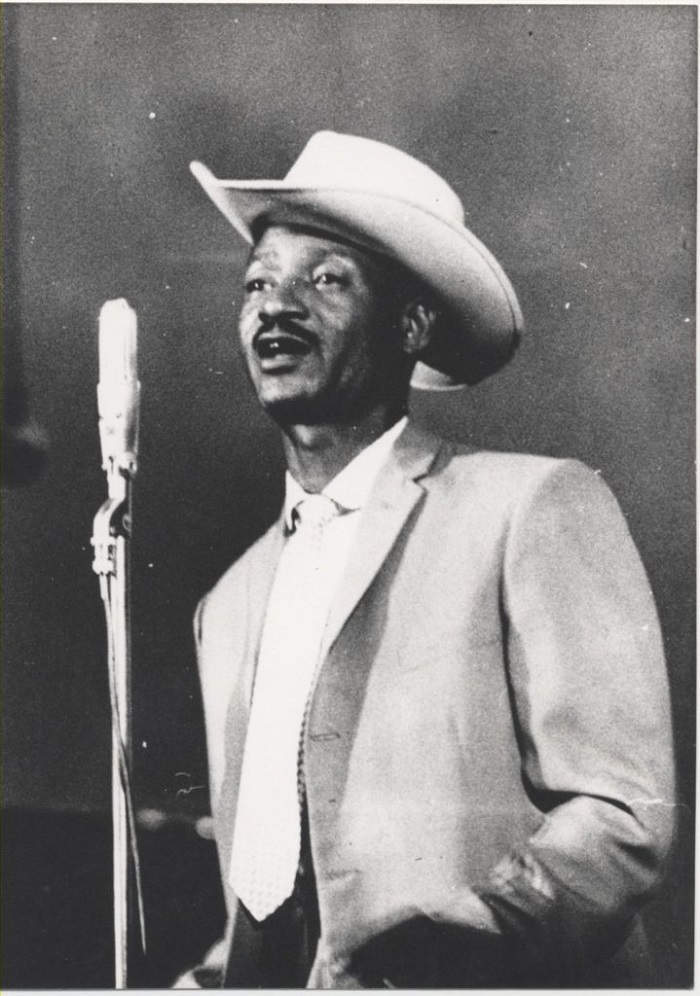
Benny More. The story of the biggest crowd idol that Cuba has given.

Benny More. He is not just another musician, he is unanimously the greatest popular artist that has ever existed in Cuba. It is the symbol, the myth, the legend, as the summary of Cuban popular music that is very rich and abundant. Benny symbolizes the peasant party, the sarao, the bohemia, the download, the coffee, the bar, the theater, the party, the carnivals, the show. El Bárbaro del Ritmo is the best of popular music.

Benny More
Benny More

Born on August 24, 1919 at 7:00 a.m. m. in the Pueblo Nuevo neighborhood of the town of Santa Isabel de las Lajas, belonging to the Cienfuegos province. His parents were named Virginia Moré and Silvestre Gutiérrez, and Benny was the oldest of 18 siblings. His surname Moré came from Ta Ramón Gundo Moré (a slave of Count Moré), who according to the tradition of the Congos, was their first king in Santa Isabel de las Lajas.


He was gifted with a flowing tenor voice that he colored and phrased with great expressiveness.

This context was definitive for his future career in music, he learned to play the insundi, the yuka drums, those of Makuta and Bembé, invokers of deities, with whom he sang and danced perfectly, but also to interpret the son, the guaracha and the rumba.

Since he was a child he manifested his great vocation for music, as he would spend all day humming a popular song or improvising and directing ensembles made up of machetes, bongos made from milk cans, guitars made from a board and nails made from strings of string. sew, two sticks as keys, etc. And when he was ten years old, he “grated” a “real” three that had been lent to him, with which he would escape from his mother to the parties near his house.

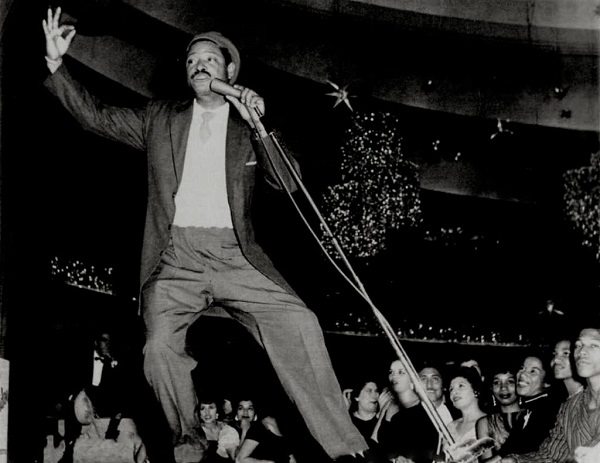
Benny More in concert

Moré was a master in all genres of Cuban music.

He could always be found standing on a table singing and reciting a son manigüero, surrounded by listeners. He spent his childhood and adolescence as Bartolomé, without the opportunity to study or get a permanent job. Like his brother Teodoro, Bartolomé was enrolled in the José de la Luz y Caballero School of Public Instruction, where he always stood out for his conduct and application.

He was gifted with a flowing tenor voice that he colored and phrased with great expressiveness.

This context was definitive for his future career in music, he learned to play the insundi, the yuka drums, those of Makuta and Bembé, invokers of deities, with whom he sang and danced perfectly, but also to interpret the son, the guaracha and the rumba.

Since he was a child he manifested his great vocation for music, since he would spend all day humming a popular song or improvising and directing ensembles made up of machetes, bongos made with milk cans, guitars made with a board and nails with strings of thread. cook, two sticks as keys, etc. And when he was ten years old, he “grated” a “real” three that had been lent to him, with which he would escape from his mother to the parties near his house.

Why is the Bacardi symbol a bat?

Moré was a master in all genres of Cuban music.

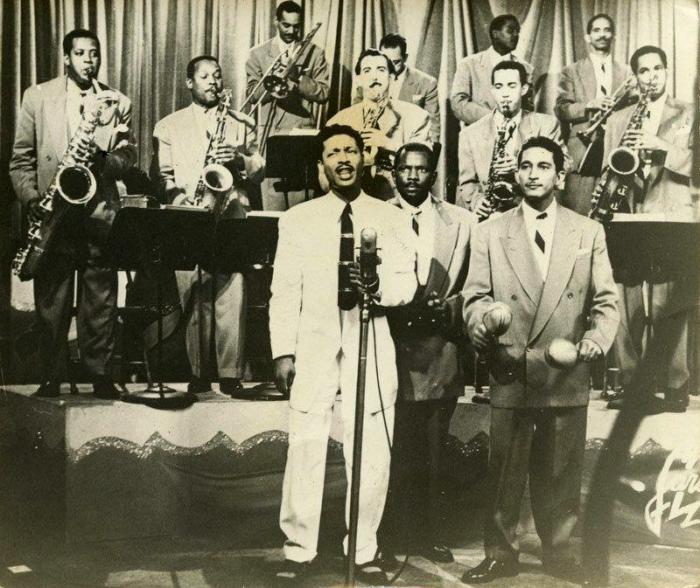
Benny More with the orchestra

He could always be found standing on a table singing and reciting a son manigüero, surrounded by listeners. He spent his childhood and adolescence as Bartolomé, without the opportunity to study or get a permanent job. Like his brother Teodoro, Bartolomé was enrolled in the José de la Luz y Caballero School of Public Instruction, where he always stood out for his conduct and application.

His voice particularly stood out in the son montuno, the mambo, and the bolero.

Since he was a child, his aptitude for singing and improvisation stood out, which he demonstrated when, barely seven years old, he escaped to entertain Guateques and parties nearby and stayed singing notes with his mother to prevent him from sleeping while ironing until late at night. .

Benny went through a complicated life, but he was willing to do anything to achieve his dreams of success. With almost twenty years of age, in 1940 Bartolomé said goodbye to his mother at the Ritz Hotel in Central Vertientes, where she worked, and traveled hidden, indistinctly, on a train and in a truck, to the City of Havana. He was definitely coming to try his luck in the bustling city. Since then he would be seen in the famous neighborhood of Belén, with a guitar acquired in a pawnshop, wandering through cafes, bars, hotels, restaurants, and even brothels.

That same year he told his cousin, a fellow downloader: “I’ll stay in Havana, here I get up or I sink.” From then on the saga of the downloads began in the bars on the avenue of the port. Once, recalling those times, he confessed: “I went out into the street with a guitar on my shoulder to sing to the tourists. I am not ashamed of it; Carlos Gardel also did it in Argentina and he is the king of tango”

At that time, the Supreme Court of Art began to be broadcast on the CMQ station. Bartolomé Maximiliano Moré appeared on that program animated by Germán Pinelli and José Antonio Alonso. After presenting it and at the moment of starting his presentation, the bell rang for him. Later Bartolomé returned to Monte y Prado to the Supreme Court and on this second occasion he won the first prize. Possessor of a fresh voice, with a beautiful timbre, sensual and evocative, of a black peasant, despite his misery, Bartolo continued to sing with all the inner strength that Cuban rhythms demanded of him.

One of his escapades Siro Rodríguez, a member of the famous Trio Matamoros, heard him sing in the bar of El Templete restaurant, on Avenida del Puerto, and was very impressed by the boy’s voice and tuning. Bartolomé’s entry into the group led by Miguel Matamoros can be considered his true debut as a professional singer, since with said group he had a stable job for the first time as a musician and made his first recordings on 78 revolutions per minute records.

Benny knew he had a voice, an atche (luck), and a destiny. Perhaps he sensed it, intuited it, or simply trusted in his triumph. When he started with Miguel Matamoros and his group, he already wanted to make changes to the picket line. In Mexico, when Miguel got sick, he was able to direct the group, took command and made the friends enjoy themselves at the El Patio cabaret.

When the contract ended, the Matamoros group returned to Havana, but without Bartolomé, who decided to try his luck alone in Mexico. When communicating his decision to the famous author of the son El que sowing his corn, Miguel Matamoros would reply: “It’s very good, but you have to change your name from Bartolo, which is very ugly. You’re not going anywhere with him. You’re right, Bartolo replied, from today I’ll be called Benny, yes, Benny Moré.

The owner of the business was hypnotized by the tasty atmosphere that Benny created as a manager. After singing with several leading orchestras in Mexico, he stood up nicely with the most famous band of the 20th century: Pérez Prado and the Cuban mambo.

With this meeting, two geniuses came together: in Benny Moré there was talent and natural intuition; in Pérez Prado, in addition to all that, mastery of technique and an enormous facility for making music.

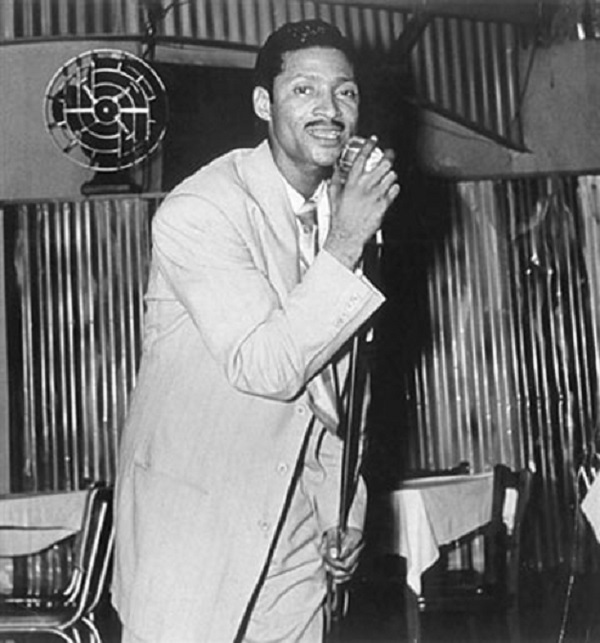
Benny More singing
Benny More singing

With Pérez Prado he conquered the noble Aztec people on tours of different states of that sister country. Due to the success achieved by Benny, the town awarded him the title of “Prince of the mambo” and Pérez Prado that of “King of the mambo”. He sang like no one else in the world and began his international rise.

By that time Benny’s voice was already known in Panama, Colombia, Brazil, Puerto Rico, Haiti, Venezuela, and of course, in his native Cuba. In the lively world of nightlife in Mexico City, the Cuban singer performed in countless theaters, among others the Margo, the Blanquita, the Folliers and the Cabaret Waikiki, alternating with renowned artists such as the legendary vedette Yolanda Montes (Tongolele ), the Mexican Toña la Negra, and the prominent Cuban pianist and composer Juan Bruno Tarraza, for whom Benny sang the bolero Ya son las doce. He participates in many films and upon his return to Cuba, he was already sure that he had to be counted on.

Nostalgia for his family, friends, for the Homeland, and the desire to obtain laurels on his Island, where he considered that he was not well known, made him return to his beloved Lajas at the end of 1950. The older sonero was definitely in Cuba, he had left behind comforts, material and spiritual satisfactions, friends and even the loves that winners usually do not lack.

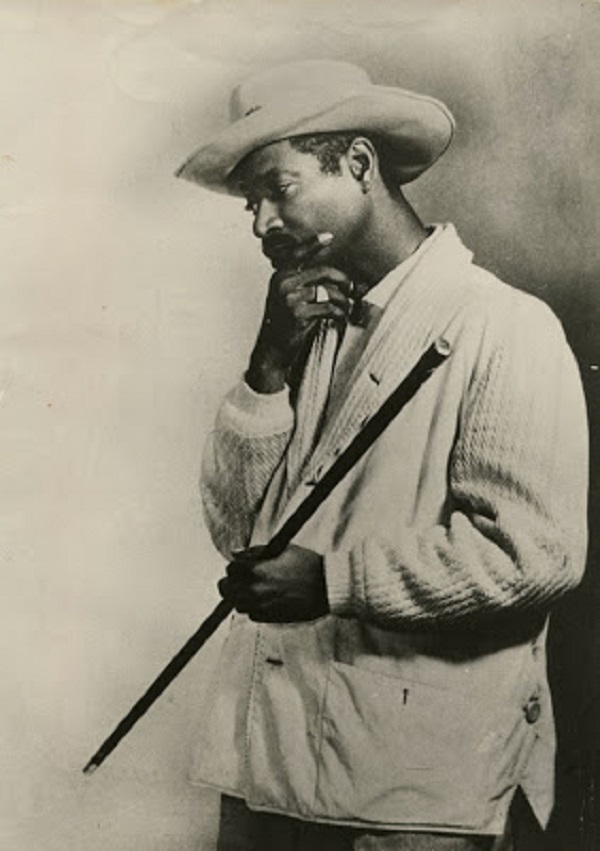
Benny More Photo
Benny More Photo

For the next two years, he performed by contract for a program called “De fiesta con Bacardi”, which aired on the Cadena Oriental radio station with the Mariano Mercerón orchestra, and the singers Fernando Álvarez and Pacho Alonso.

As Benny Moré was an exclusive artist for RCA Víctor, this firm demanded his presence in Havana to make different recordings. To fulfill this commitment, he made alternate trips to Havana and thus maintained his commitment to the eastern radio network. After the engagement at Casa Bacardí and master Mercerón, in 1952 Benny Moré returned to Havana.

Certainly Benny concluded an era, closed a chapter of Cuban musical life, that stage of nightlife that was already declining. Benny’s life was related to a world that has already disappeared. Then everything became myths and legends. Benny kept singing, but now it would be on scratch records, which were digitized.

Today’s “oidores” (listeners) must travel back in time, abstract themselves, imagine those seedy bars in the Havana port full of curious tourists. Of Chinese inns that sold “complete” for poor people who passed the hat, after singing through the streets of Havana.

Benny More
Benny More

Latin America / June 2024

Veruska Verdú woman full of BarloventeñasThe city of Caracas is getting ready for a night of pure salsa and joy!Ezequiel Lino Frías Gómez was an excellent musician, pianist, arranger and composer.Son Cubano is one of the most popular musical styles in Cuba and Kiki Valera is one of its leading exponentsCalibrated maracas

DIRECTORY OF NIGHTCLUBS

Argentina flag
ARGENTINA

Aruba circular flag
ARUBA

Belize circular flag
BELIZE

Bolivia circular flag
BOLIVIA

Brazil flag
BRAZIL

Chile circular flag
CHILE

Colombia
COLOMBIA

Costa Rica circular flag
COSTA RICA

Cuba circular flag
CUBA

Dominican Republic
DOMINICAN REPUBLIC

Ecuador circular flag
ECUADOR

Guatenala circular flag
GUATEMALA

Mexico Circular flag
MEXICO

Panama circular flag
PANAMA

Peru circular flag
PERU

Puerto Rico circular flag
PUERTO RICO

Venezuela circular flag
VENEZUELA

Latin America / May 2024

Virginia Ramirez is the artist of the XXI century, the Princess of Piano and Voice, the hope that will save the new generations of anti-music

José Antonio “Maceo” Rodríguez was a faithful cultivator of Son Cubano

Pancho Quinto is considered one of Cuba's great rumberos

From Parroquia San Agustín del Sur es Son Marín ¡Aquí Empezó la Cosa...!!A party of dancers at the concert to celebrate Willie Rosario's 100th birthday

Willie Rosario, El Rey del ritmo by journalist and music researcher Robert Téllez M.Unstoppable Hollywood Salsa Fest

Calibrated maracas

DIRECTORY OF NIGHTCLUBS

Argentina flag
ARGENTINA

Aruba circular flag
ARUBA

Belize circular flag
BELIZE

Bolivia circular flag
BOLIVIA

Brazil flag
BRAZIL

Chile circular flag
CHILE

Colombia
COLOMBIA

Costa Rica circular flag
COSTA RICA

Cuba circular flag
CUBA

Dominican Republic
DOMINICAN REPUBLIC

Ecuador circular flag
ECUADOR

Guatenala circular flag
GUATEMALA

Mexico Circular flag
MEXICO

Panama circular flag
PANAMA

Peru circular flag
PERU

Puerto Rico circular flag
PUERTO RICO

Venezuela circular flag
VENEZUELA


Latin America / April 2024

Danilo Cajiao was born on February 9, 1969 in Cali Colombia

Oskar Cartaya “My Music, My Friends, My Time”

El “Underground” e “Irreverente” de la Salsa en New York.

Wilmar Lozano from a very young age his mother saw in him the desire to be a musicianRey Ruiz's 'Contigo' concert at the Coca Cola Music Hall in Puerto Rico was Phenomenal.

Calibrated maracas

DIRECTORY OF NIGHTCLUBS

Argentina flag
ARGENTINA

Aruba circular flag
ARUBA

Belize circular flag
BELIZE

Bolivia circular flag
BOLIVIA

Brazil flag
BRAZIL

Chile circular flag
CHILE

Colombia
COLOMBIA

Costa Rica circular flag
COSTA RICA

Cuba circular flag
CUBA

Dominican Republic
DOMINICAN REPUBLIC

Ecuador circular flag
ECUADOR

Guatenala circular flag
GUATEMALA

Mexico Circular flag
MEXICO

Panama circular flag
PANAMA

Peru circular flag
PERU

Puerto Rico circular flag
PUERTO RICO

Venezuela circular flag
VENEZUELA


  • « Go to Previous Page
  • Page 1
  • Interim pages omitted …
  • Page 11
  • Page 12
  • Page 13
  • Page 14
  • Page 15
  • Interim pages omitted …
  • Page 27
  • Go to Next Page »

International Salsa Magazine (ISM) is a monthly publication about Salsa activities around the world, that has been publishing since 2007. It is a world network of volunteers coordinated by ISM Magazine. We are working to strengthen all the events by working together.