• Skip to primary navigation
  • Skip to main content

International Salsa Magazine

  • HOME
  • Previous editions
    • 2026
      • ISM / July 2026
      • ISM / June 2026
      • ISM / May 2026
      • ISM / April 2026
      • ISM / March 2026
      • ISM / February 2026
      • ISM / January 2026
    • 2025
      • ISM / December 2025
      • ISM / November 2025
      • ISM / October 2025
      • ISM / September 2025
      • ISM / August 2025
      • ISM / July 2025
      • ISM / June 2025
      • ISM / May2025
      • ISM / April 2025
      • ISM / March 2025
      • ISM / February 2025
      • ISM / January 2025
    • 2024
      • ISM / December 2024
      • ISM / November 2024
      • ISM / October 2024
      • ISM / September 2024
      • ISM / August 2024
      • ISM / July 2024
      • ISM / June 2024
      • ISM / May 2024
      • ISM / April 2024
      • ISM / March 2024
      • ISM / February 2024
      • ISM / January 2024
    • 2023
      • ISM / December 2023
      • ISM / November 2023
      • ISM / October 2023
      • ISM – September 2023
      • ISM – August 2023
      • ISM July 2023
      • ISM Edition June 2023
      • ISM – May 2023
      • ISM April 2023
      • ISM March 2023
      • ISM February 2023
      • ISM January 2023
    • 2022
      • ISM December 2022
      • ISM November 2022
      • ISM October 2022
      • ISM September 2022
      • ISM August 2022
      • ISM July 2022
      • ISM June 2022
      • ISM May 2022
      • ISM February 2022
      • ISM January 2022
    • 2021
      • ISM December 2021
      • ISM November 2021
      • ISM October – 2021
      • ISM September 2021
      • ISM August 2021
      • ISM July 2021
      • ISM May 2021
      • ISM April 2021
      • ISM June 2021
      • ISM March 2021
      • ISM February 2021
      • ISM January 2021
    • 2020
      • ISM December 2020
      • ISM November 2020
      • ISM October 2020
      • ISM September 2020
      • ISM August 2020
      • ISM July 2020
      • ISM June 2020
      • ISM May 2020
      • ISM April 2020
      • ISM March 2020
      • ISM February 2020
      • ISM January 2020
    • 2019
      • ISM December 2019
      • ISM November 2019
      • ISM October 2019
      • ISM Septembre 2019
      • ISM August 2019
      • ISM July 2019
      • ISM June 2019
      • ISM May 2019
      • ISM April 2019
      • ISM March 2019
      • ISM February 2019
      • ISM January 2019
    • 2018
      • ISM December 2018
      • ISM November 2018
      • ISM October 2018
      • ISM September 2018
      • ISM August 2018
      • ISM July 2018
      • ISM June 2018
      • ISM May 2018
      • ISM April 2018
      • ISM March 2018
      • ISM February 2018
      • ISM January 2018
    • 2017
      • ISM December 2017
      • ISM November 2017
      • ISM October 2017
      • ISM September 2017
      • ISM August 2017
      • ISM July 2017
      • ISM June 2017
      • ISM May 2017
      • ISM April 2017
      • ISM March 2017
      • ISM February 2017
      • ISM January 2017
    • 2016
      • ISM December 2016
      • ISM November 2016
      • ISM October 2016
      • ISM September 2016
  • Spanish
  • Download Salsa App
    • Android
    • Apple

Search Results for: Argentina

Yasser Peralta and his musical experience

Latin America / Argentina / Buenos Aire

We have the opportunity to meet the dancer and teacher Yasser Peralta, who is dedicated to teaching Son and Rumba in the Cuban style, being something very striking due to the naturalness of his classes and we can believe that it is because his Cuban blood flows through his veins, giving the essence and flavor to the dance. He tells us that the development of his profession as a dancer and instructor began when he was little, since he was dedicated to dancing at parties, being a very common characteristic for most Cubans.
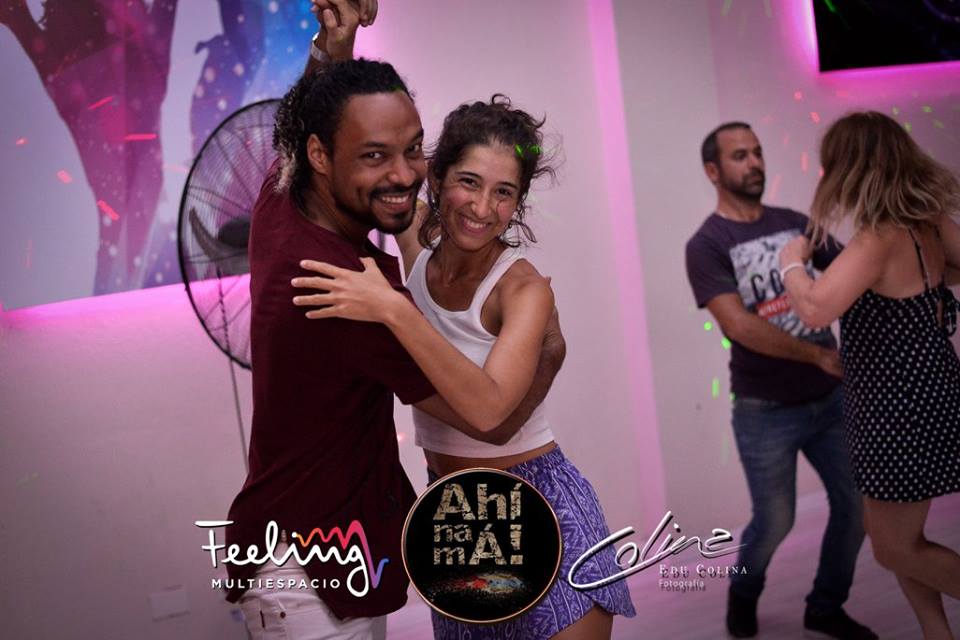
Yasser Peralta
Yasser Peralta

When he moved to Argentina, that did not stop him and in order to maintain his firm roots in his native land and to have his beloved culture very close, he went dancing, where he took advantage of every trip to Cuba to take classes, of which he was with:

  • Julia Fernández Regisseur of the National Folkloric Ensemble.
  • The Aspirins: Rumberos majors of Regla.
  • Luis Roblejo, professor of Modern Cuban Dance.

Yasser Peralta and his students

He tells us that he not only took classes, he also took training courses in both Cuba and Argentina; in Cuba he was in Cubadanza and in FolkCuba. In Argentina he was with two great dance masters of various genres and musical styles including the Cuban style such as the Mambo in 2 L.A. styles. All this made him increase his knowledge and resume of his musical career, being expanded by studying music, where he learned to play piano, guitar and percussion. And over time he began to organize events through his production company “AhíNaMá!”.
Workshop with Yasser Peralta

Of all his life journey, he tells us that “it was not only learning and having a profession, he enjoys dancing and teaching the genres of popular Cuban roots such as Afro-Cuban dances, Son and Rumba, because I understand that you have to go to the basis to better interpret current Cuban music…

On the other hand, I am from the Timba generation and I apply all of the above”, that is, dancing and teaching Cuban popular root genres are 2 of the things that I enjoy a lot, especially since In the future, he sees the possibility of traveling to, meanwhile, dedicate himself more to the production of cultural events of these Latin genres.
Photo - Workshop with Yasser Peralta
Photo – Workshop with Yasser Peralta

Yasser tells us that he has an event production company called “AhíNaMá!” where they hold workshops and teach at other academies:

La Viruta AhíNaMá! Vibra Dance
Tuesday: 20.30hs. $140

Thursday: 20.30hs $150

Wednesday: en Feeling 21.30hs más baile Social $120 Friday: 21.30hs más baile Social $150

Yasser expresses himself to all of us and above all recommends that lovers of Latin rhythms, whether they are dancers or artists who want to expand in the artistic area, “open your studio to other genres, other styles.” “Everything nourishes and gives resources to personal dance and there is nothing more difficult (but sublime) than achieving one’s own style; especially that they study the music they dance to, understand its structure and the “root” sub-genres that make it up. That is what makes the detail, and the difference is in the detail”.

Salsa Casino with Yasser Peralta

For more information:

  • Facebook:
    • https://www.facebook.com/yasser.peralta/
    • https://www.facebook.com/ahinamaproducciones/


  • Class:
    • Cuban Style : https://m.facebook.com/story.php?story_fbid=822097507972681&id=402506703265099
    • AhíNaMá en Feeling: https://m.facebook.com/story.php?story_fbid=877213132439763&id=739677559526655
    • Son: https://m.facebook.com/story.php?story_fbid=886905821470494&id=739677559526655
    • Rumba: https://youtu.be/BiTCxVsVeag
    • Musicality: https://youtu.be/ypUe_CYHRfk
    • La Viruta: https://m.facebook.com/story.php?story_fbid=809590925890006&id=402506703265099
    • Vibra: https://youtu.be/yRo9ZI1D1r0


Goodbye to José Antonio Abreu, the most beloved Master – Part 2

Latin America / Venezuela / Caracas

José Antonio Abreu. The Venezuelan musical miracle

BY ANA ROSA MASSIEU

The pedagogical plan of El Sistema contemplated, since 1980, approximately, the foundation of exemplary pedagogical structures and models as scenarios for the training and improvement of musicians. As the demand for children entering El Sistema and its nuclei has grown, projects for the construction of new educational centers are on the rise.

José Antonio Abreu - On the European stage
José Antonio Abreu – On the European stage

Among them, the Simón Bolívar Conservatory, the Montalbán Children’s Academic Center, the Center for Social Action for Music, the Academic Center for Luteria and the twelve Latin American Academies for the instruments of Violin, Viola, Cello, Flute, Horn, Contrabass, Clarinet , Classical Harp, Trumpet, Oboe, Bassoon and Trombone.

http://www.musicabancaribe.com/Publicaciones /Libro_digital/VenezuelaEnElCielo/info/capitulo6 /i/index.php#prev

The Simon Bolivar Conservatory

The Simón Bolívar Conservatory offers training of the highest pedagogical and artistic rank to the ever-increasing number of students, with a very complete curriculum of studies in which orchestral practice accounts for approximately 70%. The title of Performing Musician is awarded, an important endorsement that allows graduates to continue higher studies at universities.

“…the Simón Bolívar Conservatory has emerged as the head and model of a network of conservatories already established in Yaracuy, Carabobo, Aragua, Guárico and Ciudad Bolívar. However, I am excited and pleased with the new challenge we are facing: broadening the musical and artistic horizon of that large contingent of students that El Sistema has and of those who will join in the future.

These are the new contents: the Venezuelan Popular Music Teaching Program, in all its aspects, including that of Afro-Venezuelan roots; the Urban Music Program; the Jazz Program, which is already in progress with our Simón Bolívar Big Band Jazz Symphony and the Latin and Caribbean Music Program, which especially includes the salsa genre.

Cambiando Vidas - flyers
Cambiando Vidas – flyers

This is already underway with the creation of more than 15 pilot nuclei and the formation of a body of teachers specialized in these genres. The idea is that these programs capture and channel the talent of many musicians and students who have greater virtues for these musical currents, always pursuing and achieving the same level of excellence as those who perform symphonic music in our orchestras”.

Valdemar Rodriguez. Taken from the interview with Valdemar Rodríguez, clarinetist, Director of the CSB, creator of the Latin American Clarinet Academy, among other titles and positions, by Chefi Borzhacchini in the digital book Venezuela en el Cielo de Los Escenarios. Caribbean Bank, 2010

Latinocaribe2014-02-03

http://www.musicabancaribe.com/Publicacio nes/Libro_digital/VenezuelaEnElCielo/info/c apitulo6/ii/

Diversification of teaching, orchestras and festivals

In the same way that teaching has been diversified, including different musical genres –popular, urban, jazz, Latin Caribbean, salsa– other orchestras have emerged dedicated to developing each of these genres, as well as festivals to promote them at the regional level.

These events, organized by El Sistema, revolve around an artist, musician, composer, instrument, or arise for the meeting between musical talents from various regions, local or international.

Among them are the FIP-Llanos International Percussion Festivals, the Spain Venezuela Festival, the Festival of New Venezuelan Clarinetists, the Chamber Music Festival (in Mérida and Caracas), the International Flute Festival, the International Bassoon Festival, and the International Clarinet Festival. , International Oboe Festival, Young Virtuosos Festival, Youth Festival, Young Directors Festival and Latin American Music Festival, among others.

Simón Bolívar Symphony Orchestra of Venezuela

The Simón Bolívar Symphony Orchestra of Venezuela (OSSBV) was founded by maestro José Antonio Abreu and is currently the apex ensemble of the National System of Youth and Children’s Orchestras and Choirs of Venezuela.

Concert directed by Dudamel 40th anniversary Feb 2015

Under the musical direction of maestro Gustavo Dudamel, its 180 young musicians, whose ages range between 18 and 28 years old, named Ambassadors of Peace by UNESCO, have been trained in the Orchestral Academic Program of the Simón Bolívar Musical Foundation, through the which have received master classes with outstanding world-class teachers and soloists, including teachers from the Berlin Philharmonic, the Sibelius Academy in Finland, the Bach Academy in Stuttgart and the New England Conservatory in Boston.

His performances with internationally renowned directors include Simon Rattle, Claudio Abbado, Daniel Baremboim, Krzysztof Penderecki, Essa Pekka-Salonen, and Lorin Maazel, among many others.

Other Orchestras

  • Simón Bolívar Afro-Venezuelan Orchestra
  • Simón Bolívar Youth Baroque Orchestra
  • Youth Orchestra of Caracas
  • Youth and Children’s Orchestra Alma Llanera of Guárico State
  • Simón Bolívar Latin Caribbean Orchestra
  • National Flute Orchestra of Venezuela
  • National Children’s Orchestra of Venezuela
  • Simón Bolívar Symphonic Rock Orchestra
  • Francisco de Miranda Youth Symphony Orchestra
  • Carabobo Youth Symphony Orchestra
  • Prison Symphony Orchestras
  • Teresa Carreño Youth Symphony of Venezuela

Bands

  • Youth Symphonic Band
  • Simon Bolivar Simon Bolivar Big-Band Jazz

Assemblies

  • Assembly 7/4
  • Carabobo Metal Assembly
  • Metal Ensemble of Venezuela

Chamber Groups

  • Simón Bolívar String Quartet
  • Liberators Quartet
  • Teresa Carreño Quartet
  • Yaracuy Quartet

Choirs

Choir of White Hands Simón Bolívar National Youth Choir of Venezuela Network of Prison Orchestras and Choirs

More information at: http://fundamusical.org.ve/agrupaciones/

The system in the world

The philosophy and methodology of El Sistema has had an almost magical ability to inspire artists, educators, and social activists across the globe, as Tricia Tunstall puts it in her book Changing Lives…

Play, sing and fight

“its guiding principles—the orchestra as school of civility and the passage from a vision centered on music to a humanistic vision of social change through music” have been taken as a model to follow and El Sistema has been implemented or adapted in more than 66 countries in which five continents Programs inspired by El Sistema have emerged in:

  • AMERICA: Argentina, Barbados, Bolivia, Brazil, Canada, Chile, Colombia, Costa Rica, Ecuador, El Salvador, United States, Guadeloupe, Guatemala, Haiti, Honduras, Jamaica, Mexico, Panama, Paraguay, Peru, Puerto Rico, Republic Dominican Republic, Saint Lucia, Trinidad and Tobago, Uruguay.
  • AFRICA: Angola, Kenya, South Africa, Uganda.
  • EUROPE: Germany, Armenia, Austria, Bosnia, Croatia, Denmark, Scotland, Slovakia, Spain, Finland, France, Wales, Greenland, England, Ireland, Iceland, Italy, Luzembourg, Norway, Netherlands, Portugal, Czech Republic, Romania , Serbia, Sweden, Switzerland, Turkey.
  • ASIA: Afghanistan, Japan, South Korea, Philippines, India, Taiwan, Vietnam, Singapore.
  • OCEANIA: Australia, New Zealand. More than 66 countries on five continents.
Venezuela Sembrada de orquestas Coros Cortesía FundaMusical

More information can be found at:

http://www.elsistemausa.org/el-sistemaaround-the-world.htm http://sistemaglobal.org/ http://www.sistemaeurope.org/ http://fundamusical.org.ve/category/elsistema/el-sistema-en-el-mundo

Latin Saoko The Latin Corner of the World – 2018

Latinoamerica / Argentina / Buenos Aires

Latin Saoko, the radio is dedicated to spreading the richness of our Latin culture to all the public who want to have an encounter with the magical Caribbean and its music.

It is the Internet radio station of Latin-Caribbean genres that produces interactive programs with top-of-the-line speakers, this is how Dj timbao and Víctor Rodríguez define Latin Saoko, a radio station that since 2016 dictates the rhythm of timba and salsa on the internet .

Latin Saoko flyer
Latin Saoko flyer

In a pleasant conversation with his mentors, we were able to learn that it is an idea that arose a long time ago from these two great DJs and dance instructors from Venezuela, for now Dj timbao making life and projecting himself in Argentina and Víctor doing the same in Spain .

The radio is dedicated to spreading the richness of our Latin culture to all the public who want to have an encounter with the magical Caribbean and its music. Our work comes to you from the hand of professionals who strive every day to produce the best programs with true dynamic content through our website, with an excellent technical team and specialized personnel who work 24 hours a day in each one. Of its different spaces, Víctor mentions the director of the Kimbara school from the beautiful island of Tenerife.

There are 24 continuous hours of the best musical themes of Latin-Caribbean genres, we can enjoy premieres that come at the hands of this pair of DJs thanks to their great trajectory around the world. Dj timbao tells us that:

At saokolatino.com we seek to innovate the way in which Internet radio is currently produced so that in this way we can introduce real radio programming with dynamic content, for all local audiences and also worldwide. , offering the best of products so that saokolatino.com becomes the number one reference radio station for Latin American musical genres.

Among its main objectives is to create a space dedicated to the public that loves Latin genres, strengthen and promote Caribbean music and culture worldwide, expand the horizons of Latin radio in the world and reach number 1 in the ranking of radio stations. internet radio.

Radio Latin Saoko
Radio Latin Saoko

One of our main missions is to be the first Internet station of Latin-Caribbean genres, with unique production of true and real programs broadcast live and in real time. Spread the true Latin culture through the music that represents us and is loved worldwide, so that everyone who is connected to the radio identifies with its image and content.

Work hard so that our broadcasts, programs, calendars and music reach all possible destinations hand in hand with professionals who strive day after day, week after week and year after year to produce true radio content programs on the web, I emphasize Víctor, in the same way that the production of programs with characters from all over the world will take this radio to another level, they seek not only to delight musically speaking, they also follow the idea of ​​nurturing with programs aimed at substantially improving the offer.

They are currently in the registry of people who want to make programs, they offer excellent benefits and are open to proposals that are presented to promote programs dedicated to Latin music and Caribbean rhythms.

On the website we can also find several interactive sections, the largest of which is a chat room in which all listeners, whether registered or not, can chat with each other, sending messages, images and emoticons on the topics they most want to discuss. and in turn they can talk directly with the announcer who is making the program at that moment.

On the other hand, there is the video section, where you can see the artists of the moment and those that have been successes or classics in their times, which Important to note in this section is that it links you directly to the station’s YouTube channel which has a direct playlist of the channels of each of the artists, this is important because by watching the video you are contributing to the artist directly and growing its popularity.

Similarly, they have a section of biographies where there is the story behind each of the most important orchestras, groups, ensembles or groups in Latin music.

Estrenos Timberos - Latin Saoko
Estrenos Timberos – Latin Saoko

To close, they invite us to download the saokolatinoradio app through playstore and for IOS present at www.tunein.com as saokolatinoradio, in this way they will be able to have 24 hours of good music at hand in any corner of the world where they are. For contacts: +34654723798 and +5491161380106 or by e-mail [email protected], by facebok on Saoko Latino Radio, on Instagram and twitter as @saokolatino and the youtube channel where we can enjoy video premieres of the most popular artists. recognized is Saoko Latino.

Gabriela Anders studied classical guitar privately, and music and piano at a conservatory in Buenos Aires

Gabriela Anders was born to music amidst the grace, paradox and tradition of  Argentina.

Gabriela studied classical guitar privately, and music and piano at a  Conservatory in Buenos Aires.

Adding to the musical medley was her father’s influence (a noted jazz saxophonist and arranger) which became even stronger than her classical studies. After finishing high school, Gabriela decided to move to New York.

Gabriela’s Los Dukes after a NYC show

There she studied orchestration for brass and strings in a class conducted by Don Sebesky and composition at Hunter College. Gabriela started to write her own material. Her studio and club work took off leading to a record deal with major label Warner Brothers Jazz.

Gabriela Anders’ debut album on Warner Bros. Records, (1999) “Wanting” is brimming  with vocal subtlety; although smooth, it is anything but simple. It features arrangements and production by Paul Brown, George Duke, Allain Mallet and Anders herself.

The album elicited much praise for Anders’ vision and impassioned vocal style.

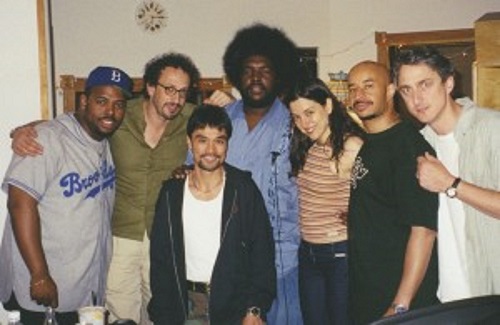
Recording with Questlove and Christian Mc Bride

Her unique marriage of Brazilian, Latin and Jazz led to Vogue and People Magazine describing Anders and her music as “exotic and bold”, “wonderfully soulful”, and “one of the most distinctive new voices to hit the music scene in years”.

Her second record for Warner Bros Records was a European release entitled “Gabriela” which featured an array of world-class sidemen, including Christian McBride, Amir “Questlove” Thompson and Kirk Whalum. Again, she contributed ten of the album’s twelve tracks.

Her next CD “Last Tango in Rio” was released in 2005 by major label EMI. “Last Tango in Rio” is a collection of songs closely associated with Billie holiday that have been uniquely transformed by Gabriela’s interpretation and orchestration.

Hailed by critics (Los Angeles Times, Billboard magazine and People magazine)) as highly -original and creative presentation of standards, “Last Tango in Rio” represents a fresh and effervescent take on a classic song book that has previously defied reinvention.

In October of 2009, JVC Japan released her CD “Bossa Beleza“. “Bossa Beleza” blends her own immediately recognizable sound with that of her first musical love, classic Bossa Nova.

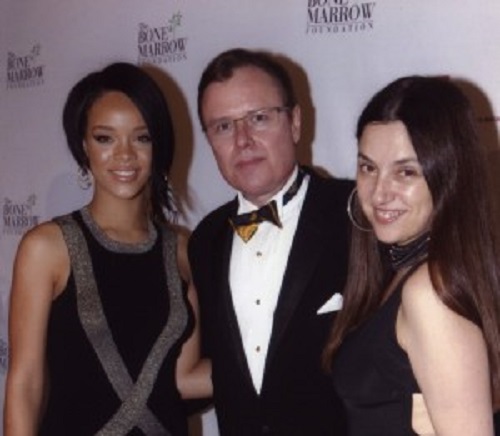
Singing with Rihanna for the NYC Bone Marrow foundation

Gabriela Anders‘ 2015 album, “Cool Again”, beautifully displays the significant gifts as singer, vocal orchestrator, songwriter and bandleader she has steadily developed through her previous releases. The mix of original and cover songs on “Cool Again” finds Gabriela at her best.

The soulful funk of the original title track is a classic example. Its message of empowerment can be considered a core theme in Gabriela’s lyrics and a source of her resonating appeal as a performer, entertainer and artist.

2020 CD ‘The Ring‘: While facing the fear and uncertainty of the virus in New York City, Gabriela recorded a piano/voices collection of songs at her home studio, creating intimate portraits of inner struggle and redemption against the bizarre backdrop of the pandemic.

The project’s three pianists – Jim Ridl, Jean-Michel Pilc and Jon Cowherd – are radically different stylists from different corners of the world, here each offering their unique sensibilities to Gabriela’s voice and music.

2021 CD release Gabriela Anders’ ‘Los Dukes’! Los Dukes is a new 9 piece band arranged and directed by Gabriela Anders, featuring songs from the Duke Ellington’s catalog done in wildly distinctive Latin American styles. A Latina’s tribute to the music of Duke Ellington.

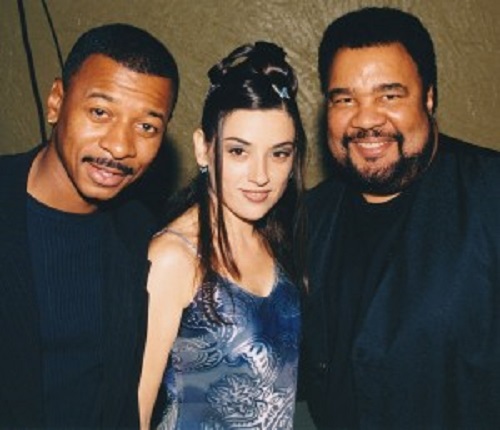
With the great George Duke

Los Dukes, pays loving tribute to the elegant GENIUS of Duke Ellington and includes some of the best Latin Jazz players on the New York scene.

Hailed by critics (Los Angeles Times, Billboard magazine and People magazine) as ‘highly original and creative artist’, a ‘multi-talented artist who is destined to leave her mark on the jazz world’ and the ‘most promising jazz influenced artists today’.

Gabriela Anders – Último Tango En Rio (2004)

Gabriela Anders
Gabriela Anders

Temas:

  1. Te Subes A Mi Cabeza
  2. Abracadabra
  3. El Amor Llegó Para Quedarse
  4. Dios Bendiga Al Niño
  5. Abrázame
  6. Buenos Aires Mix, El
  7. Cuerpo y Soul
  8. All Your Love
  9. Meant To Be
  10. ‘Til The End of Time

Músicos:

Gabriela Anders (Voz, teclados)

Romero Lubambo (Guitarra)

John Benitez (Bajo)

Wayne Krantz (Guitarra)

Portinho (Batería, percusión)

Gabriel Rivano (Bandoneón)

H. Martignon (Teclados)

Tito Castro (Bandoneón)

Donald Edwards (Batería)

Jorge Anders (Saxo)

Jorge Alfano (Flauta, flauta andina, charango)

Información realizada (22 de abril de 2009)

Also Read: Samuel Quinto Feitosa is a Brazilian virtuoso jazz and classical pianist

Latin America / November 2024

Mulatu Astatke is the first African to earn a PhD from Berklee College of MusicGabriela Anders was born in music with the paradox and tradition of ArgentinaThe world's sonero returns to dance with the bass, this time from the Coca Cola Music Hall in Puerto RicoSessions from La Loma brings together salsa fans from all over the world in Puerto RicoCalibrated maracas

DIRECTORY OF NIGHTCLUBS

Argentina flag
ARGENTINA

Aruba circular flag
ARUBA

Belize circular flag
BELIZE

Bolivia circular flag
BOLIVIA

Brazil flag
BRAZIL

Chile circular flag
CHILE

Colombia
COLOMBIA

Costa Rica circular flag
COSTA RICA

Cuba circular flag
CUBA

Dominican Republic
DOMINICAN REPUBLIC

Ecuador circular flag
ECUADOR

Guatenala circular flag
GUATEMALA

Mexico Circular flag
MEXICO

Panama circular flag
PANAMA

Peru circular flag
PERU

Puerto Rico circular flag
PUERTO RICO

Venezuela circular flag
VENEZUELA
  • « Go to Previous Page
  • Page 1
  • Interim pages omitted …
  • Page 11
  • Page 12
  • Page 13
  • Page 14
  • Page 15
  • Interim pages omitted …
  • Page 29
  • Go to Next Page »

International Salsa Magazine (ISM) is a monthly publication covering salsa activities around the world and has been publishing since 2007. It is a worldwide network of volunteers coordinated by ISM Magazine. Together, we work to strengthen salsa events around the world.